
In short
Podcast Episode Notes: "How much do dogs reduce our stress?"
Podcast Overview
- Title: Post Reports
- Hosts: Martine Powers and Elahe Izadi
- Theme: Daily podcast featuring unparalleled reporting and expert insight from The Washington Post newsroom.
- Episode Release: Weekdays at 5 p.m. Eastern time.
Episode Details
- Title: How much do dogs reduce our stress?
- Description: The episode explores the impact of spending time with dogs on stress reduction and overall happiness, featuring reporter Kyle Melnick's personal experience with a dog named Heihei.
---
Key Themes and Discussions
- Personal Narrative: Kyle's Experience with Heihei
- Background: Kyle Melnick, a self-proclaimed cynic, shares his journey of spending a day with Heihei, a dog from an animal shelter.
- Initial Hesitation: Despite his skepticism towards trust, he was moved by Heihei's immediate affection and trust towards him.
- Activities: Their day included a nature walk where Heihei exhibited excitement and playfulness, leading to moments of connection between them.
- Psychological Insights
- Benefits of Interaction:
- Mental Health: Spending just five minutes with a dog can significantly lower stress and anxiety, boost mood, and improve general well-being.
- Cortisol Levels: Interaction with dogs is linked to reduced cortisol levels (stress hormone) and lower blood pressure.
- Unconditional Love: Dogs show unconditional affection, contributing to human emotional well-being and trust.
- Kyle's Transformation
- Changed Perspective: Kyle reflects on how Heihei’s trust taught him to consider the good intentions of others, counteracting his initial cynicism.
- Lasting Impact: The experience prompted Kyle to be more open and trusting in his human interactions, marking a significant shift in his outlook.
- Expert Commentary
- Dr. Keri Rodriguez: An expert in human-animal relationships, explains the measurable benefits of pet interaction on psychological and physiological health.
- Research Findings:
- Even unfamiliar dogs can provide immediate stress relief.
- The bond formed with pets enhances levels of oxytocin, promoting trust and connection.
---
Key Takeaways
- Dogs as Emotional Support: The episode emphasizes the profound emotional and psychological benefits of spending time with dogs.
- Trust and Connection: The narrative illustrates how interactions with animals can influence human trust and social relationships.
- Encouragement for Interaction: Listeners are encouraged to engage with dogs, whether through adoption or community programs, for both their own benefit and the animals’ well-being.
---
Final Notes
- Production Credits:
- Reported and produced by Maggie Penman and Kyle Melnick.
- Edited by Allison Klein, mixed by Ted Muldoon.
- Listener Engagement: The episode invites listeners to share feedback and suggests subscribing to related newsletters for more optimistic content.
---
For further exploration of this theme or related topics, consider engaging with The Washington Post's various platforms and community initiatives supporting animal welfare and mental health.
Written by AI. May contain mistakes. Listen to the episode to check what was said.
Transcript
Automatic transcript. May contain errors.0:00Right now during the President's Day Sale, you can get a Washington Post premium subscription for just$3 every 4 weeks. And that includes three extra accounts to share with friends or family. After your first year, renews at$19 every four weeks. The Washington Post. Power. Perspective. Premium. Learn more at WashingtonPost.com slash subscribe.
0:31There's a question audio producers always ask in soundchecks. What did you have for breakfast today? I made like really fluffy pancakes, bacon, eggs. No, I'm sure he did not eat breakfast. I haven't eaten anything today. I'm Maggie Penman, and that is my colleague Kyle Melnick. Kyle and I are both reporters for The Optimist, the section here at The Post that brings you inspiring, hopeful news. Stories about things that are going right in the world. But Kyle approaches the beat from a very different angle than I do. Depending on your outlook, I'm a pessimist or a realist. I would describe myself as a cynic.
1:14Do you ever think about the irony that you work for The Optimist? Yeah, when I got hired on The Optimist, a lot of people thought it was humorous. To me, Kyle is one of those classic kind of old school news reporter types. He's really smart and funny, but super deadpan. He has a very dry sense of humor. and he's skeptical of everything. As the journalism saying goes, if your mother says she loves you, check it out. And that is basically Kyle's worldview. He doesn't take things at face value. If his mother says she loves him, he checks it out, which makes him really good at his job. But it's also maybe sometimes a little bit isolating.
1:57Why do you think it's hard for you to trust people? I think it's been like a gradual decline. like over my reporting career. At least in my experience, it's rare when I feel like someone is being really honest with me. I mean, like I understand why people are untrusting at first. I totally get it because I'm like the same way. So I am a little hypocritical with that. Recently though, Kyle had an experience that changed his perspective. And that's why I wanted to interview him today. This is Post Reports Weekend. It's Saturday, November 1st. Today, Kyle's story about spending a day with a dog, and the science of how dogs can make us happier, healthier, and maybe even a little more open to trusting each other.
2:56this story starts with some reporting Kyle was doing about programs put on by animal shelters that let you take a dog out for a day even if you're not ready to foster or adopt it's good for people who don't want to own a dog who still want to spend time with a dog so when I heard about the program, I was like, oh, that's amazing. I have to do that because I love dogs, but I also am not ready to own a dog. I don't think. I think you are, but that's another story. Yeah. So I heard about the program and then first I reported a story about it. I talked to other people who did it. People really liked it.
3:34It's just fun for me. And it gets me active. It gets me like out of the house and not like doom scrolling on my phone. It's like our favorite hobby, especially since it's free and it makes us feel very good and we have a lot of fun. I reported the story and then after I reported it, I had the idea of doing it myself, but also Maggie had the idea of me doing it myself. I gently nudged in that direction, I think. Well, so part of what you found in your reporting that I thought was super interesting was that like not only is this a lovely way to spend an afternoon, but there's actually significant mental health benefits too.
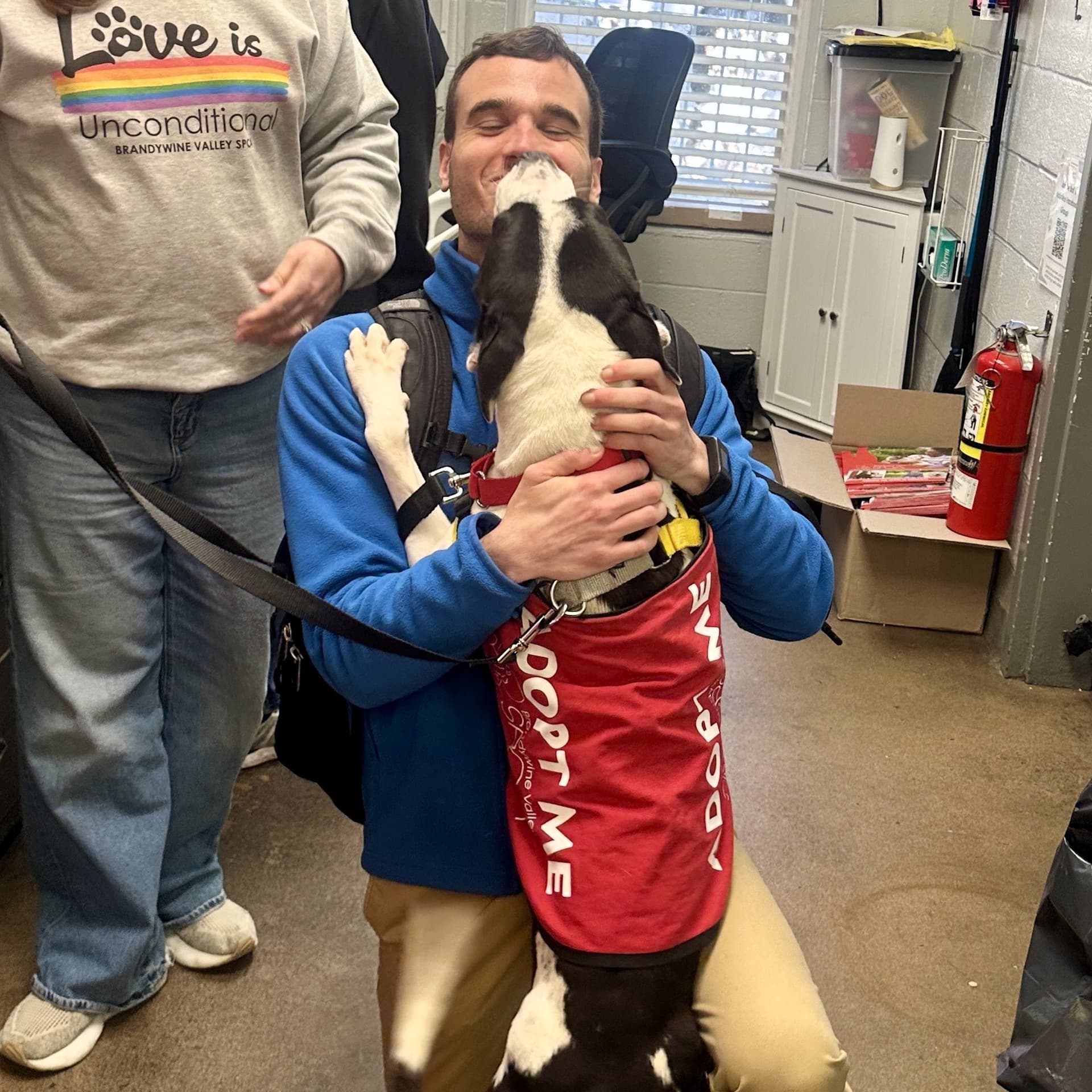
4:16Yeah. So I talked to a psychologist who said basically just spending like five minutes with a dog is good for you and the dog. It helps lower stress and anxiety, boost your mood, and it's also good for the dog. I wasn't surprised by that. I mean, anyone who has pet a dog, I think could tell you that they feel better after petting the dog. So Kyle decided to try it. He went to an animal shelter in Northeast D.C. I went in there mid-October, and they gave me a dog named Heihei, a two-year-old dog, black and white coat. And he basically, right when they brought him out from his cage, he just started licking all over my face.
5:01Right away, it was like, this is a great dog. And I was like so honored that Heihei trusted me like right from the start. Kyle told me he was really moved by this. Heihei was found on a street loose in Northeast Washington. So Heihei didn't have a micro trip and obviously nobody went to pick him up after he got to the shelter. So unfortunately dogs can't share their whole backstories. So I don't know everything, but that's what I know. Like, I know he was loose and, you know, that he went to the shelter and no one picked him up. So it made me think that, you know, he's probably had not a great backstory.
5:41Like, I guess a lot of shelter dogs, Heihei seems like he has reason not to trust people. So that made it even more meaningful when Heihei immediately put his trust into me. So Kyle and Heihei went to a nearby nature trail for a walk. At first, he seemed like a little confused. Like, he didn't know what was going on. But after about like an hour or two, he got, it seemed like he got pretty comfortable. Then about like two hours in, we walked for the Anacostia River. Like all of a sudden he got like really excited. So he like tried running into the river and he almost dragged me in. I feel like it really pulled my hamstrings like to hold myself back.
6:23And then, then he just like started jumping all over me, like kind of out of nowhere. and I was like a little confused like why he was so excited all of a sudden but then I was like I have to just go with the flow and trust that hey hey you know it's just trying to play and then he bit his leash and I was like what is he trying to do and I was like oh yeah he wants to play tug of war of his leash so we played tug of war for a few minutes and then eventually I sat against a fence and then he came over and then he just like put his head on my thigh and he closed his eyes. Was there any part of you that was tempted to keep Heihei?
7:02Definitely. It was really hard to take him back. He was so sweet throughout the whole time. You know, in those situations, you're just like weighing the pros and cons in your mind. I should mention here, Kyle is allergic to dogs. That has not stopped me from pressuring him to adopt one. He didn't have a reaction to Heihei, but they were outside the whole time, so he worried about what would happen if he brought him home. And there was another concern weighing on him. His personality is very different from mine, right? Like, I'm not sure if I'd prefer to have, like, a dog who is really outgoing or a dog who's, like, more like me, like, more, like, introverted and, like, you have to earn their trust.
7:42I don't know, I relate more to dogs who, like, are a little more hesitant at first and then, like, really love you, like, after they get to know you. And also, Heihei really enjoyed people and other dogs. So I was like, I don't know if Heihei is going to be happy like sitting alone the whole day while I'm at work. But I also kind of knew Heihei would get adopted. I was not very concerned that like someone else wouldn't want him. Like I could see someone just having the best time with Heihei in their house and Heihei having the best time with them. So sweet. Do you know if he's been adopted yet?
8:14Yeah, so actually, I checked my email after the story came out, and the shelter emailed me saying that HeHe had been adopted. So it happened pretty fast, and I was happy to see that. So even though Kyle didn't end up with a dog at the end of this, he feels like the experience did improve his mental health. And it changed his outlook. It changed my outlook a lot, and I think even to this day has changed my outlook a lot. I'm not very trusting. Like, I don't trust a lot of people. I don't think people have good intentions for the most part. But the fact that Heihei was just so trusting, despite whatever his backstory is, made me think differently about it.
8:57And I've thought about this a lot since I took him out. Like, if Heihei could trust us, then, like, why can't I? Since I took out Heihei, I've been thinking more that, you know, people are just doing their best and trying to be good. so I should give him more of a chance. Yeah, so he's really left like a lasting impact on me, which I was not expecting. That's so nice. Honestly, I kind of relate to Heihei. I feel like since I met you, I'm just like, be my friend Kyle. And you're like, I don't know. And I'm like, no, really, let's hang out. And you're like, okay, fine. Like, ugh. Yeah, I think that, I think you're probably right.
9:33I think that's probably how most of my relationships go where people are trying to learn more about me and get into my circle in my world. And I'm like kind of hesitant at first. And this has taught me that maybe I shouldn't be because, I mean, it's been two weeks now since I saw Heihei and it still has made a difference. Like he's still in my mind, the lessons he's taught me. So I hope that continues. I hope I continue to think about him for a while to be more trusting. Yeah, and if you ever feel like the lessons of Heihei are starting to fade, you can always go take out another dog. That's true.
10:11That was my colleague and hard-won friend, reporter Kyle Melnick. After the break, we'll hear from a psychologist who studies the bond between people and dogs. She explains why spending even a small amount of time with a dog is so darn good for us. We'll be right back.
10:36Some cases fade from headlines. Some never made it there to begin with. I'm Ashley Flowers, and on my podcast, The Deck, I tell you the stories of cold cases featured on playing cards distributed in prisons designed to spark new leads and bring long overdue justice. Because these stories deserve to be heard, and the loved ones of these victims still deserve answers. Are you ready to be dealt in? Listen to The Deck now, wherever you get your podcasts. Right now, during the President's Day sale, you can get a Washington Post premium subscription for just$3 every four weeks. And that includes three extra accounts to share with friends or family.
11:17After your first year, renews at$19 every four weeks. The Washington Post. Power. Perspective. Premium. Learn more at washingtonpost.com slash subscribe.
11:36I wanted to understand better what Kyle had experienced. So I called back a researcher that he had spoken to for his original story. Hi, my name is Dr. Keri Rodriguez. I am an assistant professor at the College of Veterinary Medicine at University of Arizona, where I lead a research group that's entirely focused on understanding our bond and relationships with companion animals, such as cats and dogs. That is the best job I've ever heard of. I hit the jackpot. I really have married my love of animals and research together. So tell me about some of the research you've done, just a few examples of some of the studies.
12:12Yeah, so we do a lot of research really quantifying the effect that animals have on our well-being. So from our pets to the therapy dogs that we interact with and hospitals or libraries to the service dogs that are trained for tasks that help disabilities, our research really focuses on quantifying the mental health and social health and physiological health benefits that interacting with animals has. So I spent a lot of time measuring things like cortisol and blood pressure and stress to really put numbers behind the stories. So putting strong science behind the way that interacting with a dog makes us feel good.
12:50And tell me, what is the effect on cortisol, blood pressure, stress levels, heart rate? What is the effect of hanging out with a dog? Yeah, what we find is that whether or not you know the dog, even a dog that you don't know, we have pretty immediate stress benefits. So just by sitting down with a dog and petting them and having that little five-minute relaxation break is really good for calming ourselves down. It's a form of mindfulness, just being in the moment, focusing on the dog. And what we know is that the dog really provides what we call, you know, unconditional love. They are just so excited to see you and get pet by you.
13:34And even that interaction with the therapy dog can lead to decreases in blood pressure, heart rate and cortisol and improved mood that can actually last for, you know, several hours beyond the interaction. It's even stronger when it's our own pet that we have a relationship with, where we know that positively interacting with our own dogs actually can lead to improvements in the hormone oxytocin, which is famously called, you know, the love hormone. It's really important in forming trust and bonds. And what we find is that when we gaze into the eyes of our pet dogs, not only does their oxytocin go up, but ours does too.
14:16So we know that that relationship with our own pets is really important, but that you can also get benefits from an animal that you don't know. So really, it's a special interaction. So I want to tell you about Kyle's experience. I don't know if you read his follow-up story, but he ended up actually taking a dog out himself. He describes himself as an introvert and a little bit of a cynic. I think it's the reporter in him. He's like skeptical until he reports it out. And so he has trouble trusting people. And he was saying that like after spending time with this really sweet trusting dog, he feels himself giving people the benefit of the doubt more.
14:55Yeah, that's great. Yeah, I think we have a lot to learn from shelter dogs. They're, you know, so loving so easily, even so some of them have experienced trauma in the past. And yeah, I think we have a lot to learn from the kindness and love of dogs.
15:14Maybe the recipe for a good life really is that simple. We should all be more like dogs. I'm Maggie Penman. I'm a reporter for The Optimist. If you want to hear more stories like this one on the weekend, please send me an email. You can reach the whole team at podcast at washpost.com or just me at maggie.penman at washpost.com. Today's episode was reported and produced by me and Kyle Melnick with help from Ted Muldoon, who also makes the show. It was edited by Alison Klein. If you want even more optimistic content, check out our newsletter. I'll put a link in our show notes where you can subscribe.
15:53Thank you for listening and have a great rest of your weekend.
16:14I'm Ashley Flowers, and on my podcast, The Deck, I tell you the stories of cold cases featured on playing cards distributed in prisons designed to spark new leads and bring long overdue justice. Because these stories deserve to be heard, and the loved ones of these victims still deserve answers. Are you ready to be dealt in? Listen to The Deck now, wherever you get your podcasts. Right now, during the President's Day sale, you can get a Washington Post premium subscription for just$3 every four weeks. And that includes three extra accounts to share with friends or family. After your first year, renews at$19 every four weeks.
16:55The Washington Post. Power. Perspective. Premium. Learn more at WashingtonPost.com slash subscribe.
From the publisher
On this weekend’s edition of The Optimist, reporter and self-proclaimed cynic Kyle Melnick goes on a journey with a dog. We’ll talk about what he learns, and the science of how dogs make us calmer, happier – and maybe even more trusting.
If you want more optimistic content on the weekends, let us know at podcasts@washpost.com and maggie.penman@washpost.com – and check out our newsletter.
Today’s show was produced and hosted by Maggie Penman and reported by Kyle Melnick. It was edited by Allison Klein and mixed by Ted Muldoon.
Subscribe to The Washington Post here.