
In short
Post Reports Episode Notes: How Thieves Pulled Off the Louvre Jewel Heist in Minutes
Podcast Overview Title: Post Reports Hosts: Martine Powers and Elahe Izadi Description: A daily podcast from The Washington Post providing unparalleled reporting, expert insight, and clear analysis on current events. New episodes are published weekdays around 5 p.m. Eastern time.
Episode Details Title: How thieves pulled off the Louvre jewel heist in minutes Date: October 21, 2023 Length: Approximately 30 minutes
Summary On a Sunday morning, thieves executed a brazen heist at the Louvre in Paris, stealing thousands of precious diamonds and gems from the museum in broad daylight. The incident left authorities and citizens outraged, raising significant concerns about museum security. Host Colby Itkowitz interviews Philip Kennicott, the Washington Post’s senior art and architecture critic, and a former senior investigator from the FBI National Art Crime Team to dissect the heist and its implications.
Key Discussions
The Heist Overview
- Timing and Location: The burglary occurred in the morning when visitors were present at the Louvre.
- Method of Entry: Thieves used a mechanical ladder to access a second-floor balcony and entered through a window into the Gallery of Apollo, one of the most ornate rooms in the museum.
- Execution: The thieves had specialized tools to quickly access display cases and used disguises resembling maintenance workers to blend in with the crowd.
Significance of the Stolen Items
- Items Stolen: The collection included jewels, tiaras, a crown, and necklaces made primarily in the first half of the 19th century, significant to the Napoleonic elite.
- Cultural Impact: The theft is seen as a loss to the people of France, as the jewels symbolize the wealth extracted from the monarchy during the revolution of 1789.
Reactions and Implications
- Public Outcry: There is significant outrage among the French public regarding museum security.
- Government Response: French officials, including the Justice Minister, expressed embarrassment and frustration over the incident, questioning the adequacy of the museum’s security measures.
Historical Context
- Previous Thefts at the Louvre: Notably, the Mona Lisa was stolen in 1911 but later recovered. The Louvre has a history of theft, including treasures stolen by Napoleon.
Expert Insights
- Philip Kennicott's Analysis:
- Highlighted the ease of the heist, contrasting it with Hollywood portrayals of complex thefts.
- Discussed the broader consequences of increased security measures in public spaces, which can limit public access to cultural treasures.
- Robert Whitman's Perspective:
- Emphasized that the real challenge for thieves is selling stolen items, noting that gems are easier to resell than paintings.
- Provided insights into the common outcomes of art heists and the likelihood of recovery.
Key Takeaways
- The Louvre heist underscores vulnerabilities in museum security, prompting discussions about accessibility and preservation of cultural heritage.
- The public's fascination with jewel heists often obscures the ethical implications of theft and ownership.
- The episode illustrates the intersection of art, crime, and societal values, raising questions about what is lost beyond the physical items.
Conclusion The episode ends with a call for listeners to engage with the podcast by submitting questions about living a more optimistic life, as part of the Post's ongoing exploration of positive narratives in current events.
---
Production Credits
- Produced by: Emma Talkoff, Rennie Sernofsky, Laura Benchoff, Zoe Cummings
- Edited by: Ariel Plotnik
- Mixed by: Sam Bair
- Thanks to: Jonathan Fischer, Steven Johnson
For further insights and daily updates, subscribe to The Washington Post.
Written by AI. May contain mistakes. Listen to the episode to check what was said.
Transcript
Automatic transcript. May contain errors.0:00Right now during the President's Day Sale, you can get a Washington Post premium subscription for just$3 every 4 weeks. And that includes three extra accounts to share with friends or family. After your first year, renews at$19 every four weeks. The Washington Post. Power. Perspective. Premium. Learn more at washingtonpost.com slash subscribe.
0:29On Sunday morning, the first visitors entered the Louvre in Paris. They were taking in the museum's thousands of masterpieces, like the Mona Lisa, in one gallery, home to exquisite crown jewels. Some people looked like they were there maybe to do some maintenance. They're wearing these yellow vests. Perhaps they're delivery people, perhaps they're construction workers. They're sort of anonymous in plain sight. It's the sort of thing that you wouldn't notice until suddenly everything is going really wrong. These were not museum employees. They were thieves pulling off a heist. Within minutes, they grabbed diamond and gem-encrusted treasures and fled.
1:12Two days later, the thieves are still at large. So I asked Philip Kennicott, the Post's senior art and architecture critic, about the question on all of our minds. How did they do it? It didn't take lasers and precise measurements and grappling hooks and all of these kind of Hollywood techniques to get into this gallery. It just took a little bit of force and a little bit of planning. From the newsroom of The Washington Post, this is Post Reports. I'm Kolbie Echowitz. It's Tuesday, October 21st. Today, how thieves managed to steal thousands of diamonds and gems from the most visited museum in the world in broad daylight.
1:55And we'll hear from a former FBI agent who says that pulling off an Ocean's Eleven-style heist is, in fact, easier than you might think. I mean, look, if you have the will and the desire and be fairly fearless, in other words, not worry about being caught, you can go anywhere and steal just about anything.
2:25Phil, thanks so much for joining me. It's my pleasure. So let's just start at the beginning. What happened at the Louvre on Sunday? So this is shocking and brazen. It's a theft during broad daylight at the most visited museum in the world, in the center of Paris, the Louvre. It's 9.30 in the morning, and there are actually people in the Louvre at the time, visitors. Thieves approach the museum on the riverside. They use a mechanical ladder to gain access to a second floor balcony and thus a window, leading into one of the most elaborate rooms in the entire Louvre, a 17th century room known as the Gallery of Apollo.
3:05This is one of the most ornate rooms in the Louvre, which was for a long time a royal palace before it was a museum. And in the 17th century, there's a fire in the Louvre, and this room is basically remade, it's redecorated. And the reason it's called the Gallery of Apollo is that they use mythological imagery from the story of Apollo to create a kind of metaphor for the king at the time, Louis XIV, the sun king, and Apollo is the sun god. So the room is very ornate. It's gilded from top to bottom. There are paintings on the walls, paintings in the ceilings. So it's a prototype or inspiration in a way of some very grand and maybe more famous spaces like the Hall of Mirrors at Versailles.
3:49The thieves gain access to this very elaborate gallery of Apollo. And then they have these specialized tools that let them get into the cases where the jewels are displayed. And they grab what they can carry. Maybe it's a sign of the haste that they're under. They actually drop one of the key pieces, which is a crown. That's been recovered, though somewhat damaged. It does seem that alarms go off, but it's not clear where and who hears them. In any case, they're not effective at deterring the theft. There are people in the room, and they're sort of shocked, and they flee the room. It was all very quick.
4:23It was over in a matter of minutes, and it seemed they were out the window and back at street level and on mopeds or street bikes with the jewels dissolving into the Paris landscape quite quickly.
4:38Do we know exactly what they made off with? So it's a collection of jewels, tiaras, a crown, necklaces encrusted with diamonds and other precious stones. These are made mainly in the first part of the 19th century. And they belong to kind of the Napoleonic elite and some of the other major political figures in the first half of the 19th century after the French Revolution. You know, you talked a little bit about the history of these jewels, of these gems from the time period. But like, what is the significance for France, for Paris, of these jewels? So the Louvre exists as a museum because France has a revolution in 1789 and they get rid of their king.
5:23And they take some of the wealth that was associated with the monarchy and some of the art. And they put it on display as possessions of the republic, of the people. And so this is a moment in which there's not just a political change, but a cultural change. And so this theft, although it sounds like a Hollywood caper and there's a lot of interest in it as a sort of narrative, it's a theft from the people of France. And the people of France have paid a dear price for these objects. You don't get jewelry like this without enormous concentrations of wealth, without an aristocracy. And the cost of that is paid by ordinary people.
5:59And many of these jewels date from a period of time when France is modernizing. But it's also concentrating wealth. And it's not a particularly democratic society. There are reforms that are happening, but there's a lot of cost. It's interesting. In a museum like the Louvre, most of the paintings and sculptures are, as we say, a document of barbarism. They exist because there are people who have the wealth to commission the best craftsmen, the best painters, the best sculptors to make them. But Jules really concentrate that paradox, the paradox that they wouldn't exist without a great deal of inequity and cruelty in society.
6:34And yet, there are these beautiful things that still give us pleasure, that still have meaning. Well, jewels are kind of the quintessence of that paradox. Yeah, yeah. I mean, could you even put a price on that? Is there a dollar amount that you could even assign to these jewels? There are so many complicating factors. You know, a painting, if you steal a very famous painting, it's very, very difficult to resell it. Because the value of the painting is the painting itself, the thing that represents its provenance. And so the Mona Lisa is priceless in part because you could never sell it. You can never legitimately sell it.
7:07The jewels are slightly different. They can be broken down. The metal can be melted down. So they do have actual value on the market. I think the safest thing to say is that they're priceless. But apparently today there was a Paris prosecutor that has come up with an estimate of about 88 million euros. That would be around 102 million U.S. dollars. But still, I think it's going to be really difficult to pin that down. There are just so many ways in which the price of something like this can fluctuate. So if you're going to break these jewels down, you know, recut them so they don't look like 19th century stones and you can resell them more easily, you're going to have to find somebody who can do that work and who's not going to talk a lot.
7:49And so that's actually going to maybe reduce the value that the thieves can get for them. So a lot of factors in play. How are people in Paris across France reacting to this? Yes, the French do seem to have opinions. And this is a period of, you know, pretty significant political turmoil in France. There is a, you know, affordability crisis in Paris in particular is extremely expensive. And a lot of people are being squeezed into this kind of precariat class. You know, oftentimes fairly educated, skilled workers who can't get sufficient employment or stable enough employment. France is in a particularly unstable period politically right now, like a lot of European countries, like a lot of democracies.
8:35They have a president who has been in power for quite some time and he is not popular. They're going through prime ministers like a hungry guy eating crepes at this point. They can't really get stability in the government. And so there's a lot of anger in France and a lot of disillusionment about the ability of the government to be functional. So there's a lot of discussion about it. Was the Louvre well enough guarded? Has it been well enough funded? Has it been sort of starved of the resources it needs to properly protect these things? French officials are obviously embarrassed and outraged by this.
9:09The French justice minister has said it puts a deplorable image of France to the public. and they're deeply concerned by how easily this seems to have taken place in the middle of Paris. He said, we failed. People were able to park furniture hoists in the middle of Paris, get people in it in several minutes to get priceless jewels. Has the Louvre said anything about how something like this could happen? Because I think that's another thing that has shocked people, is that a place like the Louvre that you would imagine would be so heavily protected, someone could somewhat easily, it seems, get inside and steal something and get away.
9:51Right. So the Louvre closed Sunday and Monday, and there was an investigation, an ongoing investigation. The French Ministry of Culture on Sunday put out a statement saying basically the guards had followed protocol that they put the thieves to flight and they protected the people in the gallery. And that's what we know so far. Phil, is this the first time that something has been stolen from the Louvre? No, it's not. I mean, there was a very famous, bizarre story. In 1911, there was an Italian guy who had actually worked at the Louvre for a while who stole the Mona Lisa. It wasn't exactly an unknown painting at the time, but that theft, you know, it shrouded it with a certain amount of mystery and romance.
10:34It was recovered a few years later. Wow, a few years later. A few years later, yes. The thief seems to be a kind of hapless figure. It wasn't ultimately a loss of the painting, but it also seemed to have something to do with nationalism and kind of Italian pride. It's worth pointing out that the Louvre, a lot of what's in there, is the result of theft, Napoleon's theft. I mean, he conquers much of Europe and he brings back treasures from Italy and stocks his galleries with it. So the Louvre is no stranger to theft.
11:09After the break, what might happen to these precious gems next? And what an expert in museum heist thinks about this latest caper? We'll be right back.
11:29Some cases fade from headlines. Some never made it there to begin with. I'm Ashley Flowers and on my podcast The Deck I tell you the stories of cold cases featured on playing cards distributed in prisons designed to spark new leads and bring long overdue justice. Because these stories deserve to be heard and the loved ones of these victims still deserve answers. Are you ready to be dealt in? Listen to The Deck now wherever you get your podcasts. Right now, during the President's Day sale, you can get a Washington Post premium subscription for just$3 every four weeks. And that includes three extra accounts to share with friends or family.
12:10After your first year, renews at$19 every four weeks. The Washington Post. Power. Perspective. Premium. Learn more at WashingtonPost.com slash subscribe.
12:29So, Phil, it's been two days since this heist. The thieves have not been caught. What has been happening? How big of a hunt is this in Paris? So there was a great deal of urgency the moment people became aware of what happened. Because the jewels can be broken down, they can be, you know, recut, the metal can be repurposed, melted down. So there's a real sense of urgency to get these things back. My sense of this being in international scope at this point. Yeah. They would want to get these to a place where there's a market for them, where there are skilled artisans who can perhaps do the work of recutting them.
13:06And that may not be in Paris. That may not be the place that they do it. So it's an enormous search right now. You know, Phil, I was so captivated by this story and so interested to understand, like, how a heist like this could happen and how one might investigate such a heist. So I actually called up an expert here in the United States. My name is Robert Whitman, and I'm the former senior investigator and founder of the FBI National Art Crime Team. During my career at the FBI, I recovered about$300 million worth of stolen art and cultural property in more than 20 countries. So I asked Whitman, you know, I wanted his professional opinion on this heist and on the chances that these thieves could get away with it.
13:49I thought, boy, that was an audacious theft. I thought these guys were real professionals. They must have really known what they were doing. But then the more I looked into it and the more I found out, I mean, the fact that they had dropped one of the crowns and damaged it. They left the ladder there that they had gone up on and they dropped their arc cutters. One of them lost his vest, the yellow construction vest that he was using as a disguise as a construction worker. That's not professional. I mean, dropping all this material, it's all forensic evidence. So this former FBI agent, you know, he thinks these guys are going to get caught pretty soon.
14:28So in other heists over the years at museums, what has happened? Do people usually get caught or are they usually more professional operators than this? So it's a very mixed story. One of the most famous and largest thefts from a museum was from the Isabella Stewart Gardner Museum in Boston. And those works have never been recovered and they include major paintings by Rembrandt. There was a case in Dresden, I think in 2019, where jewels were stolen, and a good portion of what was taken was recovered, but not all of it. So it's really mixed, and jewels, as people have noted, are easier to resell than paintings.
15:08Certainly a lot easier to resell than a Rembrandt painting that was famous for hanging in a museum for many, many years. You know, and I asked Mr. Whitman about this. the real art in an art heist, it isn't stealing it, it's selling it. Like you said, what are you going to do with it? In this case, there's only a couple of options. I mean, one option is that they would break it down into its parts and try to sell parts, which would be terrible. Okay. The second option would be that they sit tight and hopefully that the government of France offers a reward for recovery. The third option would be they throw it in a river so they don't want to get caught.
15:46And that's, again, that's a terrible option as well. I mean, Phil, other than like the Hollywood nature of a heist, why should people care that these jewels were stolen? There's so much going on in the world right now. I can imagine some people would say, OK, so what? There's a bunch of diamonds missing. What would you say to that? One of the losses that people don't take into account when we read these sort of romantic caper stories about a jewel theft is that there will be enormous pressure for the Louvre to make this gallery more secure, maybe to move those objects out of this gallery into someplace that can be better defended.
16:23And what happens is a loss of access. And we're kind of used to that, right? Every time there's a security breach of public building, Supreme Court or the Capitol, we get less access to it as the public. When that happens in a museum, you're working against the very purpose of a museum like the Louvre, which is about that democratic access, that public access to treasures. I mean, one of the reasons this story is so fascinating is that when you go into a museum, you encounter priceless object after priceless object. We're rarely in that kind of intimate proximity to things that just dwarf what any ordinary person will understand as wealth in their own lives.
17:05You know, jewel thefts, I think, are attractive to Hollywood because they change the lives of the people who do the stealing. It's like winning the lottery. You go from being, you know, an ordinary person to, you know, potentially enjoying enormous wealth, enormous status. Whether or not that actually happens for these thieves and one hopes that it doesn't, that's the romance of it. museums are meant to, in some ways, create a civilized, domesticated version of that romance. That wealth is ours for the moment that we're in those museums, in the hours we're among it. We own it, and in some ways we belong to it.
17:42So the loss is to our sense of the commons, that we can own these things, and we don't have to leave them in the hands of the people who will use them as forms of extravagance, as symbols of power, We'll use them to cow us in our desire to be fully enfranchised in public space.
18:04Phil, thank you so much for coming on the show. I really appreciate all your expertise. Thanks for having me. Phil Kennecott is the senior art and architecture critic for The Post. That's it for Post Reports. Thanks for listening. Today's show was produced by Emma Talkoff, with help from Rennie Sernofsky and Laura Benchoff. It was mixed by Sam Baer and edited by Ariel Plotnik. Thanks to editors Jonathan Fisher and Steven Johnson. Before we go, the last few weekends, we've been bringing you stories from our colleagues on The Optimist. This is the section here at The Post that covers the best of humanity, things that are going right in the world.
18:43We've had episodes about how to age gracefully, how to build community, how to be happier. And we've heard a lot of positive feedback from listeners about those episodes. you want more of those types of stories. So we're opening up the floor to you. Send us your questions about how to live a more optimistic life, and we'll see if we can get you an answer. These could be questions like, how do I learn to like people more? How do I get off my phone? Whatever you think might help you make the world a better place, ask us about it. Email us at podcasts at washpost.com. I'm Colby Echowitz. We'll be back tomorrow with more stories from The Washington Post.
19:51deserve to be heard, and the loved ones of these victims still deserve answers. Are you ready to be dealt in? Listen to The Deck now, wherever you get your podcasts. Right now, during the President's Day sale, you can get a Washington Post premium subscription for just$3 every four weeks. And that includes three extra accounts to share with friends or family. After your first year, renews at$19 every four weeks. The Washington Post. Power. Perspective. Premium. Learn more at washingtonpost.com slash subscribe.
From the publisher
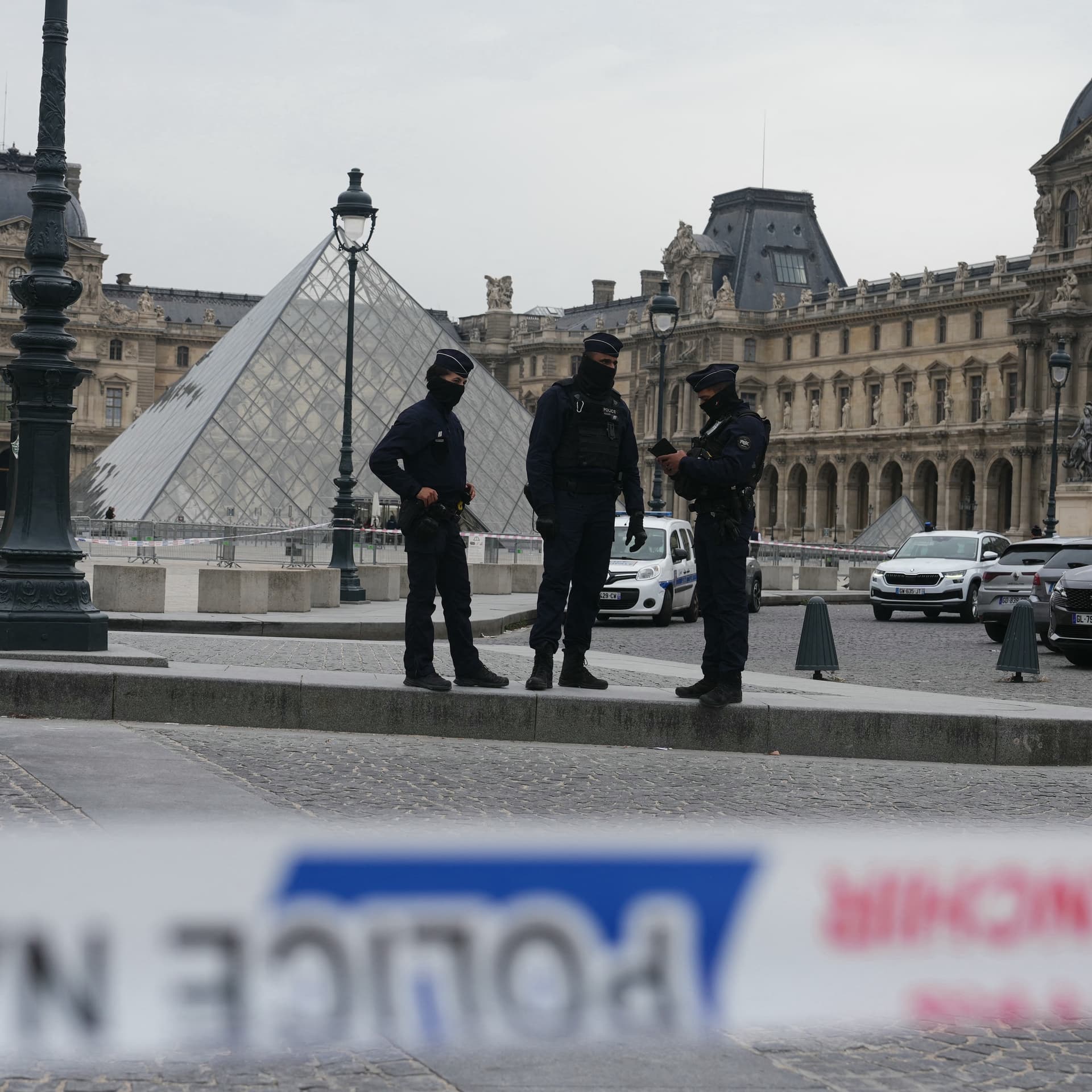
On Sunday, the Louvre museum in Paris was burgled in broad daylight. Thieves in disguises entered through the windows and used a glass cutter to access thousands of precious diamonds and gems. The thieves are still at large.
Across France, authorities and citizens alike are both outraged and captivated by the robbery. The incident has ignited questions about security and accountability at the museum.
Host Colby Itkowitz speaks with the Post’s senior art and architecture critic, Philip Kennicott, about how the thieves pulled off their brazen heist. We also hear from a former senior investigator and founder of the FBI National Art Crime Team about the reality of museum heists.
Today’s show was produced by Emma Talkoff with help from Rennie Svirnovskiy, Laura Benshoff and Zoe Cummings. It was edited by Ariel Plotnick and mixed by Sam Bair. Thanks to Jonathan Fischer and Steven Johnson
Subscribe to The Washington Post here.