
In short
How “super agers” thrive into their 80s and 90s—focused on behavior (exercise, social connection, purpose, optimism) more than genetics.
Guests
- Edna Jane “EJ” (90), Washington, D.C. neighbor; retired nurse (worked at Georgetown; helped start an ICU in Chicago; trained nurses in D.C.); volunteers at the Folger Shakespeare Library for 20 years; exercises 4–5x/week with a trainer twice weekly; renovated her own home; never married; active community member.
- Dr. Eric Topol, cardiologist and scientist at Scripps Research; researched super agers; wrote a book on them.
Key claims
Super agers are 85+ with no prior chronic age diseases; longevity is largely not explained by genes; they share optimistic (“sunny”) disposition, physical activity, education, and especially social engagement/avoiding isolation; purpose and volunteering are common.
Notable examples
EJ’s trapeze lessons at 80; her gym routine and weightlifting; her crowded 90th birthday party; volunteering at the Folger; remembering others’ names.
Written by AI. May contain mistakes. Listen to the episode to check what was said.
Chapters
Tap a time to open that second in VOE.J.'s Life and Secrets
2:42 to 6:15
Discover E.J.'s background, her approach to life, and her philosophy on aging.
“I was really drawn to EJ's story because she's not one of those one-in-a-million super athletes who is running marathons at 90.”
Research on Aging
6:15 to 7:10
Explore research findings on characteristics of those who thrive into old age.
“When I asked her for her advice for staying healthy and engaged, She said it's simple.”
Insights from Dr. Topol
7:15 to 11:39
Hear insights from Dr. Eric Topol about the importance of social engagement and purpose in aging.
“When it comes to the big questions, who you ask matters.”
Transcript
Automatic transcript. May contain errors.0:02If you walked down my block in Washington, D.C., right across from a school, you would definitely notice E.J. She's 90 years old. She drives a green Mini Cooper. She has a beautiful garden full of flowers. You can often see her outside working in her yard. Sometimes she's wearing this T-shirt that says, you don't stop lifting when you get old, you get old when you stop lifting. I can bench press 55 pounds and I can leg press 250. She never married. And sometimes I get smart ass and say, just lucky. But even though she lives alone, she never seems to be lonely. Last year, I went to EJ's 90th birthday party.
0:48It was at her house and it was kind of a rager. Like the first floor was so packed with people. You were standing shoulder to shoulder with everyone. She was sitting in her kitchen, surrounded by friends, telling stories, talking about how for her 80th birthday, 10 years earlier, she went to trapeze school. I kind of always wanted to do it. I thought it would be a very freedom of grabbing hold of that thing and swinging through the air. And I just think for birthdays like 80 and 90 are special. So I took lessons for about two, maybe two and a half months. It was fun, particularly falling. You're just falling through air and you know you're not going to get hurt.
1:33That's the beauty of it. You can't interact with someone like EJ and not just want to know how. I am 35 years old, and I am not half as brave or as extroverted or as adventurous as EJ is at 90. What is it that lets her keep thriving at 90 years old? How is it that she has so many friends? She's so involved in the community. She always remembers my dog's name and my daughter's name. Like, who is this woman? So I asked EJ if she would sit down for an interview to reveal some of her secrets about the ingredients for a good life, especially as we get older. I'm Maggie Penman. This is Post Reports Weekend.
2:20It's Saturday, September 20th. I used to work on this show. But now I'm a reporter for The Optimist, a section here at The Post where I write about the best of humanity and things that are going right in the world. Today, I'm taking you inside my reporting on super agers, like my neighbor EJ, and what research tells us about how we can all age better. I was really drawn to EJ's story because she's not one of those one-in-a-million super athletes who is running marathons at 90. She's just a regular person who also happens to be thriving into her old age. Okay, well, could I have you start by just introducing yourself, telling us who you are?
3:01I'm a 90-year-old woman who is enjoying her life. My name is Edna Jane, but I always introduce myself as EJ. I worked at Georgetown. There were three of us on the floor that went by signatures, DJ, BJ, and EJ. And we were all on at the same time. It drove us and everyone crazy. Before EJ retired, she was a nurse. I was all over the place. I was in San Francisco, Chicago, Philadelphia, Kentucky. My mother used to say she was going to get an address book just for me. I like to go around. But when I moved here, I moved to stay. I was tired of moving around. And I've never been sorry. So eventually she bought the house she now lives in, which she renovated herself.
3:57It was a total wreck, plaster hanging off. and someone had put brown paint over the entire house, including the floors. And I lived in it while I did it. I couldn't afford to live anyplace else. EJ didn't grow up with money. And there's a reminder of that right over her antique gas stove, this old metal pail. The aluminum bucket was my father's lunch bucket. He worked in the mines outside of Pittsburgh. My father went into the mines after he lost his business during the Depression. And with six children, he never got out. I was born into abstract poverty. We lived in a little frame house with no central heat and no air conditioning.
4:44And the pipes always froze in the winter. EJ wanted to go to college. And I knew my family couldn't afford to send me. So I went to nursing school, and I got a good education. EJ worked as a nurse for decades. She helped start an ICU in Chicago and trained nurses in Washington, D.C., and she retired 25 years ago, but she never slowed down. When I retired, I knew I wanted to do something other than just sit here. So EJ applied to volunteer at the Folger Shakespeare Library here in D.C. And I told them, you know, I like Shakespeare, but I'm not a buff. There are two or three plays I really like.
5:25I don't like the comedies. I like the histories and the tragedies. They let me in. And I did it for 20 years. It was great fun. EJ has always stayed intellectually engaged. But as you might have guessed from her weightlifting t-shirt, she's also a big believer in exercise. I can quote my brother who said, you think diet and exercise will cure anything. Well, I do. I go to the gym four or five times a week. I have a trainer twice a week. I like to exercise. No matter what I feel like, I come out of the gym feeling better. Yeah. And I like being there with all the people. I go places where there are a lot of people.
6:08EJ says that's a big part of what keeps her healthy. Not just working out, but being at the gym, around people. When I asked her for her advice for staying healthy and engaged, She said it's simple. Be active. And it turns out there's research that backs her up. After the break, I talked to a cardiologist who has been trying to identify what helps us thrive as we get older. We'll be right back.
6:44E.J. Truax:America's next chapter is being written right now. PMI-US has invested more than$1 billion expanding U.S. manufacturing, creating American jobs, and strengthening communities through advancing science-backed, smoke-free nicotine alternatives to help millions of legal-age, 21-plus adults move away from cigarettes. This is what being invested in America's future looks like today. Learn more at USPMI.com. When it comes to the big questions, who you ask matters. From breaking news to politics that impact your life to advice you can trust. Get answers you don't have to question with Ask the Post AI.
7:30Trained exclusively on post journalism with clear sourcing. And if we don't know the answer, we'll tell you. Ask the Post AI. Find it on WashingtonPost.com or in the app.
7:46Okay, could I start by having you introduce yourself and say your title, how we should introduce you? Okay, I'm Dr. Eric Topol. I'm a cardiologist and scientist at Scripps Research in La Jolla, California. Dr. Topol just published a book about super-agers. He spent years researching why and how some people can age better than others into their 80s and 90s. He identified 1 ,400 people like EJ who were thriving well into old age to try and figure out what they had in common. Yes, they had to be 85 plus with no prior chronic diseases, age-related diseases. So it was really hard to find them. It took seven years to find 1 ,400 people.
8:32They probably comprised well less than 1 % of people in their 80s. And it wasn't, of course, how long they lived. It was that they lived so healthily. One of the first surprises was it didn't seem like their longevity had anything to do with their genes. Their genes didn't reveal much. So sometimes it's the genes, but most of the time, the vast majority of the time, it has nothing to do with their DNA. They did have other things in common, though. They had a very sunday disposition. They're optimistic people. They were physically active. They tended to be educated more. But I think that's actually probably very hopeful information to a lot of people, because I think what can be discouraging sometimes is thinking like, oh, no, like, whatever my genes are, I'm stuck with it.
9:20And there's no getting out of it. For me, I have terrible family history. It was liberating. Maybe I won't follow in my parents' and my aunt and uncle's footsteps. I asked Dr. Topol to explain what he meant by sunny dispositions, because that seems like a surprising data point. There's a chapter in the book about mental health and how that tightly intertwined with physical health. The social isolation or social interaction thing is really important. We've seen such remarkable data as people get older. They tend to live in a cave. And humans, we're social animals. And we get a lot out of that interaction.
10:01So that's another thing that people should be working on, you know, not being so isolated and lonely, but rather striving for, you know, interactions with other people. And I told him this sounded a lot like my neighbor EJ. She's active. She has tons of friends. She volunteers. She tries new things. She's involved in her community. They have a purpose. They're doing all kinds of stuff. A lot of them volunteering, community service stuff. They're very active people. That is a common theme. And you don't find that in the DNA either. You know, that's a behavioral trait, which is mutable. You can certainly, you know, be more like that.
10:46E.J. doesn't think the story of her life is really all that interesting or unique. What's extraordinary about this? Nothing. It's just the way someone lives their life. People who sit around and don't do anything, I don't think they live that long. I asked EJ if there was another trapeze school in store for her. So are there any other things on your bucket list? Are there things you still want to do? Just to take good care of my gardens and to be nice to people. What I love about these goals, taking care of her garden and being nice to people, is that they sound modest, but they totally speak back to the research about how we can all thrive as we age.
11:33By staying involved, having a sense of purpose, and having a community. And I don't know if I will ever be brave enough to make it to trapeze school, but EJ has inspired me to start a garden.
11:51I'm Maggie Penman, and I'm going to be bringing you more stories like this one on the weekend. along with other members of the Optimist team. So please send us an email and let us know what you think. You can reach us at podcasts at washpost.com. You can find more hopeful and inspiring stories online and in our newsletter. We'll put a couple of links in our show notes. And as you heard Dr. Topol say, having a sunny disposition could make you live longer and stay healthier. So the Optimist is good for you, according to science. Today's episode was reported and produced by me with help from Ted Muldoon, who also mixed the show.
12:31Thank you to my editor, Alison Klein. Have a great rest of your weekend.
12:42When it comes to the big questions, who you ask matters. from breaking news to politics that impact your life to advice you can trust. Get answers you don't have to question with Ask the Post AI, trained exclusively on post journalism with clear sourcing. And if we don't know the answer, we'll tell you. Ask the Post AI. Find it on WashingtonPost.com or in the app.
From the publisher
It’s hard to age gracefully. Social isolation, physical immobility, mental decline — these are all problems that most people struggle with as they get older. But one group of people prove that it’s possible to thrive into your 80s and 90s. Researchers call them “super agers.” And one of them lives just down my block.
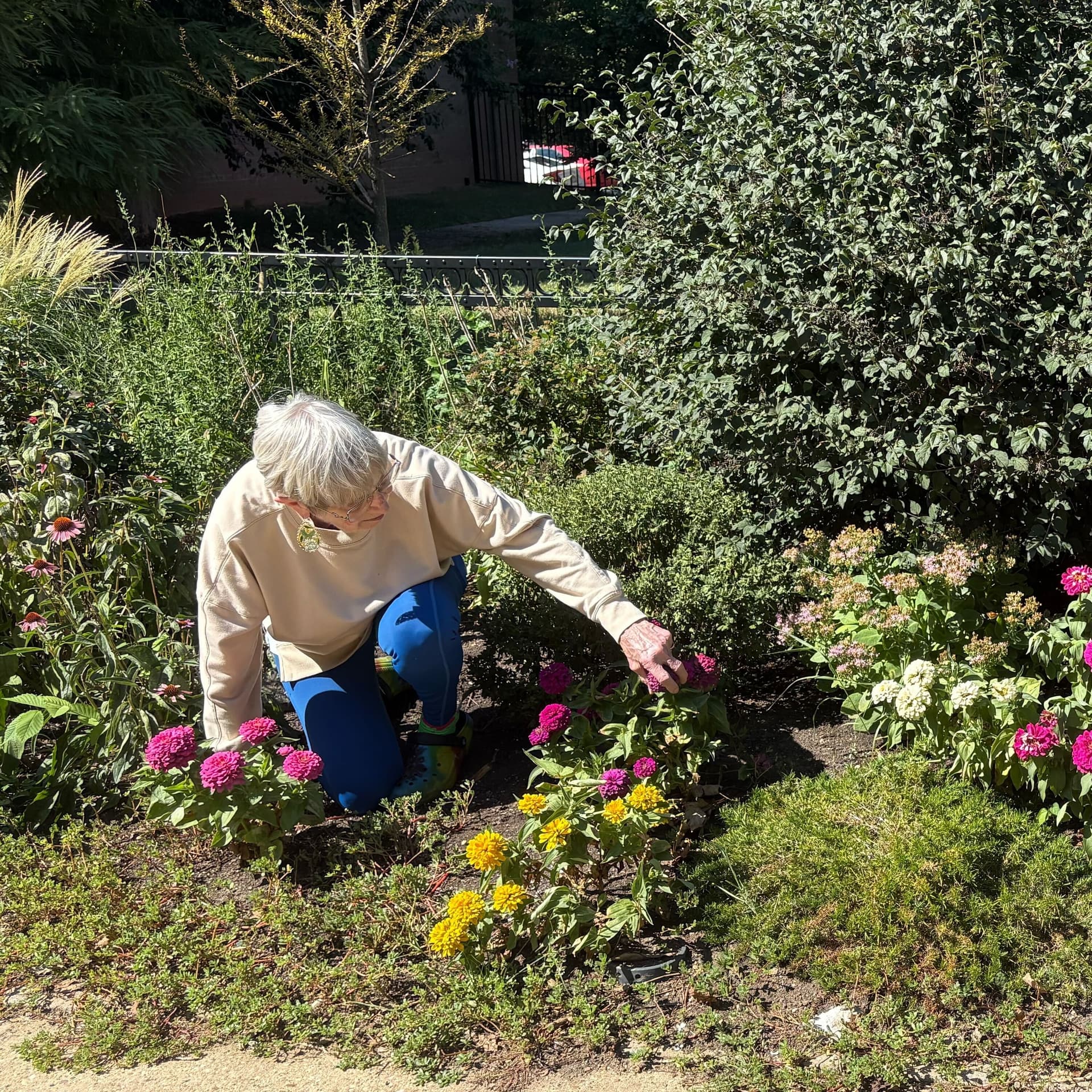
Ednajane Truax, who is known to friends and neighbors as “E.J.,” can often be found on her hands and knees in the dirt, working in the garden at the Sherwood Recreation Center in Northeast Washington. She also has an impressive garden of her own and helps out with other neighbors’ gardens. She works out several times a week, sometimes while wearing a shirt that says, “You don’t stop lifting when you get old — you get old when you stop lifting.” She can bench press 55 pounds and leg press 250.
Truax has never married — “just lucky, I guess,” she jokes when I ask her about that — but she has remained social her entire life. She volunteers, goes to the gym, throws parties, knows her neighbors and their children by name. Truax says her secret to thriving as she ages is simple: Be active.
It turns out that research backs her up.
If you’re looking for more surprising, delightful stories about the best of humanity, check out The Optimist from The Washington Post. We also have a newsletter: Subscribe to get stories from The Optimist in your inbox every Sunday morning.
Today’s show was produced by Maggie Penman with help from Ted Muldoon, who also mixed the show. The Optimist’s editor is Allison Klein.
If you liked hearing this story on “Post Reports,” send us an email at podcasts@washpost.com. You can email Maggie directly at maggie.penman@washpost.com.
Subscribe to The Washington Post here.