In short
Podcast Episode Summary: Post Reports - "How to make – and keep – friends"
Episode Overview In this episode of Post Reports, hosts Martine Powers and Elahe Izadi delve into the importance of friendship and the challenges of forming new connections as adults. The episode features Maggie Penman, who embarks on a journey to explore how to make and sustain friendships amidst the realities of busy adult lives.
Key Concepts
Importance of Friendship
- Friendship is essential for health and happiness, yet often deprioritized in adult life.
- Acknowledgment of a "loneliness epidemic," exacerbated by factors like the COVID-19 pandemic, highlighting the urgent need for social connections.
The Journey to Make Friends
- Maggie Penman attends an event called Real Roots, aimed at connecting strangers looking to form friendships.
- She shares her experiences and feelings of nervousness parallel to going on a first date.
Insights from Billy Baker
- Billy Baker, journalist and author of *We Need to Hang Out,* discusses his journey of understanding friendship's significance through journalism.
- Baker emphasizes that while society has not traditionally prioritized friendships, there is an increasing awareness of their benefits.
- He reflects on his struggles as a middle-aged man to maintain friendships and the realization that he needed to actively pursue connection.
Challenges in Adult Friendships
- The societal tendency to overlook friendships leads to isolation, particularly for busy adults.
- Baker’s exploration reveals that many people feel guilty about prioritizing friendships when they have family and work responsibilities.
Key Takeaways from Research
- Health Consequences of Loneliness: Numerous studies illustrate the negative impacts of loneliness on physical and mental health.
- The Need for Consistent Connection: Baker refers to the need for regular, predictable community interactions—termed "velvet hooks."
Practical Tips for Making Friends
- Prioritize Friendship: Recognize and schedule time for friendships as part of daily life.
- Engage in Activities: Use shared interests or activities (like sports) as a "velvet hook" to forge new connections.
- Be Vulnerable: Embrace vulnerability in expressing a desire to connect with others. Taking a small risk can lead to rewarding friendships.
Baker's Journey to Friendliness
- Baker shares anecdotes from his experiences, such as starting a regular gathering ("Wednesday nights") for men in his community, emphasizing the need for routine in cultivating friendships.
Maggie's Experience
- Maggie participates in an event designed to foster friendship, meeting diverse individuals and sharing her experiences of initial awkwardness, leading to meaningful conversations.
Conclusion
- The episode concludes with a reminder to prioritize friendship, urging listeners to reach out to someone they miss or would like to reconnect with.
- The hosts encourage vulnerability and open communication in seeking friendships, emphasizing the potential for rewarding connections.
Additional Resources
- Book Recommendation: *We Need to Hang Out: A Memoir of Making Friends* by Billy Baker.
- Newsletter: Subscribe to The Optimist newsletter for more uplifting stories.
---
This episode of Post Reports not only highlights the importance of friendship but also provides actionable advice on how to foster connections in a fast-paced adult life.
Written by AI. May contain mistakes. Listen to the episode to check what was said.
Chapters
Tap a time to open that second in VOThe Challenge of Adult Friendships
0:54 to 2:56
Discussing the difficulties of making friends as adults and the importance of social connections.
“I haven't been on a first date in, like, 10 years, but I kind of have that, like, about to go on a first date feeling.”
Billy Baker's Journey to Understanding Friendship
2:56 to 4:19
Billy Baker shares his personal experiences and insights on friendship and loneliness.
“There was even a Surgeon General advisory a couple of years ago declaring a loneliness epidemic and talking about all of the dangerous side effects of being isolated.”
Reconnecting and Building New Friendships
4:19 to 7:54
Exploring how to reconnect with old friends and make new ones in adulthood.
“I'm a reporter for The Optimist, the section here at The Post where we bring you good news.”
The Search for Connection
7:54 to 10:34
Billy discusses the need for new friendships and the realization of loneliness.
“where you kind of look around and you're like, wait a minute.”
The Science of Friendship
10:34 to 14:01
Delving into the psychological aspects of friendship and what makes it work.
“I had referenced these older guys that live in my town who have this thing they call Wednesday night.”
The Importance of Velvet Hooks in Friendship
14:01 to 14:27
Learn about the concept of 'velvet hooks' for maintaining friendships.
“I was like, that's the right term for that thing you need.”
Finding Velvet Hooks for Friendship
14:27 to 14:40
Billy shares practical approaches to creating and maintaining friendships.
Building Community and Regular Connections
14:40 to 16:39
Discover strategies for creating regular social gatherings to foster friendships.
“Eventually, Billy found some velvet hooks that worked for him.”
Finding Common Interests as Friendship Connectors
16:40 to 21:08
Explore how shared interests can act as a foundation for new friendships.
“And when I was first writing this book, every guy I knew who was a golfer was like, dude, just play golf.”
Vulnerability in Friendship Requests
21:09 to 22:08
Understand the role of vulnerability in expressing a desire for friendship.
“been thinking about you and I want to hang out more.”
Show all 11 chapters
Making the First Move in Friendship
22:11 to 24:16
Learn about the challenges and rewards of reaching out to make new friends.
“She writes for The Home You Own, a section here at The Post.”
Transcript
Automatic transcript. May contain errors.0:02Hey, it's Ella. Hey. On this holiday Monday, we've got a rerun of a great episode for you. and it comes with an idea for the start of the year. Making a new friend.
0:17I know that for a lot of us, myself included, maintaining friendships as an adult can be hard. We don't always prioritize it. And where do you even find new friends? Where do you go? What do you do? What do you talk to them about? How do you make the time? Wouldn't it be easier to just stay home? Well, it turns out that friendships are incredibly important for our health and happiness. So today, I'm going to turn things over to Maggie Penman. She's a reporter for The Optimist, and she has some advice on how to make and keep friends. Here's the show.
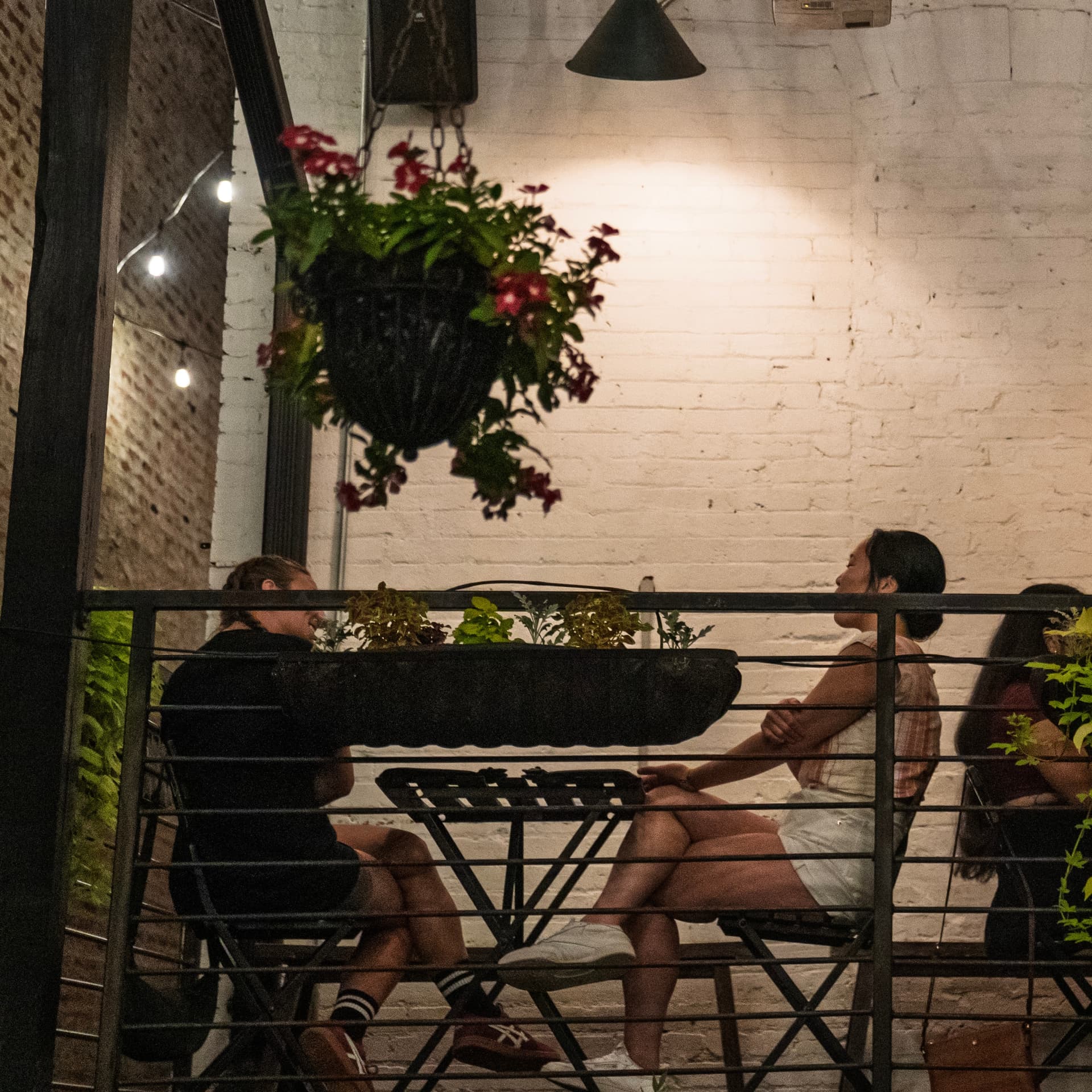
1:04okay i am walking up to this event for real roots um to meet a group of women who are looking to make friends and i'm feeling a little nervous on a recent thursday night in downtown Washington, D.C., I went to a bar to make new friends. I haven't been on a first date in, like, 10 years, but I kind of have that, like, about to go on a first date feeling. I actually don't think 10 years is even really long enough because I don't think I've tried to show up at a new place just to make friends, probably since the beginning of college. So, yeah, I was pretty nervous. So, I'm going to go inside. We'll see how it goes.
2:03Real Roots is an app that matches you with a group of new potential friends. In other words, basically strangers. And it's trying to solve this problem that a lot of people have. It's not just me. It's really hard to make new friends as an adult. There were a couple dozen women at this bar for the same reason I was. Yeah, so I'm someone who likes to try and push myself and try new things, and I also really enjoy meeting new people. I grew up with social anxiety, and now that I'm an adult, it's actually really hard to make new friends because I just work and sleep. I work from home, so pretty isolated.
2:39I have been for a little while. I've been here about a year. Making friends as a grown-up is hard.
2:50As you may have heard, we are not doing a very good job as a society of prioritizing friendship. There was even a Surgeon General advisory a couple of years ago declaring a loneliness epidemic and talking about all of the dangerous side effects of being isolated. A lot of experts say this was a problem even before COVID-era lockdowns made everything worse. COVID only exacerbated it, but also I think made people appreciate just how important friendship was in their lives. This is Billy Baker. He's a journalist and author of the book, We Need to Hang Out, a memoir of making friends. So I think, naively, optimistically, we are now in a golden age of friendship appreciation.
3:32People are acutely aware of how important it is. And for me, like getting involved in this and then working on and solving my own friendship problems was the greatest gift I've ever given myself.
3:48Perhaps naively, optimistically, I agree with Billy. So many of us have seen and experienced firsthand the negative consequences of isolation. And hopefully we understand now how good friendship is for us, how essential social connection is for our health and our well-being, as well as our happiness. But that doesn't make it any easier to make friends as an adult.
4:21I'm a reporter for The Optimist, the section here at The Post where we bring you good news. stories that bring you inspiration and a little bit of hope. And today, we are going to figure it out, how to make friends as an adult.
4:44For Billy Baker, this all started with an assignment from his editor at the Boston Globe. He wrote Billy an email that said, We have a story we think you'd be perfect for. And so I marched down to his office and said, lay it on me. And he looked at me and said, I want you to write an article about how middle-aged men have no friends. And I think initially I was offended. Billy had just turned 40 at the time. So first of all, he was like, who are you calling middle-aged? But secondly, Billy was like, wait, I have friends. I have a lot of friends, actually. Right? It really only took a short walk back to my desk in the newsroom to go through an inventory of people I think is my great friends.
5:30And it was like, I haven't seen that guy in a year. I haven't talked to him in forever. And by the time I sat down, it was like, you know what? I am perfect for this story because I'm so typical. So Billy wrote the story. He wrote about all the data and studies that say loneliness is terrible for us. all the things that get in the way of friendships, and why we have to prioritize them anyway. The story went viral. It went around the world. Like, before I knew it, I was the guy on NPR talking about male loneliness, which was not what I wanted to be when I grew up. But, you know, it was the right time.
6:11It was the beginning of what has become now a very public issue. This article ended up becoming his book. And as Billy said, taking this project on was the best thing he's ever done for himself. Because the thing about friendship is it's really good for you, but it's also just fun. It's the lowest of low-hanging fruit. It's not eating your broccoli and going to the gym every day, right? It's hanging out with the fellas and then apparently reaping all these wonderful mental and physical health rewards, which I struggle to put my finger on. I played in an indoor golf league last night with three guys.
6:48I mean, we told jokes. We made fun of each other. Apparently, I'm a healthier human this morning. Yeah. Well, tell me about some of that research. What did you learn as you were first writing this article and then later your book about like, why is friendship so important? Well, so the jumping off point for the article was about how negative the health consequences were if you don't have a robust friendship circle in your life. And for me, like loneliness kind of clears the room, right? Like no one really wants to talk about loneliness. I didn't really want to talk about loneliness. But friendship, I mean, you say that word and everybody lights up, right?
7:30Like you're going in your memory banks and remembering all these wonderful times you've had with your friends. So the article dealt with the negative in me kind of raising my hand and saying, I need to do something about this. when I was asked to write a book, I was like, I don't want to write a book about loneliness. I want to write a book about how we incorporate friendship into our lives. At the time, I just turned 40, which seems to be the age when it hits a lot of people where you kind of look around and you're like, wait a minute. I've been doing everything right in my life, but I don't have anyone that I'm actively hanging out with.
8:10So I want to pause on that point, actually, because I think a lot of it's myself included. I'm 35. I have a toddler and a full time job and a dog who needs to be walked. And I think a lot of us in these kind of like busy middle of the life times are like, of course I have friends. But then when you like really stop to think about it, you're like, wait, one of my best friends from high school still hasn't met my daughter because we haven't seen each other in that long. So like, I think part of the process you were going through is a process that many of us go through when we really stop to think about like, wait, when did we last like hang out with people just for fun?
8:50Yeah, I think your story is every story, right? We were never taught to prioritize friendship. And I think what I did, the gift I gave myself is to put friendship on the to-do list every day alongside eating well, taking care of the family, taking out the trash, all those things. Like it needs to be a part of our daily life if you really are going to reap the benefits. And having a toddler is no joke, right? Like that's a full-time job. It is no joke. but you need to make time for your friends and like you know so when I wrote the book I really went on this journey to try and figure out how to have a functional friend life and I made a mistake initially which is I thought that meant getting the band back together you know most people especially men if you ask them who your best friend is or your best friends they're going to go back in the past.
9:50They're going to reference people from high school or a sports team or college or whatever it might be. So I ran around like a maniac trying to get all these bands back together and it was fun. And I reconnected and our relationships were stronger than they'd been since that point when we became best friends. But the past is a nice place to visit, but you can't really live there. So I had to address a situation that I think many people find themselves And I don't live where I grew up anymore. You know, I had done the proverbial thing where we had our second kid and we moved to the suburbs. And I thought I was going to be broing out with the dads on the sideline.
10:30And, you know, there were a few I feel like I connected with. But at the end of the day, I became my sort of jumping off point for what I wanted was when I was writing the original article. I had referenced these older guys that live in my town who have this thing they call Wednesday night. And it's not even an event. It's a promise that every Wednesday night we'll get together and we'll do something, anything. And Wednesday nights would come around for me. And it was like, I have nobody, nobody to hang out with tonight. And you feel a little guilt in that because I have wonderful children, a wonderful wife, and all these things are going right.
11:11but that was missing. So I shifted my focus. The book really has kind of two cycles. The first half, I'm trying to get the bands back together. The second half is realization that like, I need to have friends where I am right now in my life. And I mean, there are a million jokes about being a man over 40 trying to make friends. Like there's this meme of Jesus at the Last Supper where it's like his greatest accomplishment was still having 12 friends in his 30s, right? And so I had to start a new band and it was silly. It was a little vulnerable. What I had to do is basically say to those men I knew from various quarters of my life in not these exact words, but the sentiment was correct.
11:59Like, I feel a spark when I'm around you, you know, like I light up a little when we're together, like we need to hang out. And what was the reaction that you got when you would say that to people? I will say that vulnerability for me was always rewarded. You know, it is a scientific fact. Going into the science of how friendship works is so fun and it's so evil in some ways. Like you learn all these things that are really human bonders. One is that we like people that we know like us. Like we are just simply like, yeah, it's that simple. The other is that one of the greatest bonding mechanisms ever created is mutual dislike of a third party.
12:46So complaining about like the soccer coach who coaches your kids team or yeah. Those are connectors, right? They feel a little naughty, but they're there. So I tried a million things and I tried to, because I was writing a book, figure out what is it? what is this thing that you need to make friendship work? And I had a stupid post-it note on my wall for a couple of years that said that thing. And I was trying to figure out what that was. And the closest thing I could think of to it was Velcro. But Velcro feels a little harsh, right? There's something, you know, it makes this violent noise when you take it apart.
13:28And then I started reading about Velcro. And Velcro was invented by the scientist who was walking through a field with his dog and wondering why his socks and his dog were covered in these burrs. And he looked at them under a microscope and he saw that they had little hooks. And so he created a synthetic version of that he called Velcro. And he named it using a portmanteau of the French words velour and crochet, which if you translate that literally means velvet hook. And that's that hit me. I was like, that's the right term for that thing you need. You need a velvet hook. You need some soft connector that's regular, that's on the schedule, that keeps you connected.
14:16You need a way to be friends with your friends.
14:22After the break, with Billy's coaching, I try to make a new friend. We'll be right back.
14:40Eventually, Billy found some velvet hooks that worked for him. Sometimes it was as simple as going up to the guy that he always saw at the gym and being like, hey, do you want to come to the gym together on purpose? Or in Billy's words, I would text him and be like, yo, bro, you want to throw some weights around? You know, whatever accordiness would get him in the door. Then he went on to start his own version of Wednesday nights to start to create a regular, predictable community where he lived, putting friendship on the to-do list every week. You know, it's so silly, but at the end of the day, I went from a guy that didn't have anything to do on a Wednesday night to now I've got a roster of different people.
15:24Ultimately, I tried to start a Wednesday night group of my own. That was the conclusion of the book and it was okay. It felt a little forced, you know, sitting around. First, we met in a barn, then we were hanging out around campfires and became different things. But that Wednesday night group still works, but in smaller groups. They're now sometimes hanging out without me. I'm like, whoa, I introduced you guys. The three of you are now doing this? I mean, it's working well. And I think that another cool thing about the science is thinking about the group size. So three people is what they call the laughter group.
16:07If you want to have a laugh, three is the right number. If you want to have a conversation, four is about the limit. And if you ever look around at a dinner party, people standing around chatting, when a group gets larger than four, it naturally breaks into smaller groups. There are these wonderful things that these creepy social scientists have determined by just watching us in the world, but they hold true. So, you know, smaller groups work better than bigger groups. Four is about your max level for a conversation. you and I spoke a few weeks ago and I confessed begrudgingly that I've become a golfer.
16:45And when I was first writing this book, every guy I knew who was a golfer was like, dude, just play golf. And I was like, no, it's more complicated than that. It's more nuanced. You're like, no, I need to do research into science. And they're like, just play golf. And you know what? They were right. Because if you look at what golf is, it's four guys, right? And most of the time, it's three guys laughing at what the other guy just did. You know, there's each hole has kind of this cycle of drama and mistakes. Everybody stinks at golf. Even good golfers stink at golf. It goes horribly most of the time.
17:25At this point in my conversation with Billy, senior producer Ted Muldoon interrupted my conversation from the control room and told me to wrap it up. So naturally, I started picking on him. So actually, well, I'm glad Ted just walked into the studio because he was asking me before this interview, he was like, so can you ask him like how I can learn to like, like people more and like find more people who I connect with? Because he's like, my problem is just like finding people who I vibe with? So what would you say to someone who has that problem? Perfect question. Ted, I would say you have things you were interested in, right?
18:04That's your velvet hook. Start with the velvet hook and then see who you spark with around it, right? A lot of people are in this situation where they move to a new city or whatever it is, they get divorced. They are literally friendless. You have to go to those places where you do this thing that you already like, you know, and then you're going to stand around talking about that thing you like. I mean, pickleball has changed senior friendship, right? Like they all go play pickleball for four hours a day. Is it pickleball they love or is it having this activity that they enjoy and finding others who also enjoy it and then they're off for coffee, you know?
18:43So I think, you know, if you have no friends, you start with an activity and connect that way. If you have someone you'd like to be friends with, you need to find the activity that will be your velvet hook. Okay, good advice. And then I think another thing a lot of people struggle with is being vulnerable and admitting like, I want to make more friends or, hey, I really noticed a spark with you. Like maybe we could be friends. Like, how do you go about getting over your own fear of rejection and making that ask? I mean, you don't get over it, right? You take two seconds of courage. And I mean, in my experience, it's always worked, but you are fully justified in thinking this is not going to work.
19:30This is the most awkward thing I've ever done in my entire life. But, you know, I mean, work is a classic thing, right? Like you have work friends and people tend to shelve those in a place where it's like not more than that. Yet you might spend more time with them than you do with your own children, with your spouse, whatever it might be. So it's okay. There are accidents of proximity, but that's also how most friendships start, right? Is there just like a piece of advice you want to leave people with if they really want to prioritize friendship? I mean, I think that's the advice. Just prioritize friendship.
20:06You know, it has to go on the schedule each day along with all the other stuff you need to do. And it can be the most fun part of your day. And I will say that, you know, I often get has to be on podcasts like this, like I'm some friendship expert. I'm not. Everybody is, right? You know how it works. You know what works. You know the people you want to be friends with. You know the people you feel a spark towards. Just make that little move and you will be rewarded. It will be a gift you've given yourself and it's the easiest one. And, you know, if I used to do the thing where I'd like ask people to close their eyes and picture one person they missed and wish shade, hung out with more.
20:48And like everyone had someone, it came right away. So I would say that to the listeners, like if you close your eyes and think, who is it I'd like to see more or hang out with more. And then you pick up the phone and you call them and say that, I'll bet you magic will happen. Yeah. And everyone wants to hear that, right? Everyone wants to hear like, hey, I've been thinking about you and I want to hang out more. Right. Maggie Penman, if I were to put you through that experiment? Is there someone that comes to mind? There is actually. I think, honestly, the person who I'm thinking of is a colleague who I just adore.
21:23And every time I talk to her, I'm like, you are the most fun person I've ever talked to. But I have not made the move or been like, hey, can we like be friends outside of work? So I think I might try. Might try? I think I'm going to do it. I'm going to do it. I think you have homework. Okay. Is this person in the building right now? Yes. Maggie. I know, I know. I can do it. I'm like blushing just thinking about it. I'm going to text you in a couple hours if you fail this assignment. Okay, I'll let you know. I'm going to go make a friend and I'll get back to you.
22:02Billy Baker is a journalist and author of We Need to Hang Out. It's a great book. I'll include a link in our show notes if you want to check it out. After this interview, I reached out to the co-worker I was thinking of, the one who I want to be my real friend, not just my work friend. Her name is Rachel Kersias. She writes for The Home You Own, a section here at The Post. And I did something that felt very vulnerable. Yeah. Okay, wait. So why are we here? Yeah. What's going on? Okay. So, okay. So the reason I called you into the studio this morning is... You're fired. We're trying this new thing.
22:43It's a reality TV show where we fire people on now. Basically, I'm doing an episode about friendship. Oh, I'm getting like nervous. I'm doing an episode about friendship. And I talked to this guy who wrote a book about how to make friends. and at the end of it he was like close your eyes and picture a person who you wish you were better friends with and I thought of you oh my god now I have chills so um so I just wanted to say um Rachel will you be my friend yes it was really cute because like he realized he just needed to be more vulnerable it is I think in some ways more vulnerable than like dating or something like that Because with dating, there are a lot of reasons why it's like, oh, we're looking for different things.
23:31I'm monogamous and I already have a partner. Whereas for friendship, the only reason you would say no is because it's like, I just don't feel that vibe. You know what I mean? Yes, totally. So it is in many ways more vulnerable. I think so, too. Okay, well, I think this is the beginning of a beautiful friendship. Oh, my God, this is so fun. Yeah. And also now we have— Best work meeting ever. Right? I know. Well, thanks for coming. Thanks for being game. I love how I literally messaged you being like, can you come into the studio for mysterious reasons? and you're like, obviously. Yeah, that sounds great.
23:57I love a mystery. Yeah.
24:02So caveat here, not everyone is as easy to talk to as Rachel Curzius. But the thing about being vulnerable is it does work. The event that I went to at that bar to try to make friends, I'll admit it was a little awkward at first, but everyone knew we were all there to make connections. I ended up having some really great conversations and meeting people I never would have met otherwise. a professional ballroom dancer, a nurse who works with patients who have dementia, an aid worker who travels for work to places like Sudan. I'm not sure yet how many lasting friendships will come out of it, but I believe that Billy's right.
Read the full transcript
24:39If you keep putting yourself out there and putting friendship on the to-do list near the top, eventually something will click. I'm Maggie Penman, and I'm here most Saturdays bringing you optimistic stories to cleanse your feed. If you want more content like this, subscribe to our newsletter. And if you think there should be an optimist podcast, email me so I can forward it to my boss. My email is maggie.penman at washpost.com. Today's episode was reported and produced by me with help from my friend, Ted Muldoon. He also mixed the show. My editor is Alison Klein. That's it for today. Call your friend or make a new one and have a great rest of your weekend.
25:23Thank you.
From the publisher
Friendship is vital for our health and happiness, but we don’t always prioritize it. The Optimist’s Maggie Penman goes on a journey to make new friends and learn why so many of us are craving connection.
Today’s show was produced by Maggie Penman, with help from Ted Muldoon, who also mixed the show. It was edited by Allison Klein.
For more stories from The Optimist, subscribe to our newsletter. If you want to hear more stories like this on “Post Reports,” send Maggie an email at maggie.penman@washpost.com.
If you want to check out Billy Baker's book, it's called “We Need to Hang Out: A Memoir of Making Friends.”
Subscribe to The Washington Post here.