 Ask ChatGPT

The episode is about a pivotal CDC Advisory Committee on Immunization Practices (ACIP) meeting in Atlanta and how HHS Secretary Robert F. Kennedy Jr. is reshaping U.S. vaccine policy. It claims the committee’s membership was overhauled after RFK Jr. fired all 17 prior members in June and handpicked new ones, including vaccine skeptics, raising fears the process will no longer be evidence-based. Notable examples discussed: a surprise plan to review the entire childhood immunization schedule (linked by critics to RFK Jr.’s long-running autism claims), and a flu-shot vote where the panel declined to recommend thimerosal-containing vaccines after an anti-thimerosal presenter (Lynn Redwood), despite CDC/FDA/WHO and other medical societies saying thimerosal is safe.
Lena Sun and Lauren Weber, veteran health reporters at The Washington Post.
Written by AI. May contain mistakes.
Exploration of RFK Jr.'s overhaul of the ACIP committee and implications.
“has overhauled this committee that influences everything from what's in vaccines to whether insurance will pay for them.”
Discussion on the qualifications and backgrounds of the newly appointed panel members.
“And, of course, again, you know, Robert F.”
An overview of how the recent ACIP meeting was conducted unusually compared to past meetings.
“The new members don't have that level of depth of experience of vaccine expertise, and it did show during the meeting.”
Insight into the implications of reviewing the childhood immunization schedule.
“the agenda shows up where there's stuff that was not supposed to be discussed on the agenda, including presentations that nobody has even seen before.”
Analysis of the rise of alternative vaccine guidelines and their effects on public health.
“And he has said that he wants to reevaluate the childhood vaccination schedule because he's falsely linked it to autism.”
Discussion on the skepticism surrounding COVID vaccine recommendations at the panel meeting.
“So just to let you know how deeply embedded ACIP recommendations are in the framework of the United States, there are over 600 state laws or regulations that reference ACIP.”
Discussion on skepticism regarding the COVID vaccine and its implications.
“They asked a lot of questions about the COVID vaccine that would seem to indicate a lot of skepticism toward it.”
Overview of the panel's discussions about flu vaccines and decision-making.
“and on the record in the Washington Post app or at WashingtonPost.com slash games.”
Insights into flu shot recommendations and concerns over thimerosal.
“regarding childhood vaccines or what they didn't talk about when it came to the COVID shot.”
Discussion on thimerosal safety concerns and historical context.
“Then it comes to this panel, and this panel decides who we recommend to get the flu shot.”
Exploration of the panel's decision regarding thimerosal in vaccines.
“After a critical appraisal of this issue almost 25 years ago, the prestigious Institute of Medicine made this same recommendation.”
Medical experts express concerns about the direction of vaccine policies.
“And then they also did things or had conversations that seem to be aligned with what typically happens at these gatherings.”
Discussion on potential impacts to the childhood vaccination schedule.
“and the panel voted on this one presentation that was presented by an outside presenter.”
Analyzing RFK Jr.'s influence on reshaping vaccine policy in the U.S.
“So when you send your kid to kindergarten, you know that they are protected.”

Get the gist, explore an idea or ask about something said.
 Claude
On Post Reports, what are the key points of this episode?
Searching your listeningAutomatic transcript. May contain errors.
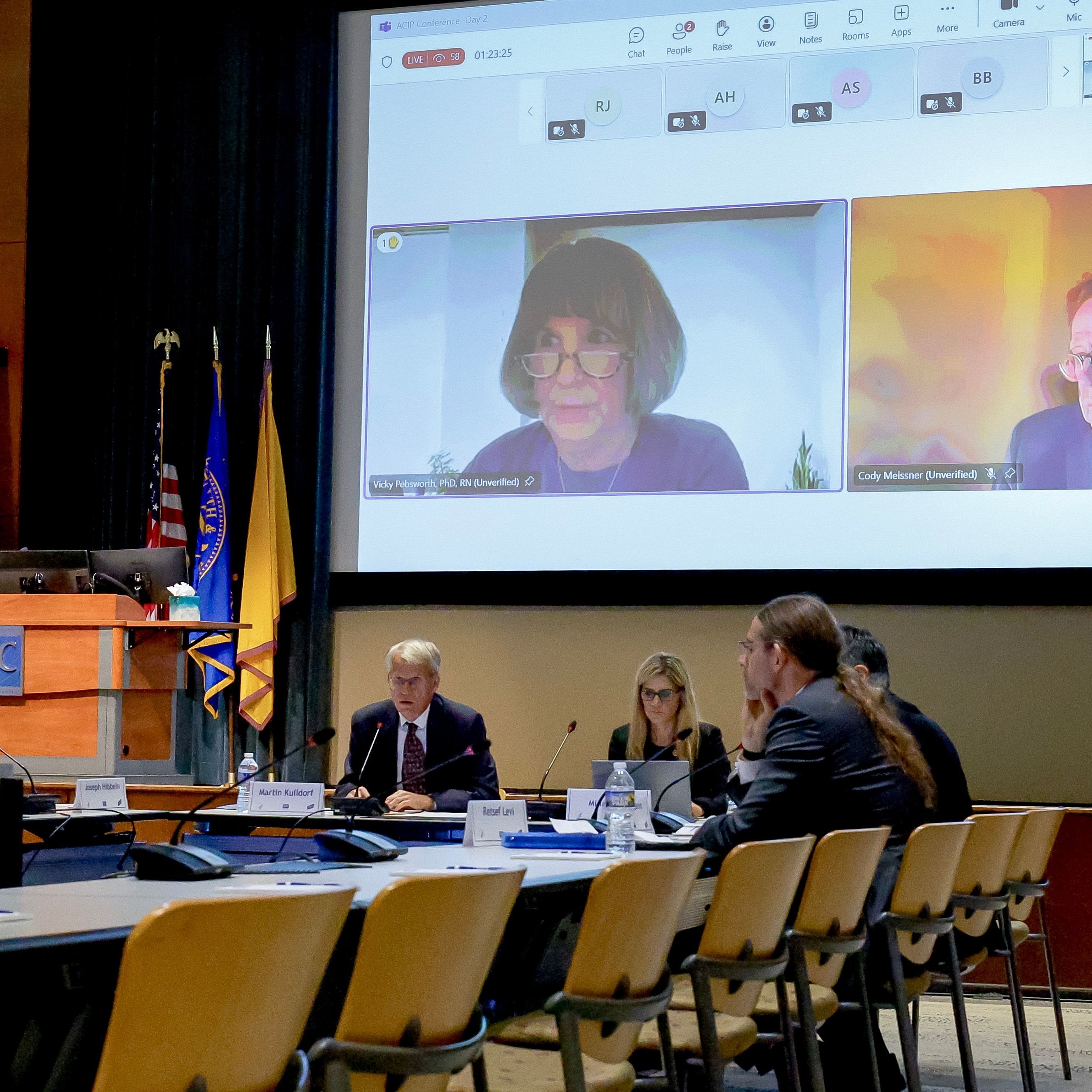
0:02Good morning. I'm pleased to call today's ACIP meeting to order. I wish you all welcome. This was the beginning of a pivotal meeting in Atlanta last week. Seven people gathered inside a conference room in a CDC building to make decisions that could impact everyone in the country. Secretary Kennedy has given this committee a clear mandate to use evidence-based medicine when making vaccine recommendations. And that is what we will do. They were members of the Advisory Committee on Immunization Practices. Every year, they gather to discuss everything about vaccines, including who should get them and when.
0:47The group then sends its recommendations to the CDC, the Centers for Disease Control and Prevention. This year, two of the Post's veteran health reporters were inside of the room. So it's Lauren Weber. And Lena Sun from The Washington Post. And we're coming to you live from CDC's campus. On the beautiful campus in Atlanta, Georgia. It's pretty hot here, though. We are covering the meeting of the newly appointed CDC vaccine advisory panel. Normally, this is a pretty dull affair. Days of presentations on disease studies and cost-benefit analyses. But not this year. To some, this year's meeting was a five-alarm fire.
1:36That's in part because of who is on this panel and how they got there. They're all brand new to the job. Some of them have voiced skepticism of vaccines. And Health and Human Services Secretary Robert F. Kennedy Jr. handpicked every member. That worries a lot of experts in the public health world. And it's clear that the new members are trying to raise doubts and sow skepticism about the validity of vaccine safety and particularly the safety of the coronavirus vaccine. From the newsroom of The Washington Post, this is Post Reports. I'm Elajeh Izadi. It's Tuesday, July 1st. Federal vaccine policy has long been stable, bipartisan, and grounded in settled science.
2:25But that seems to be changing. RFK Jr. has overhauled this committee that influences everything from what's in vaccines to whether insurance will pay for them. So today, Lena and Lauren take us behind the scenes in Atlanta to find out what the future of American vaccines under RFK Jr. could look like.
2:51Lena and Lauren, hello. Hi. Hello, hello. Thank you both so much for joining me in the studio today. We're so glad to be here in this slightly warm studio. It's a little toasty, but that was what Atlanta was like. It was much hotter in Atlanta. Well, I do want to talk to you both about this meeting that you went to. But first of all, Lena, I had never heard of this vaccine panel before. First of all, what is their job? Most people have never heard of this panel before, the Advisory Committee on Immunization Practices. It's a mouthful. It's also known as ACIP or ACIP. They're the vaccine advisors to the CDC, Centers for Disease Control and Prevention.
3:32And they decide, based on science and data, how Americans should get their vaccines, who should get them, when they should get them. And what they decide triggers so many things, what schools require for entry, whether insurance will cover this. And what they decide also affects this program that covers half the children in the United States. Those are the kids who are underinsured or uninsured and get these vaccines for free. Okay, so they make these recommendations to the CDC. Once they make them, does the CDC just accept them? Is that the final word? They make these recommendations to the CDC director.
4:10Right now, we don't have a CDC director. So then it goes to the next higher level authority, which just happens to be RFK Jr., our health secretary. And so, Lauren, what has happened with this panel since RFK Jr. was confirmed as health and human services secretary back in February? Well, it's been pretty unprecedented. In June, he actually fired all 17 members that were on the panel and handpicked eight new members to serve on this panel. It's important to note that actually of the eight that ended up taking the call, only seven ended up at the meeting at the end of June. OK. One withdrew due to what appears to be a financial conflict before the meeting began.
4:51The folks that he picked had a lot of public health experts up in arms because he picked a few folks who are considered vaccine skeptics. And, of course, again, you know, Robert F. Kennedy Jr., as we've talked about on this podcast, is an anti-vaccine activist. He, for years, has disparaged vaccines in many different shapes and forms. And so public health officials and folks that are medical experts were really concerned going into this meeting about what this could mean. And what did RFK Jr. say about why he fired the previous members? So when RFK announced his decision, he said that he wanted to get rid of them because they were corrupted by industry and that they always rubber stamped everything that was recommended to them.
5:34That is not quite true. The conflict of interest that each of these members declares, they do it before each vote. And this committee, this panel, does not rubber stamp every vaccine. There are several that they have not approved. But the important thing to know is that the process by which people are nominated to this panel normally takes months. Somebody nominates you. You have to fill out all these forms. You have to show your expertise that gets vetted all the way. It takes months to get approved in the paperwork. He appointed these members two days after he fired everybody else. The former members had a range of expertise on vaccinology, immunology, pediatrics, wide variety of expertise because that's what's required to make a decision on vaccines.
6:21The new members don't have that level of depth of experience of vaccine expertise, and it did show during the meeting. You know, and I would add that the thing that a lot of them had in common is that they are considered contrarians, which is something that RFK Jr. is considered and that many members of the health officials of the United States are now considered contrarians. And you really saw that reflected at the meeting this week. Wow. Okay. So you both have described what happened leading up to this meeting last week. Now I want to talk about what happened at the meeting. What was it like?
6:56This meeting was abnormal in many ways. not just how the members were appointed or who they are and what their backgrounds are, but also by the way the meeting progressed.
7:10Normally, before they take a vote on anything, or normally before anything even gets on the agenda, that is worked out weeks in advance. There are CDC groups of experts who are looking at the data and deciding to make a recommendation. Before they even get to a recommendation for a vaccine, they're looking to see, well, how bad is the disease? how many people would this affect? What are the side effects? And what is the cost-benefit analysis for if we decide to make a recommendation that people should get this shot? That takes months behind the scene. The new panel comes in, and boom, the agenda shows up where there's stuff that was not supposed to be discussed on the agenda, including presentations that nobody has even seen before.
7:51For example, the idea that they're going to review the entire childhood immunization schedule.
8:00Okay, Lauren, talk to me about that. What did they talk about when it came to the child immunization schedule? And first of all, what is the child immunization schedule? Yeah, so the childhood immunization schedule is really what undergirds all of your first appointments with the pediatrician as a child. It's when you go to get your vaccines against the measles, against various other diseases. Right now, the vaccines that are listed in the schedule are also the vaccines that many states require for school entry. What are some of those? Measles, mumps, and rubella, polio, DTaP, the pertussis, whooping cough.
8:35Most vaccines tend to be given at two, four, and six months because that's when they are seen to be most effective for the kid and when you are most vulnerable to these diseases. And they announced that they're going to take a look at all of those, the order that you get them, the number that you get, and so on. And what was really alarming to public health experts that Lena and I have spoken to is that this has been a talking point of Robert F. Kennedy Jr.'s for years. And he has said that he wants to reevaluate the childhood vaccination schedule because he's falsely linked it to autism. There's many scientific studies that show there is no link between autism and vaccines.
9:12We don't really know what's going to happen. They said that they want to review the immunization schedule, and that could take many forms. It sounds like for now, we don't know what's going to happen with the vaccine schedule for children. That could change. It could not change. But let's say it were to change because I know there's a lot of people paying very close attention and the experts you spoke with. If it were to change, is there anything parents could do if they wanted to stick to current vaccine recommendations? So it's interesting. We've seen in response to really a lot of medical associations not having a lot of faith in ACIP that there's almost a rival public health infrastructure being set up.
9:52The American Academy of Pediatrics has said they will release their own vaccine guidelines. So depending on how this changes, that could come in conflict with how the government's guidelines turn out. So you could see some parents deciding to turn to them instead of the CDC guidelines, depending on what happens with ASIP. Yeah, but then will insurance pay for it? Like if I had a kid, will I be able to go to the pharmacy and get them vaccinated? I just wonder what are the consequences of a rival system? Like what does that introduce? So you have many medical groups, public health associations, insurers, pharmacies, vaccine manufacturers, all talking about what's a way to make sure that Americans can get vaccinated.
10:37And the insurers have already signaled that they would continue to cover vaccines on a voluntary basis if they, for example, follow the guidelines of the AAP, American Academy of Pediatrics. I see. And I just want to add, it's not like insurers are doing this out of the kindness of their heart. I mean, I think the reason that insurers would be incentivized to do this is it's a lot cheaper to vaccinate someone and prevent an infectious disease, which could result in hospitalization or death, to prevent some of the diseases that we no longer see on an everyday basis but used to really rack this country.
11:11Well, it is pretty remarkable that there could be a sort of parallel system being set up where insurers and other institutions in the medical system are looking to rather than the governmental institutions that have long set the standard. And it just raises these questions about where are people going to turn to and then also the availability in the future. So just to let you know how deeply embedded ACIP recommendations are in the framework of the United States, there are over 600 state laws or regulations that reference ACIP. So it's not just schools and, you know, hospitals and health care workers, whether pharmacies can administer the shots.
11:52Some states have actually changed the language in their laws to say, you know what, you don't have to follow only ACIP. You can include other medical groups. I think what we're looking at, though, is you're starting to see potential cracks in the public health system and a version of America where you have red state, blue state when it comes to infectious disease. And disease doesn't recognize state borders. It does not. And so there are a lot of public health experts that are just very concerned that even with these potential alternate guidelines that you could see kind of fracturing along political or state lines.
12:27So let's go back to what else was discussed at this panel meeting that you both went to. Did they talk about COVID and the COVID vaccines? So COVID vaccines are, of course, the most politicized of all the vaccines. At this meeting, they were supposed to make a recommendation who should get the COVID vaccine for the upcoming fall season because COVID has become like every other respiratory viral disease. But back in May, RFK Jr. had already unilaterally bypassed this panel and said, you know what, I'm going to decide who can get vaccinated with the COVID vaccine. He did it in a video on X. I believe it was less than a minute.
13:08I couldn't be more pleased to announce that as of today, the COVID vaccine for healthy children and healthy pregnant women has been removed from the CDC recommended immunization schedule. The CDC then changed their guidance. So instead of telling parents you should get your child vaccinated for COVID, they said parents should talk to their child's doctor about whether or not they should get a COVID vaccine. usually this panel will make a recommendation for the fall and say here's who should be getting the shot for the 2025-2026 season we haven't had that yet that's probably going to come later this year and so the question in a lot of people's minds is what's going to happen in the fall for my kids and the covid shot and the answer is we don't really know right now did they talk about at all give any indication at this meeting where they might head on the COVID vaccine?
14:03They asked a lot of questions about the COVID vaccine that would seem to indicate a lot of skepticism toward it. So, I mean, I think we, you know, it remains to be seen how they could come down on it in the fall. But let's all remember that Kennedy himself has falsely called the COVID vaccine the, quote, deadliest ever made. So, you know, considering that background, some of the questions were asked at the meeting and they were all picked by him, I do think there is some question of whether or not it will continue to be recommended.
14:32So the data that was presented shows the continued benefit of COVID vaccination. They did not really respond to that in any way that would signal what they're going to do. But the presentations were actually very thorough, very good, very science-based and evidence-based. And that was not true for the rest of the presentations.
15:01After the break, Lena and Lauren tell us the decision this panel made about flu shots. We'll be right back.
15:24and on the record in the Washington Post app or at WashingtonPost.com slash games. No subscription required.
15:39So we've talked about what this panel discussed regarding childhood vaccines or what they didn't talk about when it came to the COVID shot. But now I want to turn my attention to this other vaccine, and that's the flu shot. Lena, I know every year There's usually a new flu shot, and it's based on what experts anticipate will be the dominant or most deadly strain in the coming year. Is this the panel who decides, yes, it's this strain and this shot? Are these the people who pick that? No, these are not the people who pick that. The people who pick that are an advisory panel committee to the Food and Drug Administration.
16:14It's another advisory panel that RFK Jr. has blown up. Okay. Well, that's for another day. That's for another day. But they make that decision in concert with the WHO, that's the World Health Organization. And they look at flu all around the world in the southern hemisphere and say, oh, this strain seems to be like doing bad things. I think maybe for this year we'll have this one, this one, and this one. Then once they decide the strains, the vaccine manufacturers need several months to get everything revved up so that the flu vaccine can be available for when kids go back to school, August, September.
16:48Then it comes to this panel, and this panel decides who we recommend to get the flu shot. And almost always, every year, it's like everybody six months and older. So they voted to recommend that everybody six months and older get a flu shot, which is what public health recommends every year. What was different this year, though, is that we had a presenter, Lynn Redwood, who used to be the head of an anti-vaccine group that Kennedy founded, who came in and gave a presentation against thimerosal, which is a mercury-based ingredient that is found in multi-dose flu vials. Thimerosal is a preservative, and it's put in these vials to make sure there's no bacterial contamination.
17:30So in a multi-dose vial, that means there's more than one dose in the vial. And when the doctor is giving out the doses, they have to draw from that same vial multiple times. And this is to make sure that each time a needle goes in, you know, you reduce the risk of contamination. So it's not the vaccine itself. It's a preservative that's added for some vaccines. How prevalent is this? It's really not prevalent at all in the United States. It's only in really, for our purposes, in the multi-dose flu vial vaccines, which is I think only it's like 6 percent roughly of flu vaccines given a year are from these multi-dose vials.
18:11Now, the CDC itself, as does the FDA, as do all medical scientists that are quoted by these experts, all say this ingredient, thimerosal, is safe. But Lynn Redwood gave an entire presentation on how she believes it is not safe. Thimerosal is recognized as a developmental and reproductive toxicant and is listed as a chemical on the California Proposition 65 list since 1990. Unused doses of thimerosal-preserved flu shots must be disposed of as a hazardous waste. Back in the late 90s, early 2000s, there was a lot of concerns that it could be linked to the rise in autism because there was a lot of concerns.
18:52Then autism was going up, you know, strikingly. People were really focused on it. So out of an abundance of caution, they took thimerosal out of pretty much all of the vaccines besides these multi-dose ones. Since then, many more studies have come out to show that there is no evidence that thimerosal is not safe. And the WHO, the World Health Organization, several other medical societies have all definitively said, even the CDC and the FDA on their own website say that their belief based in science is that thimerosal is safe. But our current Health and Human Services Secretary, Kennedy, feels differently.
19:29He said so on X this week. He's written and edited an entire book calling to get rid of thimerosal and vaccines. And they had this presenter, Lynn Redwood, speak, that spoke out against thimerosal. After a critical appraisal of this issue almost 25 years ago, the prestigious Institute of Medicine made this same recommendation. Removing a known neurotoxin from being injected into our most vulnerable population is a good place to start with making America healthy again. Okay, so then what did this panel end up doing when it came to thimerosal? Did they just listen to this presentation or did they make a decision?
20:09They listened to the presentation. They asked a bunch of questions that would seem to sound like they agreed with the presentation. And they voted to not recommend any thimerosal-containing vaccines. To have a solo presenter bring this topic up and then to have it be voted on in this way against the recommendation of the CDC, the FDA, the World Health Organization, all these other medical societies is really alarming for public health experts because they feel like if they're not following the science on this particular issue, what else are they not going to follow the science on? So after two days of this panel meeting, you know, based on what you both have described, there are things that have raised big questions for public health experts.
20:51And then they also did things or had conversations that seem to be aligned with what typically happens at these gatherings. I'm wondering what the reaction has been from medical associations and other people in the medical or public health community. I think people are pretty alarmed. I mean, again, there's still a lot to be determined. There will be another ASAP meeting in the fall. But based on the general just pronouncement that they will be reevaluating the childhood vaccine schedule, I think that is just a step in a direction that many medical professionals are uncomfortable with. You know, Robert F.
21:24Kennedy Jr. promised that when he got into office, he was not going to take away anyone's access to vaccines. He said that many times. One of them was in an interview with NBC in November. I'm not going to take away anybody's vaccines. I've never been to any vaccine. You will not take any vaccine that is currently on the market? If vaccines are working for somebody, I'm not going to take them away. People ought to have a choice, and that choice ought to be informed by the best information. So I'm going to make sure scientific safety studies and efficacies are out there, and people can make individual assessments about whether that product is going to be good for them.
22:07I think there is some concern for medical and public health professionals that if they are to review and redo the childhood vaccine schedule, it could do just that. Paul Offit, who is one of the leading pediatric infectious disease experts in the country and is at the Children's Hospital in Philadelphia, had some very strong remarks about what he saw at the panel. I didn't know what to expect. I mean, I feared what frankly happened. I just feel these were anti-vaccine talking points come to public policy. And that's what I feared. And at some level, that's what I saw. The other takeaway from this is that you can already see by the action they took on thimerosal that it completely violated all previous protocol and it violated the scientific review process because it was put on at the last minute.
22:59The presentation was not reviewed. The presentation was inaccurate. and the panel voted on this one presentation that was presented by an outside presenter. Usually the people who present at these meetings are either the CDC experts or people from the FDA or perhaps the vaccine companies to talk about their new drugs. It's not usually somebody who is so clearly has an anti-vaccine track record. So tell me then, what is the vaccine policy to come? What is the direction you both see this headed in based on this? I would say that the medical experts that we spoke to said they're really concerned that vaccine policy going forward will not be made grounded in science.
23:41There's a lot of concern that this could lead to abrupt changes in the childhood vaccination schedule. I think you will see a lot more emphasis on what Kennedy has said in the past, which is the focus on choice. And perhaps instead of maybe the worst case scenario, of course, would be if they pulled all the vaccines out of the schedule. That would be worst case. But probably maybe more likely would be if they said, this is the schedule, but states, you can do what you want. You're not required to follow this vaccine schedule for school entry. If parents decide they can choose to opt in or opt out of vaccinating their children for elementary school, it's not that you could have outbreaks.
24:23You will have outbreaks because these diseases are very contagious. And we're not just talking about measles, which is exquisitely contagious. I'm talking about pertussis or whooping cough, other diseases that are controlled when you have community immunity. So when you send your kid to kindergarten, you know that they are protected. And when they are playing with another kid in the playground or another kid coughs on them in recess or something, that they are protected from getting these diseases. Because maybe you have somebody at home who is a cancer patient and immunocompromised and can't get the vaccine.
25:04Or you have a baby. Children under one years old are the most vulnerable, and they cannot get these vaccines, and they are most likely to get severely ill and die. I think what's important to note is Secretary Kennedy has said many of these things that were said by the panel for years. He's written a book about it. He's spoken publicly about it. He's on the record repeatedly espousing many of the talking points that the panel ended up bringing up. And I think it's just reflective of his growing power as he works to reshape vaccine policy in the United States. And I think that, you know, we've been focused on vaccine policy in this particular panel.
25:44But what you see happening here is also the undermining of the entire vaccine ecosystem. Because this is a key but obscure group that makes really, really important decisions about your health, my health, everyone's health. and it's a slippery slope because who knows what might happen next. Well, thank you both so much for joining me and explaining all this. I appreciate it. Thank you so much for having us. We really appreciate it. Thank you very much. Enjoyed being here.
26:20Lena Sun and Lauren Weber cover health and science for The Post. That's it for Post Reports. Thanks for listening. Now is a great time to subscribe to The Washington Post. Our 4th of July sale is still underway. That means you can get a core subscription for just$29 for the first year. This is a limited time offer. Again, only$29 for your entire first year. It then renews annually at$120. As always, you can cancel at any time. To get that$29 deal, go to WashingtonPost.com slash subscribe. That's WashingtonPost.com slash subscribe. You can also look for a subscription link in our show notes. Today's show was produced by Emma Talkoff with help from Thomas Liu.
27:10It was mixed by Sam Baer and edited by Ariel Plotnick. Thanks to Lynn Bowie and Fennett Nearpil. I'm Elahey Izadi. We'll be back tomorrow with more stories from The Washington Post.
27:31Thank you.
28:01We'll tell you. Ask the Post AI. Find it on WashingtonPost.com or in the app.
Every year, the Advisory Committee on Immunization Practices (ACIP) gathers to discuss vaccinations and make recommendations to the Centers for Disease Control and Prevention. This year, however, the panelists are all new to the job and were all handpicked by Health and Human Services Secretary Robert F. Kennedy Jr. — who has expressed skepticism of vaccines.
Today on “Post Reports,” host Elahe Izadi speaks with two of The Washington Post’s health reporters, Lena Sun and Lauren Weber, about last week’s controversial ACIP meeting, and what the future of vaccines in the United States could look like under Kennedy’s leadership.
Today’s show was produced by Emma Talkoff, with help from Elana Gordon and Thomas Lu. It was edited by Ariel Plotnick, with help from Reena Flores and mixed by Sam Bair. Thanks to Lynh Bui and Fenit Nirappil.
Subscribe to The Washington Post here.