In short
Post Reports: Inside Silicon Valley’s Push to Breed Super-Babies
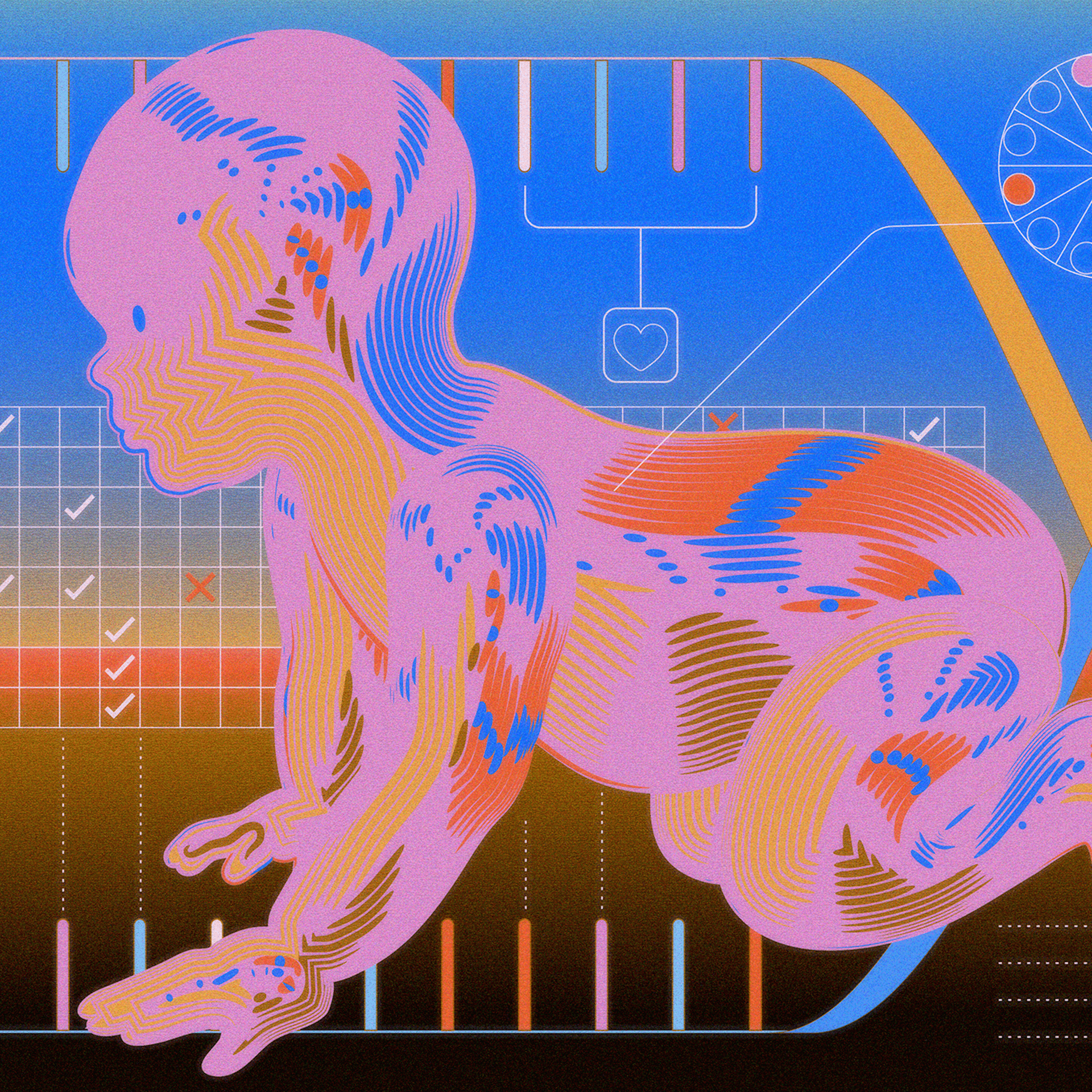
Episode Overview In this episode of *Post Reports*, hosts Elahe Izadi and Elizabeth Dwoskin explore the controversial landscape of fertility startups in Silicon Valley, particularly focusing on a company called Orchid Health. These startups are using advanced genetic testing to screen embryos for genetic abnormalities and predict potential future health issues. The episode delves into the ethical implications, the science behind the technology, and personal stories from families navigating these decisions.
Key Concepts and Discussions
Silicon Valley's Fertility Startups
- Orchid Health: A San Francisco-based company offering advanced genetic testing for embryos.
- Promise of Technology: The potential to identify and eliminate diseases before birth.
Genetic Testing and Predictions
- Standard Genetic Screening vs. Advanced Testing:
- Traditional IVF clinics often conduct basic genetic screenings.
- Orchid offers extensive tests, screening for over 1,000 rare diseases and making polygenic predictions about future health issues like Alzheimer’s and obesity.
- Polygenic Predictions:
- Uses data from biobanks to correlate genetic patterns with diseases.
- Provides probabilities rather than certainties about future health outcomes.
Personal Stories
- Families, like that of Roshan George and his wife, share their experiences with Orchid. They screened embryos to avoid passing down rare genetic mutations. Their successful outcome highlights the personal stakes involved in these decisions.
Ethical Considerations
- Eugenics Concerns:
- The fear of creating a societal divide based on genetic selection.
- Public comfort levels vary significantly when it comes to selecting for diseases versus traits (e.g., intelligence, height).
- Accessibility:
- Currently, these services are primarily available to wealthy individuals, raising questions about inequality in access to genetic technology.
Accuracy and Reliability of Testing
- Concerns from Experts:
- Variability in testing results from different companies raises doubts about the reliability of polygenic scoring.
- Limitations of data from predominantly American and European populations may lead to inaccuracies for diverse genetic backgrounds.
- Methodological Transparency:
- Orchid has published limited data on their sequencing methods, raising red flags for some scientists regarding their claims.
Future Implications
- The discussion suggests that while the potential for genetic technology in IVF is significant, the ethical, social, and scientific implications are still evolving.
- The possibility of broader access to these technologies in the future could transform societal norms and expectations around parenthood.
Conclusion The episode concludes with a reflection on the moral questions surrounding genetic selection and the ongoing debate about the implications of these technologies on society. As fertility startups continue to innovate, the intersection of technology, ethics, and personal choice will remain a critical area for discourse.
Key Takeaways
- Advancement in Fertility Technology: Significant improvements in embryo screening can lead to healthier outcomes for families.
- Ethical Dilemmas: The potential for eugenics and increased inequality poses complex challenges.
- Scientific Uncertainty: Questions about the accuracy of predictive tests highlight the need for ongoing research and transparency.
- Societal Impact: The decisions made by families today could set precedents for future generations in terms of health, ethics, and social equity.
Production Credits
- Produced by: Laura Benshoff, Arjun Singh
- Edited by: Ariel Plotnick
- Mixed by: Sam Bair
Additional Resources For more insights on this topic, subscribe to *The Washington Post* or explore further articles on fertility technologies and genetic screening.
Written by AI. May contain mistakes. Listen to the episode to check what was said.
Transcript
Automatic transcript. May contain errors.0:00Right now during the President's Day Sale, you can get a Washington Post premium subscription for just$3 every 4 weeks. And that includes three extra accounts to share with friends or family. After your first year, renews at$19 every four weeks. The Washington Post. Power. Perspective. Premium. Learn more at WashingtonPost.com slash subscribe.
0:30Silicon Valley is on a quest to optimize babies. This is baby Jaffe. Oh my goodness. So what has the first couple of months been like? This is from a promotional video for a company called Orchid Health. It offers advanced genetic testing for embryos. In the video, mom Leah leans over a baby in a bouncy chair. Leah describes how Orchid helped her and her husband create baby Jaffe. They tested their embryos, talked to a genetic counselor. We actually talked with one of the genetic counselors with Orchid. We went online and looked at all the results and then selected an embryo for implantation. So as you would, you were once an embryo.
1:16Lizza Dwoskin is the Post's Silicon Valley correspondent. She's been reporting on startups like Orchid that are getting into the fertility game. Orchid Health is a company here in San Francisco that's part of this growing crop of startups that are offering what I would call a brave new world of genetic predictions. These companies screen embryos for health issues, but they're not just looking for health issues now. They're trying to predict ones that could develop decades after a baby is born, once they've grown into an adult. Issues like cancer or Alzheimer's. Here's Noor Siddiqui, the founder and CEO of Orchid Health, speaking in that promo video.
2:01She says babies like Jaffe are just the beginning. This baby represents the future of how all babies will be created, hopefully.
2:13From the newsroom of The Washington Post, this is Post Reports. I'm Elajei Izadi. It's Tuesday, October 14th. Today, Inside Silicon Valley's push to breed super babies. Lizza explains how companies are investing in technology they view as a medical miracle that will reduce future suffering. And we get into the thorny ethical questions this is raising.
2:54Hi, Lizza. Thanks so much for making time to talk with me today. Thanks for having me on. So I'm really excited to dive into this reporting that you and your colleagues have been doing. To start, why did you decide to profile Noor and her company, Orchid Health? Well, I got interested in this because I'm a mom of two and I've gone on my own fertility journeys and I've experienced the anxiety and sometimes the agony of just, you know, waiting for the results of a genetic test about your baby. And then I discovered this sort of whole world of fertility hacking. And there's a lot of investor money going towards financing companies that extend or improve fertility right now.
3:34Companies like Orchid are focusing specifically on, well, you'd say optimizing the baby using genetic selection and advanced genetic testing to basically help families who are implanting embryos through IVF choose the healthiest embryo, the embryo that's least likely to be affected by disease. That is so fascinating. And I want to dig into that in a little bit. But before we get there, how did Noor come up with the idea of Orchid Health? What she says is that her mom was born with this debilitating genetic eye disease called retinus pigmentosa that essentially made her effectively blind. She couldn't see.
4:17And she said, if we had had better genetic screening back when my mom was born, well, we could have chosen a different embryo that wouldn't have had the eye disease. She had this family trauma around her mom and she wanted to do something to solve that. Okay, so this is personal for Noor, but I want to understand how the genetic screening that ORCID is doing is different from what's commonplace already. Like certain genetic tests are already standard during pregnancy and people do some of this with IVF in vitro fertilization. So how is what ORCID is delivering different from what's already out there?
4:57Yes, many people who do IVF will also have the embryos go through a genetic screening because some of these mutations can actually cause a failed pregnancy. So you'd want to do a genetic screening to also help the health of the pregnancy and the success of the pregnancy. But what Noor and ORCID are offering is sort of eons beyond what your standard IVF clinic is offering. They're offering, I think, over 1 ,000 possible rare diseases that a baby could be born with that they'll screen for. They take just five cells from an embryo. And through those just five cells, they make a full sequence of the genome.
5:34And then they look at the health of the genome, whether it has genetic mutations or chromosomal abnormalities or clusters of genes that point to diseases. And this could be a tragic disease that the baby is born with from the moment of birth, or they are also making what are called polygenic predictions about diseases that these babies could develop when they're adults later in life, like Alzheimer's or obesity or diabetes. Okay, that was a lot of science. So let's just unpack this a bit. So not only are companies like Orchid doing a sort of souped-up genetic testing on an embryo to see if anything genetically could be wrong now, but they're also making predictions about an embryo's future health called polygenic predictions, right?
6:26How does that work? Polygenic scoring is this really interesting and emerging area of science, which is around making predictions for the diseases of a population based on their genetics. And what you have in various countries around the world, particularly in the UK and in Europe, you have what are called biobanks. And these are repositories of genetic data where adults like you and me could go say, I volunteer, maybe I'll get paid some money, to have my genome sequenced for the purposes of science. And now they can look at those people's diseases, who got heart disease, who got schizophrenia, who developed obesity, and they can say, are there any correlations between the genes of these people who got these diseases?
7:12And it turns out that there are clusters of genes that they've identified in large populations that seem to be predictive of disease. So again, these are predictions. It's just about the likelihood. No one's saying you are going to get cancer if you have this particular constellation of genes. And then if you're a prospective parent, how does this work? Like, let's say it is being offered in the clinic that you are going to. How much does it cost? What do you have to do? It costs$2 ,500 per embryo you screen. And obviously, most families want to screen all their embryos because the point is to compare one embryo against one another to pick the healthiest.
7:55And the way that these couples are getting embryos is just through the process of going through IVF or in vitro fertilization, where you go to an IVF clinic, one partner gives their sperm or there's a donor sperm, and then embryos are created in a petri dish. So when I was reporting this story, families would show me their embryo reports, basically where they would look at the genetic results of different embryos and kind of compare them side by side. And even Noor Siddiqui did it herself with her own embryos that she's screened on a promotional video on Orchid's website. So these are my actual embryos.
8:35I ended up getting, I think, something like 20, 21 eggs. And then from those 21 eggs, we got 16 embryos. So I think I'm going to show you those 16 embryos right now. So what you get essentially is a printout for each embryo that you screened. and you can basically compare those embryos side by side. You can compare embryo 2 to embryo 3 and say, okay, look, fortunately, we just avoided risk for hundreds of diseases that otherwise you wouldn't have been able to detect until after the baby was born. Again, we're looking at embryos as before. And so there, you know, you're looking many years into the future.
9:13It's a percentage score. For breast cancer, you see a delta of, you know, this embryo is close to the population average risk of about 14 % lifetime risk compared to this embryo, which is very elevated. It's a 37 % lifetime risk. And when families are weighing this side by side, they're literally like choosing the babies by spreadsheet in a certain sense. You know, Liz, we've been talking a lot about just the technology itself, but did you talk with anyone who has used ORCID as a service and what was their experience like? Yeah, so all the people I spoke to who use these services had something in common, not only that they had means, but also that they had rare diseases in their family that they didn't want to pass on to their children and it wouldn't have been caught by a regular embryo screening.
10:00So they wanted more advanced screening. One of the people I spoke with was Roshan George and his wife, Julie. They live in San Francisco. They work in tech. We had a little bit of interest in this stuff. So it seemed like a pretty good idea. And then we went ahead with it. They found that they were carriers for this pretty rare genetic mutation that can cause hearing loss in a baby. And they found it was too complicated through their regular IVF clinic to see whether their embryos were carriers of that genetic mutation. So they went to ORCID and they actually screened six embryos. And the end result is we have six embryos, but two of those embryos are completely affected, like very likely that they will be born deaf.
10:52And two are carriers, just like me and Julie, and two are completely unaffected. And he said that the polygenic score was the tiebreaker for them. It really pushed them over to the edge of saying, okay, well, this one's like even going to be slightly healthier in the future than the other one. But mostly they wanted to know that the baby didn't have the hearing loss gene And they were very satisfied customers. The baby was born healthfully and does not have hearing loss.
11:21After the break, how well these predictions work and why this technology is leaving critics uneasy. We'll be right back.
11:44The New Yorker's Political Scene Podcast
11:59So true, because first of all, we are actually friends in real life. But I can't wait till Fridays to hear what you guys think. Everybody sees the headlines, but you guys fill in the gaps. I also think, though, occasionally we get somebody to come on, and I'm always smarter for it. If you get a great historian who can tell you about a presidential election 50, 60 years ago, often it can help you understand about what's happening today. So if you're looking for weekly insights into what's going on inside the Beltway, Please join us every Friday on The Washington Roundtable, part of the New Yorker's Political Scene podcast.
12:57Learn more at WashingtonPost.com slash subscribe.
13:07So, Lizza, we've been talking about the promise of these new forms of early genetic testing, but I wanted to now just kick the tires a little bit on this technology. What do we know about the accuracy of these tests? I got very different impressions about the accuracy from different experts and scientists around polygenic scoring. If you even look at the difference between the different companies, the few startups that offer this type of scoring, the scores that they offer for embryos are quite different. Depending on the company you go to, you might get pretty different scores. That in itself suggests to me that this stuff may not be ready for prime time.
13:51Each company is going to have its own secret sauce, its own algorithms. And those algorithms are based on the latest scientific research. Nonetheless, how you make your proprietary algorithm is different for each company. And the results can be quite different. And then the weight that environmental factors have in getting a disease, that's a big unknown. You know, even though we're learning more about genes, environmental factors, stress, all epigenetics, it's called. All that stuff can actually affect whether a gene or gene mutation expresses itself or not. The other issue besides not knowing how the environment is going to impact how genes express themselves is this issue of bias.
14:30Most people who have given their genes up, volunteered their genes to biobanks, are American or European. And so if you're of Asian, African, or Middle Eastern descent, the accuracy of a polygenic score is going to be much, much lower. That's really fascinating. And also, Lisa, one thing that really stuck out to me when you were talking about ORCID specifically, you said this earlier, that they can just take five cells from each embryo and run their testing on those five cells. What is the reliability of that method? Yeah, one of the findings in our story was just that a number of scientists really questioned whether the full genome can be accurately sequenced from just five cells from an embryo.
15:14What has ORCID or Nora Siddiqui said in response to that? Well, they've said that they can accurately do so, but they've only published one major paper on this. They call it their breakthrough paper, and they put it out in 2022. But the paper does not include the methodology that they use for sequencing. Now, ORCID says that's because the information is proprietary, but the effect is that no one has been able to replicate the method or see how they actually do it. And a number of scientists told me that was cause for concern. Even some scientists who are believers in the service said that was a red flag.
15:51So, Liz, I would imagine some people listening to this, you know, we've touched on it a little bit, would be really concerned about the ethics of all of this. Like, it's one thing to screen an embryo for a disease that would basically render that pregnancy, you know, unable to come to term. versus screening embryos for potential future diseases. It's almost like, are people picking and choosing to essentially breed super babies? I feel like that is something that may feel a little icky about this whole conversation. Well, I think it also depends on what you're screening for. There's been some studies.
16:31There was one last year from Harvard Medical School, which actually found that it was a survey, And most Americans who were surveyed said that they were comfortable with the idea of advanced genetic screening when it came to disease. But they were less comfortable with the idea of doing these kinds of screenings for what we would call phenotypes or traits like height or eye color or intelligence. And by the way, there's no regulation whatsoever in the United States about what you can test for or what you can claim you can test for within IVF. Okay, let's talk about that because selecting for certain traits like height and eye color, that makes a lot of people uncomfortable, I think, because it raises the specter of eugenics.
17:15That's basically the idea of breeding superior humans and they're considered superior because there are certain racial or ethnic or physical traits that would be considered inferior. So what is this genetic screening really about? There's sort of this whole debate in this world over whether genetic screening is about creating healthier babies or creating babies that are healthier than everyone else and maybe smarter than everyone else and maybe better looking than everyone else. I think the best way to ask that question is to say, who gets to do this? Like, how would you feel if everybody had the ability to select for their baby's height or their baby's intelligence?
17:57I think that core question is right. If it was available to everybody, if everybody could pick intelligence or height, maybe that would feel more equal and less icky, less unethical. But the fact is, is right now these services are only available to a really small number of people. So then you start getting, yes, into this race of who gets to make the smarter babies. But it also could just be that a lot of these wealthy people who are doing this are getting a little bit duped because polygenic scores for intelligence aren't that good right now. I think they can only predict a handful of IQ points.
18:27So you might be doing this whole thing just for a handful of IQ points. You might not be getting much at all for your money. You know, on some level, I get that. Like couples who are going through IVF because they're having fertility issues is very fraught. It's very difficult. And this is just like such a personal decision and situation. And I would understand why someone would want every tool at their disposal to have the best outcome, especially if you don't have many chances. But at the same time, are there any considerations as to what could be lost by screening out embryos in this way? Like I'm even thinking about the story that inspired Noor to go down this path about her mother.
19:11Like if they had screened for that, her mother wouldn't have been born and she wouldn't have been born and this company wouldn't have existed. Yeah, exactly. So there's this other scientific issue that is actively being researched right now. There's this concept called pleiotropy, which essentially talks about how certain genes cluster together. And so if you, let's say, choose an embryo that might have a high likelihood of schizophrenia, you might be screening out something like creativity. Again, that's not proven, but there is some scientific research about certain clusters of genes that produce traits that have nothing to do with one another.
19:50I think one was genes that are correlated with heart disease can also be correlated with your taste buds and your ability to taste. So in theory, if you were screening out a baby with a high genetic propensity for heart disease, you might actually be screening out some of their ability to taste. Again, this research is really in process and a lot is unknown, but that's one of the arguments that some scientists say why these tests shouldn't be commercialized because there's just so much we don't know about how genes interact and how they function and how they produce outcomes in our lives. You know, Lizza, as someone who has covered Silicon Valley for so long, and as you dug into not just this company, Orchid, but just emerging fertility technologies, where does this all leave you on the question of what is kind of the next step on how Silicon Valley is shaping our reality?
20:41One of the reasons that I enjoy covering Silicon Valley after all these years is because I do think it is useful to get in the heads of the people who are quote unquote building the future. And in many ways they are. One of the interesting things that I learned from the story was just how fast genetic knowledge is changing, which is why I came to believe that a lot more genetic testing is gonna be available in IVF clinics in the near future, that a lot of this is gonna trickle down. It's not democratic now, but it could trickle down. Another takeaway for me was around this question of eugenics.
21:16Eugenics is a really, really charged word because of its association with Nazism and government programs to try to weed out people like Jewish people and others with quote unquote inferior genes. What they saw were inferior genes. But what a lot of the people in Silicon Valley are trying to do who are proponents of this is take the word eugenics out of the equation and go into this question of individual choice. If scientific knowledge is available, why shouldn't people be able to use it to make healthier and smarter babies? And if you already are a wealthy person who has the right to give your child a trust fund or put your child in an elite private school, shouldn't you also have the right to use the latest scientific knowledge to improve your child's health or their outcomes in life?
22:04Now, when it comes to ORCID, they refute any association with eugenics. But they did have an interview with an academic who has promoted eugenics on their website. And they only took it down once I asked them about it. So there's that too. But, you know, I think if you put aside the charged term eugenics for a second, there's actually a deeper and more interesting question to wrestle with here. And I think a lot of people will listen to this and say, well, yeah, that's why should we exacerbate inequality? Society is already unequal with trust funds. Should we make it even more unequal with biology?
22:36and that's a huge conversation to have, but the fact is this is already happening and people are already doing this. So let's see what they're doing. Let's get in their heads and let's explore the moral questions and the societal questions around it.
22:55Liza, thank you so much for joining and sharing your reporting. Thanks so much for having me.
23:04Liza Dwoskin is the Silicon Valley reporter for The Post. That's it for Post Reports. Thanks for listening. If you love the show, help other people discover it by leaving a rating on Spotify or a rating and review on Apple Podcasts. Today's show was produced by Laura Benshoff with help from Arjun Singh. It was mixed by Sam Baer and edited by Ariel Plotnick. Thanks to James Graff. I'm Elahe Izadi. We'll be back tomorrow with more stories from The Washington Post.
23:55Hi, I'm Susan Glasser. I'm Jane Mayer. And I'm Evan Osnos, and we host the Washington Roundtable from the New Yorker's Political Scene podcast. For me, this is the water cooler. This is a wonderful chance to sit down with two of the smartest colleagues in the country and, you know, just kind of compare notes. No, that's so true, because first of all, we are actually friends in real life. But I can't wait till Fridays to hear what you guys think. Everybody sees the headlines, but you guys fill in the gaps. I also think, though, occasionally we get somebody to come on, and I'm always smarter for it.
24:30If you get a great historian who can tell you about a presidential election 50, 60 years ago, often it can help you understand about what's happening today. So if you're looking for weekly insights into what's going on inside the Beltway, please join us every Friday on the Washington Roundtable, part of the New Yorker's Political Scene podcast.
Read the full transcript
24:52Right now, during the President's Day sale, you can get a Washington Post premium subscription for just$3 every four weeks. And that includes three extra accounts to share with friends or family. After your first year, renews at$19 every four weeks. The Washington Post. Power. Perspective. Premium. Learn more at WashingtonPost.com slash subscribe.
From the publisher
A crop of Silicon Valley startups offers the hope of eradicating disease by testing embryos for genetic abnormalities and the potential for future illness. But those tests come with a high price tag and ethical questions about the use of predictive technology to decide who gets born – or not.
Host Elahe Ezadi speaks with Silicon Valley correspondent Elizabeth Dwoskin about the cutting-edge science driving fertility startups, what families who use them say, and how this trend fits into Silicon Valley’s obsession with hacking our health.
Today’s show was produced by Laura Benshoff and Arjun Singh. It was edited by Ariel Plotnick and mixed by Sam Bair.
Subscribe to The Washington Post here.