
In short
The Washington Post’s Dan Lamoff discusses President Trump’s plans to expand domestic military deployments beyond Washington, D.C. and Los Angeles, with Chicago identified as the next target. The episode centers on Pentagon planning, legal authority, likely troop size, and what missions could look like.
Guest backgrounds
Dan Lamoff covers the military for The Washington Post; he broke the story and provides details from sources about Pentagon options and timelines.
Key claims
Planning for multi-city deployments predates Trump’s public comments; Pentagon options include sending a few thousand National Guard troops to Chicago as soon as September. Likely scenario is a narrow, no-law-enforcement mission under Title X (similar to Los Angeles), with court challenges expected. Trump frames it as “clean up the city,” despite declining crime trends.
Notable examples
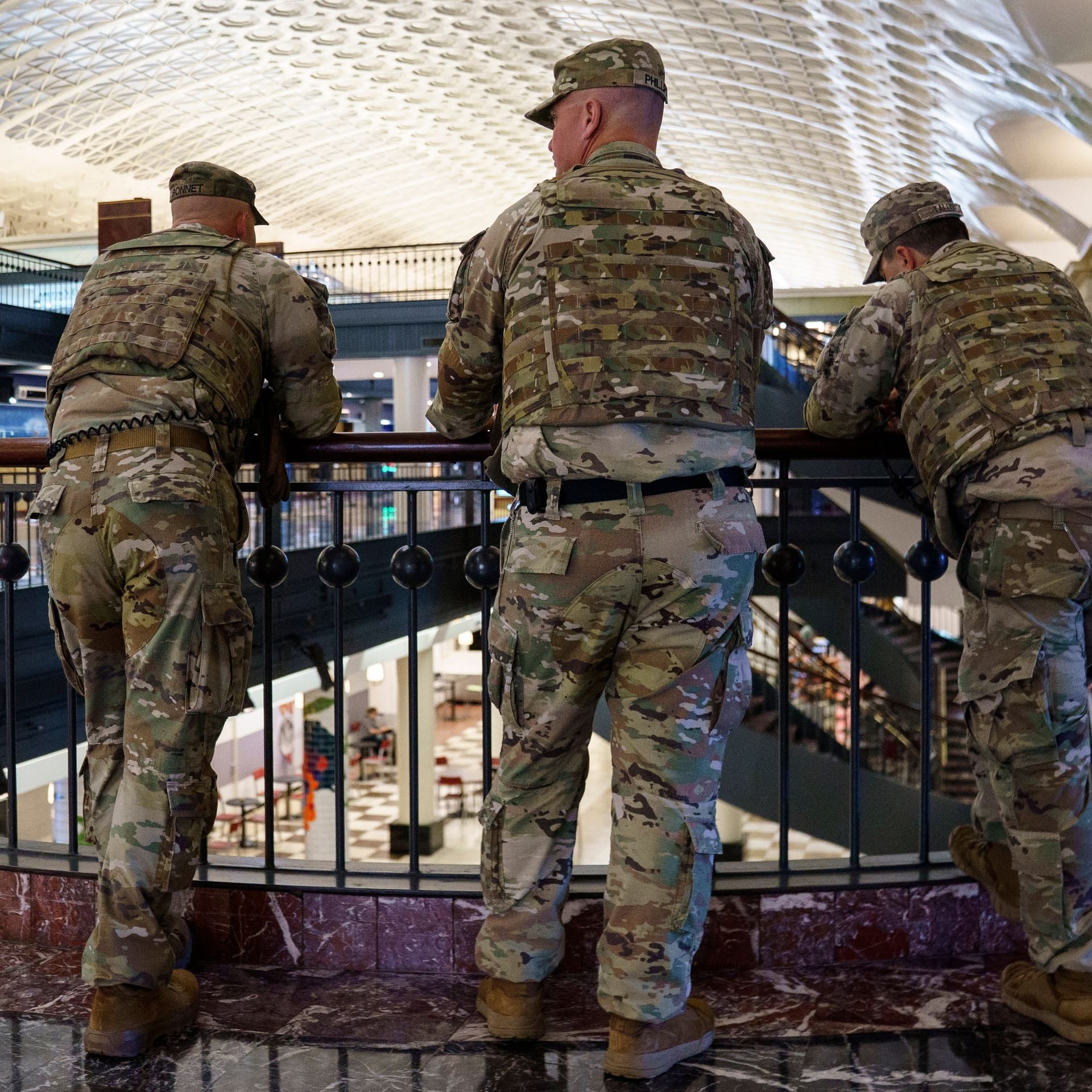
Los Angeles deployment (thousands of California National Guard plus 700 active-duty Marines; guarding federal buildings; ICE detention with a “bubble” cordon; limited crowd dispersal). D.C. deployment (over 2,000 National Guard; armored vehicles; broader missions; tourist areas). Chicago backlash: Mayor Brandon Johnson says it’s a constitutional violation and a “military occupation.”
Written by AI. May contain mistakes. Listen to the episode to check what was said.
Chapters
Tap a time to open that second in VOTrump's Military Plans for American Cities
0:00 to 1:11
Learn about Trump's deployment of troops to various American cities and the emerging plans for Chicago.
“First, President Donald Trump deployed troops to Los Angeles.”
The Context of Military Deployments
1:32 to 2:30
Discover the historical context of Trump's military strategy regarding urban violence.
“So, Dan, you broke this big story over the weekend.”
Insights into Military Planning
2:30 to 3:56
Understand the planning process behind military deployments in American cities.
“So choosing my words carefully here, I would say that I've been asking these questions since well before President Trump said last week that he was looking at Chicago as, quote unquote, the next city.”
Legal Considerations for Deployments
3:56 to 5:14
Examine the legal frameworks governing the deployment of troops in U.S. cities.
“Okay, so you basically were able to get confirmation that this planning, that it's happening, that things are already in motion.”
Local Reactions to Military Presence
5:14 to 8:23
Explore the local responses and controversies surrounding military deployments in Chicago.
“So, Dan, when you say that they're waiting to see what's legal, I mean, what is the legal basis for doing this, to just send troops into American cities?”
Comparing Deployments in L.A. and D.C.
8:23 to 9:26
Analyze the differences in military deployment strategies between Los Angeles and Washington, D.C.
“And like a lot of American cities right now, they all point to declining violent crime.”
Perspectives of Deployed Service Members
9:26 to 13:58
Gain insights into how service members feel about their roles in urban deployments.
“Trained exclusively on Post journalism with clear sourcing.”
Military Sent to American Cities: Perspectives and Implications
14:00 to 17:09
Explore the varied opinions of service members on potential deployments to American cities.
“Especially now that we've got National Guard that are not local.”
Concerns Over Use of Force in Domestic Deployments
17:10 to 18:08
Discuss the implications of a military presence in cities and concerns over their response to threats.
“The discussion predates his conversation.”
Transcript
Automatic transcript. May contain errors.0:02First, President Donald Trump deployed troops to Los Angeles. Then, Washington, D.C. I really am honored that the National Guard has done such an incredible job working with the police. Now, he's looking at another American city. And the people in Chicago, Mr. Vice President, are screaming for us to come. They're wearing red hats, just like this one. But they're wearing red hats. African-American ladies, beautiful ladies are saying, please, President Trump, come to Chicago. Please. On Friday, Trump signaled plans to expand his domestic use of military force. He zeroed in on Chicago. Chicago's a mess.
0:46You have an incompetent mayor, grossly incompetent. And we'll straighten that one out probably next. That'll be our next one after this. And it won't even be tough. It turns out this plan has been weeks in the making. The Pentagon put together several military options for the president. One option includes sending at least a few thousand National Guard troops to Chicago as soon as next month. From the newsroom of The Washington Post, this is Post Reports. I'm Kolby Akowitz. It's Monday, August 25th. Today, I talked to my colleague that broke this news over the weekend, Dan Lamoff. Dan covers the military for The Post.
1:26He brings us the details of the military's plans to deploy troops in more American cities and how those plans compare to what we've already seen in D.C. and Los Angeles.
1:40Dan, hey, thanks for joining me. Of course. So, Dan, you broke this big story over the weekend. And before we get into the specifics of the plan, I'd love to talk about why. Like, why Chicago? Why is Trump fixated on Chicago? Yeah, I think it's important to kind of play it back a bit. President Trump for years has seen the military as a solution to a lot of problems that other people don't. I think on top of that, when we look at the way he talks about carnage in cities, this is something he's fixated on. And when he announced the deployment to Washington, D.C. in mid-August, he spouted off a number of other cities, Oakland, Baltimore, Chicago.
2:21This is something that I think he very much has in mind. And that's what a lot of my sources are telling me. And they started planning for it as a result. Okay, Dan, so with this planning, you were able to get some exclusive insight into what the military, the Pentagon is thinking here. How did you find this out? So choosing my words carefully here, I would say that I've been asking these questions since well before President Trump said last week that he was looking at Chicago as, quote unquote, the next city. And there are a few things that are obvious here that I think anybody in my job should be asking questions about.
2:56When he went off on a list of cities as he was announcing the Washington, D.C. deployment. So I think Chicago will be our next and then we'll help with New York and we're going to help with. It would raise a reporter to say, hey, what else is going on behind the scenes here? So I did have the sense that there might be something else in play. But once he said those words last week about Chicago being next, at that point, it became a lot easier to confirm on a level that The Washington Post would be comfortable with. that there really is detailed planning here going on. It involves multiple cities.
3:36Chicago is seemingly next, according to the president. I imagine there's a world where they deviate and do some other city instead. But there's a multi-city discussion here. And yeah, we're waiting to see what the specifics are. No orders, as I'm sitting here talking to you, have been issued that I'm aware of. But the discussion became kind of pushed out into the sunlight once the president started talking last week. Okay, so you basically were able to get confirmation that this planning, that it's happening, that things are already in motion. So, Dan, what do we know now about what this deployment could look like in Chicago?
4:12So that's really the rub at the moment. We're in the planning phases. So they usually, when they set up military plans, there's usually a range of options that they'll present the commander-in-chief and the commanders below him. So the most likely option, I think, is roughly a brigade of soldiers, three, four or five thousand National Guard members. So that likely would require federalizing the Illinois National Guard or a portion thereof against the wishes of the governor. And, you know, that would play out roughly in line with what we saw in Los Angeles, where they federalized the California National Guard, even though Governor Newsom didn't want that to happen.
4:53And in that case, they actually activated and pulled in an infantry battalion of active duty Marines, which was, you know, for a lot of people, even more inflammatory. Hard to say what they'll actually greenlight here other than there's acknowledgement that the planning is active. The planning has been active for a while and they're kind of waiting to see what's desired and what's legal. And they're working through that now. So, Dan, when you say that they're waiting to see what's legal, I mean, what is the legal basis for doing this, to just send troops into American cities? So, there's actually a couple ways that these deployments have come about.
5:29Under the most common scenario, the National Guard is deployed by a governor under state orders. That's the kind of thing you see after a hurricane or something like that, where they're sent out to do a local mission under local authority. That's one option. That's not going to happen here. The governor's already made it clear that he's not sending troops. He's also made it clear that he's not comfortable with sending troops under what is known as Title 32 orders, which is where you have governor consent to deploy somebody, but they're paid federally. It's a bigger mission. That's not going to happen here either.
6:01Those are the orders, however, that they're employed under Washington, D.C. at the moment. So that leaves you with another option, narrower mission, no law enforcement generally. And that is what we saw in Los Angeles. The California National Guard in that mission, they were under Title X authority. They're not arresting anyone. It's a very narrowly tailored mission. I think that is probably the most likely scenario for Chicago should they decide to go forth with this. it also would probably very likely and very quickly be contested in court. Yeah. So what does Trump say he wants them to do in Chicago?
6:45I know we're not sure what exactly they would do, but what does he want them to do? Yeah, so the way he talked about it is sort of like the clean up the city sort of feel to it. In Los Angeles, the mission was put into play only after some protests led to concrete getting thrown at ICE agents. There is no attack on ICE agents in Chicago that we have seen. So there are people who are already questioning the legality of this sort of deployment. And I mean, I imagine one discussion here is do you deploy them anyway and just hash it out in court after? Meanwhile, you've already got the imagery on the streets that perhaps the president desires.
7:24The other option would be that you, you know, kind of juice the ICE ops in Chicago and you're kind of waiting to see whether or not there are attacks on ICE agents. And at that point, you've got the guard ready to go. But just the fact that there's crime in Chicago, that there's homicides in Chicago, like that's not Trump's purview. I mean, that's the Chicago mayor. That's the Illinois governor, both Democrats. I imagine that they're not welcoming this idea with open arms. No, the backlash to the reporting of my story was pretty immediate. Mayor Johnson, like they immediately started responding to this, including on national television, on MSNBC, addressing the concerns that their own citizens have.
8:07The city of Chicago does not need a military occupation. This is clearly a violation of the Constitution, and we're going to remain firm and vigilant in our commitment to ensure that our democracy is protected and our humanity is secured. They're very against the idea. And like a lot of American cities right now, they all point to declining violent crime. You know, I think there's broad acknowledgement that kind of coming out of COVID, a lot of major American cities, Washington, D.C. and others, all had major concerns. Violence was up. Carjackings were up. Murders were up. And we've seen a decline in Washington, in Chicago, and in a lot of other major cities.
8:50So a lot of these conversations President Trump's having, when he was campaigning, the discussion was a little more live. You know, it was a legit concern for a while. And as we've seen the statistics kind of trend in a more positive direction, you know, in terms of declining crime, he's still kind of fixated on the idea.
9:16After the break, Dan and I get into what boots on the ground have looked like in L.A. and D.C. And how troops in those American cities actually feel about it. We'll be right back. Thank you.
9:56Trained exclusively on Post journalism with clear sourcing. And if we don't know the answer, we'll tell you. Ask the Post AI. Find it on WashingtonPost.com or in the app.
10:12So Dan, as we've discussed, Trump has done this in two other American cities already. In June, Trump sent thousands of California National Guard members to L.A. along with 700 active duty Marines. And now he's deployed over 2 ,000 National Guard troops here in D.C. So let's talk a little bit about what that's looked like both in D.C. and L.A. and maybe what that can tell us about what Chicago would look like. When we looked at that deployment in California, a lot of people looked at it and said, what are they actually doing? And the role was quite limited. It gave you the imagery. It gave you the uniforms on the street.
10:46But the actual, like, what can they legally do? You saw them around buildings, courts and other things, you know, like federal buildings that they are legally entitled to protect. Right in downtown Los Angeles in front of the federal building here. But you can see dozens of Homeland Security officers as well as National Guardsmen are out here on this plaza protecting the property. And later on, you saw some ICE operations where people were being detained. And the National Guard almost created like a little cordon or bubble around that operation and basically, you know, like protect the ICE agents as they were carrying out that detention.
11:28Their role in dispersing crowds has been minimal. But ICE posting these photos on their X account showing National Guardsmen providing protection for ICE agents on a raid in Los Angeles. The Washington, D.C. deployment, because the president has broader authority in terms of deploying them and having ability to set sort of the parameters of what they're doing, they've got a much more active role in a wider set of missions than they did in Los Angeles. So we've seen them out with armored vehicles. We've seen them, you know, walking crowded areas, a lot of touristy areas. I would also add areas that didn't really have a crime problem in the first place.
12:08But the case you could make would be, hey, we want to keep these areas safe. There is a deterrent effect in having American uniforms in these areas. I was out on the wharf a couple days ago for an alumni event for University of Massachusetts and bumped into probably five different groups of National Guard over the span of a couple hours coming in and leaving the event. they were walking groups of four, five, six at a time, very cheerfully saying hello to everybody they saw. So I think they also kind of probably get the optics here and they're doing everything they can on the rank and file level to make it clear that they're just there to do the job.
12:51They're not trying to invade anybody. So it's a tough spot to be in if you're that 22-year-old sergeant or something too. And watching the rollout. once a day, the National Guard task force has been kind of releasing what they've done over the last day. And it's interesting seeing the granularity on like the kind of things they're highlighting. One of the things last week was an elderly gentleman fell off a bicycle. The National Guard assisted the man, cleaned up his wounds and sent him on his way. So you're looking at that saying like they're trying to make the point that they're here to help.
13:27Yeah. Despite there being the concerns of sort of a military takeover. And like the discussion, the concerns, the reality don't always match here. And I think that's something that we need to clarify as well, kind of covering this story. Yeah. I mean, how much is it costing taxpayers to have the National Guard there to help a man clean up his bike accident? I mean, that I think is a concern that will come up over and over again as we see this potentially move to other cities. This is not cheap. don't necessarily have a great read on what that costs, but it's not nothing. Especially now that we've got National Guard that are not local.
14:06What's a hotel cost in this area? $150 a night, conservatively? Multiply that by multiple weeks and multiple hundreds of guardsmen, and you kind of get the sense that this will add up fast. I mean, Dan, when you're talking to service members, how do they feel about being deployed into American cities like this? I mean, not unlike the rest of America, I think there's a range of options. Often this comes through the lens of talking to recent veterans who are a little more freely able to speak. Some of these folks are excited by the mission, see value in the mission, just want to help. This is the role they've been given.
14:46OK, let's do it. Some people have misgivings. You know, the idea that they train to do something overseas to see the world, all of those sorts of things. and now they're doing this instead. And so there's at least, you know, in the little more quiet conversations, yeah, that there are people who struggle with this idea too. Yeah, I imagine when you sign up, you don't think you're going to get deployed to Chicago. Yeah, you know, and, you know, there are rare occurrences where we've seen this in the past. Usually it's precipitated by some sort of major riot. When we had the major riots in Los Angeles in 1992, There were active duty troops put into play.
15:27There was National Guard put into play. It came at the consent and request of a governor. And that is a major difference here. We have no riot and we don't have a governor or a mayor who is looking to do this. They actually see a lot of risk with it. I don't think it's lost on anyone that Trump is targeting cities that are democratically run, Los Angeles, Chicago, D.C. Where else could we potentially see him send troops? Yeah, I mean, I think you're looking at sort of the major cities. I mean, he has said Oakland, which would raise for me the question of Oakland, San Francisco, kind of that metro area.
16:06I think other major liberal cities is something that he has kind of pointed to in the past. I think another thing that's worth kind of having the thought exercise of is when you look at sort of the major American cities that are struggling with violent crime. Some of those cities are Democrat-run cities in Republican-run states. St. Louis, Missouri, Memphis, Tennessee. in those scenarios, if the governor wanted to deploy the guard, he could have done it on his own authority weeks and months ago. They didn't. So if the governors in these states really also find common cause with President Trump on this, they haven't done that.
16:47They have the authority. So if they turn around and do it now, either under federal authority or under state governor orders, it would kind of make you wonder, why didn't they do this all along? Right. So how serious, I mean, from your reporting, do you think Trump is about sending troops to Chicago? I mean, like, how soon could we see this happen? Yeah, the sources are telling me it's as soon as sometime in September. President Trump was talking about it last week. The discussion predates his conversation. This isn't something they started planning as a result of him, you know, shooting from the hip in an Oval Office interview on Friday.
17:20This predates the conversation Friday. it. The scenario, I think, that really worries people, you know, that like oversee this sort of thing and think about these issues is you're unlikely to see the guard going off, you know, and shooting people or doing something random. That's the, you know, like these people have training, they have some discipline. But if they're attacked, how do you respond to that, They have the ability to defend themselves. And how they go about doing that is, I think, something that is going to give people pause. And they're going to, you know, like, what other tools are you reaching for before you're using lethal force?
18:00This is a very polarizing deployment that gives a lot of people pause. It gives me concern. Well, we'll be following your reporting closely, Dan. And thank you so much for coming on and walking us through all this. Sure. Thank you. Dan LaMoth covers the military for The Post. That's it for Post Reports. Thanks for listening.
18:49That's WashingtonPost.com slash subscribe. There's also a link in our show notes. Today's show was produced by Laura Benshoff with help from Thomas Liu. It was mixed by Sean Carter and edited by Rena Flores. Thanks to National Security Editor Andy de Grand Prix. I'm Cole Bierkowitz, and we'll be back tomorrow with more stories from The Washington Post.
19:23When it comes to the big questions, who you ask matters. From breaking news to politics that impact your life to advice you can trust. Get answers you don't have to question with Ask the Post AI. Trained exclusively on post journalism with clear sourcing. And if we don't know the answer, we'll tell you. Ask the Post AI. Find it on WashingtonPost.com or in the app.
From the publisher
The Defense Department is outlining plans to send troops to Chicago as soon as September.
These plans have been in the works for weeks – long before Trump’s declaration Friday that “it won’t even be tough” to send troops to the third-largest city in the U.S.
Pentagon reporter Dan Lamothe uncovered the details of these military plans, which are part of Trump’s broader crackdown on American cities. Dan speaks with host Colby Itkowitz about what a troop deployment in Chicago could look like, what legal arguments the administration is making and what we can learn from the military’s presence in Los Angeles and D.C.
Today’s show was produced by Laura Benshoff, with help from Thomas Lu. It was mixed by Sean Carter and edited by Reena Flores. Thanks to National Security Editor Andy
deGrandpre.
Subscribe to The Washington Post here.