In short
Podcast Episode Notes: Is this the American Oligarchy?
Podcast Overview Title: Post Reports Description: A daily podcast from The Washington Post providing unparalleled reporting, expert insight, and clear analysis.
Episode Details Episode Title: Is this the American oligarchy? Hosts: Martine Powers, Elahe Izadi Guest: Beth Reinhard, Investigative Political Reporter Date: December 17th Production: Produced by Rennie Svirnovskiy; Edited by Elana Gordon; Mixed by Sean Carter.
Key Themes & Discussions
Introduction to Oligarchy
- Definition of Oligarchy: Traditionally associated with countries like Russia, where a small group of wealthy individuals wields significant political power.
- Contextual Shift: Discussion on whether the U.S. is heading towards a similar model due to the increasing influence of billionaires in politics.
Billionaires and Political Influence
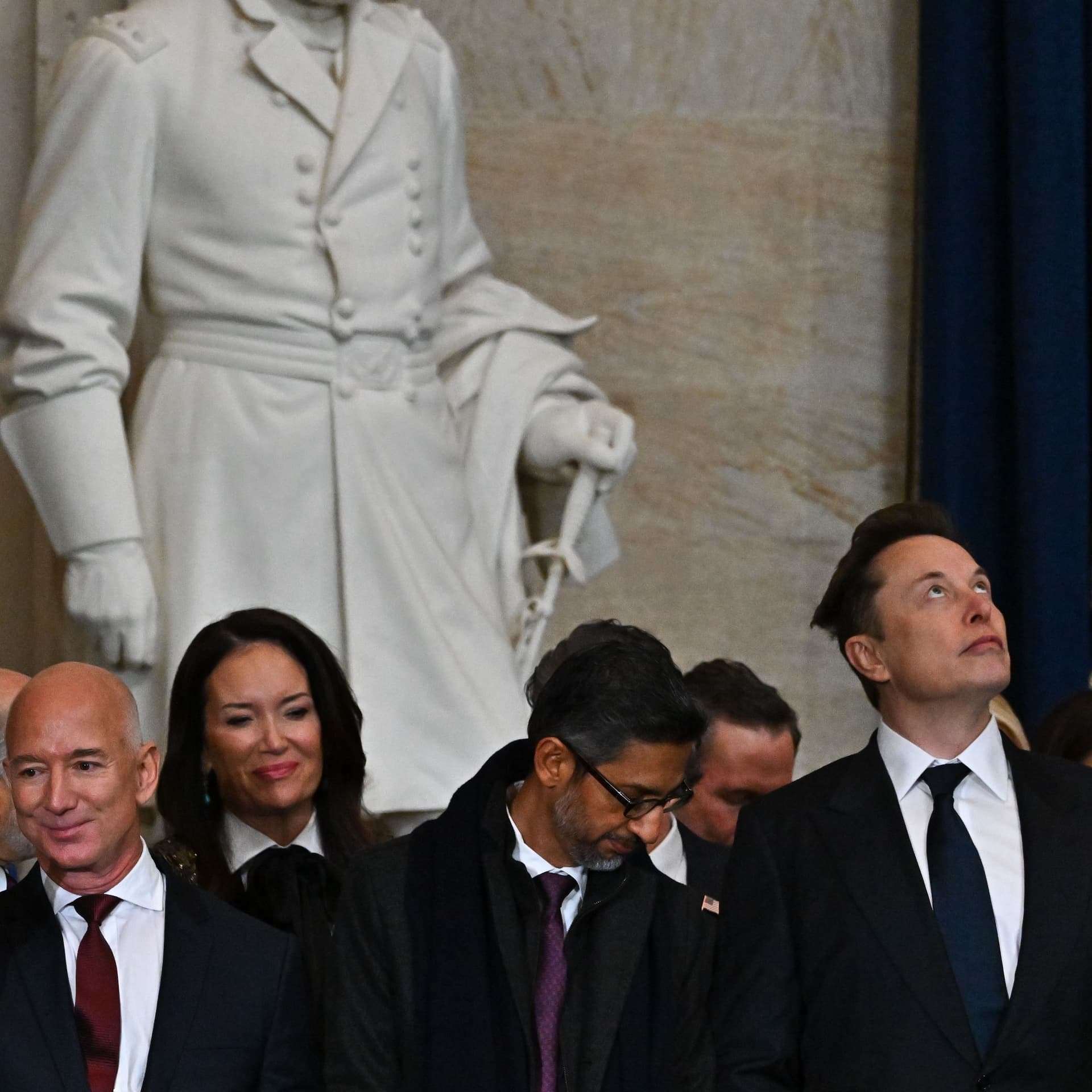
- Inauguration Highlight: At President Donald Trump’s second inauguration, 17 billionaires attended, showcasing a significant concentration of wealth and privilege.
- Notable attendees included Jeff Bezos, Elon Musk, and Mark Zuckerberg.
- Contrast between the elite billionaires seated inside and ticketed spectators left outside in freezing temperatures.
Financial Contributions to Politics
- Growth in Donations:
- Spending by the top 100 wealthiest Americans hit over $1 billion, representing $1 out of every $13 spent in the last election.
- From 2000 to 2024, donations from the wealthiest 100 increased from 0.25% of federal election costs to 7.5%.
- Political Party Affiliation:
- Approximately 80% of donations from this group supported Republican candidates, reflecting a significant shift in where these wealthy individuals align politically.
Factors Driving Donations
- Tax and Regulatory Concerns:
- Many billionaires are attracted to Trump’s tax policies and anti-regulation stance, which they believe preserve their wealth and business interests.
- Backlash Against Criticism of Wealthy Individuals:
- Some billionaires express frustration over being villainized, leading them to support candidates who align with their interests.
The Role of Super PACs
- Impact of Citizens United and SpeechNow Rulings:
- These rulings allowed for unlimited donations to Super PACs, dramatically shifting the landscape for campaign financing.
- Campaign Spending Arms Race:
- Candidates increasingly rely on wealthy donors to compete financially, creating an environment where money dictates success.
Case Study
Blake Masters
- 2022 Arizona Senate Race:
- Blake Masters, initially a political novice, gained traction due to a $15 million donation from billionaire Peter Thiel, illustrating how billionaire backing can change a candidate's trajectory.
Resistance to Billionaire Influence
- Emerging Political Figures:
- Examples like New York City Mayor Eric Adams, who criticized the billionaire class, indicate potential backlash against oligarchic influence.
- Legislative Efforts:
- Some proposals aim to increase taxes on the wealthy, but they face significant political hurdles.
Conclusion
- Future Implications:
- The concentration of wealth and influence among a small group poses risks to the democratic process, potentially compromising the principle of one person, one vote.
- Outlook:
- Trends suggest that billionaire influence in American politics will continue to grow, raising questions about democracy and equitable representation.
Key Takeaways
- Wealth Disparity: The increasing power of billionaires in politics could lead to a new form of oligarchy in the U.S.
- Bipartisan Influence: While both parties receive funding from wealthy donors, a predominant percentage is currently supporting Republican candidates.
- Legislative Challenges: Despite calls for reform and pushback from political figures, substantial changes to campaign financing seem unlikely in the near future.
---
For further insights and discussions, subscribe to The Washington Post and stay updated with daily reports.
Written by AI. May contain mistakes. Listen to the episode to check what was said.
Transcript
Automatic transcript. May contain errors.0:02What would you say if someone called you an oligarch? How would you feel about that? I'd say thank you. I grew up in Harlem, and I worked very hard. I worked seven days a week, 70 hours, 80 hours a week for the last 50 years. I deserve it. This is Beth Reinhart, an investigative political reporter at The Post, speaking with John Katsimatidis. Katsimatidis is a billionaire who made his fortune in oil and real estate. And last year, he donated$2.4 million to help elect Donald Trump and other Republicans. That's asking him how he'd respond to someone calling him an oligarch because for months she's been reporting on how the ultra-rich, like him, are donating record amounts to politics.
0:49Some, especially on the left, argue that it's moving American democracy closer to an oligarchy. We tend to think of oligarchy, tend to associate it with countries like Russia, where you have a small group of very rich, corrupt politicians running the show. But I wanted to ask a billionaire, what does he make of that? I want you to understand that. It's different. He said he's proud of the wealth that he's earned. It isn't as if I made a deal with some crooked guy. An oligarch is make a deal with a crooked guy to become a crook in, how do you want to say it? A fellow crook. You follow me? And that he doesn't see any kind of a threat to democracy that's caused by him or other wealthy people.
1:48But Beth and our colleagues found that billionaires do have an outside sway over politics. That it's a very exclusive group of wealthy people who are donating growing amounts to influence U.S. elections. We're talking about one four hundredth of one percent of the population that's having this much influence and spending this much money. It's a very, very small percentage of the population.
2:16From the newsroom of The Washington Post, this is Post Reports. I'm Kolbie Echelowitz. It's Wednesday, December 17th. Today, Beth takes us inside her reporting on the billionaires who are gaining more and more influence over U.S. politics, especially in the second Trump administration, and how that may be reshaping power in America.
2:41Beth, hi. I'm thrilled to have you on. Thanks so much. Great to be here. When did it become obvious to you that something was changing, that the ultra-wealthy were seeming to gain even more influence in politics than they previously had? I think there was a moment, not just for me, but for so many people that I talked to, they would say, remember that time at the inauguration, at Trump's second inauguration? Below freezing temperatures, moving the ceremony inside for the first time in 40 years. A smaller guest list created for the smaller venue. There are about 800 seats that have been crammed into the rotunda for the VVIPs.
3:23We're talking about family members, cabinet picks, Supreme Court members. When the three wealthiest people in the world, Jeff Bezos, who owns the Washington Post, Mark Zuckerberg, the meta guy, Elon Musk, the Tesla CEO, were all sitting right behind Trump's family and in front of some of the cabinet members. Like they had these, you know, VIP seats. Please welcome the 47th president of the United States of America. And they weren't the only billionaires. We counted that at least 17 billionaires attended the inauguration.
4:08So Apple CEO Tim Cook was there, a media mogul Rupert Murdoch. There were several others. Some of these names will be familiar to you. Vivek Ramaswamy, Howard Lutnick, Linda McMahon, Sam Altman, Sundar Pichai. Wow. There were tens of thousands of people with tickets who didn't get to go. And in fact, there were governors and foreign dignitaries that had to stay in overflow areas. And it was amazing to us how many billionaires they managed to squeeze into this very elite group. And obviously, there have been very wealthy people on the stage before, but never to this degree, never this brazenly, never this many.
4:55You know, we often think about, you know, the deals that are done in the back rooms, right? A lot of dealmaking, a lot of wealthy people are doing business behind closed doors. But this was so striking that it was out in the open. So, you know, these billionaires, they're out there more. We know that they donated to this inauguration to put the whole thing on. But did we have a sense then of just how much these billionaires had donated to Trump's campaign or to other political campaigns? I think we had some idea. I don't know that we knew the full extent. We knew that Elon Musk had spent this record-setting amount, almost$300 million on Trump and other Republicans in both state and federal elections.
5:40A staggering amount of money. And he was about to get basically the keys to the kingdom. He was about to become head of this new Department of Government Efficiency. And he was going to have pretty sweeping powers over personnel and policy. So we could all sense that we were in a different place, that these were extraordinary times. But we wanted to know more about what was going on behind the scenes. And so you start looking into this pretty soon after the inauguration, I think, right? And what did you learn about how much money America's wealthiest are spending on politics? So this was a really heavy data lift.
6:24My colleague, data reporter, Ence Morris, spent months and months pouring through Federal Election Commission filings, FVC filings. That's where all federal campaign data is reported to the federal government. And also looking at data from Open Secrets and Transparency USA. This is not information that's easily accessible or in plain sight.
6:50Once we totaled up the numbers, it was a pretty surprising amount. We found that since 2000, spending by the 100 richest people has increased 140-fold since 2000, which is, you know, just skyrocketing amounts. We found that back in 2000, the country's wealthiest 100 people donated about a quarter of 1 % of the total cost of federal elections. By 2024, it was 7.5%. Whoa. We're only talking about 100 people, remember that. This is like a handful of people that have this big share of the pie. Another way to look at it in 2024, spending on elections by the richest 100 Americans crossed the$1 billion threshold.
7:43One out of every$13 spent in last year's election was donated by a handful of the wealthiest Americans. Wow.
7:55Are both political parties benefiting from these deep-pocketed donors or one more than another? So both parties are definitely benefiting from the wealthy. But the wealthiest, if you look at the top 100 again, that group of people, 80 percent of their money went toward Republicans. 80 percent. So there's a real surge towards the Republican Party under Trump in 2024 among the very, very wealthiest Americans. Again, that's not to say that Kamala Harris didn't get money from billionaires and millionaires. In fact, I think she raised more money than Trump. But when you look at the most elite group, they're surging toward Republicans and Trump.
8:38And were you able to uncover why that is? Is that about taxes and regulation? why have they so strongly been backing Trump? I think there's a lot of reasons. I think Trump's agenda is definitely appealing to them. He campaigned on extending the tax cuts he signed into law during his first term. He also campaigned on radically changing the federal government and that to many wealthy business people, the government is a real hindrance and a lot of red tape and bureaucracy and getting in their way and regulating them. In one interview I had with John Katsimatidis, the New York City billionaire we heard at the very top of the show, he said to me, if you're a billionaire, you want to stay a billionaire.
9:28As in, like, don't tax me. Not just don't tax me, but, you know, preserve my way of life, preserve my way of doing business. I also spoke with another billionaire named Thomas Pederfee. He founded an electronic brokerage firm. His net worth is like$57 billion. And he said business people are really drawn to Trump because of his promises to get rid of red tape and government bureaucracy. To the extent the wealthiest people are business people. They are surging towards Trump because they understand how much better Trump is for a prosperous economy. And we talked to other billionaires who talked about sort of the villainization, the demonization of the wealthiest Americans by Democrats and how that has become kind of a turnoff.
10:20And billionaires don't like that. They don't like being made to feel like they've done something wrong. They're reaping the profits that they feel they've rightly earned. You know, Beth, I've also been thinking about tech industries because we talked about all the tech executives that were at Trump's inauguration. You know, there's been such an explosion of wealth in the tech industry in recent years and like where they see themselves politically now. The tech industry had traditionally, Silicon Valley had traditionally leaned Democratic. But that changed. Under Biden, they saw their industry becoming more policed, more negativity about big tech.
11:02And this is a group of very libertarian type thinkers. And they started really gravitating toward Trump and the Republican Party. So, you know, through all of this work, you find this small group of billionaires have donated this enormous amount in the last federal election cycle. I mean, obviously money matters in politics, but how much does this money actually matter or make a difference to who's going to win? So I think one of the biggest expenses is television. But increasingly, our campaigns have become so sophisticated in terms of the data analysis that they're using. They're paying data scientists and other consultant types big sums of money to figure out which voters they should be targeting and very specific ways how.
11:52And all of that's very expensive. And we've seen what is kind of like an arms race in the campaign world where things just keep getting more and more and more expensive. Right. And so in order to keep up, you need more money. Right. And, you know, when one guy starts spending more money, then the other guy starts spending more money, too. I mean, is there an example of a campaign that maybe was going in one direction and then suddenly there was this infusion of funds and that changed the trajectory of the race? One example of that is if you look at the 2022 Senate race in Arizona, you had a fairly crowded Republican primary.
12:34You had the sitting attorney general. You had a millionaire who was self-financing his campaign. Those were among the candidates. Then you had this guy, Blake Masters. He was a political novice. He had never run before, but he had worked and was friends with Peter Thiel, a billionaire investor. And so even though he might have been seen as a long shot, when Peter Thiel put$15 million into a super PAC benefiting Blake Masters, Blake Masters quickly became the frontrunner. But it's decisive at this point. We did it. And the seal of approval from Peter Thiel, I think, you know, that that sends a message to other wealthy people, sends a message to President Trump about who was sort of the anointed person.
13:26And Blake Masters, despite being a very flawed candidate, won the nomination and then, of course, went on to lose in the general election to incumbent Democrat Mark Kelly. But right, but he didn't ultimately win. Right. He didn't. But it was his path to the Republican nomination. Money put him on the map. Obviously, there's a lot of reasons why campaigns go up and down. But with campaigns costing as much as they do, increasingly, if you have access to a billionaire for funding, that can make a big difference. That's so interesting. So, I mean, I think about this and I think about the influence of these very wealthy people, but then I think that there's also a backlash to that, right?
14:10And you look at someone like Zoran Mamdani, who won the mayor's race in New York City, and he was able to kind of buck the billionaire class and win. So I wonder how that fits into this narrative. You're right. He was someone who had been very critical of billionaires. I don't think that we should have billionaires because, frankly, it is so much money in a moment of such inequality. And ultimately, what we need more of is equality across our city and across our state and across our country. And I look forward to the billionaire class. They banded together and set out to stop him. And he came up winning.
14:50So I think it tells you that, you know, even billionaires have their limits. They're not going to always win. Money doesn't always make the difference. Another example of billionaires not winning, we saw earlier this year when Elon Musk put$20 million toward a Supreme Court seat in Wisconsin. That's right. It's not the most important political contest in human history, but it is now the most expensive race ever for a seat on the state Supreme Court of Wisconsin. That seemed to sort of backfire. People protested and didn't like one man spending that much money on a seat for the Supreme Court, and he lost.
15:31But if you set aside these examples of when billionaires have come up short, and you look at the big picture, overall, billionaires are doing very well. They have a seat at the table like never before. They're spending more money than ever before, and they have more influence than ever before.
15:54After the break, we look at how we got to this point and how the recent campaign donations might be paying off already. We'll be right back.
16:21to share with friends and family, so they can stay informed too. Right now, you can get a premium subscription to The Post for$6 every four weeks. Just$6 unlocks trusted reporting to share with other people in your life. After your first six months, it'll cost$19 every four weeks. You can cancel anytime. Head over to WashingtonPost.com slash subscribe and get premium access to The Washington Post today. That's WashingtonPost.com slash subscribe.
16:53So, Beth, how did we get to a point where the wealthiest Americans can exert this much power over our elections and then over our elected officials? Like we talked about earlier, money in politics, not new. And yet now we're talking about a billion dollars spent in the last presidential election. Like, what happened? So to understand how we got here, you go back to Watergate. Of course, you know, maybe the most infamous campaign finance scandal from President Nixon's 1972 campaign, which led to his impeachment and resignation. Good evening. The Nixon presidency is virtually being overtaken by events tonight.
17:36The president himself admitted he has lost his impeachment fight in the House, that he has not always given the public the straight story on Watergate, and that he withheld from his lawyers and the House committee certain damaging information. After Watergate, Congress came in with a number of reforms. They limited contributions, they limited spending, and they created the Federal Election Commission to regulate federal elections. These regulations are pretty Byzantine, but the goal is to curb corruption and increase transparency so that campaign spending and fundraising is all reported and publicly available.
18:20So then there's been so many changes since then, right? I mean, those rules and regulatory structures have just continued to erode. Right. In 2010, you saw basically an earthquake in terms of campaign finance. Citizens United ruling, which many people I think might be familiar with, really changed the landscape, clearing the way for corporations and unions to contribute unlimited money to elections. This is an extraordinarily triumphant day for the First Amendment. Let there be no mistake, today's decision is the most radical and destructive campaign finance decision in the history of the United States Supreme Court.
19:01And then right after that, there was a federal court ruling, didn't reach the Supreme Court, but it had a very big impact. So that ruling was called SpeechNow. And before SpeechNow, there were limits on how much donors could contribute to PACs. It was a$5 ,000 limit. PACS being political action committees. Right. And after SpeechNow, they took away those limits. So basically creating unlimited donations to PACS, which gave way to the name Super PACS, meaning a political committee on steroids, essentially, that people can give unlimited contributions to. The legal theory was that donors should be able to give whatever they want to a political committee because it's basically equivalent to free speech.
19:51We shouldn't restrain their speech. We shouldn't restrain how much money they give to a political action committee. And after that, we saw really an explosion in the number of super PACs. It's just been every election cycle, more and more super PACs and them playing even a more and more dominant role in campaigns. And as a result, candidates are increasingly reliant on wealthy donors to fuel those super PACs. So now that we've covered all of that, how we got to a point that mega donors can play a bigger role in campaigns, I want to get back to these donations that you've uncovered over the past year.
20:29Because you mentioned that, you know, access to the White House is probably what billionaires are seeking when they're donating to campaigns. So have they achieved that? Like, what does that access look like now that Trump is president? I mean, when I think about mega donors, I often think about like these cushy ambassador jobs in these fantastic European cities. I mean, is that a thing that people still get? But ambassadorships are still a prize often given to wealthy donors. But we've seen billionaires be more involved in the White House than we have before. I mean, Elon Musk running Doge. There were a record number of billionaires appointed by President Trump to his administration.
21:14We counted about a dozen. And there are a couple in his cabinet, his Commerce Secretary, Howard Lutnick. He and his wife gave hundreds of thousands of dollars to Trump and pro-Trump groups in 2020. And then in 2024, he gave nearly$9 million. Trump named him a co-chair of the transition in between the campaign and the administration. Linda McMahon, the education secretary, she and her husband have given more than$47 million to Trump and other pro-Trump groups and the RNC since 2015. So that's a level of involvement that we haven't seen before. And so you're saying that that's rare or even unprecedented that a president would take one of their largest, a large donor and make them a cabinet official.
22:07I wouldn't say that's unprecedented, that someone who is a donor gets a plum job. Again, it's to the extent the number of billionaires. There's not just one or two, you know. There's several of them. And Trump doesn't try to paper over those relationships. OK, Beth, so we've talked about these appointments of some of these billionaires to cabinet positions. But since Trump took office again, how else have the billionaires or the billionaire class reaped the benefits of supporting him? To be clear, Trump wasn't the first president to court wealthy donors and to support policies that favor the rich.
22:49Democratic President Bill Clinton aggressively courted Wall Street. Then he signed a sweeping financial deregulation bill at a trade deal that was strongly backed by wealthy Americans. Republican President George W. Bush also relied heavily on affluent donors. He pushed through tax cuts that benefited the rich and bailed out big banks. But Trump, I think to a singular extent, his agenda has really benefited the wealthy in very striking ways. Much of Trump's agenda, not all of it, but much of his agenda has benefited the wealthiest Americans. There was a huge tax cut for wealthy Americans and corporations or the extension of those cuts, while at the same time slashing health care for the poor and the elderly.
23:40We've seen a radical restructuring of the federal government, downsizing of agencies that got in the way of corporate activities. Other examples, the IRS, for example, under President Biden, they had expanded its efforts at cracking down on the wealthiest tax sheets. The IRS under Trump has gotten a lot smaller. We're seeing the Consumer Financial Protection Bureau, which was started to protect consumers from predatory financial institutions, is on its deathbed. So we're seeing in a lot of policy areas, policies that benefit the very wealthy.
24:27Beth, I know there's been pushback to how much billionaires have influenced our politics. We talked about Mom Donnie running on this platform. But are there any actual efforts, any actual legislation underway to really push back against the growing influence of billionaires? Courts have been very reluctant to step in here. They have tended, if anything, to loosen campaign finance regulations as opposed to restricting how much people can give. There are Democrats who have proposed legislation that would raise taxes on the wealthy, that would tax not just income but wealth, which is really where billionaires have money.
25:11It's not their annual salary. But those efforts are not gaining steam, especially with a Republican-controlled Congress and White House. But probably the most well-known person speaking out against billionaires right now is Senator Bernie Sanders, the independent for Vermont. And what we are hearing loudly and clearly is the American people say no to oligarchy. You did see in this past year, Sanders out there leading these fighting oligarchy tours that drew hundreds of thousands of people. People are sick and tired of a handful of billionaires running the United States government. So at these rallies, Bernie Sanders is trying to galvanize the ordinary American, the average person and say, you know, you have a voice.
26:13You shouldn't let billionaires drown out your voice just because they have all the money. It's really a call to action and a movement that he is trying to lead. Okay, so there's pushback from people like Bernie Sanders. But where does this moment, where does it go from here? Because, you know, there's more billionaires than ever. Do you think there's just going to continue to be this acceleration of influence of billionaires in our politics? I think so. And, in fact, we're probably going to see trillionaires in the next decade. If you think about one four hundredth of one percent of Americans, that's the billionaire class weighing this heavily on elections, having this much influence and the cost of elections rising.
26:58You have politicians more dependent on a billionaire class than ever before. And that has very broad implications for policy. When I talked to John Katsimatidis, that New York City billionaire, we talked about this question about the billionaire class and what are the implications for democracy. But do you think that there's a small group of people with too much power?
27:27You know, it depends if they're smart enough to know how to use their money. Washington is for sale. Are you allowed to say that? I'm allowed to say that. Washington is for sin now. What does that mean? That means both sides. And people are seeing that as a threat to democracy, to the ideal of one person, one vote. If billionaires who are such a small percent of the population are being heard or their voices are louder because they're able to spend so much more money than the average person, basically unlimited money. And, you know, when you look at the net worths of these billionaires, they're spending$100 million,$200 million.
Read the full transcript
28:11That's pocket change for them.
28:20Well, Beth, thank you so much for coming on. Thank you.
28:26Beth Reinhardt is a political investigative reporter for The Post. That's it for Post Reports. Thanks for listening. We are so grateful to have you as a listener. And now we want to learn more about your listening habits and how you think we can be better. We've got a new survey that we're running for a limited time, and we would love to hear from you. It shouldn't take more than 10 minutes to complete. To do that, you go to WashingtonPost.com slash podcast survey. Again, that is WashingtonPost.com slash podcast survey. When you're done, you can enter to win a$100 gift card. And one more time, if that got your attention, that is WashingtonPost.com slash podcast survey.
29:06Today's show was produced by Rennie Svarnovsky and mixed by Sean Carter. It was edited by Alana Gordon. Thanks to editor Patrick Caldwell. I'm Kolbe Iakovitz. We'll be back tomorrow with more stories from The Washington Post.
29:31three extra accounts to share with friends and family so they can stay informed too. Right now, you can get a premium subscription to The Post for$6 every four weeks. Just$6 unlocks trusted reporting to share with other people in your life. After your first six months, it'll cost$19 every four weeks. You can cancel anytime. Head over to WashingtonPost.com slash subscribe and get premium access to The Washington Post today. That's WashingtonPost.com slash subscribe.
From the publisher
Investigative reporter Beth Reinhard first noticed it in January, when President Donald Trump’s second inauguration celebration got moved indoors because of freezing temperatures. Thousands of ticketed spectators were left to stand out in the cold, but at least 17 billionaires, collectively worth more than $1 trillion, claimed coveted seats in the Capitol Rotunda — a historic concentration of wealth that seemed to herald a new class of American oligarchs, there to celebrate the inauguration of the 47th president.
In the months since that cold January day, Reinhard and her colleagues discovered that spending on elections by the richest 100 Americans crossed the $1 billion threshold for the first time, and that $1 out of every $13 spent in last year's election was donated by a handful of the wealthiest Americans.
Today on “Post Reports,” Reinhard speaks with host Colby Itkowitz about how billionaires have driven up campaign costs and, as a result, how they may be reshaping American democracy.
Today’s show was produced by Rennie Svirnovskiy. It was edited by Elana Gordon and mixed by Sean Carter. Thanks to Patrick Caldwell.
Subscribe to The Washington Post here.