
In short
Post Reports Podcast Notes
Episode Title
MAHA's Fight Against Food Dyes, Corn Syrup, and Seed Oils
Hosts
- Martine Powers
- Elahe Izadi (Host of this episode)
Episode Overview This episode discusses the Make America Healthy Again (MAHA) movement, led by Secretary of Health Robert F. Kennedy Jr., focusing on the push to eliminate harmful ingredients in ultra-processed foods such as food dyes, corn syrup, and seed oils. The episode features insights from nutrition columnist Anahad O'Connor and national health reporter Rachel Roubein.
Key Themes
- MAHA Movement Agenda
- Focus: Targeting ingredients in ultra-processed foods to improve American health.
- Key Ingredients Targeted:
- Food Dyes: Linked to hyperactivity and other health issues, especially in sensitive individuals.
- High Fructose Corn Syrup: Criticized in favor of cane sugar.
- Seed Oils: Concerns about inflammation and health impacts.
- Health Crisis Context
- High consumption of ultra-processed foods contributes to obesity and chronic diseases.
- Reports suggest that Americans get about half of their calories from ultra-processed foods.
- Government Actions
- Creation of the MAHA Commission to investigate chronic illness causes and propose action plans.
- Initial reports from the commission highlighted poor nutrition as a significant factor in childhood illnesses.
- Food Industry Response
- The food industry is responding to MAHA's push, with some companies agreeing to remove synthetic dyes.
- Confusion about commitments and response strategies from companies.
Discussion Points
A. Food Dyes
- Safety Concerns: Limited definitive research on long-term effects.
- Industry Perspective: Many companies maintain that dyes are safe, while advocacy groups argue for their removal as a precaution.
B. High Fructose Corn Syrup vs. Cane Sugar
- Nutritional experts suggest that both are processed sugars with similar health impacts.
- MAHA's position framed the switch to cane sugar as a health improvement.
C. Seed Oils
- Seed oils are ubiquitous in processed foods but have been labeled as pro-inflammatory.
- Observational studies link high consumption of ultra-processed foods (and thus seed oils) to negative health outcomes, but causation is complicated.
Recommendations for Individuals
- Focus on consuming whole foods: fruits, vegetables, unprocessed meats, and other natural ingredients.
- Be cautious with ultra-processed foods that contain long ingredient lists or unfamiliar additives.
Future Directions
- Anticipation for the new dietary guidelines expected to be released, which may reflect MAHA's goals.
- Monitoring ongoing state and federal actions related to food regulations and public health initiatives.
Conclusion The episode emphasizes the complexity of food policy, the role of consumer advocacy, and the necessity for individuals to make informed dietary choices amidst an environment saturated with ultra-processed foods.
Production Credits
- Produced by: Elana Gordon
- Edited by: Peter Bresnan
- Mixed by: Sam Bair
Additional Resources
- Links to articles discussing the implications of MAHA's food policies and the science behind food additives can be found in the episode's description.
---
This structured note captures the essence of the podcast episode, presenting key points, discussions, and future directions in a clear and accessible format.
Written by AI. May contain mistakes. Listen to the episode to check what was said.
Transcript
Automatic transcript. May contain errors.0:01So, Anahan, Rachel, hi. Hi. Hi. I know it's the afternoon. It's not breakfast, but I actually wanted to bring some breakfast items here and read some of the ingredients to you. I have this box of cereal here. And some of the ingredients here are sugar, wheat flour, whole grain oat flour, modified food starch, contains 2 % of or less vegetable oil. Oh, boy. Okay. Now we're starting to get into some oat fiber. I can't say malterdrexan salt, soluble corn fiber. And yummy, yummy, yummy, yummy, natural flavor, red 40, love that yellow 5, blue 1, yellow 6, and BHT for freshness. Yes, yummy. All things I keep in my cabinet here at home, my pantry.
0:51Oh, yeah, me too. This is Anahad O 'Connor, a health columnist, and Rachel Rubine, a reporter covering the Food and Drug Administration. And I brought them in to discuss this little box of cereal because actually foods like this and the ingredients in them are the target of a growing movement around the country. Make America healthy again or Maha. Something is poisoning the American people. Robert F. Kennedy Jr., the Secretary of Health and Human Services, has been at the forefront of this movement. And we know that the primary culprits are changing food supply, the switch to highly chemical-intensive processed foods.
1:38The kind of overarching goal is to address childhood illness and chronic disease. And one of the ways Secretary Kennedy, now the nation's top health official, wants to do that is by cracking down on the food supply. Kennedy and the Maha movement have been going after some of the ingredients in ultra-processed foods. These are foods designed to tempt us and last for a while on the shelf. The Maha goal is to eliminate certain dyes, oils, and other additives from our diets. But how much of a dent exactly will that make in America's health crisis? Nutrition experts will tell you that, you know, you're just kind of moving around chairs on the deck of the Titanic.
2:23From the newsroom of The Washington Post, this is Post Reports. I'm Elahey Izadi. It's Tuesday, September 30th. Today, why the Maha movement is targeting things like food dye, seed oils, and corn syrup, and what the science says about the true threat of these ingredients.
2:48Anahad, Rachel, hello. Thank you for joining me. Thanks for having me. Thanks for having me. So Anahad, I wanted to first ask you about the Make America Healthy Again agenda. It's been at the forefront of the Trump administration's approach to public health. What is the core problem that this movement is trying to address? I think the core problem is that people recognize that there's a problem with the food that we're eating, not just in the United States, but in other developed countries around the world. We've had an explosion of obesity and chronic diseases in the past few decades. And more and more of the research is focusing on the food that we're eating being a key driver of obesity and chronic diseases and lots of other health conditions.
3:33And we know that because the majority of the calories that we're consuming in the United States and in other countries are coming from ultra-processed foods because they are relatively inexpensive. expensive. They are dominating grocery stores. They are foods that are designed to sit on shelves for days, weeks, or months. And they, you know, last seemingly forever in some cases. And they're very convenient and they're tasty and they're loaded with sugar and so many additives, many of which we actually don't know that much about because they haven't been studied that well. So Rachel, given you are tracking very closely what the government, now the Trump administration is trying to do to address this problem.
4:14Robert F. Kennedy Jr. is the Secretary of Health. What have they been doing to try to address this problem? As you said, it starts with Secretary Kennedy here. And when Secretary Kennedy was confirmed, President Donald Trump created a Make America Healthy Again commission. Chaired by our new secretary, this groundbreaking commission will be charged with investigating what is causing the decades-long increase in chronic illness, reporting its findings, and delivering an action plan to the American people. And it's going to be a plan that people are really waiting to hear. So the Maha Commission released its first report in May about what's driving chronic disease in children.
4:58One of the main causes that this report really highlighted was poor nutrition. They also blamed other factors like physical inactivity, exposure to environmental toxins. Now, I should mention this report did get some serious criticism for citing some studies that did not exist at all. But the food agenda of Secretary Kennedy and the Maha movement does have broader bipartisan appeal than some of his other actions, particularly actions to upend the vaccine system. Overall, when it comes to our food, Secretary Kennedy in the Maha agenda, they have several major talking points. This includes redefining what exactly ultra-processed food is, demanding healthier meals in schools, limiting what exactly people can buy with food stamps.
5:51But a big signature so far of his food efforts has been going after some very specific things found in ultra-processed foods. So have RFK Jr. and the Maha movement been able to achieve anything through policy thus far? One of the big pushes has been around food dyes. They want to eat petroleum. They ought to add it themselves at home. But they shouldn't be feeding it to the rest of us.
6:22In April, Secretary Kennedy had a press conference at the Department of Health and Human Services building. There was a lot of fanfare around it. And he said that he had a voluntary understanding with the food industry that the industry was going to take out synthetic dyes by the end of 2026. We have them on the run now and we are going to win this battle. And four years from now, we're going to have most of these products off the market or you will know about them when you go to the grocery store. So I want to thank you.
7:04Afterwards, I talked to some people in the food industry who said that the announcement had sort of unleashed some confusion. There was not like a firm commitment to do this, but also, you know, they were kind of considering how to respond because they want to have a good relationship with Secretary Kennedy. And since then, since the spring, we have seen major companies say that they're going to do this in the coming years. states have also passed laws kind of requiring companies to do that, which also I think is a driver here. Are we talking about specific food dyes here? Secretary Kennedy's announcement, it was like six synthetic food dyes.
7:40So, you know, red dye number 40, there were two blue dyes, et cetera. Anahad, when you hear what those dyes are, what can you tell us about them? How harmful are they or not, these particular food dyes? Well, there has been some research showing that, you know, in people who are particularly sensitive to these ingredients, you know, food dyes have been linked to increased hyperactivity in kids, increased headaches, other issues in people who are sensitive to them. The research is not definitive. It's mainly observational studies, not conclusive. But there have been concerns about them for some time.
8:16And I know a lot of parents are concerned about them. And I think the Maha movement to a large extent has been driven by parents who are concerned about what's in the food that they're feeding their children. And these synthetic food dyes come from petroleum in many cases. So that, you know, people see that and think... I mean, this doesn't sound good. Yeah, it sounds, you know, it's one of these things people have been concerned about. But when you listed the ingredients on this standard sugary breakfast cereal earlier, the food dyes are one of the last ingredients. And there are lots of other things in a standard breakfast cereal that nutrition experts are concerned about, namely that they have a lot of sugar in them.
8:54So this breakfast cereal, for example, had 12 grams of added sugar in it, which one teaspoon of sugar is four grams. So 12 grams of added sugar is three teaspoons of sugar. And most people are eating more than the standard serving size. So when you eat a bowl of your typical kid's breakfast cereal, you're getting three to five teaspoons of sugar. And that's, you know, many people look at that, nutrition experts especially and say, that's just a bowl of candy with some milk on it. And there are lots of reasons why you shouldn't be eating that, ideally, not just the food dyes, but all the other stuff in it.
9:30Yeah. I mean, when you talk to the food industry while they are now doing this, they will maintain that the dyes are safe. But the argument from consumer advocacy groups is like, why take the risk? Why not switch? I'm wondering, can the government just tell a company, hey, you need to remove food dyes. How does that work? I mean, if we look back to January, the Food and Drug Administration, and this was before Trump was sworn into office, so under President Biden, the FDA did ban red dye number three. And that did take years. That was an outgrowth of a citizen petition. Consumer advocacy groups basically asked the FDA, hey, will you take a look at this?
10:12This, in their perspective, should be banned. And years later, the FDA did, but it's a process. So it takes time. You can see why some of this push is for companies to voluntarily do this first. So there's not been a federal ban on, you know, some of the dyes that we mentioned. But I think sort of a driver here as well is the states. For instance, West Virginia earlier this year, a Republican-leaning state banned synthetic food dyes for sale in the whole state beginning in 2028. but they banned school meals from selling products with these dyes starting this school year 2025 and in other states have started passing these bans too and the food industry the i've talked to them they'll tell you they hate the idea of a patchwork system the idea of like oh i can sell one product in this state but i can't sell it in another state yeah so that kind of drives them to reformulate these products so you know like for the whole country then yeah yeah so i do also think Like state legislation is also kind of driving some of this train.
11:20Okay, so it just sounds like it's very complicated for the federal government and the FDA to issue dictates to companies about what ingredients are in their products. Yeah, so the Food and Drug Administration is charged with regulating the vast majority of food products and what companies add to them. But there's this loophole, and it's actually something that Kennedy wants to try and address and tighten. But it's this decades-old rule that basically lets companies add certain ingredients in their products without notifying the nation's food regulators first. If it's an ingredient that we know that's been around for a long time, that's been commonly used in food, things like oils and salt and sugar and everyday seasonings, then companies don't have to go through a rigorous process of studying these ingredients and submitting safety data on them because we know they're generally recognized as safe.
12:16The problem is that many food companies, critics have alleged that many food companies have used this rule to introduce new ingredients that have not been studied. So things like all sorts of synthetic additives and ingredients that they say, oh, these have been around for some time. And so they can just introduce it without actually submitting safety data to the FDA. And so you've had in recent years thousands of new food additives being introduced into the food supply through this. So, you know, an RFK has pointed to this loophole as something he wants to potentially eliminate. You know, Anahad, stepping back and thinking of that context, when we're speaking of food dyes, like when we look at the ingredient list and how further down they are, given the totality of what is in this box of cereal, given that, are there food additives that we should be especially mindful of as we're shopping?
13:10Yes, absolutely. One of the additives that's been studied most intensely and most strongly associated with potential health effects is sugar, added sugar in particular.
13:24After the break, we talk sugar, corn syrup and seed oils. We'll be right back.
13:44We've talked so far about these food dyes, but bringing up this other point about this other ingredient that Maha has been targeting, high fructose corn syrup, which is a type of sugar, right? So, Rachel, what is Maha's position on high fructose corn syrup? So Secretary Kennedy has said swapping out high fructose corn syrup for cane sugar is a Maha win. And this came up in July. President Trump said that Coca-Cola was planning to sell soda with cane sugar in the United States. President Trump announced on his social media platform that Coca-Cola has agreed to use real cane sugar in its drinks sold in the United States.
14:31Coke uses corn syrup. Coca-Cola says it will start selling a version of Coke made with U.S.-grown cane sugar instead of high-fructose corn syrup. And this kind of revived this long-running debate about whether Coke sold in Mexico, which uses cane sugar, tastes better than it does here. I mean, you see it advertised on menus like Mexican Coke. It's like, oh, no, that's the good tasting Coke. Yeah, they did a taste test. One of our reporters did here, too, to see what people thought. So, yeah, it's, you know, very contentious. But Coca-Cola eventually announced that, yes, they were going to roll this out in the United States.
15:06Trump got ahead of them. But some nutritionists I talked to were kind of a bit perplexed by this whole back and forth. They said studies don't show like a substantial benefit of switching from high fructose corn syrup to cane sugar and basically said it's kind of like swapping one sugar for another. Yeah, but Anahad, from a nutrition standpoint, is there really no difference? because when I look at different types of sugars, I'm like, I'd rather have the most natural form of sugar, like natural cane sugar or unrefined cane sugar versus something that sounds to my ear so processed, which is high fructose corn syrup.
15:46Isn't it, if you're going to have one type of sugar, isn't it better to have the more natural, unprocessed sugar than the alternatives? No, that's the short answer. No, that's the wrong way to look at it. I'm sorry to burst your bubble. But first off, cane sugar. I thought I was having healthy, healthy cake. Well, I mean, I think a lot of people believe that. And there's a good reason for that. There's a lot of marketing behind this. But cane sugar, table sugar is extremely processed. Think about it. You have to get from the sugar cane that grows with all the fiber, the big, large plant. you have to get from that to the granules of sugar.
16:27And chemically speaking, sugar or sucrose, table sugar, is just a molecule of fructose and glucose bound together. High fructose corn syrup is almost chemically identical. It just has slightly more fructose in a sample of corn syrup than you would find in cane sugar. And one reason companies started switching to high fructose corn syrup is because it's a lot cheaper. because in this country, we subsidize the production of corn syrup. But chemically speaking, studies have shown that they have pretty much the same impact on your body, on your liver, on your blood sugar levels, on your insulin levels.
17:06If you look at a can of Coca-Cola or a similar sugary soda, they have about 40 grams of sugar in them. So as I said earlier, a teaspoon of sugar is four grams. So if you're drinking a 12-ounce can of soda that has about 40 grams of sugar in it, you are drinking 10 teaspoons of sugar. So that's the way you— Oh, my gosh. I'm already freaking out. Yeah. So you shouldn't think, oh, is this corn syrup or is it table sugar? A nutrition expert will tell you. You should look at it as 10 teaspoons of sugar. And in fact, my understanding is that Coca-Cola is still going to be producing the version with high-fructose corn syrup.
17:45They're just going to have this additional version with cane sugar for people who want that. But some nutrition experts are worried that now that product is going to have the health halo around it. And it may lead people to say, well, oh, I can drink this can of soda with 10 teaspoons of sugar in it because it's cane sugar, not corn syrup. But effectively, they're going to have the same impact on your body. And a lot of studies have pretty much shown this.
18:13you know i've talked to many nutrition experts and what they say is that if you want something with sweetness because there's also a lot of sugar substitutes and sugar alcohols and artificial sweeteners and low calorie sweeteners that also have some health effects that we're learning about generally they say that you can go for the sweetness but try to eat the least amount possible okay so it ain't the kind it's the it's the amount it's the amount You know, studies have shown this, that we're just consuming so much of it. When you drink, you know, two, three sugary sodas a day, as many people do, I mean, you're really mainlining sugar, and that's pretty new in our species.
18:53Your liver starts converting all that sugar into triglycerides and body fat. It's just a whole lot of downstream effects. Rachel, covering, you know, policy, government regulations, what's happening from the top down here. Has there been any messaging from RFK Jr. about the amount of sugar in foods or has it really been keyed in on these types of of sugars? Oh, yeah. So at the press conference in April where Kennedy was talking about food dyes, he was talking, talking, and then he called sugar poison. Sugar is poison, and Americans need to know that. It is poisoning us. It's giving us a diabetes crisis.
19:35So, you know, that's been part of his messaging. OK,
19:45moving on from sugar, let's go to seed oils. This is something that I've seen a lot in the Maha circles. It's also like all over my social media feed. Things like canola, sunflower, soybean, corn, rice bran, safflower, grapeseed. That seed oils are bad and we should avoid them. Those toxins have the capacity to damage ourselves and it just will not function. Rachel, has RFK Jr. or the Trump administration talked at all about seed oils? Like, what is the concern here? Yeah, I mean, one of the first very public events that Kennedy did after being sworn in as HHS secretary was to sit down at Steak and Shake.
20:30The fast food chain had said that they were going to swap out their seed oils for beef tallow. In general, though, like you said, it's something that you're seeing a lot from people in the Maha orbit on social media. what exactly the federal government itself is going to do on it is not, you know, exactly clear. Yeah. Anahad, what is the deal with seed oils? What are they and how worried or not worried should I be about them? Yeah. So seed oils are basically just vegetable oils that are extracted from the seeds of different plants like sunflowers, soybeans, corn, for example. And these seed oils are very prevalent in our food supply, particularly in ultra-processed foods.
21:15And there's a reason for that. Decades ago, researchers noticed that foods that were high in saturated fat, especially things like butter, cream. The delicious stuff. All this delicious stuff that we use in baking and cooking, they noticed that saturated fat increases blood cholesterol. And when you have an increase of blood cholesterol, that's associated with a higher risk of heart disease because cholesterol is one of the drivers of heart disease. And so they started encouraging people to consume more polyunsaturated or unsaturated fats, things like olive oil, avocado oil, these vegetable oils that have less saturated fat in them.
21:54These things are also a lot cheaper for food companies to use than saturated fats like butter and cream. So generally speaking, companies will want to use seed oils over butter, for example, because it's cheaper. Also, they sort of last longer on store shelves. And so when you're consuming a lot of ultra-processed foods, you're consuming a lot of seed oils. The problem, according to people in the Maha movement, is that these seed oils are very pro-inflammatory. They say that they cause inflammation in the body. They break down more rapidly. They're unstable. and there have been studies showing that if you're eating a lot of foods with seed oils, that's not great for you.
22:34But, you know, it's this issue of observational studies where if you're eating a lot of packaged foods with seed oils, is it affecting your metabolic health because of the seed oils or because of all the other things that are in these products, like the sugars and the emulsifiers and the dyes and the thickeners and the flours and refined grains. Similarly with the food dyes, if you're giving your kid Skittles and noticing that it's causing hyperactivity, is it the synthetic food dyes or is it all the sugar in the Skittles? And so there's this issue of these confounding variables. If you are not eating a lot of ultra-processed foods, then by definition, you're not eating a lot of seed oils.
23:15But that doesn't mean that the seed oils themselves are driving the obesity epidemic. Most nutrition experts say there's just no evidence for that at all. Yeah, but I will say, Anahad, like I went to the grocery store and I saw, oh, buy these potato chips. They are made with avocado oil. And it was presented as like a healthier option than a potato chip that is using canola oil. But what I'm hearing you say is that isn't as relevant as much as how much oil is even in this product. And also, what are all the other ingredients in this product? Is that right? Exactly. Exactly. So if you're eating a French fry and it's cooked in canola oil versus, you know, beef tallow or palm oil or another saturated fat, you're still eating a French fry.
23:58You're eating this food that's not very nutritious. Yeah, you're eating something that's very delicious, that's not very nutritious, that's very high in sodium and other additives and probably other sorts of flavorings on it. So just swapping out one of those additives and replacing it with something else, it's still a French fry. It's still a potato chip. It's fine to eat potato chips as a snack, But to think that eating potato chips is going to be good for you because it has avocado oil instead of canola oil, I think most nutrition experts would argue that it's really a wash. Rachel, I'm wondering, taking all of this into account, how is the Maha movement feeling about the moves that the government is making around food dyes, talking about seed oils or this emphasis on cane sugar versus high fructose corn syrup?
24:50So, Rachel, is the Maha movement feeling like, wow, like we're really notching some winds here? Or do they feel like actually the government isn't doing enough? The Maha movement is kind of a wide tent, right? But I think people who are influential in a Maha world say that they feel like they've ignited this conversation that's getting a lot of tension in the high levels of government. There obviously is sort of some tension points within the Maha movement. You know, some people think that there should be more of a crackdown on pesticides, for instance. That's not food related. But there are some people who are longtime allies of Kennedy who want him to, like, take the COVID vaccine off the market, for instance.
25:32So it is kind of this wide tent. But on the food side of things, they do feel like this is getting attention. So, Rachel, as you were paying attention to what's happening at the federal government and state government levels, what is next? What will you be paying attention to? Something that I am keeping my eye on is the dietary guidelines, which they come out every five years. They're sort of the cornerstone of federal nutrition policy. Is this sort of like the old school food pyramid and then there was a plate and that? Yeah, yeah. Like the dietary guidelines that like different, you know, federal health programs will follow.
26:08That document's due out this year. it's from two departments, Department of Health and Human Services, Department of Agriculture, and Kennedy has already said that they want to make major changes to it. Yeah. And so on food policy and ultra-processed foods, what else is on your radar? So the Maha Commission actually released a second report in early September. The first one gave the, as we touched about, the big picture of the problem of chronic disease in America. Now, The second one mapped out more specific actions the federal government can take to address this rise in chronic disease in children.
Read the full transcript
26:49What are some of the specific things that they propose doing for food and diet? So they want to expedite research into chronic disease, push for healthy foods in schools and federal nutrition programs. It supports state efforts to bar the use of food stamps to buy junk food. It wants to try and limit direct marketing of certain unhealthy foods to children. like creating industry guidelines to remove misleading claims. It wants to remove restrictions on home milk sales in schools and renew a focus on full fat products. I touched a lot of nutrition experts and people in the food and agriculture industries after the report came out.
27:27And one of the things that stood out to them is what's not in the report. Some nutrition experts that I spoke with said the document includes proposals that they think could improve health. but is laid on specifics and regulatory action to mandate change. They wanted more information on how the various initiatives will be funded, but also avoided proposing widespread restrictions on ultra-processed foods and commonly used pesticides. So there wasn't a fierce blowback from the powerful agriculture and food industries. Wow. Okay. So there's still a lot to monitor on the policy front of things. And Anahad, just going back to my breakfast here, as we wait to see what ends up happening at a federal level and also state level around some food policy, what do you think are the main things that either individuals should do or policy things that should be implemented to make people healthier for the food to be better for us?
28:26So I'll say a couple of things. When RFK was nominated, I know a lot of people in the nutrition community were very excited about his ideas around food and ultra processed food. They thought, wow, finally, we've got someone coming in to run HHS who wants to do something about ultra processed foods because they are making Americans sicker and fatter, period. And I know since he's come into office and done these things, they've been very underwhelmed because they see him as, and the Maha movement is focusing on, you know, you take a box of breakfast cereal with 30, 40 ingredients in them, many of them potentially harmful or dubious.
29:05And they're focusing on one of those ingredients, just focusing on removing the food dyes. But, you know, that's still not in their eyes a food that you should be giving to a child for breakfast because it's loaded with sugar and all sorts of other things. And so you're sort of missing the forest for the trees. And so a lot of these initiatives are seen as underwhelming and not really moving the ball forward or doing much to impact public health. And at the same time, we're seeing this administration cutting funding for food programs. Like there was cuts to farm to school programs that would provide fresh fruits and vegetables to school children.
29:41So supporting kids health, also supporting farmers. There have been cuts to emergency food aid programs. So I know a lot of people in the nutrition community are very disappointed. And I will say that as far as takeaways for the average person, you should be focusing on eating whole foods as much as you can. One reason we eat a lot of ultra-processed foods is, as I've said, because they're very cheap and inexpensive and convenient and they taste good. And so we're not going to get rid of all ultra-processed foods, nor should you feel the need to eliminate all of them. But the more you can eat whole foods, the better it will be for your health.
30:16Fresh fruits and vegetables, relatively unprocessed meats and seafood and eggs and plants and beans and nuts and seeds, you know, foods that your great, great grandparents would recognize. Things that we as a species have been eating for thousands of years and that have generally been good for our health. If it comes in a package and it's ultra processed and you don't recognize the ingredients or it has a long list of ingredients, that should make you wonder, you know, what's happened to this food? How's it been processed? Why does it have so many ingredients? And should I really be consuming it?
30:48What are these ingredients doing to my health? You know, try to eat foods that don't have a long list of food ingredients when you can.
30:57Well, Rachel and Anahad, this conversation has weirdly left me hungry. So I think I'm going to avoid these boxes on the table and see if I can find an apple. Thank you both so much for your time. Thank you. Thank you.
31:14Anahad O 'Connor is a health columnist with The Post's Wellbeing Desk. And Rachel Rubine is a national health care reporter covering the Food and Drug Administration for The Post. That's it for Post Reports. Thanks for listening. Today's show was produced by Alana Gordon. It was mixed by Sam Baer and edited by Peter Bresnan. Thanks to Emily Kodik and Fennett Mirapil. If you want to show your support for the show, please subscribe to The Washington Post. Not only is it a great way to help us continue to do this work, but you can now get access to Washington Post podcasts, ad-free, and Apple Podcasts.
31:54Subscribe in Apple or by following the link in our show notes. I'm Elahe Izadi. We'll be back tomorrow with more stories from The Washington Post.
From the publisher
During confirmation hearings to become secretary of the Department of Health and Human Services, Robert F. Kennedy Jr. warned that “highly chemical-intensive processed foods” are “poisoning the American people.”
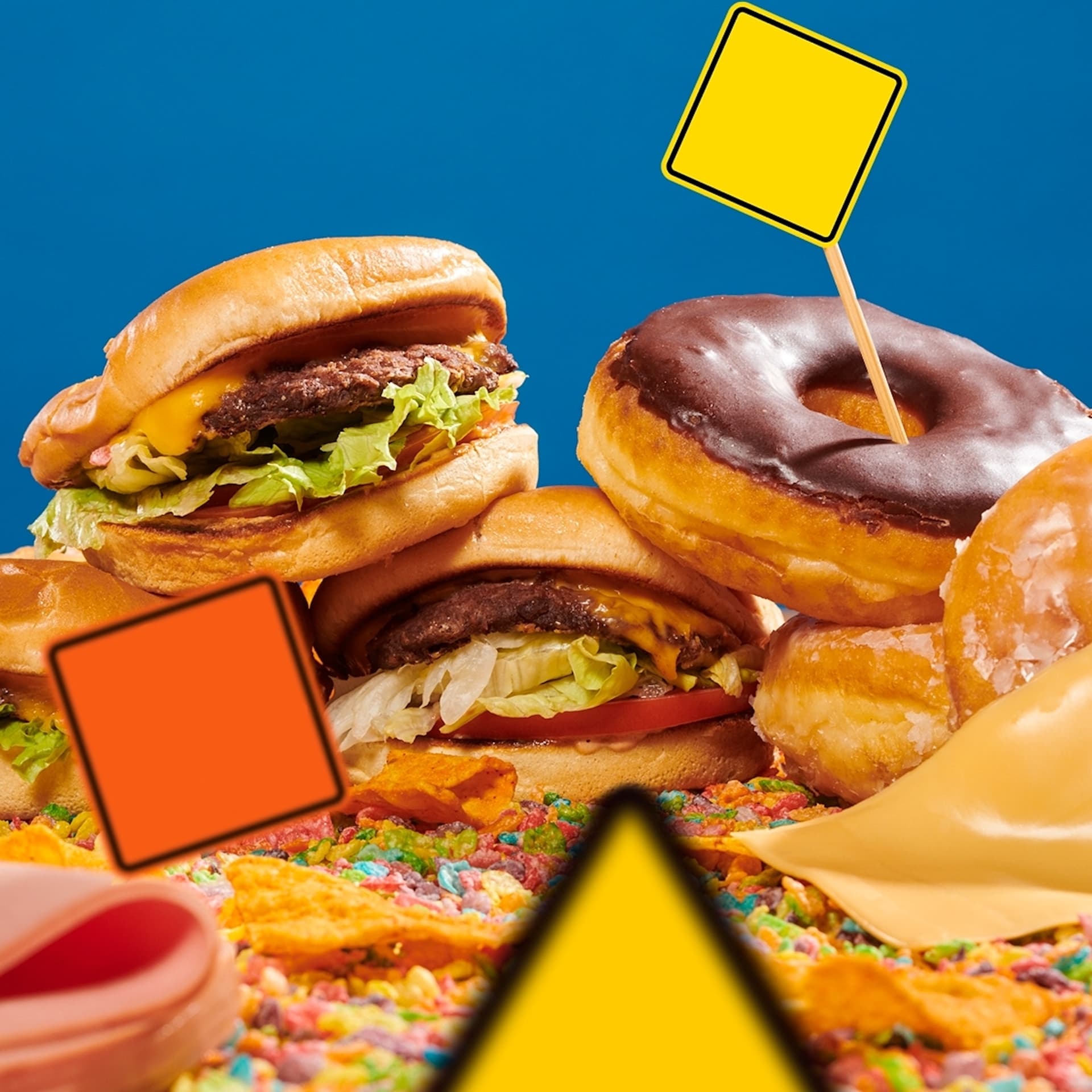
A striking report from the federal government has since found that Americans on average get about half their calories from ultra-processed foods, which have been linked in studies to increased rates of obesity and chronic disease.
A central part of the Make America Healthy Again movement’s food agenda is going after some common ingredients in packaged foods: seed oils, corn syrup and food dyes. But what kind of dent will these efforts make in America’s health?
Today, host Elahe Izadi brings in nutrition columnist Anahad O’Connor and national health reporter Rachel Roubein to discuss MAHA’s popular food policies, what the science says about the threat of these ingredients and some simple steps we can all take to improve our diets.
Read More:
- Coke confirms cane sugar change. RFK Jr. calls it a MAHA win. Is it?
- What science says about artificial food dyes amid RFK Jr.’s push to ban them
- Which oil do you cook with? The answer can impact your health.
- Why additives are so common in America’s food
- Which breakfast is highest in sugar? Test your knowledge with our quiz.
- We analyzed dozens of ultra-processed foods. Here are the healthiest options.
Today’s show was produced by Elana Gordon. It was edited by Peter Bresnan and mixed by Sam Bair. Thanks also to Emily Codik and Fenit Nirappil.
Subscribe to The Washington Post here.