Ask ChatGPT


 Post Reports
26 Jun 2025 · 27m · 7 chapters
New York City Democratic mayoral primary upset—Zoran “Mamdani” Mondani defeats Andrew Cuomo—and what it signals for Democrats; then Capitol Hill coverage of war powers after Trump strikes Iran, and prospects for Trump’s Senate tax bill.
Paul Kane, senior congressional correspondent at The Washington Post; Sarah Ellison, Post reporter covering the NYC mayor race.
Kane covers Congress and war powers legislation; Ellison reported on Mondani’s campaign and voting patterns.
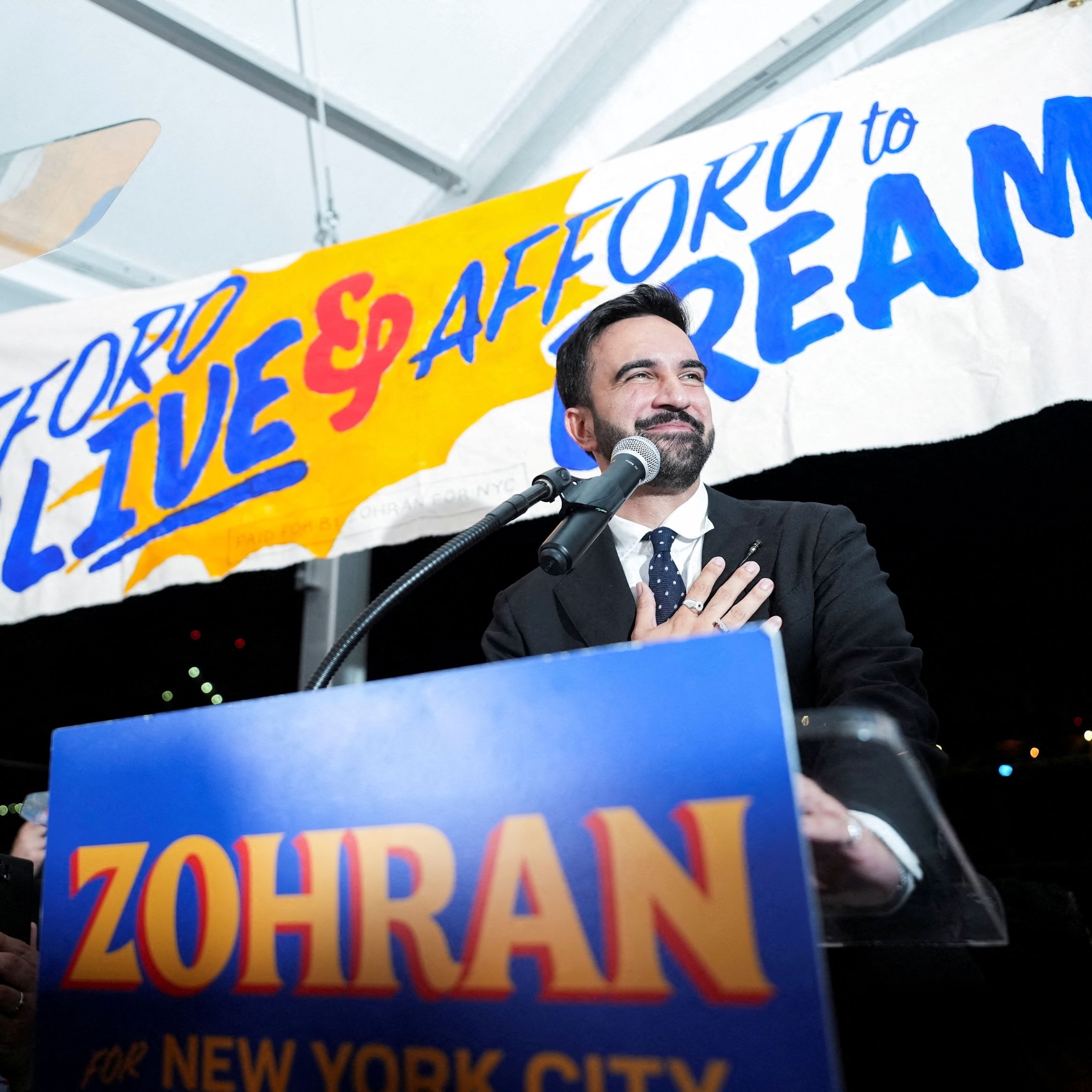
Mondani’s grassroots, generational “anti–old guard” appeal beat Cuomo’s money and union endorsements. His platform emphasized affordability: free buses, freezing rent-stabilized rents (about 1 million units), and city-run grocery stores. War powers: Congress has repeatedly failed to force debate/authority on authorizing force; Tim Kaine’s resolution to require congressional approval was overtaken by the Iran strikes. Tax bill: Senate passage is likely with 53 GOP senators; Rand Paul is the main holdout; debate could start Friday with extensive amendments.
Cuomo’s COVID-era Emmy-winning press briefings; sexual harassment allegations leading to resignation; Mondani’s AOC endorsement boosting Latino support; Trump striking three nuclear facilities in Iran without prior congressional approval.
Written by AI. May contain mistakes.
Analyzing Zoran Mamdani's surprising victory over Andrew Cuomo.
“From the newsroom of The Washington Post, this is Post Reports.”
Exploring Mamdani's platform and grassroots campaign success.
“So, Sarah, you've been covering this race.”
Discussing Andrew Cuomo's rise and dramatic downfall in politics.
“So he had this huge organically growing volunteer organization, which was just like young people who were excited by him got out to knock on doors, hand out flyers.”
Examining the demographics and voter turnout in the primary election.
“And he won an Emmy for those appearances.”
What Mamdani's win indicates for Democratic strategies moving forward.
“His endorsement from Alexandria Ocasio-Cortez, the congresswoman from New York and the Bronx, that helped him leapfrog Cuomo among Latino voters.”
Discussion on the implications of Mamdani's primary win and its impact on Democratic strategies.
“the fact that lots of New Yorkers who had come out before to vote for the Democratic candidate didn't come out for Kamala Harris.”
Analysis of Trump's military actions regarding Iran and Congress's war powers.
“But, you know, the one thing that struck me and I've been thinking about a lot is, you know, Trump did not seek approval from Congress before he authorized this bombing of Iran.”

Get the gist, explore an idea or ask about something said.
 Claude
On Post Reports, what are the key points of this episode?
Searching your listeningAutomatic transcript. May contain errors.
0:00Oh, oh, oh, O 'Reilly! Check engine, ABS, or maintenance light on? Take the guesswork out of your warning lights with O 'Reilly Veriscan. The service is free and provides a report with solutions verified by ASE-certified master technicians. And if you need help, we could recommend a shop for you. Ask for O 'Reilly Veriscan today. Oh, oh, oh, O 'Reilly! Auto Parts! Oh!
0:32I keep having the same thought ever since Tuesday's mayoral primary in New York City. I mean, we all know it came down to these two candidates, and one of them was former Governor Andrew Cuomo. He was trying to resurrect his political career, and he failed big time. I mean, has any politician had as much of a spectacular fall from grace as Cuomo has? Wow. Wow. Well, the only other one that I can think of right there in New York would be Anthony Weiner. Of course. Anthony Weiner is probably the best example, but Cuomo has done it multiple times. And don't forget, he ran for governor in 2002 and flamed out spectacularly.
1:18So he really does keep rising, falling, rising, falling.
1:27From the newsroom of The Washington Post, this is Post Reports. I'm Colby Ickowitz. It's Thursday, June 26. I'm joined this week by Paul Kane, senior congressional correspondent here at The Post. Hey, PK. Hey, Colby. And we're also here with Sarah Ellison, the Post reporter that was covering the New York's mayor race this week. Hey, Sarah. Hi.
1:51I'm so excited to have you both on the show today. Sarah, you're joining us from New York, which is awesome because I want to talk to you about Zoran Mondani. He's the young Democratic socialist who defeated Cuomo in the city's Democratic primary for mayor this week. And I've been thinking, like, Democrats are obviously still grappling with how to rebuild after their 2024 losses. And so, you know, New York Democrats, Democrats nationally can't ignore that in this election, voters seem to have rejected establishment politics and endorsed generational change and, I guess, progressive ideas. Later in the show, we're going to tap your expertise, PK.
2:32You are up on Capitol Hill right now and will help us break down a couple of the newsy pieces of legislation that are floating around Congress. One is about the president's war powers in light of last weekend's strikes in Iran. And we'll also discuss President Trump's big tax bill, which could come up for a vote in the Senate later this week. So I'm very excited, PK, for you to bring us up to speed on all of that. Happy to be here. So let's start with this Mamdani upset. So, Sarah, you've been covering this race. What was your first thought when Cuomo conceded so early on Tuesday night? It was such a shock, not just that Mamdani had come from nowhere.
3:10and he was nipping at the heels of this political dynasty. I mean, Andrew Cuomo is not just a former governor. He's the son of a former governor, Mario Cuomo. And the idea that he had so much money behind him, his super PAC broke all kinds of records. And it just really felt like the movement, I mean, Mom Donnie's people said this, but it was like the movement broke the machine and it was a race where people in New York, unusually people were talking about it. So it's just been incredible to see what everyone expected, that Andrew Cuomo was going to be just a shoo-in for mayor to be toppled in the way that he was.
3:53I mean, PK, what did you think when you saw the news? How is this kind of reverberating in Washington? I think down here in the Capitol and throughout Democratic power, the corridors of power, They are seeing this through the generational lens in the fallout of 2024 in which Biden tried to run for another term, obviously had to bow out because of age. They have been gnashing their teeth down here fighting about generational change. And Cuomo represented that old guard. So this is what the Democrats are going through right now. And it happened in, you know, the world, America's biggest media market and got a ton of attention.
4:37And so that's what we're all talking about. And to your point, PK, I mean, much of Mom Donnie's appeal since he's 33 years old was that he's young, but also he was pitching himself on issues that really resonated with younger voters. Sarah, can you kind of walk us through, like, what was his platform? What was he out there talking about? Sure. You know, I mean, he's just a three-term assemblyman in a district that overlaps with New York Representative Alexandria Ocasio-Cortez. He's a Democratic socialist. Which, just to say, that means he's a Democrat, but he's like Bernie Sanders on the far left, kind of anti-capitalist pro-worker.
5:20So that is an unusual party or platform to be running on here. And his campaign was really focused on affordability and how people increasingly cannot afford to live in New York City. So he promised things like free buses. He promised to freeze the rent on rent-stabilized apartments in New York where actually one million New Yorkers have rent stabilization. So that affects a much larger portion of the population than I think most people realize. And he even talked about developing city-run grocery stores that could lower the cost of produce for people. So he had this huge organically growing volunteer organization, which was just like young people who were excited by him got out to knock on doors, hand out flyers.
6:09You know, New York Attorney General Letitia James likened him to Obama in the way that he caused so much excitement and seemed to sort of come out of nowhere. Yeah, it was a real grassroots campaign, right? Yes, yes. He had a fraction of the money that Cuomo had. And Andrew Cuomo was able to get endorsements from almost every union in the city. He had endorsements from, you know, former President Bill Clinton. And the thing that was interesting is that all the attacks that Andrew Cuomo made on Momdani, it might have actually helped Momdani for Andrew Cuomo to be saying, like, Like, he's new. He doesn't have a lot of experience.
6:52He says he's going to give you free buses and we're not going to be able to afford that. The younger people who were supporting Mamdani felt like all those attacks really resonated in a positive way, that Cuomo was coming from this sort of atrophied, older part of the party that, you know, they felt had sort of gotten us into this mess, quote unquote, to begin with. And remind us, we've talked a bit about Andrew Cuomo, but how did he fall from grace? Because what I remember during COVID is that he was like a superstar, right? And he was out there every day and really giving everyone updates on how the city was doing.
7:28And then suddenly he was like not wanted. So Andrew Cuomo was considered a pretty successful governor of New York. And Cuomo, he became a kind of national figure during COVID because he ran these incredibly comforting to many people daily press conferences on how things were going. And he won an Emmy for those appearances. He became the person who was speaking to the nation at a time when a lot of people felt like Donald Trump was really failing. And then at the very end of his tenure, a number of women came out and made sexual harassment allegations against him. And by the end, he had to resign in disgrace over these allegations.
8:17Now, Cuomo has responded to all of these charges. He was initially contrite about the women, and now he's really launched a kind of scorched earth campaign against them. But he's denied sort of wrongdoing in every single one of these cases. Sarah, it strikes me what you said about these comparisons to Barack Obama. And obviously, since Barack Obama, the Democrats have really struggled to put together the coalition that Obama did in 08 and again in 12. You know, young voters, voters of color. And we saw a lot of those voters defect from the Democrats in 2024, some of them even turning to Donald Trump.
8:54So when we look at who voted in New York, was Mondani successful in winning back some of those voters that didn't show up for Harris in 2024? I went through some early voting analysis with a CUNY professor who just walked me through how much Mamdani really brought out a new set of voters. So early voting was huge compared to 2021, and it really skewed very hard for him. And that represented a lot of people who had not voted in a primary between 2012 and 2024. So he got a large number of first-time voters. So those are young voters that are historically incredibly hard to turn out. He did get fewer black voters.
9:40His endorsement from Alexandria Ocasio-Cortez, the congresswoman from New York and the Bronx, that helped him leapfrog Cuomo among Latino voters. That was actually an incredibly effective moment for him because he did not have the traditional multiracial group that you saw voting for Obama. I mean, PK, does this feel like a template for how Democrats can kind of win back that coalition? I think what national Democrats are trying to look at here is the template of how to do it, how to go out and be authentic to yourself and have a candidate who is charismatic and is not afraid of all the different forms of media communications in this modern era, whether it's talking to any podcaster out there.
10:38filming videos that go to places like TikTok. And I think there are elements of that that National Democratic Party are trying to look at and learn from. I think they view some of his proposals as too far left. And there are elements of how to do it. And he definitely latched on to inflation and pocketbook issues in a way. To some degree, it looks a little bit like throwing spaghetti on a wall, whether you're talking about city-run groceries and free buses and stuff like that. But at least they were ideas. They were things that people could connect to and understand directly in their lives. Whereas the Biden-Harris campaigns, when it came to talking about inflation, they were talking about things that would happen in several years through a tax credit benefit that would, you know, eventually lead to lower energy bills in your electric and gas.
11:42And it wasn't directly in their daily lives. They felt like hard to grasp. And here you had a young candidate who was just like, hey, you're going to have cheaper groceries around the corner. You're going to be able to jump on the bus for free. He was trying to throw spaghetti against the wall. That was more than what the Biden-Harris campaign people were trying to do. They really didn't even bother making the pasta. Well, I think that what's interesting about Mamdani is that his message very much was focused on, like, as you said, PK, really immediate affordability issues, you know. But the Republicans are trying so hard to attack Mamdani, and other Democrats are, frankly, attacking Mamdani.
12:26So it's going to be interesting to see how he can grapple with that. I mean, you saw President Trump jump on it, like, right away. Exactly. Exactly. And really attack Momdani. I forget the exact language that he used. I should have pulled it up. But like, you know, it's just kind of crazy and the Democrats have lost their mind. They want to make him the face of the Democratic Party. People are saying, like, you have to choose. You either have to embrace him wholeheartedly. When I say people, I mean sort of Republican influencers and some electeds. The Democrats either need to own him or reject him.
12:58You can't have it both ways. And that is the play to try to kind of cut this off at its knees and make it kind of a purity test. I do wonder, guys, like Vermont Senator Bernie Sanders has been saying now forever that if the Democrats were to run, you know, an inspiring progressive, like that's the way to win. And that the problem with the Democrats is that they keep playing the same playbook over and over and over again. And New York City is obviously an isolated place. You can't really extrapolate that to the whole country. But was Sanders right? Like, is that the direction the party should be headed in order to start winning again?
13:38What happened in New York, New York City in November was actually really instructive for people. And I think it's part of the reason why people are taking such a pause and seeing what happened with Mamdani as a possible path forward, which is that in November, Donald Trump won 30 percent of the vote in New York City. In the last election, he won 23%. And the difference of those seven points came from the fact that lots of New Yorkers who had come out before to vote for the Democratic candidate didn't come out for Kamala Harris. And so to get enthusiasm, I mean, it's such an organic thing. You cannot buy it.
14:19You cannot manufacture it. And the ironies of Mamdani's win and what progressives and younger people here have said is that the Democrats have been casting about for what's our path forward? What are we going to do? How are we going to get people back on board? And the moment you have a candidate like Mamdani, the entire establishment lines up to kill him politically. And so it's amazing that something like the New York mayor's race has tapped into so many of these national questions, but it does really pose this tricky question for how Democrats are going to move forward. You don't want to dismiss this kind of enthusiasm.
15:01And the fact that he was successful is really energizing to some people and really frightening to others. Right. And so to that point, Sarah, briefly, this was just a primary. What happens next? So Mamdani will be the Democratic nominee in New York. And then, I don't know if people have forgotten this name, but we have a current mayor, Eric Adams, and he is running as an independent. He did not run in the primary because he, I think, worried about his prospects in that primary. His popularity really tanked after he was indicted in a corruption scandal. We also have a Republican, Curtis Sliwa, and then Andrew Cuomo may actually run as an independent in this race.
15:48And he's, Yeah. What he has said is that he is trying to figure out whether or not he's going to run in the general. He's looking at his path. He's consulting with people. But it's very possible that this general election is going to be a rematch between Mamdani and Cuomo, adding in Eric Adams, the incumbent, with a little challenge from Curtis Lee, while the Republican, but unlikely. Oh, that'll be wild to watch. So after the break, we're going to talk about what the Senate could do with Trump's big, beautiful bill this week and why Congress has kind of ceded its power to determine when the U.S.
16:26goes to war. We'll be right back.
16:42Thumbtack presents Tile Trouble. Every single time I use my sink, I make eye contact with the uneven grout on my kitchen backsplash. The crooked corners eye me and I'm haunted by more tiling questions than I thought possible. What kind of pro can fix a backsplash? Can I replace one cracked tile or should I replace them all? What? What if I just use Thumbtack? I can hire top-rated pros, read reviews, and compare prices with a tap. All on the app. Thumbtack knows homes. Download the app today. John Deere is putting in work and putting up highlights. Oh man, look at those passes. Tillage, planting, harvesting.
17:20Three years in and these pre-owned machines are still at the top of their game. We're talking reliability, performance and long-term potential. And get this, these veteran machines can pick up the latest precision tech with ease. You know it and fans ready to add John Deere certified pre-owned equipment and more options to their lineup can shop at machinefinder.com.
17:44So switching gears a bit, guys, obviously the biggest story this week was Trump's decision to strike three nuclear facilities in Iran over the weekend. But, you know, the one thing that struck me and I've been thinking about a lot is, you know, Trump did not seek approval from Congress before he authorized this bombing of Iran. And not only that, there's reporting that Trump didn't even tell some of the congressional leaders until after it happened. So, PK, how unusual is that? Like so many things that happen with Trump is he'll take a slight precedent and then just drive a bulldozer through that precedent.
18:26There have been plenty of presidents, George W. and Obama and Trump 1.0 and Biden, who have ordered bombing campaigns in places that they haven't quite had a actual congressional resolution saying you can do this. So that's not entirely unusual. This was a big, big decision because we have not had a real congressional debate on striking Iran. We've talked about it. People have – John McCain ran for president in 2008. He like jokingly once was singing, bomb, bomb, bomb, bomb, bomb, Iran. That old Beach Boys song, Bomberin.
19:16Oh, my God, I forgot about that. But, you know, it's not exactly of a real debate and vote in the Senate. And that's not entirely unusual. But going to this length, a lot of these other campaigns, bombing runs that like Biden was doing were against, you know, little rebel groups like the Houthis. this was hitting another nation state, a country of 90 million or so people. And that definitely crossed a line for a lot of members of Congress, mostly Democrats. And now, P.K., you're following this resolution in the Senate, right, that actually came up before Trump decided to bomb Iran that would try to get Congress involved again in whether to use military force abroad, I think in Iran specifically.
20:08Who's been pushing that and what would it do? Virginia Senator Tim Kaine, former vice presidential nominee in 2016, he has been saying for 10 years or more, Congress needs to step up on war powers issues. And he put together a resolution that was going to force Trump, before he strikes Iran, formally say you have to come to Congress in order to do that. Well, Trump went ahead and ordered the attack over the weekend before the Senate could even debate a resolution that was meant to force a debate on a war resolution. So, yeah, it's kind of moot at this point. And they've already hit a ceasefire.
20:53And so Republicans are already now just dismissive of it. They will be able to probably force a vote, but it will not get a majority in the Senate. And the House will probably be able to dismiss it with a sort of tabling motion and it'll go nowhere. And that is just what happens over and over again when it comes to one of the most highest powers of Congress. And they just aren't flexing their muscles at all. Yeah, that's interesting. Say more about that, because I know that this week you wrote about the long history of the failed attempts by Congress to say, like, hey, this is our job. Under the Constitution, we get to declare war.
21:32So why does Congress keep failing to assert those powers? Congress has been so AWOL on this issue for so long now. They have done these stops and starts where they say, OK, we really should update that war resolution from 2001 after the 9-11 attacks. And let's have a debate in the Senate Foreign Relations Committee about this. They did that in 2018. It kind of went round and round and went nowhere. The Obama White House in 2014, when the Islamic State had a reign of terror in Syria and some other parts of the Middle East, they went to Congress and said, yeah, you know, you guys draft an actual war resolution, what they call the AUMF, Authorization for the Use of Military Force.
22:23And it took an entire year and it only got so far as the Senate Foreign Relations Committee and ended on a 10-8 party line vote and then went nowhere the following year. They have done this over and over. Two years ago, the Senate actually voted to repeal the 1991 and 2002 war resolutions for the two Iraq wars. They were like, wow, we've actually done something. All they did was repeal those two. They didn't actually set new guidelines or parameters for war policy. And both parties have bungled this. It's happened under Republican presidents and Democratic presidents and Republican majorities and Democratic majorities.
23:07It's really been an incredible, incredible failure by Congress. Yeah. I mean, and to that point, you know, Sarah, in addition to covering the New York's mayoral race for us, you are a member of our democracy team. You and I were colleagues on that democracy team. What does it mean that Congress seems unable to wield one of its, you know, constitutional powers? Sure. This is potentially one of the most important jobs that Congress has, which is to really insert itself in the declaration of war. But as we've seen, Congress has stopped standing up for its own job in this separation of powers on many different issues.
23:51And this is something that has developed partly because of the way that we've gerrymandered congressional districts. And Donald Trump really has also reshaped the party and driven people out of Congress who disagree with him. He talks about primarying anyone who sort of gets in his way on the Republican side. And so this is, it's a real democracy issue. It's really something that people who watch and worry about the health of American democracy talk about frequently that if Congress can't even, you know, decide that going to war is something that they have a role in determining, which is a constitutionally ordained power.
24:39What are they standing up for? And another thing that's going on on the Hill this week, speaking of acquiescing to Trump's agenda, is his signature legislation, this big, beautiful bill, he calls it. And the bill would, PK, correct me if I'm wrong, disproportionately benefit kind of higher earners by cutting taxes for them while reducing funding for benefit programs like food stamps and Medicaid, which go to low-income Americans. And a version of this, you know, we've covered this past the House a few weeks ago. So the Senate version could come up for a vote this week. What's the chances of this thing actually passing?
25:18The chances of something passing are pretty good at this point. I don't know exactly when, and the contours of the bill might still change. But there's a majority of senators of the 53 Senate Republicans. The only one who really is ruling it out at this point is Rand Paul because the bill, in addition to everything else you said it does, it grants a$5 trillion lift on the debt ceiling, which used to be considered a line you shall not cross as Republicans. I'll plug – if you go to WashingtonPost.com, anybody can find – we have a headline that will take you to a calculator that our data people and economic policy reporter Jacob Bogage put together that you can riff through and see what the impact will be on your own income.
26:22So I encourage people to do that. That's very cool. But what they would like to do, Senate Majority Leader John Thune would like to start the debate sometime on Friday, open up the first motion, vote, move on to debate, and then go into an endless sea of amendments that people can come forward with. And once – if he gets that rolling, he can still be negotiating with people on the final piece of the bill because at the very end of that session that they always call Votarama, this long, long marathon of votes, he can do a final amendment, which is the final version of the bill, put it down and vote.
27:07And that would be what goes back to the House of Representatives. I think they will get there. I don't know if it's going to be early next week instead of this weekend. They might need more time. Some people just think, yeah, you roll the dice, get it going. And in the end, nobody wants to vote against Trump. Right. You know, that's that's very true if it comes down to one or two people who are, you know, the difference between something passing and not passing. But if there are upwards of 10 or 12 Senate Republicans who still want to negotiate, then we will probably negotiate into next week. Well, thank you guys so much.
27:50This has been a great conversation. I loved having you both on. And that's it for today's episode. So thanks, guys. Thank you. Thank you. Take care.
28:36We'll see you next time.
28:56reliability, performance, and long-term potential. And get this, these veteran machines can pick up the latest precision tech with ease. You know it, and fans ready to add John Deere certified pre-owned equipment and more options to their lineup can shop at machinefinder.com. Booyah! Did you know you can play the Washington Post's games for free? Find the crossword, keyword, ridges, and on the record in the Washington Post app or at washingtonpost.com slash games. No subscription required. you
Mamdani’s primary win in New York excited progressives as the Democratic Party tries to find its footing after its 2024 losses. Host Colby Itkowitz talks with national enterprise reporter Sarah Ellison about whether Mamdani’s victory could be a road map for the party. They also talk with senior congressional reporter Paul Kane about whether the Senate will pass Trump’s big tax bill and how congressional Republicans have continued to cede power to the executive branch.
Today’s show was produced by Laura Benshoff. It was edited by Lucy Perkins and Reena Flores. It was mixed by Sean Carter. Thanks also to Arjun Singh.
Subscribe to The Washington Post here.