
In short
Post Reports Podcast Summary
Episode Title
Meet the Man Who Invites 1,000 People to His House Every Month
Episode Overview
- Host: Maggie Penman
- Date: September 27, 2023
- Focus: David Weiner's monthly open-house jazz jam sessions in his D.C. rowhouse, exploring community building and social connection.
Key Themes
- Community and Connectivity: The episode highlights the importance of social gatherings in fostering community ties.
- Perseverance in Hosting: Weiner's dedication to hosting these events for over 15 years, despite challenges and exhaustion.
- Courage Amidst Worry: The conversation revolves around facing fears associated with hosting and the joy that comes from community engagement.
Key Details
- Event Description:
- Takes place on the 21st of every month, rain or shine.
- Attendance ranges from 40 to 100 people.
- No formal invitations; word-of-mouth spreads the news.
- Suggested donation of $21 to cover costs, with guests encouraged to bring food or drinks.
- An open jam session featuring both professional and amateur musicians.
- David Weiner:
- Host and owner of the two combined row houses, which create a spacious, open venue for the parties.
- Responsible for cooking and cleaning, finding joy in the act of hosting despite the physical demands.
- Motivated by guests' appreciation and a sense of obligation to continue the tradition.
Notable Quotes
- "I feel kind of an obligation to keep it going." – David Weiner
- "I worry about everything, but I don't let it stop me." – David Weiner
Additional Insights
- Evolution of the Parties:
- Initially skipped November and December but found that these months attracted many guests looking for social activities during the holidays.
- The parties have become a staple of community social life, with an email list exceeding 1,000 recipients for guest reminders.
- Atmosphere and Space:
- The unique open layout of Weiner's home allows for a warm, welcoming environment filled with art and plants.
- Guests enjoy the eclectic decor, which reflects Weiner's personal history and travels.
Lessons Learned
- Creating Community: The episode emphasizes that anyone can create a version of a community gathering, regardless of the scale or resources available.
- Overcoming Fear of Hosting: It encourages listeners to confront their apprehensions about social gatherings and to experiment with hosting smaller events.
Conclusion The episode encapsulates the spirit of community through David Weiner's monthly jazz sessions, showcasing how one person's initiative can have a profound impact on bringing people together. It inspires listeners to foster connections within their own circles, even in simple ways.
Contact Information
- Feedback: Listeners are encouraged to share their thoughts via email at podcasts@washpost.com or directly to Maggie Penman at maggie.penman@washpost.com.
Further Reading/Listening
- For more uplifting stories, the podcast suggests checking out *The Optimist* section of The Washington Post.
---
This structured summary provides an overview of the podcast episode, highlighting the core themes, significant details, and takeaways, making it accessible for readers looking for a concise understanding of the episode's content.
Written by AI. May contain mistakes. Listen to the episode to check what was said.
Transcript
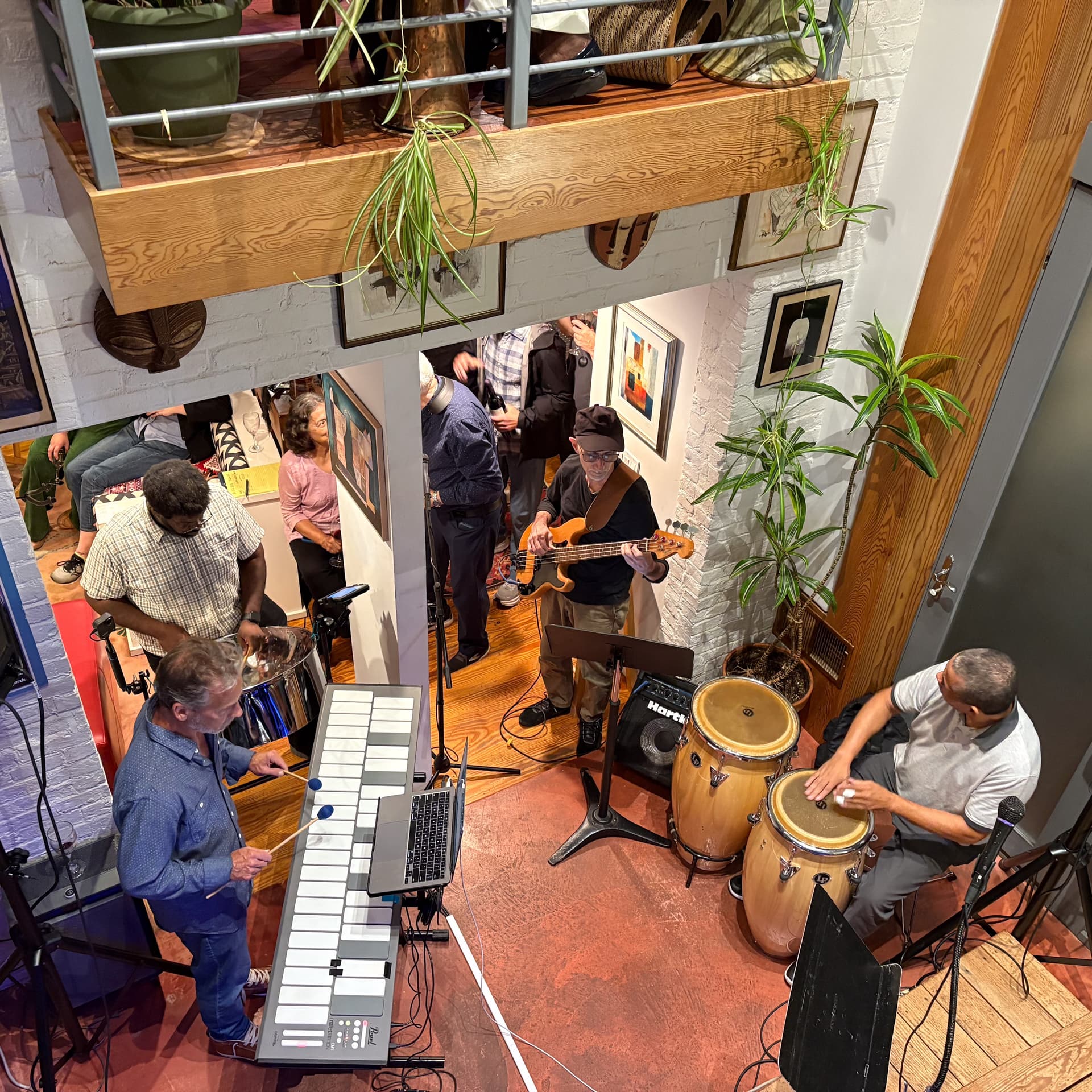
Automatic transcript. May contain errors.0:07David Weiner is washing dishes. I'm David Weiner and welcome to the 21st of 21. It's the 21st of the month, so his D.C. row house is full of people. Some of them are friends he's known for decades. Some of them are people he's never met. It's a party basically for the community here, but the invitation is open. It was created with the idea of a big jam session. There's a jazz band playing downstairs and the music is floating up through the house. A few of the musicians are professionals, but others are amateurs, people who showed up with an instrument and enough courage, liquid or otherwise, to join in.
0:50David Weiner:I did play the French horn, which doesn't work very well at one of these events. The price of admission is a$21 suggested donation. That just about covers costs and pays the house band. A bottle of wine or food to share is always welcome. And this party has happened basically every month for 15 years. It draws anywhere from 40 to 100 people of all ages every month. And the question I had for David is how does he keep this going? I'm Maggie Penman. This is Post Reports Weekend. It's Saturday, September 27th. I'm a reporter for The Optimist, a section here at The Post where we write about the best of humanity.
1:37Things that are going right in the world. Today, I'm bringing you along for some reporting I did about one person who is building community with an open-door policy. We all know that socializing is so good for us. Building community is so important. But we're busy and distracted, and keeping it going can be hard. I can't even keep my book club going. So I wanted to ask David, what is the secret to throwing a great party? Because whether or not you want to invite a thousand strangers to your house once a month, I'm assuming you don't, I think there's something for all of us to learn here about creating and sustaining a community.
2:23When it comes to how he got here, the first thing David will tell you is that there's a lot that he's learned over the last 15 years. Originally, the first year, we skipped November and December because Thanksgiving and Christmas. But then he realized those were some of his guests' favorites. It occurred to me that people would be coming to town and maybe they'd be looking forward to something to do. And that was absolutely the case. And so it was huge and a lot of out-of-town people. David prefers the warm weather months, in part because he doesn't have to figure out what to do with everyone's coats.
3:05It's not easy for David to do this. The coats are just one problem. This event takes work. He cooks, he cleans, he entertains. It can be exhausting. I mean, part of the reason he likes washing dishes is because it gives him a break from socializing. Doing things like doing the dishes keeps me from having to be sociable. Or not sociable, but I mean entertaining. And he does think about stopping. He's 75 years old. Do you imagine yourself continuing to do this for a lot longer? Only in the sense that I'm not thinking about not doing it. thinking of myself being 85 and doing it seems a little preposterous.
3:44But at the same time, you know, why not? But what I find so inspiring about David is that despite all of the work, he still thinks it's worth it. People's appreciation for it is motivating. I feel kind of an obligation to keep it going. Multiple times during the night, I see David get pulled away from a conversation or from washing the dishes by guests who want to thank him. David, honestly, I am blown away. I've never been to anything like this. And you did all the cooking. Parvati Ramchandani is a physician in her 70s. She's here tonight for the first time. But I really, I'm so, I will definitely.
4:26I feel so privileged to know Mary Glenn, who said, you know, you have to come, you have to meet David.
4:35It's not like David advertises this party. right? People find out about it through word of mouth from their friend or in the case of one woman I talked to, someone she was dating who brought her and he knew about it because someone he had dated before that brought him. Anyone who comes can add their name to an email list where David sends monthly reminders, which are forwarded and passed along. That email list now has more than a thousand recipients. I've been doing this for a really long time, practically since it started. And it's just such a great way to see neighbors that I haven't seen in a while or that I only see once a month.
5:14Nan Raphael is sitting outside on David's roof deck. She's 70, she's a piccolo player, and she spent 26 years playing in the U.S. Army Field Band. In fact, when I first started coming, I would bring my piccolo and jam with the band, but I haven't done that in a while. Now she mostly just comes to sit around with her neighbors, have a glass of wine, catch up, and listen to the music.
5:41After the break, the secret to what makes David's parties work so well, and how we can all replicate just a little bit of it. We'll be right back.
6:09Everyone I talk to agrees. Part of what makes this party work so well is the space. David's home is actually two row houses next door to each other. He bought the first one in 1983 and the second one in 1995. And eventually he combined them. And that created this really incredible, open, theatrical space. The band plays on the first floor right next to his bedroom. And the guests sit on the stairs and fill in the loft-like area above them. There are no doors in the house except for on the bathrooms. The house is also full of plants and art. David's father was a painter and some of the pieces are his.
6:47Others come from David's world travels when he was making documentaries. And part of the pleasure of going to this party is just wandering around looking at all of David's cool stuff. Wow, it's a lot of new people already. It's a good hop-in tonight. Yeah, it sure is. The turnout tonight is really good. Every couch and chair is filled. People are even sitting on the floor and on the stairs. David is staying busy, running back and forth from the kitchen. I don't see him sit down once. The guests start to trickle out around 10 p.m., and then the party gets a second wind. Musicians who have been playing at clubs and bars around the city finish their sets and come play here again, just for fun.
7:35The last guests leave between midnight and 1 a.m. I asked David if he ever had to tell people to leave. He said no, people seem to know when it's time to go home. Has anyone ever stolen anything? He said not really, although he always seems to be missing a few forks. Doesn't know why. Does David ever worry about too many people showing up? Or his art? Or his home with all of these people traipsing through it? David thought for a moment about that one and said, I worry about everything, but I don't let it stop me.
8:13I do feel like this is the lesson that I took away from talking to David. It kind of feels like the definition of courage. The fact that he does worry, right? He is scared, but he doesn't let it stop him. I think a lot of us let the worry part get in the way. Like, what if I have a party and no one shows up? And David does think about that. But after 15 years and well over 100 of these parties under his belt, he's gotten good at this monthly trust fall. And by making this space, by opening his home, he is showing up for his community. And they show up for him too. The main thing I'm trying to take away from David's Jazz Party is that we can all do our small version of this.
8:58I don't have an amazing house or the stamina to host a party until 1am. But maybe I can try again with the book club.
9:11I'm Maggie Penman, and I'm going to be bringing you more stories like this one on the weekend, along with my other colleagues from the Optimist team. So please send us an email and let us know if you like it. You can reach me at maggie.penman at washpost.com. And you can find more hopeful and inspiring stories online and in our newsletter. We'll put a couple links in our show notes. Today's episode was reported and produced by me and Ted Muldoon, who also mixed the show. Thank you to my editor, Alison Klein. Have a great rest of your weekend.
9:51Thank you.
From the publisher
David Weiner is washing dishes. It’s the 21st of the month, which means his D.C. rowhouse is full of people. Some are friends he’s known for decades, others are people he’s never met. There’s a jazz band playing standards downstairs, and the music is floating up through the house. Some of the musicians are professionals, others are amateurs who showed up with an instrument and enough courage — liquid or otherwise — to join in.
The price of admission is a $21 suggested donation to cover costs and pay the house band. A bottle of wine or food to share is welcome, too. Weiner always makes salmon and provides a big salad, as well as some snacks. Nearly everything else on the crowded table of food is brought by guests.
The monthly party happens rain or shine, whether the 21st falls on a Monday or a Tuesday or a Friday. There was a hiatus during the pandemic, but otherwise it’s happened almost every month for 15 years, drawing anywhere from 40 to a hundred people of all ages each time.
The question I had for Weiner is: How does he keep this going?
You can read more about Wiener’s jazz party here.
If you’re looking for more surprising, delightful stories about the best of humanity, check out The Optimist from The Washington Post. We also have a newsletter: Subscribe to get stories from The Optimist in your inbox every Sunday morning.
Today’s show was reported and produced by Maggie Penman and Ted Muldoon, who also mixed the show. The Optimist’s editor is Allison Klein.
If you liked hearing this story on “Post Reports,” send us an email at podcasts@washpost.com. You can email Maggie directly at maggie.penman@washpost.com.
Subscribe to The Washington Post here.