
In short
Podcast Episode Summary: Negotiating over Trump's Peace Plan for Gaza
Podcast Information
- Title: Post Reports
- Hosts: Martine Powers and Elahe Izadi
- Episode Title: Negotiating over Trump's peace plan for Gaza
- Episode Description: The second day of peace talks in Egypt between Israel and Hamas aimed at ending the ongoing conflict, securing hostages' release, and increasing humanitarian aid to Gaza.
Episode Highlights
Current Context
- Date of Discussion: October 7, 2023
- Location: Sharm el-Sheikh, Egypt
- Background of the Conflict:
- Two years ago, Hamas launched a surprise attack on Israel, leading to significant casualties and the taking of hostages.
- Israel's military response has resulted in severe devastation in Gaza, with over 60,000 fatalities reported.
Post Reports Insights
- Host: Colbie Itkowitz
- Guest: Michael Birnbaum, Washington Post foreign policy reporter
- Main Discussion Points:
- Overview of the peace talks involving key players from Israel, Hamas, the U.S., and other nations.
- Examination of Trump's role in the negotiations and the current state of the proposed peace plan.
Key Aspects of Trump's Peace Proposal
- Structure of the Proposal:
- 20-point plan designed to establish a ceasefire, facilitate the exchange of hostages, and provide humanitarian aid.
- Initial focus on:
- Ceasefire agreement.
- Israeli withdrawal from parts of Gaza.
- Release of hostages by Hamas and Palestinian prisoners by Israel.
- Future Governance of Gaza:
- Discusses the possibility of a technocratic administration to manage Gaza post-conflict, without a role for Hamas.
Participants in the Negotiations
- Notable Figures:
- Khalil al-Hayat (Hamas negotiating team lead).
- Ron Dermer (Israeli official close to Netanyahu).
- Jared Kushner (former U.S. envoy involved in Middle Eastern diplomacy).
Dynamics of the Negotiation
- Secrecy of Talks:
- Ongoing discussions are shrouded in confidentiality, making it difficult to ascertain progress.
- Tensions Present:
- Both sides exhibit a lack of trust, complicating the hostage release and ceasefire arrangements.
- Concerns over operational security prevent Hamas from releasing hostages while under Israeli military pressure.
Public Sentiment and Pressure
- Israeli Public Opinion:
- Growing frustration with the prolonged conflict and eagerness for a resolution.
- Trump's Pressure on Netanyahu:
- A more assertive approach from Trump compared to prior administrations is noted.
- Recent diplomatic incidents have increased tension between the U.S. and Israeli leadership, pushing Netanyahu to conform to U.S. expectations.
Future Considerations
- Potential Outcomes:
- If the negotiations fail, Israel threatens to escalate military actions against Gaza.
- The proposal hints at a roadmap for Palestinian statehood, but details remain ambiguous, leaving room for interpretation on both sides.
Conclusion
- The episode leaves listeners with a sense of cautious optimism regarding the peace talks, though significant obstacles remain. The discussions reflect complex historical grievances and the urgent humanitarian needs of the people in Gaza.
Key Takeaways
- Continued Violence: The humanitarian crisis in Gaza persists amid negotiations.
- Importance of Trust: Mutual distrust hampers progress in negotiations.
- Role of External Influences: U.S. involvement, particularly Trump's stance, plays a crucial role in shaping the dynamics of the peace talks.
Production Credits
- Producers: Rennie Svirnovskiy, Lucas Trevor, Sabby Robinson
- Editor: Reena Flores
- Mixer: Sam Bair
For more insights and updates, listeners are encouraged to subscribe to The Washington Post.
Written by AI. May contain mistakes. Listen to the episode to check what was said.
Transcript
Automatic transcript. May contain errors.0:00Right now during the President's Day Sale, you can get a Washington Post premium subscription for just$3 every 4 weeks. And that includes three extra accounts to share with friends or family. After your first year, renews at$19 every four weeks. The Washington Post. Power. Perspective. Premium. Learn more at WashingtonPost.com slash subscribe.
0:30My name is Claire Parker, and I'm the Cairo Bureau Chief for The Washington Post. I'm close to the Red Sea resort town of Sharm el-Sheikh, which is on Egypt's Sinai Peninsula. It's pretty hot here, and it's a beach town where normally it's just filled with tourists. But the past two days, it's also played host to talks between Israel and Hamas over Trump's peace plan to end the war in Gaza. My colleague Claire is reporting from Egypt right now at a critical time. Today is exactly two years since October 7th, 2023. That's the day Hamas launched a surprise attack on Israel. They targeted communities on the country's border with Gaza, killing 1 ,200 people in their homes and at a music festival.
1:20They also took 251 hostages. Israel's retaliation has devastated Gaza. They've killed more than 60 ,000 people there. 170 ,000 more have been injured in drone strikes and ground operations. Millions are being starved. Their homes destroyed. Now there are glimmers of hope for an end to the war. On Tuesday, Israel and Hamas entered a second day of peace talks, the closest they've come to a peace deal in a long time. It's been difficult to understand precisely how things are going, as the talks only began yesterday. and they are conducted under intense secrecy. So it's hard to know how soon we'll reach an agreement to cease fire and then beyond that, how soon or whether the parties will agree at all on the more difficult questions of governance and security in Gaza after the war.
2:25From the newsroom of The Washington Post, this is Post Reports. I'm Kolbie Echowicz. It's Tuesday, October 7th. Today, as Claire continues her reporting on the talks in Egypt, we turn to White House reporter Michael Birnbaum in our studio. Michael brings us more context for these peace talks and what exactly President Trump's role has been in them. We talk about how these negotiations are different from the other times the sides came to the table and what happens if they fail.
3:05Michael, thanks so much for coming on. Thank you, Colby. So let's begin. Michael, what is the latest news right now out of these peace talks between Israel and Hamas? So we have right now a bunch of Hamas officials, a bunch of Israeli officials, and a bunch of American officials, along with representatives from other countries, gathered in a Egyptian resort city on the Red Sea. And they are talking about how this terrible war in Gaza might end and facilitating some sort of deal between the Israelis and Hamas. And this was a peace deal that was proposed by President Trump? Like, what's President Trump's involvement in all of this?
3:47So President Trump came to office saying he was going to end a whole bunch of world conflicts very, very quickly. This two-year-long war in Gaza is one of them. And he has gone on and off in terms of the intensity of negotiations. But this is something that he's come up with along with some of his advisors in the last few weeks. And it does seem the closest we've been to some end to the work. So what do we know about what's actually in this proposal? So this is a 20-point proposal. It's a couple of pages long.
4:31It has a couple of phases. It's a little complicated, and it's also short on some details. But the very first thing that would happen is fighting would stop. The Israelis would pull back partway from territory in Gaza. And Hamas would release the Israeli hostages that it's holding along with the remains of dead hostages. And Israel would release Palestinian prisoners who have been held. And then they would surge in humanitarian aid. And so how many hostages do we know are left in Gaza, Israeli hostages? The Israelis believe that there are 20 living hostages and about, well, they say 28 remains of hostages.
5:21And then the second phase, you know, there are many bigger questions about the future of Gaza, how it would be run. But the idea is that eventually Israel would withdraw its forces from Gaza, Hamas would be disarmed, and then we'd have some kind of technocratic group of Palestinians who would run the day-to-day administration of Gaza territory. So that's keeping the lights on, you know, hospitals, basic security. Has Israel and I guess the U.S. given up on this idea that Israel would just take over Gaza at some point? Trump was talking about creating a Riviera in Gaza with hotels and making it a vacation destination.
6:10Like, has that all been put to the side? It has been. Palestinians who want to stay in Gaza would be able to stay in Gaza. So there was this idea earlier in the year from Trump of basically bulldozing the whole thing. Right. Displacing all the Palestinians. Displacing the Palestinians, which the Americans said would be voluntary, and completely rebuilding it into some ritzy destination. And that's off the table now. It would just be a Palestinian territory for Palestinians. But just to be clear, Michael, this second phase that we're talking about, that's not really being covered in these talks.
6:49they're still negotiating this first phase, which is around hostage release, the exchange of prisoners, a ceasefire. Yes, exactly. We are still in a place where the two sides don't actually agree on the details, even though the plan is pretty clear. What on paper exists is that Israel is going to pull back partially from the deepest parts of Gaza into something a little closer to Israeli territory. and then Hamas is supposed to release the hostages within 72 hours. But the Israelis are saying they want Hamas to release the hostages first. Right. Which Hamas doesn't want to do. Right. Because I guess there's a fear.
7:31I mean, both sides in this case, they don't trust each other, right? And I imagine that neither side wants to be the ones to go first out of some fear that maybe the other side won't hold up their end of the bargain. Yeah, I mean, I think that's a good way of putting it. But Hamas says that they are not going to come out and release these hostages when they are kind of literally surrounded by Israeli tanks. Right. But, you know, on paper, there isn't, I would say, much dispute over what, you know, the agreement says. And that's for the Israelis to pull back first. I mean, to your point, Michael, like these talks, they break down in the details.
8:08There's been talks that have come and gone over the last two years. And it's been hard to imagine how this war was ever going to end. So I'm wondering, like, what is it about these specific talks, this proposal, that has people more hopeful that this war could end? Well, there are a couple things that are happening. One is that the Israeli public is tremendously tired of the war. They want the hostages freed. There is diminishing support for a conflict. The residents of Gaza, of course, have been terribly, terribly devastated by this war. They want things to end. And then President Trump has shown himself willing to use, at least until now, more pressure on Israeli Prime Minister Benjamin Netanyahu than he has earlier in the first months of his term and certainly than President Biden was willing to do in his term.
9:12And so there's a kind of mixture of ingredients here that does seem to point toward more of a likelihood that something could work out now. What does that pressure from Trump look like? Well, so President Trump was furious with Netanyahu in September, early September, when the Israelis launched some airstrikes against Hamas compound in Doha, Qatar, which is a U.S. ally, has hosted Hamas leadership at the request of the Americans and the Israelis for years to facilitate negotiations. A very large plume of smoke above the Qatari capital of Doha and paired with that an Israeli military statement saying that they have, quote, conducted a precise strike targeting the senior leadership of the Hamas terrorist organization.
10:05End quote. The Qatari's were absolutely furious. The Israelis didn't warn Trump in advance. And Trump basically castigated Netanyahu for doing this. I would tell you this. I was very unhappy about it, very unhappy about every aspect. And we've got to get the hostages back. But I was very unhappy about the way that went down. He, along with the Qataris and Hamas itself, accused the Israelis of really operating in bad faith because they're trying to come up with a deal and then they are attacking the Hamas officials who have gathered to discuss whether to accept the deal. So they didn't like that.
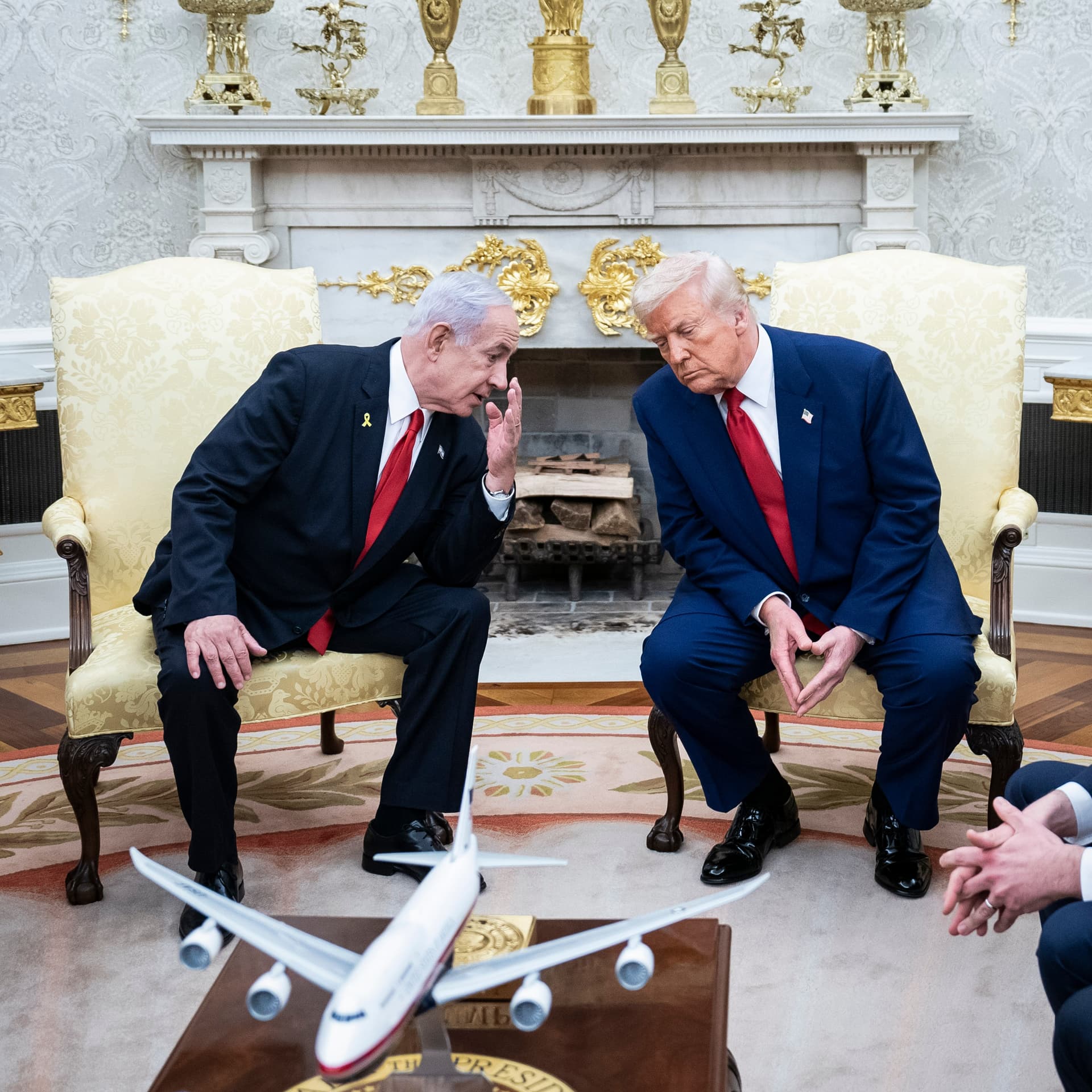
10:52Trump puts on a lot of pressure, and there is a lot of back-and-forth discussion, negotiation. We have the UN General Assembly where there are more conversations. Trump meets with some European leaders and some Arab leaders about what would be acceptable as he is refining the plan. And then ultimately, Netanyahu is in the United States for the U.N. and he comes to Washington. Last week, Trump forced Netanyahu to call the Qatari leader and apologize. We had a phone call today just to make it clear. I said to the, sorry, the prime minister of Qatar, Israel was targeting terrorists. It wasn't targeting Qatar.
11:43And of course, we regretted the loss of the Qatari citizen. It wasn't our target. Which is kind of a humiliation for the Israelis. And the Americans and Netanyahu himself agree on the final details of what the Israelis can accept. I want to thank you, Mr. President. History has already shown that under your leadership, Israel and America can change the face of the Middle East. And today I'm hopeful that your plan to end the war in Gaza will do so again and do so soon. And then we have a week basically in which Hamas is discussing whether to accept the deal or not. And then, you know, as this has evolved in the last week and a half, Trump has shown himself willing to push Netanyahu pretty hard.
12:38On Friday, a few days ago, when Hamas came out with its response to this peace proposal, I read what Hamas was saying. And I thought, OK, the Israelis are never going to actually agree to this because it violates a whole bunch of what they say are their red lines. You know, Hamas is not actually on paper saying it's willing to disarm. It is saying it wants to have some role in future governance of Palestinian territory. This is what the Israelis have said all along is absolutely unacceptable to them. So Hamas comes out and says, and I'm like, okay, well, this is all going to break down. And then Trump comes and he says, great, Hamas is ready for peace.
13:21I'm so excited that everything is coming together. And then Netanyahu says, okay, we'll do it. We'll have these talks. We'll have, well, I mean, we have a deal. So you're saying that Netanyahu agreed to what Hamas was saying, that they would continue to have some role in the government of Gaza? Well, I mean, now we have actual discussions. So we'll see what happens. But we're still further along in a process. And Trump has basically boxed the Israelis in and not focused too much on the details. He just wants peace. He wants a deal. We don't know if that's going to be successful yet, but it is more progress than we've seen so far.
14:08And the pressure from Trump, does that come in the form of like, we're not going to supply weapons anymore? We're not going to, you know, come to the aid of Israel? Like, what does pressure actually look like when it's coming from the United States? Well, that is the kind of ultimate threat that the U.S. could bring to bear on the Israelis. That's not something that Trump has said publicly, and I don't think it's something he said privately either. But he's pushed Netanyahu harder. He's been tougher on Netanyahu. It's more of a rhetorical pressure, it sounds like. Like he's talking about it publicly.
14:44Right. But Netanyahu is clearly more concerned about Trump and the future of American support for Israel than he was about Biden. Interesting. And than he was about Trump earlier in this term. Yeah. I mean, and that comes at a time when the international community has really turned on Israel as well, right? I mean, America was kind of one of the last standing nations that was really had Israel's back in this war because of the devastation, the horrific humanitarian crisis that we're seeing in Gaza. That's right. So a couple of weeks ago, France recognized a Palestinian nation at the UN General Assembly that comes after a number of other close U.S.
15:31allies also recognized Palestinian statehood. You know, Israel is more isolated than really ever in its history at this moment. And the United States has always been Israel's most important ally. At this point, it's really Israel's only or sort of biggest ally. And when you call support into question, that's something that has Netanyahu nervous, I think.
16:03After the break, we'll talk about the current negotiations in Egypt and some of the surprising people who are at the table. We'll be right back.
16:22Right now, during the President's Day sale, you can get a Washington Post premium subscription for just$3 every four weeks. And that includes three extra accounts to share with friends or family. After your first year, renews at$19 every four weeks. The Washington Post. Power. Perspective. Premium. Learn more at WashingtonPost.com slash subscribe.
16:52So the negotiations, they're happening right now. So who is at the table? Like, who is actually negotiating this deal? So we have – I mean, we've had a technical team of kind of lower-level officials until now. But the senior people who are coming in to, one could imagine, strike a real deal. There's a senior Hamas official named Khalil al-Hayat. He was one of the people who was targeted last month in that Israeli strike on Doha. He survived that attack. His son was killed. Wow. He's leading the Hamas negotiating team. So he's going to actually be at the table with people that tried to kill him a month ago.
17:36Tried to kill him and killed his son. And did kill his son a month ago. Wow. Then for the Israelis, we have Ron Dermer. He is a very close partner and advisor to Netanyahu. And for the Americans soon to come, Trump's friend Steve Whitcoff, who is the U.S. envoy for everything. He's also dealing with Ukraine issues and Trump's son-in-law, Jared Kushner, who was very involved in Mideast diplomacy in the first term. Yeah. Oh, wow. So Jared Kushner is going to be part of these negotiations. He's bopping around. He'll be in the charm. Wow. So some of these players, they're already there, some yet to arrive.
18:18But these negotiations, they started yesterday. And like our colleague Claire Parker mentioned at the top of the show, there's a lot of secrecy around these talks. But is there anything that we know about how day one went? So they met for a few hours on Monday. And according to reporting from our colleagues who are in the region, an Egyptian official who has some knowledge of the discussion said the parties agreed on most of the first phase terms. And so that's about how to release the hostages and establishing a ceasefire. OK. But they're— That sounds promising. It sounds promising. I mean, I think that there's still some back and forth about where the Israeli forces go, how far they pull back.
19:06And Hamas is saying that it's actually going to take them more than 72 hours to release all of the hostages and the remains of the hostages. And that's really just for logistical reasons. They are spread out. And I think there's a bit of a lack of clarity about how good a track Hamas has on the locations of everybody. Yeah. Yeah. So they're saying, if you hold us to these three days, these 72 hours, we might not be able to meet that deadline. And we're going to need a little bit more time. And please don't start bombing us again if we haven't released everything in 72 hours. That is what Hamas is saying.
19:46And they say they can't move around Gaza if there's active fighting. And, you know, until now, the Israelis, after that initial agreement came to pass on Friday, the Israelis have reduced fighting. They've reduced their assault on Gaza. They say they're just conducting defensive operations now, but there's still active combat happening. Yeah, I mean, people in Gaza are still being killed while these negotiations are going on. Yeah, has there been any discussion of trying to halt the fighting while these talks are happening? Is that anything Hamas has asked for? I mean, Hamas has asked for a halt to fighting all along.
20:33Sure. Trump has also said, you know, Israel should stop shooting. The Israelis say they need to keep firing to protect themselves. But a lot of people in Gaza are still dying. As of the conversation we're happening right now, more than 150 people have been killed in Gaza since Friday, according to the health ministry there. And most of those fatalities are occurring in Gaza City, where most of the fighting is happening right now. What other details need to be negotiated before this war can finally end? And you mentioned some of them in the first half of our conversation, but there's different phases to this agreement.
21:13And like you said, they're lacking detail. Well, the very biggest question, I think, is the future of Hamas itself. Israelis say that Hamas is an existential threat to the state of Israel. They say that they launched this attack on October 7th, 2023, and that they cannot accept a situation where Hamas exists in its current form in a territory right next to Israel. And they've said all along that that is the point of their war, that they need to eliminate Hamas. Hamas is not at a stage yet where it's saying it is willing to dismantle itself and go away. So that's the very biggest sticking point, and that will be pretty hard to manage.
22:05What do the people of Gaza want for their governance? I think that the people of Gaza want the fighting to stop, and they want food, they want medicine, they want a basic ability to live. And some of the proposals of a kind of technocratic administration with Palestinians kind of running basic services, you know, bread, medicine, this kind of stuff, without a role for Hamas. I mean, the word is that would be acceptable. Does the deal discuss autonomy for Palestinians, that this would create a Palestinian state? Do they go that far in kind of what the future is for the Palestinian people? So, yes.
22:58But the timeline is pretty fuzzy. So you can look at what's written in this deal and you can see a roadmap to a Palestinian state run by Palestinians that would incorporate both the West Bank and Gaza, the Palestinian territories. Yeah. And you can be a Palestinian and say, this is something that will eventually lead us there. You can be Israeli and opposed to Palestinian statehood and say, this is something that is not going to lead us there anytime soon. And Netanyahu has long made his political fortune on pushing back and preventing the formation of a Palestinian state. And there's enough ambiguity in what's in this document that both sides can look in it and see things that give them hope.
23:54But that's, at the same time, a perfect reason to think that the deal could still break down. Yeah. And if it does, if there's a failure to reach a deal, what happens next? Well, the Israelis have been saying that they are going to escalate. Gaza is devastated. It is mostly destroyed. But they've been, in recent weeks, putting together another offensive on Gaza City. And so that's what they say they'll do next. and Trump, as part of his pressure on Hamas, has said that he would, you know, if a deal doesn't come together, he'll let the Israelis do what they're going to do. Well, Michael, thank you so much for coming on.
24:40I really appreciate it. Thank you, Colby.
24:47Michael Birnbaum is a White House reporter for The Post. That's it for Post Reports. Thanks for listening. If you want to show your support for the show, please subscribe to The Washington Post. Not only is it a great way to help us continue to do this work, but you can now get access to Washington Post podcasts ad-free in Apple Podcasts. Subscribe in Apple Podcasts or by following the link in our show notes. Today's show was produced by Rennie Siernowski with help from Zoe Cummings and Peter Bresnan. It was mixed by Sam Baer and edited by Rena Flores. Thanks to White House editor Katie Burnell Evans.
25:25I'm Kolbe Akowicz. We'll be back tomorrow with more stories from The Washington Post.
25:56$19 every four weeks. The Washington Post. Power. Perspective. Premium. Learn more at WashingtonPost.com slash subscribe.
From the publisher
It is now Day 2 of peace talks in the region, with delegations from Israel and Hamas meeting in Egypt in an attempt to end the conflict. The peace deal – which was originally proposed by President Trump – would look to end fighting, secure the release of all remaining hostages and increase humanitarian aid to Gaza.
After two years of deadly assault on the Palestinian enclave, the two sides will also look to negotiate Gaza’s security and political future.
Today on “Post Reports,” host Colby Itkowitz is joined by Washington Post foreign policy reporter Michael Birnbaum. He discusses who will be at the table for both sides, what the future of Gaza could look like and why these talks look to be developing differently than ones in the past.
Today’s show was produced by Rennie Svirnovskiy with help from Lucas Trevor and Sabby Robinson. It was edited by Reena Flores and mixed by Sam Bair.
Subscribe to The Washington Post here.