
In short
Washington Post Post Reports episode on Israel’s security cabinet approving a plan for Netanyahu to take control of Gaza City, dismantle remaining Hamas strongholds, and potentially expand to central Gaza/tent camps—raising fears of more Palestinian civilian deaths and harm to Israeli hostages.
Guest backgrounds
Shira Rubin, Washington Post reporter based in Tel Aviv.
Key claims
The plan would be the first time Israel is instructed to hold and maintain control of Gaza’s largest city; it doesn’t specify timing, with assessments suggesting at least two months (around October) and possible use as leverage for ceasefire talks. Critics say the war became political, driven by far-right coalition partners seeking long-term occupation and even Jewish resettlement.
Notable examples
Protests in Tel Aviv over hostages; hostage accounts warning captors would kill them if Israeli forces closed in; Hamas/Islamic Jihad videos showing emaciated hostages; international condemnation by multiple European leaders and calls for a Security Council meeting; mention of Al Jazeera journalist Anas al-Sharif killed in Gaza City.
Written by AI. May contain mistakes. Listen to the episode to check what was said.
Chapters
Tap a time to open that second in VOInterview Introduction
1:16 to 1:41
Kolbe introduces Shira Rubin to discuss Israel's plan.
“Today, I talk with The Post reporter in Tel Aviv, Shira Rubin, about Israel's plan, the local and global condemnation it's faced, and why Israeli leadership does not seem fazed.”
Details of Netanyahu's Plan
1:41 to 3:10
Shira explains the details and implications of the approved plan.
“What is in this plan that was approved last week by Israel's security cabinet?”
Urban Warfare Strategy and Civilian Impact
3:10 to 5:48
Discussion on the intense urban warfare strategy and its impact on civilians.
“So Cher, why would they have to evacuate all the civilians from Gaza City?”
Political Context of the War
5:48 to 7:34
Exploration of internal Israeli politics affecting the war strategy.
“But that last step, that kind of holding step, has not been the strategy so far.”
Public Reaction to Military Actions
7:34 to 9:37
Insights into the Israeli public's sentiment regarding the plan.
“his far-right coalition that they eventually want to not only take over Gaza militarily, but actually, like you said, resettle Jewish people in Gaza.”
Hostages' Lives at Risk
9:37 to 13:10
Discussion on the risks to hostages due to military operations.
“Yeah, Sherry, you kind of answered my next question, which was, what has been the reaction from the general public in Israel?”
Netanyahu Government's Justification
13:10 to 14:00
Examination of how the Netanyahu government justifies its military actions.
“Because, you know, what we've heard for the last two years is that this war could end if Hamas just returned all the hostages.”
Hostage Situation and Public Response
14:00 to 16:12
Explores the Israeli public's reaction to the hostage crisis and government actions.
“Yeah, I mean, the families of the hostages are barely existing.”
Humanitarian Crisis in Gaza
16:51 to 20:02
Details the humanitarian crisis in Gaza and the restrictions on aid.
“Exclusively on Post journalism with clear sourcing.”
Israeli Media's Coverage of Gaza
20:02 to 21:54
Discusses the Israeli media's portrayal of the humanitarian situation in Gaza.
“and that means that the Israeli audience have been able to stay in their kind of echo chamber and hear really only what was relevant to them and not understand what was happening on the ground in Gaza.”
Show all 13 chapters
International Reactions to Military Actions
21:54 to 24:08
Examines global leaders' responses to Israel's military strategy in Gaza.
“And is that going to affect the kind of news that we'll be able to see out of Gaza?”
Netanyahu's Stance on International Pressure
24:08 to 26:19
Analyzes Netanyahu's reaction to international criticism and its implications.
“Expanding military operations will only endanger the lives of all civilians in Gaza, including the remaining hostages and resulting further unnecessary suffering.”
U.S. Political Influence
26:19 to 27:53
Discusses the U.S. stance and Trump's influence on the situation in Gaza.
“Shira, I want to conclude by asking, where does the U.S.”
Transcript
Automatic transcript. May contain errors.0:04Good afternoon. I'm glad you came here because I'd like to take the opportunity to puncture the lies and tell the truth. Israel is preparing to take control of Gaza City. In a news conference on Sunday, Israeli Prime Minister Benjamin Netanyahu laid out and defended this controversial plan. Israel's security cabinet instructed the IDF to dismantle the two remaining Hamas strongholds in Gaza City and the central camps. Contrary to false claims, this is the best way to end the war and the best way to end it speedily.
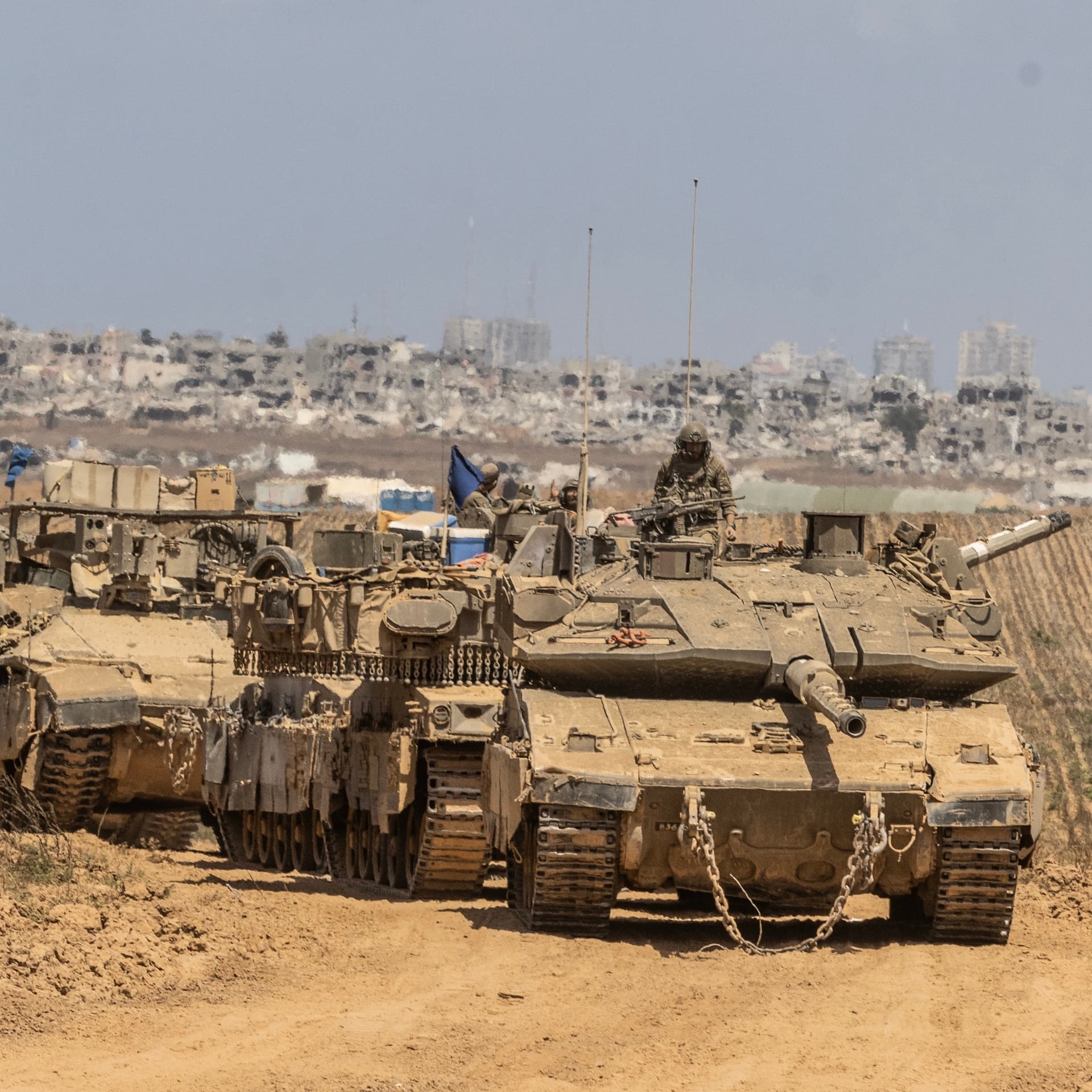
0:42The decision marks a significant tactical shift for Israel. The Israeli military currently controls about 75 percent of the Gaza Strip. But this would be the first time its military has been asked to hold and maintain control of Gaza's largest city. And it would pave the way for a phased military takeover of the entire enclave, which could lead to the deaths of more Palestinian civilians and the Israeli hostages still being held there.
1:12From the newsroom of The Washington Post, this is Post Reports. I'm Kolbe Ekowitz. It's Tuesday, August 12th. Today, I talk with The Post reporter in Tel Aviv, Shira Rubin, about Israel's plan, the local and global condemnation it's faced, and why Israeli leadership does not seem fazed.
1:40Shira, hello. Thank you so much for joining us. Thank you for having me. So, Shira, let's start with this. What is in this plan that was approved last week by Israel's security cabinet? What does it allow Netanyahu to do exactly, and what does it not allow? The plan that was approved by Israel's security cabinet very early on Friday morning allows Netanyahu to take control and hold Gaza City, which is the largest city in Gaza and the northern part of Gaza, where the Israeli army has not operated for many months. And it is possible that that plan will also expand to other areas in central Gaza, including a lot of the tent camps that have popped up in the past two years nearly.
2:28What it does not detail is exactly how it will happen, when it will happen. There are a lot of predictions and assessments by Israeli military officials that logistically and also strategically, it cannot happen before at least two months from now, which is around October potentially. And so because there is that kind of lag between the official approval and the actual start, which would in some way need to also evacuate nearly a million citizens who are believed to reside in the city. The lag allows for Netanyahu also to potentially, if that is what he's doing, to use it as leverage in the negotiations with Hamas to get to a ceasefire, which would essentially put all of those plans on hold.
3:23So Cher, why would they have to evacuate all the civilians from Gaza City? Israel's plan is to activate a very intensive urban warfare strategy. And that means civilians will be in the crosshairs, most likely. That means also that a lot of civilians will be killed. This would be an entirely new level of combat in which they would be expected to not only fight and not only bomb and not only, you know, use ground forces in collaboration with air forces and, you know, potentially others. But they would also be expected to stay and to continue to fight. And that would be a level of warfare that we actually have not yet seen in this war.
4:09How is it different? I think people look at what's happening in Gaza and they already kind of think that Israel is occupying Gaza Strip. I mean, how is what Netanyahu is proposing different from the current situation that Palestinians are facing? Yeah, you're right. I think people outside of Israel might not be as sensitive to the very kind of on-the-ground nuances. Yeah. What Israel is doing now is it has kind of installations throughout the Gaza Strip. And it has certain areas that are no-go zones where civilians are not allowed to go. And then there are areas like the Gaza City where the Israeli army has not gone in for a kind of more permanent operation.
4:53They've gone in for two weeks or three weeks and they've killed whatever X number of militants or apprehended also another few hundred militants, according to IDF statements and IDF kind of officials. But they did not go in with the intention of staying. They went in with very limited goals. And once they were completed, they left. And they went back to their installations, which were either inside the Gaza Strip or outside the Gaza Strip on kind of the border with Israel. But in none of the cases where Israeli forces invaded a big city like Gaza City were they instructed to stay and deal with what it means to stay.
5:41I mean, there's a lot of infrastructure within Gaza that would allow for such a situation to happen. Like, for example, there are all these corridors that Israel has kind of paved to allow kind of transport in and out. But that last step, that kind of holding step, has not been the strategy so far. So how did we get here? Like, what are the internal politics of Israel's government that got us to this stage? So critics of Netanyahu say that at a certain point in the war, maybe three, four, five months in, this war became a political war. It was a war that could have been wrapped up, that Netanyahu could have found some sort of way to reach a ceasefire, but instead chose not to.
6:29And many believe that the reason that he chose not to, and instead to simply keep the war going, and fail to sign a deal that would end the warfare and release the hostages that were still being kept within Gaza, the reason for that is because he has coalition partners who are extremist far-right partners. And they have long demanded that Netanyahu occupy Gaza, that Netanyahu allow for the Israeli army not only to create a military administration within the enclave, but allow for Jewish resettlement of the enclave, which is a very controversial idea within Israel and widely opposed within Israel.
7:11Although Netanyahu knows this, critics say, he also is very keen to keep his coalition partners who have repeatedly threatened that if their demands are not met, they will let the government fall and Israel will go to elections again. So this appears to be the long-term goals of the Netanyahu government, his far-right coalition that they eventually want to not only take over Gaza militarily, but actually, like you said, resettle Jewish people in Gaza. Yes, yes, yes. Yes, they are a kind of once fringe minority within the Israeli population. They were for many, many years kind of persona non grata within the Israeli Knesset, the parliament.
8:01And in the government that Netanyahu started, he used them as partners because he had no one else to turn to. all other kind of political partners had neglected him and decided that they would not cooperate with him anymore. So he turned to them and they make up now his government. I mean, Shira, this seems like a huge move, you know, if this comes to be. And you've covered Israel and Prime Minister Netanyahu for a really long time. Were you surprised this is the direction it's going? Yes. I think a lot of people, a lot of Israelis, a lot of people who have been looking at this war and asking for so many months, what is the strategy?
8:48We're surprised by this decision because it doesn't actually answer any of the overarching questions of what the strategy is. It doesn't kind of answer how the Israeli army is meant to do such an expansive campaign. The Israeli army has been suffering for many, many months, a manpower shortage, which is coming at the same time that the population, the majority of the population, according to public opinion polls, are starting to question the point of the war, the kind of strategy of the war. Where is it going? And most Israelis say that they would prefer instead for Netanyahu to find a way to sign a ceasefire, to get the hostages home, to stop the warfare and the combat, and to find some way forward so that a new security reality can happen.
9:37Yeah, Sherry, you kind of answered my next question, which was, what has been the reaction from the general public in Israel? It sounds like this is not a plan that most Israelis support. Yeah, it's interesting. I think it might not be well understood outside of Israel, but Israel at the moment, and actually for many months, has been suffering a kind of almost problem of democracy. The Israeli government represents a small minority of the population, and the vast majority does not accept this plan. They do not see it as putting military pressure that will convince Hamas to release the hostages, which is their top goal.
10:21And they do not see it as anything more than prolonging what has already been prolonged for many months. Yeah, and our colleague, Lior Soroka, has actually been out in the streets in Tel Aviv, and he recorded some of these protests over the weekend. In this clip, they're saying, why are they still being held in Gaza? Bring them home, they being the hostages.
10:48And here they're saying, we will not accept a government that abandons its people. The ministers are responsible for the hostages' lives.
11:03Shira, as we can hear from these protests, a lot of Israelis are clearly so concerned for the well-being of the Israeli hostages that are still being held by Hamas. I mean, it's part of the resistance to this plan that the hostages could be harmed if Israel launched a more aggressive military assault and takeover in Gaza. Yes, there are 50 hostages in Gaza, at least 20 of whom who are presumed to be alive. And Israeli intelligence indicates that they are being held potentially underground, potentially above ground, in the central Gazan areas, which includes Gaza City and the tent cities. And so there is an enormous fear among not only hostage families, but the tens of thousands of Israelis that have been at weekly protests already for nearly two years.
11:49They say that this campaign will put their lives immediately at risk. And that is also because a lot of the hostages that have been returned to Israel, either in rescue missions or in deals previously, they have spoken specifically about this. They have told Israeli media and The Washington Post in several interviews that their captors told them repeatedly that if they feel that the Israeli army is closing in on them, the hostages would be killed. This is the message that hostages are being given at this moment. And Hamas has said itself almost exactly a year ago when there were Israeli troops in the southern city of Refah, Hamas said itself, the reason why it instructed its militants to shoot and kill six of the hostages who were being held there was because they felt the Israeli army was coming.
12:51And the Israeli army confirmed that with an investigation. So it is kind of a widely accepted fact among Israeli society that any Israeli operation that will happen even above ground will endanger the hostages who are being held below ground. Shira, how does the Netanyahu government respond to that specifically? Because, you know, what we've heard for the last two years is that this war could end if Hamas just returned all the hostages. But now they're planning a move that could put those hostages' lives at risk. How do they defend that? They say they have no other option that when the negotiations fell apart in the past few weeks, the Netanyahu government realized that they need to threaten Hamas on a larger scale.
13:42They need to let them know that Israel means business and it does not want to play any more games and have any more partial deals that will return some of the hostages and leave some of the hostages still inside Gaza. but more generally the Netanyahu government kind of gives a vaguer statement about all of this and says you know we will do what's necessary to protect the hostages with the caveat as much as we can but our goal is to also defeat Hamas and many far-right members of the government have said you know we are going to defeat Hamas even at the expense of the lives of the hostages I'm sure that does not go over very well with the families of those hostages in Israel.
14:31Yeah, I mean, the families of the hostages are barely existing. I mean, they do not trust the government. It took a little while for there to be a protest movement on the streets of Israel because at the beginning of the war, there was such chaos. There was such confusion that people were really afraid that if they said something, publicly, they would somehow affect or negatively influence negotiations to wrap it up. But, you know, very quickly, Israeli families of hostages realized that in their accounts, that the Netanyahu government was not interested or not prioritizing the release of the hostages and let a lot of opportunities simply go by.
15:18So they now feel that they have no other choice left but to protest and to try to influence from the outside as much as they can. I mean, as of the coming days, they are trying to convince Israeli society to participate in a widespread economic shutdown. But the families of the hostages have for a very long time said that the time for their loved ones inside Gaza have run out already. I mean, there were videos a few days ago that Hamas published, which showed emaciated hostages, one in a stated hostages, and another published by another militant group, Islamic Jihad. And, you know, the families look at these videos, and the Israeli public looks at these videos, and they say, we don't know exactly what, but something needs to be done to end this.
16:11After the break, Shira and I talk about how the Israeli public got to this understanding of the war, and how the international community has reacted to the plan to take over Gaza City. We'll be right back.
16:51Exclusively on Post journalism with clear sourcing. And if we don't know the answer, we'll tell you. Ask the Post AI. Find it on WashingtonPost.com or in the app. So Shira, let's take a step back here because on Post Reports, we've covered the increasingly dire humanitarian crisis that's going on in Gaza. The malnutrition and starvation caused by, you know, Israel's control over the flow of aid into the enclave. But let's remind listeners how we got here and what the toll of the war has been so far. So since the war started in 2023, the civilian death toll skyrocketed. There have always been enormous civilian death tolls associated with this war.
17:39And now in the past few months, we've seen a death toll that's also very related to malnutrition cases, which is because Israel has deployed kind of very, very stringent restrictions on delivery of humanitarian aid and food aid coming into the Gaza Strip. That means that a lot of Gazans, number one, cannot find food. There's just an extreme scarcity on the ground. And even if they are able to get food, if they're very lucky and are able to get food from the very few distribution points that are set up by GHF, this U.S.-Israeli kind of aid initiative, or by the few trucks that are coming in, or from the airdrops.
18:22So even if they are able to get food, it's not enough. It's a drop in the ocean for just how extreme the situation has kind of accumulated until now. And Netanyahu, he actually, he addressed this at his press conference on Sunday, and he basically said, you know, everything that you're saying right now is fake news. He showed pictures from the New York Times and other international press and said this was just Hamas propaganda. But this is outrageous. These are the three most celebrated photos. And they're all fake. It's the kind of malignant lies that were leveled at the Jewish people in the Middle Ages.
18:59We won't suffer. We won't allow it to go unchallenged. And this is the purpose of this press conference. How much information about what's happening in Gaza, the humanitarian crisis as it is, reaching the people in Israel? I think most Israelis did not have any idea the scale and kind of severity of the humanitarian crisis until fairly recently. And that would probably come to a surprise to most international audiences because they've been seeing Gaza every day on the TV, every day in the newspaper. And yet it's been completely, potentially completely on some channels or very minimized for an Israeli audience.
19:44And there's a few very, very complicated reasons for that. But mostly, I mean, I think a lot of Israeli journalists themselves have said it's because the Israeli channels have chosen not to. They had kind of a moment, you know, at some point during the war where they decided not to show these images to the Israeli audience. and that means that the Israeli audience have been able to stay in their kind of echo chamber and hear really only what was relevant to them and not understand what was happening on the ground in Gaza. But as that has started to change, you know, maybe seeing footage of civilians in Gaza for the first time, is that also starting to shift Israelis' views of the war?
20:30Yes, it's related. I don't know if it's cause and effect necessarily. I think it's very complex. But it's definitely related because I think at the beginning of the war, you know, there was this massive kind of Israeli solidarity movement that was born kind of of the shock of October 7th. And now nearly two years in and no strategy in sight and no end in sight, there is kind of an opening to question things that were once taboo or were once off bounds for questioning. and one of them is the central question of the humanitarian crisis in Gaza. So that has been breaking through. It's still nothing like what it looks on American television channels at all.
21:18It just is not comparable at all. But the conversation is coming up more and more people are kind of questioning, where is this going? What are we telling ourselves about where this is going? and at what price to them, to us, to the world, kind of more generally. I'm sure I also wanted to ask you about over the weekend, there was news that the Israeli military targeted and killed a crew of Al Jazeera journalists in Gaza City, including a man named Anas al-Sharif, who for many across the Arabic speaking world has been one of the most recognizable faces and voices of the war in Gaza over the last nearly two years.
21:58So what happened there? And is that going to affect the kind of news that we'll be able to see out of Gaza? Yes, Al Jazeera was one of the only channels that did have access to Gaza and had kind of a large network on the ground in Gaza. Like many news outlets, it relied only on local journalists because foreign journalists have been barred from entering since the beginning of the war. I think the loss of a journalist is a loss of whatever they could have shown. And I mean, I don't think that the Israeli army has given a really thorough chronicling of what exactly happened. Netanyahu and the Israeli government are claiming that they were kind of working with Hamas, right?
22:44Yes. Yeah. So since the beginning of the war, there has been also a kind of expansion of what a Hamas employee or what a Hamas member exactly is and how it's defined. And it's very kind of amorphous and controversial. I don't believe the Israeli army has provided any sort of evidence showing that this particular person was working for Hamas. But I do think that the Israeli army more generally has a bit more freedom in who it defines as Hamas today. And that definitely includes kind of not only the physical warfare using weaponry, etc., but also kind of the information warfare environment. You know, as Netanyahu has lost support from some in the Israeli public, he's also lost international support as this war has gone on.
23:38And this particular move has been widely condemned. And what have we heard specifically from world leaders about the move to occupy Gaza? Most world leaders, except for President Trump, have said that this is a disaster. We, the United Kingdom, Denmark, France, Greece and Slovenia call for today's urgent meeting of the Security Council on the situation in Gaza. We condemn the government of Israel's decision to further expand its military operations in Gaza. That nothing can really come of this, that it will endanger, first of all, so many Palestinians who are above ground, who are living in tent camps already and suffering in indescribable conditions, as well as the hostages themselves, which may be held below ground.
24:34Expanding military operations will only endanger the lives of all civilians in Gaza, including the remaining hostages and resulting further unnecessary suffering. They have said that they cannot support such a move and allies even including Germany which is historically Israel's most important ally in terms of European policy. Germany has said that it will begin some form of an arms embargo for any sort of weapons that could be used in Gaza. So there is an escalation of the rhetoric and the condemnation. And within Israel, that, of course, is being heard by everyone. Yeah, I wondered if like that international pressure will have an impact or if at this point Netanyahu just feels like he can do what he wants.
25:28Yeah, I think a lot of international diplomats and leaders maybe misinterpret Netanyahu. Netanyahu really feeds off of pressure from the outside. He uses it as just one more piece of evidence that kind of the world is against Israel or the world doesn't understand the kind of enormous challenges that Israel is facing. And the world is hypocritical. So for all intents and purposes, it doesn't, as far as we can see, you know, from the outside, it doesn't shift Netanyahu in the way that it would have him stop the war or stop this move. If anything, it's made him double down and it's given him reference points for, you know, why he is the leader to kind of stand up to all those who criticize him.
26:19Shira, I want to conclude by asking, where does the U.S. stand in all of this? You mentioned before that President Trump has been notably absent from the international condemnation of this plan. What has he said so far and where does he actually stand? So I'm in touch with a lot of people who are not exactly within the government, but they know a lot about what's going on in the government. And they say these past few months, everything that we've seen going on in relation to Gaza have been a result of President Trump demanding something, demanding some sort of pivot, some sort of anything, that he doesn't really care what the details are or what exactly the decision is, but that the status quo in which, you know, Gazans were dying every day, malnutrition was rising.
27:11there were these pictures of starvation on his TV that he kind of couldn't watch anymore. There was this understanding that Trump had kind of declared that that period was over and something else needed to come. And so that is kind of the context in which Netanyahu has made these alternative plans to conquer Gaza City and potentially the rest of Gaza. Well, Shira, thank you so much for coming on. And really appreciate having you. Thank you so much, Colby.
27:46Shira Rubin is a reporter for The Washington Post, based in Tel Aviv. That's it for Post Reports. Thanks for listening. Today's show was produced by Rennie Sramnowski with help from Sabby Robinson. It was edited by Maggie Penman and mixed by Sam Baer. Thanks to reporter Lior Soroka and editor Alan Cypress. The Post is continuing to follow President Trump's takeover of the D.C. police and deployment of the National Guard here in Washington. If you want to follow our coverage and you're not a Post subscriber already, you can get a one-week pass for just a dollar a day. Follow the link in our show notes.
28:27I'm Kolbie Echowicz. We'll be back tomorrow with more stories from The Washington Post.
29:06We'll be right back.
Read the full transcript
29:10or in the app.
From the publisher
Israel has announced a plan that could eventually allow it to take military control of the entire Gaza Strip. But the announcement has been met with widespread criticism inside and outside Israel. Foreign leaders and protesters say this approach lacks clarity and will prolong the suffering of Palestinian civilians and endanger hostages still held by Hamas.
Host Colby Itkowitz speaks with Tel Aviv- based correspondent Shira Rubin about the consequences of this tactical shift and why Netanyahu has seemed unswayed by international pressure.
Today’s show was produced by Rennie Svirnovskiy with help from Sabby Robinson. It was edited by Maggie Penman and mixed by Sam Bair. Thank you to Lior Siroka and Alan Sipress.
Subscribe to The Washington Post here, or check out our new one-week pass at washingtonpost.com/weekpass.