In short
Post Reports Podcast Notes
Episode Title
Shutdown Cracks, Jay Jones’s Texts, Trump’s Gaza Deal
Episode Overview
- Hosts: Martine Powers and Elahe Izadi
- Produced by: Laura Benshoff and Josh Carroll
- Edited by: Reena Flores
- Date Published: October 10, 2023
The episode focuses on various pressing political issues, including the ongoing government shutdown, a contentious Senate hearing involving Attorney General Pam Bondi, problematic text messages from Virginia’s Jay Jones, and a peace deal facilitated by former President Trump regarding Gaza.
---
Key Discussions
- Government Shutdown Dynamics
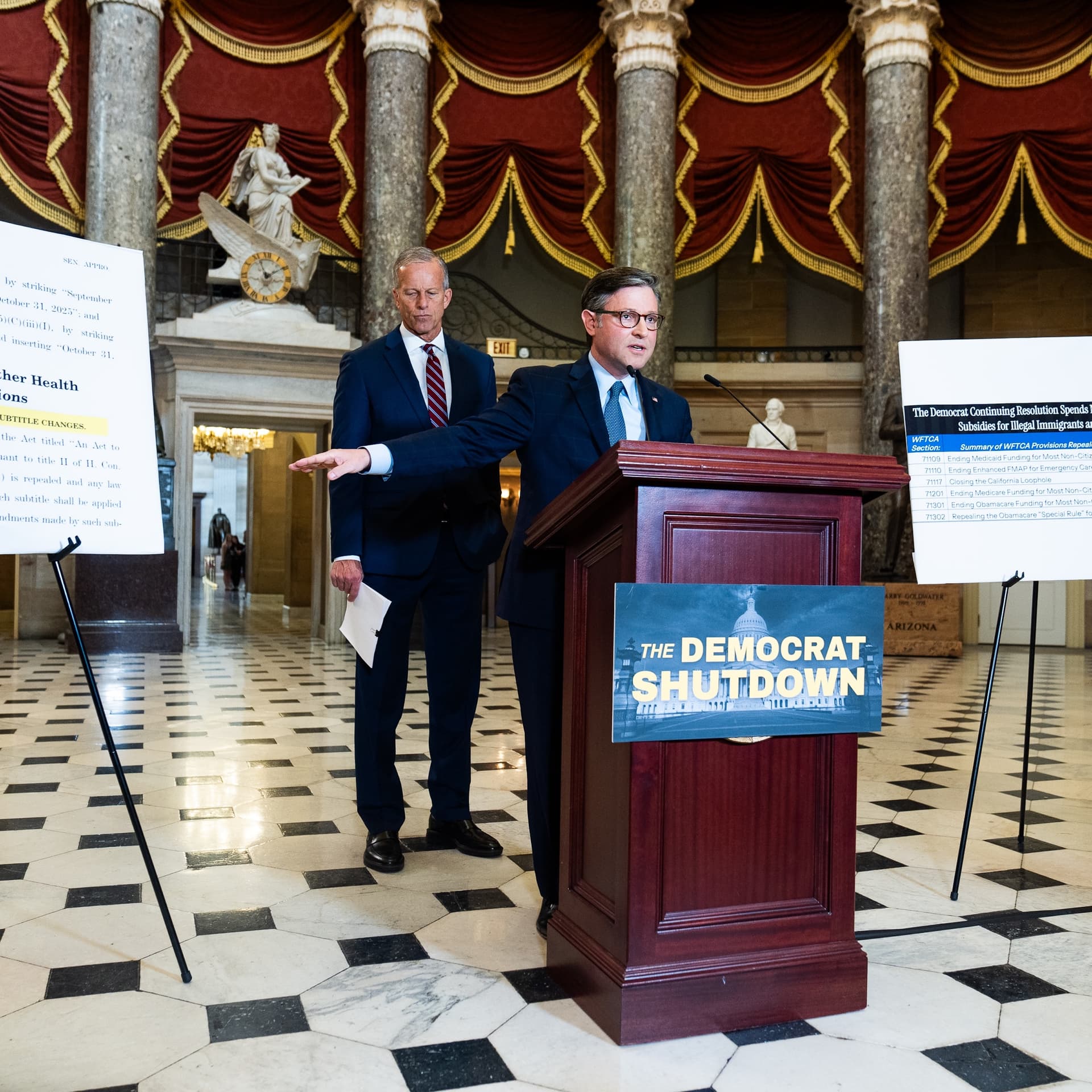
- The Senate is currently divided, with both parties struggling to negotiate a resolution.
- Public Perception: Polling indicates that voters are equally, if not more, blaming Republicans over Democrats for the shutdown.
- Health Care Costs: Discussions focus on negotiations surrounding health care subsidies from the Affordable Care Act (ACA). Some Republicans express concern over the impending increase in health care premiums if no deal is reached.
- Republican Messaging: There's confusion among Republicans regarding their stance on health care reform, causing a division within the party.
- Attorney General Pam Bondi's Senate Hearing
- Bondi faced intense scrutiny during her Senate hearing, which seemed to be combative and politically charged.
- The hearing was seen as a demonstration of loyalty to the Trump administration, with Bondi's aggressive stance reflecting the current political climate.
- Tactics: The hearing showcased a shift in the tone traditionally expected in Senate hearings, aligning more with confrontational political discourse.
- Jay Jones's Controversial Texts
- Virginia Democratic candidate Jay Jones came under fire for text messages suggesting violence towards political opponents, specifically referencing House Speaker Todd Gilbert.
- Political Ramifications: Calls for Jones to step down have intensified, yet he remains on the ballot due to timing constraints.
- Implications for Other Democrats: Concerns arise regarding the impact of Jones's comments on other statewide candidates, notably Abigail Spanberger.
- Trump’s Gaza Peace Deal
- A peace deal has been brokered involving the release of hostages by Hamas in exchange for Palestinian prisoners held by Israel.
- The deal marks a significant diplomatic achievement for Trump, positioning him favorably following challenges faced during his administration.
- Future Challenges: Although a first phase of the agreement has been established, unresolved questions linger about Gaza's governance and long-term stability.
---
Key Takeaways
- Government Shutdown: The dynamics within the Republican Party are shifting, with public opinion playing a crucial role in negotiations.
- Bondi's Hearing: The combative nature of the hearing signals a broader trend in political discourse, emphasizing aggressive tactics over traditional decorum.
- Text Controversy: Jones's situation raises questions about the Democratic Party's stance on political violence and the consequences of individual candidates' actions on the party as a whole.
- Diplomatic Implications: The Gaza deal represents both an opportunity and a challenge, testing the effectiveness of Trump's foreign policy strategies.
Conclusion This episode of Post Reports provides a thorough examination of current political events, highlighting the complexities and consequences of actions and rhetoric in the current political climate. The discussions reflect a media landscape that is increasingly confrontational and politically charged, with significant implications for both parties as they navigate these turbulent times.
Written by AI. May contain mistakes. Listen to the episode to check what was said.
Transcript
Automatic transcript. May contain errors.0:00Right now, during the President's Day Sale, you can get a Washington Post premium subscription for just$3 every four weeks. And that includes three extra accounts to share with friends or family. After your first year, renews at$19 every four weeks. The Washington Post. Power. Perspective. Premium. Learn more at washingtonpost.com slash subscribe.
0:29I still could see a scenario, like basically my dime store analysis is that I think either Trump decides he wants an ACA deal to open back up the government, and that's 1 ,000 % what happens, and it just happens, or Trump doesn't decide that, and then I do think eventually Senate Democrats would fold.
0:52From the newsroom of The Washington Post, this is Post Report's weekly politics roundtable. I'm Kolbie Echowitz. It's Friday, October 10th. There is a lot to get to today. First, we're going to talk about which side might crack first in the ongoing government shutdown. Next, Attorney General Pam Bondi's contentious hearing in the Senate. Also, we'll discuss some text messages that are getting a Virginia Democrat in trouble. And finally, the peace deal between Israel and Hamas that President Trump helped broker. I'm thrilled to be joined today by national politics reporter Liz Goodwin. And back with me at the roundtable, Dan Merica, the co-anchor of our politics newsletter, The Early Brief.
1:35Thank you both for joining me. Yeah, thanks for having us. Happy to be here. So, Liz, congratulations on your new role as a national politics reporter. Oh, thank you. Because before that, you were our Senate expert. Yes. And we're going to tap into that Senate expertise right now. We're going to go back to that expertise. So we're going to go back to that. I can't quit them, so it's fine. I mean, once you're a Senate expert, you're always a Senate expert, I think, because the negotiations over the government shutdown over funding the government, it's all playing out in the Senate right now. So what's the latest?
2:09Yeah, so we're kind of in an interesting place that I could not have predicted a week ago, for sure, because I think Republicans, when the shutdown started last week, I think Republicans felt like once Democrats crossed that bridge, you know, voted for a shutdown, they would crack really quickly because, as Lindsey Graham said, you know, they love government more than like a 300-pound man loves a donut or something. This was kind of their position. Not to live fact check you, Liz, but my producers in my ear, apparently what the South Carolina Republicans said was that it was a 600 pound man. Oh, 600.
2:46600. OK. Good fact check. And they had Russ Vogt as the bad cop and they were kind of dangling the OMB director, dangling that over their head, saying Russ Vogt's going to go cut these jobs. You guys are going to be so sad when he fires federal workers. And in the past, there have been shutdowns where Democrats have cracked really quickly. That has happened. And so there's a little precedent for that. And there were three Democrats who voted against the shutdown and you only needed five more to end the shutdown. So I think the majority leader, John Thune, he thought, OK, I'm going to tee up votes every single day.
3:19And, you know, one more is going to crack, then another one's going to crack. And then we're going to open the government back up with zero concessions. And instead, a bunch of polls started coming out saying, you know, people were blaming Republicans. More people were blaming them than Democrats. And this messaging on health care seemed to kind of be breaking through. And, you know, press conferences that have been empty where Democrats have been yelling about various things are now like filled with reporters. Like they're finally getting this attention that they've been craving in the second Trump era.
3:52So you kind of have them really doubling down is where we're at right now. And to remind everyone, the health care fight is over these subsidies from the Affordable Care Act that they want to see expanded, because if they don't expand them, people are going to see their premiums rise. And so is that why Republicans are being blamed? Because voters are saying, well, they should be working with Democrats to make sure health care prices don't go up. I think most of why people are, you know, either split or blaming Republicans is that they're in charge, right? Everyone knows Trump is president. And then, you know, they do control the House and the Senate, even though in the Senate they need some Democratic votes to pass most legislation.
4:34And I think that's kind of the crux of it right now. I would also say I think their messaging has been a little bit divided in some ways more than Democrats, which is kind of unusual in recent months because Trump has said, you know, I want to fix the Obamacare problem. I don't want people's premiums to go up. And even the House Speaker, Mike Johnson, has said he's open to it as well. It's a little bit confusing because they're not saying, hey, we all hate this ACA thing. We're never going to budge on it. Y 'all need to open up the government because this isn't happening. They're kind of saying, like, maybe this should happen, but also open the government up.
5:10So it's a little bit of a confusing message right now. Dan, Liz mentioned that the Trump administration had threatened to fire people if the government shut down. Now the Trump administration is signaling that they're not going to back pay furloughed government workers. What should we make of all of these threats? Yes, you're referring to the budget office of the Trump administration's memo that basically raised the specter of furloughed workers not receiving back pay. They have received back pay in the past, including during government shutdowns overseen by the Trump administration. Right. Yeah, it's a bit of an open question at this point because in 2019, they did pass a loss saying that federal workers are entitled to back pay.
5:52Trump signed that law. And now OMB and its head, Russ Vogt, are saying that that's not the case. But it's a little bit unclear if their interpretation would hold water since it's, you know, the plain text of the law says that they are entitled to this back pay. Of course, a lot of this is just a strategy here by the White House to kind of create as much pain as possible on Democrats, hoping that those cracks that Liz was talking about will continue, that if they can inflict enough pain on the federal workforce, that it will lead to Democrats buckling and deciding to fund the government and ending this government shutdown.
6:29You know, it's interesting because the Trump administration really has kind of one speed when it comes to stuff like this, and it's push, push, push. And at some point, if you don't back up that pushing, which they haven't done with the furloughed workers, people are going to not believe you. You know, they're not going to believe the threats that you make. Liz, but it also seems that even if they're not empty threats, that the Democrats are willing to accept a little bit of pain to fight back this time. Yeah, I think they learned a pretty tough lesson back in March when Minority Leader Chuck Schumer, he ended up gathering enough votes to keep the government open.
7:06And they never really did make a demand for those votes. They didn't really get anything out of it. They just said, OK, we're going to keep the government open. And a big reason why he said he ended up doing that, which the base Democratic base hated, was that he feared what Russ Vogt could do, the OMB director. He really feared this idea of you're going to give them free reign to slash the government. And I think now when when Democrats explained why they're voting differently this time than last time, they say, like, all of that worst stuff has happened. Like to them, they felt like they didn't really have anything to lose because, you know, Doge sort of did its thing.
7:43Russ Vogt has done his thing. He's paused, you know, billions of dollars in spending. They've done a pocket rescission sort of impoundment technique to cancel foreign aid without a congressional vote. A lot of their worst fears kind of came true and they felt like they had nothing to lose. The fight is the point. The fight is the point. Just having the fight is the point. It doesn't necessarily matter to a lot of Democrats. We've seen this with the feedback we received at the newsletter. I'm sure you've seen this in comments on your stories about Democratic politics. But Democrats just want to see their representatives fighting, even if it does cause a little pain and even if it doesn't necessarily end in an outright win.
8:21They want to see the fight. Yeah, but to your point, both of you, they might win this because there are cracks in the Republican Party on these health care subsidies. I mean, notably, Marjorie Taylor Greene, the Republican from Georgia, who has been an ally of President Trump for as long as she's been in politics, has been really vocal this week. What did she say? Yeah, that was really fascinating. I mean, she's been a little bit of a firebrand on a bunch of issues, including the Epstein situation. But yeah, this week she basically said she hates Obamacare, but that she's worried about premiums doubling when the tax credits do expire.
9:00She said, I don't personally like Obamacare, but it's here. Millions of people are on it. And is it really a good idea to let all these people pay so much more money for their health care just because we can't make a deal here in Congress? And a few other Republicans have said that, too. It's not the majority position, but there's some in the House who are in districts that Biden won last time that have been raising this as well. And there's a few proposals floating around already to extend them for a year or longer. So this is definitely something that they are divided on. I still could see a scenario like basically my dime store analysis is that I think either I think either Trump decides he wants an ACA deal to open back up the government and that's a thousand percent what happens and it just happens or Trump doesn't decide that.
9:51And then I do think eventually Senate Democrats would fold. You know, Dan, you also made the super smart point that in a lot of our politics right now, the fight is the point. And that's true on both sides. Right. And we saw that this week when Attorney General Pam Bondi was testifying in the Senate, right? Before we get to what happened to that hearing, let's just recap, like, why was she there? Yeah, this was a regularly scheduled oversight hearing. It was pretty highly anticipated, though, just because there's so many questions that Democrats have been burning to ask her. But this is very normal for the attorney general to get, you know, called over to the Hill once or twice a year just to answer routine questions.
10:29And they asked her things like, you know, the department's decision to prosecute former FBI director James Comey, who pled not guilty this week. Right. And it talked about convicted sex offender Jeffrey Epstein. What was notable to me about this hearing was just how combative she was and how it seemed like the point was to show her fighting with senators. In fact, like the White House was clipping moments from the hearing in real time and posting them on social media. There was this one moment between Senator Dick Durbin, he's a Democrat from Illinois, and Pam Bondi, where he's asking her about the fact that the National Guard was sent to Chicago this week.
11:09And this is what they said. What's the rationale for that? Yeah, Chairman, as you shut down the government, you voted to shut down the government, and you're sitting here, our law enforcement officers aren't being paid. They're out there working to protect you. I wish you loved Chicago as much as you hate President Trump. And currently, the National Guard are on the way to Chicago. If you're not going to protect your citizens, President Trump will. When you guys listen to that clip, when you reflect back on other hearings this year with Trump administration officials, I mean, what does that accomplish?
11:44I mean, not to repeat myself, but the fight is the point. I mean, she is in some ways, you know, playing to an audience of one who enjoys that kind of language and that kind of bravado, and that is obviously President Trump. But she's also kind of playing to a broader media and political ecosystem that has come to accept that. It's come to accept that this is the way that our politics is at the moment. And it's notable because this is not the first time that a Trump administration official has gone to Capitol Hill and has used this technique. I mean, you've seen it with Health and Human Services Secretary Robert F.
12:18Kennedy Jr. You've seen it with FBI Director Cash Patel. You've seen it with a number of officials. So I have to wonder, and maybe this is a good reporting target, but are they being coached by the administration to take this tactic to Capitol Hill? Because it stands out, especially in the Senate, to me at least. The Senate has always been this kind of, I mean, I defer to Liz, but like this more genteel, more respectable, where senators refer to each other, or the honorable whatever from their state, or they're just more respectful. My friend on the other side. My friend on the other side. And then you have these Trump administration officials who are in a WWE wrestling match with Dick Durbin, who is an older gentleman who is definitely more reserved, and it stands out.
13:03I mean, you had the Attorney General Pam Bondi accusing Maisie Hirono, the senator from Hawaii, of supporting Antifa, attacking Richard Blumenthal, senator from Connecticut, of lying about his military service. And it really did stand out, both because of the way it's happened before and because of just the general tone, I would say, of the United States Senate. Yeah, I think to me, what it said to me is that she's in trouble and she feels like she's in trouble because... In what way? Yeah, so it reminded me a little bit of Brett Kavanaugh's hearing. He was the Supreme Court nominee in Trump's first term, and his Senate confirmation hearing was also very contentious.
13:42An allegation came out, you know, from high school of a sexual assault that he denied, but he was really in trouble. And he came out in a very angry performance. All the reporting at the time said that Trump actually loved it. Trump was wavering on him and it helped solidify his standing. Republicans got pumped about it and it saved his nomination. And I think Bondi is in a similar spot because she's facing pressure from the right because she promised all of these disclosures on Jeffrey Epstein, the disgraced financier that never came out. All of the promises she made fell flat. And the right, who's been very incensed about Epstein, is really upset at her.
14:24You have Trump sending a direct message to her that published on his true social saying, Pam, why haven't you gotten, you know, Jim Comey indicted yet? This is before they did indict him. She's under a lot of pressure. And her performance during her hearing when she was actually nominated for this position could not have been more different. It was a very normal Senate hearing confirmation hearing where she vowed that the Justice Department would be free of all political influence. influence. She was very respectful to the senators, even the Democratic senators. And this was such a changed Bondi that I think it just reflected the tough spot she's in.
14:59But she, again, to Dan's point, wants to show everyone that she's going to fight, especially Trump, especially Trump. That's a very smart point from Liz. And that is definitely like quarter store, not dime store analysis. That was like, that was at least maybe even dollar store. That was dollar store at least. That was a level up. By the end, we get below. Yeah. By the end, we get dollar store. Once I'm warmed up. We're building up to dollars. Well, let's take a pause there. And when we come back, there are some eyebrow raising texts from a Democratic candidate in Virginia that we're going to talk about.
15:29And then I also want to talk about the peace deal in Gaza. We'll be right back.
15:42Hi, I'm Susan Glasser. I'm Jane Mayer. And I'm Evan Osmos, and we host the Washington Roundtable from the New Yorker's Political Scene podcast. For me, this is the water cooler. This is a wonderful chance to sit down with two of the smartest colleagues in the country and, you know, just kind of compare notes. No, that's so true, because first of all, we are actually friends in real life. But I can't wait till Fridays to hear what you guys think. Everybody sees the headlines, but you guys fill in the gaps. I also think, though, occasionally we get somebody to come on, and I'm always smarter for it.
16:16If you get a great historian who can tell you about a presidential election 50, 60 years ago, often it can help you understand about what's happening today. So if you're looking for weekly insights into what's going on inside the Beltway, please join us every Friday on the Washington Roundtable, part of the New Yorker's Political Scene podcast.
16:38Right now, during the President's Day sale, you can get a Washington Post premium subscription for just$3 every four weeks. And that includes three extra accounts to share with friends or family. After your first year, renews at$19 every four weeks. The Washington Post. Power. Perspective. Premium. Learn more at WashingtonPost.com slash subscribe.
17:09So, Dan, I now want to dig in on a story that you covered this week. It's a controversy surrounding Jay Jones. He's the Democratic candidate running for attorney general in Virginia. Tell me what he's catching heat for. It's not often we focus this far down the ballot. Right. But Virginia is one of the states that has off-year elections a year after presidential elections. They are often seen as bellwether races that determine or at least like portend what the midterms might look like. Jay Jones is a former member of the House of Delegates. And in 2022, he sent a series of text messages to what is now a former colleague, a Republican former colleague, that there's no other way to put it that raised the prospect of killing or shooting than House Speaker Todd Gilbert.
17:59was this construct where it was if I had two bullets and Adolf Hitler, Paul Pot, a Cambodian dictator, and then Todd Gilbert were the three choices that he said, quote, Gilbert gets two bullets to the head, according to a screenshot, and then said, quote, spoiler, put Gilbert in the crew with the two worst people you know, and he receives both bullets every time. Now, these texts came forward. Jones has apologized for them, but he has resisted calls to get out of the race or drop out of the race. He's already on the ballot. Voting has already begun in Virginia. Voting is a state that has a lot of early voting.
18:39So hundreds of thousands of ballots have already been cast in this race. And my reporting, my understanding is there's no kind of legal way to get him off the ballot. He's on the ballot whether he ends his campaign or not. Right, because the election's in a month. The election is in a month in early November. Republicans have definitely jumped on this story, as you might expect. Donald Trump, the president, J.D. Vance, former vice president Mike Pence. Wow, they've all weighed in. Yeah, the governor of Virginia, Glenn Youngkin, have all weighed in and I think for the most part have called on him to end his campaign.
19:15Democrats who are running statewide in Virginia have stood by him. They have denounced what he has said, but have basically allowed him to decide whether to continue his campaign or not. The big question for Democrats here is, what does this do to other statewide races in the state? Do voters who see these texts punish other candidates who are running? Most importantly to Democrats, former Congresswoman Abigail Spanberger, who is running for governor in the state. All the polls have had her ahead of the Republican Lieutenant Governor, Winston Sears, who is running for governor. and it will be interesting to see if we get some recent polling after this story came out if those numbers change.
19:57I think that will be very determinative in this where the story goes from here. Has Bamberger reacted to this? Yeah so she has reacted to this. She very swiftly I think when the story came out I believe on Friday denounced the texts but has not called on him to end his campaign. I mean to your point Dan this is probably a race that most people wouldn't be paying attention to. We're in an off year election. But Virginia is an important bellwether. And more than that, I feel like this story really encapsulates where we are in our politics right now, because Democrats, they're usually the ones that are out front condemning violent rhetoric, certainly condemning it when when Donald Trump or others in the Republican Party use it.
20:38But they're not coming down too hard on this guy over this. And yeah, I mean, Dan, you did some reporting to that extent this week. Yeah, I think this raises huge questions for the broader Democratic Party about can you be the party of norms, of democratic values, of calling out political speech that crosses the line, and also stand behind someone like Jay Jones who had sent these text messages. We did do some reporting at the early brief. We called all 100 Democrats running for the House of Delegates in Virginia. Wow. It was a long list of people. We called all 100 or emailed all 100. Most of them did not respond to us.
21:20A few of them hung up on us when we mentioned Jay Jones, like they answered the phone. We mentioned Jay Jones and they hung up on us. A few Democrats said that he was quoting the office. Is that true? Is that a joke from the office? There is a setup in the office where Michael Scott, played by Steve Carell, jokes about two people. I can't remember exactly who, but two horrible people and the head of HR in the office and saying that he would shoot Toby, who was the head of HR. If I had a gun with two bullets and I was in a room with Hitler, bin Laden, and Toby, I would shoot Toby twice. No. That's fine.
21:55Okay. All right. You were being really funny and then you went too far. That was actually something that Democrats told us. In defending him. More or less go easy on Jay Jones because he was just quoting the office. There was one Democrat running for House of Delegates who said he should end his campaign. So this is bigger than just one race because I think it does hit at something that is core to the Democratic Party right now. And that is how do they grapple with being the party of norms in a time when very little about politics is normal. I mean, Liz, you know, it wasn't that long ago that we were talking about how Democrats go high when they go low.
22:32But, you know, has Trump's norm-busting behavior in politics, has it forever changed how voters now expect their politicians to act? Like, has the bar been lowered so much that we just kind of shrug when we find out that a candidate for office sends a text like that? I do think the bar has been lowered, but I also think Trump is unique in some ways. I think there's things that Trump can do or say that when, you know, other Republicans try to do it, they don't get away with it or voters don't like it to the same extent. And I don't know if that's going away, but I also think that people sometimes overestimate Trump's transferability, like his sort of political laws of gravity don't always transfer to someone else.
23:20So I want to end us here, and this has been a great conversation, on a hopeful note, which is that it seems that Israel and Hamas have agreed to at least a first phase of a peace deal to end the war in Gaza. Trump took it as his opportunity to be the first one to announce that on social media because he did help broker this deal. Dan, what do we know about what's in the deal? Yeah, I mean, it is fair to say that Trump had a pretty substantial role in just getting these sides to the negotiating table. And I think the framework for the negotiation was this kind of 20-point plan the Trump administration had rolled out.
23:58So Hamas has agreed to release all the remaining hostages in exchange for Israel's release of certain Palestinian prisoners. There are certainly massive long-term questions that are unresolved, including who will take charge of Gaza. And it is worth noting that previous ceasefires like this have fallen apart. I mean, Israel and Hamas and Israel and Gaza have gotten to this point before, and it hasn't ended like many people would have wanted. But it is a big moment for the Trump administration. I mean, they put a lot of political capital on the line to try and get these sides to the table. You did see the president kind of working with both sides here.
Read the full transcript
24:42Obviously, he's incredibly close with Benjamin Netanyahu, the head of the Israeli government. You have seen him grow much closer to certain Arab leaders as well. So he has some credibility on this that he brought to this term. And I do think where this goes from here will be significant. I mean, if they get past this first phase where they exchange hostages and prisoners, the next questions are massive, including, I think the agreement calls for a demilitarization of Hamas, which is a huge step. There's obviously, as I said, huge questions about who leads the Gaza Strip, who governs the Gaza Strip.
25:20And then what does Israel do? How does Israel handle leaving or what's the next steps of how they handle removing their military from the Gaza Strip? But at the moment, in the moment that we are in right now, there has been an agreement. And it is a big success, I think you can say, for the Trump administration. Yeah, Liz. I mean, if this deal goes through, massive diplomatic accomplishment for Trump. I mean, this was a priority of his. He's always talking about his negotiating and dealmaking abilities. What does it mean for Trump to have this deal get done? I think it's huge for him, especially after the Russia-Ukraine talks kind of fell through.
26:00And that was something he said he was going to do his first day in office. It turned out to be a lot harder than he thought. And I think he was very surprised at Russian President Vladimir Putin's kind of intransience. He sort of had like an education, Putin education, I think, in the past year. But here, I mean, this is this is something Biden failed to do. He couldn't do it. Netanyahu, the Israeli prime minister, was really kind of disrespectful to Biden openly all the time. Democratic senators were saying it was, you know, embarrassing privately how badly he handled that situation. And I think Trump, he has a very different style after the Iranian strikes.
26:41I don't know if you all remember, but he kind of went out because Israel was going to retaliate again. And he was like, cut it out. Stop. Like the language he's willing to use directly to Netanyahu is something I have never seen from an American president. And I think just this kind of push and pull between them where he's kind of like, listen, enough, stop. I just I think that's really unique. And I think it was core to getting this deal done. Well, thank you both so much. I really appreciate you coming on the show today. That's it for today's episode. Dan, Liz, thank you. Thanks. Thanks for having us.
27:18Liz Goodwin is a national politics reporter for The Post. Dan Merica is the co-anchor of our politics newsletter, The Early Brief. Today's episode was produced by Laura Benshoff and Josh Carroll. It was engineered by Sean Carter. It was edited by Rena Flores and Laura Benshoff. Thanks also to editors Sean Sullivan and Sean Collins. Our team also includes Ted Muldoon, Alana Gordon, Renny Svarnovsky, Savvy Robinson, Emma Talkoff, Thomas Liu, Zoe Cummings, Peter Bresnan, Renita Jablonski, Alai Azadi and Martine Powers I'm Kolbie Echowitz have a great weekend
28:11Hi I'm Susan Glasser I'm Jane Mayer and I'm Evan Osmos and we host the Washington Roundtable from the New Yorker's Political Scene Podcast For me this is the water cooler This is a wonderful chance to sit down with two of the smartest colleagues in the country and, you know, just kind of compare notes. No, that's so true, because first of all, we are actually friends in real life. But I can't wait till Fridays to hear what you guys think. Everybody sees the headlines, but you guys fill in the gaps. I also think, though, occasionally we get somebody to come on, and I'm always smarter for it. If you get a great historian who can tell you about a presidential election 50, 60 years ago, often it can help you understand about what's happening.
28:53So if you're looking for weekly insights into what's going on inside the Beltway, please join us every Friday on the Washington Roundtable, part of the New Yorker's Political Scene podcast.
29:08Right now, during the President's Day sale, you can get a Washington Post premium subscription for just$3 every four weeks. And that includes three extra accounts to share with friends or family. After your first year, renews at$19 every four weeks. The Washington Post. Power. Perspective. Premium. Learn more at WashingtonPost.com slash subscribe.
From the publisher
The Senate remains far apart on resolving the ongoing government shutdown. But the battle for public opinion on who’s to blame has shifted. Republicans appear split on whether to negotiate on health-care costs, as Democrats are demanding. And polling shows voters blame the GOP just as much as Democrats, if not more, for failing to fund the government.
Plus, what Attorney General Pam Bondi’s combative hearing before the Senate Oversight Committee this week signals about her place in the Trump administration, the text messages blowing up a statewide race in Virginia and the peace deal for Gaza that President Donald Trump helped broker.
Host Colby Itkowitz speaks with national politics reporter Liz Goodwin and Dan Merica, the co-anchor of The Post’s flagship politics newsletter, The Early Brief.
Today’s show was produced by Laura Benshoff and Josh Carroll. It was edited by Reena Flores and mixed by Sean Carter.
Subscribe to The Washington Post here. You can find this episode on YouTube here.