
In short
Podcast Episode Summary: Talking to ChatGPT Drains Energy. These Other Things are Worse.
Podcast Information
- Title: Post Reports
- Host: Martine Powers and Elahe Izadi
- Release Date: October 6, 2024
- Description: Daily podcast from The Washington Post featuring expert insights and clear analysis on various topics.
Episode Overview This episode discusses the energy consumption associated with using AI chatbots like ChatGPT. It explores the misconceptions surrounding the environmental impact of these technologies and compares them to other digital habits that use significant amounts of energy.
---
Key Points
Energy Consumption of AI Chatbots
- Significant Energy Use: A single interaction with a large language model (LLM) can consume considerable energy, reportedly:
- 10 times more electricity than a standard Google search.
- Equivalent to using more than a half-liter of fresh water to cool servers.
- Generating images with AI can be akin to charging a smartphone.
- Expert Insight: Michael J. Coren, a climate advice columnist, discusses the implications of AI's energy consumption in detail. He reassures that while concerns are valid, the energy use from AI chatbots shouldn't overshadow larger issues.
The Reality of AI's Impact
- Comparison with Other Activities:
- AI's energy consumption is small compared to other digital activities (e.g., streaming TV, internet use, commuting).
- For instance, watching TV consumes over 100 times the energy of a few AI queries.
- Broader Digital Footprint: AI currently represents a minor portion of total energy use, expected to rise from 3% to 8% of total electricity consumption in the U.S. by 2030. However, it remains significantly less than other major energy consumers like email and video streaming.
Managing Digital Energy Consumption
- Practical Steps for Responsible Use:
- Use more energy-efficient tools for simple queries instead of high-demand AI models.
- Be mindful of the context in which AI is used, reserving it for more complex inquiries rather than trivial questions.
Future of AI and Energy Efficiency
- Advancements in Technology:
- Companies are actively seeking ways to enhance the energy efficiency of AI models. Innovations include adjusting operational practices and developing smaller, more specialized models.
- Potential for Increased Consumption:
- The Jevons Paradox suggests that as efficiency increases, so may consumption, potentially offsetting energy savings.
Long-Term Concerns
- Infrastructure and Resource Management:
- Continuous expansion of data centers without considering long-term energy efficiency could lead to resource depletion, increased utility rates, and other environmental impacts.
- Balanced Perspective:
- While AI's energy use is a valid concern, focusing on more impactful lifestyle choices (like dietary decisions and travel habits) can yield greater benefits for reducing one’s carbon footprint.
---
Conclusion The episode emphasizes the need for a balanced approach to understanding AI's role in energy consumption, placing it in the context of broader digital behaviors. While the energy use of AI chatbots is noteworthy, it is essential to recognize the larger contributors to energy consumption in daily life.
---
Listening Information For more insights, check out Post Reports on The Washington Post, and subscribe for daily updates.
Written by AI. May contain mistakes. Listen to the episode to check what was said.
Transcript
Automatic transcript. May contain errors.0:00Right now during the President's Day Sale, you can get a Washington Post premium subscription for just$3 every 4 weeks. And that includes three extra accounts to share with friends or family. After your first year, renews at$19 every four weeks. The Washington Post. Power. Perspective. Premium. Learn more at WashingtonPost.com slash subscribe.
0:30The company behind ChatGPT has told its users that being polite to their AI chatbot is expensive. Saying hello and please and thank you, it costs the company tens of millions of dollars in computing and energy bills. I don't really use ChachiBT that much, except sometimes for little things. Like this week when I asked it, can dogs eat kiwi? The answer, by the way, yes, but in moderation. I almost always say thank you. It somehow feels rude and wrong not to. I've heard so many things about how much energy ChachiBT devours. And hearing that announcement from them back in April, I've been wondering, is it worth it to get a quick answer to my stupid question?
1:14But then I also wonder, when the machines eventually take over, will ChatGPT remember that at least I was polite? Well, I would never argue with getting on the good side of our robot overlords.
1:29From the newsroom of The Washington Post, this is Post Reports. I'm Kolbie Echowicz. It's Monday, October 6th. Today, we're talking about how AI chatbots earned a reputation as energy-hungry beasts. How bad are they really? And how do all the other things we do online compare? The post-climate coach, Michael Corrin, joins us to break it down.
1:57Michael, thank you so much for joining us. Happy to be here, thank you. So, Michael, you write a lot about how our digital lives online impact our carbon footprint. So kind of set the table for me, how these AI tools like ChatGPT fit into this larger conversation around the digital impact on the environment. Yeah, a lot of people have been worried about it. And I think for some good reason, you know, the early estimates on how much energy and water these AI models use have been pretty significant. So reportedly about 10 times more electricity per query than a basic Google search. And, one image is equivalent to charging your smartphone, and you're using liters of water for just a conversation.
2:36At least that's the original estimates. And so I was really curious if that's still true, because there was a panic a few years ago about Netflix, and that every time you watched a half-hour show, it was like driving four miles. And that turned out to be not true. Those estimates were quite often by a factor of 25 to 50. And so I wanted to look into that. So Michael, I'm going to ask you to really dumb things down for me because I've always struggled to understand exactly how the internet is using energy. How does asking ChatGPT a question cost energy? Sure. The internet consumes energy because every question you ask requires electricity.
3:17It's that simple. So all these questions are being processed by GPUs. These are specialized chips that are running algorithms in massive data centers. And then once you type something on your screen, that message gets sent over vast distances, it gets processed in these data centers, and then it gets sent back. And sort of every step of that process is going to consume electricity, which obviously requires power plants to run, and then they need to be cooled as well, and that requires water. So you might see a single data center alone consume the equivalent of thousands of households of electricity per year.
3:49Wow. Okay. So then how do you begin to calculate this question of like, how much energy is used per question on ChatGPT? So researchers have basically been lining up different AI models, and then they pepper them with questions, and then they measure how much power is consumed by the GPUs, by these chips. And they have to make some extrapolations. That's not a perfect science. But basically, they understand more or less how much energy is required for how much runtime per chip. And then they make some sort of informed guesses. And over the last few years, it appears that they've been directionally correct as their measures and as independent analysts, as well as the ones issued by the company's sort of lineup.
4:34So, for example, AI research firm Epic AI, they estimated that a typical AI query now consumes about 0.3 watt hours. So that's enough to power a standard LED bulb for about two minutes. And when I wrote Google, they confirmed by email that actually their median text response by its AI tool, Gemini, is around slightly less, around 0.24 watt hours. And so why does it take so much energy? Like, we had a post article describe it last year. You know, getting ChatGPT to write an email would be like wasting a bottle of water. So what is it about AI that's taking up so much energy? So unlike maybe a search query, which looks at the internet as a fixed data set and then finds the appropriate query and then returns the link or set of links, this has actually digested the internet and then built a neural network around it.
5:24So it's almost like an artificial brain. And when you're asking a query, it's not just finding the right link. It's actually functioning very similar to your brain. And that requires a lot of energy. Your brain, I think, requires about 20 % of the energy consumption of your body. And so similarly, an AI bot is going to require a lot more energy than just a simple text search. That's so fascinating. So you mentioned Gemini, which is Google's AI, and how much energy they use. So are all AI models equally guzzling the same amount of energy? Yeah, so not all AI models are equal at all. You can choose between bigger models that use a ton of computing power and were assembled with massive training data sets, which means they sucked in the entire internet, and others that are much slimmer.
6:15So DeepSeek was released by a Chinese firm earlier this year that was using a fraction of the power of some of the big models and performing similarly. And then there's now what they call small language models. So these are relatively tiny models that are easy to run on your smartphone, and they're useful for very specific tasks. And it seems like what we're going to see is that these massive models with billions of parameters, what they sort of be akin to neurons in your brain, are amazing for the scope and breadth of what they can do, but not necessarily more useful for some of the specific tasks.
6:50And so we may move to a world where the small language models do more of the specialized work, and we find other uses for the large language models instead of asking about if your dog can eat kiwis. Yeah, probably not a good use of energy. So are these larger language models, are they looking for ways to become more energy efficient? Absolutely. So you could think of the training process for these models, which requires hundreds of megawatt hours. It's like running a full-size power plant for days and days just to train the model as waste. Every dollar they spend on energy is a dollar they can't recoup.
7:27And so they're very rapidly trying to reduce the energy consumption. I spoke with Google not that long ago, and they said they were seeing 10-volt increases in efficiency just in their early days. And that's not surprising. You see this in a lot of digital technology. So they're working on multiple fronts. They're trying to change the timing of when the queries are run or when the training models are run. That can reduce emissions. It can become more efficient for the grid. They're just looking at smaller and more efficient models and just trying a bunch of different things that are both operational and then the actual relate to the models themselves.
8:05But tell me if I'm wrong here, but as efficiency improves, do we then start consuming more, not less? Does it offset in some ways? Yes. So the Jevons paradox is a paradox that was first observed during the Industrial Revolution in England. And basically what it found was as coal-burning steam engines became more efficient, we didn't use less coal, we used more coal. And the reason was that as the price falls for that service or that energy, you're actually able to use more of it productively. And in this case, we may see something similar. So as we get better and better in models, we're going to see more and more applications for them and use more and more energy.
8:49Now, the question is, can the efficiency improvements outpace the applications? That's an open question because many of these companies do not release a lot of data around exactly how much all these models use. Also, researchers have to estimate it. So we don't know for sure whether we're seeing that paradox. Right now, it seems like people are mostly using AI for these chatbot experiences. But how else do you think it's going to seep into other aspects of our lives? Well, we will probably see AI not just in your chatbot field, but it'll become integrated into almost everything that you have that's digital.
9:27So your phone, your car, if you're making a customer service call, your stove, your dishwasher may talk to the energy grid and decide, oh, it's time for me to run or not. There's so many applications that will just be invisible. It is. That is hopefully or maybe, hopefully not, the future. Because if it becomes so cheap that essentially it's ubiquitous or free at the incremental level, it just may become something that isn't everything. Okay, but let's say, you know, this happens. AI has taken over every aspect of our lives. Like, what is the worst case scenario here when it comes to AI energy consumption?
10:08What could happen that we should be worried about? So I think the worst case scenario is that we keep building out these data center infrastructure and these models with no regard to how to make them more efficient long term and how the power consumption is going to affect everyone else. So we're already seeing data centers around the world basically reduce the accessibility of fresh water, destabilize the grid, actually increase utility rates in some places, just because these require so much electricity. And rate payers are often the ones stuck paying for that infrastructure in the long run.
10:45And so I think if we don't do this well and we think far ahead about not only how to be more efficient, but how to site and power all of these data centers, we're going to end up with a lot of collateral damage for people who really were not consulted on this and are going to have to pay the price. Well, let's take a break there. And after the break, I want to chat with you about the other emissions in our digital lives and how we should be managing them. We'll be right back.
11:43Thank you.
11:54So I'm wondering, you know, with AI, it is everywhere. You know, even if you don't realize you're using it, you might be passively using it. So should we be worried about our use of AI? Well, it's still really early days. And I think while AI consumes more energy in the basic search, and the two have begun to merge, there have been such incredible gains in such a short time, and they're still accelerating. So, you know, on the most basic level, AI algorithms today consume less than 1 % of the energy that they required in 2008. And if you think about that, plus how fast things are improving, I think it's just too early to say where we're going to end up.
12:34But I do know right now, AI remains a really tiny part of our digital footprint. Okay, so that's interesting. So do we have a sense of how much it's using? Like AI is still small when it compared to things like what? Email, Google? Well, yes. So compared to other digital activities, it's a little bit more. But if you compare it to a lot of other things we do in our life, it really doesn't show up. So for example, TV viewing, that's more than 100 times more energy for the average American than the eight or so standard search queries they do or AI image queries they do. And then internet use with your computer, because you have a screen on and you're using the internet, you're also consuming quite a bit more energy.
13:20Digital storage, video streaming, those are all going to be a bigger digital impact than asking a few text questions. I will say, if you're using AI to create long-form video, that's a different story. But for most people, it just doesn't show up. I'm curious then, Michael, we've heard so much about how AI is draining our energy, but I don't hear that a lot when it comes to rotting on my couch and watching eight episodes of a TV show. Yeah, I think that we are very focused on what's new and the fact that it is true that AI in aggregate is going to use a lot of electricity. So it's expected to consume about 8 % of the total electricity in the United States by 2030.
14:05That's compared to 3 % today. But the driver of that is not you asking very simple text questions. And so sure, think about it, but don't worry about that piece of it. Because there's other things that we do in our life, like watching TV, that are taking up more energy. Of course. But beyond TV, there are things that, for example, your commute. There is nothing that you can do with AI short of maybe re-recording all of the greatest movies of the last 20th century that compares to the average U.S. commute. You would have to search queries for about several thousand years to match the emissions it takes the average American to get to and from work every year.
14:47And so I kind of gets back to this idea that there are three things that, you know, really you should focus on. And it's, you know, what you eat, how you move around and how you heat and cool your home. Those are where you get the biggest bang for your buck when you're thinking about your own life.
15:06so what shouldn't i be eating well you know if you had to cut one thing out the hamburger is usually the one we go to just because cattle use so much water 660 gallons for the average burger compared to 0.1 for even a thousand chat gpt responses not to mention all the energy and methane and emissions that come from them so you know if we had to pick anything that would be an easy one. I will say this might not be very relatable, but I actually don't eat red meat. So I guess that means I can use all the AI I want. You go right ahead and ask about those Kiwis.
15:43So back to the AI chat box, what are, you know, just some simple rules that our listeners can follow if they want to use it more responsibly? Sure. So I think, you know, you're better off using either a search engine or some of the simple AI models for your simple questions that is a totally kind of, I think, going to be the standard. And you won't even be able to avoid it. I think when you ask Google now, you're basically getting an AI response. The world is going to move the way it did to the search field, to the sort of AI chatbot field. You'll be able to choose models and you'll be able to choose companies, I think, that do this the most responsibly.
16:20We're still too early to say who those are and how exactly, but I think it will become very clear over time. For now, a lot of these companies have sort of blown up their emissions targets because they're just scrambling to get electricity. But I think we're going to see those return and we'll very quickly see much more efficient models and hopefully clear data on what matters and what doesn't. Well, Michael, I'd love to have more conversations with you about this. But until then, if I have any more questions, I'm just going to ask my chat GBT, but I'll be very, very polite. Great. Well, glad to hear that.
16:57Good luck. Thanks so much for coming on. Thank you. Glad to be here.
17:04Michael Korn is the Climate Coach Advice Columnist for The Post. That's it for Post Reports. Thanks for listening. If you're looking for the latest updates on the big news of the day, check out our morning news briefing, The 7. We bring you the seven stories you need to know about every weekday morning by 7 a.m. You can listen to it wherever you listen to podcasts. Today's show was produced by Rennie Siernovsky. It was edited by Ted Maldun and Reena Flores and mixed by Sean Carter. Thanks to editor Marisa Bellek. I'm Kolbie Echowitz. We'll be back tomorrow with more stories from The Washington Post.
17:51Right now, during the President's Day sale, you can get a Washington Post premium subscription for just$3 every four weeks. And that includes three extra accounts to share with friends or family. After your first year, renews at$19 every four weeks. The Washington Post. Power. Perspective. Premium. Learn more at washingtonpost.com slash subscribe.
From the publisher
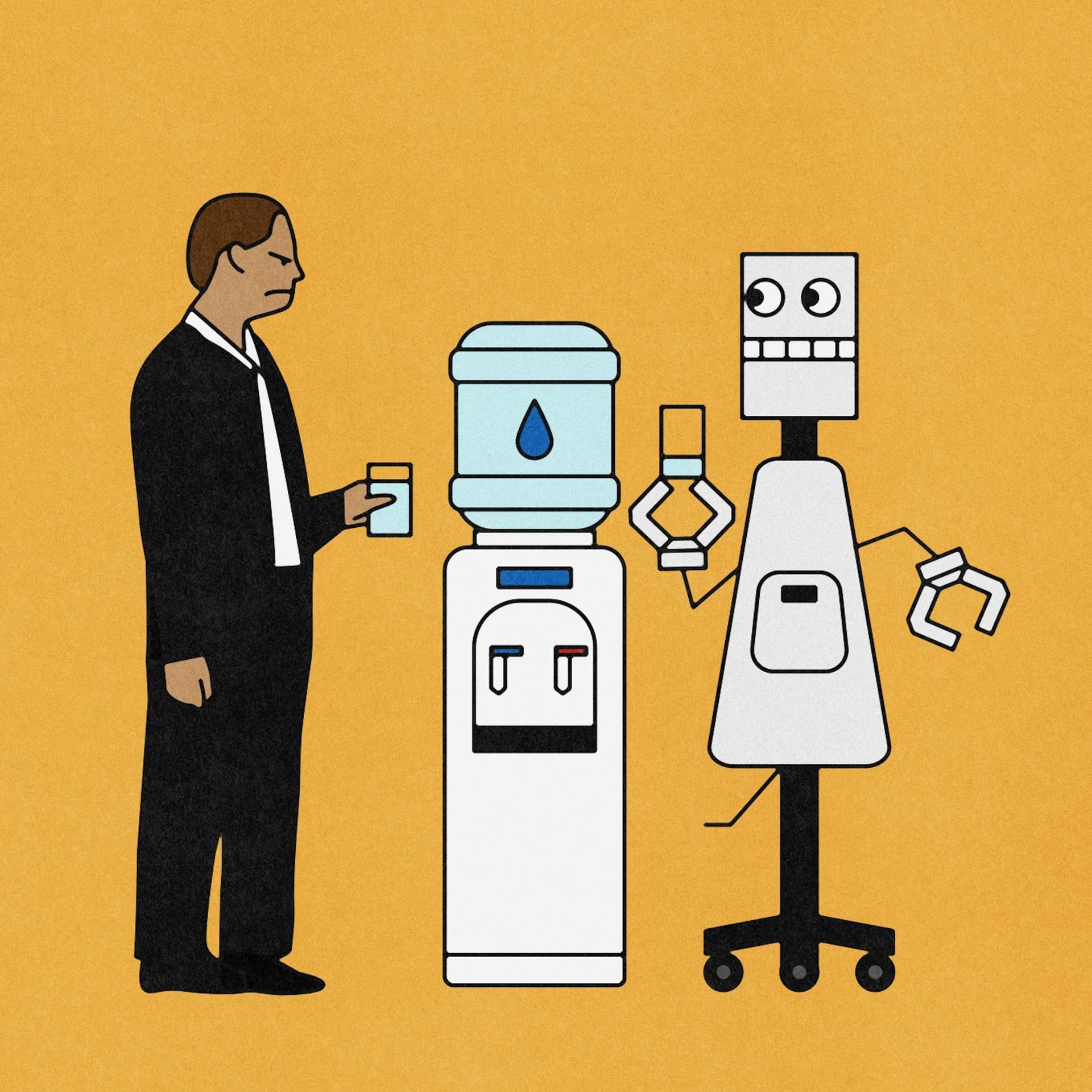
A single Q&A session with a large language model can consume more than a half-liter of fresh water to cool servers. Asking ChatGPT one question reportedly consumes 10 times as much electricity as a conventional Google search. And generating an image is equivalent to charging a smartphone.
Should we be worried about that?
Climate advice columnist Michael J. Coren doesn’t think so – or, at least, we shouldn’t lose sleep over it.
Today on “Post Reports,” he joins host Colby Itkowitz to dispel myths around AI’s energy consumption, explain how to use AI chatbots responsibly, and break down our other energy-intensive digital habits.
Today’s show was produced by Rennie Svirnovskiy. It was edited by Ted Muldoon and Reena Flores, and mixed by Sean Carter. Thanks to Marisa Bellack.
Subscribe to The Washington Post here.