
In short
Podcast Summary: The Hunt for a Stolen Jackson Pollock Painting
Podcast Title
Post Reports Hosts: Martine Powers and Elahe Izadi Episode Release: Weekdays around 5 p.m. Eastern Time
Episode Title
The Hunt for a Stolen Jackson Pollock Painting Episode Description: Decades after a significant art theft affected Merry White’s family, federal agents have pursued the missing artwork. The search holds personal significance for White as it is tied to her father’s connection to famed painter Jackson Pollock.
---
Key Themes
- Personal Connection to Art:
- Merry White, the daughter of Harvard professor Reginald Isaacs, shares her complex emotions regarding Pollock's work, specifically *No. 7, 1951*, which was stolen in 1973.
- The painting once hung above her bed, leading to mixed feelings due to her memories of Pollock's tumultuous personality.
- Art Theft and Its Impacts:
- The episode explores the emotional and financial ramifications of the theft on the Isaacs family, particularly regarding the psychological toll on Reginald Isaacs and the legal battles that ensued.
- Historical Context of Pollock’s Art:
- Discussion includes Pollock’s innovative techniques and emotional struggles, as well as his relationship with the Isaacs family.
- The popularity and financial value of Pollock's works skyrocketed in the art market, influencing crime rates related to art theft.
---
Episode Structure
- Introduction:
- Narrated by art critic Sebastian Smee, introducing the narrative of the theft and its emotional layers.
- The Friendship with Jackson Pollock:
- Recounts how Reginald Isaacs became friends with Pollock and acquired multiple paintings, shedding light on the artistic and personal exchanges between them.
- The Theft:
- Details the brazen 1973 robbery of three Pollock paintings from the Isaacs’ home, including the immediate aftermath and its effect on the family.
- The Recovery:
- Focused on the recovery of *No. 7, 1951* and the ongoing search for the remaining missing works, highlighting the legal and investigative efforts involved.
- Emotional Reflection:
- Merry White's reflections on her childhood experiences with Pollock and the impact of his theft on her family's life and legacy.
---
Key Takeaways
- Art as Emotional Artifact:
- The emotional weight of art can linger long after physical possession is lost, as exemplified by Mary White’s feelings towards Pollock’s work.
- Impact of Theft on Lives:
- The psychological effects of art theft extend beyond financial loss, altering family dynamics and personal histories.
- The Role of Law Enforcement:
- The narrative emphasizes the complexities of recovering stolen art, intertwining personal connections with broader issues of crime and art valuation.
---
Conclusion
The episode provides a poignant exploration of the intersections between personal memory, artistic legacy, and the traumatic impact of art theft. It underscores the lasting emotional traces that can remain when cherished artworks are lost. The pursuit of the remaining stolen Pollock painting continues to resonate for Merry White and her family, symbolizing both loss and the hope for resolution.
---
For more insights and stories, listeners are encouraged to subscribe to The Washington Post.
Written by AI. May contain mistakes. Listen to the episode to check what was said.
Chapters
Tap a time to open that second in VOOverview of the Story
0:45 to 1:46
An introduction to the key themes of the art theft and emotional connections.
“It's also about the theft itself, and it's about the recovery of two of the works.”
Mary White's Encounter with Art
1:46 to 4:31
Mary White recalls a pivotal moment at the National Gallery of Art.
“She'd been walking around the East Building at the National Gallery of Art in 1984, when she'd suddenly found herself standing in front of a painting by Jackson Pollock.”
The Theft and Its Aftermath
4:31 to 7:18
Describing the theft of Pollock's work and its impact on Mary White.
“One of those works, a combination of paint and collaged ink drawings, is still missing.”
Reginald Isaacs and Pollock's Friendship
7:18 to 11:16
Exploring Reginald Isaacs' relationship with Jackson Pollock and their art exchanges.
“can be the emotional traces, which are often undetectable.”
Pollock's Decline and Legacy
11:16 to 14:01
A look into Pollock's final years and the impact of his death.
“Mary White is now a Professor Emerita of Anthropology at Boston University and an authority on food culture.”
The Impact of Pollock's Death
14:01 to 15:22
Learn about the aftermath of Jackson Pollock's death and its emotional impact on those close to him.
“They all sat on the sand in a circle trying to figure out what to do.”
The Record-Breaking Sale of Blue Poles
15:23 to 16:46
Explore the significance of the sale of Pollock's Blue Poles and its impact on the art market.
“and for many years I have avoided his shows.”
The Burglary of Isaacs' Art Collection
16:47 to 18:12
Understand the details surrounding the burglary of Pollock's paintings from Reginald Isaacs' home.
“Burglars and crime gangs also took notice.”
Isaacs' Turmoil Post-Burglary
18:13 to 19:52
Discover the emotional and psychological toll the burglary took on Reginald Isaacs and his family.
“He wanted his name removed from museum wall labels and art catalogues, White said.”
A Wave of Art Theft
19:53 to 20:59
Learn about the rise of art thefts in the 1970s and its connections to organized crime.
“What keeps me going at all, George, is my responsibility to my wife, children and grandchildren.”
Show all 17 chapters
The Recovery of Pollock's No. 7
21:00 to 22:24
Follow the recovery process of one of the stolen Pollock paintings and the legal complications that ensued.
“The pair of thefts from these two Harvard professors were not disconnected.”
Isaacs' Legal Battles
22:25 to 24:01
Examine the legal struggles Isaacs faced after the burglary and the impact on his life.
“Abrams thought there was a chance the pair might also have been involved with the theft of Isaac's Pollocks.”
The Fate of the Remaining Pollocks
24:02 to 28:00
Investigate what happened to the remaining stolen Pollock paintings and their eventual recoveries.
“After the Welch theft trial, Abrams hoped Dunn, who had been found not guilty, might be able to lead them to the other stolen works.”
The Legacy of Pollock and the Isaacs Family
28:00 to 29:23
Explore the aftermath of Pollock's death and the impact on the Isaacs family.
“Unfortunately, by the time of the work's recovery, Isaacs was no longer around to benefit.”
The Search for the Missing Pollock
29:24 to 31:39
Learn about the efforts to recover the stolen Pollock painting and the complications involved.
“Homeland Security will not reveal the source, the organization, or the type of compensation they sought for fear of compromising agents in the field.”
Mary White's Emotional Journey
31:40 to 33:32
Discover Mary White's reflections on Pollock and her family's tumultuous history with him.
“And so, painting 1028, 1948, the third painting stolen from the Isaacs' home, is still missing.”
Visiting the Pollock-Krasner House
33:33 to 34:23
Experience Mary White's visit to the Pollock-Krasner house and her memories rekindled.
“When they went into the gift shop, she noticed that the only postcard for sale was No.”
Transcript
Automatic transcript. May contain errors.0:28Hi there, this is Martine Powers. Hi, I'm Sebastian Smee. What you're going to hear in a moment is a story I wrote about the theft of three works by Jackson Pollock from the home of a Harvard professor in Cambridge, Massachusetts. I'll be narrating the story. It's broken into chapters and there'll be some light music to immerse you in the piece. The story is really in three parts. It's about the special friendship between Jackson Pollock and the owner of the works, Reginald Isaacs, whose daughter Mary White has unpleasant memories of visiting Pollock's home on Long Island in the years leading up to his death in a car crash.
1:07It's also about the theft itself, and it's about the recovery of two of the works. It also recounts new information about the mystery of the third work's whereabouts. I guess I wanted to tell the story not because I'm especially fascinated by art thefts, although I know a lot of people are, but because I discovered that this particular art theft opened out onto some incredibly complex emotional wounds. Okay, here's the story.
1:45Mary White crumpled to the gallery floor. She'd been walking around the East Building at the National Gallery of Art in 1984, when she'd suddenly found herself standing in front of a painting by Jackson Pollock. She recognized the work, a 1951 painting in black enamel on canvas, splashy but not abstract, and was suddenly so overwhelmed that she felt her legs about to give way. Number 7, 1951, as the painting is titled, is from a brief period near the end of Pollock's life when he was experimenting again with figurative art. On the right, you can make out but a female-looking figure with a face divided, almost in the manner of late Pablo Picasso.
2:29Her body is crudely drawn, shaded with a welter of different-sized dots. The work's left side, meanwhile, is a thicket of tilting verticals, punctuated by drip-like splotches, not unlike the poles in Pollock's Blue Poles. White knew No. 7, 1951 intimately because her father, Reginald Isaacs, had acquired the painting directly from Pollock. It used to hang over her bed when she was a child. White, who goes by Corky because her mother was a painting student at Washington's Corcoran Institute when she had her, remembers resenting its presence there. Like any teenage girl, she would have preferred to decorate her bedroom with her own things.
3:14But her discomfort was more acute than that. The painting reminded her of the man who created it, A man whose intense anger and volatility had made family visits to his house profoundly uncomfortable. In the late 1940s and early 50s, she, her parents and two younger brothers used to visit Pollock and his wife, the painter Lee Krasner, at their home in Springs on Long Island. On those visits, Pollock was often drunk and sometimes violent. Being in the same house as him, White felt vulnerable and unprotected. But she felt she couldn't communicate this because her parents were so proud of their friendship.
3:58Dad was always interested in proximity to fame, remembers White. He wore his proximity to Pollock like a medal. So No. 7, 1951 stayed on the wall above her bed. If the painting triggered unpleasant childhood memories, It also triggered memories of the days and weeks after an afternoon in 1973, when thieves broke into her parents' apartment in Cambridge, Massachusetts, and stole No. 7, 1951, along with two other paintings by Pollock. One of those works, a combination of paint and collaged ink drawings, is still missing. Eric Gleason of Olney Gleason, which represents Pollock's estate, told the Washington Post that depending on several factors, especially its condition, the missing artwork could be valued up to$20 million.
4:51The feeling White had that day in the National Gallery was overwhelming. A guard who saw her sit down on the gallery floor walked over to check if she was all right. When she told him the painting used to hang over her bed, he looked at White, she recalls, as if she were, quote, a nutcase. But he seemed to believe her after she stood up and showed him the label, which had her father's name on it, Reginald Isaacs.
5:26Jackson Pollock continues to divide people. He's one of the most important American cultural figures of the 20th century, as influential as Marlon Brander, Miles Davis, Billie Holiday, or Frank Sinatra. Yet even today, when people stand in front of Pollock's paintings, they're often unsure about what to make of what they're looking at. One way to think of Pollock's paintings is as traces of a sequence of actions. In one sense, a painting's always a trace. It's what remains after someone applies a paint-loaded brush to canvas. But Pollock dramatised this action-based aspect of creation. Here's some archival audio of Jackson Pollock speaking about his process.
6:08I enjoy working on a large canvas. Placing his canvases on the floor of the studio. I feel nearer, more a part of the painting. He used a stick or turkey baster to flick and drip liquid paint onto them, as if he were drawing in the air above the canvas and letting gravity do the rest. I want to express my feelings rather than illustrate them. Technique is just a means of arriving at a statement. Because he moved his entire body as he performed these actions, the finished paintings are sometimes described as a kind of index to a physical performance, a performance that was liberated, explosive, and more instinctual than intentional.
6:49When I am painting, I have a general notion as to what I am about. Pollock was treating the campus as, quote, an arena in which to act, as the critic Harold Rosenberg put it. Of course, for detectives and criminal lawyers, a crime scene is also like a canvas. It's an arena of past actions which may have left behind various traces, what we call forensic evidence. But just as telling as the physical traces of a crime can be the emotional traces, which are often undetectable. If someone grew up with a Jackson Pollock hanging above her bed, for instance, and that painting was subsequently stolen from her family home, how would she feel about the resulting absence?
7:37Would she want to dwell on it? Or might she, because of its negative associations, wish the whole episode to vanish, leaving no trace?
7:56The Isaacs family's apartment was in Riverview, a large block at a 180-degree bend in the Charles River in Cambridge. In 1973, when the theft took place, Reginald Isaacs was a professor at Harvard University. Though trained as an architect, he became an internationally recognized expert in regional planning. His friendship with Pollock began in the 1940s, before Pollock's astonishing rise to fame. Isaacs had been in East Hampton visiting a friend who took him down to the sand flats to dig for clams with a neighbour. The neighbour was so self-contained that Isaacs assumed he was a hired hand or a particularly gruff Long Island clammer.
8:40I didn't catch his name and I didn't know he painted, Isaacs told the Washington Post in 1983. Later, we traded some clams for a few beers and a lemon and went back to his house. Isaacs glimpsed some paintings through a swinging door. I said, my God, who made those? Pollock muttered that he was the one responsible for the paintings. Accustomed by now to people mocking his work, he was surprised when Isaacs said that he loved the painting he'd seen and wanted to buy it. Isaacs, the author of a massive illustrated biography of Bauhaus founder Walter Gropius, was open-minded when it came to art. Architects in those days knew how to do watercolours, explains his son Mark Isaacs.
9:28Dad entered his stuff in shows. He was quite good. When he lost to an abstract type painting, instead of getting upset at this newfangled thing, which won when he didn't, he studied them and got to like them. As Isaacs and Pollock became close friends, Isaacs went on to buy more work directly from the artist. In those days, Pollock and Krasner often didn't have enough food on the table, so Isaac's interest was good for more than just morale. He paid the works off over time,$10, sometimes$20 a month. The two men maintained their friendship, even as Pollock rocketed to fame. No American artist before Pollock had experienced anything like the level of exposure that came to him when Life magazine published an August 8, 1949 story under the headline, Is he the greatest living painter in the United States?
10:22But celebrity was a mixed blessing for Pollock. Although he craved recognition, he wasn't mentally equipped to cope with sudden fame. Nor did the renowned bring instant wealth. Pollock and Krasner continued to struggle financially. Isaacs acquired more artwork. At one time, according to Mark Isaacs, he was in possession of Lavender Mist, one of Pollock's most celebrated canvases, also now in the National Gallery of Art. But he came to feel that he couldn't afford the$150 a month payments to the artist. When, on a visit to Springs, he admitted as much to Pollock, the painter took Isaacs into the studio, pulled out a portfolio of works on paper, and helped his friend pick out three more affordable things to replace lavender mist.
11:11Isaacs and his wife Charlotte came to own more than a dozen original Pollocks, both paintings and works on paper. Mary White is now a Professor Emerita of Anthropology at Boston University and an authority on food culture. She vividly remembers the chaotic and unpleasant atmosphere in the house during her family's visits to Springs, which she came to dread. By the time of the Isaacs' final visit to Springs, in June 1956, Pollock was creatively blocked and consistently inebriated. His greatest champion, the influential critic Clement Greenberg, had long since withdrawn his support. Every great artist has a run, said Greenberg, and Pollock's run was over.
11:59The painter, recalls Wyatt, would refuse to come to the table at mealtimes or else storm off halfway through eating. His face was lined and puffy. his marriage to Krasner, who had recently returned to the studio to resume her own art making, was foundering, and he had started an affair with 26-year-old painter Ruth Kligman. Since Pollock was unable to paint at all, Krasner's return to the studio made him resentful and cruel. His temper was explosive. He'd punched holes in the wall, according to White, who also said Pollock had a jerry-built sound system with speakers throughout the small house, and he liked to play Wagner at high volume.
12:43Krasner was just barely holding it together, White says of the household. On one occasion, Pollock tried to present Mark Isaacs with a gift, an archer's bow that was clearly too big and dangerous for a young boy. Reginald Isaacs had to intervene, suspecting that Pollock wouldn't remember the gift in the morning. Pollock enjoyed playfully wrestling with other men. Two years earlier, his ankle had snapped when he fell during a tussle with his friend and rival painter, Willem de Kooning. Pollock was bigger and stronger than Isaac, so when they got to grappling, the professor always thought it a great accomplishment when he managed to stay on his feet.
13:26But on this visit, as Isaac's told an interviewer, Pollock was very corpulent. I felt something was really wrong, and I did something to him emotionally by throwing him on the soft sand. In an effort to get Pollock creating again, the two men had earlier agreed that Pollock would paint a family portrait of all five Isaacses. But by the third day of the visit, and after the wrestling incident, it was clear that Pollock wasn't up to it. He was too involved with the bottle, recalled Isaacs. He didn't even go through the preliminaries. Isaac suggested instead that the family stop at the house on their way back to Cambridge in the fall Then I'll really be in shape to paint, said Pollock But two months later, on August 11th 1956 Pollock died in the car crash that also killed Kligman's friend, Edith Metzger Kligman was the sole survivor After hearing word of the crash, Isaac rushed to Springs He walked down to the beach with Krasner and five or six other people who knew the couple.
14:36They all sat on the sand in a circle trying to figure out what to do. Isaacs then walked back up to the house alone and went to the old barn converted by Pollock into a studio to have a final look. Any studio takes on an uncanny aura after the artist who used it has died. Pollock's studio, which is now open to the public, was where he had his most famous breakthroughs. It felt odd to Isaacs that Pollock wasn't there. There were only dim traces of his life. Just the flies, the sunshine, the usual disorder. I couldn't believe it had happened, he later remembered. At the funeral, Isaacs was one of the pallbearers.
15:21Ours was a quiet friendship, he observed, and for many years I have avoided his shows. I find it emotionally devastating.
15:39In 1973, the National Gallery of Australia purchased Pollock's Blue Poles, originally known as Number 11 1952, for a whopping$1.3 million, A sum so outrageous it smashed the record for a contemporary American painting and required sign-off by Australian Prime Minister Gough Whitlam. The ensuing scandal fed into a narrative about his government's financial mismanagement and ended with Whitlam's downfall amid a constitutional crisis in 1975. Never had such a picture moved and disturbed the Australian public, said art historian Patrick McHackie. The sale of blue poles kicked off a period of dramatic increases in valuations of modern art.
16:25Pollock's works have typified that explosion. In 2015, billionaire Kenneth Griffin reportedly paid$200 million for No. 17A, a 1948 painting by Pollock. The public, not just art dealers and collectors, became obsessed with the art market's outlandish prices. Burglars and crime gangs also took notice.
16:55On November 8, 1973, Isaacs returned home from his office at Harvard University at 3pm. He changed quickly into his rowing outfit and went straight to the boathouse. Sculling on the Charles was part of his daily routine. He was prone to anxiety and depression, mired in departmental complications at Harvard, and bogged down in his research, so he needed a therapeutic outlet. Rowing did the trick. After Isaacs left Riverview at about 3.15pm, two men came into the foyer. The day guard at the security desk was away from her station, and the men were able to gain entry to the Isaacs' apartment. It's unclear how long they were there, but by 4.45pm, when Isaacs returned, they had departed, most likely using the fire escape rather than coming back through the lobby.
17:49They took with them three artworks by Pollock, including No. 7, 1951. Two witnesses described both men as about six feet tall and slim and watched them put the paintings into a foreign-made car, according to the Harvard Crimson. What followed for Reginald Isaacs and his family was a decade of turmoil and anxiety Isaac's peace of mind, fragile at the best of times, was destroyed by the robbery White remembers that before the burglary, her father would frequently bring people to the family's previous home in Cambridge's Shady Hill Square to show off his collection of Pollocks He'd invite in strays from the street, friends from college, anyone, she said But after the theft, he was badly rattled and terrified of publicizing his connection to Pollock.
18:40He wanted his name removed from museum wall labels and art catalogues, White said. Isaacs didn't have an elaborate insurance policy. He was an academic who happened to have made friends with an artist before he became famous. Three of the works he had acquired from Pollock, having shut up in value, were now gone. For the next ten years, Isaac's thrashed about in a snake pit of legal and financial woes relating to insurance and liability. His notes from this decade resemble the drawings and paintings of Cy Twombly, scattered with sequences of numbers and crossed-out lists and half-formed, semi-legible sentences that peter out into nothing.
19:21They look like the traces of a man struggling to cling to sanity. When his doctor told him he would likely have a delayed reaction to the burglary, a normal response to shock, Isaacs didn't believe him. But as the legal and financial issues became more and more tangled, he suffered recurring migraines and tightness in his chest. He became nervous and distractible, admitting in a letter to his lawyer George Abrams that he would sometimes lose his thread while lecturing. I tend to confuse pre - and post-burglary events, he wrote in 1980. What keeps me going at all, George, is my responsibility to my wife, children and grandchildren.
20:12The Isaacs' burglary was an early part of a wave of art thefts that grew through the 1970s, some connected to organized crime, in response to the art market's exponential rise. A year after the Isaacs burglary, thieves hit the nearby home of another Harvard professor named Stuart Carey Welch, a collector and curator of Indian and Islamic art at Harvard's Fogg Museum, a fine arts lecturer, and a friend of Jackie Kennedy Onassis. They took, among hundreds of other items, antique English silver and ancient coins, a Tang Dynasty ceramic horse, a 7th century ivory-hilted sword from India, and a Mughal-carved dagger set with gems.
21:00The pair of thefts from these two Harvard professors were not disconnected. In fact, the Welch robbery would lead directly to the recovery of the first and most valuable of Isaac's three pollocks, the National Gallery's No. 7, 1951. In February 1975, Isaac's attorney, Abrams, who had also been retained by the Welch's, received a call from Cambridge detective James A. Roscoe, who had recovered coins stolen from the Fogg Museum. Roscoe said he had a lead in the Welch case. A man named Donald Smoothie Smoot, who had connections to the Winter Hill crime gang based in Somerville, Massachusetts, had told a state policeman at Boston's Logan International Airport that, for a reward, he could facilitate the return of the Welch's stolen items.
21:52Smoot was a 43-year-old high-stakes gambler who later testified against the Angulo family, members of La Cosa Nostra, in a 1985 racketeering case. He lost a leg soon after when his car exploded. Welch agreed to put up$5 ,000 and Roscoe and his partner Fidela Centrella set up a sting. On March 5, 1975, when Daniel E. Levin, 25, and Patrick L. Dunn, 24, tried to set up a sale of some of the stolen Welch items in Smoot's East Boston garage, police swept in and arrested the men. Abrams thought there was a chance the pair might also have been involved with the theft of Isaac's Pollocks. so when the case went to trial he invited Isaacs to the Cambridge District courtroom.
22:46Isaacs was reluctant to come but when he did he immediately recognized Levin. He waved Abrams over and said he'd seen Levin more than once around the Riverview apartment in the week before the robbery 18 months earlier. Abrams relayed this to the judge who said that if the defendants could provide information leading to the return of the Pollocks, he would consider leniency. Two days later, Cambridge police received a tip. If they went to a specific room in a hotel in nearby Newton, they might find something of interest. When police entered the room, they found Pollocks No. 7, 1951. The work, the same one now in the National Gallery, had been removed from its lattice frame, folded and rolled up like a rug, put in a plastic trash bag and apparently buried.
23:40The bag was covered with dirt. They took the painting back to the Cambridge police station where Isaacs confirmed that it was one of the three stolen paintings he'd acquired from his famous friend. Two stolen Pollocks were still missing but recovering them would prove far more difficult. After the Welch theft trial, Abrams hoped Dunn, who had been found not guilty, might be able to lead them to the other stolen works. But that route was cut short when Dunn was found dead from an overdose. It was a suspicious death, said Abrams, but there was no determination as far as I know whether that suspicion was justified.
24:30When No. 7, 1951, had been recovered from the hotel room in Newton, Isaac sued his building's trustees and their insurer on Abrams' advice, alleging that negligent security had facilitated the theft. According to Abrams, police suspected an inside job. For a long time, Isaacs dragged his heels. He wanted to drop the suit. He was afraid of publicity, stressed about money, and suffering from bad migraines. but Abrams convinced him to persist. The 1980 trial resulted in a great evaluation for the work around one million dollars more than five times the defense's estimate and a settlement that left Isaacs and Abrams sharing seven hundred thousand dollars plus title to the two missing paintings should they be recovered.
25:21Through the mid-seventies the rash of art thefts in New England continued Even as Abrams helped Isaacs and Welch navigate their burglaries, his own home was also raided. He and his wife Maida were building a formidable collection of Dutch and Flemish art. Police called him home from a summer trip to find some 17 paintings and 113 drawings vanished, many cut from their frames, some of which were left behind and spattered with blood, recalled Abrams. The culprits were two amateurish young men. The works were duly recovered. This theft was apparently pure coincidence. The next high-profile break-in, Abrams believes, was not.
26:06In July 1976, thieves quietly removed art from the home of Harvard's president, Derek Bok, while the Bok slept upstairs. Two of those paintings, according to the FBI, were taken to Rhode Island. Then, in May 1991, just over a year after the disastrous theft at Boston's Isabella Stewart Gardner Museum, a Connecticut lawyer representing an anonymous possessor brought a work to Christie's auction house in New York. The piece looked like a pollock. It was a loose skein of mostly straight black lines and scattered drips in watercolor, ink and lacquer on heavy white paper. Together, Christies and the lawyer submitted it to the Pollock Authentication Board.
26:54To the board committee, the work looked dubious. It seemed to be inscribed with They assumed this to be a reference to Peggy Guggenheim, Pollock's early champion. But there was no record of Pollock having anything to do with Guggenheim's family, and Guggenheim had left for Venice two years before the work was made. They rejected it as inauthentic. Two years later, when it resurfaced at the Burt Gallery in Providence, Rhode Island, authenticators reconsidered. Could the Rhode Island connection link it to the 1973 Isaacs theft? The scrawled dedication wasn't to Peg and family, the committee now realised, but to Reg and family.
27:41They also discovered an old photograph of the work in Pollock's studio. The photograph clinched it. This was the second missing work, number 21, Untitled with Poles, 1949. The painting went into the custody of the FBI pending legal proceedings. Unfortunately, by the time of the work's recovery, Isaacs was no longer around to benefit. In 1986, two years after the National Gallery acquired the first recovered Pollock, number 7, 1951, he suffered a massive heart attack and died. Number 21 was sold for$500 ,000 according to Abrams who says he got about 40 % of the money. Most of the remainder, according to Isaac's son Henry went toward the care of Isaac's aging widow Charlotte.
28:32Now only one of the three Pollock paintings stolen from Riverview remained missing. Painting 1028, 1948.
28:48Mary White's younger brothers, Mark and Henry, both took up painting. Henry Isaacs is a well-known Vermont-based painter, and both speak about the influence Pollock had on their art. Although Mary has mostly tried to forget Pollock, she inherited his record collection and various other low-value items, including letters to her father by Pollock from Isaacs. Meanwhile, she can't help but be acutely conscious that if the third work were recovered, she and her children, and possibly their children, might be financially secure for life. This prospect became a distinct possibility in 2014, when a special agent for Homeland Security Investigations in Paris received a tip from a source representing an organization in possession of stolen artworks, willing to return them in exchange for compensation.
29:43Homeland Security will not reveal the source, the organization, or the type of compensation they sought for fear of compromising agents in the field. But according to Kate Pote, an HSI spokesperson, the organization was willing to coordinate the return of one stolen work to, quote, demonstrate their bona fides. That work was Picasso's La Coiffeuse, a small Cuba's painting from 1911. It had been reported stolen in 2001 after a loan request revealed it was missing from storage at the Centre Georges Pompidou, a major museum in Paris. On December 17, Robert shipped the painting from an address in Belgium to a climate-controlled warehouse in Long Island City.
Read the full transcript
30:33A FedEx customs form valued the work at 30 euros. It was actually worth 15 million dollars, indicating in the description that it was art craft and including the words Joyeux Noël, Merry Christmas. The next day, when it arrived in Newark, federal agents intercepted it. The Picasso was eventually returned to the French government At a ceremony held at the French Embassy in Washington, D.C. to announce the recovery, no one mentioned the larger arrangement. But that was the plan all along, and sure enough, the source soon contacted Homeland Security Investigations again to arrange for the return of another work, the missing Pollock, stolen from Reginald and Charlotte Isaac's home in 1973.
31:24The source again provided instructions for special agents to intercept the Pollock. The agents followed those initial instructions, but the source went silent. According to an HSI statement, quote, no further actionable leads were able to be developed. And so, painting 1028, 1948, the third painting stolen from the Isaacs' home, is still missing.
31:56Two summers ago, Mary White was visiting friends, Linda Stein, a sculptor, and her wife, the Harvard Japanologist Helen Hardacre in East Hampton. How close is the Pollock-Krasner house? White asked Stein. Ten minutes, replied Stein. Okay, said White. Let's go. Pollock had been an important part of her father's life. In the days after the artist died in a car crash, Isaacs, finding himself alone in Pollock's studio, had stared at the paint-splattered floor, dismayed by his friend's porny and absence. But for Mary, the house had always meant something different. The artist's tantrums and intimidation, his chaotic presence, the sense she had of being unsafe and unprotected by her parents.
32:47As a kid, when something like that happens, you're not sure how you're feeling, she explained, sitting at a table in her Cambridge home. In the meantime, she had watched as Pollock became the most famous of all American modern artists. The subsequent theft of three Pollocks from her parents' home had only added to the drama that had enveloped her family. so I have a complicated set of feelings around him she explained. Now when White and her friends drove the 10 minutes to the Pollock Krasner house a place she hadn't visited in almost 70 years she had armed herself against dramatic feelings. She felt calm and simply curious.
33:33As she walked around the property White noticed a few things about the house that were different But her strongest memories of being there as a teenage girl were sparked only when she entered the studio and looked intently at the studio floor, still spattered with Pollock's paint. When they went into the gift shop, she noticed that the only postcard for sale was No. 7, 1951, the recovered painting that is now in the National Gallery of Art in Washington. I said to my friends, This painting was hanging over my bed in my bedroom, remembers White. Everyone gasped. Then we went to have coffee.
34:23This story was reported and read by me, Sebastian Smee, and produced by Bishop Sam.
34:33That's it for Post Reports Weekend. Thanks for listening. We'll be back on Monday with more stories from The Washington Post.
34:59subscription to the Washington Post, you get three extra accounts to share with friends and family so they can stay informed too. Right now, you can get a premium subscription to the Post for$6 every four weeks. Just$6 unlocks trusted reporting to share with other people in your life. After your first six months, it'll cost$19 every four weeks. You can cancel anytime. Head over to WashingtonPost.com slash subscribe and get premium access to the Washington Post today. That's WashingtonPost.com slash subscribe.
From the publisher
Decades after a brazen art theft drove Merry White’s father to despair, federal agents closed in on the missing work. For White, the search is personal.
Read more:
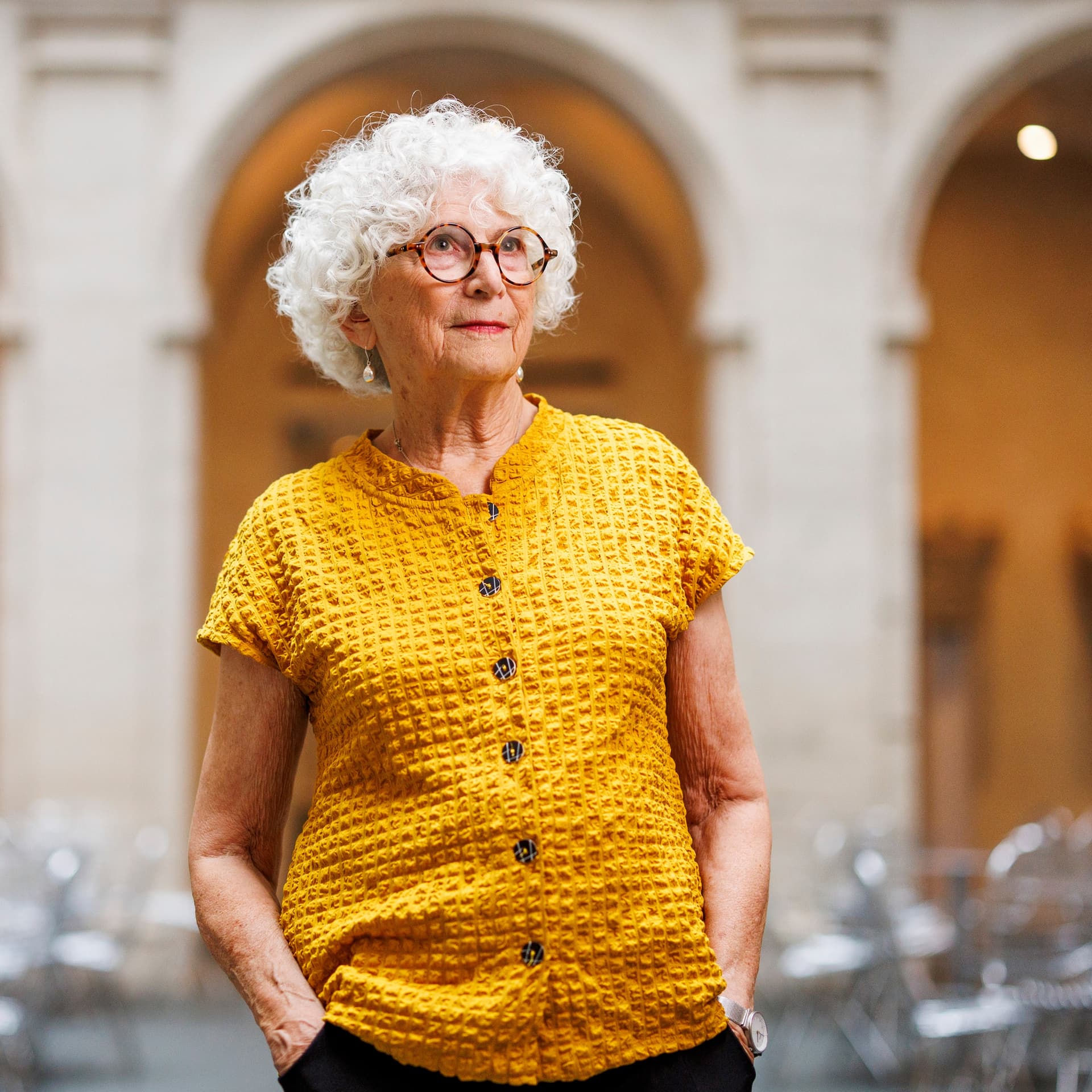
Merry White is the daughter of a Harvard professor who was close friends with painter Jackson Pollock. White’s parents came to own several of the painter’s artworks, and one hung over White’s bed when she was a child. It was stolen in 1973, along with two other paintings by Pollock. The theft destroyed White’s father's peace of mind, and left White with complicated feelings.
On this weekend episode of “Post Reports,” art critic Sebastian Smee reconstructs the provenance and theft of these precious works of art. Audio production and original music by Bishop Sand, with help from Sean Carter.
Subscribe to The Washington Post here.