In short
Podcast Episode Summary: The Making of Trump’s Presidential Library
Podcast Overview Podcast Title: Post Reports Hosts: Martine Powers and Elahe Izadi Description: Post Reports is a daily podcast from The Washington Post offering unparalleled reporting, expert insight, and clear analysis.
Episode Details Episode Title: The Making of Trump’s Presidential Library Release Date: December 15, 2020 Duration: Approximately 33 minutes
Episode Summary In this episode, the hosts discuss the planning and implications of Donald Trump's presidential library, which is currently being developed in Miami. With $50 million raised from undisclosed donors, the library is anticipated to serve not only as a repository for presidential documents but also as a monument to Trump's legacy.
Key Topics Discussed
- Purpose of Presidential Libraries
- Traditionally, presidential libraries function as research hubs housing documents and artifacts from a president's time in office.
- They are intended to serve as monuments to a president's legacy.
- Funding and Construction
- Trump's library is being funded through private donations, with $50 million already raised.
- The state of Florida contributed land in downtown Miami for the library.
- Concerns arise regarding the lack of transparency in the funding process, as details about the donors are not disclosed.
- Historical Context and Changes
- The episode discusses how past presidential libraries were funded partly by the government but have increasingly shifted to a private funding model.
- Former President Obama initiated a new model with his presidential center, which raises questions about future libraries, including Trump's.
- Potential for Historical Misrepresentation
- Concerns are raised by historians about the potential misrepresentation of history in Trump’s library.
- Unlike previous libraries, there’s no obligation for the Trump Library to adhere to factual historical presentation, particularly as it pertains to controversial elements such as his two impeachments.
- Location and Land Transfer Controversies
- The library's location in Miami, next to the Freedom Tower, was approved in a process that faced legal and public scrutiny.
- The land is viewed as highly valuable and the decision to transfer it has attracted controversy.
- Exhibits and Content
- While specifics about the library’s exhibits remain vague, discussions have included the possibility of a "fake news wing" to illustrate Trump's adversarial relationship with the media.
- The absence of independent historians to review the exhibits raises concerns about bias in how Trump's presidency will be presented.
Expert Insights
- Michael Kranish, a political investigative reporter, provides in-depth commentary on these issues, highlighting the implications of a privately funded presidential library.
- Kranish notes that while Trump’s library may not represent an entirely new concept in presidential history, it exemplifies a growing trend of personal narrative shaping within these institutions.
Conclusion The episode concludes with a reflection on the importance of historical accuracy in presidential libraries. Trump's library is positioned to be a unique case study in the intersection of politics, memory, and public history.
Key Takeaways
- Presidential libraries historically serve as factual repositories but may be subject to personal narrative and bias, particularly in Trump’s case.
- The shift to private funding for presidential libraries raises ethical questions about transparency and influence.
- The Miami library could redefine how future historians interpret Trump's presidency, depending on its content and narrative framing.
Additional Information
- Producers: Thomas Lu
- Mixers: Sean Carter
- Editor: Ariel Plotnick
- Thanks to: Dan Eggen
For further insights and discussions, listen to the full episode of Post Reports.
Written by AI. May contain mistakes. Listen to the episode to check what was said.
Transcript
Automatic transcript. May contain errors.0:02Historically, presidential libraries have been used as sort of research hubs to house documents and artifacts from a president's time in the White House. They're also a monument to a president's legacy. The planning for President Trump's library is well underway. I can promise you it's going to be the greatest shrine to the greatest president this country has ever had. And I promise you, I mean, it's going to be the greatest structure ever created for a president by far. It's going to be the greatest library ever envisioned. That is Eric Trump, Trump's oldest son. He was giving an interview on a conservative-leaning podcast back in the fall.
0:38Eric Trump was talking about the creation of his father's presidential library. Trump has raised$50 million from undisclosed donors to build it. And the state of Florida has gifted Trump acres of land in downtown Miami for it. What's less clear is what will be in the library.
1:01From the newsroom of The Washington Post, this is Post Reports. I'm Kolbie Echowitz. It's Monday, December 15. Today, I speak with investigative reporter Michael Kranish about Trump's plans for his presidential library and why some historians worry that it could misrepresent this moment in history by telling the story only through Trump's eyes.
1:28Michael, thank you so much for joining me. Thanks for having me. So, Michael, you reported over the weekend on President Trump's plans for his presidential library in Miami. And I want to get into all the ways that Trump wants to memorialize his presidency. But first, like, what has historically been the point of a presidential library? How have past presidents used them? Well, I think it started with FDR. He had all these papers. What do we do with them? And there was this idea that we'd store them, have a library, make them available to the public. So there's been about maybe 15 presidential libraries so far.
2:00and they're all done pretty differently. But the bottom line is, and according to a court ruling that happened some time ago, the papers are the property of the public. They're not the property of the president. So when you say presidential papers, what does that encompass? So they don't have to be literally papers. A lot of this obviously would be electronic communication. Presidential libraries also have artifacts of the presidency. So there's a mass of material, but the papers belong to the public. So the National Archives is the one that controls these papers. So for many years, the libraries have been the repository.
2:31For example, at the LBJ Library, you can go in, they've got tons and tons of papers from that presidency. Robert Caro, the historian, has written a multivolume biography of LBJ, famously says he goes there and he wants to turn every page. So that's the image that a lot of people probably have of a presidential library, but it's changed. So under President Obama's library formulation, it's not really a library at all. He is building what he calls a presidential center. They put aside$5 million to help the National Archives digitize Obama's papers, But basically, it's a presidential center. You're not going to go there to research this presidency.
3:02You do that online. Okay, so as I understand it, a presidential library, a place to keep all the archives and documents and artifacts from a presidency. But that is owned by the National Archives, not by the president himself. So who's paying for these libraries? It's done differently everywhere. The National Archives says that they spent a fourth of their budget regarding presidential libraries. They want to sort of stop that cost from growing even more. It's only recently that there's been this idea that if this really has to be privately done, there is money that the National Archives spends to help on these other libraries.
3:36But they're trying to sort of get out of that business, which may seem contrary to the public purpose that people see of these libraries and presidential centers. Okay, Michael. So what you're saying is these presidential libraries have long had at least some part of it be funded by the government. But in recent years, we've shifted to having these libraries be exclusively privately funded. How did that start? So Obama started what people consider a new model of presidential libraries or centers. He has a private foundation. It's raised about$1.6 billion, might raise more. That's an awful lot more than other centers and libraries have raised.
4:15And that money is going to basically build this facility on a 19-acre campus in Chicago. So that opens in June of next year. That model is now likely what Trump will use, particularly since they're fundraising through a private entity, the Trump Library Foundation. So far, they've raised$50 million and spent$6 million. Trump had said that some of his money has come from settlements against media organizations like his lawsuits against CBS and ABC. Because it's a private foundation, they don't need to disclose where the money is coming from. It could come from companies or others that have interest before the government, and Trump is doing this while he's still president.
4:50So there's folks who say, you know, that's not appropriate, but Congress has not provided money for building these centers. They provide money to maintain existing libraries in some ways, but in some ways, they've created this situation where they say, you have to build a presidential library center if you want one. There's no law saying you've got to construct one. So, of course, there's going to be, you know, criticism of how money is raised by whichever party is not in power, but they're not providing that money. Is it unusual that a president would start raising money for their library this soon in their term?
5:23Was President Obama raising money for his center during his time in the White House? I don't think Obama was raising much, if any, money before. It was known that he was going to build the center. He was there for two terms. It is obviously easier to raise money while you're president because then people, maybe they're trying to influence you or they just want to do it while you're president. Now, the example of how this can be so hard is President Biden. President Biden wants to build some kind of library or center. His filing says he's raised$4 million. That is just almost nothing in this business of building centers when you look at Obama's$1.6 billion that he's raised and what Trump's doing.
6:02So right now, Biden is going to be talking about this, but it's awfully it's harder to raise money after you've left office. So for Trump, he is able to raise more money while he's in office. He's doing this for the construction of the East Wing, for example. So ballroom, the ballroom. Yeah. And the library is sort of, you know, analogous to that and that this is a huge project. And there are these questions come up about, you know, using private funds while he's still president. The way Trump is doing it, I mean, there's no laws that people are saying have been broken. The Democrats have introduced what they call the Presidential Library Anti-Corruption Act.
6:37Under that act, it would ban fundraising until after a president leaves office except from nonprofits, and it would require a two-year delay after a president leaves before donations can be accepted from foreign nationals, foreign governments, lobbyists, individuals seeking pardons, and federal contractors. So you can see that this would be a way to avoid these conflicts of interest or appearance of conflicts and so forth. So far, only Democrats have supported that legislation, so it doesn't seem to be going anywhere in this Congress. Okay, so as of right now, there's no guardrails around where the funding comes from, and that's what the Democrats are suggesting should change.
7:10But is there anything in place that acts as kind of an oversight of what actually gets put into these libraries? Like what piece of history and how history is remembered? Well, the presidential papers, the artifacts, those are all overseen by the National Archives, and that won't change. They'll probably be at the National Archives here in D.C. not at the library, but it's possible they could be at the Trump facility if that's what he decides. That's how some earlier libraries have been built. Also, the museums, and that's key here, like in the Nixon Library, years ago, they had a Watergate exhibit that said Watergate was just a conspiracy against Nixon.
7:44The National Archives came in, put an archivist there in charge, and said, you can't have an exhibit like that. It has to be factual. So the library ended up changing at the direction of this new archives appointed director. And that factual exhibit about Watergate is what's in the library today. But if Trump constructs his library or center entirely funded by his private foundation, the museum there would have no obligation to work with the National Archives, who in other cases might have had oversight to keep things accurate from an independent point of view. So Trump could tell whatever story he wants about the history of his own election, and maybe he would say the 2020 election was stolen, as he had said, which of course is false.
8:30I did ask a former President Obama spokesperson about this and how that works with the Obama Center, which sort of set the model for this. And they said they've used historians to come in, review their museum, and so forth. We don't know if there'll be independent historians who would do that in the Trump Library case. That's a great place to pause, Michael, because after the break, I want to talk to you more about what we do know about Trump's plans for his library. We'll be right back.
9:04Good journalism is even better when it's shared. With a premium subscription to The Washington Post, you get three extra accounts to share with friends and family so they can stay informed too. Right now, you can get a premium subscription to the post for$6 every four weeks. Just$6 unlocks trusted reporting to share with other people in your life. After your first six months, it'll cost$19 every four weeks. You can cancel anytime. Head over to WashingtonPost.com slash subscribe and get premium access to the Washington Post today. That's WashingtonPost.com slash subscribe.
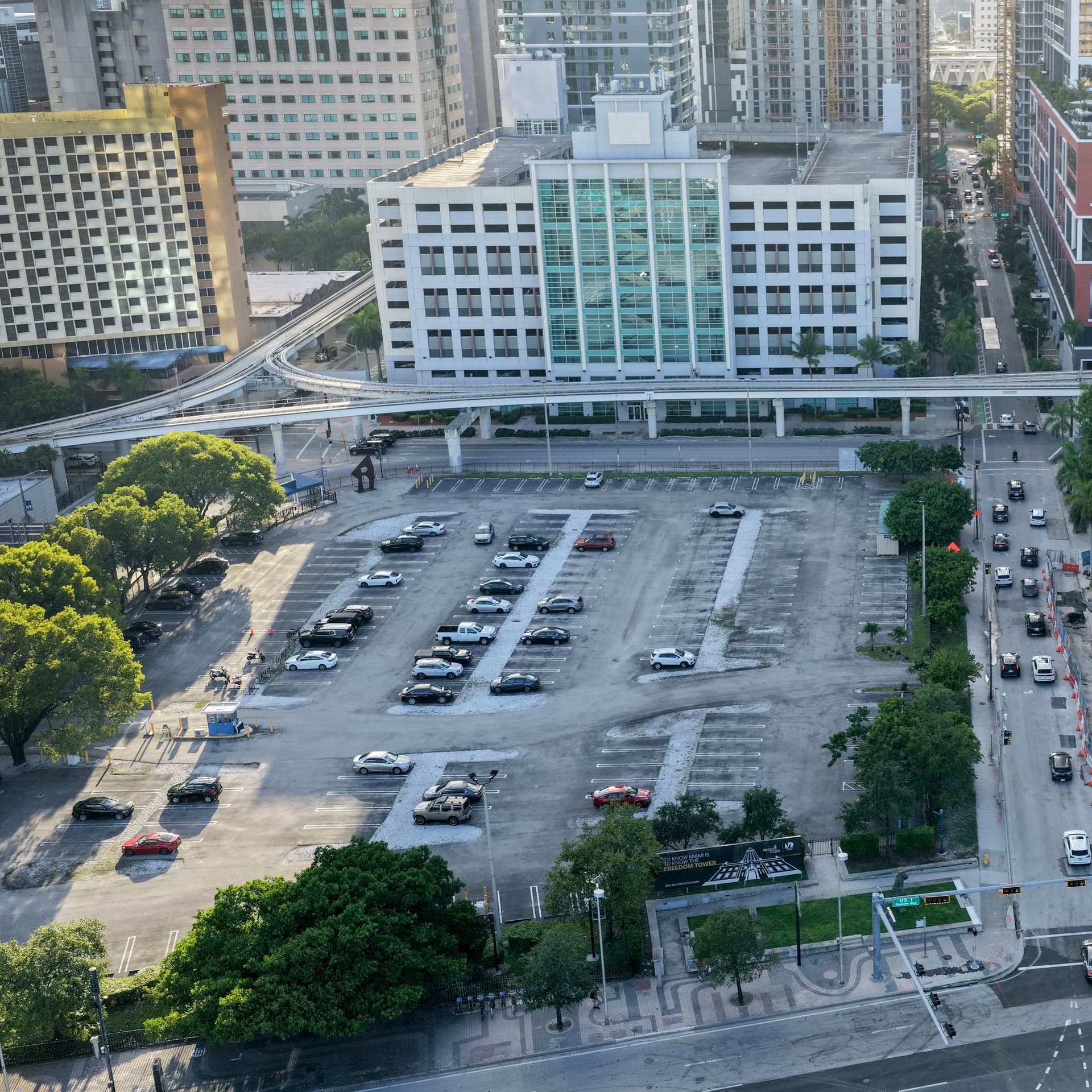
9:44So, Michael, we mentioned earlier that Trump's library is going to be in Miami. Obviously, Florida is a very friendly state to Trump. It's where he has Mar-a-Lago and West Palm Beach. What do we know about this choice of location? Kind of why, where, how? So this is a 2.6-acre site. It's right in downtown Miami, right next to a place called the Freedom Tower, a very prominent location. So what happened there was there was a meeting in September by the Miami-Dade College, which is a state institution, and they had a notice in the Miami Herald and it very vaguely said there'd be a meeting about a land transfer.
10:20It didn't say it was about Trump, didn't say anything about what it was. And they unanimously approved, the Board of Trustees approved, giving this 2.6 acre parcel to the state, which then promptly gave it to the Trump Library Foundation. That transfer is being contested in the courts. But the bottom line is this property is, their various estimates was appraised at more than$60 million. Some real estate folks told us it might be worth more than$300 million. And Eric Trump himself has said it's one of the most valuable pieces of property in Florida. So no doubt it's a very valuable gift to start off with to have this.
10:54And from the college's standpoint, there are other campuses across the country that do have an association with the presidential library. So it's not unheard of. But there are some people who say, you know, this should have been more thoroughly vetted. You know, this site doesn't make sense. So there was a lot of controversy over it. The bottom line is the Board of Trustees, after being sued, voted a second time unanimously to give this land. But that is still being contested in the courts. What else do we know, if anything, about Trump's plans for his library? You know, with Obama's, it's opening in June.
11:22We know it's going to have an athletic facility and an auditorium, a garden. Do we have any sense at all of what will be in Trump's library? Well, we don't really know exactly what he's going to build. We know, of course, the Trumpian language where he said this is the folks in the Trump world have said it's going to be iconic. It's going to be the best presidential library ever. But we only know a few things that they've said over time. For example, Eric Trump, he's the part of the board of the Trump Library Foundation. When he went on a podcast hosted by Benny Johnson, the host asked him, you know, would you have a fake news wing?
11:57And Eric Trump liked this idea, jumped on it. By the way, I hadn't thought of that, but that's beautiful. So that's going to be controversial if it happens because he's telling this story. I actually think that'd be a great exhibit about how dishonest these people are and how they will lie, cheat, and steal. And that has certainly been one of the things that President Trump has said time and time again. So from Trump's perspective, that's a big part of his presidency. He believes the media has been against him. It's the enemy of the people, according to him. So it's not surprising, really, that they would say that.
12:24But it certainly is something we don't usually see in a presidential library or center. And we know that President Trump has said that Qatar is giving him a 747 to be Air Force One, which would then be turned over to the library to be displayed there in some way or maybe at another site. but they haven't released any specific plans other than statements from time to time about what they want it to be. So they'll have to do that sort of pretty soon to say what they want to do and as they start gathering more funds and put together plans. You know, past presidential libraries, they were incentivized to be historically accurate but there's nothing that says that Trump can just not mention his two impeachments.
13:07What does that mean for the future of understanding Trump's presidency, for future historians, future biographers? I actually just finished a series about Thomas Jefferson, and one of the stories in that series was about the Jefferson Memorial. And I got interested in that because I knew the panel on memorial on slavery was misleading. It left out key parts. It was doctored. It used some phrases, but then did not follow up phrases and didn't mention that Jefferson owned 600 slaves in his lifetime. So I went back and I told the story of how that happened. And the reason that's so relevant here is because it just shows you that time and time again, there are people who want a certain story to be told about a former president.
13:47So in that case, that was arranged by Jefferson's great-great-grandson who was on the Thomas Jefferson Memorial Commission. So here we have the Trump Library. His son, Eric Trump, is leading this effort. We do see this. So I certainly want to say, well, Trump's the only one who's doing it differently. We've seen time and again that, you know, there are monuments here that people will disagree and for, you know, the way they are. But it is the way that those monuments were done at the time. And sometimes there's one interpretation. And then later on, people come on and say, you know, I have a new take on this history and I found new things.
14:19And that is part of the process, the historiography, as it's called. So no doubt there'll be people, you know, for decades to come studying the Trump presidency. And you have new perspective. And hopefully people can look at it and get their own sense, gather all the information. And it's something that's important today and for history.
14:41Michael, thank you so much for coming on. Thanks so much for having me.
14:47Michael Kranish is a political investigative reporter for The Post. That's it for Post Reports. Thanks for listening. We are so grateful to have you as a listener. Now we want to learn more about your listening habits and how you think we can be better. We've got a new survey that we're running for a limited time, and we would love to hear from you. It shouldn't take more than 10 minutes to complete. To do that, you go to WashingtonPost.com slash podcast survey. Again, that is WashingtonPost.com slash podcast survey. When you're done, you can enter to win a$100 gift card. One more time, if that got your attention, that is WashingtonPost.com slash podcast survey.
15:27Today's show was produced by Thomas Liu and mixed by Sean Carter. It was edited by Ariel Plotnick. Thanks to editor Dan Egan. I'm Kolbiechowicz. We'll be back tomorrow with more stories from The Washington Post.
15:51Good journalism is even better when it's shared. With a premium subscription to The Washington Post, you get three extra accounts to share with friends and family, so they can stay informed too. Right now, you can get a premium subscription to The Post for$6 every four weeks. Just$6 unlocks trusted reporting to share with other people in your life. After your first six months, it'll cost$19 every four weeks. You can cancel anytime. Head over to WashingtonPost.com slash subscribe and get premium access to The Washington Post today. That's WashingtonPost.com slash subscribe.
From the publisher
Historically, presidential libraries have been used as research hubs to house documents and artifacts from a president’s time in the White House. They’re also a living monument to a president’s legacy.
Less than a year into President Donald Trump’s second term, planning for his presidential library is underway, with $50 million already raised from undisclosed donors.
Co-host Colby Itkowitz speaks with national political investigative reporter Michael Kranish about how presidential libraries and museums are usually created and why Trump’s private fundraising foundation could allow history to be misrepresented at his future library.
Today’s show was produced by Thomas Lu and mixed by Sean Carter. It was edited by Ariel Plotnick. Thanks to Dan Eggen.
Subscribe to The Washington Post here.