In short
Podcast Episode Summary: Post Reports
Episode Title
Top GOP leader on shutdown: ‘This could go on for quite some time’
Hosts
- Colby Itkowitz (Host)
Key Guests
- Sen. Shelley Moore Capito (R-West Virginia)
Episode Overview This episode of Post Reports focuses on the ongoing federal government shutdown, which is now in its third week. It highlights the political standoff between Republicans and Democrats and examines critical issues surrounding healthcare and government operations during the shutdown.
---
Key Themes
- Government Shutdown Dynamics
- Current Situation:
- The shutdown has led to missed paychecks for government workers and increased airport delays.
- Both parties are far apart on negotiations to reopen the government.
- Republican Stance:
- Sen. Capito emphasizes that the government should be reopened without preconditions, after which negotiations on healthcare and other issues can commence.
- Healthcare Subsidies as a Sticking Point
- Democrats demand the inclusion of renewed health care subsidies for ACA marketplace enrollees as part of any negotiation to end the shutdown.
- Republicans, including Sen. Capito, assert that these discussions cannot happen until the government is reopened.
- Concerns About Extended Shutdown
- Capito expresses concern that the shutdown could continue for an extended period if both parties do not come to an agreement.
- She suggests that a resolution could involve a temporary extension of health care subsidies while reforms are discussed.
- Presidential Power and Actions During Shutdown
- Discussion regarding President Biden's use of executive power to lay off federal workers during the shutdown.
- Capito critiques this approach, suggesting it should be done more surgically and highlights the risks of expanding presidential power.
- Public Opinion and Political Strategy
- The episode touches on the perception of health care as a "winning issue" for Democrats, particularly among constituents in red states like West Virginia.
- Capito expresses concern that Republicans may not be effectively communicating their position or advocating for their constituents' needs.
- Bipartisan Solutions
- Capito advocates for a collaborative approach to healthcare reform that involves both parties, emphasizing the need for reform without simply throwing money at the issue.
- She reflects on the importance of balancing taxpayer interests with support for those in need.
- Addressing Extremism and Political Climate
- Capito also addressed recent instances of extreme rhetoric among political groups and emphasized the need for self-discipline in public discourse.
---
Conclusion Sen. Shelley Moore Capito presents a Republican perspective on the government shutdown, emphasizing the need for reopening the government to address critical issues such as healthcare reforms. The discussion reveals tensions between immediate political strategy and long-term solutions while highlighting the complexities of bipartisan negotiations in a charged political environment.
---
Additional Notes
- The episode produced by The Washington Post also highlights the roles of individuals behind the scenes, including producers and editors.
- The discussion reflects ongoing concerns about the balance of power in government and the implications of executive actions taken during a crisis.
Resources
- Find more episodes on [YouTube](https://www.youtube.com/@washingtonpostpodcasts).
- Subscribe to The Washington Post for in-depth journalism and reporting.
Written by AI. May contain mistakes. Listen to the episode to check what was said.
Transcript
Automatic transcript. May contain errors.0:00Right now, during the President's Day sale, you can get a Washington Post premium subscription for just$3 every four weeks. And that includes three extra accounts to share with friends or family. After your first year, renews at$19 every four weeks. The Washington Post. Power. Perspective. Premium. Learn more at washingtonpost.com slash subscribe.
0:28I think the president's trying to make a point. While you're not in doing your work, I'm going to do some of your work for you. Which in this case seems to be firing or laying off thousands of people. Yeah. I mean, I think it's 4 ,000 people. So far. Right. And, you know, I'd like to see it done more surgically. But I think the president and his executive team has decided this direction to go.
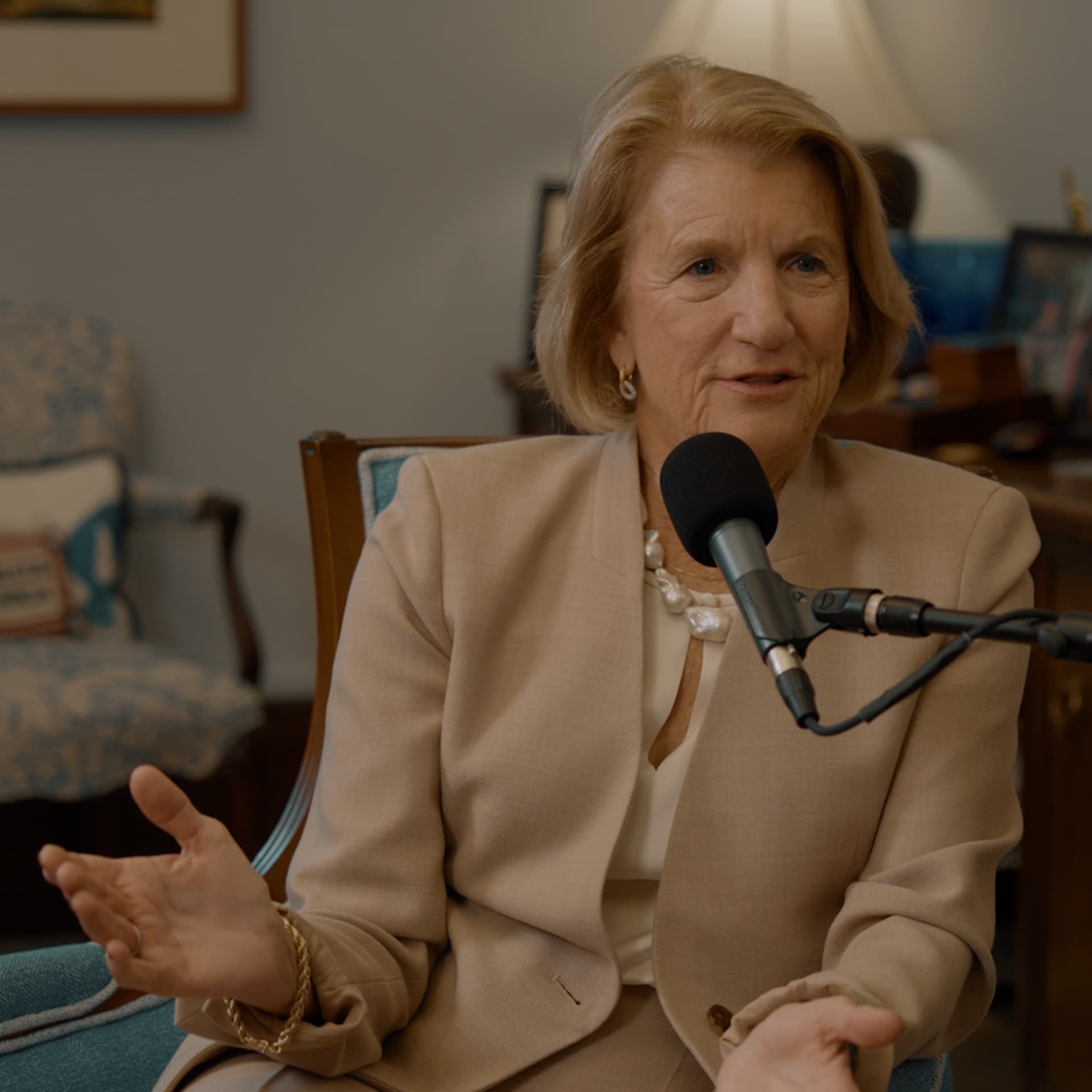
0:58That's Senator Shelley Moore Capito, the senior Republican from West Virginia. She's also the only woman in Senate Republican leadership. I wanted to find out how she thinks this ongoing federal government shutdown is going to end. And what is her message to the real people who are caught up in this stalemate? From the newsroom of The Washington Post, this is Post Reports. I'm Kolbie Echowitz. It's Friday, October 17th. Today, the shutdown is in its third week. Republicans and Democrats are still at odds. Democrats say in order to reopen the government, Republicans have to agree to extend health care subsidies that will lower premiums for millions of Americans.
1:44Republicans say they're not going to have that debate until Democrats agree to reopen the government. So we asked Capito if a health care deal is possible. We also asked her about President Trump sidestepping Congress and expanding the bounds of presidential power. Senator, thank you so much for having us in the office. Thanks for coming in, Colby. So, Senator, we're on week three of this government shutdown, and we're seeing government workers starting to miss their first paycheck. There's airport delays. People are feeling real pain. How do you see this ending? Well, I think that the easiest way to end this is to simply open the government and then begin negotiating the terms of health care and other things that need to be discussed.
2:26As we sit here now at a stalemate, I'm concerned that this could go on for quite some time. I think that Senator Thune, our leader, has more than a few times offered to discuss the issues, to put issues up for votes, but first have to open the government. It is a very simple thing. People would get their paychecks. Our air traffic controllers would be in a much more certain position. Our troops, all of these things would fade away. If the Democrats, we have three, if we can get five more to just simply join us, open the government, and then not even begin these talks because they're already happening, continue the talks.
3:05Are you part of any of those talks around health care? We're all talking. I mean, I think we've been talking about this for several months, aware of the November 1st date when the approximation of what your insurance payments would be are going to be sent out. So we're all aware of this. We've been talking about it, and there's some good ideas out there, but it can't go forward without some reforms. Do you see any world—I mean, the Democrats have made it very clear they do not want to reopen the government unless they have assurance that these health care subsidies are going to be extended. You mentioned the November 1st date.
3:35Obviously, that's a couple weeks away. People are going to start seeing how high their premiums are. Do you see any world where the government is—that relief, insurance relief, is part of a package to reopen the government? I think that the way the premium support was so hugely expanded during the COVID years has to be really looked at and reformed. Many people are paying nothing. And so I think there are reforms that need to be made. I think it's unreasonable for the Democrats to say we have to be assured of a certain policy outcome to open the government, to keep government moving, to stop all this angst that's going forward.
4:16To me, that's simple. I mean, Senator Schumer said, this is really, this is getting better and better for us. I don't think he's talking about government workers and troops and other people. He's talking about the politics of it. I mean, speaking of what Senator Schumer said, I think the Democrats do think that they're winning on this issue. They think that health care is a winning issue, that people are worried about price increases. They want health care to be more affordable. Obviously, a lot of the people that get these health care subsidies live in red states, live in West Virginia. They do.
4:47Are you worried that Republicans aren't making the strongest case here, that they are kind of losing in the court of public opinion? You know, I think, well, first of all, whoever wins and loses really is immaterial here. I think that many of us, me included, have shown a great willingness to say, we have an issue here with this premium support of 67 ,000 West Virginians, receive premium support. I've done the deep dive on this. And I want to make sure that that beautician and barber and small business owner can afford the insurance. They're working. They're doing the right thing. But they don't have enough to pay high premium.
5:25But we need to look at what are the insurance companies making on this? What kind of not just waste, but what kind of better way could we help those folks without just simply throwing money at that? And I think that's the real issue here. So health care is a winning issue. There's no doubt. But I think also being good stewards of the American taxpayers, making sure we're not wasting, making sure there's a fairness quotient here is also good politics. When you talk to those people in West Virginia, the beauticians and the small business owners, like you said, in a couple weeks, they're going to go to sign up for insurance on the marketplace.
6:04And in some cases, they're going to see those numbers more than double. I mean, what do you say to them? It doesn't sound like it will maybe be possible to get all those reforms done in a couple weeks. There's all kinds of ideas for, for example, make an extension for a certain period of time while we work on some of the reforms. Is that something you would be open to? I mean, I'm open to that, but not without some kind of reforms here. I think that we have a golden opportunity here to work together as Republicans and Democrats to solve a problem that really the Democrats created when they opened up the floodgates here.
6:40And so I think it's reasonable to think it's a problem for both of us. And for some reason, the Democrats seem to think it's our problem politically when really it's a Republican and Democrat issue that we need to work together on. Yeah. So if there was some kind of deal made where, OK, we'll reopen the government and we'll vote on a year long extension of these subsidies until we can figure out these reforms, that's something that you might be open to? You know, I think that's a reasonable position. And I believe that that's pretty much the position that Senator Thune has said to Chuck Schumer, that we will vote on this.
7:19But it comes back that what he wants is a, what Chuck Schumer wants is a guaranteed outcome. Well, I think I've been here long enough to know there's no guaranteed outcomes. After the break, I asked Senator Capito about her position on the Critical Appropriations Committee, and I asked her about President Trump encroaching on that committee's powers. We'll be right back.
7:53Hi, I'm Susan Glasser. I'm Jane Mayer. And I'm Evan Osmos. and we host the Washington Roundtable from the New Yorker's Political Scene podcast. For me, this is the water cooler. This is a wonderful chance to sit down with two of the smartest colleagues in the country and, you know, just kind of compare notes. No, that's so true, because first of all, we are actually friends in real life, but I can't wait till Fridays to hear what you guys think. Everybody sees the headlines, but you guys fill in the gaps. I also think, though, occasionally we get somebody to come on, and I'm always smarter for it.
8:27If you get a great historian who can tell you about a presidential election 50, 60 years ago, often it can help you understand about what's happening today. So if you're looking for weekly insights into what's going on inside the Beltway, please join us every Friday on the Washington Roundtable, part of the New Yorker's Political Scene podcast.
8:49Right now, during the President's Day sale, you can get a Washington Post premium subscription for just$3 every four weeks. And that includes three extra accounts to share with friends or family. After your first year, renews at$19 every four weeks. The Washington Post. Power. Perspective. Premium. Learn more at WashingtonPost.com slash subscribe.
9:20Senator, I wanted to talk to you about your role on the Appropriations Committee, because I used to work up on the Hill as a reporter. And what I remember from those days is that there was no more powerful position to have than the Appropriations Committee. And yet, in recent years, that role has eroded a bit as they've struggled to pass spending bills. And now it seems that President Trump has also decided that he can kind of cut programs or cut agencies that Congress had previously approved and had appropriated money for. Are you worried, though, that President Trump, the Trump administration, has taken it upon themselves in some instances to, again, cut programs or cut agencies that are congressionally approved, congressionally appropriated?
10:04There's no doubt that the president has expressed his desire to cut government. And, you know, I think that we have a bloated government as well. But it has been problematic. During Doge, we had certain instances where programs were being cut or cut back that had great impacts in my state. And I picked up the phone and called. One would be NIOSH, which is the National Institute of Health and Safety for our coal miners for inhalation and things like that, firefighters as well. I said, you guys can't cut this as an essential service. They put it back online. It was sort of an overcut on their part.
10:45And you've seen that in certain instances. And so I think they've restored some of this. On the other hand, I think that there are rescissions that we do in the appropriations process. We as appropriators say, okay, this program's not working. We're going to take that money back. And we do that. I think we did it 150 times last year or something in all the various bills. Now, that stat may not be 100 % correct, but a lot. Yeah. And so we want to get back to that, to where we're the ones making those decisions. But with the government closed, the Democrats have left the barn door open for the president to be able to do what he's doing.
11:21Yeah. Why is that? Because I don't remember that from previous shutdowns. I mean, in previous shutdowns, I don't remember the president taking that as an opportunity to fire people. No, I do remember President Obama during the shutdown. I believe it was in 2013, closing the parks, closing the National Mall, shuttering. so you know he was making these layoffs these layoffs that he was sending everybody home not considering them essential uh it may it's not exactly the same but he was asserting what his to it to really to put the biggest pressure point pain on congress to get back to work i think that's what the president's doing here i think i've seen stories where some of this may be restored afterwards but i think the president's trying to make a point while you're not in doing your work, I'm going to do some of your work for you.
12:09Which in this case seems to be firing or laying off thousands of people. Yeah. I mean, I think it's 4 ,000 people. So far. Right. And, you know, I'd like to see it done more surgically, but I think the president and his executive team has decided this direction to go. On the subject of presidential power, the expansion of presidential power, we've also seen President Trump sending the National Guard into some cities across the country over the wishes of the governors and the mayors. And I'm wondering if that's something that you think is appropriate, that the president would decide, even though a governor or mayor says, no, no, we don't want that, to send them anyway.
12:49Well, you know, for D.C., obviously, this is not a state. Right. You know, I was walking around last night a little bit, kind of at dusk, and saw a couple groupings of the National Guard. And I was very appreciative. They weren't really doing anything offensive except their presence. And I think it's been very helpful here in the capital city. I would not have been probably walking around at dusk if I didn't know they were gonna be out there. And by myself, it's probably not a smart strategy anyway. But I, and so when you go to a state, when you go to Memphis, The governor has welcomed the troops, and I think it has the highest crime statistics, I understand, at least in the country.
13:35So in that case, that's a different case. When you look at Chicago and Portland, I do think that that's going to be tested in the courts. I think the courts have already put a hold on that. I think the president is using a national emergency designation so he can federalize the National Guard there. But you know what I think? I think these mayors and these governors should look a little more closely at the safety of their cities. I mean, Chicago's been known for years to be rife with violent crime. The Portland situation, I think, is probably more around the ICE situation than other things. And so I think it's incumbent upon a president to protect citizens.
14:18And maybe by doing this, maybe those mayors and those governors will up the police presence. I mean, you've already seen that in D.C. You've seen a better police presence even with that fortification. Even when that goes away, I think it's going to be better. And I don't think that's a bad thing. I mean, people, those are beautiful cities and they're getting destroyed. And to me, the president's concerned about that. And so he's sent the troops in in terms of declaring a national emergency. But I think it's going to be decided in the courts whether he actually has the ability to do that. Senator, you've been in Congress a very long time.
14:55Before you were in the Senate, you were in the House. Are you worried about the balance of power, that the executive having too much power and the Senate and the Congress having less? I do worry only in the sense that I feel that things like a shutdown, things like inability to get nominations, you know, in this case, nominations over the floor, you have to do something dramatic to change that. These used to be everyday things that were done in the Senate on both sides of the aisle. And that worries me because I feel like obstructionism and not getting things done in this day and age when everything's moving so fast, we've got to be more agile and ready to grab the reins of power.
15:42You know, I think a lot of this, I don't worry about it because I think the balance of power shifts from personality to is it more court driven? Is it more legislative driven? I think the founding fathers, when they created this system, probably tried to rein in the power of the king or the executive, which they did. And you see every day decisions that are made in the courts or if we would ever get back to work here, things that we would do here that would more assert our authorities. Senator, I also wanted to ask you, the president has kind of directed his U.S. Justice Department to prosecute some of his so-called political enemies.
16:27You see it with former FBI Director James Comey. You see it with New York Attorney General Letitia James. And I know that your son was just appointed U.S. attorney in West Virginia. I wonder what you would tell him if he felt pressure to prosecute a political opponent of the president. Well, you know, I'm going to let him row his own boat. I'm very proud of him. We are as parents, and he'll do fine as a U.S. attorney. I think that the president with the Department of Justice has probably some ax to grind here because of what happened to him. And I think probably when you read that seven or eight members of the United States Senate's phones were tapped without their knowledge or at least part of their metadata or whatever, this is just coming out five years later.
17:21However, I'm not sure the Department of Justice can claim a non-bias position since as long as I can last 10 years. Yeah. I wonder if that makes it okay. Let's say they did do that. Does that make it okay then for President Trump to do it too? Everything has to be within the bounds of the law. Nobody's above the law, and those will be decided in the courts. And then finally, Senator, there were some leaked text messages that Politico reported from some young Republicans. They said things like, I love Hitler, and they joked about gas chambers and slavery. And yeah, it was pretty, they were pretty extreme.
18:03Well, I mean, I can't really react to text messages. I don't know who they're from or whatever. But I can react and say that the tenor and the tone of what people say online has got – I don't know how we get a hold of it. It scares me. I'm a grandmother. I worry about it from their aspect. Nobody should be threatening people online. I get threats online about, and, you know, it makes you very concerned. And so any kind of heated rhetoric like that, certainly as the daughter of a World War II veteran who went across the ocean to fight for people, didn't know one single person over there. And I always think about him when I hear things like this because he would just be so ashamed of anybody that would use the word Nazi in any kind of a way and think they could achieve something by doing that.
18:56How do we tone it down? That is a question. I'll leave it to your generation. We're not doing such a good job here. I think, I just think people just need to have more self-discipline. And it's so easy to attack somebody when you're faceless and you're just writing something. And, you know, kids are going to do stuff. I don't know who these people are. You know, young people are going to do stupid things, but that's over the top. Yeah. I mean, but we see it from our elected officials. We see it also from President Trump, the name calling. Well, I don't do that. Senator, thank you so much for having us.
19:34Thank you. It's a great conversation. Thanks for coming over.
19:39Shelley Moore Capito is the senior Republican senator from West Virginia. So one thing before we go, we looked into the senator's claims that Republican lawmakers' phones had been wiretapped. This is what we learned. So it seems like Senator Capito is referring to phone call records that the Biden administration Justice Department requested for dates around January 2021. That would be around the January 6th insurrection. No phones were actually tapped. And that's according to a fact-checking outlet, PolitiFact. That's it for today's episode. Thanks for listening. If you also want to watch this episode, we filmed it.
20:19So you can find it on YouTube. Specifically, you can find it on the Washington Post podcast channel. And we'll include a link to that in our show notes. Today's show was produced by Laura Benshoff, Josh Carroll, and Alana Gordon. It was mixed by Sean Carter and edited by Reena Flores. Our team also includes Ted Muldoon, Renny Siernovsky, Sabi Robinson, Emma Talcoff, Thomas Liu, Zoe Cummings, Peter Bresnan, Renita Jablonski, Alaha Izzadi, and Martine Powers. I'm Colby Urkowitz. Have a great weekend.
21:07Hi, I'm Susan Glasser. I'm Jane Mayer. And I'm Evan Osmos. And we host the Washington Roundtable from the New Yorker's Political Scene podcast. For me, this is the water cooler. This is a wonderful chance to sit down with two of the smartest colleagues in the country and, you know, just kind of compare notes. No, that's so true. Because, first of all, we are actually friends in real life. But I can't wait till Fridays to hear what you guys think. Everybody sees the headlines, but you guys fill in the gaps. I also think, though, occasionally we get somebody to come on, and I'm always smarter for it.
21:42If you get a great historian who can tell you about a presidential election 50, 60 years ago, often it can help you understand about what's happening today. So if you're looking for weekly insights into what's going on inside the Beltway, please join us every Friday on the Washington Roundtable, part of the New Yorker's Political Scene Podcast.
22:04Right now during the President's Day sale, you can get a Washington Post premium subscription for just$3 every four weeks. And that includes three extra accounts to share with friends or family. After your first year, renews at$19 every four weeks. The Washington Post. Power. Perspective. Premium. Learn more at WashingtonPost.com slash subscribe.
From the publisher
As the federal government shutdown stretches on, Republicans and Democrats are still far apart on a path to reopening. One major sticking point is the Democrats’ demand to include renewed health care subsidies for ACA marketplace enrollees as a part of any vote to end the shutdown.
Host Colby Itkowitz sits with Sen. Shelley Moore Capito (R-West Virginia) to ask about how Republicans view that demand, how the politics of health care are playing in this moment, and the White House’s moves to fire federal workers during a shutdown.
Today’s show was produced by Josh Carroll, Laura Benshoff and Elana Gordon. It was edited by Reena Flores and mixed by Sean Carter.
Subscribe to The Washington Post here. And watch the video on YouTube here.