
In short
Podcast Summary: Post Reports - Episode: Trump Demolishes White House East Wing; Nazi Controversies Hit Both Parties
Episode Overview
- Title: Trump Demolishes White House East Wing; Nazi Controversies Hit Both Parties
- Hosts: Martine Powers and Elahe Izadi
- Release Date: October 24, 2023
- Production: Produced by Laura Benshoff and Josh Carroll; Edited by Reena Flores; Mixed by Sean Carter.
Key Discussions
- White House East Wing Demolition
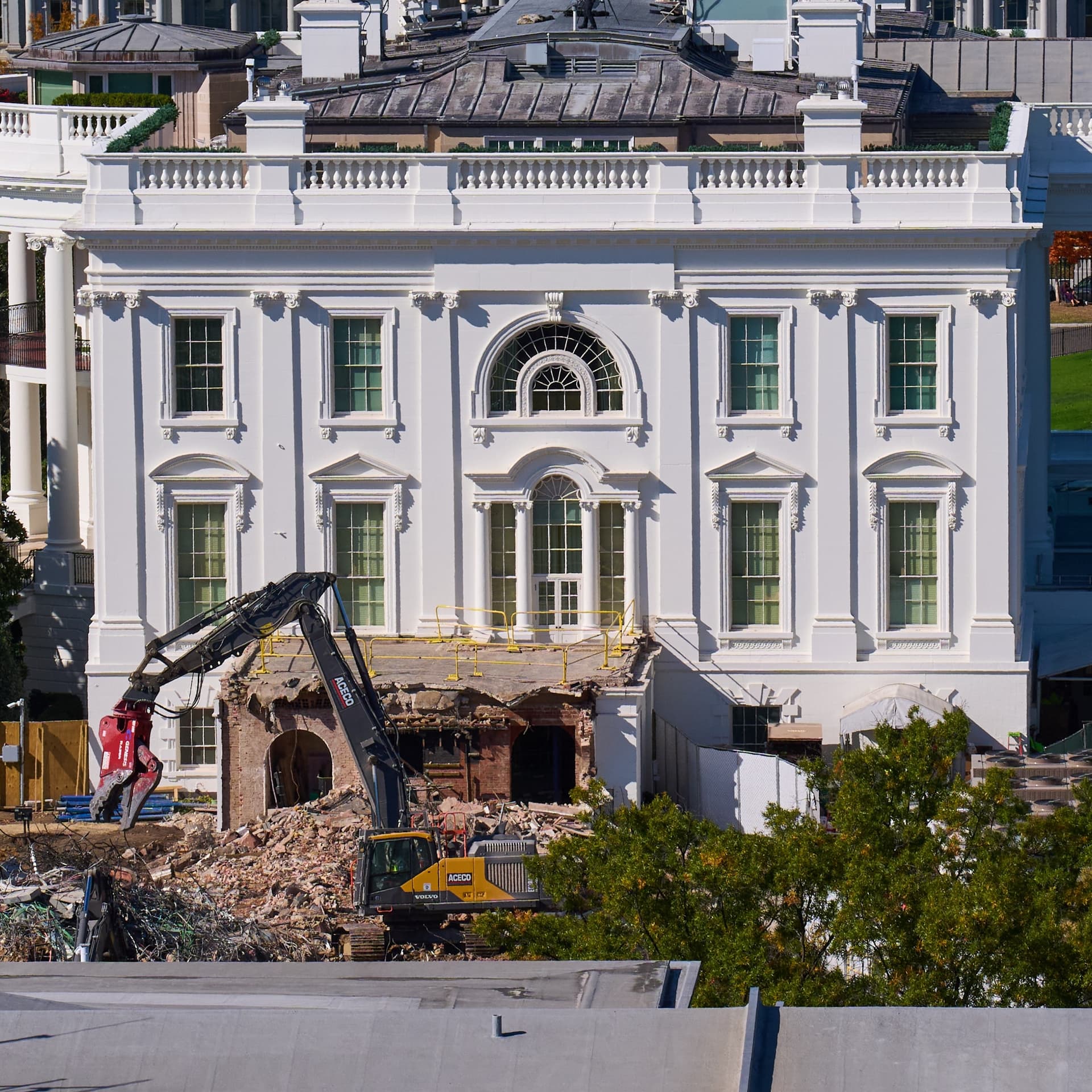
- Demolition Event: Construction crews have knocked down the East Wing of the White House for a new ballroom project, surprising many as President Trump previously indicated this would not significantly alter the structure.
- Ballroom Details:
- Size: Planned to be a 90,000-square-foot ballroom, potentially twice the size of the White House residence.
- Capacity: Designed to seat nearly 1,000 people.
- Historical Context:
- The East Wing was not part of the original White House and has undergone significant changes over the past century.
- Critics view the rapid demolition as an emblem of Trump's "bulldozing" approach to governance.
- Funding and Approval Controversies
- Funding Source: President Trump claims the project will cost hundreds of millions, funded by private donors including major companies with ties to the administration.
- Approval Process:
- The National Capital Planning Commission typically oversees such projects; however, demolition began without their prior approval, raising concerns about the lack of oversight.
- Political Implications and Public Reaction
- Public Sentiment: There is significant concern among the public regarding the demolition and its implications during a government shutdown, with many viewing it as misplaced priorities.
- Comparison to Shutdown: The demolition contrasts sharply with the ongoing government shutdown, highlighting a disconnect between governmental issues and Trump's attention to personal projects.
- Senate Race Controversies in Maine
- Candidate Overview: Graham Platner, a Democratic Senate hopeful, is gaining traction but facing scrutiny over past controversial comments and actions.
- Controversial Revelations:
- Platner had previously made derogatory remarks about Trump supporters and had a Nazi symbol tattoo.
- He has attempted to distance himself from these comments, presenting himself as a relatable candidate who has grown since his earlier life.
- Comparison with Republican Nominee
- Paul Ingrassia Case: A Republican nominee had to withdraw due to offensive comments made in a group chat, demonstrating that both parties face challenges related to candidate controversies.
- Political Landscape: The contrasting responses to the controversies faced by Platner and Ingrassia reflect differing political dynamics and expectations within each party.
- Broader Context of Political Discourse
- Shifting Standards: The discussions highlight an evolving landscape where political candidates are scrutinized for past actions, but the bar for accountability may be shifting.
- Voter Tolerance: Polling indicates that voters may be more forgiving of candidates' past indiscretions, complicating the political narrative.
Key Takeaways
- East Wing Demolition: Seen as a significant shift in the White House architecture, sparking debates about governance priorities amid a government shutdown.
- Candidate Scrutiny: The emergence of social media history as a critical factor in political campaigns, illustrated by Graham Platner's controversial past versus the abrupt withdrawal of Paul Ingrassia.
- Political Dynamics: The episode encapsulates a broader trend in American politics where candidates' pasts are increasingly relevant to their current campaigns, reflecting changing voter expectations.
Conclusion This episode of Post Reports dives deep into the complexities of modern political life, from the physical changes in the White House to the personal histories of politicians vying for office. Through expert insights, it examines how these elements intertwine within the fabric of American governance and public perception.
---
*For further exploration of these topics, listeners can tune into the full episode of Post Reports.*
Written by AI. May contain mistakes. Listen to the episode to check what was said.
Transcript
Automatic transcript. May contain errors.0:00Right now, during the President's Day Sale, you can get a Washington Post premium subscription for just$3 every four weeks. And that includes three extra accounts to share with friends or family. After your first year, renews at$19 every four weeks. The Washington Post. Power. Perspective. Premium. Learn more at washingtonpost.com slash subscribe.
0:29The East Wing is gone. It's like a movie. Pretty close. It's crazy. White House down. It is. It is cinematic. Someone was making the point in the movies when the White House gets destroyed, it's like, well, it's usually not the East Wing. It's like the main residence. But either way, when the White House gets destroyed, it's like, you know, the bad thing in the movie. It's the climax. The bad guys did it. It's usually not the president.
0:58From the newsroom of The Washington Post, this is Post Report's weekly politics roundtable. I'm Cole Bierkiewicz. It's Friday, October 24th. Today, we'll be digging into the construction of President Trump's new White House ballroom. And we'll be discussing some recent controversies. One that brought down a Trump nominee, and another that is complicating the race for a Democrat in Maine. I'm joined this week by White House reporter Dan Diamond. And back at the table with me is Dan Merica. He's the co-anchor of our politics newsletter, The Early Brief. Guys, thanks so much for joining me. Another Dan-al today.
1:32Yeah, happy to be here. My favorite kind. With my Dan partner. Dan, I want to start with you because you've been writing this week about the major construction at the White House on Trump's new ballroom. The Post was the first one to release some pretty stunning photos of the demolition of the East Wing. It's basically been completely knocked down at this point. And like we said, in its place, Trump is planning to build this massive ballroom. What do we know about it? We know that the ballroom is something that President Trump has wanted to do for many years. David Axelrod, who was an advisor to President Obama, said back in 2010, he got a call from Donald Trump saying, hey, I want to build a ballroom on the White House campus.
2:17Wow. President Trump is a builder. He's a real estate guy. He's very attached to this idea and this project. He didn't pursue it in his first term, but has said all year this is something he wanted to do. Earlier this year, though, he said it wasn't going to touch the main building, wasn't going to interfere. Later, White House officials said, no, we'll have to affect the East Wing in some way. We determined that after really a tremendous amount of study with some of the best architects in the world, we determined that really knocking it down, trying to use a little section, you know, the East Wing was not much.
2:52It was not much left from the original. It was over the course of 100 years. It was changed. The columns were removed and it was a much different building. Then a story was added on in 1948, 1949. There was a story added on, which was not particularly nice. And the building was very, very much changed from what it was originally. But Colby, as you mentioned, when we got the first photos, and credit where due, Jonathan Edwards, my partner on the story, he got the first tip, first photo. We weren't sure that this was real, watching these construction machines dig into the White House. We thought it might be AI.
3:28It happened very quickly, and now a few days later, most of the East Wing is gone for a ballroom that we still don't have formal plans for, other than knowing Trump has said he wants it to seat nearly a thousand people, and that it might be 90 ,000 square feet, which is about twice the size, for reference, of the White House residence itself. So it'll completely eclipse the actual White House residence if it's built to that size. Potentially. So I was at the White House earlier today talking about it with staffers, and one made the point that because of the slope of the White House grounds, that it would be 90 ,000 feet, but it would be kind of on the same level or below the White House.
4:07Either way, that's a major, major addition that none of us have seen at the White House for all the construction projects at the White House in recent years. Nothing like this has been done in generations, and it would significantly change the campus. The profile of it wouldn't eclipse the White House because of the way that the ground is actually shaped. Potentially. Again, we don't know for sure. We know a few things about Donald Trump. We know he likes to build. He likes to build big. And his style is not necessarily the style of, say, classical architecture in D.C. White House officials have said, no, this is going to fit in.
4:41This will look like part of the surrounding buildings. But again, there has been no formal filing of the plans. We're just going off bits and pieces. And, I mean, he was showing some pictures, I think, of what he imagined the inside of this ballroom would look like. It seems very Trumpian in his imagining. He has said that he wants it to look on some level like the ballroom he built in Turnberry, Scotland, at one of his resorts. And look, I'm not an architect. I'm not an expert in ballrooms. Maybe all ballrooms kind of look the same. But I saw those photos. There was a lot of gold. It had that sort of feel of maybe a resort that Trump had built.
5:21I think this is why, one of many reasons, in fact, why there is so much scrutiny here. People want to know what the White House is going to look like when Donald Trump is through with it. And we still don't have any formal plan other than these models, photos that have been shown very quickly to reporters. It does seem like there's an urgency here because Donald Trump knows that he will be leaving the White House in three years. And I would imagine if he's going to go through all of this, he wants to use the ballroom that he is putting so much into building. And getting a ballroom like that built, I mean, I guess three years is probably doable and he can use it near the end of his second term.
5:59But I would imagine that's on his mind as well, that he wants to use the ballroom that he is now building. He doesn't want to just leave it behind to the next president. I mean, the East Wing. Let's talk about what is in the East Wing. Why does it matter that now it doesn't exist? What was in the East Wing? What used to be in the East Wing that is no longer? It has been the entrance for visitors. It has been the place where the First Lady had her office. Other offices were located there. It has been, in addition, only for the past 80 years or so. I mean, it's not part of the original White House.
6:32And it is true, the White House does grow and change over time. But this has been, for basically the lifetime of any American, this has been part of the White House. It seems extremely expensive. Who is paying for this? President Trump initially had said this would be$200 million and raised it to do 50. This week, he then said$300 million, that it's going to be footed by him, some private donors, and they include companies like Amazon, founded by Jeff Bezos, who also owns the Washington Post, Palantir, major government contractor, some other large companies that have contracts with this administration.
7:12And one question has been, what are those companies going to get out of the deal of being donors for the president's ballroom project? Are they getting some preferential treatment later? It's also worth noting that President Trump has been critical of other projects in Washington that have become more expensive than he had anticipated. He went to the Fed earlier this year very famously and had somewhat of a confrontation with the Fed chair, Jerome Powell, over their redevelopment of the Fed building, criticized him for the cost of it and criticized him basically saying that if he were to have done this project, it would have come in under budget.
7:49He's already kind of elevated the budget for this ballroom a number of times. So his own words on building and something he clearly cares deeply about and the cost of this is going to be a focus because it's gone up already and the ballroom hasn't even broken ground really. Interestingly, the same commission that was putting a lot of pressure on Powell is probably going to approve President Trump's ballroom. He has put his allies on this commission and this tiny commission is suddenly at the center of several major stories in Washington. Well, I was going to say, and Dan, I'm glad you brought up the commission because to your point, this isn't changing the wall color.
8:24It's not putting up new curtains in the Oval Office. This is taking down an entire wing of the White House. This is a historic building, a national American landmark. What is this commission? Does he need approval? We had a story this week, me, John Edwards, Paul Schwartzman, about the lack of controls on this, that the president found in some ways a loophole. No one is really responsible for stopping demolition on the White House grounds. The commission that we've been mentioning, the National Capital Planning Commission, does approve construction projects. And normally what happens is that project would not begin.
9:01There wouldn't be any demolition work until that commission signed off. But Trump just went ahead and did the demolition anyway. That commission is going to hear, theoretically, the White House has said they're going to go through it. It's going to hear the ballroom pitch and almost certainly will sign off on the ballroom pitch. The head of that commission now is a guy named Will Scharf, who is Trump's staff secretary. Listeners and viewers might know if they've seen President Trump sign an executive order in the White House. The guy who's reading the executive order and handing it to the president to sign is Will Scharf.
9:32So if anyone thinks that that guy is going to tell Donald Trump, no, you can't have your ballroom, I have another construction project to sell you. Trump has bulldozed Washington in so many ways, and he's bulldozing through on this project in very much the same way. Yeah. You know, I think about that, right? Like, what do we make of the fact that the president is prioritizing this? It does feel a little bit symbolic of the way that he's trying to, you know, tear down and rebuild our federal government. And he's actually now doing it like literally with the White House. And the timing matters. We're in the middle of a government shutdown.
10:12There are people who are worried about the government benefits that they've enjoyed for many years. There are furloughed federal workers, some of whom are scared of being fired and laid off. I mean, the timing of this does matter. And I will say we put out a question this morning in our early brief newsletter asking about how people feel about the ballroom and about this project and about the East Wing being torn down. And the response was just overwhelming. We've received tons of emails from people who are concerned about this, who are sort of horrified by the images that The Washington Post brought to light and the way that this has been conducted.
10:43But this whole process is somewhat emblematic of kind of Trump's whole political style. In some ways, he did identify an issue with the White House. The White House probably should have a ballroom. They can host a state dinner. So you don't have to have a giant tent on the South Lawn like they've had to do in the past. That's a legitimate thing that the White House should have. But the way he goes about it is very much the way he goes about politics. It's full gas, full bore, like more Metallica than Mozart. You know, it's like hard rock. Yeah. Guys, let's take a break there. After the break, we'll talk about a very important Senate race in Maine and some controversies that are tripping up a Democratic candidate.
11:23We'll be right back.
11:34Some cases fade from headlines. Some never made it there to begin with. I'm Ashley Flowers, and on my podcast, The Deck, I tell you the stories of cold cases featured on playing cards distributed in prisons designed to spark new leads and bring long overdue justice. Because these stories deserve to be heard, and the loved ones of these victims still deserve answers. Are you ready to be dealt in? Listen to The Deck now, wherever you get your podcasts. Right now, during the President's Day sale, you can get a Washington Post premium subscription for just$3 every four weeks. And that includes three extra accounts to share with friends or family.
12:15After your first year, renews at$19 every four weeks. The Washington Post. Power. Perspective. Premium. Learn more at WashingtonPost.com slash subscribe.
12:34So there's a lot of important races in the midterms starting next year. And one of the biggest is the Senate race in Maine. It's one of the seats that Democrats are targeting, hoping that they can kind of rest back control. Although resting back control of the Senate seems incredibly difficult for Democrats next year, but they're going to try. And running in Maine is this oyster farmer named Graham Plattner. And he's this young rising star. Democrats were getting pretty excited about him in Maine. What makes him unique in this race, Dan? So he's a progressive guy. He's backed by Bernie Sanders, among other progressives.
13:13But his entire persona is somewhat embodying the working class culture of Maine. Not only is he an oysterman, but he is served as his town's harbormaster, which is a very Maine job. I don't think there's a harbormaster. Maybe I apologize if I'm wrong. I don't think there's a harbormaster. Is that an elected position? I don't believe it is. I can be corrected if I'm wrong, but it is a position within, I think his town is Sullivan, Maine. That's where he's the harbormaster. But his whole argument is that he is the kind of guy, yes, he is progressive, but he works alongside Trump supporters. He works a lot.
13:49He lives alongside of them. He knows how to speak to them in a way that other Democrats can't. So his argument is he can reach the progressive base, which he's really already done in Maine. There's a lot of energy around him in this race. But he could also tap into the parts of Maine that are Trump-supporting areas, that have voted for Trump numerous times over the last decade. He's never run for office before, so he's a complete political newcomer and political unknown. But he's in a compelling race, especially the Democratic primary. He is running against Maine Governor Janet Mills. And that's new this week, right?
14:26She just got in? She recently got in. She has won twice statewide. She also has a compelling case. She is well-known in Maine. But she is 77 years old. And if she were to be elected, she would be the oldest freshman senator ever. This race is, as you say, critical to Democrats. They have to win four seats in the midterm to flip the Senate, control of the Senate. It's a long shot for sure. But there's no way that they could do that without Maine. Before we get back to Plattner, when Mills entered the race recently, the establishment of the Democratic Party kind of swiftly got behind her, it seems.
15:03The establishment of Maine and of national democratic politics are fully behind Governor Janet Mills. They see her as the best candidate to defeat Susan Collins, who is the Republican senator from Maine. That has opened up a fissure in Maine between the progressive base and kind of the establishment class and folks in Washington. And in some ways, that has helped Graham Plattner because he can now argue that he is not the establishment. He's not the main, you know, the candidate who Chuck Schumer wants to be in the Senate. And he has used that effectively to this point to kind of rally his support.
15:40And so what happened this week? Because like you said, Democrats in Maine, particularly the progressive base, very excited about him, really think that he's kind of the future. He's the exact kind of Democrat that we need for this moment, is what they would say. But there's some controversial things that have come out about his past. What happened? I mean, this is what happens when people who are largely unknown run for office, is they're kind of the quote unquote skeletons in their closet have not been aired out in earlier races. Our colleague, full credit to her, Liz Goodwin, has been all over this story.
16:14She revealed a number of, I would say, controversial posts that he made on Reddit about a little over a decade ago when he had recently returned from service in Afghanistan and he also served in Iraq. Graham Plattner had a tattoo of a Nazi symbol on his chest. He has claimed that he didn't know it was a Nazi symbol when he got it and that he has since had it covered up. He also showed kind of the new tattoo to a local outlet up in Maine. Yeah, he appeared on this local news outlet, Topless, I think. Bared his chest. Yeah, yeah. Literally bared his chest. To show off this tattoo. And am I correct that Plattner had actually deleted a lot of these posts, right?
17:01These were not posts that he just left out there. He had an idea that these would be controversial. These were things about the LGBT community. They were commentary about sexual assault, kind of making light of sexual assault. But these things are still findable. Like you can delete it from your social media, but there are ways to still uncover things you put online. And I think some of the most damaging stuff in what he wrote, yes, it was deleted from Reddit, is how he describes Trump supporters. His whole pitch is that, as I said, he is one of these guys who can reach out to Trump supporters, who knows them, who works with them, who can relate to them.
17:38online he had written some stuff that was demeaning of trump supporters called them names spoke about trump supporters in a way that you would expect kind of in the in the the caricature of like an east coast elite yeah talk about trump supporters baskets of deplorables kind of yeah i mean it's like demeaning them kind of you know calling them names call it saying just saying rude things about them i'm not gonna i won't repeat it but saying things that he would probably not say right now about trump supporters yeah i think that is damaging too because it cuts into his whole argument. And so it's not just him saying things that are, you know, politically incorrect or wrong now, but it's saying something that kind of cuts into his political argument.
18:18So Plattner has apologized for much of what he has written online. He's actually also used it to defend himself and kind of the change that he has made from somebody who has recently returned from war and all that he's learned over the last decade plus about where he was in his life and where he is now. He's done a lot of media appearances, kind of explaining himself throughout throughout this whole process, he went on Pod Save America, which is a progressive podcast hosted by a number of former Obama staffers. I am not a secret Nazi. Actually, if you read through my Reddit comments, I think you can pretty much figure out where I stand on Nazism and anti-Semitism and racism in general.
18:56I would say a lifelong opponent. Always a good moment for your campaign when you have to deny being a secret Nazi. Right. But it has certainly rocked the campaign because this is a critical race and it is raising a number of questions to the Democratic Party of do they want to go with the establishment figure who is well known, may not be as exciting and has kind of the age issue against her? Or do they want to go against the untested unknown candidate who has, you know, all of these skeletons in his closet, but also literally a skeleton on his chest that that has raised so many red flags? Yeah.
19:31And Dan, we've talked on this show before about how, you know, the bar for judging a politician seems to have been lowered in recent years and that voters are kind of become immune to some of these controversies or maybe they've lowered their expectations about how a politician talks or behaves. Do you think voters are going to care about what Graham Plattner said on social media a decade or so ago? Well, I don't know the mind of the main voter, but I did see some polling and I don't know at what stage in the Graham Plattner controversies this polling was done. But Graham Plattner had a lead on Mills, a fairly substantial one.
20:08So he clearly still has some support. I'd flip it a little bit, Colby. It's not just that voters have become more tolerant of politicians, which which certainly is true. But the politicians themselves don't have the same shame reflex that there used to be. We saw this famously with Donald Trump, who just put his head down in 2016, especially. And every scandal that came out, just nothing took him from the race, even the infamous Access Hollywood clip, which a month or so before the election, many Republicans were saying, don't keep running. And he did. And he won. And then on the Democratic side, it's a little different.
20:44But John Fetterman had a stroke, could barely talk at the debate and won his race. Pennsylvania senator. Pennsylvania senator. So we live in a world where things that might have taken politicians out before don't seem to the same way. I do think one notable thing about Graham Plattner, he just, to me, seems like a guy who wasn't living his life to get into politics and now is facing all the scrutiny as a result. And that, in some ways, may be a good thing. We want normal people to get in to the political sphere. But at the same time, if you're going to mount race and represent people, it does matter what you said five years ago, 10 years ago, 20 years ago, and what you did in terms of tattoos that he might have gotten.
21:29I think this is also a lesson learned from Democrats that for a long time, they held their candidates to a higher standard at times than Republicans did. And so Democrats have learned, I would say, over the last decade that candidates can be complicated. They can say things that maybe they don't believe in anymore. They can change and they shouldn't be kind of thrown out because of what they had previously said. And so being able to say, I spoke like this online, I regret it, and I've learned from it, actually can make a candidate more relatable because people can see themselves and the growth that they have had over the last decade or so in the candidate that is now asking them for their vote.
22:08It's a stretch, and I think this is going to be— Yeah, Dan looks like he's not sure. Maybe. I mean, I just think that you're handing your opponent a cudgel. And even if some people say, oh, I can see that, you know, you said this bad thing online 10 years ago. We live in an era where you're sometimes defined by the worst thing you ever tweeted on your worst day. But how is that going to play out when people who are not 70 and 80 are running for re-election or running for office and they have lived their entire lives online and they've documented everything they've done online? I mean, it's different from Graham Plattner, who's in his 40s.
22:44He didn't come up in an age where everything was on TikTok and Instagram and whatnot. Imagine when candidates are, you know, in 20 years, have their entire lives documented online. There's going to be something out there that they don't agree with anymore and it's controversial. I think that's a it's a it's a deeper question about politics that maybe the main Senate race will at least go towards answering. You know, we're talking about how, you know, people can get away with things that maybe they couldn't get away with in the past. But we should probably note that there was a Republican nominee who actually had to withdraw his nomination because of things that he said, I think, in a group chat that he wasn't going to have the votes in the Senate.
23:21Yeah. Paul Ingrassia, he was 30 years old. He was nominated to lead the Office of Special Counsel, which investigates whistleblower complaints and allegations of political interference from the federal government. He withdrew his nomination after these texts were revealed. The most damning quote, which was first reported by Politico, is that he said he, quote, had a Nazi streak. It does signal that there is a line to things that you can say and do online and continue to move ahead in your career. What's really interesting is that the folks who were opposed to his nomination were not kind of the traditional Republican holdouts.
Read the full transcript
24:00He was getting opposition from hardcore Republicans who had gone along with a number of Trump nominees and decided that this was the line. John Thune, the Senate majority leader, just blanket said he does not have the votes, which pretty much put the kibosh on his nomination. And I guess another difference between Pauling Gracia and Graham Plattner is that this is contemporary, right? Like he said this recently versus Graham Plattner, who said these controversial things years ago and can kind of disavow his younger self. Yeah. While this guy is like calling himself a Nazi in real time. Yeah. And I also think you have senators who will have to be on the record for their votes in a way that an average voter in Maine, you know, it's anonymous.
24:46I'd make one other point here, which is Donald Trump in the second term has been picking through a smaller pool of potential employees across the administration than in the first, where he didn't have a big staffing operation. He was kind of mixing and matching Mike Pence people, traditional Republicans. Like, it actually made a great reporting project because you could go to those different factions in the first administration and sort of play them off each other. Now it's all loyalists. It's all people who didn't criticize Trump from the first administration. There were a lot of Republicans who did.
25:18So you end up with more Paul and Gracia's. You're pulling from this pool of often Trump acolytes. And I've spoken to people in the White House about this who say there are a lot of nasty people who are finding their way into this administration. And that Paul and Gracia, he's getting a lot of attention, but he's far from alone as someone who has said and done bad things. And in this case, it did blow up, but others have made it through. I'm sure there are a lot of group chats that we have not seen. So guys, before we go, Dan, you mentioned the government shutdown when we were talking about the ballroom.
25:53And we should note that it's now in its fourth week. And as far as I can tell, there's not an end in sight. So I want to ask you both this. How long does this go on for? And how do you see it ending? I mean, I'm on ballroom duty, dude. But no, I've written a little about the shutdown and the ACA fight. I used to be a health reporter, still very much am. And I think the fact that it has become almost status quo is interesting to me. I was expecting a lot more anxiety and agita. I do think the potential lever of premium hikes are coming very soon. That may explode as more of a political issue as people start opening their mail and seeing just how much their health insurance premiums are going up.
26:37That may give Democrats a little bit more fuel to force the Republicans at the table. Republicans in the White House are thinking about it too, though they say we're not going to talk until after the shutdown is over. So I think that is one issue. And in the meantime, pulling it back to the construction on campus at the White House, the pulling on that is bad for the administration. There are a majority, slight majority of Americans think that demolishing the East Wing is bad, maybe less than a quarter think it's good. And I do think the Trump administration, in the absence of other things going on, the ballroom has become a very easy way to draw the distinction, as I think Dan Marico was doing earlier.
27:13The shutdown, government's not working, but Donald Trump is. And what he's doing is pulling down part of the White House. So it's a tricky messaging environment, to say the least, I think. I do think the whole question of when this is going to end is going to be all about pressure points. Dan invokes one about these ACA premiums. That is absolutely a pressure point that I think is looming in this whole debate. But otherwise, there haven't been that many pressure points during this process. Donald Trump is living his life. He's going to Asia soon. He was in Mar-a-Lago recently. He's hosting White House events.
27:45He's bulldozing the East Wing. His life is largely unchanged during this government shutdown. Unlike the thousands and thousands of federal workers who are worried about their future. But then you take that a step further. in the House. House Republicans are not here. They haven't been here for weeks. And Speaker Mike Johnson has held the line on that and has gotten a little bit of pressure from folks in his conference, but not enough to break. And then you look at the Democrats. They're being cheered by their base for the way that they have handled this. The base is loving the fact that they're standing up to Donald Trump, that they're demanding these ACA credits be extended.
28:22If you look at that as a kind of as a whole, there isn't a lot of pressure being put on these main factions in this debate. And until that changes, you can see a scenario where this carries out and becomes status quo, as Dan mentioned, because no one is being forced to change their position. Well, guys, thank you so much. This was a great conversation. Love having you both on always. Happy to be here. Glad to be here, Colby. Dan Diamond is a White House reporter for The Post. Dan Merica is the co-anchor of our politics newsletter, The Early Brief. If you'd like to watch this episode, we have also filmed it.
29:00You can find it on our Washington Post podcast channel on YouTube. We'll also add a link in our show notes. Today's episode was produced by Laura Benshoff and Josh Carroll. It was mixed by Sean Carter. It was edited by Reena Flores. Thanks also to our politics editors. Our team also includes Ted Muldoon, Alana Gordon, Ariel Plotnick, Renny Sviernovsky, Sabi Robinson, Emma Talkoff, Peter Bresnan, Renita Jablonski, Alahi Azadi, and Martine Powers. I'm Cole Bierkowitz. Have a great weekend.
29:46Some cases fade from headlines. Some never made it there to begin with. I'm Ashley Flowers, and on my podcast, The Deck, I tell you the stories of cold cases featured on playing cards distributed in prisons designed to spark new leads and bring long overdue justice. Because these stories deserve to be heard, and the loved ones of these victims still deserve answers. Are you ready to be dealt in? Listen to The Deck now, wherever you get your podcasts. Right now, during the President's Day sale, you can get a Washington Post premium subscription for just$3 every four weeks. And that includes three extra accounts to share with friends or family.
30:28After your first year, renews at$19 every four weeks. The Washington Post. Power. Perspective. Premium. Learn more at WashingtonPost.com slash subscribe.
From the publisher
This week, construction crews knocked down the East Wing of the White House to make way for the construction of a 90,000-square-foot ballroom. This demolition surprised many in D.C., as President Donald Trump had previously said his proposed addition would not significantly alter the existing structure.
Host Colby Itkowitz speaks with White House reporter Dan Diamond and Dan Merica, the co-anchor of the Early Brief newsletter, about why this construction is unlikely to be derailed and what we know about the ballroom plans. And, they discuss how past comments by Maine Senate hopeful Graham Platner and onetime Trump nominee Paul Ingrassia have come back to haunt them.
Today’s show was produced by Laura Benshoff and Josh Carroll. It was edited by Reena Flores and mixed by Sean Carter.
Subscribe to The Washington Post here.