In short
Podcast Summary: Post Reports - "Trump is trying to use the shutdown to lay off workers"
Episode Overview
- Podcast Title: Post Reports
- Episode Title: Trump is trying to use the shutdown to lay off workers
- Air Date: October 15th
- Hosts: Colby Itkowitz
- Guest: Reporter Hannah Natanson
- Description: This episode discusses the ongoing effects of the federal government shutdown as it reaches its third week, focusing on the implications for federal workers and the Trump administration's actions to lay off employees from programs they consider non-essential.
Key Points Covered
Impact of the Government Shutdown
- Duration: Entering its third week.
- Immediate Effects:
- National parks closed.
- Flight delays reported.
- Federal workers missing their first paychecks.
- Increasing Strain on Services:
- Taxpayer helplines of the IRS shut down.
- Delays in permits from the EPA and Transportation Department.
- Increased demand on food banks and community services, already strained by previous cuts.
Layoffs and Job Cuts
- Job Losses:
- Over 4,000 federal employees have been laid off across various agencies (Commerce, Education, Energy, Health and Human Services, Housing and Urban Development).
- Layoffs target offices that support vulnerable populations, often labeled by Trump as “Democrat programs.”
- These cuts adversely affect services for school children, the elderly, and people with disabilities.
- Administration's Justification:
- Trump claims laying off these workers helps manage the shutdown and is a response to Democrats.
- Experts challenge the legality of these layoffs, stating they may violate the Anti-Deficiency Act.
Legal Implications
- Anti-Deficiency Act: Prevents the government from incurring financial obligations during a shutdown, which includes layoffs.
- Judicial Response: A judge blocked further firings during the shutdown due to the administration's failure to prove their legality.
Broader Economic Impact
- Federal Employees: Approximately 2.1 million federal workers affected, with potential further layoffs estimated at up to 16,000.
- Economic Consequences: Previous shutdowns have had significant negative impacts on the economy (e.g., $11 billion loss during the last shutdown).
- Uncertainty for Workers: Many federal employees face financial struggles, with some seeking assistance from food banks due to missed paychecks and fears of job security.
Conclusion
- The episode emphasizes the ongoing crisis that the government shutdown has created for federal workers and the broader implications for various government programs intended to support vulnerable populations. It also highlights the contentious political landscape, where these layoffs are framed within a larger ideological battle between the Trump administration and Democratic priorities.
Final Thoughts
- The discussion indicates a potential for continued instability in federal employment and services as the government shutdown prolongs, with significant effects anticipated for federal workers and the economy at large. The episode illustrates the tension between political maneuvering and the real-world consequences for citizens dependent on government services.
Written by AI. May contain mistakes. Listen to the episode to check what was said.
Transcript
Automatic transcript. May contain errors.0:00Right now during the President's Day Sale, you can get a Washington Post premium subscription for just$3 every 4 weeks. And that includes three extra accounts to share with friends or family. After your first year, renews at$19 every four weeks. The Washington Post. Power. Perspective. Premium. Learn more at WashingtonPost.com slash subscribe.
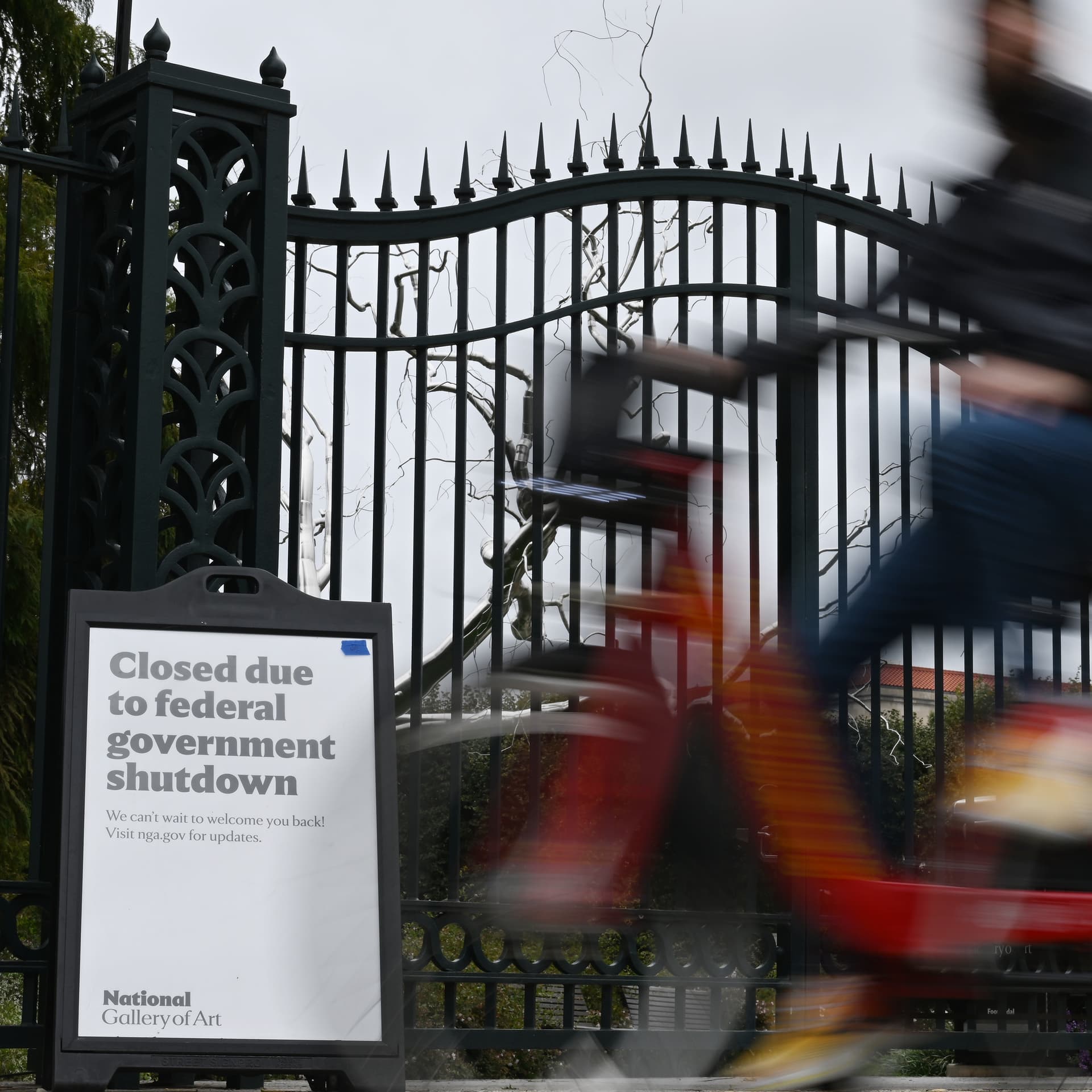
0:31We are in the third week of the government shutdown. It is already having real impact. It's caused flight delays, shuttered national parks. Federal workers aren't getting paid. And some of those workers got even more bad news over the weekend. My phone began exploding with messages from folks across agencies saying they'd been riffed or colleagues had been riffed. Riffed is the federal form of a layoff. Since the beginning of this administration, Hannah Naitensen has covered President Trump's efforts to shrink the federal government. She says Trump is using the shutdown now to cut even more, targeting, quote, Democrat programs.
1:12And it sort of emerged, ultimately, that Trump had targeted different offices, but many of which shared a similar mission, which was to help the nation's most vulnerable populations. And the effects of those cuts could extend well beyond this shutdown.
1:31From the newsroom of The Washington Post, this is Post Reports. I'm Kolbie Echowitz. It's Wednesday, October 15th. The federal government has been shut down for 15 days. Today, Hannah shares her reporting on the impact of that and how Trump is using this shutdown to further slash the government. Hannah, thank you so much for joining me. Thank you for having me. So before we get into these layoffs, let's start with kind of where the shutdown is right now. What effects are we starting to see as the shutdown enters its third week? So we are starting to see this go beyond federal workers who are already affected, of course, by either not having to work or they're being forced to work without pay.
2:18Their missed paychecks are starting to hit. We're now seeing the shutdown reverberate out, though. So it's closed taxpayer helplines of the Internal Revenue Service. It's snarling permitting approvals at the EPA and the Transportation Department. It's shutting off access to national parks. And you're starting to see, you know, food banks and community services across the nation, many of which were already hurting because Trump had slashed away federal food and funds for them earlier this year. They're starting to see increased strain, increased demand. And then we saw, as you mentioned, people start losing their jobs.
2:58Who exactly in the federal government is losing their jobs right now, Hannah? So it looks like more layoffs could be coming. So that answer will probably change in the next couple of days. But I can tell you what's happened so far. So on Friday, and we know the extent of this because there's a lawsuit already about these firings and a judge ordered the administration to say exactly what it was doing. So we know from the administration itself that the firings hit slightly more than 4 ,000 employees across agencies, including commerce, education, energy, health and human services, housing and urban development.
3:38But what, you know, was not in the government's filing, which emerged over conversations that I've been having with more than 70 federal workers, current and former, in the days since these firings hit, is that what these layoffs overwhelmingly targeted were offices that are devoted to things that Trump doesn't see as a priority, that he's calling the things that Democrats want. Elements of the government that try to aid America's most vulnerable or most at-risk populations. Among the offices that were cut was a unit of employees who helped regulate hazardous waste, inspectors who checked the quality of federal housing, an office that makes sure students with disabilities get the help they need.
4:20It's sort of this vision. It's this pure essence of Trump's vision of what government should be, which is really focused on immigration, defense and law enforcement. And he's trimming away, yet again, all these other things that many in this country have come to depend on. All these social services type programs. Exactly. And he's calling them, we heard him call them Democrat-oriented. So he specifically, it sounds like, thinks that these are Democrats' priorities. That's what he says. I mean, he told reporters in the Oval Office on Friday that he was laying off... People that the Democrats wanted that in many cases were not appropriate.
5:01We fought them... Quote, people that the Democrats want. Because we figure, you know, they started this thing, so they should be Democrat oriented. It'll be a lot. And we'll announce the numbers over the next couple of days. But it'll be a lot of people all because of the Democrats. I mean, they want to give. He's sort of pitching this as a way to harm the political left. You know, in interviews, though, you know, that I've spent all weekend having federal officials, current and former of many different political persuasions, persuasions were warning that the people this is actually going to hurt is the elderly, school children, adults with disabilities.
5:35And some were even pointing out that some of the programs that Trump is cutting actually seem to dovetail with Republican goals as they are traditionally viewed. So for example, I was talking a lot to someone at the education department who received notice, and the office that this person worked in ran a program that distributed federal funds, guidance, and technical assistance to states so they could help students and adults with disabilities gain skills to get jobs and get off benefits. That was the whole point. And she was pointing out to me, I don't understand why the Republicans are cutting this.
6:10They're all about that. They're all about let's get people off benefits and make them work. So certainly I would say the president is painting with a broad brush when he claims that what he's cutting is the left part of government. We should also note, Hannah, that a lot of these programs you're talking about are not exclusively used by Democratic voters or Democratic constituents or blue states or blue cities. I mean, a lot of red states use these services, depend on these services, right? Correct. Oh, and I'll also note, like another thing they cut at the education department is a part of that agency focused on charter schools.
6:47That was actually really hugely popular in red states with red politicians because charter schools is a big Republican priority. So, you know, I've had some federal workers who are pointing out that the way these firings rolled out, it seems like they were slicing off whole categories of employees or whole offices and just cut that without really investigating what they were cutting. And I will note that as my incredible health colleagues have been reporting, they actually reversed more than half of the firing notices they issued at the Centers for Disease Control and Prevention. Because there, pretty clearly, it seems like they didn't realize they had cut the people who were leading the measles response and the response to an Ebola outbreak, which are pretty crucial people who have now been brought back.
7:31Yeah, yeah. I mean, Hannah, we've had you on the show earlier this year to talk about how you've become a trusted resource for a lot of federal employees who have been affected by these changes since Trump took office. So like you said, your phone was blowing up when these new cuts came around. How did these employees tell you? Like, how were they notified? Were they surprised? I mean, in some ways they were surprised. So some of the people who really felt that their work was essential and was prioritized by the Trump administration were still surprised. But a lot of people are just kind of, if something bad can happen at this point, I'm going to expect it to happen.
8:17I've lost any sense that there's any stability in working for the federal government. I wasn't surprised. I was saddened. I was frustrated. I, you know, it's another wave of anxiety to try and deal with on our end, but surprised, no. One of the people I spoke with was Miles Batson, who worked for the EPA in Colorado. He spoke to me in his capacity as Executive Vice President of AFGE Council 238, which represents over 7 ,000 EPA employees around the country. He's currently still working during the shutdown, but as a union vice president, he's been hearing a lot about how other federal employees are dealing with the layoffs.
8:53Shutdowns were already stressful. People had to go without a paycheck or try and figure out how to fill that gap. Now, if you add on the fact that, oh, what I do for the agency is not looked upon fondly by this administration, does that mean that I'm not going to, that we're going to get notices to riff instead of just going without a paycheck and being brought back? You know, that threat affects people in a much stronger way than any shutdown has ever previously. The complicating thing here, right, is that there's a shutdown. So you're either working without pay or you're on furlough. And if you're on furlough, it's basically like taking a temporary pause on your job, or as some feds put it to me, it's like an unpaid vacation.
9:34You might have gotten instructions not to be checking your government device, even though technically the Trump administration did put out guidance. They actually specifically put out guidance, which doesn't normally happen, that said, please be assured that you should be checking your federal email even if you're on furlough this shutdown because you need to be able to know if you've been fired. They put that out there. But still, people from their direct managers going on the rules of past shutdowns were told not to check. So some people found out from the news or from social media or from their own signal chats with other federal employees.
10:09I had a lot of people at the education department in particular who were messaging me all weekend. And it was sort of like it started off going, oh, God, I hear they're cutting. And then, oh, no, they're cutting Ed. And then, oh, no, I'm very sure I'm cut. I'm very sure I'm cut. Hannah, I can't look at it. I can't look at it. And I sort of got this running update. And by Monday, they finally looked. And it was just, you know, they're very sad. I mean, the weird thing is they're sad, of course. They're stressed about entering this job market, which is terrible. And they're sad to see their agency's mission and their work being dismantled.
10:47But even amidst all that, for some of them, there is still this little slice of relief. And why they're relieved is what they've been telling me, Hannah, I'm finally done. He doesn't have any power over me anymore. Like, there's just less chaos and uncertainty in my life now that I don't have a job.
11:08After the break, I'll ask Hannah whether these layoffs are legal. We'll be right back.
11:25Hi, I'm Susan Glasser. I'm Jane Mayer. And I'm Evan Osmos. And we host the Washington Roundtable from the New Yorker's Political Scene Podcast. For me, this is the water cooler. This is a wonderful chance to sit down with two of the smartest colleagues in the country and, you know, just kind of compare notes. No, that's so true, because first of all, we are actually friends in real life, but I can't wait until Fridays to hear what you guys think. Everybody sees the headlines, but you guys fill in the gaps. I also think, though, occasionally we get somebody to come on, and I'm always smarter for it.
11:59And if you get a great historian who can tell you about a presidential election 50, 60 years ago, often it can help you understand about what's happening today. So if you're looking for weekly insights into what's going on inside the Beltway, please join us every Friday on The Washington Roundtable, part of The New Yorker's Political Scene podcast.
12:21Right now, during the President's Day sale, you can get a Washington Post premium subscription for just$3 every four weeks. And that includes three extra accounts to share with friends or family. After your first year, renews at$19 every four weeks. The Washington Post. Power. Perspective. Premium. Learn more at WashingtonPost.com slash subscribe.
12:54I mean, one thing that doesn't make a lot of sense to me about this moment is that Trump was during, you know, the doge cuts, the Department of Government Efficiency Cuts. He was already, you know, firing people and ending programs at will at the beginning of the year. So now, why does the Trump administration say they're doing all these firings during a shutdown? Certainly the rhetoric that's coming out, he seems to be positioning these cuts as a way to inflict pain on the political left. He sees it as a bargaining tool, a way to, you know, take advantage of this opportunity to make the government more like what he wants and less like what the left wants.
13:37I will say any argument that they're putting forth about, oh, we need to do this because there's no funding anymore, or, oh, you know, to keep essential federal services going, we have to cut federal personnel, totally false. That is just not true. That is not how shutdowns work. And there is no world in which firing federal workers is going to make it easier to keep providing federal services. The shutdown has nothing to do with firings. There is no part of the law that says, oh, the government's shut down, you can fire people now. In fact, the reverse is likely true. There's something called the Anti-Deficiency Act, which says that the federal government, if there's a lapse in funding, cannot incur any obligations, like in terms of money or services that somehow represent a monetary value, while the government remains shut down.
14:28That almost certainly, per legal experts I've talked to, would include conducting a RIF. A RIF is a reduction in force, again, the federal form of layoffs. And like any layoff, it entails severance. That is a financial obligation. So when you're starting to undertake firings during a shutdown, you're probably in violation of the Anti-Deficiency Act. And in fact, many of the largest federal unions actually have already sued over this. They sued even before Trump's firings began because, you know, they were talking a big game back then about we're going to do these firings.
15:07And on Wednesday afternoon, a judge actually blocked the administration from conducting these firings during the shutdown, saying that the government had not even bothered to prepare an argument to explain why this was legal. There will likely be more twists and turns in this and more appeals, so we'll see what happens. But for now, the Trump administration is barred from doing any more firings. You mentioned, Hannah, that the CDC specifically had to call people back because they had laid off a bunch of people that are responsible for, you know, making sure that diseases don't spread in this country.
15:44So is it possible that some of the other people who've lost their jobs in this will get called back maybe when the shutdown ends? I hesitate to predict the future in any way anymore. I mean, we've just seen so much. They fire people. They unfire them. They re-fire them. I've talked to plenty of people who've been in that situation. And then in some agencies, they've gone through all these firings and then realized they have too few people and been able to post for new jobs. It's just, it's chaos. And so my best answer for you is maybe to probably, we'll see. So Hannah, it's about 4 ,000 or so people so far.
16:27Do we have any sense of how many more could be laid off? What I can tell you about how many more are coming is based on reporting that me and Emily Davies did earlier this month, where according to people familiar with the matter who've seen plans, we understand that the initial plans are about 16 ,000. So if that holds up and the Trump administration doesn't change its mind or the shutdown doesn't end, it seems like we're maybe about a quarter of the way through what they've planned to do. Wow. I mean, you mentioned earlier, you know, how hard this job market is right now. So let's say you have another 16 ,000 people who have lost their jobs.
17:09You also have many, many people that are currently not getting a paycheck. What's the broader impact on the economy at a time of, you know, mounting economic uncertainty? Bad is what I hear from my colleagues who cover the economy. But, you know, it's interesting, though, one of the key statistics that will help us understand, and by us, I mean my colleagues who report on the economy because me and economics don't get along very well. But what I'm sure they will understand and be able to explain lucidly to the public will be the job market numbers, which come from the Bureau of Labor Statistics, which is on pause because of the shutdown.
17:50So those key numbers, which we're all waiting for, which will help us understand just how bad things have gotten, those probably won't come out till this shutdown is over. So we won't even understand fully how bad things are until that point. All I can say is, you know, that first wave of missed paychecks for federal workers, which are still 2.1 million people, even after all Trump's cuts, all across the country, that's going to hurt the underlying economy in many communities. And the longer that other services remain shut off and paychecks keep getting missed, the worse the effects of this will be.
18:27The last shutdown, the longest in history, 34 days, shaved$11 billion off the country's economic output. So we'll see where this goes. And, you know, I can't imagine for so many families how they will manage to pay their bills if a paycheck isn't coming in. And there's also a question of whether or not they're going to ever see that money, right? There's threats of not giving them back pay, which has always been customary in shutdowns. Trump signed a law in 2019 making it required by law. He signed it because of his other shutdown, the 34-day one. It's his law. And yet he's now, there was a memo circulated that seemed to be saying, no, we don't actually have to give furloughed federal workers back pay.
19:18We could, but we don't have to, which legal experts I've talked to were like, no, that's blatantly misunderstanding the basic text of the law. So we'll see if that plays out. So far, it seems potentially more hot air than anything else. But, you know, if that happens, that's definitely going to hurt families. And, you know, I'm already hearing from federal workers who are going to food banks and food pantries. Wow. I mean, I know that you, Hannah, you are our expert on all things federal government. But are you hearing anything about what the current prospects are for the end of this shutdown?
19:52Maybe from our colleagues on the Congress team or from your own reporting? Seems like my answer on the economy. Seems bad. Yeah, I do happen to work on a reporting team at The Post here that is staffed by people who both cover the economy and people who cover Congress and the intersection of that. So that's literally all I hear about in our team meetings. And I will tell you, economy, bad. State of negotiations, bad. Nobody's talking to anybody. And it seems like we might be on track for the longest shutdown in history. Wow. Well, Hannah, thank you so much for coming on. I really appreciate it.
20:31Thank you for having me, and I wish I reported better news.
20:37Hannah Natanson reports on the federal government for The Post. That's it for Post Reports. Thanks for listening. So I've got a fun Halloween-themed call-out for you. We want to hear your ghost stories. Tell us all about the spooky experiences that you can't explain or that have been part of the lore in your community or your family. So if you have a ghost story to tell, send us an email. Or even better, send us a voice memo to postreports at washpost.com or follow the link in our show notes to submit. Today's show was produced by Emma Talkoff. It was edited by Reena Flores and mixed by Sean Carter.
21:15Thanks to economics editor Mike Madden. I'm Colby Echowitz. We'll be back tomorrow with more stories from The Washington Post.
21:27Hi, I'm Susan Glasser. I'm Jane Mayer. And I'm Evan Osnos. And we host the Washington Roundtable from the New Yorker's Political Scene Podcast. For me, this is the water cooler. This is a wonderful chance to sit down with two of the smartest colleagues in the country and, you know, just kind of compare notes. No, that's so true. Because, first of all, we are actually friends in real life. But I can't wait until Fridays to hear what you guys think. Everybody sees the headlines, but you guys fill in the gaps. I also think, though, occasionally we get somebody to come on, and I'm always smarter for it.
22:01If you get a great historian who can tell you about a presidential election 50, 60 years ago, often it can help you understand about what's happening today. So if you're looking for weekly insights into what's going on inside the Beltway, please join us every Friday on the Washington Roundtable, part of the New Yorker's Political Scene podcast.
22:23Right now, during the President's Day sale, you can get a Washington Post premium subscription for just$3 every four weeks. And that includes three extra accounts to share with friends or family. After your first year, renews at$19 every four weeks. The Washington Post. Power. Perspective. Premium. Learn more at WashingtonPost.com slash subscribe.
From the publisher
As the federal government shutdown stretches into its third week, its effects are starting to ripple across the country. National parks are closed, flights are delayed, and this week, some federal workers will miss their first paychecks.
For some of those workers, things are even more stressful: President Donald Trump is making good on his threat to use the shutdown to shutter government programs and offices he disagrees with. Thousands of workers have received notices that they may lose their jobs.
The Trump administration has claimed the cuts will help them keep the lights on during the shutdown. But experts say that’s not true – and the action may not be legal.
Host Colby Itkowitz speaks with reporter Hannah Natanson about Trump’s attempt to close swaths of the federal government – permanently.
Today’s show was produced by Emma Talkoff. It was edited by Reena Flores and mixed by Sean Carter.
Subscribe to The Washington Post here. And tell us a ghost story here!