
In short
Podcast Episode Notes: Trump’s Pivot on the Epstein Files and His Polling Plunge
Podcast Overview Title: Post Reports Description: A daily podcast from The Washington Post featuring expert insight, clear analysis, and unparalleled reporting. Hosts Martine Powers and Elahe Izadi tackle essential questions and current events.
Episode Details Episode Title: Trump’s Pivot on the Epstein Files and His Polling Plunge Release Date: November 21, 2021
Main Topics Discussed
- Release of Epstein Files
- Congress voted to release Epstein files, culminating in the signing of legislation by President Trump.
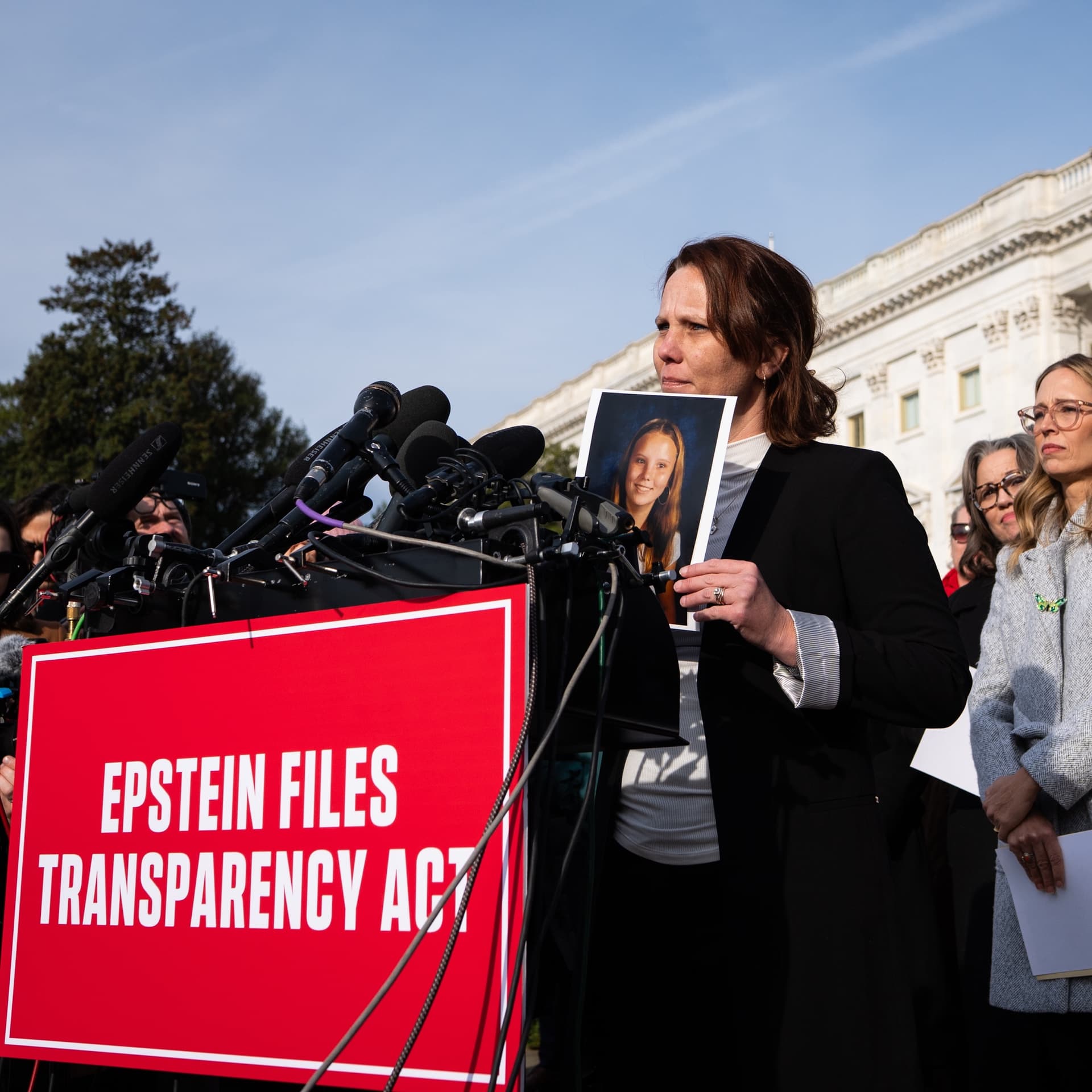
- The *Epstein Files Transparency Act* compels the Justice Department to disclose investigative materials related to Jeffrey Epstein and Ghislaine Maxwell.
- Despite the vote, questions remain regarding how much information will actually be released due to potential loopholes within the law.
- Trump's Political Strategy
- Trump's pivot on the Epstein files reflects a strategy to maintain dominance in the Republican Party.
- His previous opposition to releasing these files changed as he sought to unify Republican support and avoid looking weak.
- Current Challenges for Trump
- November 2021 has been marked by significant political setbacks for Trump:
- Losses for Republicans in key elections (Virginia, New Jersey, Georgia, Mississippi).
- A government shutdown that reflected poorly on him and the Republican Party.
- Decreasing approval ratings, with a notable drop in public support.
- Justice Department Investigations
- Trump called for investigations into Democratic figures linked to Epstein, which raises further questions about the motivations and implications of such actions.
- Challenges are present in the Justice Department’s ability to prosecute based on procedural issues and the potential for political motivations.
- Gerrymandering in Texas
- Discussion on the implications of the federal court ruling against Texas' redistricting plan, which could affect the midterms and party advantages.
- The ruling may lead to significant changes in how political maps are drawn, impacting both parties.
Key Takeaways
- Transparency and Legal Loopholes: Although Congress voted overwhelmingly to release the Epstein files, the actual transparency is uncertain due to potential redactions and legal loopholes that the Justice Department may exploit.
- Trump's Image and Party Dynamics: Trump's strategy highlights his need to maintain control within the Republican Party amid growing challenges and dissatisfaction among party members.
- Judicial Processes and Investigative Actions: The legal processes surrounding investigations into Trump’s political enemies face significant scrutiny and procedural challenges, which could undermine their effectiveness and credibility.
- Implications of Gerrymandering: The Texas redistricting ruling underscores the critical role that such decisions play in shaping the political landscape for upcoming elections, with potential repercussions for party control in Congress.
Conclusion This episode provides an in-depth analysis of the intersection between legal transparency regarding high-profile figures and the current political climate surrounding Donald Trump. It highlights the complexities of governance, party loyalty, and the ramifications of legal decisions on upcoming elections.
For further insights and updates, listeners are encouraged to subscribe to The Washington Post's podcast and access additional resources through their site.
Written by AI. May contain mistakes. Listen to the episode to check what was said.
Transcript
Automatic transcript. May contain errors.0:00Right now, during the President's Day sale, you can get a Washington Post premium subscription for just$3 every four weeks. And that includes three extra accounts to share with friends or family. After your first year, renews at$19 every four weeks. The Washington Post. Power. Perspective. Premium. Learn more at washingtonpost.com slash subscribe.
0:29There's kind of this push and pull with Trump throughout the story, is that at one point he had to have known that he was going to lose this vote in the House. Yeah. He was willing to go about this about face and backtrack on Epstein because maybe worse for him is looking weak inside the party. He's had this hold on the Republican Party for years.
0:54From the newsroom of The Washington Post, this is Post Report's weekly politics roundtable. I'm Kolbe Ekowitz. It's Friday, November 21st. Congress voted overwhelmingly this week to release the Epstein files. But does that mean that the Justice Department is going to let us see them anytime soon? That's the question and more that I'll pose to my guest today. Back at the table is Dan Marica. He's the co-anchor of the politics newsletter, The Early Brief. And we're thrilled to also be joined by Jeremy Roebuck, the Post's Justice Department reporter. Guys, thanks so much for joining me. It's great to be here again.
1:29Thanks for having us.
1:32So, guys, let's start with the latest in the Epstein saga. There was months of buildup for this moment. Congress votes this week to compel the Justice Department to release their files on Epstein. Dan, walk us through that. You're right. There was a lot of buildup. And I think that if you would have predicted the outcome that actually happened months ago, you would have been shocked. because two members of Congress, Ro Khanna, a Democrat from California, and Thomas Massey, a Republican from Kentucky, were the main drivers behind this discharge petition. And then, you know, initially, all Democrats signed the discharge petition, which is basically a vehicle for the party and the minority in the House to force a vote in Congress.
2:15And they got all the Democrats to sign and a small handful of Republicans, which put them over the 218 threshold. That was signed— To force a vote. Yeah, to force a vote. because Republicans were not going to put this on the floor without that. They put it on the floor. They got the discharge petition through because of those Republicans who signed. And Congress overwhelmingly backed it. I mean, not just— It was near unanimous except for one person, Clay Higgins, a congressman from Louisiana, voted against it because he said he wanted to protect some of the witnesses and some of the people who were injured and harmed throughout the Epstein saga.
2:50The reason that it was supported unanimously is because of an about face from Donald Trump. After months of saying he didn't want these documents to be released, of attacking and criticizing people who did, he had an about face. And once it was clear that this was going to happen, he said Republicans should vote for this. And so with his blessing, instead of having, you know, what would have been a few dozen, maybe a hundred Republicans voting for it, every Republican except for one voted for it. Then, because of that overwhelming majority, the bill headed to the Senate across Capitol Hill, and the Senate voted for it through unanimous consent, which is ostensibly just, you know, everyone here agree?
3:31Great. It passes. No vote was actually taken on that because there was no one who was going to stand in the way. It went to Trump's desk this week, and he signed it. But it does not bring to end this saga, this question about what happens next, because now it is in the Department of Justice's hands. And there are a number of questions about where it goes from here. And that's where we turn the table to Jeremy, which is, what does the law say the Justice Department must do now? The law is called the Epstein Files Transparency Act, and it specifically compels the Justice Department to release essentially everything that the department gathered in all of its investigations of Epstein, his associate Ghislaine Maxwell, and any sort of third parties or other businesses that they may have interacted with that may also have been at various points under investigation by the FBI.
4:18Now, that's a whole lot of material. There was one judge in New York earlier this year that had some sense of what still was to be released. And he classified it as like 100 ,000 pages or more of material that could include things like, you know, summaries of interviews that FBI agents did with potential witnesses. It could include information that might not be relevant to the specific cases that the Justice Department was building in the past against Epstein and Maxwell for sex trafficking crimes. And I guess we should pause to say that Epstein was charged in 2019 with sex trafficking. Sex trafficking minors, specifically.
4:54But he committed suicide in custody while awaiting trial. And then Maxwell was convicted of those same crimes in 2021 and is serving a jail sentence or prison sentence in Texas right now of 20 years. Now, there has been some production of documents already over the years, whether that came out through Maxwell's trial, whether it came through people petitioning courts to unseal certain things that had been held back. And, you know, this year we've seen some very limited productions from the Justice Department of documents that they have released publicly, you know, in the name of transparency, in their words.
5:29But a lot of that information had already been released through these other means. So really what I think people are anticipating is that we're finally going to see things that maybe they've been holding back. But there are some loopholes that they can hold on to documents. Like, how long do they have to get these documents out to the public? So it gives them 30 days. You know, that may be open to some negotiation as we go forward. But I think what Congress is looking for is a good faith effort on the part of the Justice Department to really move and act on this request. And let's stay on the Justice Department for a second, because there are some concerns that I've seen that there might be ways for them to get around.
6:08and you mentioned some loopholes, but ways for them to get around releasing the documents or maybe redacting information. Can you walk us through what DOJ could do with these files? Sure, sure. They're not requiring the Justice Department to release anything that might identify potential victims in a way they can redact that information, although you must provide a reason for redaction for everything that you redact, and that's part of what needs to be made public. There are also other things like grand jury material that may still be under court seal that they can't legally require DOJ to put out there.
6:43And this is the key one. There's a carve out for anything that may interfere with an active investigation. And that's important because right before Trump had his about face on this vote, he directed Pam Bondi, the attorney general, in a post on social media last week to open an investigation into Democratic figures that, you know, have been caught up in this whole Epstein saga just through their past associations with him. Those include people like Reid Hoffman, the Democratic mega donor, Bill Clinton, the former president, and others. And Pam Bondi very quickly turned around and said, yes, we'll investigate this.
7:23We're assigning the Manhattan U.S. attorney to lead this investigation. And then a couple of days later, Trump has his about face on the vote. So President Trump, so just so I understand, President Trump has said any major Democrats that show up in these files, we want an investigation into their relationship with Epstein. Have those Democrats, people like Bill Clinton, said anything publicly about their relationships with Epstein? Clinton, Hoffman, many others have long denied that they knew anything about Epstein's alleged crimes. And, you know, more importantly, they've adamantly said that they had no involvement in anything like that.
8:04Trump's focus on these Democrats speaks to kind of the origin story of his interest in the Epstein files. Yes. This is a man who has ceded all of the interests, really political interests, at least in Epstein for years now since his rise in 2016. Right. He thought he could use it against Hillary. Absolutely. When she was running the president. The association between Bill Clinton and Jeffrey Epstein was used as a kind of cudgel by not just Trump, but broader Republican ecosystem against Hillary Clinton in 2016. You had him bring it up throughout his 10 year decade in political life. And in part because he saw Epstein and has said this as much that he saw Epstein as a big benefactor, someone who donated Democrats.
8:46I think recently even he called him a lifelong Democrat. and that association with Bill Clinton and other Democrats kind of is the genesis for that. It's so interesting, Dan, because I think a lot of people wonder this. Trump, did he not consider that he would be opening himself up to questions because he does have a documented long relationship, a friendship with Jeffrey Epstein that dates back, you know, several decades. I mean, they both were kind of operators. They had social lives in Palm Beach, which is where Donald Trump has his kind of winter escape Mar-a-Lago. Jeffrey Epstein also had a house on Palm Beach.
9:24They had known each other socially for many years. Donald Trump's name has come out in many of the disclosures from the estate, from the Epstein estate. We've seen some of these emails be disclosed over the last few weeks and months. And President Trump's name has been in those emails. Now, Donald Trump claims that he kicked Jeffrey Epstein out of his club, that he never knew about what was alleged at the time to have been Jeffrey Epstein's crimes, and that he called him a creep and viewed him negatively because of his actions in Palm Beach. And obviously, Donald Trump has denied any wrongdoing and denied that he knew anything about Epstein's crimes.
10:09But, I mean, Donald Trump has to know that he knew Epstein for many years and is going to be in and around his files and his life. Yeah, go ahead, Jeremy. I also think it's important to note that this investigation of Democrats and their ties, he ordered this as he was under a microscope because of these email releases. Jeremy's exactly right that, like, the timing of when he came out and called for these investigations was noteworthy. Because there's kind of this push and pull with Trump throughout the story is that at one point he had to have known that he was going to lose this vote in the House.
10:41Yeah. He was willing to go about this about face and backtrack on Epstein because maybe worse for him is looking weak inside the party. He's had this hold on the Republican Party for years. He's very rarely told no by Republicans. and what that House vote would have been if it had been against Trump, even if it was a dozen, two dozen, maybe 50 lawmakers, Republican lawmakers, it would have been them ostensibly saying no to Donald Trump. And it would have looked like a major break in the party. So by backtracking, even on something he has called a hoax, he's attacked people who have wanted to release these documents, backtracking like that was a way for him to protect this idea that he is still the dominant force in the Republican Party.
11:27That's a great note to pause on because after the break, we're going to talk about how this episode fits into Trump's difficult November. We'll be right back.
11:57After your first year, renews at$19 every four weeks. The Washington Post. Power. Perspective. Premium. Learn more at WashingtonPost.com slash subscribe.
12:17So Dan, you were talking before the break about Trump's hold over the Republican Party. And this month has really tested that. I mean, I don't think it's just me in saying that the president has had a pretty rough November. Yeah, it's been a November to forget for Donald Trump, for sure. And I talked to a historian, actually, for something I'm working on, and he kind of mused that it might have been one of the worst months for a president in the first year of a term. This is usually when presidents are riding high, they're passing legislation because they have all this political capital built up from their election win, and they're spending it.
12:54So they're using it to do things. They're passing legislation. They're working their party. And Trump has done some of that. I mean, you have the one big, beautiful bill earlier in the year. He has certainly gotten a lot done, a lot more than I think people would have expected done on the international stage. But domestically, in particular, it's been a really rough month. It began with the thumping that Republicans took at the ballot box in these off-year elections. It wasn't just Virginia, New Jersey, and New York where Republicans lost. You also saw the party losing in places like Georgia and Mississippi.
13:27Then you look at the government shutdown. This should have been a win for Donald Trump. Republicans held the line. The House was gone. Senate Republicans held the line. And it took Democrats caving to reopen the government. But if you look deeper in the aftermath of the shutdown, Republicans were blamed for keeping the government closed in poll after poll. And not only did it hurt the Republicans, it also hurt Trump's brand. And if you look at the way that the polls that test how he's handling the federal government right now, those were down from earlier in the year. And that is in a direct association with the government shutdown.
14:01And then once the government reopened, all of this Epstein stuff kind of burst onto the scene. Yeah. So it really has been a tough month for Trump. And it's remarkable to see that this Teflon Don image that he has kind of garnered over the last decade in politics that not much sticks to him. He kind of invites controversy and then it falls off, has really taken a hit in this month. And the question will be, where does he go from here? How does he build over the next year towards the midterms? And is he able to fight what has been a bad November? Yeah. And Jeremy, he's also facing some obstacles at the Justice Department, right?
14:35Because he has ordered investigations into what he considers his political enemies. But what's going on there? Because some of those seem to be falling apart a little bit. Yeah, I guess you could say it's been a week on that front. So people might remember that Trump earlier this year pressed the Justice Department to prosecute two of his, you know, frequent targets of his wrath, former FBI Director Jim Comey and New York Attorney General Letitia James. Initially, the U.S. attorney in Eastern District of Virginia declined to move forward on those cases, saying there wasn't any evidence to warrant such a case.
15:12And then that guy was shoved out and Trump replaced him with one of his former personal attorneys, Lindsey Halligan, who moved quickly to get indictments against both. For Comey, it was an indictment saying that he made false statements to Congress during a 2020 Senate judiciary hearing. For Letitia James, it's a mortgage fraud case. Both of those cases, Comey and James, have argued that the cases should be thrown out for a number of reasons, including that these cases are improperly just an extension of Trump's own animosity towards them, which is not really a legal motive to bring a case against someone.
15:46But before we even get to those threshold issues, we've seen a number of problems come up this week that may sink these cases going forward. There are three different judges in the last week that have raised serious questions in the Comey case about the process that Lindsay Halligan, the U.S. attorney, who we should note, had never prosecuted a case before she was installed in this office as U.S. attorney. She's an insurance lawyer, right? She's a former insurance lawyer. She goes to the grand jury. And from what we've learned from these court hearings and judicial rulings over the past couple of days, it seems like it was a very irregular process.
16:20It was not the way things normally go when prosecutors take cases before a grand jury. Number one, she went entirely by herself to present this case on her first couple of days on the job. That's not normal. But in this case, a number of the prosecutors in her office wouldn't go with her because they agreed with this assessment earlier that there was insufficient evidence here. Now, there was a magistrate judge earlier this week who ruled that there were so many improper, his words, improper things that occurred in front of this grand jury that it could amount to prosecutorial misconduct is how he described it.
16:57Those things included things like he said that Halligan misstated the law at issue in several instances in front of the grand jury. And then we learned Wednesday during a court hearing on, we should say, an entirely different matter. It came out that Lindsey Halligan hadn't ever presented the final version of the Comey indictment to the full grand jury that supposedly signed off on it. Now, what happened was that there was a first version of the indictment that charged Comey with three counts. The grand jury rejected one and supposedly approved the other two. The Justice Department says that all they did was chop off the one that the grand jury rejected and just had the grand jury foreperson sign the revised document before they presented that to the judge.
17:44But that's not how these things normally go. Jeremy, can you just explain briefly, like, why it matters that they wouldn't put forward the final indictment to the grand jury? And then also, like, why all of this could blow back on Trump? Sure. Broadly, Grand Jury 101, you know, it's the grand jury that indicts people. It's not the prosecutors that indict people. So here we have a situation where there's potentially an indictment that is served against someone and the grand jury who authorize and on whose authority those charges are being brought may not have seen the final version of this document.
18:21Now, where that's bad for Trump, it's for two reasons. One, he really pushed Lindsey Halligan in this role. So if it all falls apart because of her inexperience, that's not a great look for him. But in the broader sense, you know, his base has been calling for some sort of prosecution, some sort of retribution, some sort of accountability for these people. And in fact, had recently become quite animated that they didn't feel like this was moving along fast enough. Yeah. And so if the first big swing of the Justice Department to go after some of these people that Trump has called for to be prosecuted for so long falls apart, that's also not a great look.
18:56And so is there it sounds like there's a real chance that this at least this case against Comey gets thrown out. It's hard to say. These are a number of procedural errors. I think, you know, there are judges that are looking at this very skeptically right now. Yeah. There's an addition to all these grand jury questions. There's a pending challenge against the legality of Lindsay Halligan's appointment in the first place. And because she was the only prosecutor that took this before the grand jury, if her appointment is found to be invalid, then that kind of throws into question everything she did while she was in this office.
19:29So that's another grounds on that could complicate this case. And these things that are threatening the case now are all before we get into the really meaty questions of like, was this a vindictive prosecution? Are there other, you know, are there key pieces of evidence that should be suppressed because they don't belong in these cases? That's all coming out now and it could frustrate these cases going forward. And I imagine. President Trump will be extremely frustrated if these cases go away. Yes, I think you're right. He will be frustrated. But it's also interesting that like key Justice Department officials have said, not necessarily in relation to these specific cases, but have kind of floated this idea of like sometimes the investigation or the outcome of the case doesn't actually matter to them.
20:11They're in it to, in the words of Ed Martin, the former interim U.S. attorney in D.C., they're out to name and shame people. To humiliate them. Exactly. It's more about the process, putting them through the same legal gauntlet that they say that Trump had to go through when he was charged during the last administration. And it probably is costing those people a lot of money in legal fees. Yeah, they are not cheap. And so you're also not only shaming them, but you're putting them through a process that's that's both very timely, but also very expensive. I wanted to ask you both because as we've established, Trump has not had a great month.
20:49You know, we're heading into the holidays and then we're going to be like full speed ahead with the 2026 midterms. How do you see Trump trying to turn things around? I think what's been fascinating about his presidency is that if you would have asked somebody after the election in 2024, what is Trump going to focus on the most? You would have almost exclusively talked about domestic issues. But his greatest successes have been internationally. I mean, compare the November that he had with October. He struck a trade deal with China. He traveled to the Middle East and struck this Gaza-Israel ceasefire that is holding on, at least for now.
21:28And the question will be whether that resonates with voters who I think more than anything vote on domestic issues. And you've seen Trump's polling numbers go down over the last few months. I mean, there's a Fox News poll that came out this week that had his disapproval number at 58%. And the thing that's interesting about that is the strength of the disapproval. 45 % of poll respondents said that they strongly disapproved of Donald Trump. when someone is strongly disapproving of someone, it's hard to kind of turn that around. And the fact that that's a 45 percent, I think, is really telling with where the electorate is right now with the president.
22:08I think in terms of his relationship to the Justice Department, I think we are seeing him turn back to some of these things that have animated his space before. The sense of we need to go after and prosecute people, the sense of grievance, these democratic figures, these people that they feel have done them wrong. And, you know, we've seen that now with increasing frequency he's going to social media, including on Thursday when he, you know, was calling for certain members of the Democratic members of the House to be prosecuted and tried for various crimes because there has been this sense among, you know, some of the right-wing influencers that the Justice Department hasn't done enough to fulfill the sense that they felt Trump was going to bring retribution when he came back into the White House.
22:49I mean, he certainly ran on that. So we're going to end the show a little differently today. Dan, as we always mention, you are the co-writer of our early brief newsletter. And this week you did a call out for reader questions that we could answer on this podcast. And we got a few great ones, but we're going to answer one from Paul Anagonastas. He comes from Orlando, Florida, and I'm going to read here what he asked us and have you both respond. He writes, it seems to me the most important story of the week got short shrift. the federal court throwing out the Texas redistricting plan. This will have a massive impact on the midterms if it's allowed to stick.
23:27And then he asks, what will the Supreme Court say about it? Obviously, this case is complicated, but let's, you know, try to explain what happened this week in Texas, with Texas, and what it means going forward. I'll let Jeremy guess what the Supreme Court or read the Supreme Court's mind. That's what we pay him for. We are not mind readers over there. But it is a huge story. And it really matters because Texas went through a whole process. They kicked off this cascade of news about gerrymandering earlier this year. They went through a mid-decade process, which is out of the norm, at the behest of Donald Trump and Republicans to try and give Republicans an advantage.
Read the full transcript
24:05So they passed new congressional maps through both arms of their state legislature, and they were adopted and accepted. And if it worked, it would give Republicans a five-seat advantage in Texas. That's a huge win for the party. Yeah, when the House is so narrow. Yeah, I mean, when the House – I mean, you're talking about a possible majority maker if the House is as narrow as it is right now. But this week, a panel of judges ruled two to one that they issued a temporary order stopping these new maps to go into effect and ordering the state to go back to the maps that they had drawn during a traditional redistricting process in 2021.
24:45If this ruling stands, it's a huge victory for Democrats, many of whom are in Texas and have been running for kind of seats that are up for grabs. And there's a question going forward about what the Department of Justice does from here. But because Texas kicked off this whole cascade of redistricting questions, it also raises the fact that this map was thrown out also raises questions about other redistricting efforts as well. Yeah. So, Jeremy, if this federal court says, OK, what Texas did, they can't do that. Does that then invalidate the other states like California, which, you know, approved during the elections earlier this month to redraw their maps and get a five seat advantage for Democrats in that state?
25:25Is it going to invalidate other maps that have been redrawn? Not necessarily. The issues at play in this case were very specific to the pattern of events that led up to the Texas redistricting effort. The judges cited an effort by the Justice Department that kind of kicked off the whole redistricting effort in Texas, in which the Justice Department urged lawmakers there to focus on four non-white majority districts in South Texas, especially in the Rio Grande Valley, which is a heavily Latino area, part of the state. And the judges looked at that and said, OK, this is a explicitly racially motivated reason that you are laying out for redrawing these maps.
26:06Yeah. Now, there are obviously challenges going on in these other states to some of the maps that are underway there. The Justice Department is suing over the California maps, and that's all still to be hashed out. But I don't necessarily think we can necessarily read too much into this specific ruling in terms of how that will play with the efforts in other states. Because the Supreme Court, correct me if I'm wrong, the conservative majority has seemed more inclined to allow partisan gerrymandering, which is gerrymandering specifically to grant one party an advantage, versus racial gerrymandering, which is to disadvantage a certain group of people.
26:40That's the correct read, right? Right. I think the Supreme Court has actually even said that. Yes. It's not even a preference. It's just they've said we're not going to rule on partisan gerrymandering cases. That's not in our purview. Right. But it is hard to predict. I mean, the Supreme Court right now, it's unique and it's hard to predict what the Supreme Court's going to do. So to Paul's question, you can't guess what the Supreme Court's going to do on any issue right now. And who knows? But why this matters is, as we said earlier, the House majority could be decided by, you know, a few seats.
27:09And if Democrats have maps that are more favorable to them in Texas and these California maps stand, I mean, you could see a scenario where redistricting plays a major role in who controls the House for the second two years of Donald Trump's second term in office. That has huge implications for not only the House, but the future of Trump's presidency. So that's why there's so much focus on redistricting now, because I think both parties know that it's going to be a could be a critical factor in the 2026 midterms. Yeah. Well, Paul, thank you so much for a great question. Thanks, Paul. That's it for today's show.
27:47Dan, Jeremy, thanks so much for being with me for a great conversation. Thanks. Thanks for having us. Dan Merica is co-anchor of our politics newsletter, The Early Brief. Jeremy Roebuck covers the Justice Department for The Post. So if you'd like to watch this episode, we also filmed it. You can find it on our Washington Post podcast YouTube channel. And we'll add a link to that in our show notes. Today's episode was produced by Laura Benshoff and Josh Carroll. It was mixed by Sean Carter. It was edited by Rena Flores. Thanks also to our politics editors. Our team also includes Peter Bresnan, Thomas Liu, Ted Muldoon, Alana Gordon, Ariel Plotnik, Renny Siernovsky, Sabi Robinson, Emma Talkoff, Elihe Azadi, and Martine Powers.
28:35I'm Kolbie Echowitz. Have a great weekend.
28:48Right now during the President's Day sale, you can get a Washington Post premium subscription for just$3 every four weeks. And that includes three extra accounts to share with friends or family. After your first year, renews at$19 every four weeks. The Washington Post. Power. Perspective. Premium. Learn more at WashingtonPost.com slash subscribe. Thank you.
From the publisher
After months of buildup, Congress voted to release the Epstein files on Tuesday. President Donald Trump signed the bill into law. But language in that legislation leaves wiggle room for the Justice Department to hold back some of the files, and questions remain about how much transparency the measure secures.
Host Colby Itkowitz speaks with Justice Department reporter Jeremy Roebuck and Dan Merica, co-anchor of The Washington Post’s flagship politics newsletter, The Early Brief. They talk about this latest step in the Epstein saga and also unpack some recent setbacks facing the second Trump administration. And they answer a question from an Early Brief reader about gerrymandering in Texas.
Today’s show was produced by Laura Benshoff and Josh Carroll. It was edited by Reena Flores and mixed by Sean Carter. Thanks to Alec Dent and David Lauter.
Subscribe to The Washington Post here. Watch this episode on YouTube here.