
In short
Podcast Episode Notes: Post Reports - "Trump's Renewed Epstein Problems, Plus Takeaways from the Shutdown"
Episode Overview
- Hosts: Martine Powers and Elahe Izadi
- Air Date: November 14, 2023
- Produced By: Emma Talkoff and Josh Carroll
- Edited By: Peter Bresnan
- Mixed By: Sean Carter
Key Topics
- Trump and Epstein Emails
- Federal Government Shutdown Insights
---
- Trump and Epstein Emails
Background
- Recent emails from the estate of Jeffrey Epstein suggest President Donald Trump may have known about Epstein's conduct with underage girls.
- Epstein was a financier with connections to many powerful figures, including Trump and Bill Clinton. He was charged with sex trafficking and died by suicide while awaiting sentencing.
Important Points Discussed
- Relationship Between Trump and Epstein:
- Trump and Epstein socialized and had ties in Palm Beach, Florida.
- Trump has historically denied knowledge of Epstein's illegal activities, despite past comments hinting at Epstein's preference for younger women.
- Details from the Emails:
- The emails were released by House Democrats and suggest that Trump spent hours alone with one of Epstein's victims in 2011.
- The release of these emails is seen as a significant political maneuver by Democrats, aiming to hold Republicans accountable and put pressure on Trump.
- Political Implications:
- Discussion regarding why the emails were released now: coincided with the reopening of the House after a government shutdown.
- This timing is strategic, as it leverages the Republican base's frustration over Trump not fulfilling his campaign promise to release Epstein-related files.
Republican Response
- Trump has dismissed the release as a "hoax," arguing that Democrats are using it to distract from their own past connections to Epstein.
- The White House has been active in pressuring Republicans to distance themselves from these emails.
---
- Federal Government Shutdown Insights
Overview of the Shutdown
- The shutdown lasted 43 days and ended with a funding bill signed by Trump.
- Eight Senate Democrats broke with party lines to support the reopening of the government due to pressing issues related to healthcare and federal functions.
Political Takeaways
- Democratic Strategy:
- The shutdown experience highlighted the need for Democrats to focus on practical solutions rather than just show strength against Republicans.
- A year out from the midterms, Democrats need to capitalize on healthcare affordability as a central issue.
- Republican Response:
- Senate Republicans demonstrated higher pain tolerance during the shutdown, sticking to their positions which proved effective politically.
Future Implications
- Democrats emphasize the need to continue pushing for healthcare subsidies and affordability, which may lead to future confrontations, including the possibility of another shutdown.
- The episode emphasizes the risk for Trump and Republicans if they fail to effectively address affordability issues in the lead-up to the midterms.
---
Conclusion This episode of Post Reports delves into the complexities surrounding Trump's connection to Epstein and the ramifications of the federal government shutdown. Both topics highlight significant political dynamics as the United States approaches the next electoral cycle, underscoring the interplay between personal accountability, party strategies, and voter sentiment on critical issues like healthcare and government functioning.
For more insights, subscribe to The Washington Post and watch us on YouTube.
Written by AI. May contain mistakes. Listen to the episode to check what was said.
Transcript
Automatic transcript. May contain errors.0:00Right now, during the President's Day sale, you can get a Washington Post premium subscription for just$3 every four weeks. And that includes three extra accounts to share with friends or family. After your first year, renews at$19 every four weeks. The Washington Post. Power. Perspective. Premium. Learn more at washingtonpost.com slash subscribe.
0:29President Trump himself campaigned on releasing a lot of these files, right? It's not just something from the Republican base. And so a lot of the kind of anger and frustration on the Republican base to get these files out is because they're saying, Tartuffe, why did you not do what you said you were going to do? So this is kind of almost a sense of accountability on the president from his own base. Is that the first mission of Tartuffe in the post-war history? I mean, 100%. Did you make a deal with someone where you were like, I'm going to get this word in somehow? Yeah, I'm getting$50 after this now.
0:59No, I'm just kidding.
1:04From the newsroom of The Washington Post, this is Post Report's weekly politics roundtable. I'm Kolbie Echowitz. It's Friday, November 14th. Newly released emails from Jeffrey Epstein suggest that President Donald Trump may have known about his conduct with underage girls. We're going to dig into what those emails say and how the White House has responded. And then we'll discuss the end of the longest ever federal government shutdown. We'll talk about what both political parties learned from it and why Trump seemed to take a hands-off approach. Back with me at the table is Dan Marica, co-anchor of our politics newsletter, The Early Brief.
1:41And we are thrilled to be joined by Dan's colleague and co-anchor, Matthew Choi. Thanks, guys, for joining me. We're happy to be here. Thanks for having us. Speak for myself. I'm happy to be here. I'm sure Matthew is thrilled. Oh, I'm thrilled, too. You're thrilled, too? We're all thrilled. It's the newsletter kind of combo that you've been waiting for. I have been waiting. I feel like we've got like there's going to be some like deadpan and then like I'm really excited to see what you bring to the table. All right. No pressure. No pressure. So let's get into these Epstein emails. House Democrats dropping a major bomb this week.
2:14They released these emails from Jeffrey Epstein. There were emails to Jeline Maxwell, his partner in all of this. They seem to suggest that President Trump knew about Epstein's conduct with underage girls. Dan, it's been a minute since we've talked about Epstein on this podcast. So before we get into like what was in these emails and why they matter, quick refresher on the Epstein scandal. So Jeffrey Epstein was a powerful New York financier, had a lot of famous friends, including Donald Trump, but also Bill Clinton, Prince Andrew in the United Kingdom. He was charged with sex trafficking, underage girls, and he died by suicide while he was awaiting his sentencing.
2:56His life and his death have become ripe for conspiracy theories and also kind of political fodder. The Republican Party in particular latched on to the Epstein story in 2016 kind of as a way, I think, to torment and to focus on Bill Clinton's association with Epstein while Hillary Clinton was running for president. But Donald Trump has known Epstein for much of his life. They both had ties to Palm Beach in Florida, where Donald Trump has Mar-a-Lago, his kind of winter estate. You know, Trump has denied knowing about Epstein's illegal behavior with women. But over the years, he has made comments that kind of hint at Epstein's affinity for young girls.
3:40And he's made comments in interviews about Epstein's affinity for younger women. And so that is kind of who Jeffrey Epstein is. And that brings us to today, which is why these emails are so revelatory. because they say a lot about not who Epstein is, but actually the relationship between Trump and Epstein. Yeah, I'm curious about that, Dan, because like you mentioned that, you know, we've known for a while Trump and Epstein had a relationship. They socialized together. They partied together. Like you referenced, Trump had once said that Epstein likes women on, quote, the younger side. So, Matthew, why are these emails, why are they such a big deal?
4:14What is in them? What do they reveal about Trump's relationship with Epstein? President Trump has maintained throughout this kind of saga that he really cut Epstein out of his life early in the 2000s. But here in these emails, Epstein says in 2011 that the president spent hours at his house alone with one of the victims who eventually came forward. And even mentioned that Trump was a dog that hasn't barked and never came up in police reports. reports. So, I mean, it just kind of like goes, exposes something that maybe hasn't really been discussed very deeply so far and really just kind of keeps us in the conversation when the president has really tried to kind of get this out of the dialogue.
4:56So it's the Democrats that released these emails. It was three emails at first that they released. They were the ones that seemed to suggest that Trump knew something about Epstein's conduct. Why did the Democrats choose this week to release the emails, Dan? So the House has been out for about eight weeks. They have not been at work during the government shutdown. It was a strategic decision by House Speaker Mike Johnson to keep the House away. They passed their government funding bill, and they were trying to put pressure on the Senate to just take up that bill to reopen the government. So, I mean, tactically, this was really kind of the first day that the House was back and open and that this was really possible to put out.
5:33But there's also the fact that Adelita Grijalva, who was then a representative-elect when these came out, she was elected during a special election, Southern Arizona district. She actually is taking over for her father, who passed away earlier this year. She was sworn in earlier this week and became the 218th signature on what is known as a discharge petition, which is just a fancy way of saying a forced vote on the House. Matthew, that's the right way to say it, right? Yeah, it pretty much allows the vote to go onto the floor regardless of what the speaker wants, because normally the speaker can control, you know, what kind of legislation is scheduled on the floor when.
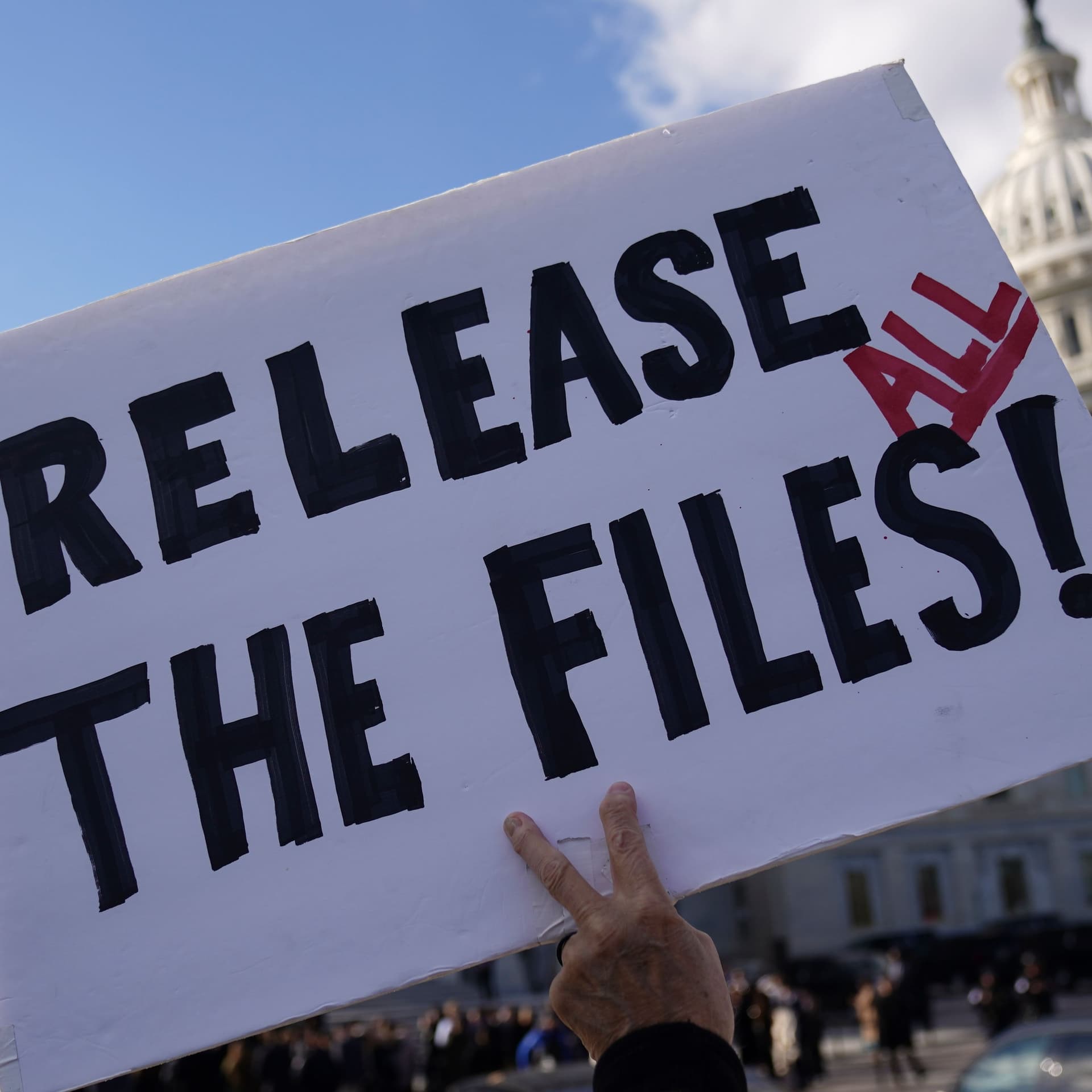
6:10And that's important for Democrats because they don't have the majority. And so in order to get anything on the floor that is not approved by Mike Johnson, they have to use this discharge petition process. And to do so, they had every Democrat sign it as well as some Republicans who signed it because the Republican Party has made a lot of hay around these Epstein files. Many Republicans who are in the House had run for office saying they wanted to release the Epstein files. And now this discharge petition was a way to basically force them to take a position on something they had talked about before.
6:43And that passed, that discharge petition received all 218 signatures and now is going to be required to get a vote on the House floor, which will then put more pressure on the Republican Party to decide whether they're going to live up to what they had said previously about the Epstein files or go along with Donald Trump, who has really worked strenuously to keep this out of the news and to shake off this story. There's a third topic, the reason that I think this came out this week that is important. And it's because I think Democrats have realized that, you know, we had talked before about these elections in Virginia and New Jersey and all over the country, these off-year elections and how critical affordability was to those elections.
7:21I also think that what Democrats are realizing is that there's a corollary to that, which is corruption. And so the more that they can talk about Donald Trump and his wealthy friends and Donald Trump and his association with Jeffrey Epstein, that they can tie in that talking point with the fact that he's more focused on Epstein than he is on prices. The more the Democrats can talk about that, the better politically they think their standing will be in the 26 midterms. Yeah, that's fascinating. So House Democrats force this vote, make Republicans decide whether or not the Justice Department has to release all of its files on Jeffrey Epstein.
8:02But Matthew, explain to me, because the House Democrats also have these other files. So is that a separate trove of files? I think people are probably confused about what files we're talking about here. So there are two kind of wells that people are getting the records from. One is from the Epstein estate and one is from the Justice Department's investigation into Epstein. Got it. So the latest emails that came out were from the estate, which were obtained through a subpoena that the House Oversight Committee issued on the estate. What this discharge petition is trying to go for is the Justice Department's investigation into Epstein.
8:34And I want to remind everybody that President Trump himself campaigned on releasing a lot of these files, right? It's not just something from the Republican base. And so a lot of the kind of anger and frustration on the Republican base to get these files out is because they're saying, Tartuffe, why did you not do what you said you were going to do? So this is kind of almost a sense of accountability on the president from his own base. Is that the first mission of Tartuffe in the poster parts history? I mean, 100%. Did you make a deal with someone where you were like, I'm going to get this word in somehow?
9:05Yeah, I'm getting$50 after this now. No, I'm just kidding. So Trump, he has tried to stop these files from being released. Now these emails are out there. They've taken over the news cycle. How has Trump and the White House responded to the release of these emails? So Trump himself keeps saying that this is all a massive hoax. Now, he's not saying necessarily that the emails themselves are fabricated or anything like that. he just kind of uses hoax as just like a general kind of discreditor for any kind of thing that he doesn't really like. The White House and the House Oversight Republicans have really been pressing that Democrats released these specific kind of cherry-picked emails to focus specifically on Republicans and, you know, try to make it seem that this is like a Republican scandal.
9:52When in reality, a lot of Democrats also socialized with Jeffrey Epstein in the past. Famously, former President Bill Clinton also was his associate. So that's kind of the way the Republicans are responding. And what happened? Because there's been a lot of reporting about what happened at the White House when these emails came out, that there were some like urgent meetings and conversations that happened. What do we know about that? So Republicans have really been pressuring their own conference members not to vote for this discharge petition. There was a handful of Republicans who did. And it appears that Carolyn Levitt acknowledged that— The White House press secretary.
10:29Correct. One of the Republicans, Lauren Boebert from Colorado, who's normally a very strong MAGA ally, was brought into the White House and discussed in the situation room to, you know, try to persuade her not to vote. In the situation room. In the situation room. I mean, that's reserved for like the biggest. For situations. For situations. That's right. So ultimately that proved unsuccessful because she did not end up going to the floor of the House to rescind her signature. So the pressure campaign from Trump himself wasn't enough to get her to take her signature off. I mean, that's so interesting, Dan, because Trump has been successful in his 10 years on the political stage, just kind of getting Republicans to go along with him, making things go away when he doesn't like it.
11:15But this story has not gone away. Like, why has this one, why has the Jeffrey Epstein scandal been the thing that has stuck on Trump and he can't get it to go away? I mean, there's a term for Trump. He was Teflon Don. I mean, he was the person that you would, that politics and politicians have thrown labels at, attacks at, that have really just kind of bounced off him like, you know, an egg, not sticking to a nonstick pan. And part of the reason that this has been so sticky is that Trump himself, as Matthew mentioned, has used this topic and rallied the Republican base around it to the point that it's so associated with Republicans that then when he gets into office and has a chance to do what he said and not doing that, it's galling to many Republicans.
12:03I mean, you've seen throughout Trump's decade-long kind of hold on the Republican Party that there are very few instances where Republicans actually break with him. This is one area that has really fractured the MAGA base. Yeah. Because so many of these people who are either influencers online or elected officials or even just kind of Republican supporters, they have probably said things about releasing the Epstein files. Yeah. And about wanting to see what's in there. People that are currently in the Justice Department, leading the Justice Department. Maybe a vice president of the United States who criticized reporters in 2021 for not asking about releasing the Epstein files.
12:43The history here for a number of these folks is quite lengthy and pretty easy to find. Yeah. And so I think that's one reason that it has stuck to Trump is that he rallied the base around this. Republicans rallied around this. And then the idea of him not delivering on it, I think, is pretty galling to a lot of Republicans who partly elected him because they wanted to see this kind of information be exposed by the guy who said he was going to drain the swamp. And so it's bigger than just, I think, some files and Jeffrey Epstein. It is an existential question for Republicans going forward. So, Matthew, what happens now?
13:18So there's enough signatures on this discharge petition. Where is this scandal going to go next? The rules of the House require House Speaker Mike Johnson to allow seven days for it to ripen. That is the official term. Like a banana. Like a banana. And then the resolution will have to have a floor vote with the whole House. And it's expected to pass. A couple of Republicans who actually voted, who did not sign on to the discharge petition, said they would end up voting for it on the floor. Oh, okay. Then it would go to the Senate. And there, that's where the big question mark is, because Senate Republicans seems a lot less inclined to support this effort at this time.
13:59Well, let's pause here. After the break, we're going to talk about the end of the government shutdown and why President Trump sat it out. We'll be right back.
14:17Right now during the President's Day sale, you can get a Washington Post premium subscription for just$3 every four weeks. And that includes three extra accounts to share with friends or family. After your first year, renews at$19 every four weeks. The Washington Post. Power. Perspective. Premium. Learn more at WashingtonPost.com slash subscribe.
14:49Okay, so now I want to turn to the government shutdown, which has finally come to an end. That old thing. The House voted Wednesday night on a bill that funds the government through January 30th. We should note, of course, that means that we'll be talking about this again and potentially shutting down the government again. in February, but then President Trump signed it Wednesday night. So we discussed the end of the federal government shutdown in an episode earlier this week, the fact that eight Senate Democrats, one is actually officially an independent, but he caucuses with the Democrats. They voted with Republicans to reopen the government and didn't get any of the concessions that they had wanted, the reason why they shut the government down in the first place over these healthcare subsidy extensions.
15:32Matthew, remind us why these eight Democrats broke with their party, sided with Republicans, and reopened the government. Well, they were feeling that the shutdown just wasn't really working. At this point, there was just such a stalemate, such an impasse over whether or not they would be able to do anything on ACA tax credits with Republicans while the government was shut down. And they just thought, you know, this is a really pressing, time-sensitive issue. You know, our federal functions are kind of falling apart right now during the shutdown. This is, you know, the cost-benefit ratio is just too high.
16:05So we have to end this thing now and be kind of the adults in the room. And they understood that that was going to be very politically difficult for Democrats. But all of these senators were either not running for re-election, not running for re-election for a while, or just really came from states that were really acutely impacted by the shutdown. They said, we'll take the fall for it and, you know, reopen the government. To Matthew's point, most Democrats in the Senate were like, we need to keep this going. We're showing our voters that we are fighting Donald Trump. Like, this is working. So after 40 days of this, like, what is the political takeaway for Democrats and then also for Republicans?
16:43I think first for Republicans, it does seem like the strategy on the Hill from the Hill Republicans did work. I mean, Mike Johnson kept the House away. It meant that they weren't there to vote on a bill that the Senate wanted to send back and put a lot of pressure on Senate Republicans to take up the bill that they had passed. I think the Senate Republicans also just dug in. They didn't give an inch. And they showed that they had a higher pain tolerance than Democrats on this issue. When we went into this government shutdown, you and I talked a lot about how for Democrats kind of the fight was the point.
17:16that they wanted to be shown that they could stand up and fight Republicans, even from the minority. And I think what the shutdown showed is that that may work rhetorically, but it doesn't work tactically. Just fighting to show that you have fight doesn't mean you're going to win that fight. You know, there are plenty of people who have gotten into fights on a schoolyard just to show they can fight and then lose the fight. That's basically what happened to Democrats here. You know, there are plenty of folks who say that they did win, mostly Democratic senators and one independent who voted to reopen the government.
17:46Because they are going to get a vote on health care on a bill of Democrats choosing. Yeah. And just as a reminder, these are the Obamacare health care subsidies that Democrats wanted extended because they have expired. Yeah. Millions of people's health care premiums are going up. But as we discussed on the show earlier this week, just because they got a vote doesn't mean that these health care subsidies are going to get extended. Their argument is that either the subsidies will get extended or at least approved by the Senate and then have a chance in the House. or Republicans will be forced to take a position that is politically unpopular.
18:20These subsidies are popular. Health care costs going up. It's an unpopular thing to happen to many Americans. And they think that'll be a political winner in the midterms. I mean, as somebody who covers politics and has covered politics for a long time, I think that's a stretch. You never know what the issue of the midterms is going to be, especially not a year out. A year from now, right. It may be health care. They may be right. Yeah. It will likely be something about affordability, and healthcare certainly factors into that. But there are, I mean, a year in politics is multiple lifetimes. And there could be countless things that could happen between now and the midterms that change the topic that is on the minds of many voters.
18:57So it is a risk in that way. That if the thing that you're thinking you're going to get is something to use as a cudgel against Republicans in the midterms. A year from now. You're taking a big risk. Democrats think that might be worthwhile, especially to reopen the government and get people back to work and get people paid and all the things that have happened during the shutdown. But it is a big risk. Yeah, and Democrats do plan on continuing this fight over the healthcare subsidies. That might even include another shutdown. Senator Jean Shaheen, Democrat from New Hampshire, she was one of the lead negotiators who voted to reopen the government.
19:30And she said, after the January deadline, if we do not have these extensions, I'm willing to consider doing another government shutdown. And one thing about this deal that makes its future government shutdown maybe a little bit more palatable is that it included year-long funding for the agriculture appropriations. So that includes things like SNAP, WIC, food benefits that were really, really quite sensitive that made this current shutdown very painful. That won't be a factor if we shut down again in January. Oh, that's fascinating. So they won't be able to hold that pain that people have been feeling won't be there.
20:04It did seem like that was a really difficult pressure point for Democrats. For sure. That and then the FAA issues with flights and flight cancellations and delays. I mean, once the government shutdown got to the point where it was not just impacting federal workers, federal contractors, people who interact with the federal government regularly. and was impacting everyday Americans who were trying to fly, who needed these benefits from the federal government. I think that's when you saw Democrats start to buckle under that pressure, particularly on those food programs and also flights. Yeah. Matthew, I've been mostly very fascinated by Trump's role in all of this because he seems conspicuously absent over the last seven weeks, at least in terms of dealing with this shutdown.
20:50He hasn't really talked about it. We haven't really seen him kind of meeting with with Senate Republicans, at least not in a public way. What was his role? What has he been up to over the last 40 days? I mean, that's such a great point, because if you contrast it with the 2018-2019 shutdown, he's very, very involved in those negotiations. I mean, Dan wrote a great piece for a newsletter about how the president was jet setting around the world, caring about, you know, like foreign policy and things like that, which, of course, are very important issues. But, I mean, in the past, the president has canceled overseas trips to deal with government shutdowns.
21:25So he was pretty hands-off during this one. What he really kind of got concerned was after the elections, the off-year elections last week, which were catastrophic for Republicans. Democrats just really just swept through. And he said, this is a sign that, you know, we are losing this shutdown politically. We need to end this thing right now. And he called on the Senate Republicans to eliminate the filibuster in order to do so. Now, Senate Republicans would rather do literally anything else than eliminate the filibuster. So that was one point where they said, yeah, I don't think we're going to do that.
21:59And so, you know, like that just kind of goes to show that, you know, the president was also, you know, like not super involved in that tactic. But still, you know, that really kind of showed that he was very concerned at that point. Right. There's this amazing dynamic where in the last for the first Trump term, there was a government shutdown, which had previously been the longest in history. Yeah. And Trump was at that point on Twitter posting these messages about being like alone in the White House and kind of like almost like he was sad. Like he was kind of like by himself in this big building, like where are all my friends?
22:30And to contrast that with his shut the shutdown now where he's all over the world, he's down at Mar-a-Lago throwing a lavish party. And he's like, yeah, the difference in who Donald Trump was, the difference between who Donald Trump was in the first shutdown in his first term and this shutdown, it is dramatic. And it says a lot about the differences in these terms as well. The first term was handled kind of by traditionalists, people who had been in office before, who kind of kept guardrails around Trump and did things like other shutdowns of the past. And this this shutdown was completely different.
23:06It highlighted the fact that many of those guardrails are gone and that Trump kind of went about his life as if there was no government shutdown. Yeah, it's a little bit of a tangent, but it's related because it's what was on Trump's mind during the shutdown. We also saw him issue a bunch of pardons related to the 2020 presidential election. Not the last one, but the one before that, the one that he says he won and that it was rigged against him. What was that? Why was that something he was focused on while the government was shut down? I mean, he issued pardons for a number of people who helped him try and flip the election that he claims he won, that he did not win.
Read the full transcript
23:48You had this whole string of fake electors in different states who were going to be electors to the Electoral College had they been able to flip those results. Those people, some of them have been charged with state crimes. Trump issued broad sweeping pardons to a lot of those folks, including Rudy Giuliani, the former New York mayor, who was one of his lawyers and kind of a top communicator on that effort. It's worth noting that none of these people have been charged with federal crimes that fall under the pardons that Donald Trump issued. But it does speak to kind of where his head was at. You know, he's still thinking about that 2020 election that he lost.
24:28And it still is kind of like a thorn in his side that even as the government shutdown is happening and Republicans who were elected in his image are kind of fighting it out on Capitol Hill to reopen the government to not give an inch. He's, you know, has 2020 on his mind. Yeah. We also talked a little bit. You mentioned, you know, the message on affordability. Yeah. It was a huge message for Democrats when they won big in their governor and mayoral elections last week. Trump seems like he hasn't been able to really nail down a message on this because there's this disconnect, right, where the White House is saying the economy is great and real people are saying it doesn't feel so great.
25:09And it's incredibly reminiscent of what President, former President Joe Biden found himself in, the trap he found himself in when he wanted people to acknowledge that parts of the economy were doing really, really well. But again, people weren't feeling it. So how, Matthew, how big of a risk is it for Trump and for Republicans heading into the midterms if they can't put together a cohesive pitch on affordability? I mean, it kind of collapses the house of cards, right? Affordability was the issue of last year's elections. It was the issue of last week's elections as well. Mikey Sherrill ran almost exclusively on very heavily on lowering.
25:46In New Jersey. In New Jersey, very heavily on lowering energy costs specifically. You know, I mean, there is all these other things that she could have run on in, you know, that Democrats may have pounced on in the past, like the president's conduct or things like that or decorum. But the Democrats are really kind of pivoted to focusing exclusively almost on affordability. So if the president and Republicans fail to deliver on that going into next year's elections, that's be an enormous liability for them. And the comparisons here to Joe Biden are just incredible. I mean, Donald Trump is somebody who latched on to the right issue ahead of the 2024 election.
26:24Joe Biden spent so much of his presidency post-COVID convincing people that inflation may be an issue, but it's getting better. and he kind of got pinned down on the economy and trying to convince people not to, you know, don't trust your lying eyes. Like the economy is great. What are you talking about? And that did not work with people. When people are struggling to pay for things, to pay for gas, to put food on the table, and the president is out there saying that like the economy is getting better. We have this great recovery from COVID. It just didn't resonate with people. And it the nominee for the party.
27:02It hurt her as well. And that is a big reason when you talk to Democrats after the election that they believe they lost in 2024. And the fact that Donald Trump comes into office and focuses on so many other things other than affordability, it is incredible to see him fall into the same trap that kind of bewildered Joe Biden. And you're seeing the Trump administration try and throw these ideas out there to try and address this affordability issue. You had a suggestion of like a 50-year mortgage as opposed to the traditional 30-year mortgage. You had this idea of a rebate check from all the money coming in from tariffs.
27:38Right, right. I mean, all of this is very skeptical. You should be very skeptical about it. It's difficult to see how this actually happens. You've had Republicans even say that this stuff isn't going to happen. But it does show that the White House, that Trump, that his aides are trying to figure out a way to communicate on affordability at a time when prices are going up on things. and they haven't really landed on a message that works yet. They say that that's going to be the focus of the next year. He's going to be talking a lot about it. But it doesn't really matter if he's talking about it or not, if he's not talking about a way that actually resonates with voters.
28:11So I want to close on this because we've talked a lot right now about Republicans and what Trump and Republicans do going forward. Democrats seemingly winded their back after last week's elections. They're feeling good. We're a year out from the midterms. What do Democrats need to do over the next year? Do they need changes in leadership, maybe, in the Senate, like, as some are discussing? Like, what do Democrats do to move forward and continue their momentum? I think a change in leadership is definitely something that a lot of Democrats are saying that they need. There was quite a bit of frustration with Leader Schumer over the way that the Senate deal went down, even though it is very important to note that Leader Schumer was against the Senate deal.
28:53But a lot of people said that, you know, a stronger leader would not have allowed these kind of defections to happen. That is a very popular campaign talking point. Within the Senate itself, though, it seems like there isn't as much of an appetite as Senate Democrats talk amongst themselves because who would replace Schumer right now? Right. Who wants that job? Exactly. It's a very unglamorous job. Ambitious Democrats in the Senate want to run for president. They don't want to run for leader. The Senate minority whip, Dick Durbin, he actually did vote for the Senate deal and he's retiring. So there is a kind of experience vacuum.
29:25And it's interesting when you hear House Minority Leader Hakeem Jeffries talk about it. He didn't directly criticize Schumer. He said that Schumer led his caucus pretty valiantly, actually, even though he did criticize the Democrats who did to fact. I think that you're going to see there was already a number of Democrats running for the Senate who were running against Chuck Schumer. as a way to signal to their voters that they aren't part of the establishment, that they can run kind of as an outsider, even if they've been in public office and been elected before. Running against the party establishment is a pretty good way to do that.
29:57I think more for Democrats, they seem like they have found a message in these off-year elections that we have talked about in Virginia, New Jersey, and New York and elsewhere. I think you're going to see Democrats talk incessantly over the next year about affordability. I think they're going to try and pressure Republicans on everything from energy costs to health care to grocery costs. You're going to hear a lot about the Trump administration and what they are doing on this issue or maybe what they're not doing on this issue. And I think that's going to be coupled with this corruption message.
30:27And that's going to be the pitch that you see Democrats put out to voters in 2026. And really that the election will likely, if affordability is the issue, the election will hinge on their success. Well, I look forward to chatting with both of you about this over the next 12 months. This was really fun. Dan, Matthew, thank you so much for being on the show. Thanks for having us. Yeah, thanks for having us. That's it for today's episode. Dan Marica and Matthew Choi are co-anchors of The Early Brief, our politics morning newsletter. If you'd like to watch this episode, we also filmed it. You can find it on the Washington Post podcast YouTube channel.
31:05We'll add a link to that in our show notes. Today's episode was produced by Emma Talkoff and Josh Carroll. It was mixed by Sean Carter. It was edited by Peter Bresnan. Thanks also to our politics editors. Our team also includes Ted Muldoon, Alana Gordon, Ariel Plotnik, Renny Stiernovsky, Sabby Robinson, Laura Benshoff, Rina Flores, Renita Jablonski, Eliha Izzati, and Martine Powers. I'm Kolbie Echowitz. Have a great weekend. Thank you.
32:06premium. Learn more at washingtonpost.com slash subscribe.
From the publisher
The House Oversight Committee released a tranche of emails from the estate of disgraced financier Jeffrey Epstein that give us more information about his relationship to President Donald Trump. Today on the politics roundtable, we’ll unpack what these emails say and how the White House has responded.
And, after 43 days, the federal government is back open for business. As the dust settles on the longest shutdown in history, we’ll talk about what lawmakers learned – and whether another shutdown could be right around the corner.
Colby speaks with Dan Merica and Matthew Choi, who are co-anchors of our politics newsletter The Early Brief.
Today’s show was produced by Emma Talkoff and Josh Carroll. It was edited by Peter Bresnan and mixed by Sean Carter.
Subscribe to The Washington Post here. And watch us on YouTube here.