In short
Post Reports Episode Summary
Episode Title
What Happens to Asylum After the Attack on the National Guard
Hosts
- Martine Powers
- Elahe Izadi
Episode Release Date
- December 2, 2025
Overview This episode focuses on the implications of a recent shooting involving two National Guard members in Washington, D.C., perpetrated by Rahmanullah Lakhonwal, an Afghan national who had been granted asylum in the U.S. The episode discusses the subsequent immigration policy changes announced by the Trump administration, which aim to make it more difficult for foreigners, particularly from certain "Third World" countries, to enter or remain in the United States.
Key Points
Incident Overview
- Shooting Details:
- Occurred near the White House.
- Victims: Army Specialist Sarah Beckstrom (20 years old, deceased) and Air Force Staff Sergeant Andrew Wolf (24 years old, critically wounded).
Shooter Profile
- Rahmanullah Lakhonwal:
- Afghan national, entered the U.S. via a special visa program for those who aided U.S. forces.
- Worked as an asset for military and intelligence operations in Afghanistan.
- Granted asylum earlier in 2025.
- No clear motive has been established yet.
Trump Administration's Response
- Policy Announcements:
- Halting Asylum Decisions: USCIS paused all asylum claims, asserting a need for extensive vetting.
- Visa Issuance Pause: State Department halted visa processing for Afghan nationals.
Broader Context of Asylum and Immigration
- Historical Context: This response is reminiscent of post-9/11 immigration restrictions.
- Impact on Asylum Seekers:
- Over 1.4 million pending asylum cases could be affected.
- Individuals awaiting decisions may face job loss and income instability.
Asylum Process Discussion
- Application Process: Describes the rigorous vetting and screening asylum seekers undergo.
- Concerns Raised:
- Generalizations about Afghan nationals and other immigrants following the shooting could lead to undue stigma and increased risks for these communities.
Reactions and Concerns
- Community Impact: Afghan community advocates stress the dangers of associating individual actions with broader populations.
- Policy Implications:
- Potential legal challenges to the administration's new policies.
- The broader narrative of linking crime with immigration policy is emphasized.
Conclusion
- The episode highlights the tension between national security and humanitarian considerations in immigration policies, particularly in the wake of violent incidents involving immigrants. The discussions underscore a significant shift towards more restrictive immigration measures, reflective of the prevailing narratives within the Trump administration.
Additional Information
- Guests: Arelis R. Hernández (immigration reporter)
- Production Credits:
- Produced by: Emma Talkoff
- Edited by: Elana Gordon
- Mixed by: Sam Bair
Call to Action Listeners are encouraged to stay informed and consider the implications of these policies on both current and future immigration processes in the U.S.
Written by AI. May contain mistakes. Listen to the episode to check what was said.
Transcript
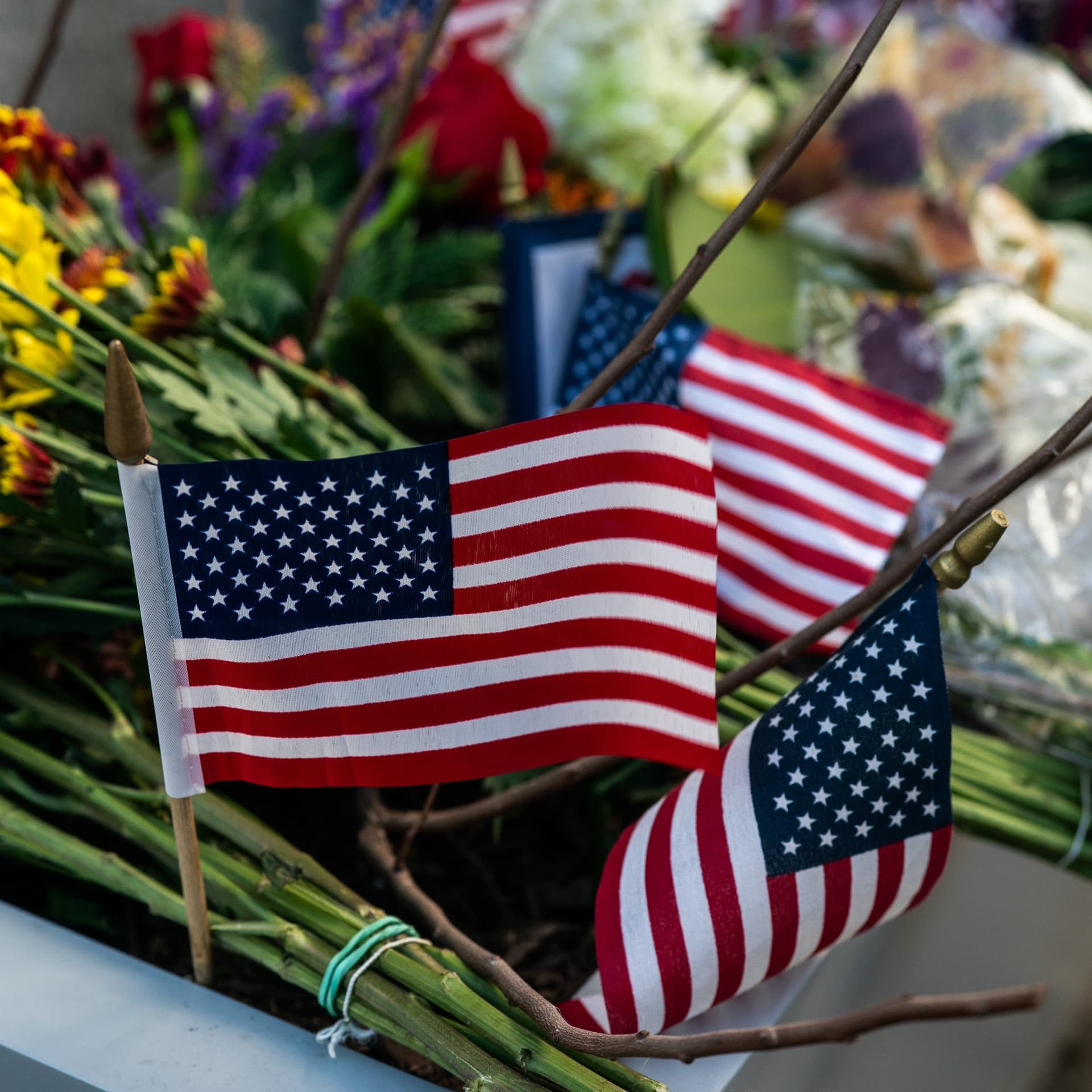
Automatic transcript. May contain errors.0:01Here in Washington, D.C., prayers and tributes have been pouring in for the two National Guard members who were shot near the White House last week. A memorial has been taking shape at the Metro, where the two Guard members were stationed. You can find a makeshift display of fresh roses, handwritten notes, and American flags just feet away from a bullet hole in a planter. This tragedy has also spurred a response that's reverberating well beyond the nation's capital. In the aftermath, the Trump administration is taking an even stricter approach to immigration. That's because the alleged shooter, Rachmaninoff Lakhonwal, came to America after Afghanistan fell to the Taliban in 2021 through a special visa program for allies of the U.S.
0:50He was granted asylum earlier this year. After the shooting, President Donald Trump zeroed in on Lock and Wall's immigration status and posted on social media that the administration planned to halt immigration from countries like Afghanistan that he said were, quote, third world. In the days since, the administration has vowed to go further, pledging restrictions that would make it even harder for many immigrants to find refuge in America. The last time that we saw something this restrictive was probably around 9-11.
1:28From the newsroom of The Washington Post, this is Post Reports. I'm Kolbie Echowitz. It's Tuesday, December 2nd. Today, I speak with The Post's national immigration reporter, Aurelise Hernandez, about how the administration's response to the tragic shooting of two National Guard troops is upending asylum and immigration policies in the U.S.
2:04Arlise, hi. Thanks so much for joining me. Thank you for inviting me. Arlise, I really want to dig in with you and understand better how the asylum process in the U.S. is changing, is going to change as a result of this shooting. But first, it's almost been a week since this happened outside of a metro stop near the White House. What more do we know about the victims? Well, Army Specialist Sarah Beckstrom, who was 20, had joined the National Guard a few days after graduating high school. She died Thursday with her parents by her side. As we understand, vigils have been taking place in her hometown in West Virginia, including at her former high school.
2:43As of this morning, we know that Air Force Staff Sergeant Andrew Wolf, who is 24 and was also critically wounded in that shooting, remains in the hospital. I know new reporting continues to emerge about the alleged shooter, but what have we learned about him so far? Well, the suspected shooter is an Afghan national, Rahmanullah Lakinwal, who's 29 years old and first entered the U.S. as part of Operations Allies Welcome, which was a Biden-era program that helped resettle Afghan nationals following the U.S. military withdrawal from Afghanistan. He was apparently an asset of our military and intelligence apparatus over there in Afghanistan and worked directly with military personnel.
3:24Lackawal had been a part of one of the CIA's zero units. The units, which have never been publicly acknowledged by the CIA, carried out missions to kill or capture members of the Taliban, Al-Qaeda, the Islamic State, and other extremist groups. with intelligence and logistical support provided by the CIA and U.S. military. And there was this sense after the United States pulled out in 2021 that we would try to resettle some Afghans who had helped Americans resettle them here in the United States. Yes, particularly because these individuals who lent themselves to the American project in Afghanistan, their lives were in danger with the new regime coming back into power, the Taliban.
4:07And so the idea was these are people who helped U.S. military personnel to try and achieve their goals in Afghanistan. And their lives were in critical danger if left to the whims of the incoming Taliban regime. And so Lakhonwal, he was able to resettle in the United States through this special program. And then what was his path to asylum? As we understand it, he would have gone through a sort of expedited humanitarian parole program to come into the United States initially. They call this a special immigrant visa. So for these very specific kinds of circumstances that the executive branch needs to give people sort of entry into the United States.
4:51But asylum is a whole other process that normally begins through an application to U.S. Citizen and Immigration Services or USCIS. That was approved last April. And just to be clear, at this point, do we have any sense of what Lock and Wall's motive was for why he allegedly carried out this crime here in D.C.? None that has been shared publicly so far. DHS Secretary Kristi Noem told ABC News this week that officials hadn't identified yet what drove Lock and Wall, who drove all the way from Washington State to D.C. before carrying out the attack. But there's also been other reporting that has taken place that seems to indicate that the shooter seemed to have been struggling with life here in the United States.
5:39Soon after Lock and Wall was identified as the alleged shooter, Trump officials began claiming that he hadn't been vetted before entering the United States. Is that true? Lock and wall would have underwent a thorough vetting by counterterrorism authorities, by the military, by the State Department, and then ultimately by USCIS. And this is according to people with direct knowledge of the case. You know, it would be clear to readers and listeners that, you know, when the withdrawal happened in Afghanistan, they did not come directly to the United States. There were sort of way stations that were other countries where there were checks being done at those places, you know, first starting with the military where Lock and Wall in particular would have had to get sort of a chief of mission to sign off on what is called the special immigrant visa that would have brought him to the United States.
6:33And then the Department of State would have conducted interviews, medical exams, all those kinds of things. In addition to that vetting, when he went through the asylum process, that would have been another layer of vetting that would have taken place through USCIS, which includes things like interviews with consular officials, with asylum officers who would have reviewed and made sort of subjective decisions based on those interviews and verifying information that Lock and Wall would have provided. to asylum officers. So the question remains, you know, what is sufficient vetting according to the Trump administration because these are processes that have been in existence for decades.
7:14I mean, one thing that Trump himself and people in the Trump administration have said, not just about Afghan refugees, but immigrants in general that come into this country, is that they are violent criminals and that they are responsible for all of this crime in America And I just wonder how unusual it is that a violent incident like what we saw last week happens with someone who's been granted asylum. Historically, it's been pretty rare. These are people who are fleeing violence, who are fleeing threats against their lives in their countries. and asylees and refugees in particular are probably the highest and most intensely scrutinized of the immigrants who apply to come to this country, particularly those who are coming from nations that we have conflict with or we don't have diplomatic relationships with or where there's some kind of international issue that makes their flight from that nation a security risk to the United States.
8:17But to claim that all asylum seekers are themselves security risks would be to not face the facts of what has transpired with, you know, refugees and asylums for the past half a century or more since the end of World War II, when we entered into some of these international agreements to receive people who were fleeing conflict in their nations. And it was partly tied to the rejection of the United States government of a boat full of Jewish refugees from Europe during World War II. Many of those people ended up being killed. And that was something that the United States at that time had said, we would not do this again, that if someone needed protection, that the United States would be a place where they would have a fair shot at getting that.
9:04You know, Arlise, the thing that, you know, I really want to understand better is the Trump administration's kind of swift and strong response to the shooting and the pretty consequential policy changes that it's made as a result. What have they done? It's been a flurry of different statements that the administration has put out. But essentially on Friday, the U.S. made two immigration policy decisions. One is where U.S. Citizen Immigration Services, so USCIS, has halted, stopped all asylum decisions until, in their words, every alien is vetted and screened to the maximum degree possible. This is coming from USCIS Director Joseph B.
9:49Edlow. He wrote this in a social media post. And then a little after that, the State Department said that it would pause visa issuance for individuals traveling on Afghan passports, and that was done through social media as well. The question as to whether these steps are constitutional are ones that still need to be borne out, but I do need to remind listeners that the executive branch has wide latitude for sort of controlling who enters the country. And so there's a lot that is within their power to be able to restrict these things. I know we're waiting on details, but I just want to understand a little bit better.
10:31So in the first case, anyone, no matter where they're from, if they're seeking asylum in the United States, all of that has kind of ground to a halt for now. That is our understanding based on the statements that the administration has made. Now, there was a memo that went out and it was reported by CBS News directing asylum officers and USCIS employees to just completely stop the work. But again, these are policy memos that are not necessarily have the weight of law yet. We're still trying to tease out those details. But people seeking asylum are a very specific group of people that go under a very specific process for screening and for vetting.
11:10and largely, of course, these are people who fear persecution in their home country based on a series of different factors, right? Whether you're a member of a particular social group, you're being persecuted because of a political thought or action that took place in your home country, those types of things. I mean, how many people do we know are seeking asylum right now in the U.S.? I mean, how many pending cases are there that might be at least temporarily halted? The latest number that we have is from the end of 2024, and there are more than 1.4 million pending asylum cases, and there are many millions more who are waiting and in different parts of that process.
11:54And what does the person do in that time while they're waiting? So while someone's application for asylum is pending, generally the law says that they have a right to be in the country while it's being processed. But the Trump administration in particular has asserted that it has a right to also detain those people while they're waiting. And what we've seen is that in detention, many people, asylum seekers who might have legitimate claims, have abandoned those claims and instead sought voluntary departure because the conditions were so bad in detention or they could not take the separation from their family over a long period of time.
12:31So Arlise, I know that we're still trying to piece together what exactly the Trump administration means when they say they're putting this new hold on asylum applications. But what is the potential impact of that, of placing a hold on what you said is, you know, probably more than a million people waiting for to get their application processed? That would send a more than a chilling effect. it would be sort of cold water onto the lives of these individuals who are waiting and expecting the United States to give them a fair shot in this process. That means that people who have work permits, who have now expiration dates on those permits, might not be able to renew them, in which case those people would lose their jobs, in which case those families would lose income.
13:23You know, they're already largely in sort of difficult economic streets to begin with.
13:34After the break, how the administration's new proposals may affect immigrants beyond those seeking asylum. We'll be right back.
13:50Good journalism is even better when it's shared. With a premium subscription to The Washington Post, you get three extra accounts to share with friends and family, so they can stay informed, too. Right now, you can get a premium subscription to The Post for$6 every four weeks. Just$6 unlocks trusted reporting to share with other people in your life. After your first six months, it'll cost$19 every four weeks. You can cancel any time. Head over to WashingtonPost.com slash subscribe and get premium access to The Washington Post today. That's WashingtonPost.com slash subscribe. We're talking about this hold on asylum seekers, but has the Trump administration said that, you know, their response to last week's shooting is going to extend beyond just those in the asylum process?
14:41Is it going to affect other immigration statuses? Well, back in June, the administration restricted the entry of foreign nationals from 19 different countries with different sets of restrictions. So countries like Afghanistan, Burma, Chad, the Republic of Congo, these are places that are experiencing sort of either a full or partial suspension of any kind of admissions. And that means access to visas like tourist visas or medical visas or work visas, those types of things. So now what we have is the Trump administration talking about going even further than that and adding more names of countries to this list of 19s from which it will either be difficult to obtain a visa.
15:26But the step further here is the review of people who are already in the United States. People who already have green cards or illegal visas that have not expired yet. these are folks from these, again, 19 countries, and we're expecting more countries to be added to this list who will undergo sort of additional checks and review. And we don't know exactly what the details of that will look like, whether these are people who will have to, like, report to a U.S. Citizenship and Immigration Services office and make appointments to do that, to have their entire files screened. Again, we don't know if, like, employees at USCIS will just be going through these files and then flagging for any specific things.
16:11We just don't know how that will take shape. It's already really difficult to qualify and be eligible for asylum. And what appears to be sort of the step further is the review of people who've already gone through this process, asylees and visa holders or green card holders, who are now possibly, depending on what the details are, going to be subjected to sort of like a second set of reviews that may or may not result in their expulsion from the nation.
16:47How feasible is it that they could actually do that? Looking and reviewing the applications of people who are already here is a step that as a country we have not taken since, you know, 9-11 in the aftermath of the September 11th attacks. That is incredibly labor intensive because there are millions of people in this country with, you know, permanent status and green cards and have received asylum in recent years. And I'm not sure that denaturalization is something within the powers of the executive branch. I think that's something that will receive robust legal challenge in the same way that birthright citizenship did.
17:29And it could be that these reviews of green card holders could also result in legal challenges as well. So the State Department after the shooting also said that it wants to immediately pause visa issuance for individuals traveling on Afghan passports. What does that mean? Well, the State Department's order on Friday appeared to be an attempt to shut down the special immigrant visa program. That's the program that first brought Afghan nationals to the United States. And these were Afghan nationals who were employed on behalf of the U.S. government in Afghanistan. Deporting Afghans who have been granted asylum itself, as the president himself acknowledged on Thursday, is very difficult.
18:15And yet this is something the administration says they are going to try very hard to do. But Arliss, it sounds like what the State Department is saying is it goes beyond just the special immigration program that Lock and Wall came to the United States on. But is this for all Afghans traveling to the United States? It could be, right? We just don't know. And I cannot express enough how the lack of details here sort of hurts our ability to understand how exactly any of this will work. members of the Afghan community in the United States, as well as their advocates, have expressed deep concern over the generalizations that Trump and his allies have made about Afghan evacuees in the wake of the shooting.
18:55For example, I live in San Antonio, Texas. There's a huge Afghan refugee population in San Antonio, Texas. NGOs have worked very closely with that community to adjust to American life and to obtain jobs. In fact, most of the individuals who pick up people at San Antonio Airport are themselves, you know, Afghan nationals who came here as refugees. So they have been very clear, the community, you know, and people who speak on their behalf to say, like, it is dangerous to ascribe the actions of an individual to an entire community. You know, Arlise, I think about all of this, and you're one of our lead immigration reporters.
19:33You've been covering immigration for a long time. You know, how does this moment fit into kind of the broader immigration picture in this second Trump administration? Well, so I'm a visual person. And often when I think about immigration, it's very border specific because that's where I've been for the last five or six years. But the way I visualize it is that United States, if you think about the sort of the outline of the United States, there are a bunch of doors that are open. If you think of like doors all along the borders of the United States. And there are many fewer doors that are open across the border.
20:12And there are even fewer, you know, near the water. and those few doors that were open to people over the course of the Trump administration are closing, right? So for me, this is sort of part of a broader and expansive Trump administration crackdown, but also, you know, sort of a commitment to this entire narrative that the Trump administration and this entire perspective that they have around immigration, that it should be restricted. that for the last three or four years, what we've seen is chaos, and that under the Biden administration, tons of people entered who were not vetted, who abused the system.
20:56I mean, this is all sort of a consistent drumbeat towards a more restrictive immigration policy. The Trump administration has also been consistent in another way. The administration has been clear and so brutally, in some ways, honest about very tragic situations that have occurred in this country that have involved accused killers or accused criminals who happen to be immigrants or people without legal status in this country or with pending immigration relief. If the killing of a young girl happens and it happened at the hands of an immigrant, that's then used to justify something like Operation Midway Blitz in Chicago and the crackdown there.
21:43The administration has not, I don't want to be cruel, but has not wasted a tragedy to advance their particular set of policy agenda around immigration. And this shooting, as tragic as it was, also feeds into this general idea that immigrants, as Secretary Noem put it, are themselves flooding our nation with killers, leeches, and entitlement, and then using that as a justification or reasoning for why these more restrictive policies are necessary. I don't know if this shooting by the accused killer, Mr. Lock and Wall, will be a touchstone to broader immigration crackdowns. It's sort of a wait and see moment, but it certainly seems like that is the track we are running on, given that this is a path that we as a country under the Trump administration have walked before.
22:53Arlise, thank you so much for all of this. Thank you. I appreciate the time.
23:01Arlise Hernandez is a national immigration reporter for The Post. That's it for Post Reports. Thanks for listening. If you're looking for the latest updates on the big news of the day, check out our morning news briefing, The 7. We bring you the seven stories you need to know about every weekday morning by 7 a.m. You can listen to it wherever you listen to podcasts. Today's show was produced by Emma Talkoff with help from Renny Shernowski. It was mixed by Sam Baer and edited by Alana Gordon. Thanks to editor Christine Amario. I'm Kolbiekowicz. We'll be back tomorrow with more stories from The Washington Post.
23:48Good journalism is even better when it's shared. With a premium subscription to The Washington Post, you get three extra accounts to share with friends and family, so they can stay informed, too. Right now, you can get a premium subscription to The Post for$6 every four weeks. Just$6 unlocks trusted reporting to share with other people in your life. After your first six months, it'll cost$19 every four weeks. You can cancel anytime. Head over to WashingtonPost.com slash subscribe and get premium access to The Washington Post today. That's WashingtonPost.com slash subscribe.
From the publisher
Two days after the shooting of two National Guard members in the nation’s capital by a suspect who is an Afghan national, the Trump administration announced a flurry of policies aimed at making it harder for some foreigners to enter or stay in the country.
The administration said it was halting all decisions related to asylum claims and paused visa issuances for Afghan nationals, including a special program for U.S. allies who fought alongside U.S. troops there. The move came after the president posted an anti-immigration screed, in which he vowed to “permanently pause” migration from nations he described as “Third World Countries.”
Today on “Post Reports,” immigration reporter Arelis R. Hernández joins host Colby Itkowitz to run back what The Post has learned about the suspected shooter, the complicated world of asylum, and how this tragedy has upended an already fraught process.
Today’s show was produced by Emma Talkoff, with help from Rennie Svirnovskiy. It was edited by Elana Gordon and mixed by Sam Bair. Thanks to David Nakamura.