 Ask ChatGPT



The Washington Post’s Post Reports episode explains how President Trump’s proposed “One Big Beautiful Bill Act” tax bill would change household taxes and federal benefits, using a Post-built calculator to show who gains vs. loses. It also covers the bill’s Senate/House path, economic effects, and why Republicans are struggling to pass it.
Jacob Bogage, Washington Post congressional economics correspondent who built/works on the Post tax calculator with economists and data scientists (including Kent Smetters of the Penn Wharton budget model).
The bill extends 2017 TCJA, expands standard deduction and child tax credit, and exempts tips and overtime from tax, but cuts Medicaid and SNAP and adds $3.3T debt over 10 years. CBO estimates 11.8M people lose health insurance over 10 years.
A Pennsylvania couple making $50,000 with two kids (on SNAP/Medicaid) is down about $655; a Pennsylvania couple making $250,000 with two kids and $30,000 qualified business income is up about $11,226. Medicaid cuts are framed as the main sticking point, especially for rural hospitals and states like North Carolina.
Written by AI. May contain mistakes.
Discussion on a tax calculator to analyze the implications of Trump's tax bill.
“So let's say you're a married couple with two kids living in Pennsylvania and you make$50 ,000.”
Exploring the provisions and implications of the proposed tax bill.
“Republicans on Capitol Hill are furiously scrambling to put together a massive tax bill with major economic implications for all Americans.”
Jacob shares insights on the tax bill's impact on households.
“Today, we dig into Trump's big, beautiful bill.”
Analyzing how wealthier households will benefit from the tax changes.
“So Jacob, before we get into the nitty gritty of this bill, I want to continue playing with this calculator.”
Discussion on Republicans' defense of Medicaid cuts and their rationale.
“This bill has finished debate in the Senate.”
Overview of the development and purpose of the tax calculator tool.
“How do they defend the cuts to the low-income programs?”
Exploring how tax policy favors wealthier individuals.
“And the response that we've gotten from readers who have engaged with it, who've played around with it, who have learned something has been incredibly meaningful and rewarding.”
Examining the overall economic impact of the proposed tax changes.
“I want to zoom out a little bit, Jacob, on the economy for a second.”
Explore how Trump's tax bill affects national debt and health insurance coverage.
“Our national debt right now is$36.2 trillion.”
Discuss the political hurdles Republicans face in passing the tax bill.
“Obviously, the Democrats are against it.”
Analyze the pressure on Congress regarding the tax bill and its implications.
“Vance, the vice president, has to come in and break the tie, which would be incredibly embarrassing.”
Reflect on the possibilities of the tax bill passing and future discussions.
“The House wrote a far less expensive bill to begin with.”

Get the gist, explore an idea or ask about something said.
 Claude
On Post Reports, what are the key points of this episode?
Searching your listeningAutomatic transcript. May contain errors.
0:00Thumbtack presents Tile Trouble Every single time I use my sink, I make eye contact with the uneven grout on my kitchen backsplash. The crooked corners eye me and I'm haunted by more tiling questions than I thought possible. What kind of pro can fix a backsplash? Can I replace one cracked tile or should I replace them all? What? What if I just use Thumbtack? I can hire top-rated pros, read reviews, and compare prices with a tap. All on the app. Thumbtack knows homes. Download the app today.
0:33So let's say you're a married couple with two kids living in Pennsylvania and you make$50 ,000. I'm going to put that into this calculator. This is$50 ,000 combined. Household income. Household income. Jacob Bogage is a congressional economics correspondent for The Post. On Monday, I had him with me in the studio to run some numbers on this tax calculator that Jacob and The Post built. The calculator, it shows you how much you could save or lose with President Donald Trump's signature tax bill. You can input your personal situation, your salary, where you live, how many kids you have, if you get government benefits.
1:16At$50 ,000 with two kids, they're going to be on SNAP. And actually, they probably are on Medicaid at$50 ,000 with two dependents. So the effects of the tax bill, four people with Medicaid, they receive SNAP benefits, they have some tip income. Overtime income. This is going to be interesting. Will the tip income, overtime income, and the child tax credit outweigh the loss of income from SNAP and Medicaid? Hmm. Well, let's find out. They are down$655. Yeah, they really rely on that Medicaid. Taxes, they might not be the most glamorous topic. But I found the tax calculator that Jacob and I have been playing with incredibly helpful to understand this big debate that's happening in Congress right now.
2:04Republicans on Capitol Hill are furiously scrambling to put together a massive tax bill with major economic implications for all Americans. President Donald Trump calls it his big, beautiful bill, a tax cut for almost all income brackets. And if it's signed into law, it's very likely to be officially known as the One Big Beautiful Bill Act. Donald Trump and Republicans have put this bill into Congress and said, this is going to deliver on a lot of our campaign promises. And the campaign promises were these really populist flourishes. The no tax on tips, no tax on overtime, no tax on Social Security.
2:43But not all Republicans are on the same page. In addition to cutting taxes, it makes major cuts to programs like Medicaid and SNAP, what used to be called food stamps. These are heavy-hitting social benefits that make your way of life possible. From the newsroom of The Washington Post, this is Post Reports. I'm Colby Echowitz. It's Monday, June 30th. Today, we dig into Trump's big, beautiful bill. It's on the verge of passing in the Senate, and then will be up for a vote in the House. Jacob will explain how this could affect you and your household budget.
3:28So Jacob, before we get into the nitty gritty of this bill, I want to continue playing with this calculator. So let's look at a wealthier couple now. Someone who's maybe making$250 ,000 a year. They're married. Same others. You know, they live in Pennsylvania. they're married, they have two kids. In this instance, obviously, they're not on Medicaid, they don't receive SNAP. Do we input anything else for them? Let's do a little bit of qualified business income. So maybe let's do$30 ,000, qualified business income. I think it's going to, it's not, it's making me choose between 50 and 100. Put 50.
4:0450? 50. Okay. And then obviously no tip income and no overtime income. All right, let's calculate. Also, does Pennsylvania have anything to do with the fact that you are from Pennsylvania? 100%. Yes. Yes, I'm very curious what my family and friends are going to be paying in their taxes. So, wow. So this couple, this married couple in Pennsylvania that makes$250 ,000 a year are going to see, they're going to receive$11 ,226 in additional, I guess it's that, that money's going to come back to them? Yeah, they're better off by that amount. So, Jacob, let's step back and talk about this tax bill that we've been referring to.
4:50You've been following it all weekend as it's been kind of moving its way through the Senate. So now it's, you know, almost 10 o 'clock on Monday. As of right now, where does it stand? So where are we now? This bill has finished debate in the Senate. it's got to go through this long amendment process, and then it's got to go back to the House because the House already passed a version of it, and the House has to decide, are we willing to put up with everything we don't like in this bill just to notch a win, or do we need to start over? And then after that, it goes to the president's desk, and President Trump has told Republicans he wants this bill done by July 4th.
5:37And we talked a little bit, Jacob, up about what's actually in this bill. But let's just do a brief overview about the specific provisions in this bill. So this is the One Big Beautiful Bill Act. Yes, the Bill Act. The Bill Act. The Bill Act. What you just saw, if you were in the studio, was my eyes roll out of their sockets and across the floor. I can attest to that. That is exactly what just happened. This is the One Big Beautiful Bill Act. This is what Republicans hope will be the centerpiece of President Trump's second-term legislative agenda. It extends the 2017 Tax Cuts and Jobs Act. It makes some changes to make the standard deduction bigger, to make the child tax credit a little bit bigger.
6:27It adds no tax on tips, no tax on overtime. Instead of no tax on Social Security, a bonus for seniors in the standard deduction, no tax on auto loan interest, all of these kind of like what I call the goodie bag of taxes. It's, you know, give people candy through the tax code. And then to pay for all of that, it cuts more than$1.1 trillion in Medicaid, which is the federal health insurance program for low-income folks and disabled people, and cuts SNAP, the Supplemental Nutrition Assistance program, what we used to call food stamps, basically keeps people from going hungry. And then it borrows a ton of money.
7:12It borrows$3.3 trillion over 10 years. The real sticking point right now is, and always will be, Medicaid. Especially what this means for rural hospitals and rural health care providers that are over-indexed on Medicaid patients. they are so affected in this bill that Republicans created the$25 billion rural hospital bailout fund. And a lot of lawmakers say the very notion that we have to do this is indicative of the fact that we need to be less sweeping when it comes to the way we're reforming Medicaid and the way we're trying to reduce costs there. And Jacob, how do Republicans defend the cuts to the low-income programs?
8:06How do they defend the cuts to the low-income programs? According to polling, not very effectively. But I don't think that was the question you were asking. I think the question you're asking is like, how do they rationalize it? Yeah, right. And they look at Medicaid and they look at SNAP and say there are people on this program who shouldn't be on it. There are folks who should be working who choose not to work. That is a very small population. And there are many reasons why people who are not working either choose not to work or cannot. They say that these programs benefit undocumented immigrants.
8:46That is an incredibly minuscule number of recipients. and it's not like undocumented immigrants are encoded into this program. They qualify in certain states under certain scenarios because these programs are run state by state. And they try to point out waste, fraud, and abuse in these programs. There is waste, fraud, and abuse in these programs. It is very small. So they rationalize it using kind of those three buckets. Some of those programs are wasteful. There's undocumented immigrants who shouldn't be on them. And there's people who should be working that we need to help restore the dignity of work.
9:31So if they want to be on these programs, they should go get a job. And then once they're on the job, that will stabilize their lifestyle and give them the money to go buy health insurance, which is really expensive. and help them buy groceries. It's a very paternalistic attitude toward how Americans should be behaving and how states ought to administer these programs. So, Jacob, at the top of the show, we were playing around with this tax calculator that you helped develop here at The Post. And it's a pretty interesting tool because you can take into account all of these different changes in the tax bill and see whether or not you're going to benefit or not.
10:13Can you just give us a little bit of background about this project and how it was developed? It seems like a lot had to go into it in order to make it. A lot went into this. And it was a really exciting thing to build and see come to life piece by piece. When the House started putting its reconciliation bill together, I spend every day talking to lawmakers. I spend every day talking to budget experts. and one of them was Kent Smetters from the Penn Wharton budget model. And they do all kinds of interactive tools. And one day he said, what if we built you a calculator? And I said, great, let's do that.
10:56And it took months to engineer this, to figure out how to best present it, And then to work with Kent and his team of incredible economists and data scientists and engineers to make sure we got the numbers right. And to give people the usability so they'll know what this means for their lives. They'll know what it means for their friends and family. And then they're also able to put in folks who maybe are very unlike them and encounter people who rely on SNAP or rely on Medicaid. And we created this tool and we're really excited to see it out in the world. And the response that we've gotten from readers who have engaged with it, who've played around with it, who have learned something has been incredibly meaningful and rewarding.
11:58Well, it's so eye-opening, right? Even the examples that we played around with at the top of the show to show that, you know, maybe the what seems to me, correct me if I'm wrong, that the wealthier you are, the more you're going to benefit from this bill. The wealthier you are, the better off you're going to be. Absolutely.
12:19After the break, Jacob and I discuss the politics of this bill and why some Republicans refuse to support it. We'll be right back.
12:39Did you know you can play the Washington Post's games for free? Find the crossword, keyword, ridges, and on the record in the Washington Post app or at washingtonpost.com slash games. No subscription required.
13:00I want to zoom out a little bit, Jacob, on the economy for a second. We've been talking about individual households and how this is going to affect them. But what's been the analysis of the broader economic impact of this tax bill? It doesn't do a whole lot. Okay. Which is really important in and of itself. The rationale behind why we need to do this tax bill is major portions of the 2017 Tax Cuts and Jobs Act expire at the end of 2025. That law from President Trump's first term reduced tax rates for every income level. So that means by the end of this year, those rates will expire. So your taxes will go up if Congress doesn't do anything.
13:46So Congress wants to take up new tax legislation. President Trump ran on extending all of that legislation. This bill borrows$3.3 trillion over 10 years. It's a ton of money. Our national debt right now is$36.2 trillion. So it's adding 10 % to the national debt over 10 years. So you have interest rates rising on the federal government because the federal government's borrowed. You have the federal government not having as many resources to do its basic job that crowds out investment. That's the technical term, crowd out. And that has effects on consumers and then spiraling effects on businesses and then spiraling effects on kind of the rest of the global economy.
14:38And Jacob, how does it affect the economy that I think the Congressional Budget Office analysis was that something like 10 million more people are going to be uninsured. They are not going to have health insurance because of this bill. What kind of economic impact does that have? It's 11.8 million people over 10 years would lose health insurance under this bill, according to the CBO, which is kind of a nonpartisan bookkeeper in Congress. Some of that is true, and some of that is people who are going to lose the insurance they're on now, but will pick up insurance through their employer. Because this bill has work requirements in it that are going to force people back onto the job market.
15:22The catch to that is when you force people back onto the job market, are you putting them in jobs that offer health insurance? If you're telling someone who's really struggling to hold down a job, maybe because of a family situation, maybe because of a health situation, you need to go back into the workforce. Are they going to go into a factory that offers benefits? Are they going to go into an office job? That's not to say Medicaid is some, like, gold standard. It's not. but there's people who are on it have a pretty solid expectation of the kind of services they can get and that there is a safety net there if, God forbid, something should happen to them or their family.
16:09And that safety net under this legislation gets smaller. I want to talk a little bit about the politics of this bill. Obviously, the Democrats are against it. But it's also been, you know, the Republicans hold Congress. They hold the White House. It seems like this should be an easy win for them. Why has it been so hard to get this passed? Oh, Colby. I feel like every time I go into the studio, you ask that question. And it's either like a very— Explain why Congress is dysfunctional. Yes, explain the dysfunction of Congress. I mean, some of it is just like, you know, encoded into the DNA of Congress that like, this is difficult.
16:53God, there's so many reasons for that. Let's start with like the raw politics. Republicans' numbers in Congress are limited. In the House, they can lose, depending on who shows up, three votes. Out of a chamber of 435 members, they can lose three votes. one of them there's already one definite no and then there are a bunch of people who hate this bill and everything it stands for who kind of want to go along to get along and just need to hate it a little bit less to get to yes so that creates a ton of problems in the house in the senate they have another three vote margin but it's only 100 members So it's a little bit easier to get folks on board in the Senate.
17:47They have one definite no. That's Rand Paul from Kentucky who has debt concerns. They picked up another definite no in Tom Tillis from North Carolina, who went on the floor twice yesterday and just torched this thing and called it a betrayal and said it lacked due diligence. Tom Tillis has the problem with the Medicaid cuts. and what it would do to the more than 660 ,000 people in North Carolina who rely on Medicaid. It is inescapable that this bill in its current form will betray the very promise that Donald J. Trump made in the Oval Office or in the Cabinet Room when I was there with finance where he said we can go after waste, fraud and abuse on any programs.
18:39So the numbers are getting really, really tight. So what you're saying is that the Republicans can afford to lose one more. They can lose one more. If they lose one more, then J.D. Vance, the vice president, has to come in and break the tie, which would be incredibly embarrassing. Republicans wanted to pass this bill within President Trump's first 100 days. They did not do that. They didn't get close to doing that. Now we're outside the first 100 days, and they would have to bring in the vice president of the United States to break a tie when they have a three-seat margin in the Senate. The other thing is this polls really poorly for two main reasons.
19:14One of them is the benefit cuts. Cuts to Medicaid, cuts to SNAP. Americans hate it. So that's number one. Number two is the national debt concerns. and Americans have also been very well conditioned over the years by Republicans that the national debt is a problem. So you put together kind of, you're cutting my benefits or you're cutting benefits that I might need one day or you're cutting benefits that people I know rely on and you're still going to increase the debt. Americans by a two to one margin in a Washington Post-Ipsos poll said they didn't like this legislation. And other polls by our colleagues in the press and in well-respected polling outlets have found similar results.
20:08So looking forward, how confident is the White House and Republicans in Congress that this thing is actually going to pass this week? The hardest part was putting this bill on the floor, which Republicans were able to do over the weekend. Once the bill's on the floor, the pressure really mounts on folks who are holding out. You know, we are hours away from notching this win. Do you really want to be the stick in the mud? And that's kind of where we are here. This is really on a glide path in the Senate. The pressure is on on these holdouts, and they seem like they have the votes. So it's got to go back to the House.
20:51The House has significant problems with it. The House was not as punitive on Medicaid. The House wrote a far less expensive bill to begin with. And the House's debt limit number was$4 trillion compared to$5 trillion. That's where the big struggle is going to be for the White House. Can they arm wrestle some of these holdouts on the House into voting for it and not changing it? Yeah, if the House changes this, we got to start all over. Well, Jacob, thank you so much. I imagine that we'll have you back on the podcast again if and when this thing passes. If and when. If and when. Always a pleasure to have you.
21:33Always great to be here. Jacob Bogage is a congressional economics correspondent for The Post. And we'll put a link in our show notes if you want to check out that tax calculator that we were talking about earlier. That's it for Post Reports. Thanks for listening.
22:14You can also look for a subscription link in our show notes. Today's show was produced by Arjun Singh, with help from Tadeo Ruiz Sandoval. It was mixed by Sean Carter and edited by Reena Flores. I'm Colby Echowitz. We'll be back tomorrow with more stories from The Washington Post.
23:01We'll be right back. Play now at ChumbaCasino.com. Let's Chumba! Sponsored by Chumba Casino. No purchase necessary. VGW Group, Ford, where prohibited by law. 21 plus. Terms and conditions apply. Did you know you can play the Washington Post's games for free? Find the crossword, keyword, ridges, and on the record in the Washington Post app or at WashingtonPost.com slash games. No subscription required.
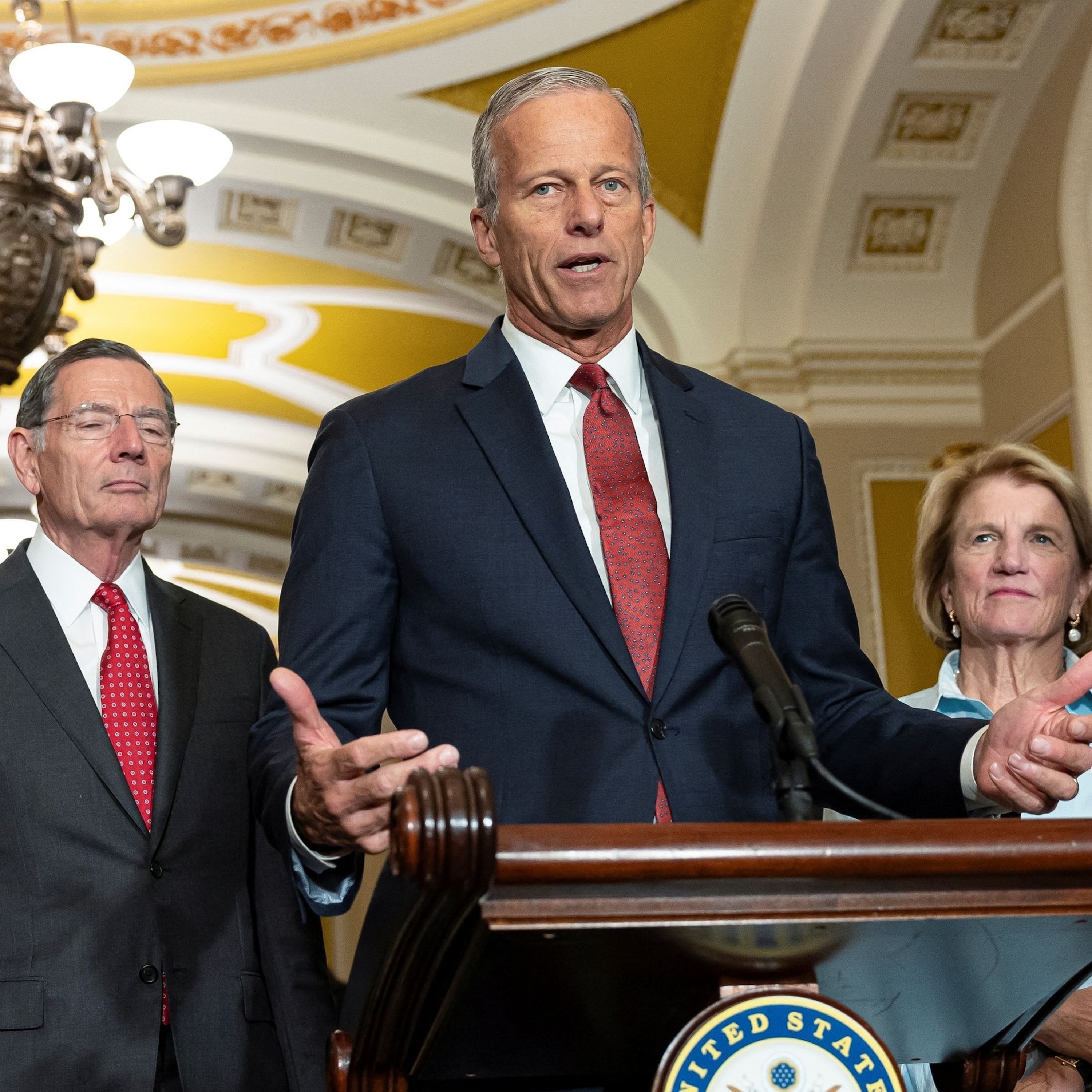
The Senate is voting on President Donald Trump’s signature legislation, which includes tax cuts for a broad swath of Americans. But who stands to benefit most?