
In short
Devastating flash flooding in Texas’s “Flash Flood Alley” (Kerr County/Central Texas) during the July 4th weekend, killing more than 90 people and sweeping away campers; the episode explains how the water rose so fast, why warnings and emergency messaging failed, and how drought, topography, and extreme rainfall amplified risk.
Guests
Brianna Sachs, extreme weather reporter for The Washington Post; previously reported on major disasters including the Palisades fires. Also featured via interview/field reporting: Thad Hartfield, searching for his son Aiden and others after the flood; reporter Aurelise Hernandez is referenced as on-the-ground.
Key claims
People ignored or didn’t receive National Weather Service alerts; officials lacked effective flood messaging/monitoring; emergency management is “broken”; climate-related drought plus heavy rain/tropical moisture increased ferocity.
Notable examples
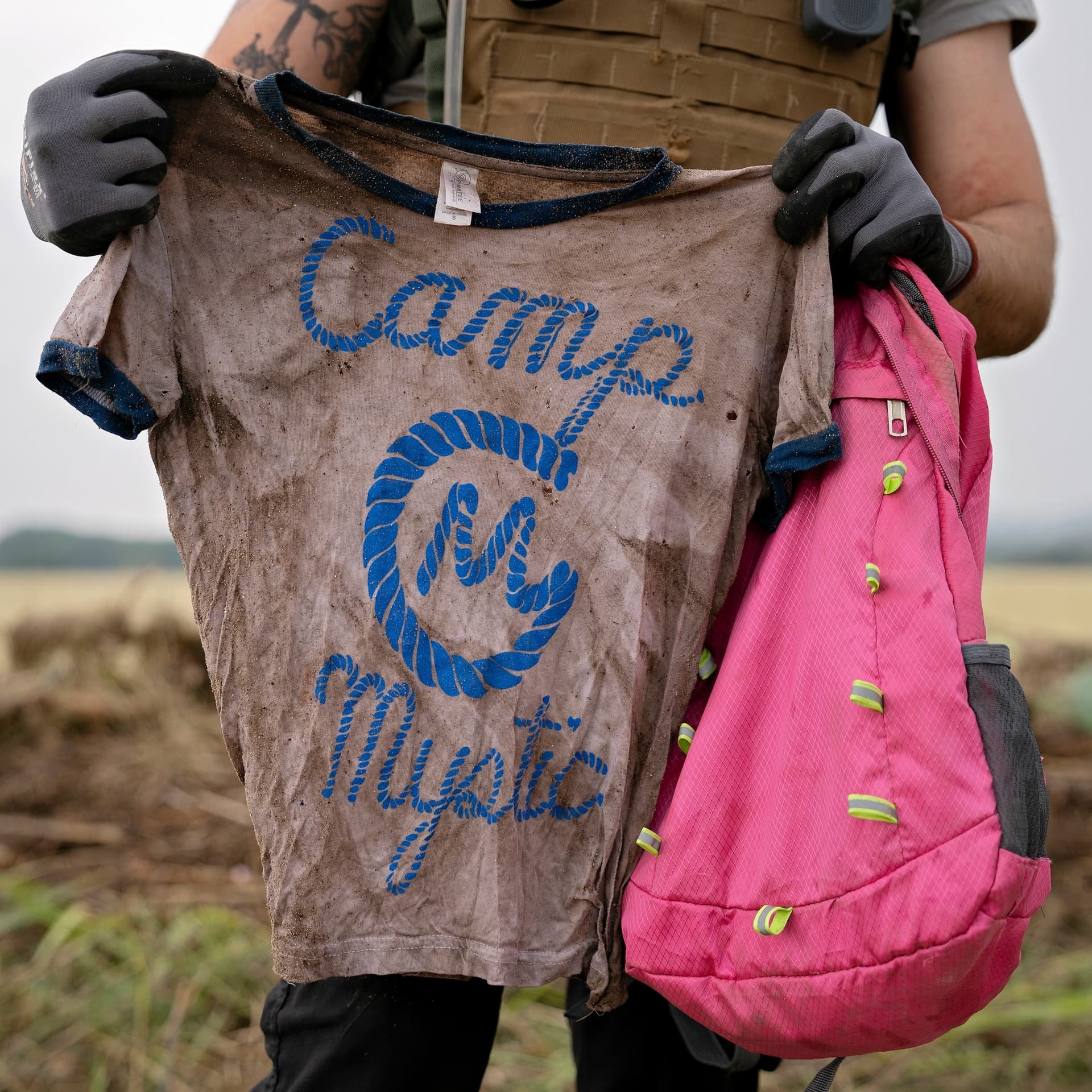
Kerrville’s 4th on the River festival and riverfront camps; Camp Mystic (Christian girls camp, ~700–750 kids; director Dick Eastland died rescuing campers); Thad’s call at 4 a.m. as water jumped from 4 inches to 4 feet and Aiden’s phone went dead.
Written by AI. May contain mistakes. Listen to the episode to check what was said.
Chapters
Tap a time to open that second in VOA Father's Desperate Search
0:29 to 2:34
Thad Hartfield shares the harrowing experience of searching for his son after catastrophic flooding.
“It was early Friday morning when the water started rising in Kerr County, Texas.”
Post Reports Introduction
2:34 to 3:17
Colby Ickowitz introduces the story of the Texas floods and the ongoing reporting.
“It may be the worst freshwater flood in the United States in nearly 50 years.”
Understanding the Flood's Impact
3:17 to 7:12
Brianna Sachs explains the circumstances leading to the catastrophic flooding in Texas.
“Today, as our release continues to report from the ground, we pick up this story of how these floods happened with extreme weather reporter Brianna Sachs.”
The Aftermath of the Flood
7:12 to 10:56
A detailed account of the devastation caused by the floods and ongoing recovery efforts.
“And a lot of people, you know, they don't really get them or connectivity is bad in these rural areas.”
Tragic Stories from Camp Mystic
10:56 to 14:00
The devastating effects of the flood on Camp Mystic and parents searching for their children.
“Rana, you mentioned the children that are missing and that many children have died in these floods.”
Heartbreaking Search for Loved Ones
14:00 to 14:51
Learn about the emotional toll on families searching for their missing loved ones after the floods.
“And she at least spent some time with him as he was searching for her, driving around.”
The Impact of Climate Change on Natural Disasters
16:08 to 17:45
Explore how climate change is intensifying natural disasters like floods.
“Piranha, you cover extreme weather as a beat.”
Challenges of Emergency Alert Systems
17:45 to 20:49
Understand the complexities and failures of emergency management systems in disasters.
“Yeah, I mean, how much is climate change playing a role in the devastation that these natural disasters are causing?”
Evaluating Texas's Response to Flooding
20:49 to 23:06
Learn about Texas's response and review plans following the flooding disaster.
“because it is really hard to imagine something like this happening to you.”
Future Reporting on Flood Impact and Community Changes
23:06 to 25:15
Hear about the importance of ongoing reporting on the long-term effects of the floods.
“I'm sure it will really now become the center of their efforts after this.”
Transcript
Automatic transcript. May contain errors.0:01John Deere is putting in work and putting up highlights. Oh man, look at those passes. Tillage, planting, harvesting. Three years in and these pre-owned machines are still at the top of their game. We're talking reliability, performance, and long-term potential. And get this, these veteran machines can pick up the latest precision tech with ease. You know it, and fans ready to add John Deere certified pre-owned equipment and more options to their lineup can shop at machinefinder.com. Booyah!
0:32It was early Friday morning when the water started rising in Kerr County, Texas. I got a call at 4 a.m. and somehow it woke me up and I answered it. And it was my son calling to let me know that there was four inches of water in the house. And I told him to get to the highway as fast as he could. This is Thad Hartfield. He was about 300 miles away from their vacation house by the Guadalupe River, where his 22-year-old son Aiden was calling him from. Aiden was staying there for the July 4th weekend with his girlfriend and some other of his friends. And as they proceeded out of the house, the water, and I'm talking about maybe a minute, the water went from four inches to four feet.
1:22and they were hanging on to some structures on the outside of the house when a massive cypress tree came and actually hit the part of the house where they were gathered. And Aiden's phone was in the hands of a girl named Joyce. And Joyce told me that Aiden and the other two girls had been swept off and got hit by something. Within seconds, the phone went dead. And so I immediately made my way here to start my search. Thad's been on the ground looking for his son and his son's friends for days. That's where he spoke to our colleague, reporter Aurelise Hernandez. How are you doing this, Thad? Like I said, I have to do something for my son.
2:11And my son called me. And that was a call to duty. I'm accepting the challenge.
2:22So far, local officials say more than 90 people were killed by the catastrophic flooding across central Texas over the weekend. Around a third were children. Many are still missing. It may be the worst freshwater flood in the United States in nearly 50 years. After searching all weekend, Thad has decided not to go out with the foot search teams anymore. He's afraid of what he'll see. Yeah, I just, I think I want to find my son, but we're now three days into, you know, a search. And if my son is no longer alive, I just have a reality of what is going on, and I don't want to have that as my memory.
3:13From the newsroom of The Washington Post, this is Post Reports. I'm Colby Ickowitz. It's Monday, July 7th. Today, as our release continues to report from the ground, we pick up this story of how these floods happened with extreme weather reporter Brianna Sachs. She explains why the flooding here was so bad and why the area seemed unprepared for such a catastrophic natural disaster.
3:45Brianna, hi. Thanks so much for joining me. Thanks for having me. So Brianna, can we start, can you explain kind of beat by beat what happened overnight Thursday into Friday morning in Texas when these floods began? Yeah, so Kerrville, which is in Kerr County, is a super popular destination for the 4th of July. They have this big 4th on the River festival, and it's right in this big park downtown right on the river. So for this long weekend, a lot of people were in town for the festival and also just to enjoy the river. It was also peak season for young campers. There's quite a few camps along the riverbanks there.
4:31So it was just like a very packed time for the area, and people were really not paying attention to the forecasts that were coming from the National Weather Service, as one's likely to do. It was lightly raining Thursday, nothing really out of the ordinary. And then around 1 a.m., I heard that the storm really started coming down and the rain was pounding in droves and it got really dark. Lightning was striking. And around like 1.15 in the morning, the National Weather Service sent its first pretty dire sounding alert saying that this was a life threatening situation. And a few more followed, but people were asleep.
5:19And then around four in the morning, the river just let loose and became a monster and started sweeping into these campgrounds and RV parks and was moving massive trailers and pickup trucks like they were pieces of cardboard. Some told me that people were knocking on doors of one another's cabins or blaring horns, flashing their lights as they were trying to evacuate. The water, which had been like a football field away from some cabins at a campground I talked to, was suddenly right up at their front door and became waist deep in a matter of minutes. And they had to scramble, leaving everything behind to get in the car and get out.
6:06And Bran, I imagine because this happened in the middle of the night, by the time people woke up, for a lot of them, was it just too late? That is what I've been hearing, yes, is that they either woke up with the water right at their doorstep or with barely any time to drive out or they had to scramble up on top of rooftops or take refuge in trees. it turned deadly so quickly. And I mean, you can't really imagine who can imagine something like this happening, right? Like it's so hard for the human brain to wrap their head around something like this happening. However, there has been precedent for it.
6:46There was a really terrible flood in central Texas 10 years ago nearby, and that was the bar until this one. So the historical precedent is there for something like this, but I just don't think that authorities and officials made that connection when they got this forecast. And there just wasn't a lot of serious messaging on their social media platforms or really anywhere except the National Weather Service to these phone alerts. And a lot of people, you know, they don't really get them or connectivity is bad in these rural areas. So it's just really hard to warn people in these situations. And tell me more about the area itself.
7:26It's known for flooding, right? Yeah, this area in Central Texas is actually known as Flash Flood Alley and is one of the most flash flood prone places in the United States. Central Texas has a really interesting topography where it's called hill country and it has undulating hills and it has steep canyons and it has this exposed limestone under its riverbeds as well as in the hills in the valleys there. And although it's really humid and it's hot and it's no stranger to rain, it's actually been going through a really punishing drought. So the soil is dry and thin. And when water hits that, it's more prone to flooding.
8:12And there's a lot of waterways in the area in central Texas, several big rivers. And normally they're really shallow and they move slowly. But when the area gets hit with a lot of rain at once, these once tranquil slow moving rivers just become fast-moving forces with what experts describe as concrete walls of water rushing downstream. And people love to live along the water, right? And a lot of the communities are nestled on the riverbanks. And so that's why it can become so dangerous. And it's also such a popular tourist destination at the same time. So we're talking it's 9.30-ish on Monday morning.
8:58what what's the scope of the damage that we know of right now i mean the death toll is just staggering honestly i covered disasters and i this one is is just hard to believe i think about you know 80 people the last time i i checked are dead they're still looking for bodies there's campers these young girls between seven nine ten years old some of them are still missing it's still a very active fluid situation in terms of looking for people who might still be alive we don't really know about the home loss yet to the area texas declared a national emergency so fema is going to be coming in and helping with the response um but it's it's still just very much an ongoing crisis.
9:56And the rain has stopped, right? So has the water started to recede? What's the rescue missions look like? Yeah, I have a rescue source there and the rain has stopped and the water is lessening a little bit. So they're able to go downstream from Kerrville. They're finding a lot more bodies, he said, downstream in a different town where they where they traveled. So I think that's where a lot of the search and rescue and recovery operations are located. And you have firefighters and volunteers, Cajun Navy is there. Visitors I talked to who call Kerrville like their second home or who had never been there before.
10:37And this was their first time they've gone home, but hotels are full. People are looking for food for like donated clothing. So, you know, those are popping up from volunteers. And it's just like another really horrific historic disaster for the country. Rana, you mentioned the children that are missing and that many children have died in these floods. Some of the most affected areas were these children's summer camps along the Guadalupe River, including a girls overnight camp called Camp Mystic. Tell me what happened there. Camp Mystic is one of about a dozen camps in the area, and it's a Christian girls camp.
11:20And these faith-based camps are really important to the region and very popular in the state. For people who moved out of Texas, they love to send their kids back to Texas for these experiences. And it's just kind of a ritual, especially during this time of the year. And Camp Mystic had about 700 to 750 kids, I believe, there when the floods hit. And it's in a more remote part of the county. And what we were hearing is this force of water came around 4 a.m. And when kids were going to bed, it was just like a normal thunderstorm. And in the camp's rules, it says no cell phones, no tablets, like no technology.
12:09They want them to be present and immersed in nature. And that goes for counselors, too. So they wouldn't have gotten these alerts. There's not a siren system in the county like there are for tornadoes. And then we heard campers who were able to were just scrambling to run to other camps. The water is rising quickly. The campers were struggling to run to other cabins to try and evacuate or to higher ground. And the water is just coming up, coming up, coming up. And one of the directors of the camp, Dick Eastland, who's very beloved and actually was part of this river authority, which is a group that tries to make the river safer.
12:59He died trying to rescue his campers. So it's just like your worst nightmare. And parents who sent their kids there, they don't have their cell phones, right? So they're trying to come and find them. A lot of parents were out of town having to fly in. So it's just like a really horrific situation. I mean, it's beyond a nightmare as a parent of a young daughter to hear this news and to have to wonder whether or not your child is okay and swept away in these horrible floods. And have we talked to any of the parents from Camp Mystic? We have several Washington Post reporters on the ground. And my colleague Arlise has just been doing harrowing, incredible work.
13:51And she actually met a father as he was looking for his little girl, Linny. And she was among youngest group of girls in one of these cabins. And she at least spent some time with him as he was searching for her, driving around. And he was going to churches and registered with authorities and tried to even visit the morgue to see if his child was there. But we have learned, sadly, we got confirmation that Lenny, who was eight years old, did die in the floods. And there are a lot more fathers and mothers and grandfathers still driving around looking for pieces of their children that they might recognize, like shampoo bottles with their names on them, their shoes, embroidered towels.
14:40So it's just still a really heartbreaking moment-by-moment situation.
14:51After the break, why early warning and emergency management systems failed to keep residents safe? We'll be right back.
15:16There were paint rollers, satin and matte finish, angle brushes, and natural bristles. There were too many choices. What if I never got my living room painted? What if I couldn't figure out what type of paint to use? What if I just used Thumbtack? I can hire a top-rated pro that knows everything about interior paint, easily compare prices, and read reviews. Thumbtack knows homes. Download the app today. John Deere is putting in work and putting up highlights. Oh man, look at those passes. Tillage, planting, harvesting. Three years in and these pre-owned machines are still at the top of their game.
15:52We're talking reliability, performance, and long-term potential. And get this, these veteran machines can pick up the latest precision tech with ease. You know it, and fans ready to add John Deere certified pre-owned equipment and more options to their lineup can shop at machinefinder.com. Booyah!
16:13Piranha, you cover extreme weather as a beat. And in fact, your family was directly impacted by the Palisades fires. And you did such incredible reporting from there. You know, we love having you on Post Reports. But it does feel like we have to have you come back more and more often talking about these devastating natural disasters. like floods and fires and hurricanes. I mean, are natural disasters getting worse? You know, it's really surreal you say that because today is actually the six-month anniversary of the L.A. fires. I was supposed to go to a memorial for those fires, but I am covering this.
16:54And it's a tough question. I think we have good years and bad years, and good quote-unquote means hundreds of people did not die in a single event. So, yes, they are getting worse and more frequent. And I think especially these blockbuster disasters that the national media does an incredible job of covering. And at the same time, there are a lot of smaller disasters where people lose everything. And flooding is one of the most frequent, actually, and dangerous disasters that this country sees on a regular basis. and we just don't hear about those people either. So it's a hard beat to cover and it feels like we move from one to the next without being able to process the tragedy that we just experienced before just another one that seems worse happens.
17:44And I don't see it slowing down, unfortunately. Yeah, I mean, how much is climate change playing a role in the devastation that these natural disasters are causing? It's playing a big role. I mean, central Texas is, you know, it's humid. It's known for rain. And at the same time, it's going through like a huge drought, which is climate related. And then you get the remnants of a tropical storm. And because the air is full of more moisture and the water is warmer, these things happen at a pace and a ferocity that we hear over and over and over again from experts, from first responders, from people who lived there their whole lives, like, I've never seen anything like this before.
18:33And that's just become the normal thing I hear every time I cover one of these things is I've never seen anything like this before. So I don't know how else you would explain it. I mean, given the increase in natural disasters that we seem to be seeing, you talked a little bit about the alerts and the warnings that went out on Thursday and Friday. But does our current alert system for these types of events, do they work well enough to be keeping people safe? It's a very complex question. And it's so hard in these situations because everyone wants to point the finger and look for something to blame.
19:11And the fact is emergency management in this country is a broken system. And it has been for a while. And it's just a very difficult thing to cover. And alerting is part of that, right? It's a whole landscape of different types of messaging and warning and connections that have to happen between federal, state, local resources, and officials. And we've lost so many valuable experts from the National Weather Service, from FEMA, because of the Trump administration and the Doge's cuts and things like that. So at a time when these disasters are getting worse, like we're kind of coming in with a lot less expertise than we used to have.
19:57And then at the same time, you just have people being human where we forget. We forget about risk. We forget about danger. We want to just enjoy a 4th of July barbecue and aren't really registering when we get a phone alert that says, oh, there might be a flash flood in your area. Like you, I don't think, would immediately imagine something like this. And then at the same time, the Kerr County officials, they also said that they weren't warned or that they didn't know this was coming despite the warnings and the predictions. And so there just seems to continue to be a big disconnect between the dire information and what we know can happen and living that.
20:40And I think that's just one of the biggest challenges in this space is how do you get people to understand and to visualize something like this happening to you because it is really hard to imagine something like this happening to you. Brianna, you mentioned the DOGE, the Department of Government Efficiency, the cuts to the National Weather Service. I've seen a lot of chatter about how that had an impact on not being able to alert people in time for this event. The warning system is already imperfect. How much of a role did those cuts to the National Weather Service play in this particular disaster?
21:18And what's the outlook for our country to be prepared for the next one? Yeah, it's a good question. There's been conflicting reporting that, you know, it didn't impact it, that it did, but I don't see how it couldn't have Because, again, when you lose just a large swath of experts whose sole job it is is to watch weather and then to alert people, that does have a cascading effect. And we do know that a top meteorologist in the area, he did leave his post in the National Weather Service. And that's a very key vacancy. He oversees warnings, which were issued in Kerr County. And he is a warning coordination meteorologist.
22:02So he's responsible for working with emergency managers and the public so that they know what to do when something like this happens. And so that role, as well as hundreds of others, are still empty after these people accepted the early retirement offers and they left. What specifically in the state of Texas have they done or are they saying about their alert system and their response to this tragedy? I believe there will be a review. There's always an after-action report in something like this. And again, they're still searching for bodies, so it's not really the time yet for them to turn and look at this.
22:40We did report that there had been discussions for a long time and efforts to try and get a flood monitoring and warning system in Kerr County, but they just couldn't get the budget for it. And then recently they did get the money to bring on a contractor to do a review of the county's system and then submit a proposal. So, you know, government just works slowly. I'm sure it will really now become the center of their efforts after this. And President Trump, he signed a disaster declaration for these floods. What else, if anything, have we heard from the Trump administration on this? Governor Abbott praised the Trump administration and DHS Secretary Kristi Noem for their quick response.
23:27The Trump administration did promise they would do everything to help the governor. FEMA is still, however, pretty hamstrung because they have these budget limitations in place where for things over at the$100 ,000, which is like basically everything, they have to get permission from a series of channels. And so they can't just go and do their usual job. There's just a lot more things that they have to go through to act quickly. And so I'm going to be watching to see how that unfolds in the next few days and weeks. Yeah, I was going to ask you, Brianna, like, as this story progresses, as we learn more and more about the response and the inability to get people to safety and time, what else are you going to be looking for and reporting on?
24:19I think it's still so important to go back to these places and in the weeks and months later and just see how the community is forever changed and what the emotional, psychological, structural changes are to a place that was so beloved. And so I think it's important to try and keep capturing that, the loss, right? The loss doesn't go away. And what can we do better in the future? So that's what I'll want to keep reporting on. Well, Brianna, thank you so much for coming on. And thank you for reporting on this terrible, terrible story. Thank you for having me. I'm sure I will be back.
25:15Brianna Sachs is an extreme weather reporter for The Post. That's it for Post Reports. Thanks for listening. If you're looking for the latest updates on the big news of the day, check out our morning news briefing, The 7. We bring you the seven stories you need to know about every weekday morning by 7 a.m. You can listen to it wherever you listen to podcasts. Today's show was produced by Arjun Singh with help from Tadeo Ruiz Sandoval. It was edited by Ariel Plotnik with help from Laura Benchoff. It was mixed by Sean Carter. Thanks to Paulina Ferozzi and Christine Armario. I'm Colby Ickowitz. We'll be back tomorrow with more stories from The Washington Post.
26:04Thumbtack presents Uncertainty Strikes. I was surrounded. The aisle and the options were closing in. There were paint rollers, satin and matte finish, angle brushes and natural bristles. There were too many choices. What if I never got my living room painted? What if I couldn't figure out what type of paint to use? What if I just used Thumbtack? I can hire a top-rated pro that knows everything about interior paint, easily compare prices and read reviews. Thumbtack knows homes. Download the app today. Step into the world of power, loyalty and luck. I'm going to make him an offer he can't refuse.
26:40With family, cannolis, and spins mean everything. Now, you want to get mixed up in the family business. Introducing The Godfather at Chumpacasino.com. Test your luck in the shadowy world of The Godfather slot. Someday, I will call upon you to do a service for me. Play The Godfather now at Chumpacasino.com. Welcome to the family. No purchase necessary. VGW group void. We're prohibited by law. 21 plus terms and conditions apply.
From the publisher
In just three hours, water levels in Central Texas rose over 30 feet, surprising local communities that say they had little time to prepare and no warning. What ensued was one of the most destructive floods the region has seen in decades.
Colby Itkowitz speaks with extreme weather reporter Brianna Sacks about what made the floods in Texas so catastrophic, why local communities were caught off guard, and how these floods have impacted the summer camp culture in Central Texas.
Today’s show was produced by Arjun Singh, with help from Tadeo Ruiz Sandoval. It was edited by Ariel Plotnick, with help from Laura Benshoff. It was mixed by Sean Carter.
Subscribe to The Washington Post here.