In short
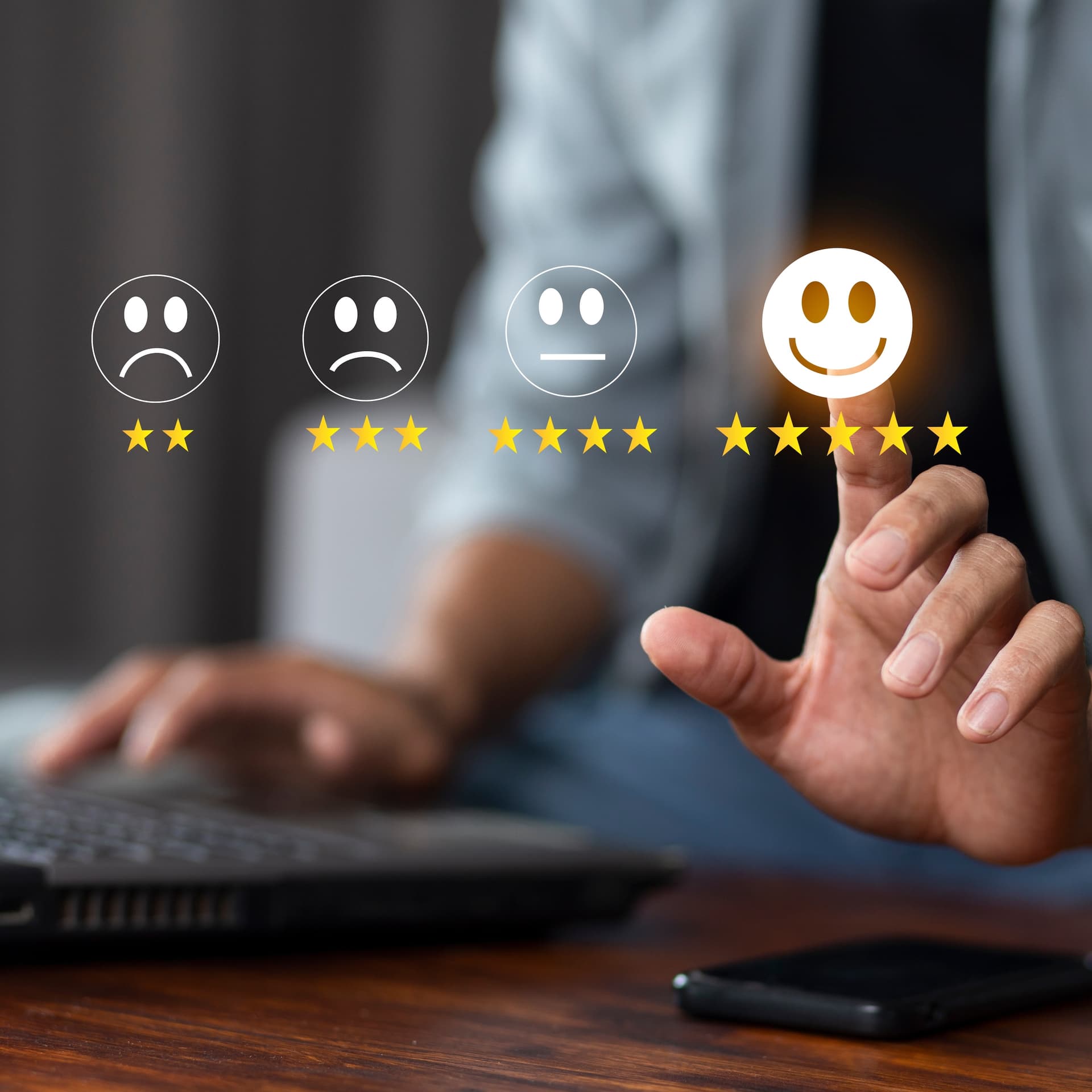
“Review culture” and why businesses and services increasingly ask customers for 5-star ratings, and how Google/ratings reshape consumer choices, trust, and even cultural consumption.
Guests
Ashley Fedders-Molloy, features and culture reporter for The Washington Post (New York City). Elahe Izadi, host from Post Reports (Washington Post newsroom).
Key claims
Ratings are used to boost visibility in Google search results (“new phone book” effect) and drive traffic for both small and large companies; incentives for positive reviews are illegal; reviews can feel dystopian and may delay fixing problems in real time; critics and public ratings can diverge, suggesting “two ratings” (critics vs general public).
Notable examples
Vermont hotel and United Airlines review emails; HelloFresh in-app review prompts; cannabis shop rating texts (Canada); hospital review request after cochlear implant surgery; orthopedic surgeon requesting Google reviews; Boulder liquor store choosing higher-rated shops; Amtrak using feedback to overhaul delay alerts and dining-car menus (e.g., gummy bears, steak/lobster mac and cheese); Goodreads flattening books into single-digit averages.
Written by AI. May contain mistakes. Listen to the episode to check what was said.
Chapters
Tap a time to open that second in VODiscussing the Ubiquity of Review Requests
1:53 to 2:25
Ashley shares her findings on the overwhelming number of review requests people receive.
“Today, we're talking about review culture.”
Stories from People Bombarded by Reviews
2:25 to 4:25
Various anecdotes highlight how people respond to constant review requests.
“So what kinds of stories did you hear about the various review requests people received?”
The Business Impact of Google Reviews
4:25 to 6:39
Exploring how businesses leverage Google reviews for success and visibility.
“I gave them five stars because I loved the doctor, and I came out all live.”
The Legality of Offering Incentives for Reviews
6:39 to 8:36
Discussion on the legality and ethical considerations of incentivizing reviews.
“And for her, it's all about these Google results and Google ratings.”
The Importance of Reviews for Big Companies
8:41 to 11:10
Big companies, like Amtrak, genuinely consider customer feedback for improvements.
“From breaking news to politics that impact your life to advice you can trust.”
The Democratic Aspect of Reviewing
11:10 to 12:35
Reflecting on whether customer reviews provide a democratic platform for expression.
“You know, obviously there are downsides to all of this.”
Cultural Impact of Ratings and Reviews
12:35 to 14:03
Exploring how ratings across different mediums influence cultural consumption.
“What is the restaurant or spot to eat that you've discovered that you're actually concerned that other people may discover?”
The Complexity of Ratings and Reviews
14:03 to 16:28
Explore how ratings can oversimplify experiences and influence perceptions.
“and I will look for the drama where the business is responding to a complaint within the review apparatus.”
Personal Reflections on Rating Systems
16:28 to 17:24
Reflect on how personal experiences shape trust in ratings and reviews.
“Yeah, because sometimes there's a gulf in that.”
Five-Star Conversations
17:24 to 17:52
A playful conclusion highlighting the irony of asking for ratings.
“Like it, to me, I don't think I realized how much that affected, you know, the restaurants I chose to go to or the orthopedist I chose to go to or the vendors I hired for my wedding.”
Transcript
Automatic transcript. May contain errors.0:02Hey, Ashley. Hey, Elahe. How are you? I'm good. You know, I wanted to tell you a story. So I recently went on a short vacation to Vermont, and the night I got back, in my email, I received an email from the hotel saying, We loved having you. Hope you did too. If so, please consider leaving a review on Google or TripAdvisor. Next email. United Airlines emailed me saying, your feedback means the world to us. How likely are you to recommend United to a friend, relative, or colleague? And I have to tell you, like in that moment, I was like, I don't know, because the plane touched down and went right back up.
0:43The pilot did a go around, but I got home safe. So, you know, I guess 10 stars, I'm home safe, like fine. But the one that really got me was I received, There's another one. There's another email that I received from the airport parking garage. Stop. Saying, tell us about your recent parking stay. And I'm like, park there, got the car after. I've never received quite a stack like that. But orthopedic surgeon and my cardiologist both recently asked me for Google reviews, which felt kind of surreal. Yeah. Ashley Fedders-Molloy is a features and culture reporter for The Post. And she says this experience of being bombarded to rate and review is not unique.
1:29She's been reporting on the rise in requests for feedback from every imaginable business and service provider. Once I started thinking about that, it was like the next question was, what do they mean? Like, why are they so important now? Why do we keep getting asked? It's like, it's obviously not for fun. It obviously matters to someone what our feedback is. From the newsroom of The Washington Post, this is Post Reports. I'm Elajeh Izadi. It's Thursday, September 25th. Today, we're talking about review culture. We'll rant a little about these constant requests for five stars, but Ashley explains how these ratings and reviews can transform business and how this is all reshaping our relationships to what we eat, what we buy, and how we move through the world.
2:24So, Ashley, in your quest to understand review culture, I know you spent a lot of time speaking with all different types of people. So what kinds of stories did you hear about the various review requests people received? Yeah, so I spoke to people who were just, you know, largely fed up and kind of incredulous at the scale and volume of how many requests they were getting. I talked to Ross Presser from New Jersey, and he was getting fed up every time he opened his HelloFresh app. Literally the second you finish entering your password and log in, it's like, review your last order. Because he'd just go in to edit his weekly order and instead just got bombarded with question after question.
3:12Was your delivery okay, but did you like the meal? Do you have anything to say about the meal? Can you post pictures of it on social media? Oh, God, that's a lot of requests. And he's just trying to order dinner. You know, like, that's a lot. Yeah. One woman in Canada named Anna Fitzpatrick, she was sort of mildly amused at having to rate all of her transactions with her local cannabis shop. I buy weed. I get a text after asking me to rate my interaction, and that's just so funny for me, because, like, when I started smoking weed, it was just some guy at a party. Like, it was just so sketchy. But there was another guy in Long Island who I thought this was like maybe the best story I heard about it.
3:50His name is Corey Lonis. He is a lighting technician in Long Island. And he told me about a time when he was still delirious coming out of cochlear implant surgery. And he got an email prompt asking him to review his stay at the hospital. A day after my surgery, I got a, please, please review your experience at the hospital where we just build a hole in your skull and put an implant in my brain. and hop up on painkillers, and I can't hear anything, and I'm hilarious. And they're like, hey, how'd you like your stay? Oh, my gosh. How many stars did you give it? I gave them five stars because I loved the doctor, and I came out all live.
4:30That's great. I mean, I'm not going to lie. I've been in the hospital, and I was hounded to give a review. I received a letter in the mail and a phone call by a human being really wanting to know. Like I said, I got a request to do a Google review of an orthopedic surgeon that had recently operated on my knee, actually. And I was like, hey, I'm writing a story about this. Can you tell me a little bit more about why you asked me to Google review? And my surgeon was wonderful about that. He was a very good sport and said, you know, it's largely about Google results. When you have a higher rating on your Google page, you will show up higher in search results on Google, right?
5:09And I did look, and their Google rating is very high. And they're one of the first orthopedic offices that do come up when you look for orthopedic surgeon in my area. Oh, my gosh. You know what this reminds me of, Ashley? A friend of mine, her uncle immigrated to the United States. And when he decided to, like, Americanize his name, he picked a name where it was, like, started first and last name started with an A. He was a dentist, so he would be first in the phone book. That's what this Google review is. Honestly, yes. It's the new phone book. Isn't it so funny? Yeah, it really is. And it does make you think about how Google reviews have just reshaped the entire service and transactional economy in a way, right?
5:51I'm trying to remember a time when I wasn't constantly being asked to review everything I did. How did we end up here? How did we land on this five-point scale for reviewing everything? The five-point scale I really cannot speak to, unfortunately. But I do think Google results play a huge role here. Just because, you know, it's like we're saying, it is similar to being the first page of the phone book. It is similar to being, you know, the top of the alphabet. And I guess when I think about it, it's like, how did I wind up at this orthopedist's office in the first place? Probably because it was the first one on the top of my Google results.
6:23So, yeah, I do think that's like the biggest thing is the Google results, you know, contribute to the success or contribute to. I mean, it contributes first to the amount of traffic that business gets, right? Like I spoke to a couple of folks in Colorado, a married couple, Chris and Sarah Jarek. And Sarah owns a liquor store in Boulder, Colorado. And for her, it's all about these Google results and Google ratings. Like she made the very good point that when you are, let's say, new in town to Boulder or just passing through and you want to grab a bottle of wine, like you might drive an extra five or 10 minutes to go to the shop that has four and a half stars on Google.
6:59and avoid the one that has 2.5. And obviously, you know, it's a small business and every purchase counts. Like those are slim margins that most businesses like that operate on. So every customer makes a difference. Yeah. I mean, I'm not going to lie. As much as I'm complaining about the reviews, I rely on them. But sometimes I wonder about the authenticity of these reviews. And I wonder, are people ever offered free stuff in exchange for a good review? How common is that? Did you come across that in your reporting? I both came across it and also learned it is illegal. Oh, it is illegal. Actually, you know what?
7:31Let me be clear here. Like, it is perfectly legal to offer incentives for reviewing a business. It is illegal to offer an incentive for a specifically positive review. Wow, that really just speaks to how powerful these reviews are and how thirsty businesses are for them, really. Absolutely.
7:52After the break, how reviews have reshaped not only businesses, but also how we all shop and live. We'll be right back.
8:18creating American jobs and strengthening communities through advancing science-backed, smoke-free nicotine alternatives to help millions of legal age, 21-plus adults move away from cigarettes. This is what being invested in America's future looks like today. Learn more at USPMI.com. When it comes to the big questions, who you ask matters. From breaking news to politics that impact your life to advice you can trust. Get answers you don't have to question with Ask the Post AI. Trained exclusively on post journalism with clear sourcing. And if we don't know the answer, we'll tell you. Ask the Post AI.
9:06Find it on WashingtonPost.com or in the app.
9:13Okay, so Ashley, it sounds like these reviews, they can have a big impact for a small business with a small margin, like the liquor store example. But especially with bigger companies, I don't know, sometimes leaving a rating can feel like you're screaming into the void. So when you were doing this reporting, did you talk with anyone from a bigger company who said that they actually considered these reviews? Yes, that was overwhelmingly the response that I got was, you know, as much as it can feel like you are reviewing directly into a void, on the other end, there are frequently, if not virtually always, humans on the other end looking at it.
9:53And one thing that surprised me was I talked to a staffer from the Amtrak market research team, someone named Phil Arnheim. And Amtrak was a really fascinating case because it just it feels like one of those national big corporations that people sometimes feel a little bit silly reviewing. Like, why would you need my help? Why would you need my feedback? But when I talked to him, he pointed out that that data helps them make all kinds of decisions and improvements to the customer service. Like Amtrak recently overhauled its alert system for when trains are delayed. Like it used to just be you'd get an email that said your train was delayed.
10:24And that was it. But now they will tell you like when you'll arrive on the new schedule, if and when they expect it to be resolved or changed back. And all that info arrives via email, text and push notification now because people did kind of give that feedback of like, hey, I'm not getting this info in time. And their surveys also like help them decide what foods to keep in stock or like the menus to keep in the dining cars. Like it's how they know how to make sure they have enough gummy bears and M &Ms, which are always very popular. And it's also how they decided to keep steak and also lobster mac and cheese available to first class riders.
10:55You can get steak on an Amtrak train? What am I doing? I'm not riding the right car. It's one particular train line and it's only the first class car. But it's a customer favorite. Apparently everybody loves it. I mean, I know we're complaining a lot about these reviews. But is there something almost like democratic in allowing just everyday folk to have an opportunity to chime in on how a massive business functions? Yes. And I think that's like, that's something that I left this story and this reporting experience thinking about is, you know, as annoying as all this can be, it's kind of nice to have the opportunity to say something in a public forum about the experience you had.
11:33You know, obviously there are downsides to all of this. Yes, it can feel dystopian. Yes, it can feel a little bit surreal to be asked to these things. And, you know, there's also a school of thought that, you know, all these reviews we do stop us maybe from asking for a problem to be resolved in the moment. Like we wait till after the interaction to be like, actually, that was bad. Also, like on this idea of like how democratic or not it is. I do wonder in some cases, like, let's say I'm looking for like a Chinese restaurant or a Vietnamese restaurant and I look at the ratings and then I look at the reviews and people are complaining about the customer service.
12:09But I'm like, these are like the best restaurants. They have the best food. And I wonder if that sort of like division in ratings and reviews is something that you've come across as well. Oh, absolutely. And, you know, I live in New York where we hold those hole in the wall restaurants where someone just sort of screams out a number at you and you have to run away with your bag. We hold those in very high esteem. Those are a beloved part of the landscape here. I'm skeptical if the rating is too high sometimes. I'm like, no, thank you. Yeah. There are flaws in the system. There are real flaws. Ashley.
12:41Yeah. What is the restaurant or spot to eat that you've discovered that you're actually concerned that other people may discover? Like it could get too popular and it would be harder and harder to get a table there. Yes, there is a place in my neighborhood that I love so much. And it's like I want to give it just enough business that it stays in business, but not so much. There's a line around the block. So I'm very careful with who I talk about this with. OK, I get that. What if we just bleep the name in the episode so we don't put the business on blast and you can still go to it?
13:21I'm seeing it has a 4.8, but it has 150 reviews, which is like, in my opinion, like the sweet spot. Wait, tell me, why is that the sweet spot? The 4.8 to 150 ratio? Just because it's like, if it has like 5 ,000, then it was like on Eater or it was on the infatuation, right? It's like everybody knows about it, right? But if it's like 150, it's like enough people like walked by it in the neighborhood and were like, oh, that looks good and went in. that I trust that rating. Because it's like, you know, if it has five ratings, that's not enough. If it has 5 ,000, that's maybe too many. This is news you can use.
13:54I like this. Yeah, I like this range. I like this ratio of 4.8 stars to 151 reviews. One thing I sometimes like to do is I will look at the reviews and I will look for the drama where the business is responding to a complaint within the review apparatus. And they're like, actually, and they tell the other side of the story. And there is so much drama sometimes in these review comments. It's incredible. Oh, my God. Yeah. And then also, I'm just thinking of, you know, the universe of things that are rated. I know movies get rated. Restaurants get rated. We've talked about that a bit here. Books also get rated on platforms like Goodreads.
14:33And that's a platform where readers can rate and review the books they read. Did you talk to anyone about how ratings and reviews can impact our cultural consumption? Anna, the woman who talked about her experience buying weed, she's also an author based in Toronto. And when her first book came out is like kind of when she started to think more critically and become more critical herself of rating systems that ask you to boil down a whole experience or distill down a whole experience into a single digit. Right. I'm paraphrasing, but she seemed to kind of hate the idea that the success of her book could be affected by people reading it and then just boiling down, like, their entire portfolio of feelings they felt reading it and all the sensations that they had following her along on this story could just be flattened down into a single digit and fed into an averaging machine.
15:24And then, you know, people would rely only on that for whether it was a good book. Yeah. But there's a whole other discussion to be had here. I have seen some other stories about this where certain people who rely a lot on reviews now have their own personal policy for like, well, I'm actually looking for something that's about a 4.2 to a 4.6, right? Because if there are too many five-star ratings, like maybe it feels like those are fake or bots or illegally obtained. Yeah, like how confident can we be that reviews are legit? Yes, exactly. That's always a good question. And there's always a grain of salt to be taken.
15:57It makes me wonder, who are these people? Like, do I even trust their taste? And my mind immediately goes to the difference between that experience and the experience of me reading a critic who I know, and I know their taste, and I trust them, and their review of something. Did this experience of digging into this make you think about the role of, like, cultural critics and different types of critics and the roles that they play? It really did. And I think that first came up when I was having that conversation with Anna, who had kind of expressed some feelings about the Goodreads rating and its effect on her book's performance.
16:28I think that was part of what she was saying was, you know, it made Anna, you know, think more about the difference between critical reviews, you know, people who are much more trained and experienced in how to talk about these things versus just a layman's like, here's my impression of this book. Here's what I thought. It also, I think, reporting this story, I heard someone express a similar sentiment, and I think this is what I've come away with, is it does feel like everything should have a Rotten Tomatoes style, two different ratings, where it's like, here's what it got from critics, and here's what it got from the general public.
16:58Yeah, because sometimes there's a gulf in that. Oh, wow, that is, you know, Google, are you listening? Yeah, so Airbnb would have Airbnb critics and also guest ratings. Yeah. So, Ashley, I'm curious, after you just spent time thinking more deeply about this and those questions that you laid out for yourself, how are you thinking about this phenomenon and what it says about how we move through the world? It really drove home to me how much we all are depending on Google search results and Google reviews. Like it, to me, I don't think I realized how much that affected, you know, the restaurants I chose to go to or the orthopedist I chose to go to or the vendors I hired for my wedding.
17:44All of these things kind of impacted my own consumer spending decisions more than I realized. Well, Ashley, I'm giving this conversation with you five stars. Thanks a lot. Would have again. Would have again. Absolutely. Would recommend to a friend. Thanks so much. Yes, thank you. This was so fun.
18:10Ashley Fetters Malloy is a feature reporter based in New York City. Speaking of reviews, and I understand the irony of saying this right now, we would in fact love your review. You can leave us a rating on Spotify or a rating and review on Apple Podcasts. We really would love to hear your feedback, and this does help other people discover the show, especially if it's five stars. And I wanted to tell you about another place where you can sound off and tell us what you think, specifically about movies. There's a social media platform called Letterboxd, and The Washington Post has an account there.
18:46So if there's a movie you can't stop thinking about, find us there and tell us what you think. You'll also find reviews from our critics, including ones from the archives. You can find this at letterboxd, that's spelled letter B-O-X-D dot com slash Washington Post. Or find a link in our show notes. That's it for Post Reports. Thanks for listening. Today's show was produced by Thomas Liu with help from Peter Bresnan and Rennie Sronofsky. It was mixed by Sean Carter and edited by Ted Muldoon with help from Maggie Peman. I'm Elahay Izadi. We'll be back tomorrow with more stories from The Washington Post.
19:27Thank you.
19:57trained exclusively on post journalism with clear sourcing. And if we don't know the answer, we'll tell you. Ask the Post AI. Find it on WashingtonPost.com or in the app.
From the publisher
The request for five stars — from airport parking lots, orthopedists or even your local liquor store — seems to be filling our inboxes more and more every single day. But do our reviews and ratings even matter?
Host Elahe Izadi chats with feature reporter Ashley Fetters Maloy about review culture, how our feedback can transform businesses big and small, and why our ratings are reshaping our relationship to companies and ourselves. So, if you’ve read this far, make sure to listen to our show then rate and review it wherever you get your podcasts.
Today’s show was produced by Thomas Lu with help from Peter Bresnan and Rennie Svirnovskiy. It was mixed by Sean Carter. And edited by Ted Muldoon with help from Maggie Penman.
Subscribe to The Washington Post here.
Check out The Washington Post’s Letterboxd here.