
In short
Post Reports Podcast Episode Summary
Episode Title
Why Going Outside is Good for You, Even When It's Freezing
Episode Description In this episode, hosts Martine Powers and Elahe Izadi delve into the science supporting the benefits of spending time outdoors, even in cold weather. The discussion includes insights from psychological experts and practical tips for integrating nature into daily life for mental health benefits.
---
Key Concepts and Discussions
- Benefits of Nature on Mental Health
- Psychological Insights:
- Jessica Magidson, a clinical psychologist, emphasizes the importance of outdoor therapy.
- Spending time in nature can significantly reduce stress levels and cortisol (the stress hormone).
- Positive impacts on mood and sleep are noted.
- Attention Restoration Theory:
- Nature can improve attention and memory through a mechanism called "soft fascination," which engages the mind without overwhelming it.
- Brief exposure (as little as 10 minutes) to nature can yield mental health benefits.
- Scandinavian Approaches to Embracing Winter
- Freiluftsleben: A concept promoting daily outdoor time regardless of weather, highlighting that even short outdoor visits can enhance well-being.
- Hygge: A practice of creating a cozy atmosphere at home after outdoor activities, enhancing the enjoyment of being indoors post-exploration.
- Nature Therapy Movement
- Growing interest among psychologists in incorporating nature into therapeutic practices, especially highlighted during the pandemic when outdoor therapy became safer.
- Heidi Schreiber-Pan's Center for Nature Informed Therapy focuses on training therapists to use nature in their practice.
- Challenges and Considerations
- Limited training and resources for therapists interested in outdoor practices.
- Privacy concerns and the need for informed consent when conducting therapy outside.
- Importance of preparation and forethought to ensure a comfortable experience for clients.
- Experiential Learning
- The hosts and guests share personal experiences with the positive emotional shifts that result from outdoor activities, emphasizing the joy and clarity gained from nature walks.
- Practical mindfulness exercises performed during walks demonstrate accessible ways to engage clients in therapeutic practices.
---
Key Takeaways
- Nature as Therapy: Engaging with natural environments can enhance mental health, reduce stress, and improve overall well-being.
- Flexibility in Therapy: Moving therapy outdoors represents a shift in traditional practices, offering a refreshing approach to client engagement.
- Cultural Insights: Scandinavian practices demonstrate successful integration of outdoor life into daily routines, serving as a model for others.
- Accessibility of Benefits: Nature's benefits can be accessed easily, even for those unaccustomed to outdoor activities.
---
Closing Thoughts The episode emphasizes the importance of going outside and embracing nature, even in less-than-ideal weather conditions. By incorporating outdoor experiences into everyday life, individuals can potentially unlock significant mental health benefits and cultivate a more profound appreciation for their environment.
Further Reading and Resources
- [Center for Nature Informed Therapy](https://www.natureinformedtherapy.org/)
- [Washington Post Newsletter - The Optimist](https://www.washingtonpost.com/newsletters/the-optimist/?utm_source=podcasts&utm_medium=referral&utm_campaign=post-reports)
Production Credits
- Produced by: Maggie Penman
- Edited by: Allison Klein, Ariel Plotnick
- Mixed by: Rennie Svirnovskiy
Subscribe to The Washington Post for more insightful content.
---
This summary encapsulates the insights and discussions from the episode, providing readers with a comprehensive overview of the mental health benefits of spending time outdoors.
Written by AI. May contain mistakes. Listen to the episode to check what was said.
Chapters
Tap a time to open that second in VOIntroducing Jessica Magidson
0:45 to 2:59
Jessica discusses her background and passion for outdoor therapy.
“And over the past year have become extremely passionate about how we can do this outside.”
Mental Health Benefits of Nature
2:59 to 5:28
Exploring how nature impacts mental health and stress reduction.
“On a walk in Rock Creek Park in Washington, D.C., I asked Jess to first just explain why being out in nature is so good for our mental health.”
Embracing Winter: Scandinavian Practices
5:28 to 7:18
Discussing Scandinavian concepts that encourage outdoor activity in winter.
“As I mentioned, it's been bitterly cold in D.C.”
Heidi Schreiber-Pan on Nature Therapy
7:18 to 11:01
Heidi shares her journey and insights into nature-informed therapy.
“Heidi started her center to train people in offering nature therapy, either at the best time or the worst time, depending on your perspective.”
Mindfulness in Nature: Mickey's Insights
11:01 to 14:09
Mickey discusses the benefits of mindfulness practices in outdoor settings.
“When Mickey Moskowitz was in college, she led backpacking trips for freshmen.”
The Beauty of Nature in Winter
14:09 to 14:40
Explore the rare beauty of winter landscapes and their soothing effects.
“I mean, I feel like this green is just like so gorgeous and so rare this time of year to see lush green.”
Incorporating Nature Therapy
14:40 to 16:36
Learn about the guidelines and considerations for therapists practicing outdoor therapy.
“If you're anything like me, you might be thinking, all of this sounds lovely, but how does this work logistically?”
Challenges in Implementing Outdoor Therapy
16:36 to 17:03
Understand the challenges therapists face in adopting outdoor therapy methods.
“Of course, it would compound the benefits of therapy.”
Meet the Experts
17:03 to 17:24
Get to know the therapists involved in outdoor therapy discussions.
“Mickey Moskowitz is a clinical psychologist in Maryland.”
Transcript
Automatic transcript. May contain errors.0:02On a recent Thursday morning, I started my day with a walk in the woods. So we're approaching a little bit of a steeper part, and then it'll level out. All right, so we're going to be huffing and puffing.
0:18It has been very cold here in D.C., so I've been having trouble getting myself outside, even though I know it's so good for me. But on this particular day, I was out here for work. So tell me, first of all, actually just, I'm going to have you introduce yourself just for the audio. Yeah. Yeah, hi. I'm Jessica Magidson. So I'm a clinical psychologist and a professor at the University of Maryland and have been doing work for a couple decades now looking at how we increase access to mental health care. And over the past year have become extremely passionate about how we can do this outside.
1:00When most of us think of therapy, we probably picture an office with a chair and a couch. Or maybe even just a screen. Virtual therapy sessions have become a lot more common in the past few years. Jess Magidson is part of a small but growing movement of psychologists who want to change that. They want to take therapy outside.
1:27There are a lot of benefits for clients to doing therapy outside. But Jess believes there are also huge benefits for therapists who have been experiencing really high levels of burnout in the last few years. As humans, we spend 93 % of our lives in worse. It obviously didn't used to be like that. We're not meant to be like that. And so I do really think that a lot of the shifts that we see at this time of year are people are more likely to be inside, less likely to get the sunlight they need. It does affect our mood. And what we need is this. Right.
2:09I'm Maggie Penman. I'm a reporter for The Optimist, the section here at The Post where we tell you about things that are going right in the world. Because, believe it or not, there are things going right in the world. It's Saturday, January 24th, and today we're going outside. So layer up, get a good coat on, and take this podcast with you. Okay, so here we have a point. We can either go through the wooded trails or we can keep on the pavement. We keep on the pavement and then loop back on the wooded trails if you wanted. Let's do the woods, right? I feel like we're talking about it. We gotta practice what we preach here.
2:59On a walk in Rock Creek Park in Washington, D.C., I asked Jess to first just explain why being out in nature is so good for our mental health. Yeah, so I think we have so much research that has demonstrated the effects of spending time in nature on our physical and our mental health. And from a mental health perspective, we've seen that it can really reduce our stress levels and reduce, let's say, cortisol, which is our stress hormone. And even at small doses, being able to really kind of regulate our body's response to stress. It helps us sleep better. And it can also have direct effects on improving our mood as well.
3:46So especially when you pair it with things like we're doing now, walking or exercise can kind of almost double the impact. There's also this theory called attention restoration. Researchers have found that taking a walk out in nature improves our ability to pay attention and remember things. Something about time and nature, again, this like being able to tune into the world around us and that it captures our attention while also not fully. So we're able to still have a conversation. We're able to kind of have more creative thoughts by having part of our attention captured by the natural beauty, if that makes sense.
4:28Researchers call this soft fascination. You can walk through the woods and look at the trees, notice the leaves, the sound of the wind, the birds. Nature engages us. But it doesn't necessarily take our full attention. And the result is a kind of mini mindfulness break for your brain. And one cool thing is it really doesn't take a lot to feel the benefits and you don't even have to like it. There's a bit of research showing that even 10 minutes of time outside or 10 minutes in nature can make an impact on our mental health. So I think being able to start small, have realistic expectations for ourselves.
5:08The other piece, too, is that we have shown that even if you don't like it, you still experience the cognitive benefits. That's hilarious. I mean, that makes sense, too. Right. It's still good for you even if you're like, ugh. Yeah, exactly.
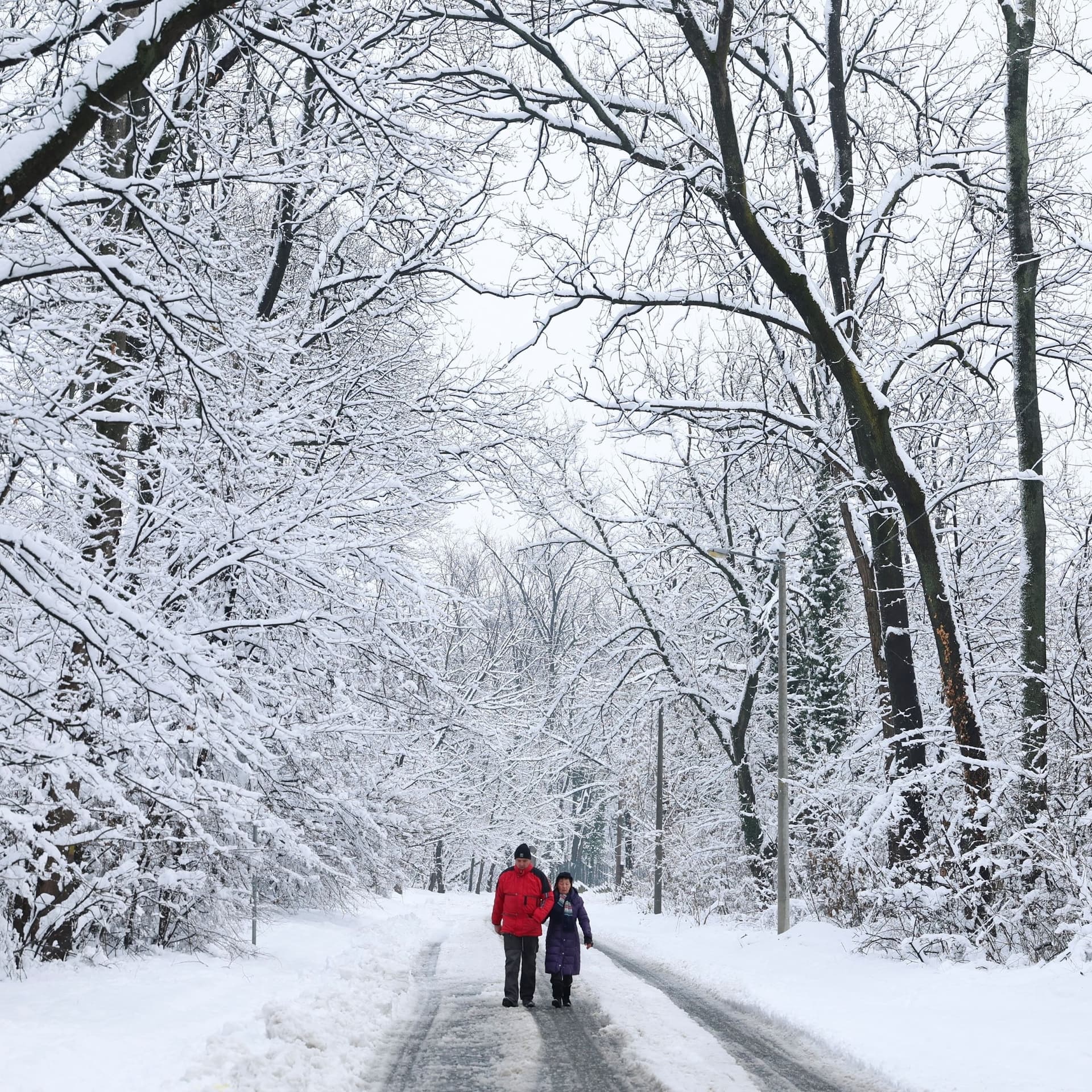
5:28I have totally experienced this myself. As I mentioned, it's been bitterly cold in D.C. this winter, which is pretty unusual here. And on a recent Sunday, I was inside with my toddler and my dog, and I made myself take all of us out for a walk. We were probably outside for like 20 minutes total, and I'm not going to sugarcoat it. It was painfully cold. And there were definitely tears. My daughter's for sure. Maybe also mine. But afterwards, I felt so much better. And I could tell she did too. The dog was definitely happier. The other thing I noticed is that being home felt so much better afterwards.
6:07Before going out, my messy living room had felt kind of stuffy. But after, it felt cozy.
6:20I talked about how we can embrace the winter better with Dr. Heidi Schreiber-Pan, the executive director and founder of the Center for Nature-Informed Therapy. So one thing to note is that the happiest people on this planet are the Scandinavians, right? The last five years, they scored the highest in happiness. They also have the longest winters. So they have this whole way that they embrace winter. And they do it through these two concepts. The one is called Freiluftsleben, which means go outside every single day for at least 10 minutes, no matter the weather. And the second part to that is hygge.
7:00And hygge is when you go back in after you've just been outside, you've earned yourself a nest. And you make a fire, you light a candle, or you make your favorite tea. It turns out I had accidentally done this winter day the Scandinavian way, and it felt great. Heidi started her center to train people in offering nature therapy, either at the best time or the worst time, depending on your perspective. So it was founded in 2020, March-ish. So right in the middle of an event that we are trying to forget about. Oh, boy. Wow. But also, like, it kind of couldn't have come at a better time. And I feel like it, I mean, for lots of reasons, because so many people had mental health struggles, but then also like the fact that it was less dangerous to be outside and there was this like opportunity for a lot of people to start trying this.
7:59While a lot of therapists took their practices online during the pandemic, a few started doing therapy outdoors or walk and talk therapy. It happened organically just because it was safer to be outside than inside. But Heidi had been thinking about this for years before that. Yeah, it was really an interesting kind of journey because I was a doctorate student in counseling psychology at Loyola University in Maryland. and projects was to interview mental health professionals about burnout and secondary stress and compassion fatigue. And so I was interviewing a whole bunch of people. And my question was, was there anything that they did for their own self-care or that they noticed was sort of a buffer for burnout?
8:48And people answered it in different ways. They would say, well, when I come home, I have to go for a walk. Some people said, I just go to do my garden. Some people said, I get on my bike. Some people said, I actually got into birding. But you know, it was like different answers, but it was all the common denominator was the natural world. People went to the beach or they sat by an open, you know, open water. And so I was so excited to find this theme that they were talking about. And then a follow up question was, do you bring this to your clients? And people said no. And I thought there was such an interesting disconnect between here was something people knew was really helping them with their own ability to bring well being to their own self, but that was not translating into bringing it to their clients.
9:45And I thought, wow, this is worth investigating. Heidi couldn't find much research or many trainings for bringing therapy out into the natural world. So that became her dissertation research. And after getting her PhD, she started working towards putting it into practice. Other clinicians are joining her, though it's still not a lot of therapists. I would say that it's still a small percentage of people. The reason being is that there is not a lot of training out there. And then I think too, is that like people think of nature. You know, it's the first thing we ask them at the training. When you think of nature, what comes to mind?
10:27And they talk about like these beautiful parks or a national park or the mountains or the ocean. And where is your therapy office? Not there.
10:40Heidi says that part of the training she's offering is just trying to open up therapists and the rest of us to this idea that even a city park can be nature. And there can be huge benefits to going outside, even if we don't go to the mountains. After the break, we'll hear from a therapist who is actually practicing outside with her clients. We'll be right back.
11:14When Mickey Moskowitz was in college, she led backpacking trips for freshmen. And she was always amazed by how in just a couple of short days, she watched these young people be totally transformed by being in nature with each other. There's just, it's a different level of connection when you're walking outside together than when you're sitting. Mickey works as a psychologist in a primary care setting, which means she's sometimes seeing patients just a couple of times or maybe only once. And she wants to help them as quickly as possible. So what I've seen that's so encouraging is that, you know, sometimes just that first session, we go for the walk and patients are like, wow, I didn't want, I didn't know this trail was here.
11:55This is so beautiful. This feels so great. This is totally something I can do on my own. And so that is so much more powerful than just if we're sitting in my office, which has no windows. Yeah. We're just talking about the idea of going outside, you know, as we sit in this like climate controlled room with no windows. Right.
12:17Another benefit Mickey mentioned to me is that being in nature encourages mindfulness. Mindfulness is a tool that lots of psychologists will suggest to people to improve their mental health. There's a ton of research about the benefits, but it's hard. Mindfulness means meditating, being fully present in the moment, just noticing what's around you, noticing thoughts as they pass through your mind without following them. It's easier said than done. And so many people are like, I can't do mindfulness meditation. I just get distracted. It's hard. I can never make time for it. And honestly, I feel that way, too.
12:55Yeah. I struggle to implement it. But when you're outside, and this I love doing with patients, is like we're doing these mindfulness practices outside. And it's so rich because we can say, okay, just look up at the treetops and notice what you see. Notice what you hear. Now you're tuning into the bird song. Look for something that's moving and you're watching like the branches sway and the breeze. Or, you know, look at something close up or look at something far away. And it's that you're doing a mindfulness practice and you're tuning into your senses and you're focusing your attention. But it's not hard work.
13:33It's just so accessible and feels so good and so helpful and healthy that people can really connect to it. I think often a lot more easily than they can with the kind of more classic mindfulness meditation. I did a version of this in the woods on my walk with Jess. We stopped near this patch of ivy and just tried to notice what was around us. And take a moment to just notice what is one thing that is beautiful to you in nature right now. I mean, I feel like this green is just like so gorgeous and so rare this time of year to see lush green. Exactly, exactly. You're really tuned into the colors.
14:20Yeah. Yeah. I think for me, when we pause and I notice, it's like that sound of the rustling of the leaves and the wind, which, you know, I think as we pause, it also gets a little bit colder. But it's that that sound is something that I find so soothing. And I think for each person, it's different, but allowing ourselves to pause and kind of see things in a bit of a different way. Yeah. If you're anything like me, you might be thinking, all of this sounds lovely, but how does this work logistically? The American Psychological Association just offered some new guidelines a couple of months ago to therapists who want to try and incorporate nature therapy or walk and talk into their practices.
14:57First, they definitely recommend getting liability insurance and learning basic first aid, being prepared with some basic supplies you might need, and getting trained in outdoor therapy. Therapists aren't supposed to practice that kind of therapy they're not trained in. And then there are the privacy concerns. If you're having a conversation in a park or on a trail, there is a chance you could be overheard. The biggest thing Mickey Moskowitz has found is that it takes some forethought and conversations between therapists and their clients or patients before they go outside. Therapists call this informed consent.
15:33We talk about, OK, so, you know, if we pass other people on the trail, what are we going to do? If we run into somebody that you know, what are we going to do? Just so that they've had a chance to anticipate that and think about it. You talk about it and they know what to expect. For Mickey, it's been totally worth the extra planning. Her clients like it and so does she. The days that I have a walking session, I am just so much more alive. I'm so energized. My mood is just totally different. And it, you know, I kind of got used to it this fall. And then I had just understandably less interest in it.
16:15Some people wanted to go through the winter, but a lot of people didn't. So I was kind of in withdrawal for a little bit in December because I didn't, I went for like a few weeks without having any. I'm like, oh my gosh, I miss it. In a lot of ways, as I was having these conversations, I felt like outdoor therapy kind of feels like a no-brainer. It's good for us to walk outside. Of course, it would compound the benefits of therapy. But it's still a relatively small trend. And the psychologists I spoke with think that's mostly because it's new. There's so many different ways to deliver care. And when we get locked into these really rigid ideas of doing things one way, because that's how we've done it and that's how we've studied it.
16:58And this is what's comfortable and this is what logistically works for our schedules. We lose sight of what's actually helpful for our clients.
17:15Dr. Mickey Moskowitz is a clinical psychologist in Maryland. You also heard from Dr. Jess Magotsen and Dr. Heidi Schreiber-Pant. I'm Maggie Penman. I'm a reporter for The Optimist. If you want to hear more stories like this on the weekend, please send me an email. You can reach the whole team at podcasts at washpost.com or just me at maggie.penman at washpost.com. And if you want more uplifting stories or more information about the mental health benefits of being out in nature, check out our show notes. I'll include some links there. This episode was produced by me with help from Reni Svernofsky, who also mixed the show.
17:54It was edited by Alison Klein and Ariel Plotnik. Thank you also to Sean Carter. Thank you for listening. Have a lovely rest of your weekend and go outside, even if it's just for a few minutes.
18:18I just kept thinking before all Hanson knows I kept praying I'm praying if we need overdrive I know what shall you do But how can I try and tell my故
From the publisher
Today on the show, we explore the science behind why going outside is so good for us, even when it’s freezing.
If you’re interested in learning more about nature therapy, check out the Center for Nature Informed Therapy.
A psychologist says this exercise can make you more hopeful in 14 days: the Noticing Nature Intervention is straightforward, but its results might surprise you.
If you want more Optimistic stories in your inbox, subscribe to our newsletter. And if you’d like to hear more hopeful stories on the weekend on “Post Reports,” please send us an email: podcasts@washpost.com.
Today’s show was produced by Maggie Penman with help from Rennie Svirnovskiy who also mixed the show. It was edited by Allison Klein and Ariel Plotnick. Thank you to Sean Carter.
Subscribe to The Washington Post here.