
In short
How President Donald Trump reshaped the John F. Kennedy Center for Performing Arts—especially by taking control of the board and inserting himself into the Kennedy Center Honors—while critics argue it politicizes arts and stretches presidential power.
Guest backgrounds
Travis Andrews, features reporter for The Washington Post.
Key claims
Trump became chair after firing the Biden-appointed board and installing loyalists; he also ousted Deborah Rutter and appointed Rick Grinnell as interim executive director. Trump says programming was “woke” and claims major influence over Honors selections (98% involvement). Performers and audiences have boycotted or shifted away, with reported subscription declines and empty seats at events.
Notable examples
Trump’s Kennedy Center Honors press conference and promise to host; canceled/struggling shows like Finn and Les Mis (quarter empty seats; booing/“F Trump”); drag queens applauded; proposed renaming (e.g., “Melania Trump Opera House,” “Donald Trump Center”).
Written by AI. May contain mistakes. Listen to the episode to check what was said.
Chapters
Tap a time to open that second in VOExploring the Kennedy Center's Significance
1:10 to 3:01
Understand the Kennedy Center's role in American culture and politics.
“Today, I talk with features reporter Travis Andrews about how Trump is reshaping the Kennedy Center in his image.”
Trump's Unexpected Takeover of the Kennedy Center
3:01 to 4:51
Discover the unusual circumstances surrounding Trump's appointment as chair.
“I thought he probably has other things to do.”
Impact of Trump's Leadership on the Kennedy Center
4:51 to 7:18
Examine the effects of Trump's influence on performances and attendance.
“He pointed out that there were some drag shows there, but there were maybe four or five out of those 2 ,000 performances.”
Changes in Board and Leadership under Trump
7:18 to 12:06
Learn about the changes in board composition and leadership at the center.
“It seems like people are generally boycotting or not even boycotting, but just going elsewhere.”
Trump's Involvement in the Kennedy Center Honors
13:24 to 14:00
Analyze Trump's unprecedented role in the Kennedy Center Honors event.
“Okay, so we talked about this a little bit at the top of the show.”
Trump's Unconventional Announcement
14:00 to 14:43
Learn about Trump's untraditional method of announcing the Kennedy Center honorees.
“I think that's an important thing to state.”
Trump's Role and Unusual Choices
14:44 to 17:04
Discuss the implications of Trump hosting the Kennedy Center Honors and his selection process.
“and again, that's unusual for either a president or the chairman of the board to be announcing them, to be holding a press conference announcing them, but that's what happened.”
Analyzing This Year's Honorees
17:05 to 19:44
Explore the backgrounds of this year's Kennedy Center honorees and their connection to Trump.
“But do these seem like Trumpy picks this year?”
Trump's Influence on Museums
19:45 to 21:04
Examine Trump's desire to control Smithsonian exhibitions and its implications for history.
“Yeah, you know, that is in a way probably an even bigger can of worms.”
Concerns Over Free Speech
21:05 to 21:46
Consider the dangers of leaders interfering with arts and history in a democratic society.
“this week, had the federal government take over the local police.”
Transcript
Automatic transcript. May contain errors.0:02Washington, D.C. is, of course, a political town. but it's also rich with arts and culture and history, regardless of who occupies the White House. A crown jewel of the city has been the John F. Kennedy Center for Performing Arts. The Kennedy Center is this grand monument to theater and live entertainment that sits along the Potomac River. Supporting the Kennedy Center has always been nonpartisan. President Donald Trump has changed that. Earlier this year, Trump was made the chair of the Kennedy Center board, And this week, Trump inserted himself into its marquee event, the Kennedy Center Honors.
0:37It's a massive event that awards musicians, actors, and artists. On Wednesday, Trump did something that a president has never done before. He held a press conference at the Kennedy Center and said he was going to host the show this year. I shouldn't make this political because they made the Academy Awards political and they went down their tubes. So they'll say Trump made it political. But I think if we make it our kind of political, we'll go up, OK? Let's see if I'm right about that. From the newsroom of The Washington Post, this is Post Reports. I'm Colby Ickowitz. It's Thursday, August 14th.
1:12Today, I talk with features reporter Travis Andrews about how Trump is reshaping the Kennedy Center in his image. And we'll discuss how Trump's broader goals of remaking arts and culture in America are stretching the bounds of his presidential power.
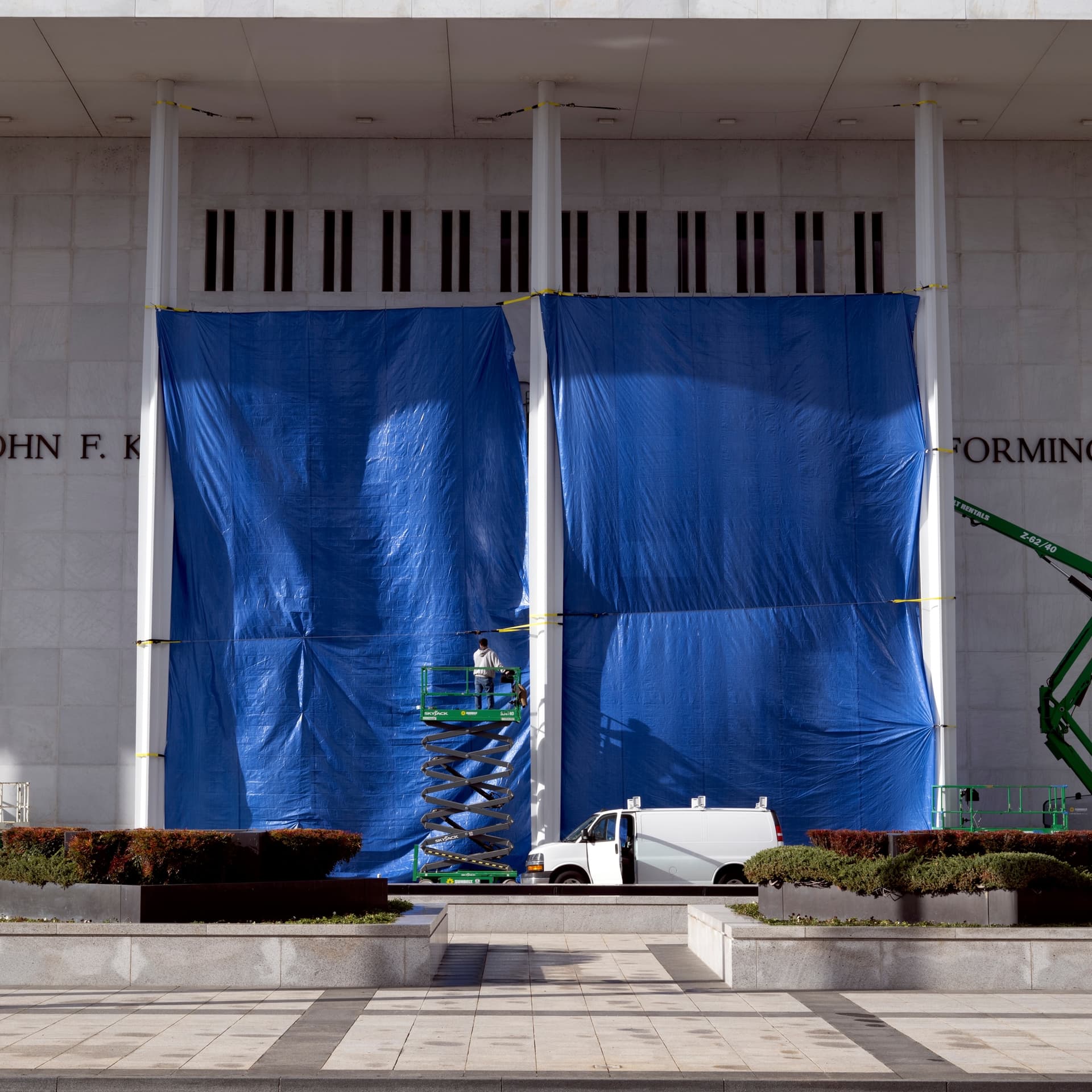
1:30Travis, hi. Thanks for coming on. Oh, thanks so much for having me. So let's talk about the Kennedy Center. It's long been one of my favorite places in Washington, D.C. But for those who don't live here, what is it? It's a performing arts center. It is kind of seen as America's performing arts center. It was originally conceived by President Eisenhower. And then following the assassination of John F. Kennedy, it was kind of turned into a living memorial for John F. Kennedy. And very famously, it's been a bipartisan art center that is both frequented and run by both Democrats and Republicans. And so let's say I'm a listener and I don't live in D.C.
2:07Why should I care about this place? So that's a very good question. A lot of people in America probably didn't care about this place until recently. One of the things I think that's most important about it is that the idea of it was it was open to all Americans. Anyone can go there. You can visit for free. It's a performing arts center where you can go and you can see theater and you can see orchestra. The National Symphony Orchestra is housed there. You can see art of all stripes, comedy, whatever. There's artwork. There's a whole exhibit for JFK. But also it just kind of hosted great shows and became the center of kind of the arts in Washington.
2:46So, Travis, I have to admit, I was stunned when Trump announced that he wanted to take over the Kennedy Center back in February. And then he actually went through with it and he basically fired its existing board. He installed new members and then they voted for him to become chair. I mean, he's the president of the United States. I thought he probably has other things to do. I mean, why is he getting so involved with the Kennedy Center? It's a great question. I will say I was equally shocked, and particularly because during his first term, President Trump showed no interest in the Kennedy Center whatsoever.
3:17Every year there is kind of the crown event, which is the Kennedy Center Honors, and that is an annual event since 1978 in which the country essentially honors five artists or groups for their lifelong contribution to the arts. And what's special about the honors is all these artists go, but they don't perform. They sit in a box with the president and the first lady and usually the second family as well. And they are honored by their peers. It's a wonderful, beautiful black tie event every year. And president always goes until President Trump's first term. And he decided not to go after Norman Lear, one of the honorees that year, was going to boycott a portion of the weekend that took place at the White House.
3:59And Trump said, I don't want to make this political. I don't want to get in anyone's way. At the time, that's at least what he said, and decided to forgo the honors for the next four years. So when he announced he was taking over the center, I was as confused as anybody. He seemed, so far as we know, to have never gone to the center, but we didn't have any records of him attending performances. He didn't talk about it much, and then suddenly it became a focal point for him, and that was extremely odd. Do we have any sense of why? So it's hard to say. A lot of speculation, including from people who work at the Kennedy Center, is that Norman Lear boycott.
4:37Like so many things I think we see with this president, he, maybe the theory goes, felt slighted by the center. And now that he was in power, decided, you know what, I'm going to take over the center. His reasons, according to him, are that the programming was too, quote, woke, which I can just say was not true. It had over 2 ,000 performances a year. They really ran the gamut. He pointed out that there were some drag shows there, but there were maybe four or five out of those 2 ,000 performances. None of his reasons really add up. What's been interesting in the aftermath of Trump taking over is the response to it.
5:18And there's been performers who have canceled appearances at the Kennedy Center because they don't want to be seen supporting Trump. So, like, what has been the impact to the Kennedy Center of Trump now running it? Yeah, it's been a really interesting thing to watch play out because you're right. In the very beginning, I did a piece where I spoke to all these artists, some who were boycotting, some who were canceling upcoming performances like Issa Rae and Hamilton. And some who decided, no, to cancel would be to play into his hands. I'm going to stay here. I'm going to do my art. Art is the most important thing.
5:52And then the very beginning of all this, there was this play called Finn. And Finn was about a shark who finds out that maybe the shark's actually really a fish inside. And clearly, you know. It's like a gay allegory. Yeah, it's a gay allegory. Yeah. I took my daughter. It was a very adorable show. Oh, you saw it? I saw it, yeah. Well, I didn't get the chance to see it because it was canceled. And to be clear and to be fair, the new leadership in Trump did not cancel the play, but they weren't able to sell enough tickets throughout the country. The Kennedy Center was kind of sponsoring this that they had to cancel it.
6:24And I think it's not a hard line to draw that maybe one of the reasons they're having trouble selling tickets was all this rhetoric from the White House and from the president. So we had all this going on and patrons wondering, do I support this place? If I boycott it, am I boycotting the Trump takeover or am I just hurting the workers there and the artists who are going there? It was a very complicated, confusing, I think, equation for a lot of people. The calculus seemed to constantly be changing. But I think what we've seen so far, and I should say, the new leadership at the center and this administration has not been very open about their books, about sharing any numbers.
7:03Past leadership was a bit more. So it's really hard to say. But for reporting, we've found that subscriptions are down a good deal. People aren't going as much. Some of these shows that are being canceled, they're losing a lot of revenue. So it's hard to say with any certainty, but it seems like fewer people are going. It seems like people are generally boycotting or not even boycotting, but just going elsewhere. You know, in Washington, D.C., we have so many theaters. We have so many choices when it comes to the arts. You don't have to go to the Kennedy Center. Right. I mean, I had a friend say exactly that to me.
7:41Like, I can still support the arts. I can still support theater. I just don't have to do it at the Kennedy Center. Exactly. And, you know, the new leadership and the center puts on this kind of they put out this image that they're having record shows and record things happening, record crowds and all this. And one of them that I was actually at was the opening night of Les Mis that the president and the first lady and the vice president and the second lady attended. And a quarter of the seats were empty. Wow. And it was kind of wild to see what the center was saying, including on the website beforehand saying sold out.
8:22Reportedly, the center bought its own tickets to sell out the theater. Whoa. But when I was there, the seats weren't filled. He got a partial standing ovation, but there were also a lot of people booing, a lot of people saying F Trump. Like loud enough that you think he could hear it? Oh, yeah. It kind of turned into – that actually happened after the intermission. So when we first got there, there was kind of cheering and boos that were like fighting, and then it turned into a USA chant, and half the people were saying it was very odd. That's so odd. It was so weird. And before Les Mis, of all plays.
8:57Yes, the irony there is not lost on those who know that show. Yeah, I mean, Les Mis is a show about political revolution. It's about wealth and equality. It's about the poor rising up against the wealthy overlords. And it's one of his favorite shows, along with a lot of those kind of 1980 musicals like Cats and Phantom of the Opera. But the irony is thick. Was that the same night that a bunch of drag queens came to the show and got like a round of applause? They did. I actually met them beforehand and walked in with them. Oh, really? One of the things I really noticed when they walked in, yeah, they got the applause from the crowd when they walked into the theater and all.
9:37But what really struck me is when they walked into the building, all the employees I could see just lighting up. They were so excited, which just kind of, I think, underpins this feeling a lot of employees there have where they work in there because it was a dream job if you were in the arts. And now they don't know what to do or what to feel or how to fight back or if there's anything to fight back against. Because, you know, forgive me if I'm rambling, but one thing we talked about earlier is all those shows that were like artists pulling out and all. The Center itself hasn't actually canceled many, if any, shows.
10:14But the rhetoric, the uncertainty has kind of led people to do that themselves, which I think is understandable. But it's led to this just, I would say, just chaos more than anything internally. And so other than, you know, effectively appointing himself chairman of the board at the Kennedy Center, what has he actually materially changed? Yes. So that folks understand how he was able to make himself chair of the board. The Kennedy Center has a board of trustees. The board is chosen by the current president, and they have six-year terms. So generally what's happened over the years is that the board's been half Republican, half Democrat, more or less.
10:52And that board chooses its chairman. And so what Trump did is he came in and he fired everyone appointed by President Joe Biden. And then he appointed loyalists into the board. So now he had a board of all Trump supporters for the most part, everyone that he had appointed to the board in his first term and now in his second term. And those folks voted to make him chairman of the board. And that is something that we'd never seen before. Nothing like that had ever really happened. The president normally doesn't have time to run an art center or interest in running the art center. At the same meeting, they voted to oust President Deborah Rutter, who had been with the center for about 10 years and had announced her retirement.
11:33At that point, Trump appointed his loyalist former ambassador to Germany, Rick Grinnell, as the interim executive director of the center, which was not a position that existed. Over time, that's become president. And it also appears that maybe it's not interim anymore, but it's unclear because a lot's unclear. And not even because we don't know, just because I think kind of entropy maybe took away the word interim and now he's president. Right. Without a little fanfare, right? Right. So that is sort of how everything got kicked off. And so far, there haven't been that many material changes, but some seem to be coming kind of outside of Trump.
12:18Recently, House Republicans voted on an amendment to a spending bill to rename the Opera House the Melania Trump Opera House. And another House Republican introduced a bill to rename the entire center the Donald Trump Center for the Performing Arts, which Trump kind of nodded at in a recent True Social post in which he called it the Trump slash Kennedy honors and then put something like, whoops, I mean, Kennedy honors. I mean, there's like, for people that haven't been there, there's a massive bust of JFK. Like, this is a monument to JFK. And so effectively what you're saying is that Republicans in Congress are like, well, let's just erase that and make this a monument to Trump.
13:01That certainly seems to be the case. And nowadays, I don't know the last time you were there, but now when you walk in, well before you reach that bust, there's giant portraits of Trump, Melania, J.D. Vance.
13:17After the break, Travis and I are going to discuss how Trump has interfered in the Kennedy Center's biggest event and why it matters. We'll be right back.
13:39Okay, so we talked about this a little bit at the top of the show. But this week, we saw Trump insert himself into the Kennedy Center Honors. You gave us a brief overview, but kind of give me the chronology of what happened. I think it's important to note that normally the honorees are chosen by a board of usually past honorees, maybe some board members, prominent people in the arts, things like that. The chairman of the board was never even that involved with choosing the honors. I think that's an important thing to state. This week, the honorees were announced, and they were announced in an unusual way.
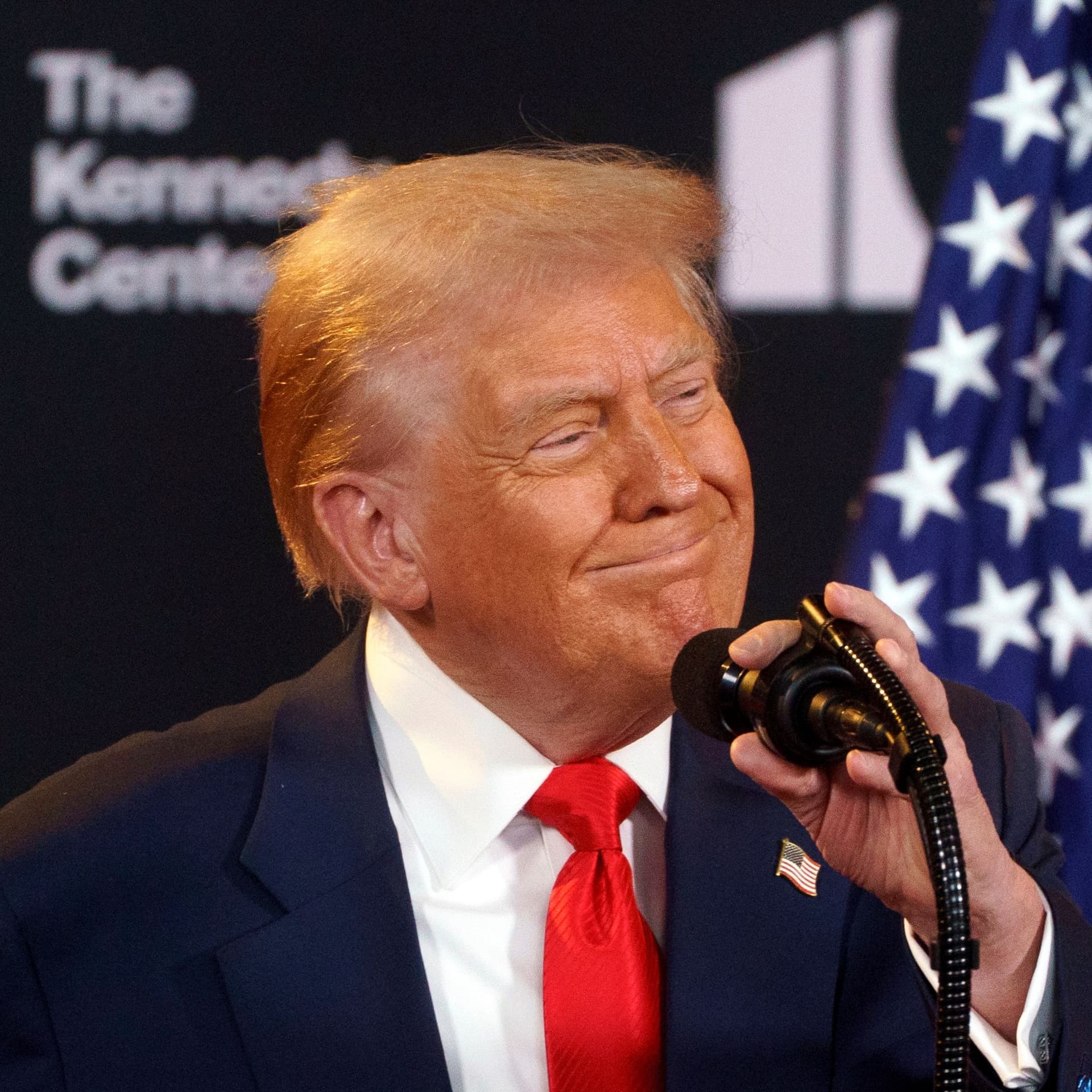
14:10normally the way they're announced is the Kennedy Center, like a lot of institutions, drafts a press release, lets us know, maybe lets CBS know, lets some places know, and we report this fact out. And that's generally how it's been announced. This year, as is his want, Trump decided to shine the spotlight on himself a little bit. And he held a press conference where he was announcing the honorees. He said that he was 98 percent involved with choosing the honorees and that all the names went through him. I'm delighted to be here as we officially announce the incredibly talented artists who will be celebrated later this year at the 2025 Kennedy Center Honors.
14:55It's going to be a big evening. and again, that's unusual for either a president or the chairman of the board to be announcing them, to be holding a press conference announcing them, but that's what happened. And at the conference, he announced that he's going to host the show, which is bizarre. He's going to host the show. He's going to host the Kennedy Center Honors. And normally in the past, the host would be someone who was a previous honoree. It was Queen Latifah last year. I think it's important to note that I believe Trump thinks of himself as a performing artist because of his time on The Apprentice and on television, which I guess in fairness that it's true.
15:35I guess he was a performing artist. But he even joked, you know, how why would the president have time to do this? I've been asked to host. I said, I'm the president of the United States. Are you fools asking me to do that? Sir, you'll get much higher ratings. I said, I don't care. I'm president of the United States. I won't do it. There was this interesting split screen because he's there at the Kennedy Center announcing this. But then he also gets questions about, like, Russia and Ukraine. Well, even before the question started, he announced the honorees by pulling velvet cloths off of portraits.
16:11It was very dramatic. But then he spoke a little bit about each honoree. And then he just started talking about crime in D.C. and how he planned to fix it and how our grass is bad. We're going to redo the grass with the finest grasses. I know a lot about grass. He knows all about grass because he golfs a lot and knows golf courses. Like the grass everywhere in D.C. is bad or specifically at the Kennedy Center? I think a general in D.C. The general grass. He had moved on from the Kennedy Center to all of D.C. I see. And then moved back to the Kennedy Center. But that really struck me when he was just kind of talking about how grass.
16:50I mean, I had an infestation of crabgrass in my yard, so maybe he's not wrong. There you go. I mean, there might be something to this grass thing. But I mean, so you said that he had a 98 % say over who got picked. I'm really curious about the other 2%. But do these seem like Trumpy picks this year? I would say like a little yes and no. If you were to hand me a sheet of paper with every year's class of five honorees and you were saying, which one did Trump pick? I probably couldn't guess. I probably couldn't tell you. Really? Yeah. For context, last year's honorees were Francis Ford Coppola, Bonnie Raitt, The Grateful Dead, The Apollo, and Arturo Sandoval.
17:34And this year, the honorees are George Strait, the country legend, Kiss, the rock band, Glory Gainer, the singer, Celeste Stallone, and Broadway star Michael Crawford. Of that list, Michael Crawford might be the one who feels most Trumpian, not because Michael Crawford has shown any interest in Trump, but because Trump adores Phantom of the Opera. Right, and he was the original Phantom. him. You know, Kiss, Gene Simmons has spoken out against Trump. Paul Stanley, another member of Kiss, seems to like Trump. So it's really hard to tell. Sylvester Stallone, he is— He's a friend, right? He's a friend and a supporter of Trump.
18:14I saw someone, and I don't mean to steal someone's smart point, but I saw someone make the point that all of those people you named are kind of from the 70s and 80s, which was Trump's heyday in New York. Like they're all like maybe nostalgic picks for him. I could see I could definitely see that happening. I do know like George Strait has been offered it before. Tom Cruise was offered it this year and declined due to scheduling. Right. Was it really due to scheduling? Right. Who knows? What really struck me is when he took over the center, there was this joke, you know, overworked Twitter jokes or X jokes or whatever it's called now.
18:52Go, you see the same joke a thousand times and everyone said, oh, we'll see Kid Rock and Ted Nugent getting it. Right. And, you know, the picks were not that. They were basically a pretty standard. Yeah, fairly mainstream. And even the decade that they came from could be nostalgia. It could just be that's about the age folks normally are when they receive this honor. Right, right. You know, it was shocking a few years ago when George Clooney received it because he just seemed far too young. Like, this is the general age range. Yeah, right. I guess that's a good point. So hard to jump to, like, too many conclusions about the time frame.
19:28I think that's one of the most interesting and frustrating parts about reporting the Kennedy Center is how not open and not transparent, despite all the kind of claims of transparency, there are – we really have no idea how things are working in there. Right. Because they don't like to share it or show anything. So in addition to what he's done at the Kennedy Center, and that seems to be where most of his attention has lied, The Post has also had some reporting this week that he wants a say over what is displayed in the Smithsonian museums that are here in D.C. What's that about? Yeah, you know, that is in a way probably an even bigger can of worms.
20:09I know recently there was an exhibit of impeachments, presidential impeachments, and his name was not on it. My colleague Janae Kingsbury has done excellent reporting on it, but I do know that ahead of America's 250th birthday celebration next year, Trump has ordered a review of the Smithsonian Museums and exhibitions. That is, I think, should be troubling to anyone. These are museums. They are not, much like the Kennedy Center is or was, who knows anymore, a bipartisan, you know, home for the arts. These are museums. They present history. Right, right. I mean, Trump's critics, they've warned, right, that leaders who interfere with free speech in the arts or in history, like these are behaviors of dictators that are seeking to control like every aspect of people's lives.
21:04And I've been thinking like this obviously comes as Trump deployed the National Guard on the streets of D.C. this week, had the federal government take over the local police. It all feels related. Yeah, I keep coming back to a quote. I did a piece a few weeks ago when the bills to rename parts of the center and the center itself were introduced. And I spoke to Georgetown Law professor David Super. And he, you know, he talked to me about how unusual it is to name anything after a living leader. And he said, I'm paraphrasing, but basically, it's not unusual in Russia or North Korea, but it's unusual here.
21:46and take that as you will, but that has resonated with me.
21:53Travis, thank you so much for coming on. Well, thank you so much for having me. Travis Andrews is a features reporter for The Post. That's it for Post Reports. Thanks for listening. As you know, The Washington Post has been reporting on all the ways the president has affected Washington, D.C. Trump's takeover of the D.C. police and the deployment of the National Guard in the city, it hits close to home. Our reporters are all over this story, and you can catch up on all of it with a seven-day pass to the Post for just$7. Find out more at WashingtonPost.com slash WeekPass. Today's show was produced by Thomas Liu.
22:31It was mixed by Sean Carter and edited by Reena Flores with help from Ariel Plotnick. I'm Kolbie Echowitz. We'll be back tomorrow with more stories from The Washington Post.
From the publisher
The John F. Kennedy Center for the Performing Arts has long been an important cultural landmark in D.C., bringing a variety of arts programming to the region while also serving as “the Nation’s Cultural Center.” Since it opened in 1971, the Kennedy Center has also been largely apolitical. It receives some federal dollars, but sitting presidents have allowed the Kennedy Center’s board of directors to operate and curate programming without any influence from the executive branch.
That changed earlier this year, when President Donald Trump made himself the chair of the Kennedy Center board. And just this week, he inserted himself into the center’s annual marquee event by announcing this year’s recipients of a lifetime achievement award, the Kenney Center Honors.
Host Colby Itkowitz speaks with style reporter Travis Andrews about Trump’s move to shake up the Kennedy Center, as well as his broader goals of reshaping arts and culture institutions in the United States.
Today’s show was produced by Thomas Lu. It was edited by Reena Flores and mixed by Sean Carter.
Subscribe to The Washington Post here.