
In short
Podcast Summary: Post Reports - Why MAGA Faithful Are Growing Frustrated with Trump
Episode Overview
- Hosts: Colby Itkowitz, Dan Merica, Natalie Allison
- Release Date: December 19, 2025
- Focus: The growing discontent among Trump's base and the challenges he faces in reconnecting with voters.
Key Themes and Discussions
- Trump's Recent Controversies
- Rob Reiner's Death: Trump posted about the death of Hollywood director Rob Reiner, attributing it to "Trump derangement syndrome," which drew significant backlash from both Democrats and members of his own party.
- Response from GOP: Many within the Republican Party criticized Trump's comments as inappropriate, reflecting a rising frustration.
- Divisions Within the MAGA Base
- Shift in Support: Longtime MAGA supporters are beginning to express dissatisfaction with Trump's performance, particularly regarding economic issues.
- Voter Sentiment: There is a notable disconnect between Trump's claims of success and the experiences of voters who feel let down, especially on economic issues.
- Insights from MAGA Leaders
- Internal Criticism: Prominent MAGA figures, including Representative Marjorie Taylor Greene, have started to publicly criticize Trump for not fulfilling promises related to the economy and immigration.
- Pollster's Role: Mark Mitchell, a conservative pollster, warned Trump about his waning support during a meeting, emphasizing the need to reconnect with the base.
- Susie Wiles' Profile and Its Implications
- Chief of Staff's Criticism: Susie Wiles, Trump's Chief of Staff, provided a candid interview that included unflattering assessments of Trump, raising eyebrows within political circles.
- Wiles' Importance: Her loyalty and influence are crucial to Trump’s campaign strategy, suggesting that while she critiques, she remains a significant supporter.
- Trump's Economic Messaging
- Campaign-Speech Style Address: Trump attempted to address voter concerns with a speech focused on economic achievements, though it was perceived as a "greatest hits" compilation that did not resonate strongly with the audience.
- Public Response: Despite efforts to reconnect, polling indicates that Trump's approval remains low, particularly in terms of economic performance.
- Challenges Facing the Republican Party
- Tensions in Congress: Moderate Republicans have begun to act independently, challenging GOP leadership on issues like healthcare subsidies, which highlights fractures in party unity.
- Impact on Trump's 2026 Strategy: The discontent could jeopardize Trump's efforts to maintain Republican control in the upcoming midterms.
Key Takeaways
- Frustration Among Base: There is a palpable frustration among Trump's core supporters, with many feeling that he has not delivered on significant promises, particularly regarding the economy and immigration.
- Backlash from Comments: Trump's remarks about Rob Reiner have sparked notable backlash, indicating his comments can alienate even his most devoted supporters.
- Need for Reconnection: As Trump continues to face criticism, the urgency to reconnect with voters, especially the MAGA base, becomes increasingly important for his political future.
Conclusion The episode underscores the evolving dynamics within Trump's support base and the challenges he faces as he navigates these discontented sentiments. With the 2026 midterms approaching, the repercussions of these internal divisions could significantly impact Trump's political strategy and the broader Republican Party.
---
This summary encapsulates the critical discussions from the podcast, providing an overview of the current political climate surrounding Donald Trump and the MAGA movement.
Written by AI. May contain mistakes. Listen to the episode to check what was said.
Transcript
Automatic transcript. May contain errors.0:00I mean, it was essentially a rally speech where he was listing everything that he has accomplished and tried to accomplish. Mental institutions and insane asylums. The rally greatest hits. It was very much a rally greatest hits. A truncated version of a rally greatest hits. But the real upshot of it was that it felt like this president who was insisting he had done more and achieved more in his first year at a time when polls and conversations with voters show that those folks who elected him to the White House are not feeling what he is saying he's achieved.
0:38From the newsroom of The Washington Post, this is Post Report's weekly politics roundtable. I'm Cole Biekowitz. It's Friday, December 19th. Today, we're talking about cracks in support for President Donald Trump and what he's trying to do to repair it. Back at the table with me today is Dan Marica, co-anchor of our politics newsletter, The Early Brief. And we are thrilled to be joined by Natalie Allison, White House reporter here at The Post. Guys, thanks so much for joining me. Thanks for having me. Great to be here.
1:09Let's talk about these cracks in support for Trump. I don't know about you, Natalie, but this week it really felt like the frustrations or disappointments in Trump from within the party were like especially pronounced. And you had this amazing exclusive reporting over the weekend that there's some MAGA leaders that are kind of quietly warning Trump behind the scenes that he's losing support from his base. What did you learn? Yeah. You know, this is something that we have seen sort of growing in recent weeks, some might argue recent months. But this idea that people who long supported Trump, anything he would do, anything he would say, they would stand behind him, they would defend him, they would say everything he's doing is correct, have gradually begun to sort of put their heads up and say, hey, actually, I disagree with this.
1:59And we started to see some of that this summer when Trump was first reluctant to release Epstein files. And we saw MAGA voices start to perk up and say, I don't agree with all of this. And it died off and then it picked back up this fall. And so what we encapsulated in the story is this idea that not only is Donald Trump struggling to resonate with some of these swing voters, these people who were really excited to get behind him a year ago in the election who now have sort of fallen off largely due to the economy in many cases. Not only are we seeing that, but we are seeing people in the MAGA base saying we also are unhappy with the job he is doing.
2:39And there's some overlap. So some of those MAGA people would say they're upset with him because he hasn't made the economy affordable like he promised to do. That's something that swing voters, median voters, average voters, normies, and MAGA people have agreed on. But the MAGA people would go a step further than that and say, well, we also are really upset that Donald Trump hasn't locked people up in jail for having passed COVID mandates. You know, the kinds of things that a median voter is not concerned about. They would say, we actually don't think Donald Trump has deported enough people. But it really gets to the kind of campaign that Donald Trump ran in 2024.
3:14He made sweeping promises on a whole host of topics, some of which you just mentioned. And his base listened. I mean, that's really what the lesson is here is his base listened to a lot of those promises and expected him to deliver on them. You know, if he loses a few percentage points of people who were devoutly following him, it could be an existential problem for not only Donald Trump, but for Republicans and any kind of political movement that comes after Donald Trump. because one of the hallmarks of his political movement and his campaigns has been this like iron lock hold on the Republican base that we have seen over and over again.
3:48So that's why Natalie's reporting is so revealing is that if that is what happens in the midterms and beyond, it could be a huge issue for Republicans. You know, one of the most prominent examples of this is Representative Marjorie Taylor Greene, a congresswoman who recently announced she's resigning. She had been as diehard MAGA as you can get when Trump left office in 2021 and few Republicans were really standing with him after the January 6th attacks. Marjorie Taylor Greene, she was new to Congress and was just unapologetically still pro-Trump. She would show up to him at every rally. She really became a darling of MAGA.
4:27And she said that she understood the populist sentiment that Trump's most loyal supporters had. And those are the people who had been with him from day one. But this year we have seen Marjorie Taylor Greene criticize him for some of the reasons we discussed, affordability. She would also say, as would some of his other supporters, that the president has been too focused on foreign affairs and international issues and solving wars in other countries and distributing aid to places like Israel instead of just focusing on Americans. Part of that, of course, would be more deportations. But that sort of reached a pinnacle when the president finally said he had had enough of her criticism and said he no longer supported her very soon after she said she was leaving office.
5:13But we are seeing other, you know, MAGA users who are big on like the X world who have these big followings for people who had been posting a lot of MAGA content in recent years. We're seeing criticism from those people. In the story, I talk about a pretty MAGA guy. His name is Mark Mitchell. He's a pollster, now the head pollster at Rasmussen Reports, which is a conservative polling outlet. And he actually was invited to come into the White House by Vice President J.D. Vance, who just got to know him from X. They were, you know, trading DMs and the vice president was following some of his criticism of the administration.
5:47And he gets invited into the White House. He gets to sit down with Donald Trump over lunch. And he is talking to the president about what he thinks Donald Trump needs to do to win back some of these supporters that he's lost and why he's explained to the president why some of the MAGA base doesn't think that he's living up to his promises. And essentially, he says the president seems more interested in talking about golfing, talking about golfing with Lindsey Graham and Brett Baer. Lindsey Graham being the Republican senator from South Carolina who really now can no longer come out on stage at Trump rallies because he gets booed.
6:21He is so widely hated by the MAGA base, seen as a neocon, seen as too much of a traditional Republican. And Brett Baer, a Fox News host, who sort of skews into like the moderate Republican side. But that also has drawn him the ire of MAGA. And so Mark Mitchell's point was that the president maybe doesn't seem to totally get what kind of trouble he could be in with his base. There was also this story in Vanity Fair this week featuring Trump's chief of staff, Susie Wiles. And it featured her saying some pretty unflattering things about Trump and his administration. It seemed like she really kind of let her guard down with this reporter.
6:56Dan, what did Wiles say that got so much attention? What didn't Susie Wiles say in that interview? It was a wide-ranging interview. My understanding from the reporting is that with 11 interviews in total between the author and Susie Wiles, she described Donald Trump as having a, quote, alcoholic's personality, saying he operates with a view that there's nothing he can't do. Nothing, zero, nothing was the quote. She said she urged the president not to pardon some of the most violent January 6 rioters. She kind of threw some cold water on some of the allegations that had been made against former President Bill Clinton around the Epstein documents.
7:34And then she said some pretty, I mean, seemingly unflattering things about Vice President J.D. Vance, calling him a conspiracy theorist for a decade. and then basically casting his evolution, which we've documented, from never Trump Republican to Donald Trump's vice president as more or less political expediency. It's a fascinating read. It led to this super interesting dynamic between the White House obviously slamming Vanity Fair, slamming the mainstream media, but they did decide to talk to Vanity Fair. They posed for photos with Vanity Fair. They were clearly well aware that the story was going on.
8:11And it actually was instructive, I think, as to how Donald Trump has changed. I mean, I covered the first Trump term, and I remember there have been moments similar to this, maybe not exactly like this, but similar to this, where someone would say something to a reporter, it would go public, and that person often would be fired. Susie Wiles is so critical to the president that you didn't see that. You saw basically anyone who has ever had a cup of coffee with Susie Wiles weighing in on how important she is to Donald Trump and how much she means to the MAGA movement. And I think the Suzy Weil story really drives that home, that in a previous iteration of Donald Trump, he may have let her go for kind of speaking out of school.
8:49But she's also so important to him that he can't do that. And he may have changed since his first term. Natalie, why is she so important to him? Well, not only is she his White House chief of staff, but she is one of the architects of his winning 2024 campaign. And that is really important to Trump. When Suzy Wiles showed up early on in that campaign cycle, she was there before many other people were by Trump's side. She showed up early to run his campaign when Trump was still sort of in and coming out of that period of political exile after he left office. And so Trump has established the idea that she is a loyal person.
9:26She is an operative who knows what she's doing. Suzy Wiles is someone who has not really told Trump no very much. She has said that she sees her job not to stop him from doing something, but to help him carry out what he wants to do. Which is distinctly different from the first term. Yeah, they were all trying to change Trump's, you know, trying to rein him in, keep him from going too far. And yeah, there's times when Susie Wiles will maybe try to put some guardrails on an idea that Trump is seeking to carry out. But in general, her position is not to block the idea. You know, if you've wondered maybe why there's not as much juicy, gossipy White House reporting coming out, it's partly because Susie Wiles, because the people who work in the White House really respect her and they listen to her.
10:05And she has said, we're not going to do that this time. And if you want to do that, you're out. And so the White House stuff has largely fallen in line. To highlight her importance, this anecdote I think really gets at this dynamic. He was on stage recently and was praising Suzy Wiles and referred to her as Suzy Trump. Basically giving her his last name as like an acknowledgement of she's so important to me. She's essentially family. Wow. And some people like online tried to dismiss that as like, oh, maybe he misspoke and he just rolled with it. No, he actually had done that again earlier in the day at a private reception.
10:42I know some people who were there at the vice president's house. He stopped by a Christmas party that the vice president was hosting with, you know, members of the Republican National Committee and others. And he said Susie Trump there again. So he clearly had workshopped it earlier, realized he liked it and did it again later that night at a rally. Okay, guys, let's take a pause here, because after the break, we'll discuss the fallout from Trump's reaction to the death of Hollywood director Rob Reiner. We'll be right back.
11:31can stay informed too. Right now, you can get a premium subscription to The Post for$6 every four weeks. Just$6 unlocks trusted reporting to share with other people in your life. After your first six months, it'll cost$19 every four weeks. You can cancel anytime. Head over to WashingtonPost.com slash subscribe and get premium access to The Washington Post today. That's WashingtonPost.com slash subscribe. So while all of this is going on, there's some pushback from moderate Republicans against party leadership in Congress this week. And Dan, you've been following so closely this like will they, won't they fight on extending ACA, which is the Affordable Care Act, health care subsidies that millions of Americans rely on.
12:17What happened this week? So this pressure really has been building for months, really since the end or the middle of the government shutdown, when it was clear that the shutdown was going to end and Democrats were not going to be able to get these subsidies, which make health care more affordable for millions of Americans, extended. They end on December 31st at the start of the new year. What happened was a small group, four Republicans, joined with Democrats to sign what is known as a discharge petition. That's a term that basically says the House has to vote on a certain bill. It's a tool used by often the party and minority to get something to the floor by going around the Speaker of the House who really controls what gets to the floor of the House.
12:59It's a huge rebuke for House Speaker Mike Johnson. He has had a pretty tough year, and it's ending on a tough note for him, because it really does raise questions about he already had this incredibly narrow margin in the House. He's lost these four members. Does he have control of his conference? But it's also a rebuke for Trump, who has pitched other ideas about health care. I mean, Republicans famously have been saying that they're going to come up with a response to Obamacare for 15 years, essentially since it was passed into law. Trump is still saying it. Yeah. So for these Republicans to go against the House Speaker and the President by saying, we want to vote on this, to extend these subsidies, it highlights how tenuous the Republican majority in the House is.
13:49and it gets back at Trump, which is if he's losing support from his base, if he's losing support from independents, if the House majority is showing signs of cracking, it really does kind of make you wonder at what point does all of that collapse in on itself. Does the White House see it that way, Natalie? Does the White House see four moderate Republicans on the Hill bucking the Speaker as also a rebuke of the president? Well, I think what's most important right now to Donald Trump, What he's most concerned about, more so than figuring out an alternative to Obamacare, is keeping control of the House in 2026.
14:26He is terrified of the idea of Democrats taking control and opening an untold number of investigations, impeachment, inquiries, etc. So that's a big priority to Trump. And that might mean that moderate Republicans are going to have to take a different position right now. I think a good example of this is Mike Lawler in New York who stood with Democrats on this. Lawler was someone this week who we saw tweeting, essentially calling out Trump for his post about Rob Reiner. Yeah. Mike Lawler was one of the Republicans saying, this isn't cool. We shouldn't be mocking the dead like this. And then the next day, he is getting a shout out from the president during the White House Hanukkah reception.
15:12And then, of course, he is also one of these members who bucked the party to take the stand he felt he needed to take on health care. And so I think this is an example of the fact that the White House is really aware that these Republicans are in a vulnerable place. They don't want to see a single seat lost. Natalie, I'm glad you brought up Rob Reiner because the horrific murders of the Hollywood director and his wife, Michelle Singer Reiner, would not normally be a story that we would talk about on the Politics Roundtable. But because what Trump posted about it and the reaction to it, I wanted to talk about it because I think that the president posts a lot of things, sometimes offensive things, and there's this sense that people are numb to it or they kind of shrug it off.
15:59But this one felt very different. And there was a lot of anger. It just struck a nerve. People did not like what he had to say. And that was true across the spectrum, the political spectrum. Dan, what did the president say? Yeah, so Rob Reiner and his wife were found dead in their home on Sunday. Their son has been arrested and charged in their murder. I mean, it's a horrific, tragic story. Obviously, Rob Reiner is iconic filmmaker, really kind of set the culture of the late 80s and early 90s with his movies. And Donald Trump took True Social on Monday and wrote about Reiner, who is a well-known Democrat, progressive, has donated Democratic causes, has been very supportive of Democratic candidates.
16:43And critical of Trump. And critical of Trump, absolutely. And blamed the death on Trump derangement syndrome. Right, Trump blamed Reiner's death on, yeah. Yes, TDS is what the president called it. And it did lead to a huge blowback from not only Democrats, but also members of Trump's base. Trump stood by the statement. He was asked about it after he posted it and really doubled down on the comment. I think it's essentially saying he didn't like Rob Reiner. Do you stand by that post? Well, I wasn't a fan of his at all. He was a deranged person as far as Trump is concerned. He said he liked, he knew it was false.
17:20In fact, it's the exact opposite, that I was a friend of Russia, controlled by Russia. You know, it was the Russia hooks. He was one of the people behind it. I think he hurt himself in career-wise. So he became like a deranged person, Trump derangement syndrome. So I was not a fan of Rob Reiner at all. But his political movement wasn't as forgiving. I mean, you did see folks who had been with the president for years say that this was out of line. You saw members of Congress who are famous for saying that they hadn't seen the Post or kind of like speedwalking by reporters actually commenting and saying that it was out of line.
17:55I did see like a few examples of people that surprised me. There was Republican Senator John Kennedy. He's from Louisiana. I'm going to read what he told CNN, which was he said something like, President Trump should have said nothing. A wise man once said nothing. Why? Because he's a wise man. I do think you're right about something is often these posts by the president kind of resonate inside a bubble of people who care about political news. But this seems to have jumped beyond that bubble because of Rob Reiner's relevance in other parts of the world because he is such a figure in Hollywood and media.
18:30that you saw people who may not usually care about what Trump posts on true social start to care about this and be horrified, frankly, by the fact that the president of the United States made someone's death all about him. I mean, it sort of felt like we were back in Trump one. It's, you know, especially with Trump being off Twitter now, a lot of his true social posts, yes, they are insults towards people. He's still talking about Rosie O'Donnell. Like he is still firing off insults several times a week about this or that person he doesn't like. But a lot of those haven't been breaking through.
19:02And so, you know, this was just something that because of what he said, because of who it was, it, you know, it did break through in a way that even I saw a number of conservative commentators saying they were sort of just shocked at how much it did break through. It's like his armor is gone, right? Like if people have kind of broken with him on the economy and broken with him on him living up to his promises. And then you have this moment where he's crude and he does something that, yes, he's done many times before. And I think some of it's baked in with the president because people expect it from Donald Trump, given his history.
19:36Yeah. So on the subject of Trump trying to win back some of these Americans that he's lost, he delivered this primetime address on Wednesday night. Natalie, you covered it for us. What was the thrust of it? What was the point of it? You know, this this speech came as Trump is struggling to get his poll numbers back up. And I will say they have rebounded slightly since their lowest in late November. But that being said, the White House still sees that he's not in a great place. He hasn't made up enough ground to where they would feel really comfortable about where Republicans stand going into the midterms.
20:10But this speech came as he's struggling to get his public opinion back up. As, of course, Susie Wiles is defending herself in the face of the story coming out that, you know, a lot of people were shocked by as the president is weighing whether to go to war with Venezuela. and, you know, trying to gauge what the public is going to think about that and how they can sell that message if they decide to proceed with more aggressive action there. And so his advisors saw this as a chance for him to try to reclaim the narrative. They saw this as a chance for him to remind people or tell people at least that he is focused on the economy, that, you know, listen, maybe everything isn't perfect in this moment, but think about all these things we did this year.
20:56Think about all the deportations that we carried out that we promised to do. And think about this legislation that we passed this summer that we promised is going to lead to the best tax season ever. You know, these are the things that they are predicting are going to happen come springtime. They're thinking that Americans are going to start feeling better about the economy. But they saw this address as a way to just remind people, you know, there were great things we did this year and you elected us to do some of these things. What we saw in actuality was a just under 20-minute speech from the president that interrupted, as I understand, the survivor finale.
21:33Which, you know, people were very upset about. Not everyone was thrilled about it. But compared to Trump's often, you know, 90-minute speeches, this was certainly a truncated version. But it was a very fast delivery, dizzying at times, jumping from immigration to I want to see more electrical generation plants and we're going to pick a new chairman of the Fed and checks for the military for maybe an average viewer who is not following all of these political storylines. I do wonder just how much they were able to absorb from that. I'm doing what no politician of either party has ever done, standing up to the special interest to dramatically reduce the price of prescription drugs.
22:18I negotiated directly with the drug companies and foreign nations, which were taking advantage of our country for many decades to slash prices on drugs and pharmaceuticals by as much as 400, 500 and even 600 percent. I read your story and you did a great job, but it was like, how do you fit all this into how do you summarize like what he said in 18 minutes? He had a line in there saying, we still have more to do, but, you know, boy, we've come a long way. On Thursday, the inflation numbers that came out, which were a little bit better than what anyone thought was going to be, that inflation has cooled just a bit compared to a year ago, is a good sign for the president.
22:59And it's something that the White House is touting as you would expect them to do. And so I think, you know, the gist of what they were saying is everyone hang in there, give us a chance. But usually these kinds of live presidential addresses are reserved for really big moments. And we didn't hear a really big announcement from the president. I thought of it almost like a, you know, when you get a Christmas card from someone you haven't heard from all year and they include a letter and it's double sided and they want to get to a lot and update you on their life and all that they've been doing over the last year.
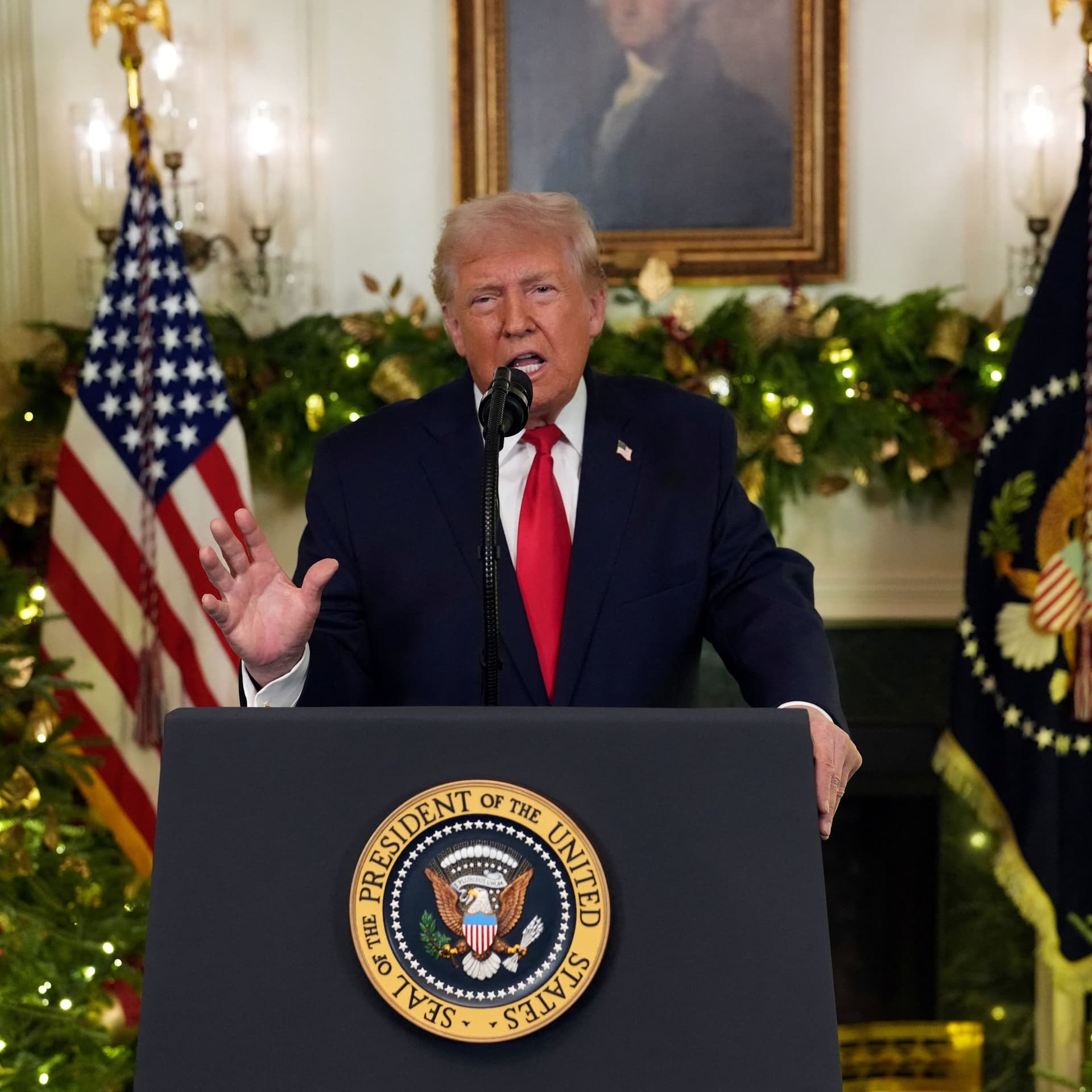
23:32It kind of felt like that to me, like he wanted to get a lot in there and he's used to us format where Natalie is very familiar, where he has 90 minutes. He has a crowd that loves him. He has applause breaks. He has, you know, just the feel of the crowd. and he didn't have any of that here. He was in the White House at a podium flanked by Christmas trees and it felt like he was speed reading the speech that they had written for him. The current Unaffordable Care Act was created to make insurance companies rich. It was bad health care at much too higher cost and you see that now in the steep increase in premiums being demanded by the Democrats and they are demanding those increases and it's their fault.
24:16It is not the Republicans' fault. It's the Democrats' fault. I mean, it was essentially a rally speech where he was listing everything that he has accomplished and tried to accomplish. Mental institutions and insane asylums. The rally greatest hits. It was very much a rally greatest hits. The truncated version of a rally greatest hits. But the real upshot of it was that it felt like this president who was insisting he had done more and achieved more in his first year at a time when polls and conversations with voters show that those folks who elected him to the White House are not feeling what he is saying he's achieved.
24:54And that's the tension that has really dominated this first year of the Trump presidency. And I think it will also dominate the next year because all of that tension will play out in the fight for the House and the Senate and the midterms. Yeah. Dan, I'm glad you brought up next year because this is our last politics roundtable of 2025. So I'm so thrilled that I got to spend it with the two of you, but 2026 is going to be a huge political year. So if we were to look into our crystal ball, what are you both going to be watching for going into next year? Well, I'm always going to say I'm watching out for 2028.
25:30I'm always going to look to like the next big presidential election as a close observer of J.D. Vance. You know, I'm curious to see how this Republican primary continues to take shape. We're already seeing Ted Cruz start to get his elbows out a little bit. And so who else is going to try to start wedging into the discourse about who's going to be the face of the Republican Party in 2020? Yeah. Is Trump replaceable? He joked with Miriam Adelson, who is a Republican megadonor, at the Hanukkah party at the White House the other day that she could just give him another$250 million to run again. So So, you know, we'll see.
Read the full transcript
26:12But I'm more interested in seeing what people like J.D. Vance and Ted Cruz are doing and saying to position themselves for the next presidential primary. I think the midterms are going to be the biggest story of next year. I think it's somewhat obvious. I think it's going to be a test of not just where the country is politically, but it's going to be an amazing test of Donald Trump standing with the country. because as much as Republicans will try and make these races about kind of localized issues, our politics are so nationalized right now that there's no world in which the 2026 midterms will not be a referendum on Donald Trump and Democrats will spend hundreds of millions of dollars to make it a referendum on a president who is unpopular right now, whose agenda is not resonating with voters.
26:57So I do think you're going to see a number of questions raised in the midterms that don't just focus on control of the House and the Senate, but kind of ask these broader existential questions about where we are as a country, where are we going politically, including 2028, and what do voters actually think about Donald Trump and his first year in office? Guys, thank you for such a great conversation. That's it for today's episode. Natalie, Dan, thank you. Thanks for having us. Thank you. I hear we're saying Merry Christmas again. Merry Christmas. Happy Hanukkah. Happy New Year, everyone.
27:32Natalie Allison is a White House reporter for The Post. Dan Marica is the co-anchor of our politics newsletter, The Early Brief. That's it for Post Reports. Thanks for listening. And if you want to watch this episode, we also taped it. It's available on The Washington Post podcast YouTube channel. We'll include a link to that in our show notes. Today's episode was produced by Sharla Freeland and Josh Carroll. It was mixed by Sean Carter and edited by Irina Flores with help from Martine Powers. Thanks also to our politics editors. Our team also includes Ted Muldoon, Alana Gordon, Ariel Plotnik, Renny Starnovsky, Sabi Robinson, Emma Talkoff, Thomas Liu, Peter Bresnan, Laura Benchoff, and Alahi Azadi.
28:16I'm Kolbie Echowitz. Have a great weekend.
28:31Good journalism is even better when it's shared. With a premium subscription to The Washington Post, you get three extra accounts to share with friends and family, so they can stay informed too. Right now, you can get a premium subscription to The Post for$6 every four weeks. Just$6 unlocks trusted reporting to share with other people in your life. After your first six months, it'll cost$19 every four weeks. You can cancel anytime. Head over to WashingtonPost.com slash subscribe and get premium access to The Washington Post today. That's WashingtonPost.com slash subscribe.
From the publisher
The week started with a Truth Social post from President Donald Trump about the death of Hollywood director Rob Reiner that drew backlash from within his own party. Then, a high-profile Vanity Fair profile of White House Chief of Staff Susie Wiles revealed her disparaging assessments of the president’s Cabinet. And it’s unclear if the fast-paced, campaign-style remarks from the White House achieved Trump’s goal of reconnecting with voters on the economy.
So how is the White House dealing with these divisions on the right?
Host Colby Itkowitz sits down with Dan Merica, co-anchor of the Early Brief newsletter, and White House reporter Natalie Allison to recap it all.
Today’s show was produced by Charla Freeland and Josh Carroll. It was edited by Reena Flores with help from Martine Powers and mixed by Sean Carter.
Subscribe to The Washington Post here. And watch us on YouTube here.