
In short
Podcast Summary: Post Reports - "Why Smaller Houses Can Make Us Happier"
Podcast Title: Post Reports Episode Title: Why Smaller Houses Can Make Us Happier Hosts: Martine Powers and Elahe Izadi Date: January 28, 2023
Overview
In this episode, the hosts discuss the paradox of home sizes in the United States, where the trend has been towards larger houses, yet those living in smaller homes often report greater happiness. The episode features insights from climate coach Michael Coren, who explores the relationship between house size and overall life satisfaction, as well as considerations for choosing a home that fosters well-being.
Key Points
The Size of American Homes
- Current Trends:
- Average new single-family homes have increased to around 2,400 square feet, compared to 1,600 square feet in 1970.
- Households now have fewer people, averaging 2.5 people per household, leading to more square feet per person than in the past.
Happiness and Home Size
- Research Findings:
- Larger homes do not correlate with long-term happiness. Initial satisfaction often declines over time.
- The relationship between life satisfaction and home size is tenuous; happiness is more closely tied to social connections and community than to the physical size of a home.
- Social Connections:
- Having a larger home can come at the expense of social relationships, which are vital for happiness. Overvaluing the size of a home leads to overlooking intangible benefits that foster emotional well-being.
Household Size and Happiness
- Ideal Household Size:
- Households with 4 to 6 people tend to report the highest happiness levels, regardless of home size.
- Living alone provides financial satisfaction but often leads to lower overall happiness compared to living with others.
Cultural Context
- Comparative Happiness:
- In Latin America, larger families and strong social networks contribute to greater happiness, even in smaller living spaces.
- Happiness often compensates for lower income or life expectancy in these regions.
The McMansion Effect
- Keeping Up with the Joneses:
- People often pursue larger homes to maintain a relative status compared to neighbors, leading to a cycle of dissatisfaction.
- The phenomenon is encapsulated in the term "McMansion," referring to large suburban homes that do not necessarily increase happiness.
Practical Considerations for Home Buying
- Choosing a Home:
- Prioritize neighborhood connections over the physical size of the home. Emotional infrastructure and community access are crucial.
- Focus on quality over quantity; many residents use only a fraction of their home's space regularly.
- Consider the environmental impact of larger homes, as smaller homes typically consume less energy and require shorter commutes.
Personal Reflections
- Host Insights:
- After researching the topic, host Elahe Izadi feels validated in her choice of a small home, finding joy in its simplicity and community connections.
- Michael Coren reflects on the balance between maintaining necessary comforts, like an extra bathroom, while appreciating the happiness found in smaller spaces.
Conclusion The episode emphasizes the value of meaningful connections over material possessions, advocating for a re-evaluation of what constitutes happiness in the context of home living. It encourages listeners to recognize the emotional significance of community and relationships when considering housing choices.
Listen to the Episode For further insights and detailed discussions, listen to the episode on [The Washington Post](https://www.washingtonpost.com) or your preferred podcast platform.
Written by AI. May contain mistakes. Listen to the episode to check what was said.
Chapters
Tap a time to open that second in VOThe Perception of Small Living
0:46 to 1:20
Discussion on the challenges and benefits of living in a small house.
“And I love that I don't have to spend a lot of time or money furnishing my place or keeping it clean.”
Research Behind Happiness and Home Size
1:21 to 2:16
Exploration of research showing smaller houses can lead to happier lives.
“and how most of us are asking the wrong questions when we're trying to figure out where to live next.”
Bigger Homes and Happiness Myths
2:17 to 3:20
Discussion on how bigger homes often do not lead to increased happiness.
“And it was built like a ship because it was such a tight fit.”
Trade-offs of Bigger Houses
3:21 to 4:33
Examination of the costs associated with pursuing bigger homes.
“So basically, after we meet all our needs for shelter and minimum square footage, at best, there's a tenuous relationship between life satisfaction and the size of our homes.”
Ideal Square Footage and Happiness
4:34 to 6:11
Insights into the relationship between home size and happiness.
“So we systematically overlook the costs, the mortgages, the commute, the maintenance, and the social disruption.”
Household Size and Its Impact on Happiness
6:12 to 8:00
Research findings on how household size influences overall happiness.
“Is how plugged in are we to the people we love, the people we care about, the people around us and the environment around us.”
Cultural Insights on Happiness and Housing
8:01 to 9:10
Discussion on how cultural aspects affect happiness related to housing.
“That's likely because they have these strong households and these extended family connections.”
Trends in American Housing Sizes
10:28 to 14:00
Analysis of current trends in housing sizes and their implications.
“Mike, you mentioned research in other countries in Europe and Latin America.”
The Stadium Analogy: Viewing Happiness
14:00 to 15:02
Learn how societal pressures influence our choices about living spaces.
“The analogy I like to use is basically, let's say you're in a stadium watching a game.”
Personal Stories of Downsizing
15:02 to 16:06
Hear real-life examples of people who downsized their homes and found happiness.
“or that just stood out to you about why they liked their smaller living quarters?”
Show all 13 chapters
Environmental Impact of Home Size
16:06 to 16:49
Understand the climate implications of living in smaller homes.
“And so that was the right decision for them.”
Finding the Right Neighborhood
16:49 to 19:20
Discover the importance of neighborhood over mere house size in achieving happiness.
“So yeah, it's a massive proportion of your total impact.”
Reflection on Personal Living Situation
19:20 to 20:51
Explore personal reflections on living situations and the pursuit of happiness.
“Now that you've done all this reporting and research and also just deep thinking about this topic, how do you feel now about your current living situation?”
Transcript
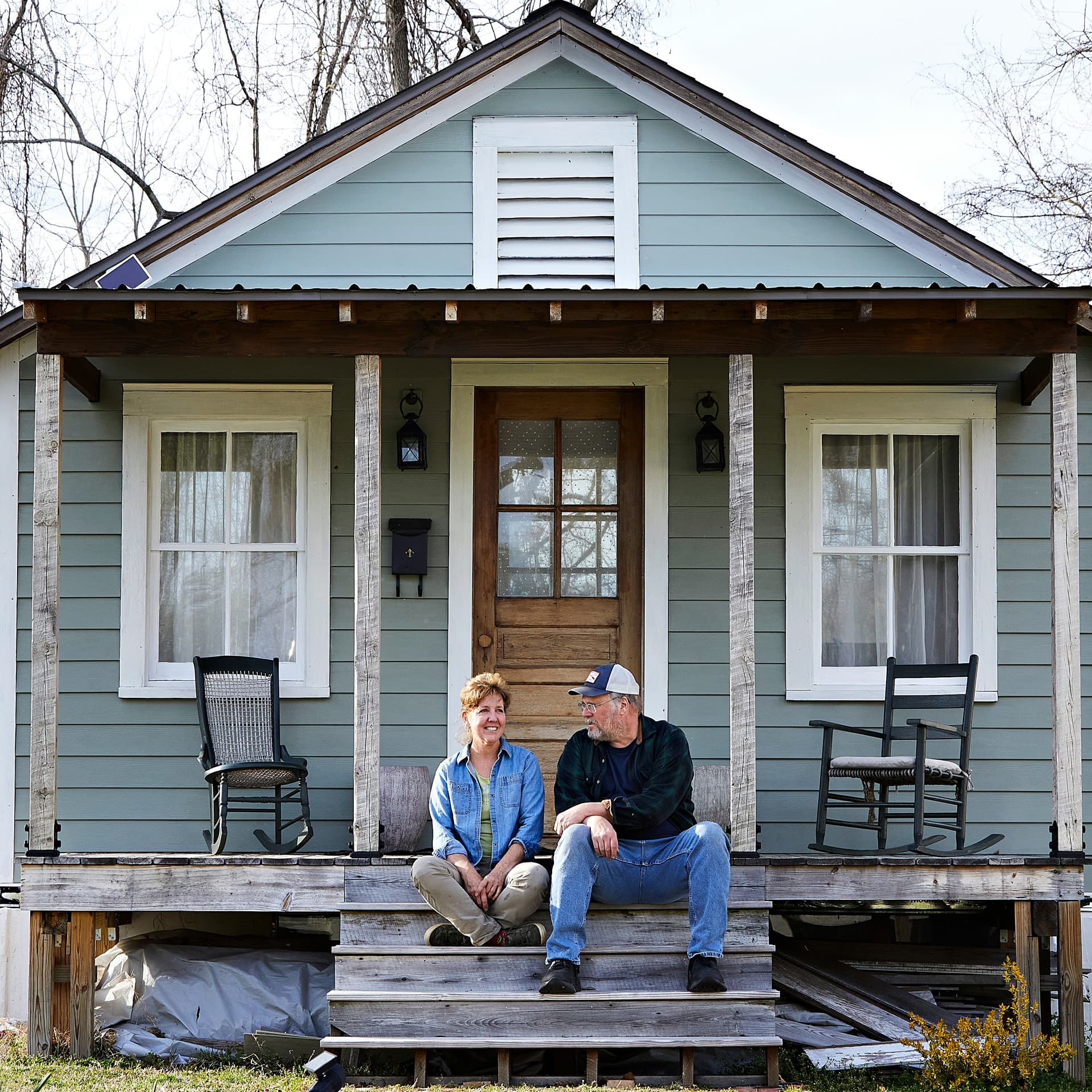
Automatic transcript. May contain errors.0:02I live in a small house, like 900 square feet small. That's less than half the size of the average American home. And I feel it. When my mom stayed for a couple days, she kept talking about how the kitchen was too small for her to cook in. And whenever I have more than seven people over, it feels like playing Tetris, trying to fit them all into the living room. Sometimes I wonder if I should upgrade, especially when I go online and it feels like everything there is telling me I need more of whatever I already have, including living space. But I've been resistant to sizing up. There are positives of a small home.
0:45Like, I can't really hoard too much stuff. And I love that I don't have to spend a lot of time or money furnishing my place or keeping it clean. And turns out there is research to back me up. My colleague, The Post's climate coach, Michael Korn, has been reporting on this and discovered something surprising. That actually, smaller houses can lead to happier lives. From the newsroom of The Washington Post, this is Post Reports. I'm Elajeh Izadi. It's Wednesday, January 28th. Today, I speak with Mike about why bigger houses don't necessarily make us happier. and how most of us are asking the wrong questions when we're trying to figure out where to live next.
1:40Mike, thanks for being on the show today. Hey, my pleasure. Mike, I have a small house, as I've said, and your story made me feel so much better about having a small house. So thank you for that. I should feel superior. I do, in fact. And I sent it to some people in my life like, ha, vindication. Yes. So, Mike, really, what made you want to look into this question of do bigger homes make us happier? Well, my friend Jay mentioned that she had raised two kids in a 500 square foot apartment in New York City. And then she mentioned that everyone would hang out there. And it was the smallest apartment of all her friends.
2:18And it was built like a ship because it was such a tight fit. She also said it was like the best years of her life. And it wasn't without inconveniences, but it was the most meaningful. And so that fascinated me. And then, of course, there's selfish reasons. I have two toddlers and a husky in a 950 square foot apartment or flat in San Francisco. And so my wife and I have been talking about sizing up, but I was hesitant. So this is all on my mind. Yeah, I love the idea of using your position as a journalist to look into a question about what should I do with my own life? I'm just solving my own problems.
2:50They just happen to be other people's problems as well. I love it. I love it. So really, okay, the big question here that you looked into, and here it is, does having a bigger house make you happier? What does the research say about that question? So we can definitively say that a bigger house does not make people happier on average. And in fact, it often does the opposite. So after we have this brief initial burst of satisfaction with new homes, people typically report their life satisfaction returning to close to its previous state. And in many cases, it even declines. So basically, after we meet all our needs for shelter and minimum square footage, at best, there's a tenuous relationship between life satisfaction and the size of our homes.
3:36So I think this is fascinating because there is this assumption, at least in the U.S., that specifically like a bigger house will make you happier. But you're saying, actually, no, the research doesn't bear that out. So why does a bigger house not lead to more happiness? So it turns out when you ask people, are you happy with your house? That's very different than asking people, are you happy with your life? And so, yeah, you can enjoy your house more, but you can also enjoy your life less. And so, you know, does that mean that a bigger house automatically makes you unhappy? It does not. But generally what we give up in pursuit of these bigger houses makes us unhappier.
4:18So basically, all the things that a house might give us can't compensate us for many things that we give up because time, money, and distance are, you know, are real trade-offs when we decide, I want a bigger house. So that means we have to uproot our life and go somewhere else. So we systematically overlook the costs, the mortgages, the commute, the maintenance, and the social disruption. And then we dramatically undervalue the intangible benefits that actually drive our happiness. So this is like seeing our kids at night, hanging with friends, having free time, knowing our neighbors, walking places.
4:55And so we're basically overvaluing things that don't ultimately make us happy in the long run and undervaluing things that do.
5:05So I guess one part of this question is, are people just like pushing beyond their means? when they are reaching for that bigger house? Not necessarily. So even if you can afford a bigger house, if that means that you then lose the friend next door or you lose that tight social network you had or you no longer can walk to the places that you want, that actually matters just as much or more as if you were stretching yourself financially to get there. So it's not one or the other, but you really have to look at it in totality. Is there actually like an ideal square footage that makes us happiest or that we should be aiming for?
5:44No, there's no ideal size, but there's probably a floor. So in my research, it was around 150 square feet per person. That was the point at which a lot of people felt anxious or stressed or even depressed from overcrowding. And even that's personal. So my friend Jay was well under that number and she was okay despite the inconveniences. But that's not to say that, you know, a tiny house is going to make you happy. Like there's no ideal. Everyone's different. Everyone has different needs. And so basically you should think about the square footage as independent of the things that matter because the currency of happiness ultimately is social relationships.
6:22Is how plugged in are we to the people we love, the people we care about, the people around us and the environment around us. And to the extent that you can optimize for that is the extent to which you can cash in on your happiness. I want to like stick with this idea of a household size, though, because in some ways it's like you're saying not how big the house is, but how many people are in it and who's in it with you. When you were looking into household sizes, what did you learn about the connection between how many people are in a home to how big it is? So that was a surprise for me. I didn't expect that to be one of the main findings.
6:59But household size is actually a big driver of overall happiness. It's not the only one, but it's a big one. Gerardo Levia, and he's an economist and researcher at IBO American University in Mexico City, basically analyzed data from like tens of thousands of households in Mexico and Europe. And what he found was that people who live alone and the people who live with lots of people are not the happiest overall. On the average, the effect of sharing with others is positive. Because in general, the nature of the connections are of support and understanding and love. What's interesting, though, is that people living alone did report the most satisfaction with their financial lives.
7:41So they were most happy with their finances. However, that trend didn't apply when you asked about overall happiness. And by far, the happiest households peaked around four to six people in them. And that was regardless of home size. Oh, wow. In fact, when you look at Latin America data, the happiness in most countries is far happier than the GDP per capita would predict. That's likely because they have these strong households and these extended family connections. And Levia predicts that basically we have these strong households that form strong emotional bonds that act like a shock absorber for life.
8:16The family life and the social life in these countries is particularly rich in these countries. To be happy and the fiestas and connecting with other people and this kind of social effervescence kind of compensates for other fields in which it don't fare as well, like income and life expectancy, for example. And so it compensates for maybe the inconveniences that you have in a smaller home or even a little slightly more crowded home. Because, yeah, you've got like people to laugh with and just like that sort of social connection makes it makes life a little easier to get through. That's right.
9:00That's right. And it does so in a way that's just greater than having an extra bathroom or maybe an extra bedroom. As nice as those might be. After the break, what to prioritize when choosing a new home? We'll be right back.
9:43you're great at, or a brand that's been living rent-free in your mind. January is your window. Before another year slips by, 2026 is when you turn the idea into income, and Shopify is how you begin. Millions of entrepreneurs have already made the leap, from household names like Heinz and Mattel to first-time business owners just getting started. Choose from hundreds of beautiful templates that you can customize to match your brand. Create email and social campaigns that reach customers wherever they scroll. In 2026, stop waiting and start selling with Shopify. Sign up for your$1 per month trial and start selling today at shopify.com slash reports.
10:22Go to shopify.com slash reports. That's shopify.com slash reports. Hear your first this new year with Shopify by your side.
10:35Mike, you mentioned research in other countries in Europe and Latin America. If we're talking about the United States, just from my own observation, I'm not a professional in this regard, although I do like to scroll on Zillow for fun. It seems like houses in this country are getting bigger. So is my assumption correct? You have been correct. So historically, in 1970, for example, homes were just 1 ,600 square feet. And now a new single-family home is around 2 ,400 square feet. That's slightly down from its peak around 2 ,500 in the 2010s. But yes, we are living in the biggest homes in history in the United States.
11:16And yet we have the fewest number of people living in them. So in 1970, there were more than 2.8 people per average per household. And now we're at a record low of around 2.5. So what that ultimately means is that we have more square feet per person, like around 940. And that's almost double than what we had in 1970. It seems like we're obsessed with building bigger houses. Why are we doing that if they don't make us happier? Well, like I said, economists have found that we're really bad at understanding what will make us happy in the long run. And so what we tend to do is optimize for things that seem like they're going to give us happiness, and they may in the short run.
11:57But that value, that contentedness tends to evaporate. So basically, you could almost boil this down in many ways to one of the strongest findings in social science, which is that people care about relative wealth, not absolute value. That is that people will choose a smaller home if it's still larger than most of their neighbors. So in other words, it's keeping up with the Joneses. Oh, my gosh. The root of all of our troubles, right, is just comparison. Yeah. I mean, there's a saying that comparison is the thief of joy. And they're absolutely 1 ,000 % right. And it's very hard for people to overcome that consciously or subconsciously.
12:37So one of the researchers I talked to, Clement Belle, he called it the McMansion effect. Wait, Mike, just real quick, what is a McMansion? So there was a technical definition in the research, basically, that McMansions are these single-family houses that are just bigger than the average houses in the suburbs, about 3 ,000 square feet. And so in 1980, only like 5 % of suburban houses met this definition. But by 2008 or so, that was about 15 % of all homes. Clement Bellet, he actually went into the American suburbs. He's a Dutch researcher. And what he found was that larger homes were not, on average, making people happier.
13:17Their well-being did not increase. And what he found that mattered most was how close the size of one's house was to the largest houses in the neighborhood. meaning that the people who moved into a larger home, all the benefit that they achieved in the short term for that larger home from terms of happiness was erased when there were larger homes nearby in the same neighborhood. Oh, so like, okay, let's say I move into a house bigger than mine and I'm feeling pretty good, but then two blocks over someone builds an even bigger house and all the benefits, all the satisfaction I felt immediately went away because I'm like, that house is bigger.
13:54I want that one. Or if you're just the smaller house in the bigger neighborhood, like you actually aren't going to see a persistent happiness effect. The analogy I like to use is basically, let's say you're in a stadium watching a game. And then one person stands up. And so the person behind them can't see. And so they stand up. Another person stands up. And so basically at the end, no one's left sitting because everyone is trying to see over the other person in front of them. And no one is better off. And the experience of the game is ruined. And that is life in a lot of American communities.
14:21Yeah, just like sit down. easily said, but hard to do. And this kind of holds true, not just with houses, but with income, for example, if someone's offered a monetary reward, they will pick a monetary reward that's smaller. If they know that other people are getting one, that's even smaller than theirs. And so people will forego a larger absolute value in terms of income or assets in order to make sure that their status or like their relative value is not lower. So that's kind of the reverse. so that we care very much about what our status is relative to our neighbors more than what's the absolute value of the house that I have or the money I have even.
15:01So Mike, I'm curious, the people you spoke to, did anyone tell you anything surprising or that just stood out to you about why they liked their smaller living quarters? Yeah, I had quite a few readers write me on both sides. Like someone who had moved from the Northeast to a condo in Florida, and she actually was regretting the lack of space. She had to put things on her balcony because she didn't have storage. And so there are people like that for sure. And those are real inconveniences. I'm not diminishing those in any way. However, there were many people who said this was the best decision they ever made to downsize from whatever large home, sometimes three homes they had, to something much smaller.
15:39Barry Crist and his wife, Maureen, they downsized from a home, a big home in Seattle, to this fixer-upper cabin in Lopez Island in Washington State. and all the contractors when they were trying to build basically wanted to tear it down and build something big to quote, fully realize our property investment return. And they didn't do it. They have never been happier. And he says, you know, once you wake up, the reality that is more happiness, more time and much less environmental impact, you don't go back. And so that was the right decision for them. Those examples are pretty interesting. And also like one thing we haven't hit on and I know you're like the climate coach, right?
16:14From a climate perspective, What are the implications of like a bigger house versus smaller house? I didn't actually mention this explicitly because I think one of the most important things for people is not necessarily the climate impact, but how this home makes them feel. It's such an emotional decision. But you're absolutely right. A smaller home is going to consume a lot less energy. It's likely going to mean a much shorter commute. And those are two of the three biggest contributors to your overall emissions. basically is how you get around and where you live. So yeah, it's a massive proportion of your total impact.
16:54Yeah. Okay, so like if I'm looking for a new place to buy, like what are some of the very practical or just straightforward questions I should ask myself that would allow me to make a decision with my priorities in order? So I think the first thing to focus on is your neighborhood. And it sounds weird because you're buying a home, but really you're buying a place. And one of the things that shows up in the data is that our happiness depends very much on where we live. Because you can think of a home as emotional infrastructure, is how does it facilitate our relationships? And that's not only inside the home, but around us.
17:35And if we're isolated and we feel like we can't plug into this larger community, that's going to make a massive difference. And even if you have a bigger home that's really private and really comfortable, it may not be enough. And everyone has different priorities on what they're looking for in a neighborhood. But I think it's actually more important than people think. The other one is quality over quantity. So space per se is really not the most important metric. There was a good study in Canada and it asked people, you know, what was most important to them. And the house design and the house size was really number eight or nine on the list.
18:13And what was much higher was affordability, proximity to friends and family and their ability to basically walk places that they wanted to go. And so I think that when you think about what space is going to do for you, certainly a minimum is important. But after that, we only use something like 30 % of our homes regularly. And it's three rooms. It's the living room, the dining room, and the kitchen. You know, obviously we sleep in our bedrooms. Wait, what about the bedrooms? Yeah, I was like, I use all my rooms. All my rooms. And you're probably a little bit of an exception because you have a smaller house.
18:51But they had studies where they do motion tracking. And they found that basically, you know, 70 % of our waking life is spent in these three rooms. And a lot of our sort of bigger spaces, whether they're game rooms or cinema rooms or all these sort of amenities are nice, but they often end up as very pricey sort of storage that people don't use them regularly. And if you're spending a lot of money to have those, that comes at a cost. It's not free. And so that's something to consider. Of course, you know, if money and space is no limitation, that might apply here. But for many people, it does.
19:27So Mike, we started this conversation out with you explaining part of your quest of looking into this question was driven by your own living situation of living in the flat that you live in with, you know, three family members and a big dog. Now that you've done all this reporting and research and also just deep thinking about this topic, how do you feel now about your current living situation? I feel so lucky. And the desire to size up has evaporated, or I should say has been replaced by the certainty that I will probably add an extra bathroom onto my current house. So you did assess how you could optimize your happiness, but it ended at a bathroom.
20:11That's right, it really did. And because I think that all the things we give up for that extra space are just completely eclipsed by what we do have already, and the inconvenience that we're really trying to solve for is the extra bathroom. And, you know, we're going to spend more money than we'd like to do that. But compared to moving, the real cost of moving, not just the financial cost, would be so much higher. And so at least for now, like we're very happy, I think, with what we have. And we'll know what to look for when we decide to move, if we ever do. And I think I was internalizing other people or other values than my own and not even realizing it.
20:51And so this allowed me to really be true to what I actually think is going to make me happy in a way that I just couldn't put my finger on before. I love that. Mike, thank you so much for sharing your reporting with us. This was so fun. My pleasure. It was great to be here. Thank you so much.
21:10Michael Korn is The Post's climate coach. That's it for Post Reports. Thanks for listening. Today's show was produced by Sabi Robinson. It was mixed by Sean Carter and edited by Dennis Funk. Thanks to Marissa Bellick. If you love the show, help other people discover it by leaving a rating on Spotify or a rating and review on Apple Podcasts. I'm Elahei Izadi. We'll be back tomorrow with more stories from The Washington Post.
21:45¶¶
From the publisher
Houses in the United States keep getting bigger, but the people in bigger houses aren’t necessarily happier. Bigger homes often come with higher costs and more maintenance and can pull people further away from the places and relationships that matter. For some, choosing a smaller home can actually make life feel easier, more connected and more satisfying.
Elahe Izadi speaks with climate coach Michael Coren about the joys that come with living in a smaller house and what to prioritize when deciding where to live.
Today’s show was produced by Sabby Robinson. It was edited by Dennis Funk with help from Ariel Plotnick and mixed by Sean Carter.
Subscribe to The Washington Post here.