In short
Podcast Summary: Post Reports - Why the U.S. Won't Quit Saudi Arabia
Podcast Title: Post Reports Episode Title: Why the U.S. Won't Quit Saudi Arabia Hosts: Martine Powers and Elahe Izadi Release Date: November 19, 2023 Description: This episode discusses the recent visit of Saudi Crown Prince Mohammed bin Salman (MBS) to the U.S., reflecting on the complexities of U.S.-Saudi relations particularly post-Khashoggi's murder.
Episode Breakdown
Introduction
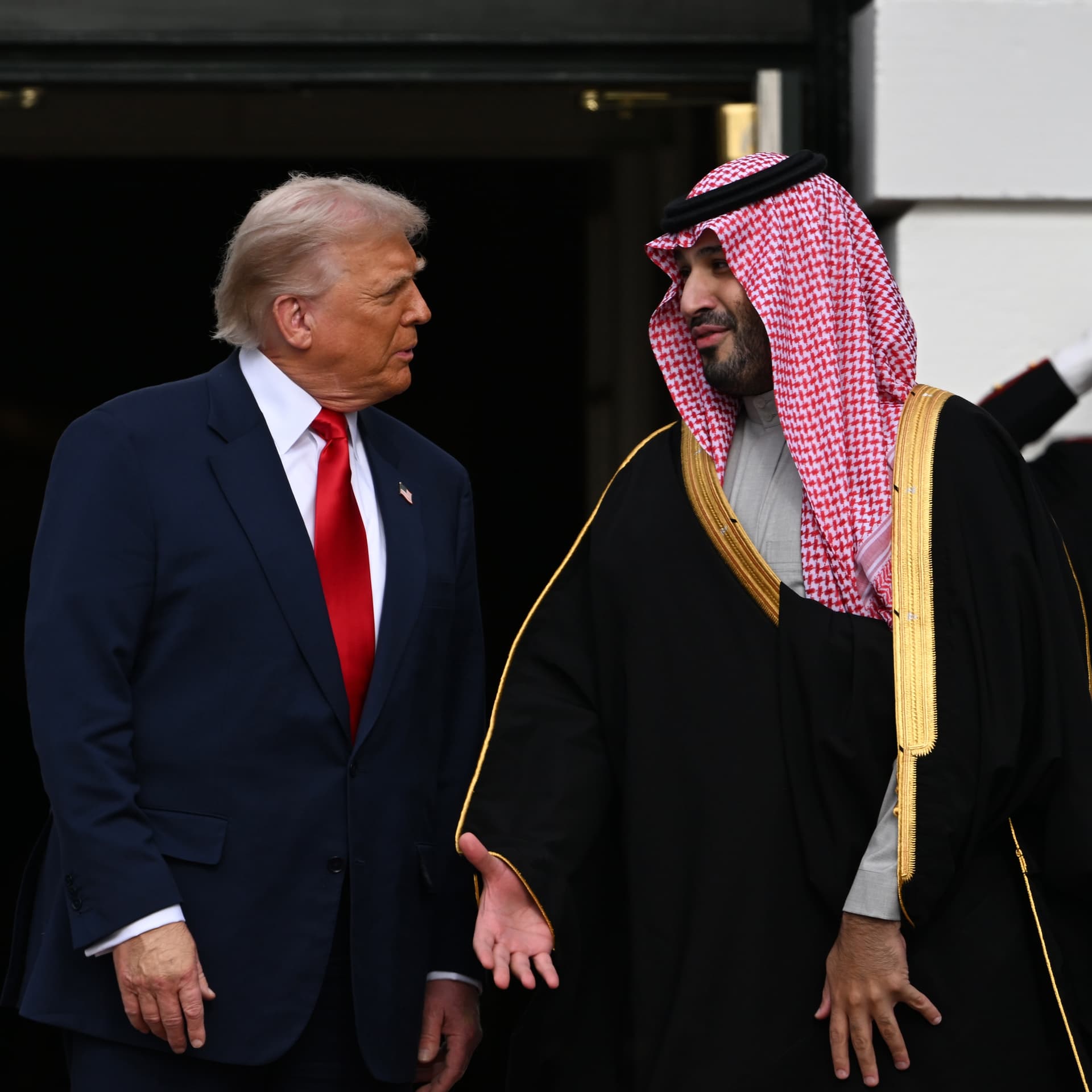
- President Donald Trump hosted MBS in a series of events showcasing the strong ties between the U.S. and Saudi Arabia.
- This marked a significant contrast to the reactions following Khashoggi's murder in 2018, where MBS was denounced and relations were strained.
Key Guests
- Michael Birnbaum, White House Correspondent, provided insights on the crown prince's visit and the evolving U.S.-Saudi relationship.
Major Themes
- The Warm Welcome for MBS
- The reception included:
- An F-35 flyover.
- A grand dinner with executives.
- A sit-down in the Oval Office where Trump embraced MBS, downplaying his controversial past.
- Trump emphasized MBS as a partner for peace and prosperity.
- Past Controversies
- In 2018, U.S. intelligence concluded MBS approved the killing of journalist Jamal Khashoggi.
- U.S. lawmakers condemned the crown prince and withdrew support for Saudi Arabia's military actions in Yemen.
- The Arc of U.S.-Saudi Relations
- After a period of condemnation, the relationships warmed, especially during economic discussions:
- MBS proposed nearly $1 trillion in investments in the U.S., although details remained vague.
- The U.S. has historically prioritized practical interests, such as oil and defense partnerships, over human rights concerns.
- MBS's Image Rehabilitation
- Despite past transgressions, MBS has been actively working to reshape his global image by engaging in cultural and economic initiatives.
- Investments in entertainment and sports (e.g., Riyadh Comedy Festival, investments in golf) highlight a shift towards modernization.
- Geopolitical Interests
- The U.S. sees Saudi Arabia as a key player in Middle Eastern politics, particularly concerning energy security and stability.
- Both nations share interests in counterbalancing threats from Iran and managing alliances with Israel.
Looking Ahead
- Future threads to monitor include:
- The personal ties between Trump and MBS, and their implications for foreign policy.
- The ongoing business relationships between the Trump Organization and Saudi investors.
- The regional stability and its impact on both U.S. interests and Saudi ambitions in the Middle East.
Conclusion
- The discussion emphasizes the complexity of U.S.-Saudi relations, where economic interests often overshadow human rights issues. The narrative of MBS's redemption serves as a reflection of broader geopolitical realities.
Production Credits
- Produced by: Renny Svirnovskiy with contributions from Emma Talkoff
- Edited by: Ariel Plotnick
- Mixed by: Sean Carter
- Thanks to: Anna Ashenbrenner
For updates and more stories, listen to The Washington Post's morning news briefing, The Seven, available wherever podcasts are found.
Written by AI. May contain mistakes. Listen to the episode to check what was said.
Transcript
Automatic transcript. May contain errors.0:00A biotech firm scaled AI responsibly. A retailer reclaimed hours lost to manual work. An automaker now spots safety issues faster. While these organizations are vastly different, what they have in common sets them apart. They all worked with Deloitte to help them integrate AI and drive impact for their businesses. Because Deloitte focuses on building what works, not just implementing what's new. The right teams, the right services and solutions. That is how Deloitte's clients stand out. Deloitte, together makes progress. Saudi Crown Prince Mohammed bin Salman used to be considered a pariah. In 2018, the U.S.
0:49intelligence community concluded that he had approved the killing and dismemberment of a Washington Post columnist, Jamal Khashoggi. U.S. lawmakers condemned the Crown Prince. They passed a resolution blaming him for Khashoggi's death. And the U.S. withdrew support from a Saudi-led war in Yemen. But Mohammed bin Salman's pariah status didn't last long. President Donald Trump pulled out all the stops this week for Mohammed bin Salman's first visit to the U.S. since Khashoggi's killing. There was an F-35 flyover in Washington.
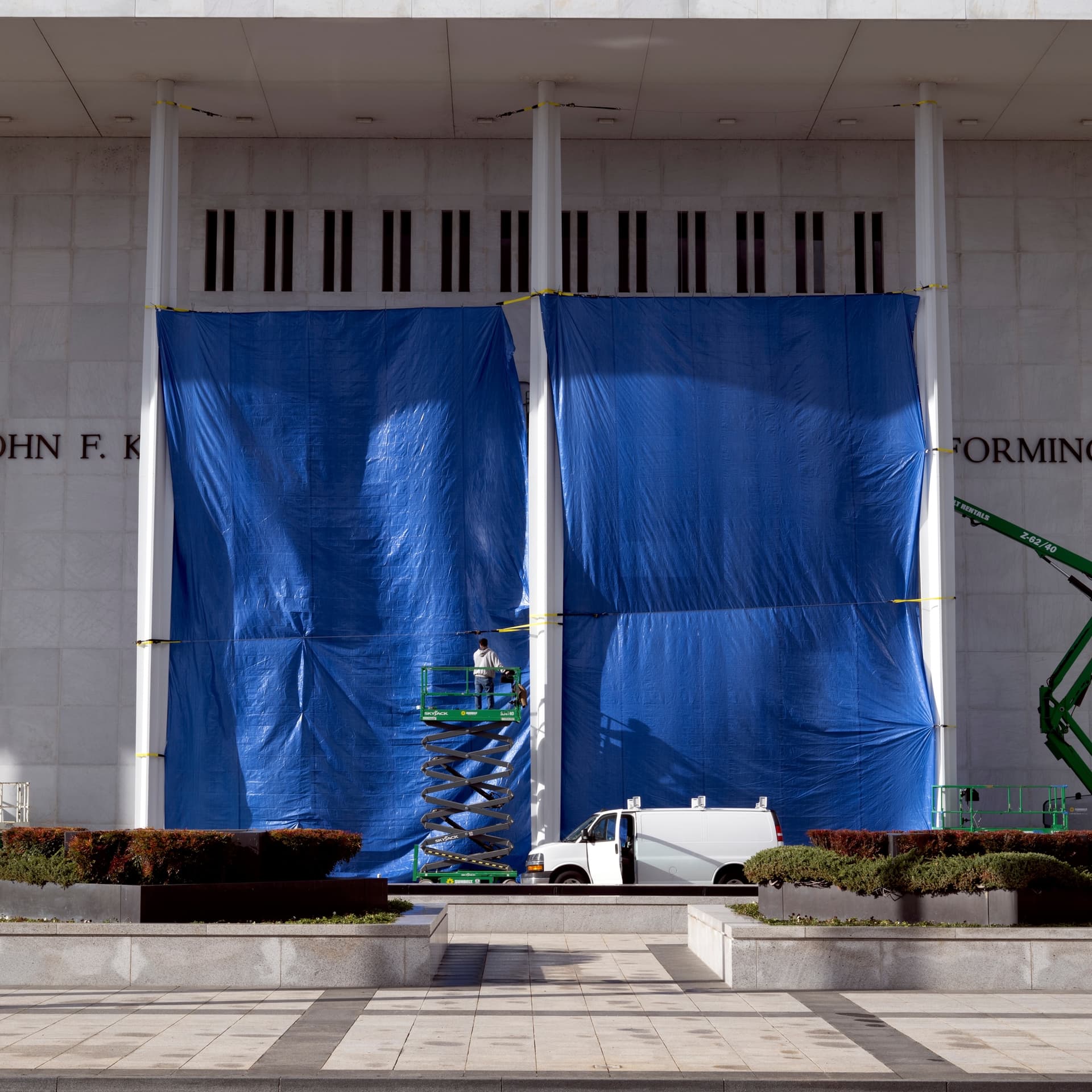
1:34A grand White House dinner with Wall Street executives and tech CEOs. He has become a true partner for peace and prosperity for our countries and for the world and for peace in the Middle East. An investment summit at the Kennedy Center. I want to thank my friend, a great gentleman, Crown Prince Mohammed of Saudi Arabia, for his bold leadership and deep commitment to the ties between our two countries. Thank you. Thank you. And a sit-down in the Oval Office, where Trump defended the crown prince when reporters asked him directly about the killing. As far as this gentleman is concerned, he's done a phenomenal job.
2:15You're mentioning somebody that was extremely controversial. A lot of people didn't like that gentleman that you're talking about. Whether you like him or didn't like him, things happened, but he knew nothing about it. And we can leave it at that. You don't have to embarrass our guests by asking a question like that.
2:35From the newsroom of The Washington Post, this is Post Reports. I'm Elahe Ezzadee. It's Wednesday, November 19th. Today, the public rehabilitation of Mohammed bin Salman. Post-White House correspondent Michael Birnbaum traces that arc and explains why the U.S. can't seem to quit Saudi Arabia.
3:04Hi, Michael. Thanks for joining me today. Hi, Alaha. Thanks for having me. Before we dive into this conversation, I wanted to just get your gut reaction to the events Tuesday. Mohammed bin Salman arrived in Washington. He's here for a couple days. I've lived here for a very long time. I've never seen the city shut down in the way that it's shut down to accommodate this visit. What is your initial reaction to just covering everything that you did yesterday and last night. Well, so this is the biggest, fanciest, roll out all the red carpets reception that President Trump has given any world leader so far this term.
3:41And we just saw a totally crazy scene unfold in the Oval Office yesterday in which Trump basically did everything he could to show his affection for the Saudi leader who has a rather complicated human rights record. And he, you know, basically smashed at any reporter who dared question what was going on. Yeah, like when you say crazy, like, what do you mean by that? Well, we can talk about the actual pomp and circumstance. We had some beautiful black horses prancing across the south lawn of the White House. We had Saudi flags everywhere fluttering alongside the U.S. flags. That's actually not that normal here in Washington.
4:26And then once in the Oval Office, this display of physical affection, Trump patting MBS, the Crown Prince Mohammed bin Salman on the back. He was making fun of President Biden for, at one point, Biden's refusal to shake hands with the Crown Prince and he just did a fist bump. When, remember Biden? He travels for 20 hours. He gets out and he gives a fist bump. Now, when you get out of the plane and you get the future king and a man who's one of the most respected people in the world, you shake his hand. You don't give him a fist bump, right? Trump kind of grabbed on to his wrist and then his hand.
5:14It was very, it was like. Physical. Very physical. And Trump doesn't give a fist pump. I grabbed that hand. I don't give a hell where that hand's been. I grabbed that hand. Fascinating. So can you tell me a little bit more about the substance of what emerged from this arrival yesterday and this meeting in the Oval Office and this event, this dinner at night? So this is a trip that's designed to show off the close ties between President Trump and the crown prince and more broadly, the United States and Saudi Arabia. So that's about investments. That's about close defense ties. That's about any number of things that is an attempt on Trump's part to bring the Saudis in and bring Saudi money in to the United States.
6:09Do you know how much money is now being signed as part of these conversations? Well, Crown Prince Mohammed bin Salman has clearly figured out the way to President Trump's heart, which is talk about very large sums of money. So he, at the beginning of this year, said that Saudis were going to invest$600 billion in the United States. This trip, he's upping it to almost a trillion dollars, he said. But there's actually not that much detail about it. How, you know, a trillion dollars over what period of time? The Saudi sovereign wealth fund is about a trillion dollars. So the math is a little iffy.
6:48But Trump loves it. Yeah. So, Michael, now I want to step back for a moment and just trace the arc of how we got to this moment and the spectacle and everything that you just laid out. So first, can you tell me a little bit more about the crown prince, Mohammed bin Salman, also referred to as MBS? Who is he? What is his role in Saudi Arabia? Mohammed bin Salman, he's the de facto leader of Saudi Arabia. His father, the king, is very old. He's ailing. He's basically out of the picture in terms of running the day-to-day operations of the Saudi nation. He's young. He's, you know, as young as these things go.
7:30He's 40 years old. He sort of ascended over the last decade or so. So he was kind of on the up and up in Trump's first term. MBS is someone who has portrayed himself and in many ways has been a modernizer in Saudi Arabia. There's, you know, generational change afoot. This is not a country that has had a young leader in a very long time. He's, you know, interested in basketball. He's interested in soccer. He's liberalized some elements of what had been a very kind of repressive situation for women within Saudi Arabia. He's also shown himself to be extremely tough on his critics, including, of course, you know, against one prominent critic, our former colleague, this columnist, Jamal Khashoggi, who was very critical of Saudi rule in general and also critical of MBS.
8:30And Khashoggi was, of course, killed in 2018. Yeah, I want to pick up from there. I mentioned earlier that the U.S. intelligence community concluded that the crown prince, Mohammed bin Salman, had ordered Khashoggi's killing. And Khashoggi disappeared after entering the Saudi consulate in Istanbul in 2018. How did the U.S. intelligence community come to that conclusion? So the conclusion of the CIA and the U.S. intelligence community was based on multiple sources of intelligence, including a phone call between the crown prince's brother and Khashoggi himself. And then also, quite famously, there was an audio recording from the consulate, a listening device inside that Saudi consulate in Istanbul.
9:26And so there was a recording of the sounds of Khashoggi being killed and dismembered. Yeah, we should say it was a very brutal killing. What was the official response from the Saudi government to this assessment? The Saudis never accepted, MBS never said, oh, yeah, I was responsible. They have always said, you know, this is a very unfortunate death. We're going to look into it. They said they did an investigation. They put some lower level officials on trial and kind of pinned the blame on others. There was never any accountability at the senior most levels of Saudi rule. And that remained the case yesterday in the Oval Office when an ABC reporter asked Trump and MBS directly about this.
10:19So Trump was extremely upset about this questioning. Honestly, I thought that the Saudi crown prince was not. He was prepared. He had his lines. About the journalists, it's really painful to hear, you know, anyone that's been losing his life for, you know, no real purpose or not in a legal way. And it's been painful for us in Saudi Arabia. So he handled it, you know, the way you'd expect a leader to handle it. It was Trump who was so upset on his behalf. So what happened to the standing of Saudi Arabia and the crown prince after this killing and also this conclusion that he was responsible for it?
11:07So this was, you know, partway through Trump's term, right around the midway point, the first go round. President Trump, even back then, was still very interested in close relations with the Saudis. He wasn't all that excited about letting the killing get in his way, but it did interrupt U.S.-Saudi relations for quite some time. It made it difficult to engage in, you know, deep defense cooperation. Why? Were there like lawmakers or was there political pressure here? Well, there's a lot of – yeah, there's fury in Congress. The U.S. Senate approved a measure to end the U.S. role in the Saudi-led war in Yemen.
11:55There was a unanimously approved resolution blaming the crown prince for Khashoggi's death. And it did put a damper on U.S.-Saudi cooperation for quite a number of years. It was a big issue in the 2020 presidential campaign. And, you know, then candidate Joe Biden, he said that he was going to make Saudi Arabia a pariah. So then Biden does become president. Did he make Saudi Arabia a pariah? Did he ice them out? There is some time, kind of the first year and a half of his time in office, where relations remain very cold. And then Russia invades Ukraine in February 2022. So Biden had been in office about a year at that point.
12:44And that sends global oil prices skyrocketing. And, you know, there was a lot of inflation in the U.S. at that point. It's a big political issue for Biden. And so he finds that as much as he dislikes MBS's human rights record, as much as he has said he's going to make Saudi Arabia a pariah, he still needs to deal with them or he feels he does at least. And in particular, he needs their help to keep global energy prices low. So even he who really didn't want to – at least he said he really didn't want to do this – couldn't help but reach out for help. In the end, you know, that's a choice that he made.
13:26And he felt as though the political consequences of rising energy prices were too difficult to not reach out to Saudi Arabia and have, you know, decent enough relations. So he ultimately goes to Jeddah, Saudi Arabia in mid-2022. He has this meeting with MBS. It's a pretty awkward one. There is indeed a fist bump because he doesn't want to shake the hand of someone. But a fist bump feels even more chummy. It's a strange spectacle, to say the least. It was a strange spectacle, and he kind of caught it from both sides for that encounter. But he also does start rebuilding a relationship with MBS, with the Saudi government, and tries to kind of pull them into his effort to produce more oil and keep energy prices lower.
14:30After the break, why the U.S. keeps leaning on Saudi Arabia and what both sides are getting out of this arrangement. We'll be right back.
14:56Share with friends or family. After your first year, renews at$19 every four weeks. The Washington Post. Power. Perspective. Premium. Learn more at WashingtonPost.com slash subscribe.
15:19So, Michael, we've just heard that there is this sort of reticence among U.S. leaders, at least recent presidents, to ice out Saudi Arabia. What is the U.S. getting out of a relationship with Saudi Arabia? So this is something that has happened, you know, many times over the years. Saudi Arabia is— Many presidents. Yes, this is not the first conflict of values versus practicality. Saudi Arabia has a lot of oil. They have a lot of energy. They are a big economic power. And in a volatile region, they are a really big player. And so both in terms of energy prices and in terms of sort of broader geopolitics, both Biden and Trump have gone back to the Saudis again and again because they are a kind of inescapable partner in the Middle East.
16:22And they seem to have determined that it's better to be on the Saudi side than working against them. Why is that for, let's say, Trump specifically? Saudi Arabia is the biggest economic power in the Middle East. It's kind of the big prize in terms of enmeshing Israel in strong economic ties to its neighbors. That's a project that Trump started in his first term. The thought is if it has close economic ties to its neighbors, which it has slowly developed over years, but it will be in a much safer place and better place as a close U.S. ally than if it is, you know, kind of cut off in a lot of ways economically from other Arab countries in the neighborhood.
17:18and, you know, the fewer economic ties there are, the easier it is to wage war with each other. So that's why Trump has focused on Saudis as the big prize for normalizing with Israel. And what has Saudi Arabia gotten out of this relationship? Well, the Saudis appreciate close relations with the United States. They get a lot of defense assistance. They get advanced military equipment. They get money and investment, a big buyer for their oil. But they too have, you know, interests in the Middle East. It's been a violent few years. There's been the Gaza War. There's been instability and ultimately regime change in Syria.
18:08And, you know, they are perfectly capable of projecting their own power among their neighbors in the region. But the United States, under really all presidents, has a big role to play and a kind of coordinating role between Israel and Arab neighboring nations. And so they appreciate working with the U.S. on that as well. Yeah, like they have their—Saudi Arabia have their own interests in the region with a number of countries. I'm thinking Yemen, Iran, the ones you mentioned. And so I would imagine that trying to end up in a situation where they're working lockstep with the U.S. government, in this case, the Trump administration, it's beneficial for them insofar as advancing their own goals in the region.
19:00That's right. The United States is Israel's closest partner. Israel is a big important military actor in the region. The United States has been involved in stabilizing Syria. It's, you know, kind of indispensable economic actor. It controls sanctions. It is trying to deal with Ukraine, which affects relations, of course, with Russia. And, you know, basically in all of these big files where Saudi energy and economics and interests are at stake, the U.S. is there too. So they're interested in working together. I want to pick up on the money piece of it all because I'm also thinking about these two men in particular, Trump and MBS.
19:56And what other ties do they just have beyond being the crown prince and the president of the United States? So, in some ways, MBS is involved in a family business that is highly profitable. President Trump comes from a family business that has certainly become highly profitable. And, you know, they have some affinities for each other based on that basic background. Since Trump's first term, his son-in-law, Jared Kushner, has gotten involved. He's taken on some Saudi investors in his business projects in a fairly big way. The Trump Organization, which is now led by Trump's two sons, has been doing some business projects with Saudi investors and, you know, essentially the Saudi government.
20:55continues to do that. So their own personal economic stakes and fortunes are increasingly entwined. Even just in the last few weeks, there have been announcements of Trump organization projects in Saudi Arabia. And the Trump org is, you know, planning a Trump-branded property in Riyadh. That's the capital of Saudi Arabia. They're building a Trump Tower Jeddah, which is this coastal city along the Red Sea. And Jared Kushner's private equity firm has gotten billions of dollars from foreign sources, including a very large investment from the government of Saudi Arabia.
21:36Earlier in this conversation, we touched on some of the deals that might be emerging from this visit from Mohammed bin Salman. What has been the reaction among lawmakers in Washington to some of these deals? Are they OK with it? There is. I mean, there remains discomfort among some lawmakers about the ties that are building. There are some questions. You know, Trump has announced that the Saudis will be able to purchase advanced F-35 fighter jets. That's something that only Israel right now in the region has access to. And there's a U.S. law that Israel needs to have a qualitative military advantage over its neighbors in terms of U.S.
22:30military aid. So there's some question about how does it maintain that advantage if the United States is also selling F-35s to the Saudis. But I should also say that some of these deals are a little unclear and might be a little overstated. The speed at which Saudi Arabia would have access to some of these technologies, for example, the F-35, that's something, you know, it's unlikely even if they place some orders today that they would have those jets within the next 10 years. That's a very long time. That's fascinating to me, though, because even though the substance of some of these deals, the substance of these agreements is in question.
23:14We don't know what the terms are, what the details are. Will this actually happen? The fact that they are being presented, that this is a big win, I think it speaks to this idea of public image rehabilitation and the complete welcoming back of MBS. and absolving him essentially of facing any kind of consequences for what the U.S. intelligence community concluded, that he ordered the killing of Jamal Khashoggi. And this is also making me think of, like, this isn't the only thing that MBS in Saudi Arabia is trying to do to build its image on the world stage. There are lots of other examples, right?
23:57Yes. So MBS, you know, partly because he's a canny strategist and partly because he's a 40-year-old man who's grown up in the world. He's a millennial. He's a millennial. That's right. He's a millennial crown prince. Saudi Arabia is also, you know, doing all these investments in things that are like pop culture, entertainment. They've started the Riyadh Comedy Festival. They've invested in the Live Golf League. And these are drawing huge names with a lot of money. Global names, you know, U.S. golf players, global soccer stars. A lot of money is at stake here. A lot of people are getting paid a lot of money.
24:41He is investing in a bunch of things that bring Saudi Arabia out of this world in which it had been a very religiously and socially conservative nation into open society where they are kind of buying into a pop culture that is more global and open. even while maintaining a fair amount of repression in various ways at home. It's still not a situation where they will tolerate criticism of the Saudi government or, you know, it's not really a political opening up. It's a cultural opening up. So, Michael, looking ahead, what will be the threads that you will be paying attention to on this story of what this relationship between the U.S.
25:42and Saudi Arabia is going to be and how it develops? So I'm very interested in the personal ties between President Trump and MBS. Trump's personal ties to world leaders all over feel really important to track these days because of the way he's operating on the world stage. He just loves direct phone calls with other leaders and hammering things out person to person. I'm following the Trump organization's business ties in investments in Saudi Arabia and with Saudi authorities because I'd like to understand that element of the Trump relationship given that he's personally profiting from a lot of these issues.
26:30And then, you know, geopolitically, we are in a very delicate phase of Gaza and the future of Palestinians and a Palestinian state. the Saudis have a fair amount of leverage on this. They are pushing the Israelis, they're pushing the Americans to push the Israelis to both keep the peace and fully end the war in Gaza and also eventually give a pathway to Palestinian statehood. Only then they say, will they fully normalize relations with Israel? And so that's a big thing that I'm watching over the coming months and probably years.
27:20Thank you, Michael, so much. Thank you, Elahe. Michael Birnbaum is a White House correspondent for The Post. That's it for Post Reports. Thanks for listening. If you're looking for the latest updates on the big news of the day, check out our morning news briefing, The Seven. We bring you the seven stories you need to know about every weekday morning by 7 a.m. You can listen to it wherever you listen to podcasts. Today's show was produced by Renny Svernofsky with help from Emma Talkoff. It was mixed by Sean Carter and edited by Ariel Plotnick. Thanks to Anna Ashenbrenner. I'm Elahe Izzadi. We'll be back tomorrow with more stories from The Washington Post.
28:13With real-world experience across a range of industries, Deloitte helps recognize how a breakthrough in aerospace might ripple into healthcare. How an innovation in agriculture could trickle into retail or biotech or even manufacturing. Is it clairvoyance? Hardly. It's what happens when experienced multidisciplinary teams and innovative tech come together to offer clients bold new approaches to address their unique challenges, helping them confidently navigate what's next. Deloitte. Together makes progress. Right now, during the President's Day sale, you can get a Washington Post premium subscription for just$3 every four weeks.
28:54And that includes three extra accounts to share with friends or family. After your first year, renews at$19 every four weeks. The Washington Post. Power. Perspective. Premium. Learn more at WashingtonPost.com slash subscribe.
From the publisher
This week, President Donald Trump rolled out the red carpet for Saudi Crown Prince Mohammed bin Salman. At a grand White House dinner, an investment summit at the Kennedy Center and a sit-down in the Oval Office, the leaders appeared to be in lockstep.
It was a stark contrast to 2018, when the U.S. intelligence community concluded that Mohammed had approved the killing and dismemberment of Washington Post contributing columnist Jamal Khashoggi. Lawmakers condemned the crown prince and withdrew support for Saudi Arabia’s war in Yemen.
Today, Elahe Izadi speaks to White House correspondent Michael Birnbaum about how the crown prince was welcomed back into the fold — and why the U.S. refuses to cut ties with Saudi Arabia.
Today’s show was produced by Rennie Svirnovskiy with help from Emma Talkoff. It was edited by Ariel Plotnick and mixed by Sean Carter. Thanks to Annah Aschbrenner.
Subscribe to The Washington Post here.