In short
Podcast Episode Summary: Post Reports - Will these Iran protests bring the government down?
Episode Details
- Podcast Title: Post Reports
- Episode Title: Will these Iran protests bring the government down?
- Hosts: Martine Powers and Elahe Izadi
- Guest: Yeganeh Torbati, Iran Correspondent for The Washington Post
- Date: January 12, 2020
Summary In this episode of *Post Reports*, host Elahe Izadi discusses the ongoing protests in Iran with Yeganeh Torbati. The unrest began in late December due to the sharp devaluation of Iran's currency, which led to widespread dissatisfaction with the government. Protesters have called for significant changes, including the ousting of Supreme Leader Ayatollah Ali Khamenei. The government has responded violently, leading to numerous casualties, and has implemented a communications blackout that obscures the true extent of the situation.
Key Themes and Discussions
Background of the Protests
- Initial Spark:
- The protests erupted on December 28, 2019, primarily sparked by the collapse of the Iranian Rial, which had fallen dramatically against the dollar.
- Merchants, especially in the bazaar, began protesting as their businesses became unviable due to price increases on imported goods.
- Demands of Protesters:
- Beyond economic grievances, demonstrators are calling for a complete overhaul of the government and an end to the Islamic Republic’s rule.
Government Response
- Violence and Crackdown:
- Security forces have responded violently, resulting in hundreds of deaths among protesters.
- The government has implemented a communications blackout to limit information flow and suppress the protests.
- Historical Context:
- The episode draws parallels to past protests in Iran, highlighting a consistent pattern of violent repression by the government.
Societal Context
- Public Sentiment:
- Many Iranians express a deep dissatisfaction with both the economy and the political system, feeling suffocated by repression and mismanagement.
- The protests are notable for their size and diversity, drawing participants from various demographics, including students and workers.
International Dimension
- U.S. Involvement:
- Discussions around potential U.S. military responses to the government’s crackdown on protests, with President Trump suggesting possible intervention.
- The Iranian government has framed the protests as influenced by foreign actors, attempting to delegitimize the demonstrators.
Future Implications
- Potential for Change:
- Experts suggest that Iran may be closer to a revolutionary moment than in years past, but uncertainty remains regarding what form this change would take and whether any organized opposition could emerge.
- The episode discusses the absence of a unified opposition, noting that many potential leaders have been repressed or are in exile.
Key Takeaways
- Current Situation: The protests represent not just economic frustration but a broader demand for political change in Iran.
- Repression vs. Resilience: Despite violent government responses, people are continuing to protest, indicating a significant level of discontent.
- International Dynamics: The role of the U.S. and its fluctuating stance on intervention complicates the situation further.
- Uncertain Future: The potential for the Islamic Republic to fall is noted, but the path forward remains unclear without strong opposition leadership.
Conclusion The episode of *Post Reports* sheds light on the complex and volatile situation in Iran, emphasizing the intertwining of economic, social, and political factors driving the protests. As the situation develops, there remains a critical need to monitor both the internal dynamics of Iranian society and external influences shaping its future.
Written by AI. May contain mistakes. Listen to the episode to check what was said.
Chapters
Tap a time to open that second in VOContext of the Protests
1:29 to 2:26
Understanding the protests against the Islamic Republic and the government's violent response.
“Today, I'm joined by The Post's Iran correspondent, Yegeneh Torbati, who's been tracking these protests from the beginning, talking to people inside Iran constantly before the comms blackout.”
Eyewitness Reports Amid Communication Blackout
2:26 to 2:52
Human rights groups report hundreds killed during the communication blackout in Iran.
“mostly because the government has chosen to completely cut off all communications channels practically with the country.”
Details of the Protests and Their Reasons
2:52 to 4:23
An exploration of the protests leading up to the communication blackout and the economic factors involved.
“The information that, you know, human rights groups have gathered indicates that people are dying due to gunshot wounds from security forces.”
The Spark of the Protests: Economic Collapse
4:23 to 7:21
How the collapse of the Iranian currency triggered widespread protests across the country.
“and also in huge cities like Tehran and Mashhad.”
Governance in Iran: Who Holds Power?
7:21 to 9:59
An explanation of Iran's governance structure and the role of the supreme leader.
“they indicated that people were asking for fundamental change to the system of government that they live under.”
Life Under the Islamic Republic
9:59 to 12:23
A discussion on how the governance and ideology of the Islamic Republic affect daily life in Iran.
“And so when you were saying people were calling for a change to the system, I mean, aside from the economic discontent, what has life been like for people in Iran under this system of governance?”
Comparing Recent and Historical Protests
12:23 to 14:00
Analyzing the similarities and differences between current protests and previous movements in Iran.
“We don't believe in this ideology and we just want to live a normal life like, you know, nothing special, just something that, you know, people all over the world kind of take for granted.”
Understanding the Iran Protests
14:00 to 19:38
Exploring the factors driving the current protests in Iran and government responses.
“So that's another aspect of why people feel so fed up at this point.”
U.S. Response and Future Implications
20:10 to 28:00
Discussing the U.S. response to the Iran protests and the potential future of Iran.
“Just$6 unlocks trusted reporting to share with other people in your life.”
Iran's Opposition Landscape: Key Figures and Views
28:00 to 29:53
Explore the diverse perspectives on Iran's opposition and the role of Reza Pahlavi.
“they're extremely limited in kind of the political actions that they can really take.”
Show all 11 chapters
The Future of Protests in Iran: Key Questions
29:53 to 30:29
Understand the critical questions regarding the resilience of the protest movement in Iran.
Transcript
Automatic transcript. May contain errors.0:02All across Iran, people have flooded the streets to protest against the government.
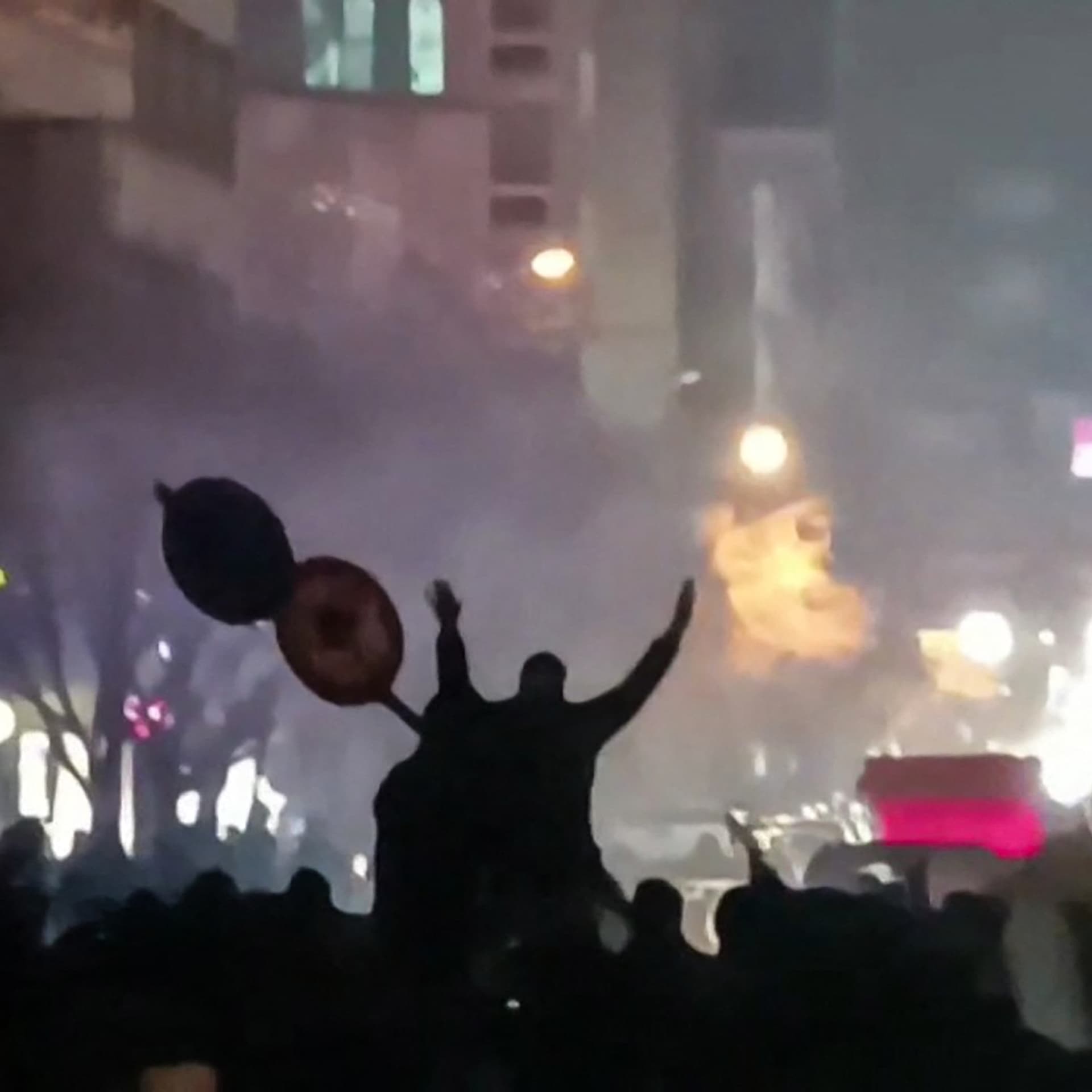
0:11We've seen massive crowds of people from all walks of life. Shopkeepers, students, workers, the young, the old, demanding an end to the Islamic Republic. And they're doing this in the face of grave danger. Security forces have responded with violence. Since Thursday night, the government has cut Iranians off from communicating with the rest of the world. Human rights groups say a massacre is unfolding under this comms blackout. They report at least hundreds have been killed, with eyewitnesses telling them of overflowing hospitals and casualties rising by the hour. This is all unfolding at a time when the Islamic Republic has been weakened on the world stage.
1:02Its economy is in shambles. Its international allies decimated. And now U.S. President Donald Trump is weighing responses to the protest crackdown, including military options. So could this be the beginning of the end for the Islamic Republic?
1:24From the newsroom of The Washington Post, this is Post Reports. I'm Elahe Ezzadi. It's Monday, January 12th. Today, I'm joined by The Post's Iran correspondent, Yegeneh Torbati, who's been tracking these protests from the beginning, talking to people inside Iran constantly before the comms blackout. She explains how we got here, what makes these protests different from others in Iran before, and whether the U.S. could get involved. Yegeneh joined me from Istanbul, Turkey, where she's based.
2:03Hi, Yegane. Hi, Aleha. We are talking Monday morning, Eastern Standard Time. And I've been wanting to talk to you because there has been so much going on inside of Iran. And I know you've covered the country for a while. So as of right now, what do we know what's happened inside Iran over the past couple of days? Well, it's a little bit hard to know what's happened over the past couple of days. mostly because the government has chosen to completely cut off all communications channels practically with the country. So we can't call people, we can't message them. And so all we're sort of left with is this trickle of information that does manage to get out through these very small apertures.
2:51And from what we can tell, hundreds of protesters have been killed by security forces over the last few days. The information that, you know, human rights groups have gathered indicates that people are dying due to gunshot wounds from security forces. There were videos kind of earlier on emerging of security forces with long guns, like shooting straight at people. We're seeing some videos being shared by Persian language news outlets, including BBC Persian, that show people looking for family members' bodies. I'm sorry, looking for their bodies, like where? Sure. In morgues, in hospitals, it's, you know, again, it's really hard to sort of verify some of this and to have a really full picture of what's going on or even drill down into kind of even one of these anecdotes and try to understand more.
3:47But the evidence that we're seeing shows hundreds of people that have been killed, possibly more, just in the last few days. And it's all sort of happening under the cover of this total comms blackout. Hmm. And before the comms blackout on Thursday night, what was the situation on the ground in Iran like in the days leading up to that moment? Yeah, I mean, prior to this, we were seeing people protesting all across the country and really sometimes in sizes and crowds that we had not seen in Iran for over 15 years. And they were happening kind of all over in largely Kurdish parts of the country, especially in the West.
4:29and also in huge cities like Tehran and Mashhad. And in particular, on Thursday night, we saw a massive protest, a series of protests kind of across the country. And we were able to get a little bit of information about what was happening there before this shutdown started. Yegane, I know you've covered other mass protests in Iran, and we've talked about them on the show before. When did these rounds of demonstrations begin and why? So these really started December 28th, and the spark was basically Iran's currency effectively collapsing. That weekend, the Riyal, the Iranian Riyal, had reached something like$1.45 million to the dollar.
5:17And just for context, when I was covering Iran 12 years ago or 13 years ago, the rial was something around 30 to 33 ,000 to the dollar. So we're talking really about a depreciation of well over 90 % in the value of Iran's currency. And so, of course, Iran's economy had been struggling for a while, but this was really the bottom kind of falling out. And it's really not just a currency. It's also sort of a reflection of how people are feeling about the government and their faith in its ability to govern. And the real sort of functions as a bellwether for Iranians' optimism for the future, effectively.
6:00But it also has these practical effects. And the most immediate one was that merchants, bazaar merchants who sell goods, especially imported goods, their businesses were not viable anymore because they have to, especially mobile phone vendors, for instance, they have to import all of those goods. And the prices that they now had to charge their customers, those customers just couldn't pay. And so we saw some of these merchants close up their shops and begin chanting and asking for others to join them. And that was a relatively small spark. It was in Tehran. And then that spread to other bazaars, other markets in the city.
6:37And then from there, within a couple of days, we saw other elements of society, particularly students who are a really core part of Iran's civil society. They joined in. And then after that, it sort of spread across the country and across various ethnic groups and sectors of society.
6:59You know, it's obviously really hard in a country like Iran, where Western journalists don't have a ton of access. We don't have a reporter base there. You know, we interview people and we try to get a sense of why they're protesting. Of course, that's just a little snapshot and we're not doing a poll or anything. So I think it's really instructive usually to look at the chance, what people are calling for. The chants that we saw in these protests, like in other rounds in the past as well, especially recently, they indicated that people were asking for fundamental change to the system of government that they live under.
7:37We heard chants of death to the dictator, which is a reference to Ayatollah Ali Khamenei, Iran's supreme leader.
7:51And we also heard people calling for the return of the Shah, meaning the monarchy, which was the system that the current Islamic Republic replaced almost 47 years ago. And so, you know, those to me indicated that although this spark may have been economic, it very quickly, within 24 to 48 hours, the protesters were showing that their concerns were not just economic. They had much deeper dissatisfactions. Yeah, and I think it would be helpful at this point to take a step back and just briefly explain how Iran is governed, to explain when people are calling for a change to the system what that means.
8:29And so since the 1979 revolution in Iran, in which diverse factions of society came to overthrow the monarchy, the Shah of Iran, Iran has been an Islamic republic. So, Yegane, can you just simply explain for us who is in charge? How is Iran governed? Right. So Iran has a blend of kind of theocratic and Republican elements. There are elections. People can vote for president and for members of parliament and for some local officials. But at the end of the day, that democratic element is very tightly managed. The candidates who are able to run for office are approved by a council of clerics and lawyers.
9:13And that council, as well as the military, as well as the judiciary and many other institutions in Iran, ultimately answer to the supreme leader. And that supreme leader right now is Ali Khamenei. He has been in charge in Iran since 1989. And he holds ultimate power. And although there is a lot of competition within rival factions in Iran, and we know we've had reformist movements and more conservative movements. At the end of the day, it is the clerical establishment that wields ultimate power and also kind of increasingly over the last 20 to 30 years, the military establishment as well. And by that, I mean the Revolutionary Guards, although they also ultimately answer to Khamenei.
9:59And so when you were saying people were calling for a change to the system, I mean, aside from the economic discontent, what has life been like for people in Iran under this system of governance? Mm-hmm. Well, I think there's a lot of different elements to that. One of those elements is the international isolation. So Iran's Islamic government has prioritized a particular ideology, and that ideology is that of resistance to the West. It has pursued a policy that, in its own words, is anti-Israel. It has supported militant groups abroad, including Hamas, including Hezbollah in Lebanon. It has pursued a nuclear program that at least Western governments suspect of being aimed at a weapon.
10:46And it's also pursued a very robust ballistic missiles program. All of that has had a cost in the sense that Iran has been under layers of sanctions really for almost its entire existence as an Islamic Republic, but especially much stricter sanctions over the past 20 years or so. And that has isolated Iranians economically, diplomatically. And so, you know, a lot of Iranians say that they just want a normal life. They just want to be able to travel on their passports to different countries and not be suspected of, you know, terrorism or kind of all of these, what they would say are, you know, kind of the nefarious goals of the government.
11:32And I think there's also just a deep sense that the government is not running Iran effectively. So just last year, we saw major water shortages in the country and just huge concerns that if it did not rain in time in Tehran or throughout the country, that the dams would be completely empty and the country would run out of drinking water, would run out of water resources used for other things. The president has said that they may need to move the capital elsewhere. And so that is also sort of seen as a product of the government's mismanagement. There's also power cuts. There's just a host of problems that people see in their day-to-day that aren't getting better.
12:17And a lot of people just feel like we're not seeing any benefit from this system of government. We don't believe in this ideology and we just want to live a normal life like, you know, nothing special, just something that, you know, people all over the world kind of take for granted. And then there's also this question of, is this a free society? Is this a society where people can openly express themselves? And the reason I'm bringing that up, too, is because this isn't the first protest movement we've even seen in the past few years in Iran. I think people might remember the mass demonstrations around 2022, the Women's Life Freedom Movement sparked by the death of a woman, Masa Amini, in police custody after her arrest for allegedly violating the hijab compulsory Islamic code law.
13:04And I think a lot of that focus became about how people were feeling repression inside the country. So how are these protests like that and how are they different? it? Yeah, so under this government, there have been a number of rights that have not been recognized, including a host of women's rights, freedom of speech, freedom of religion, the freedom to organize politically, especially in a way that the government doesn't like or doesn't approve of. All of these things are kind of part of the ways that Iranians have been repressed over the past for almost five decades. People feel quite suffocated at times by the Islamic nature of the Islamic Republic.
13:47And the government has really sought to determine how people dress, what media they consume, how they conduct their private lives on a range of different fronts. People have paid a huge price for that in their view. So that's another aspect of why people feel so fed up at this point. But in terms of how these protests are different, I mean, We have not seen crowds of this size in Iran in a really long time. There's different reasons for that, including a lack of maybe one unified organization calling for a protest at a particular time. But another big reason is the repression that the government answers these protests with and the violence.
14:28There have been economic protests in the past. in 2017, there were economic protests in 2019, but those tended to be sparked at least by a discrete issue. Like in 2019, it was the increase in gasoline prices. This time it feels much more, at least from analysts that I've spoken with, that there's not one specific thing that the government can do to fix the state of the economy right now. And we kind of see that in the responses that the government has made so far, at least early on, they made a change that would give Iranians the equivalent of$7 a month in credits that they could use for basic food items.
15:08That is not really going to have a huge impact on Iranians day to day. And that did nothing to stop the protests. So absent fundamental changes in the economy and how it's run, it seems unlikely that the protesters' demands, at least just on that front, would be met. You know, Yanke, before we leave the first part of this conversation, just circling back to when we were talking about how it's difficult to know how the government has responded to demonstrators right now, given the blackout, but we know at least hundreds, if not more, have been killed. How has the government responded to past demonstrations?
15:48You know, the government has a long and repeated history of suppressing protests with violence that stretches back, at least in my memory and possibly before this, at least in 1999, when there were student protests in Iran and those were suppressed quite violently. Then if we go forward to 2009, during the Green Movement protests, initially, you know, the government was quite taken aback at their size, but fairly quickly, they unleashed lethal violence. And listeners might remember Neda Agha Sultan, who was shot by a sniper and her death was captured on a camera phone, and then it was uploaded to YouTube and we all watched her die on camera.
16:34Then if we fast forward to 2017, there were protests then that were violently suppressed. 2019 in particular, that was when we saw a really bad internet shutdown as well. And we still don't know the exact numbers there, but reputable human rights organizations have put it at least in the 300s. And they say that that's an undercount, but that's what they could document. And then with the Woman Life Freedom protests, the estimates there are around 500 people killed. And in each of these rounds, of course, hundreds, thousands of people are arrested. And then also we see execution. So that is also what happened with Woman Life Freedom in 2022.
17:13There were, I think, around a dozen or so men who were executed for taking part in those. The charges were that they had shown violence against security forces, but, you know, we're talking about really rushed trials, inability to defend themselves, forced confessions. And so, you know, we can't necessarily take the government's word on that. That is a very established pattern of reaction from the government to street protests. Well, and I think that makes it all the more remarkable to those of us watching this unfold, that given that record and that understanding of how harsh the responses are, that people are still going out in the streets, still protesting, still, you know, chanting these phrases of calling for an end to this system of governance.
18:02Yeah, I think it shows you that people have really had it. I mean, one sentiment that we heard in our interviews with people is just like, there's a chance that I could die and that's fine. Like, what's the point of this? I can't live like this anymore. And I think people are really, really suffering and struggling and feel like they have no other choice. They feel like they have tried in different ways to first reform this system and then protest for it to change or ask for changes on the margins. And none of those demands have been met. And so for them, I think, you know, Iranians understand the risks of their actions.
18:45They know better than than anyone else, but they feel like, you know, we have to at least register our dissent with the caveat that there are probably still millions of Iranians who support this government. And also, I recognize that, you know, the people who are perhaps willing to speak to a Western reporter are maybe not completely reflective exactly of the entire population. But, you know, when I talk to analysts, when I just sort of look at the arc of Iranian history over the past, you know, 45, 47 years, it does seem clear that that discontent has really spread throughout a very large portion of the society.
19:27And it's just deepened to the point where people are not able to take it anymore.
19:37After the break, the Trump factor. what the U.S. response to these protests could look like, and what could be next for the future of Iran. We'll be right back.
20:10weeks. Just$6 unlocks trusted reporting to share with other people in your life. After your first six months, it'll cost$19 every four weeks. You can cancel anytime. Head over to WashingtonPost.com slash subscribe and get premium access to The Washington Post today. That's WashingtonPost.com slash subscribe.
20:34now i want to step back and talk more about how the united states plays into all of this and and their positioning toward what's happening inside of iran so just to start there what has president donald trump said about these protests well he has said repeatedly that if iran kills protesters that the U.S. would intervene. I said, if they do that, we're going to hit them very hard. We're going to hit them hard. We're ready to do it. And the State Department has also issued statements in support of the protesters. From what we know, as of the latest, we know that the Trump administration is considering military options and that the president has not really settled on one specific option, but that those discussions, you know, are expected to continue.
21:24And also at the same time, President Trump has said publicly that Iran has reached out to restart talks. So it's unclear what those talks would lead to. In the past, Iran has said that the U.S.'s demands of it, including zero enrichment within Iran's borders and also drastic limits to its missile program, that those are effectively non-starters. And so it's unclear if the U.S. position would change on that or if Iran would decide to agree to some of those compromises. How does this all fall in line with Trump's posture toward Iran generally? It's a little bit confusing sometimes to be able to say what President Trump's posture is.
22:09On the one hand, he reopened talks with Iran, negotiations with Iran during this second term, like basically last year. But then on the other hand, kind of in the middle of those talks, Israel struck Iran and struck its nuclear sites and military sites and killed a bunch of top Iranian military and nuclear officials. And then the United States, under President Trump's orders, also joined in on that attack, striking three key nuclear facilities. Our objective was the destruction of Iran's nuclear enrichment capacity and a stop to the nuclear threat posed by the world's number one state sponsor of terror.
22:48Tonight, I can report to the world that the strikes were a spectacular military success. But then also at other times, President Trump has expressed a willingness to speak with the Iranians and to negotiate with them. And so there's some contradictions in the policy. He's been hawkish at times. He's been open to negotiations at others. I reported with our colleague Adam Taylor a few months ago that the Trump administration had actually cut funding for Internet freedom services in Iran, which doesn't seem to be totally in line with the rest of its policy. It's hard to kind of gauge exactly where President Trump is going to come down on some of these issues.
23:30And so how has the Iranian government responded to these sort of threats that Trump has said, like we're going to hit him where it hurts and also just generally the international pressure right now? So, you know, Iranian officials have said that they would retaliate and they've also sort of used those threats. And I think also the timing of these protests, the first protests that have happened after the so-called 12-day war when Israel struck Iran's nuclear sites and military sites, like I mentioned. And so all of that kind of international pressure is also reflecting domestically where the government is sort of casting the protesters now as doing the bidding of these foreign actors.
24:20And I think it's important to note that the government has always cast protesters as being connected to foreigners. It very much fits into a very comfortable and familiar pattern of rhetoric for Iranian officials to cast internal dissent as the work of outsiders. They've been calling protesters terrorists. They've been likening their tactics to ISIS. And so you don't negotiate with terrorists. You don't compromise with them. And so that really implies like an all-out war against people who have been demanding change. You know, I think one important thing also to note is that the rhetoric that the government has been deploying about, you know, terrorism and all these things also serves to help it rally the troops, so to speak, and to kind of motivate its security forces and its base to engage in repression.
25:13So, Yegane, I have two big questions left. And they're both forward-looking. One, and I think this is a big one that a lot of people are wondering at this moment, is, is this the beginning of the end of the Islamic Republic? Could this moment be the moment that brings that government down? I think if you talk to experts, especially experts in revolution, for instance, They believe that Iran is perhaps closer to a revolutionary moment now than it has been since the Islamic Republic was established. Now, when that might happen and what form it would take and how deep the change would be, I think all those are questions that are really just unclear at this point.
26:01But I think, you know, the depth of the dissatisfaction, how wide it has spread through society, coupled with that coming at the same time as this very intense international pressure, I think that puts us in uncharted territory, at least for Iran. I think what's fair to predict or to assume just based on the evidence that we have from years of observing is that the government in its current form is very unlikely to be able to address people's deep frustrations. frustrations. And one thing to note is that right now the Islamic Republic is vulnerable. Over the past few years, it's lost ally after international ally, whether that be the government of Bashar al-Assad in Syria, its ally Hezbollah in Lebanon has been severely degraded.
Read the full transcript
26:56And even very recently, its major ally in Latin America, Nicolas Maduro, was seized and arrested by the U.S. government. And so, you know, Iran is largely isolated at this moment. If the Islamic Republic were to end, if this government were to fall, whether it's anytime soon or in the near future, are there any clear opposition leaders or an organized opposition that could step in? You know, there's, of course, opposition figures inside Iran, outside Iran, and, you know, society and charismatic figures in the opposition, labor leaders, all these sorts of figures have been pretty repressed over time.
27:41They're in jail or they've been forced into exile or restricted from doing the work of organizing society and certainly from organizing people against the Islamic Republic. There are, of course, some political parties and labor groups, especially in areas like with ethnic minorities, but still they operate in an environment where they're extremely limited in kind of the political actions that they can really take. And outside the country, there are many different visions for Iran's future and not necessarily one unifying figure that those groups all believe in, even if they all share a goal of removing the Islamic Republic.
28:23And so I would say there's not kind of one opposition group. The person with the most name recognition and probably the broadest following as a result is the former crown prince Reza Pahlavi, who was the son of the king that was deposed in 1979. And so he has taken kind of the most prominent role over the past couple weeks. He has said that he wants to sort of be a transitional figure that leads Iran to being a secular democracy and that he doesn't necessarily want to be kind of a ruler in waiting, quote unquote. Over the weekend, Pahlavi spoke to Fox News about his vision for leading Iran to democracy.
29:08I'm here to lead and help our nation go through that transition. But beyond liberation, we have to have a plan, A plan for a stable, smooth transition. And there are definitely people who are inside Iran chanting his name. We have heard that in the protests. And I think when you talk to people, you hear a range of views on that. There are definitely some people who literally want a monarchy in the country. And then there are others who, you know, see him more as a unifying figure who kind of can be like a symbol of opposition to the Islamic Republic. because this is the same form of government that the Islamic Republic overthrew.
29:45And so people are, by chanting for it, they are kind of showing the Islamic Republic that they completely reject it. Finally, just what is the big question that you are asking yourself in this moment? So what I'm going to be looking for, especially, you know, when this Internet shutdown is lifted, is one, really the true extent of the repression that occurred over the last few days and sort of what that looked like and how it was carried out. And secondly, if people continue to go out in spite of that and continue to risk their lives, I think that will tell us something about how this protest movement, these demands aren't going to go away and aren't going to be repressed so easily.
30:32Yegane, thanks so much for sharing and spending time with us. Thank you for having me.
30:40Yeganeh Torbati reports on Iran for The Post. She also has a new book about Iran coming out in June. It's called Stolen Revolution, Betrayal and Hope in Modern Iran. We'll put a link for more information in our show notes. That's it for Post Reports. Thanks for listening. Today's show was produced by Emma Talkoff with help from Sabi Robinson. It was edited by Ariel Plotnick with help from Dennis Funk. And mixed by Sean Carter. Thanks to Alan Cypress. You can stay on top of the latest developments out of Iran by following Yeganeh's reporting on The Washington Post's website. And you can share that great journalism with others.
31:21With a premium subscription to The Washington Post, you get three extra accounts to share with friends and family, so they can stay informed too. Right now, you can get a premium subscription to The Post for$6 every four weeks. Just$6 unlocks trusted reporting to share with other people in your life. After the first six months, it'll cost$19 every four weeks. You can cancel any time. Head over to WashingtonPost.com slash subscribe and get premium access to The Washington Post today. That's WashingtonPost.com slash subscribe. I'm Elahe Izadi. We'll be back tomorrow with more stories from The Washington Post.
32:11Good journalism is even better when it's shared. With a premium subscription to The Washington Post, you get three extra accounts to share with friends and family, so they can stay informed, too. Right now, you can get a premium subscription to The Post for$6 every four weeks. Just$6 unlocks trusted reporting to share with other people in your life. After your first six months, it'll cost$19 every four weeks. You can cancel anytime. Head over to WashingtonPost.com slash subscribe and get premium access to The Washington Post today. That's WashingtonPost.com slash subscribe.
From the publisher
The turmoil started in late December, when some Tehran merchants closed up shop to protest the free fall of Iran’s currency.
That initial outcry sparked a wave of protests across the country. Demonstrators demanded not just economic reform, but a total overhaul of Iran’s government and an end to repression. Some called for the ouster of the country’s supreme leader, Ayatollah Ali Khamenei.
Now the government has cracked down, and there are reports that hundreds of protesters have been killed. The country has been under a communications blackout since Thursday, making it nearly impossible to assess the extent of the bloodshed.
Elahe Izadi speaks with Iran correspondent Yeganeh Torbati about how things boiled over - and what might be happening inside the country.
Today’s show was produced by Emma Talkoff with help from Sabby Robinson. It was edited by Ariel Plotnick and mixed by Sean Carter.
You can learn more about Torbati's forthcoming book on Iran here. Subscribe to The Washington Post here.