 Ask ChatGPT


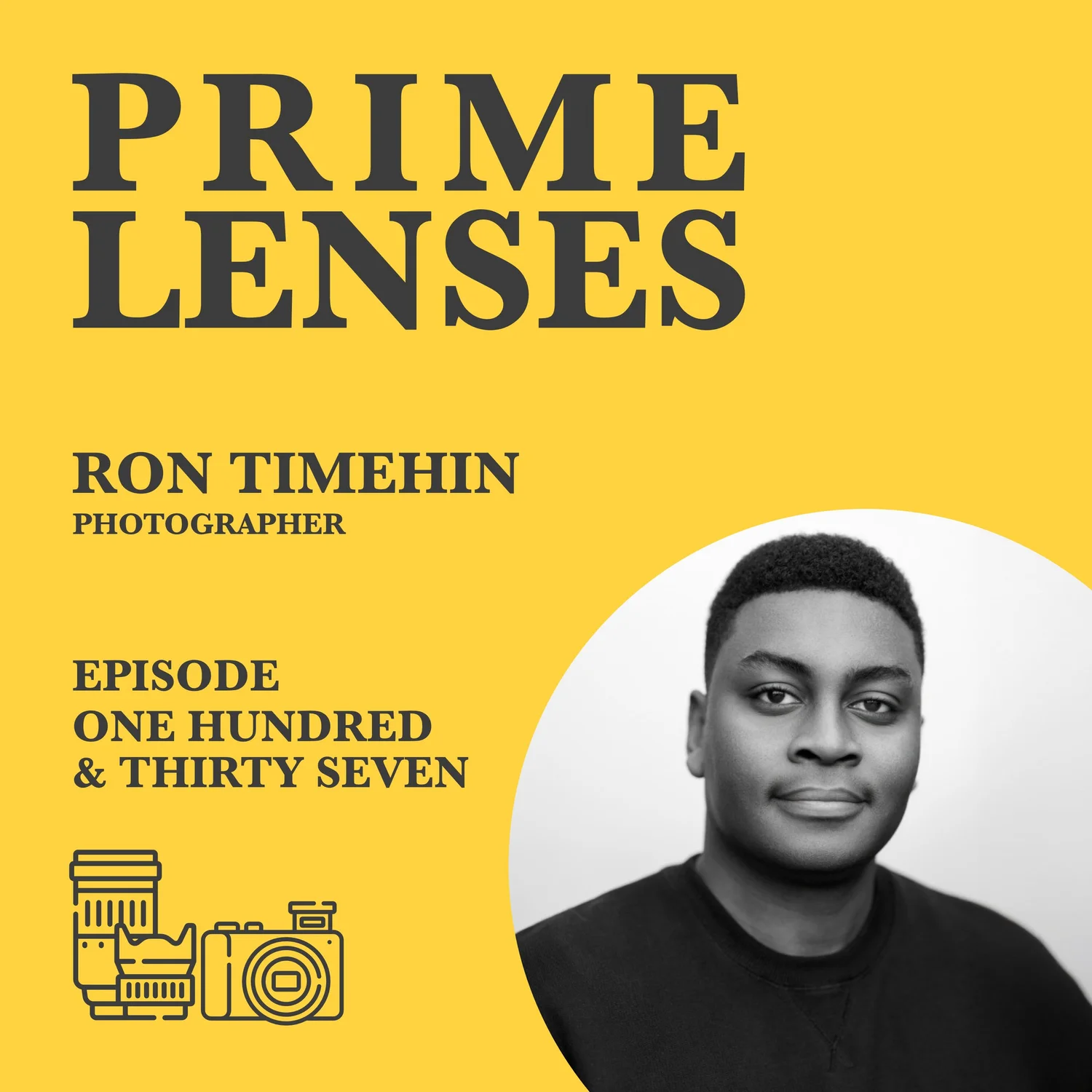
Ron Timehin (UK photographer) discusses building a photography career through targeted practice, mentorship, personal projects, and managing creative burnout. He also covers how he creates portraits collaboratively, uses music to set tone, and uses his work to support representation and community stories.
Ron is a photographer based in the UK with a music background (he played trumpet; studied business of music). He became a Sony ambassador/imaging ambassador for Europe and is long-term partnered with Adobe. He teaches and supports emerging creatives, citing mentors and the “plant seeds in others” mindset.
Practice should be targeted like musician training; personal work is where you can experiment and “make mistakes.” Rest is essential to avoid burnout. Portraits work best when the subject feels seen and the shoot environment is prepared. Representation and storytelling can create real-world impact.
Vogue September 2020 cover team (first Black team in British Vogue history); Dove documentary on race-based hair discrimination that helped change UK law; Portrait of Britain images across UK transport; Somerset House Sony World Photography Awards shortlist (Ghana community resilience). Personal series “London Fog” (11 years) and upcoming “Black Rainbow” exploring being queer and Black.
Written by AI. May contain mistakes.
Explore the struggles of sharing artwork and dealing with burnout.
“It's really terrifying putting your work up on walls for everyone to judge.”
Ian and Ron share their experiences at a photography show and their mutual connections.
“Unfortunately for him, I got on with him like a house on fire and so consequently he is part of the Prime Lenses cinematic universe that I'm building over time.”
Ron talks about his journey in photography and the importance of mentorship.
“So it's, yeah, it's a great place to connect with people, to learn.”
Ron reflects on his family's expectations and his creative journey.
“I'm trying to word this in a way that isn't disrespectful to my parents.”
Ron discusses his transition from music to photography and its unexpected career path.
“And so a camera was a way for him to do that.”
The importance of targeted practice and mastering photography fundamentals.
Ron explains his motivation to connect with people through portrait photography.
“was about learning how humans play their part within that scene, especially for environmental portraiture.”
Learn how to prepare a welcoming space for subjects in photography.
“Again, I think music is incredible, really powerful, and so I'll always have music playing in the background.”
Discover the journey of a photographer transitioning through career milestones.
“And sometimes that can be a bit overpowering.”
Understand the emotional challenges of recognition versus financial stability in creative work.
“this work can have real world influence, you know.”
Explore how personal projects can enhance creativity and lead to professional opportunities.
Learn about the pivotal moments in a photographer's life and their impact on style.
Ron shares his journey into photography with Sony cameras and his experiences as an ambassador.
“It looks like something out of Blade Runner.”
Discussion on how smaller cameras facilitate creativity and the joy of photography.
“And this is something that Tom said as well, which I fully agree with, is it just allows you to do the thing.”
Ron discusses his inspirations from music, art, and photography and their impact on his work.
“At this point in time, not really, which I'm sad to say.”
Exploring how past experiences and themes in photography inform Ron's current work.
“I look forward to kind of your exhibition space with big speakers and, you know, cool sounds as we move through it and stuff.”
Explore how personal experiences shape creative storytelling in photography.
Hear about the importance of representation in photography and storytelling.
Understand how storytelling through photography can highlight joy and positivity.
“felt this was like one of the worst times in the history of photography.”
Learn about the personal journey of exploring queer identity through art.
Discover upcoming projects aimed at inspiring and educating future generations.
“Did you see there was a really good clip of Andrew Scott doing the rounds on social last week where he was talking about retiring the phrase openly gay?”
Learn the importance of backing up your photos and managing storage space.
“I've got two, two terabytes mirrored at the moment.”
Explore the challenges photographers face with rising storage costs.
“I think if you're in the business of making things, you've got to hope to God that you make tiny text files, like writing.”
Listen to insights on the essence of photography beyond just equipment.
“Honestly, I love what you're doing here.”

Get the gist, explore an idea or ask about something said.
 Claude
On Prime Lenses, what are the key points of this episode?
Searching your listeningAutomatic transcript. May contain errors.
0:00It's really terrifying putting your work up on walls for everyone to judge. It's really scary. And burnout is absolutely real. I just had to rest. And I think that was the second lesson. Make sure you're resting because I'm shooting stuff for out of home. I'm shooting stuff for editorial. So it's difficult to find a balance. And I don't think I got that right last year. I completely burnt out.
0:25Ron Timehin: Welcome back to Prime Lenses, I'm Ian. My guest today is Ron Tomehan, a photographer based in the UK who, like a few previous guests, has a background in music which I think makes him a really great practitioner because he's applied that kind of athlete-musician mindset to getting really good at what he does. He knows it's all about practice. He's also learned and come up with some of the best other previous guests like Miss Anne Harriman and Tom Oldham, so he really knows his onions. His portrait work is incredible, his landscape and city stuff was a total surprise to me when I was researching the episode, and sitting down with Ron, having hastily met in person only once before, was an absolute joy.
1:06Ron Timehin: I think if you're interested in starting getting into photography and finding your feet with projects, I think you'll really enjoy our conversation. So, I'll get out of the way, and just thank you for listening, and here's Ron.
1:23Ron Timehin: good i can see there's a proper microphone there and a pop filter and everything this is a pro setup i'm trying he's not messing around ladies and gents it's good to see you i recognize that white wall yes it is 28 sunbury lovely lovely daylight studio that i share with uh tom oldham who's been on the podcast as well. He has. Unfortunately for him, I got on with him like a house on fire and so consequently he is part of the Prime Lenses cinematic universe that I'm building over time. So yes, hopefully we're going to add you to the ranks as well and then you'll be stuck with me as well. Brilliant.
1:59Ron Timehin: We met in person, which I like always, even if I don't record in person with someone, it's really nice to meet someone in person first, at the London video and photography event. It was like just over a year ago. And you were rushed off with people asking you questions because you are the Adobe Whisperer. Yeah, the photography show is amazing. I've been doing it for, I want to say this is coming up to my 12th year. So it's, yeah, it's a great place to connect with people, to learn. There's some also really good deals as well for camera equipment. So yeah, it was really nice to meet you there, actually.
2:34It was a lot of fun. Yeah. And the Adobe thing as well. I've used Adobe software for, well, since the start of my career. So I actually work with them long term now. I'm one of their ambassadors. And so I try and teach and, you know, give help where I can.
2:50Ron Timehin: With you working as a photographer, you touch on this a little bit in writing and other things that I've seen you do online, where you talk about like your interest in education or like supporting the next generation of photographers and creative people. was that always on your radar as someone coming up were you lifted up by people on the way up that kind of made you go well when I get to a certain level I'm going to pay that forward 100 % yeah I think I think it started actually when I used to play music and I had a lot of mentors and teachers um for those that don't know I used to play the trumpet when I was younger and did my grade eight when I was fairly young so I got to perform and travel and that's how I got into photography.
3:33It was a way to document what I was seeing. So I think just learning from other musicians really inspired me to pass on that knowledge as well. And then when photography became my main bread and butter, really that sort of ethos remained. And I've been very fortunate within the photography industry to have amazing mentors. People like Tom, they're fantastic. They really give a lot to other people. and there was a quote actually that I heard from the late actor Chadwick Boseman who played the Black Panther and he said as much as you are planting seeds in your garden make sure you're planting seeds in others as well so you can watch them flourish so I think that's a really good mindset to have and I'd like to hope I do that as well.
4:20Ron Timehin: I completely agree anytime there's any way and I learned this a little bit because I tried stand-up for a brief time in London and every comedian you met almost irrespective of how well known they were and how established they were would if you said you were doing stand-up as well they would stop and like there was eye contact and repeatedly i was asked like right what's your name where you're doing stuff because they know as a fellow performer the kind of peculiar mental illness that is required sometimes for for bashing your head against a creative wall like sometimes sometimes that's just really hard um stand-up especially but any creative endeavor if you meet someone else mad enough to try it then i think i feel like it's our duty to stick together and and help out as much as we can irrespective so no i i love that i think that's very healthy definitely i think so especially in the photography industry where it can feel quite lonely and isolating um just having people around you that you can bounce ideas off of or seek information is really important so um I mean I often get messages through emails DMs and I try and respond to as many as possible because I know what it feels like so um yeah we're doing good work when you were growing up then was that also a part because you you were into music and you know you were in a creative you're on a creative path from very early on so were you surrounded by that kind of support network or did it come from your family to kind of show you that way?
5:50Ron Timehin: I would say a mixture. I'm trying to word this in a way that isn't disrespectful to my parents. My parents don't really understand the photography industry, really, or the creative industry in general. They're both medical professionals, and they are also of African descent. So their idea of what a career should be is normally along the lines of a doctor, accountant, lawyer, that sort of thing. so they were really supportive in me doing these sort of creative endeavours but they didn't expect it to be a career path for me and so that took a little bit of convincing, actually a lot of convincing, I'm still convincing but no they have been brilliant, they have been very supportive along the way and I think just friends and I'm very fortunate a lot of my close friends are not only accountants but they DJ at clubs and festivals and I'm surrounded by artists and other photographers and filmmakers so I think building that network of creative people is really important not just for your knowledge but also for your sanity just to know you're not losing your mind.
7:02Ron Timehin: You mentioned their kind of their expectations what were your expectations as opposed to coming into photography because initially it sounds like it's something you're just doing to kind of document and stuff I had a recent guest called Graham who did a similar thing when he was traveling and working with NGOs and picked up a camera because he was rubbish at writing his blog. And so a camera was a way for him to do that. But when you kind of make the mental shift that you're like, actually, I think I like the image making more than I like the music making. What do you want? Do you know what the outcome you want is at that point?
7:36It's a really weird one for me because I didn't know it would become my career. I was sort of pushed into it very thankfully actually but I mean I went to university to study the business of music so the industry record labels artist management because that was in essence what's the word I'm looking for a compromise between my parents and I so I'd learn the business of music instead of being an outright musician and unfortunately that didn't go too well i really fell out of love with it was almost like the um what's the term i'm looking for it basically the my eyes were opened into how the music industry works and that really wasn't pleasant it was all about commodity money and the artistry of music was sort of secondary to that and i actually didn't go to lectures that often and instead i'll take my camera out and go and photograph instead because that was creatively fulfilling for me so it was around about that time that uh instagram was born so 2011 and i finally found a platform where i could share my work and have instant feedback and connect with other like-minded creatives and yeah luckily instagram saw my work they featured me for two weeks as a suggested user and so my following jumped around 25 000 followers within that space of two weeks and i freaked out because my photos weren't very good but i was suddenly propelled into this limelight where a lot of people were judging and instead of sort of crumble and hide away i decided you know what let's actually really pursue this thing and just be as good as i can and that was the sort of push that i i needed
9:32Ron Timehin: that's really interesting because you're you're talking there about like seeing an opportunity and sort of committing to it and then committing to it with a with a kind of practice i love talking to people who've got a background in music for that reason alan shaller has been on the show and he was a musician before and he seems to have there's a rigor that i think comes it's a bit like being a professional athlete another mate of mine brandon talbot has been an athlete and i i think that kind of mindset of you get up you do the reps you assess your performance and then you come back around do you think am i onto something there do you think that helps on the money 100 yeah i mean practice is really important um not just any practice though but targeted practice so if you have weaknesses or things you're aware of that you can improve on then focus on those um i think if you're just practicing and doing random things you're not going to grow at the rate that you really want to so music definitely taught me that scales i've hated doing scales but they were really necessary and when i then fell in love with jazz because i was classically trained because i i had the foundational knowledge i could then apply that to jazz and i think that's the same with photography if you have the fundamentals when it comes to lighting composition um storytelling then you can apply that to nearly any sort of genre which is amazing so practice is very important for me yeah so what were your photographic scales um well light first and foremost uh at the time i didn't have money for lighting so natural light predominantly actually the stuff i was shooting then was really landscape landscapes and cityscapes so that was a lot easier than the stuff i'm shooting now I'd say because buildings aren't moving you just have to turn up at the right time and yeah it takes a lot of effort actually to go repeatedly to the same location to get the conditions that you want but that gave me the sort of space and the time to focus on lighting composition and then when I slowly started moving into portraiture and street photography and documentary photography I understood the fundamentals and then now it was about learning how humans play their part within that scene, especially for environmental portraiture.
11:52So I think that gave me a good foundation to work off. Also, just understanding my camera, my settings, to get the desired outcome that I wanted, so that when I was then shooting portraits and street photography, all I'm thinking about is the connection between myself and a person. I'm not faffing around with settings. That's already banked in my mind.
12:13Ron Timehin: Looking at your portfolio and doing a bit of prep for this, there are some images there especially in the personal work that sort of stood out as like being more landscape and cityscapey but it's clear that with you it seems like it starts with people that you're like incredibly interested in human beings is that just always been the subject that gets you out of bed in the morning it does now for sure and i think that's taken me this long to realize oh really because at the time when i was shooting landscapes and cityscapes that for me was creative expression it was fun i got to explore i got to meet people and shoot together with them um but i mean it's quite personal but i have a lot of underlying um fears and um i don't know i'm on a process of discovering myself so i recently came out to my family as being gay um and i've always sort of wanted that sense of belonging to a community that i've that really gets me and I've realized that everybody wants that as well so I think that's the sort of baseline I'm not sure like a foundation I go into with every interaction I have because I want to know what makes this person tick I want them to feel seen and that's a real driving force for my work I want people to be proud of who they are and the way they look and I want them to celebrate that so it's a very collaborative process for you I think so yes I'd like to think so a lot of it is communication conversation um i try not to pick up the camera when i'm doing shoots in the studio for example for as long as possible just so we can get to know each other first and then that's the way you can really because having your photo or your portrait taken can be intimidating like all of your sort of self-conscious fears come out and so if i can find a way to sort of neutralize that so we come to a place where you're proud of who you are and the way you look then that's a good place to start for me yeah in the room you're in when i last was in london and visited tom we did he did a quick little session with me at the end and like we've been talking for two hours or something and even then all of a sudden when the camera comes out i i was conscious that i went very rigid and not very relaxed and he was just like all right mate it's just okay it's not it's not for the cover of vogue it's gonna be okay just you know chill out but it is funny how how that can happen and if that can happen when you know someone then walking into a space do you like to kind of prepare the space for someone coming in are you quite sort of particular in that way i think the environment is really important yeah so i will normally start obviously a warm greeting well actually it starts before they even walk into the space because we'll be communicating whether that's over emails text messages phone calls and so you get to learn a little bit about them during that.
15:11If it's somebody who has some sort of notoriety, then I'll do a deep dive into their history and their career and some of the interesting facts, things I can talk to them about, so that when they come into the room, they don't feel like a stranger. I then always have music. Again, I think music is incredible, really powerful, and so I'll always have music playing in the background. And then also the team I have with me. so I like to choose people who are friendly warm really good at what they do and normally we'll start with hair makeup or grooming so they'll be sitting in a chair they'll be taken care of and then that's the best place for me to start having a more in-depth community conversation with them so that's when it starts for me yeah no I do like that I do want to know what your playlist is now
16:00Ron Timehin: for like being in the you know like is this do people walk into Coltrane or something is that Coltrane is on the playlist actually I thought with the jazz connection you see Cleo Soul as well amazing artist really really nice to put people at ease gosh there's too many to list but yeah the playlist is good I'll send it to you yeah please do I find with playlists it's a difficult thing to strike the right balance because I'm quite an energetic and upbeat person and people come into my playlist sometimes and they're a bit like whoa oh, like you've got to ease us in. Whereas I'm straight in with like, you know, Superfly or something, you know, like something quite bouncy that's got a bit of rhythm to it.
16:43Ron Timehin: And sometimes that can be a bit overpowering. Like my wife and kids are like, what are you doing, dad? It's not disco. Like just bring it down. Just one notch. But yeah. So when you're working then with folks and, you know, we've established this about people and stuff, you've had a year of kind of like, well, not just a year, but like a lot of success has come your way recently you've had exhibitions at somerset house you've had stuff published in vogue that was why one of the things i was going to get on to was a little bit the kind of the paying it forward and kind of what's next but how do you feel now this is in the beginning of your career but you've achieved so much already you must feel like you've got to kind of reassess a little bit of where you might get to or where you want to get to because like those are that's a big deal like an exhibition at somerset house big deal being in vogue huge flipping deal oh thank you that's very kind yeah i mean i'm so i'm 33 now and i've been shooting for i want to say 16 years so it's but that journey has been very it's been varied and i did have that sort of reflection moment maybe about four years ago and that was transitioning from the sort of cityscape travel photography into portraits and documentary storytelling and so I feel like I've started again really weirdly I feel like I'm back at year one I'm learning so much and it's been a brilliant journey so far I'm very very blessed to have had the success that I've had so far and the Vogue shoot in particular with with Marcus Rashford and Adiwa Oboa was incredible.
18:22I mean, to be able to work for Vogue, especially for a historic issue like the September issue was in 2020, that front cover, the team behind it, we were the first black team ever in British Vogue history to do a cover. So I was assisting Miss Anne Harriman, who was the lead photographer. he's also now the chairman of the Southbank Centre and so just to be on set and see that many people of colour for such a historic publication was a memory I'll never forget and it really really propelled me to want to do better and to keep working and yeah it's been brilliant I've been able to to work on video stuff as well I produced a documentary well I directed to the documentary for Dove, which was around race-based hair discrimination in schools.
19:19And that actually went on to change the law. So that was really amazing to see that actually this work can have real world influence, you know. And I'm very grateful for this year. This year has been special. I was in the portrait of Britain at the start of the year. So my image was in every single train station bus stop and airport in the country which was insane and um yeah the Somerset House exhibition that was part of the Sony World Photography Awards where I was shortlisted for the professional portrait category I think this year there were 436 ,000 entries and so I got into the top 10 which is it's insane to think about um so yeah as part of that competition the um the shortlisted and winners get exhibited at somerset house um that work was from a community that i photographed in ghana late last year and it was about their resilience really about how gentrification corruption all of these things impede on their lives but actually they still stand strong and they find ways of reinventing and building and so that work did really well another community that i photographed in ghana three images were shortlisted for the taylor wesing competition this year and one of them has been selected to be exhibited at the national portrait gallery and i also got news that one of my images is going to be the front cover of the book as well so it's been pretty insane and I'm just really grateful for the opportunities and it's been a lot of hard work.
21:07I've really, really worked hard.
21:09Ron Timehin: Yeah. But it's not a given that it gets recognised, you know? So I'm very happy. Yeah. Oh, that's amazing. It feels like the right time to talk to you for sure. So just rattle that stuff off. You could take your foot off the gas probably for the rest of the year now. I feel like, you know, like, I mean, but on the one hand, you've got like nearly a quarter left. Like, let's go. Let's see what we've got. I'm still building. There's something coming. Yeah. I guess you kind of have to kind of process stuff like that fairly quickly and then move on because there is also the reality of like it's very nice to be told your image is being selected for this or whatever.
21:41Ron Timehin: But as a creative person who does this for a living, you know, that's not actually someone recognizing your thing or getting likes on something is not a paycheck. So you presumably have had to you've had to learn to kind of go, well, I enjoy this. This is great. But now I have to go back to work and do something. Yep. Oh, gosh. The emotional struggle is real. like you're you're having these amazing moments and then you need to pay rent and you know work is quiet it's it really messes with your head I think um yeah the other thing as well so I had my first solo exhibition this year which was featuring all of the work from Ghana and that really taught me a valuable lesson well two two lessons one it's really terrifying putting your work up on walls for everyone to judge it's really scary um and two burnout is absolutely real and after that exhibition i just i couldn't do anything for at least a month i just had to rest and i think that was the second lesson make sure you're resting because i mean going back to the money side of things i'm doing jobs at the same time as this stuff so i'm working on sets i'm working on productions um i'm shooting stuff for out of home i'm shooting stuff editorial so it's it's difficult to find a balance and i don't think i got that right last year i completely burnt out so going forward i'm making sure i'm trying to rest as much as possible still need to learn a living so that's very important but i think the personal projects are the things that really keep you going and actually lead to more commissions strangely enough so I think it's about striking a balance between all of those things for personal stuff do you like to kind of is that where you experiment with things that then turn up maybe in the work or try stuff out and go thank goodness I didn't try that out on a job yeah 100 % yep it's it's the the freedom to make mistakes I think um that's really important and you can do that with personal work and um it also allows you to speak your truth and to talk and talk about what you want to talk about and share your vision because that's what brands will look for or people commissioning they will look for that they want to hear your voice and see your style um that's actually how i was selected for the vogue shoot so i had photographed the george floyd protests here in london i've done a photo essay on that and somebody from vogue saw that work and that's how I was selected to be on the team for the vote shoot so there's been many cases like that and so yeah I urge everyone to to work on personal projects yeah I mean it would make sense if they were selecting Miss Anne as the lead on that he's been on the show and I know him fairly well so it's been quite nice to see I've enjoyed watching his work over time just snowball from that from that kind of 2020 moment where he's just a dude at a protest to now yeah you know that's quite an impressive rise his journey is just mind-blowing because i knew him before he was a photographer so we crossed paths and we were friends before he was actively shooting so it's amazing to see who he was before to who he is now um it's been really transformative and i think the work he's doing is amazing i mean he's a real activist and he's speaking for so many people um i think especially in times right now which are really dark really hard um it's nice to know that there are people out there fighting for the right thing yeah so consistently as well and knowing that it doesn't that's the thing for me with miss ann is like you know he often tags the show account and me in stuff to repost and share things and it's just i'm i message him sometimes i'm like go to sleep please stop for a minute just and and also to check in with him it's like that community thing you were talking about of needing folks around you is to make sure that that we're all checking and he's got good people around him and his wife and family are a sensible bunch and you know whatever but it's not a guarantee in the moment because the these tiny things in front of our eyes these phones or whatever feel all-encompassing and all-consuming sometimes and i think it speaks to what you were saying as well about sometimes being a bit lonely is that you've got to be in your body and move around the world and go and do something completely different for a bit to regulate yourself otherwise yeah otherwise it's just all consuming when when you were first starting out then because occasionally we nerd out a little bit about a bit of gear a little bit just don't tell him okay but occasionally when when you started out what were you picking up then was it kind of like point and shooty type stuff or did you fairly quickly go down a rabbit hole i am always interested in whether or not people have like an uncle or a grandfather or someone who like handed quite often they're the they're the reason like my kids are ruined for cameras because i just put little instaxes in their hands and then they run around the world but who was it for you for me it was i mean the first instances that i can remember really loving photography was family holidays and it was a sinful point and shoot you'd send it off to you know snappy snaps or something silly to get developed um but i love that process i love not knowing what you were going to get back or if it was going to turn out okay um and then when it turned to a real love for photography when i was at university that was on my phone weirdly enough it was an iphone and so i downloaded every single editing app you can imagine under the sun and just began experimenting with taking photos and editing and it was shortly after the Instagram feature that I got my first um first camera I think it was a Canon 650D saved up some money for that and uh I really really loved it I just fell in love of the whole process i then moved up to a full frame camera and i think it was a 6d at the time a canon 6d and then my camera broke and i had a really good friend i mean he's still my friend now his name is toby shinobi and we used to hang out together every single day just exploring and photographing and he said hey ron you should you should try sony and so he had i think it was an a7 that he had spare and he gave me that to use and since that day i've been sony the entire way and that's that was nine years ago now i think yeah so um and now i work with sony regularly i'm one of their uh imaging ambassadors for europe and so everything i use now is sony i think they are unbelievably good pieces of kit the technology inside them is phenomenal the glass i'm not being paid to say this as well I promise but yeah Sony is my go to I mean it's absurd I had the first A7 when it first came out our mutual acquaintance Sam I hit him up I was like this appears to be the real deal is it the real deal and he just went yeah yeah it is and I bought one and I had that camera for like a decade it was amazing I loved it and I would run around the world with that 35 Zeiss 28 the really compact one which just made the world look spectacular and it's so sharp and the rendering and the color on it was lovely and i just yeah i loved it and for me it's always a 35 to 8 whatever i'm picking up this it's funny the only camera i have to hand right now but it's my um is my stepdad's point and shoot it was a 35 mil canon with a 35 to 8 a funny little slidey front on it it's really cool it's proper 80s design.
29:34Ron Timehin: It looks like something out of Blade Runner. And it's great. Do you know what's funny? I have the 35 2.8 in my bag right now. Yes! It's a banger, isn't it? So good. So good. Not to get too nerdy about it, but it's sharp across the frame and 2.8 is sort of fast, but not too fast. And it's just so versatile. There's nothing you can't do with it, really. you get more separate and for people it's actually even kind of good for portraits in the right conditions you know like you can make it kind of work so yeah I really loved that thing it was tremendous I bought my copy of that lens I bought in an airport I was on my way out I just saw we were expecting our first child and Alice was in Boston for work and I was I just sold one of my motorbikes because I'd had I had three at the time and I was like I was being a responsible soon to be dad and I was like right I'm going to sell the bikes and so yeah I was feeling a bit sad about having sold my really big my big BMW bike and I was in an airport and two guys successfully engineered socially engineered me into buying that account that lens before I went on a trip and I've never been happier at paying probably slightly more than I should have done in an airport but it was brilliant and it was it was well worth it it's really good do you get it out the bag then very often presumably if you're carrying it around it's one that you pick up it's my go-to it stays with me so i use it with the sony a7 cr so because it's small and then i've got that camera body which is also small it's the perfect camera just to carry daily yeah um brilliant pairing love it so is it still for you because you're doing this professionally but is the camera still for you like a little note-taking object as well that you'll kind of like let yourself have that one for fun and then something probably like i'm assuming like an a7 a7r6 now yeah r5 yeah yeah it's your go-to for most things yes yeah exactly that so for anything uh job wise i use the sony a7r5 the r6 is out you're right it is it's so good i just i don't know what else to say i genuinely think it might be the best camera in the world right now um And again, the technology, the autofocusing, the white balance rendering, everything is just every year they seem to make it better.
32:03And this is something that Tom said as well, which I fully agree with, is it just allows you to do the thing. There's no friction between yourself and the camera. Anything you want to do, you can do it. And it just enables all of that. So, yeah, so that's my workhorse, the R5, which is also really good. And then the A7CR with the 35mm 2.8 Zeiss is my carry around. And I often take that traveling as well.
32:31Ron Timehin: Yeah, you can shove it in a bag. My stepdad has one of those now and he loves it. It's the size of the thing is just spot on. And I'm a fan of rangefinder style shapes of cameras. And it's got a nice grip and a flippy screen. It does a bit of video stuff. That's the thing for me is every year that goes by with every type of camera, it seems like one of the things that people like you and me had to learn to to do the thing we wanted to do like one of the one of the pain points or one of the things that you had to know through getting it wrong loads of times that actually you have to preset this to do that to then it seems like every year another one of those kind of gets taken away to the point where you you can get there that little bit quicker can't you just that the the distance between you and the thing is just that little bit shorter every year and i don't know where we go from here because we're already at like hundreds of megapixels and insanely sharp performant lenses.
33:28Ron Timehin: Like, I just don't know where it goes. Yeah, I have no idea either. I think for me creatively, I would love to see Sony bring out a medium format camera because I feel like that's somewhere I would like to explore. So Sony, come on, please. Yeah, bigger sensors feels like about the only place we've got left now. yeah but no it's it's rad having said that i've been running around i have um little like a so forth like a little instant instax it's an instax camera effectively it's a fuji it's a rebadged fuji like i'm not going to pretend it's anything more than that but it it's really fun to kind of make little in the right conditions and with that kind of challenge like even that can like make fun things and it's nice to kind of switch up a little bit and take the pressure off i assume the cr for you is a little bit of that as well you can just be at play a little bit more definitely i think it's important just to have fun with it yeah um because there is there was a time actually where every shoot i was doing was for a job um and i didn't really want to carry my bigger kit out with me all the time and um i think actually that sort of stifles your creativity i think you should be constantly looking for things so you can train your eye to see continually so i think having a smaller body smaller lens it just gives you that space and freedom because it's uh there's less pressure on you as well to create something incredible um yeah lots of fun do you still now you know you've established your life in photography do you still dip into other creative practices to kind of do something to work that muscle but in a completely different way?
35:12At this point in time, not really, which I'm sad to say. I still consume a lot, whether it's film, music, arts. I'm always going to exhibitions. I often go to workshops, talks. Photo books are big for me. I love photography books. So I'm always sort of reading through those, analyzing them, looking at how they're sequenced, how they're edited. but again that's still photography but I mean I still love music I go to gigs, I go to raves I love so much about music still and I think that informs almost how I practice again and how I see things I'm a very audiovisual person so really bizarrely if you played me a soundtrack to a film I could remember what was on the screen at that time because I have such a strong connection between that.
36:13So I think there's something there. I would definitely like to explore that, I think, creatively, the tie between music and visuals and see if there's a way they can be paired. Yeah, not in a video sense, but in a still sense. But yeah, I've been exploring arts a lot more as well. So yeah, there's more for me to do, I think. I've got a thirst for it at the moment, definitely.
36:39Ron Timehin: Well, it starts with consuming, that's for sure. It starts with finding things that inspire you and then, you know, who knows where it goes from there. But no, it's really cool. I look forward to kind of your exhibition space with big speakers and, you know, cool sounds as we move through it and stuff. Do you ever envisage that you would like to do something like a pop-up space or make books or zines or things like that? Is any of that in kind of your future? yeah 100 definitely um i published i had my first book published i think in gosh when was it 2019 i think um and that was a real introduction into the process of making a book and how difficult it is and how hard they are to sell um but what amazing pleasure they bring just having a physical you know book with your work in is very very special so um that book was called london fog and that was essentially i think at the time it was 11 years of photographing london in the fog and i think that was a way for it was a way for me to sort of differentiate myself from the other cityscape photographers at the time everyone was sort of taking the same photos of the same locations and same light and i think for me as somebody who loves jazz and blues and soul fog for me was almost a representative of that so i'd wake up at you know 4 a.m in the morning i would track the fog and then i would head up to central london and just photograph London in this really ethereal fog and I did that for years yeah and yeah I was approached by a book publishing company called Trope based in Chicago and I had my first book published which was amazing it was a nominee for the Times Photography Book of the Year which is great so I went on TV it was amazing but yeah I'm definitely looking to do another book I think the recent Ghana stuff I shot would make an amazing book so i'm talking to a couple of publishers on the moment for that and um i've got lots of little photo essays that i've shot along the way that i'd love to put into zines i've not made one yet so i think you're right with that and i think it's um it's less you know heavy lifting than a full-on book yeah yeah less pressure all around probably and you know it's something that comes out on the show a lot is it's kind of my pet theory of the show if you like that great work comes from rapid iteration cycles so if you as a creator can get something to what feels like a sort of an end point even if you then go back in straight away and revisit you know so maybe it starts as a small exhibition in a pop-up space with a zine that people can take away and then that becomes a proposal to publishers which then becomes a book which then becomes a touring exhibition and book but then you know so like you can you know the to use a musical analogy the crescendo builds then over time and then you've actually you know you've got to get there and yeah so it's nice to hear because I'm I love having my own biases confirmed like I'm a selfish host in that way um but yeah it's nice to hear you say like it's some some version of that one when you were out photographing the fog and running around london then looking back at that landscape work now and then looking at the kind of more maybe portrait commercial work that you're doing now that's editorial and there's a team of people are there things that you look back on from that london stuff that informs what you're doing now because you would think on the face of it they're very different yes I think communicating a vision clearly I know that sounds very vague but differentiating yourself and putting a bit of yourself in everything you do is what I learned from that because before then I didn't really have anything that would really differentiate me from any any other sort of cityscape photographer and then when I found that fog really meant something to me and that became a motif throughout the work that I was shooting the mood and the atmosphere and there was actually one image that comes to mind when I was photographing the foggy stuff which I think propelled me into the portrait work and I found this um a group of air cadets who were they were performing outside Tower Bridge and it was really foggy and I saw the lead trumpeter and he was a young black boy and instantly I saw a bit of myself in this young black trumpeter and so I went to the cadet officer and I said hey I would really love to take a portrait of this boy can I can I ask him and the teacher said yeah go for it and so then I spoke to the boy asked for his permission and I explained why I wanted to take his portrait in front of Tower Bridge that was really covered in fog and for me that was a really serendipitous moment because it was like my two worlds colliding there was me as a young black trumpeter then the fog in the back as a photographer and it's one of my favorite portraits today and I think that just really spurred me on to take more portraits um yeah this nice connective tissue between the two between the two bits of work i love that and and it's the the luck of him having the instrument because do you think if he hadn't been a trumpeter it might not have stood out to you as like he's a drummer it's a great image potentially but it maybe doesn't speak to you and your situation specifically 100 um and i think also i mean at the time when i was sort of first starting out and shooting that stuff i was really just trying to create these one-off hero moments right um because at the time my main outlet was instagram and carousels on instagram didn't exist at that point so it was really about getting that one shot that would grab somebody's attention and i don't think like that anymore at all for me it's about a photo essay it's about creating a body of work and that's definitely been a shift that I've been exploring over the last few years and I think from having exhibitions having a book published it's really held my mindset mature and realized that a body of work can live well on after it's been released publicly whereas when you're creating just for social it goes on a platform it swipes away and then it's sort of done but having you know touring exhibitions is something that i'd really love to do and uh it allows the work to live and breathe and go on its own journey yeah there's something i think that like songwriters movie makers and stuff i've heard a few times where they say that once it's out it's kind of not yours anymore that it becomes because with a song it can become you know it can get adopted by a football club and get you know like it's imagery is sort of the same thing people are going to read into it do you like that ambiguity because people will see your images and maybe take you bring you bring a lot of yourself to the things that you perceive are you comfortable with that or would you rather have a little bit more control over you know how someone responds to something of yours that they see um no I'm fine with that I think the main reason for me is to inform and inspire I think the people that I photograph I find them interesting so I'd hope other people would find them interesting um I think representation is a massive thing for me it's a big deal and so just seeing somebody that looks like you doing this sort of stuff is really important and I would hope that just from viewing my photos they can learn something about the communities I photograph as well.
44:59I recently did a project in Brazil in the favelas and that was I loved that project so much because I'd found a British trumpeter his name is Tom Ash and he visited the favelas in oh gosh when was it in 2011 and he fell in love with the with the favela that he went to and one thing he realized was that none of the kids there played any musical instruments and so he left the UK and built a free school in the favelas for people to come and learn instruments and so I saw a documentary on him not that long ago and so I reached out to him and when I visited he put me in touch with the school I met the teachers I met the students and I sort documented their um their practice and now these students play at rio carnival every year he grew it from four students to 150 students now and they all have opportunities to perform and play and so for me it's it's telling those types of stories which i think are really important and also bring a little bit of joy um to the world yeah that's amazing no i love it i think the
46:12Ron Timehin: i saw a friend of mine made a video recently he does stuff on youtube made a video about how he felt this was like one of the worst times in the history of photography. And I couldn't disagree more. I just, it's people like you, it's stories. You're not alone in telling tremendously uplifting and great stories. And I think that's the power of this thing that we love, that like everyone listening to this, whether they do it professionally or whether like me, they're a tourist who's just a really overly enthusiastic tourist and their world is full of like cameras and lenses and stuff that's the power of this isn't it it's it's through communication and it's how we i said this on a recent episode but it's how we show love to the world and to each other um you're the person in your group of friends i assume that everybody just goes well ron's got a camera i don't need to say pictures yeah but i'm happy with that it's fun for me yeah um yeah it's nice to be that person because people will look at those photos and reminisce and you know it's nice that you're able to freeze that moment in time and share it yeah i also between you and me like that i've got a job you know when i'm a family thing especially oh the the flexibility and freedom you're afforded when you can extract yourself from a conversation with weird uncle ted and go hang on i've got sorry i've got to go and take pictures i'd love to hear your opinions on brexit but i'll be right back it's a way to escape i was in that scenario a few weeks ago
47:39Ron Timehin: oh my god oh yeah no it's rough times man it's like yeah even that though it's um this it's there's a saying that i like to i like to say and it's um photography gives you the world's best visa because it allows you into spaces and places you would not be allowed otherwise and i think that's really special i think some of the stuff that i've been fortunate enough to witness wouldn't have happened unless i had a camera in my hand so um it gets you out of stuff and it also gets you in stuff yes it's good no i like that i like the access the time and access if you can get it nothing quite like it i spoke to um on the show a guy called judah who in maybe 30 years ago was covering gaza and israel and you know he was talking about how at the time you could easily and freely cross between sides because both sides were aware of how valuable it would be to get images out to the outside world and that he was an american photographer who was living in the uk at the time the the benefit for them to open up their lives to him so they could get the story out for both sides was was really useful and that's one thing that's kind of gone away and changed as the world has become more polarized and so i think it's it's really powerful that you're doing the work you're doing finding people like the that music story of like creating a school like this positivity in the world and going look there are bad things there have always been bad things but there's also just overwhelming wonderful amounts of good stuff as well definitely i think you have to have a positive outlook on humanity i think i think most people have a lot of positivity inside them and mean well and I look for that in my work I always look for the good that's that's how I like to do it I'd be so worried if you as a person with a camera were going yeah actually I'm looking to like just make people have to be monsters that was my secret planning all along all this time I actually just wanted to get to a position where I could like actually make people look terrible but what is next then because we were joking earlier about you've had this fantastic year you've had a few fantastic years i expect you're going to have a few more what's next like do you have a plan is it is it get through to the end of the year and then plan or have you got big plans for 27 already so obviously the national portrait gallery exhibition is coming up that's in november until january so i'm going to make the most of that as possible and just bring as many people as i can to that and i have a workshop slash talk with miss ann actually miss ann harriman at soho house at the end of the month in october so that's going to be a lot of fun um but in terms of photography work i have a project that i've wanted to do for years and i finally started it i'm about a third of the way through and it's called the black rainbow right and it's essentially exploring what it means to be you know a dual identity of both queer and black and what that means not only the triumphs but some of the difficulties um and that's been something i've wanted to make for so long but i just hadn't i couldn't do it because my family didn't know about my sexuality until a couple of years ago so yeah I only came out to my parents at age 30 so yeah about three years ago and um there's a lot of trauma there there's a lot of pain um and it's I'm using this project as a way as a way to really self-discover and to learn more about my sexuality and members of the queer community um and also shed a light on some of the difficulties that come with living this life and um i want it to be used i want it to be beautiful but i also really want it to be educational and informative so that other young black queer boys don't have to go through what i've been through um and again i'd love to turn that into a book an exhibition and uh just see where that goes but it'll be the first projects where I've really addressed my sexuality and it's scary and it's brutal every shoot I've done so far I've cried when I've got home just because some of the stories are really harrowing but then there's also a sense of joy that comes with knowing that you're not alone and other people have been through things you know so um the black rainbow that's what's next.
52:24Ron Timehin: Sounds amazing. Absolutely brilliant. That sounds also like it's got legs in terms of it could be a long that can be a long running project as well, a bit like The Fog because your relationship with that community and with yourself will grow and kind of mature and change over time. So yeah, that sounds fantastic. Amazing. Thank you. Did you see there was a really good clip of Andrew Scott doing the rounds on social last week where he was talking about retiring the phrase openly gay? No, I didn't. Because it's like you don't he was like you don't say it about any other it only appears in the media and they only ever talk about in relation to it he said it's adjacent to it being scandalous in some way it's like can you believe that they are openly themselves yeah and you know like nobody nobody goes yeah i'm proudly straight like what like you don't you don't have to you know it's so stupid so he was like you know can we just retire that one because it's not it's not usually not openly have cancer or openly you know have long hair like it just seems like an odd but we've picked that it's very strange and in a world where i think we're very lucky in the uk that it's not it's not something that i think is really debated anymore it's like you know for all of the things that politically get kicked around as punching bags things like we're very fortunate like gay marriage in the uk is not one for example like that that is done it's just not it doesn't come up anymore good in america i've got gay friends who've been married they've got married three times literally because they have the right to do it then it gets taken away and then they do it again quickly or they go somewhere else just to kind of cement it they've had to fight their entire lives um yeah just and and so we're very fortunate that's not okay but yeah i thought that was really good that i was doing the rounds yeah just because he's so so correct i yeah completely agree with that for sure i think that there still needs to be more more work done for the trans community they have really been a punching bag um and i am fearful for queer for queer people the world seems to be going a certain direction um but it takes people educating standing up um that helps push the needle in the right direction so hopefully this can be one of those things that helps yeah whether it's legislative yeah legislative stuff fair enough but in terms of just inspiring and educating I think that's enough for me yeah yeah let's see let's see how that goes well knowing your images as I do I can't see that any of it will be uninspiring or not beautiful to look at so I am very confident this will be great work when you do something with that you'll have to come back on and we can do a little midweek one talk about the exhibition or whatever it becomes that'd be nice Thank you.
55:09Brilliant.
55:10Ron Timehin: Well, mate, I've loved this. It's lovely to sit down with you and have a chat. I hope that we have the excuse to do it again. You're definitely now part of the Prime Lens Cinematic Universe, not least because I've roped Miss Anne in as well and Tom. And so there's too many people you're connected to that I'll hopefully, the gravitational pull back to us. For people listening who maybe don't know your work yet, but want to, where can they find a bit more, Ron? Yes. So I would say my website is the best place. so www.ron-tomehan.com no one ever knows how to pronounce my surname as well it's Nigerian so it's pronounced Tomehan but it's spelled Time Hin so if you put Ron and then timehin.com you'll find my work and Instagram same handle you can find me there as well yeah we can go back and scroll back far enough to find those hero shots from the early 2010s oh no that's the last tip for everybody back up your stuff please back up your stuff because i lost 30 000 images from not backing up correctly yeah and that was my earliest stuff as well so i felt like i lost a lot of my memories so back up please yes yeah i i have picked the worst time in history to have not quite a large enough NAS sat on the desk next to me.
56:32Ron Timehin: I've got two, two terabytes mirrored at the moment. And my images, and it keeps bugging me. I've got like 250 gig left, which depending on if I keep making video episodes, that might be a problem. So I keep looking at the price of hard drives and what I've paid for them in the past. And it's not good. It's insane. i'm very lucky i bought so i have um a five bay nas system and i've got three 12 terabytes and then two eight terabytes and i bought the last 12 terabyte maybe a month or two before the price is really hiked yeah so i'm hoping that's going to last me i might have to do a call because i'm already nearing the space um but yeah the prices right now are just absolutely insane yeah insane It's not easy to be a photographer right now.
57:26It's expensive.
57:27Ron Timehin: Yeah. I think if you're in the business of making things, you've got to hope to God that you make tiny text files, like writing. Great time to just do things in Word. Oh, cool. Right. Well, thank you, mate. It's been an absolute pleasure. Thank you. Likewise. Thanks for your time. It's an amazing platform. Honestly, I love what you're doing here. So thank you. And yeah, keep up. It's nice to listen to you.
58:03Ron Timehin: there you have it ladies and gents Ron Tomei and everybody wasn't he good he's lovely just lovely company and I hope for only the best for him if there's still time as you're listening to this go and seek out that thing with him and Miss Anne that will be a good time it will be a thoughtful conversation about photography. I have a little post-it note on my desk actually from that conversation with Miss Anne which says it's not just about the kit, it's about how you cherish what you're observing and I think that that is something that we should all carry with us in our hearts as we go out into the world and hopefully take some pictures today.
58:36Ron Timehin: I hope it's good where you are. If you're new to the show don't forget that you can subscribe to it wherever you get your podcasts, that's YouTube, Amazon Music, Spotify, Apple Podcasts, all the usual podcast places please do subscribe to the show please do give it a rating and get in touch with me and my dms i love hearing from listeners it's absolutely the best bit is hearing from someone and hearing what they like and what they don't like as well had a good conversation this week with someone in the comments on youtube about something they didn't like and it was really good it's really valuable so thank you everyone for listening please do support the show on patreon if you can or if you feel so inclined but at the very least let me know you're out there because it's good it and sometimes as the winter nights close in, I feel like I'm up in the Highlands on my own talking to my own computer.
59:20Ron Timehin: There you go. Right, that's enough from me. Have a wonderful rest of the week, whatever you're doing, and I'll see you next time. Bye for now.
137. The World’s Best Visa
Ron Timehin on trumpets, fog, Vogue, burnout, and why a body of work outlives a post.
Guest: Ron Timehin — London photographer and director, Sony European imaging ambassador · https://www.rontimehin.com · https://www.instagram.com/rontimehin
In this episode
Ron Timehin started as a trumpet-playing teenager, was made an Instagram suggested user before his pictures were good enough, and chose to get good rather than hide. Sixteen years on he has shot on the team behind British Vogue’s September 2020 issue, directed a Dove film about hair discrimination in schools, and this year has work at Somerset House and heading for the National Portrait Gallery. We talk about practice as scales rather than volume, why he won’t pick up the camera until a sitter has been given a chair and some music, the Canon-to-Sony story that ended with a 35mm f/2.8 Zeiss on an A7CR, the burnout that followed his first solo show, and why work built as a series lives longer than a post. It closes on The Black Rainbow, the project he is a third of the way through, and a practical plea to back up your hard drives.
Highlights
No audio timestamps were in the transcript. Positions below are approximate: how far through the transcript the moment falls.
≈12% He studied the business of music as a compromise with his parents, skipped lectures to photograph instead, then got a two-week Instagram feature that jumped his following by around 25,000 while he thought his photos weren’t very good.
≈16% Practice as scales: why targeted practice beats random practice, and how classical trumpet fundamentals carried into jazz and then into lighting and composition.
≈25% How a shoot starts long before the camera: emails, research, music playing, a team who are warm, and hair and makeup before a single frame.
≈38% After his first solo exhibition he couldn’t do anything for a month. Burnout, rent, and why personal projects keep leading to commissions.
≈41% Vogue found him through a photo essay on the George Floyd protests in London, which is how he ended up on the September 2020 team.
≈52% Iain’s airport story: socially engineered into buying a 35mm f/2.8 Zeiss. Ron’s version of that lens lives on his A7CR as his daily carry.
≈71% The foggy afternoon at Tower Bridge when he spotted a young Black trumpeter in an air cadet band and the portrait work began.
≈82% Photography as the world’s best visa: it gets you into rooms, and out of conversations with weird Uncle Ted.
≈86% What’s next: the National Portrait Gallery show, and The Black Rainbow.
Chapters
Positional only (no timestamps in the source). Swap in real HH:MM:SS from the edit if you want podcast-host chapter markers.
≈0% Opening banter and sound check
≈1% The studio, Tom Oldham, and how Iain and Ron met
≈4% Paying it forward: trumpet, mentors, planting seeds
≈9% Parents, expectations, and building a creative circle
≈12% Music business degree, Instagram, and getting serious
≈16% Practice, scales, and fundamentals
≈21% Why people: belonging, and preparing the room
≈27% The playlist (Coltrane, Cleo Sol)
≈30% A big year: Vogue, Dove, Portrait of Britain, Somerset House, NPG
≈38% Burnout, personal projects, and Misan
≈46% First cameras: point-and-shoot, Canon, then Sony
≈52% The 35mm f/2.8 Zeiss, the A7CR, and the workhorse
≈59% Play, small cameras, and other creative outlets
≈65% London Fog, books, zines, and rapid iteration
≈71% The air cadet trumpeter and the shift to portraits
≈78% From hero shots to bodies of work; Favela Brass
≈82% The world’s best visa
≈86% What’s next: NPG, Soho House, The Black Rainbow
≈91% Andrew Scott and "openly gay"
≈96% Where to find Ron, backups, and NAS prices
Mentioned in this episode
People
Ron Timehin — guest; photographer, director, Sony European imaging ambassador · https://www.rontimehin.com
Tom Oldham — portrait photographer; shares the London studio Ron is calling from, and has been on the show · https://worldphoto.org/node/4839 · ≈1%
Misan Harriman — lead photographer of the Vogue September 2020 cover; now chair of the Southbank Centre · https://en.wikipedia.org/wiki/Misan_Harriman · ≈32%
Adwoa Aboah and Marcus Rashford — the two cover subjects of that issue · https://en.wikipedia.org/wiki/Adwoa_Aboah · ≈31%
Alan Schaller — black-and-white street photographer, a former musician and past guest · https://teneues.com/en/authors-photographers/alan-schaller · ≈15%
Judah Passow — photojournalist and past guest, mentioned for access in conflict zones · https://www.hachette.co.uk/contributor/judah-passow/ · ≈83%
Tom Ashe — British trumpeter who founded Favela Brass in Rio · https://favelabrass.org/about · ≈78%
Books and reading
London Fog — Ron’s first book, published by Trope Publishing in 2019 · https://photobite.uk/the-word/trope-publishing-announce-london-photobooks-pop-up-exhibition-featuring-emerging-photographers/ · ≈65%
"I’ve been exploring what it means to be queer with African heritage" — 1854 Photography interview with Ron about The Black Rainbow · https://www.1854.photography/?p=76394 · ≈87%
Tools and products
Sony Alpha 7CR — 61MP compact full-frame body Ron carries daily · https://community.sony.es/t5/discover-sony/two-new-alpha-7c-series-cameras-have-launched/ba-p/3924123 · ≈54%
Sony Alpha 7R VI — the successor to the A7R V that Ron uses for jobs; announced May 2026 · https://sony.mediaroom.com/2026-05-13-Sony-Electronics-Accelerates-High-Resolution-Photography-with-the-Alpha-7R-VI · ≈55%
Companies and institutions
Sony Alpha Universe: Ron Timehin — Sony ambassador profile · https://www.sony.co.uk/alphauniverse/ambassadors/ron-timehin
Dove: Reclaiming School Picture Day — the hair-discrimination film Ron directed · https://www.lovethework.com/work-awards/campaigns/reclaiming-school-picture-day-1525417 · ≈33%
Vogue, September 2020 — Misan Harriman on the issue · https://www.pbs.org/wnet/amanpour-and-company/video/misan-harriman-on-his-historic-vogue-cover/ · ≈31%
Favela Brass — free music school in Rio de Janeiro · https://favelabrass.org/about · ≈78%
Places and events
Winston Taylor Photo Portrait Prize 2026 (formerly Taylor Wessing) — National Portrait Gallery, London, 5 November 2026 – 17 January 2027 · https://npg.org.uk/PhotoPrize · ≈35%
Sony World Photography Awards 2026 — Professional competition; exhibition at Somerset House · https://www.sony.eu/presscentre/sony-world-photography-awards-professional-competition-finalists--shortlists-okswt7 · ≈29%
Quotes
“Photography gives you the world’s best visa, because it allows you into spaces and places you would not be allowed otherwise.”
— Ron Timehin, ≈82%
“As much as you are planting seeds in your garden, make sure you’re planting seeds in others as well. So you can watch them flourish.”
— Ron Timehin, passing on a line from Chadwick Boseman, ≈5%
“It was like my two worlds colliding.”
— Ron Timehin, on the air cadet trumpeter, ≈72%
Mentioned but not linked
Portrait of Britain — Ron’s image shown on screens across the UK this year · ≈33%
The Labadi Community — likely the Ghana series shortlisted at Sony World Photography Awards 2026; not confirmed from a primary source · ≈34%
The Black Rainbow — Ron’s current project; no project page found · ≈87%
Andrew Scott clip on "openly gay" — couldn’t find the clip · ≈91%
Brandon Talbot — YouTuber and a friend of Iain’s, mentioned as an athlete who knows about putting in the reps; no channel link confirmed · ≈16%
Tobishinobi — close friend Ron shot with every day, who gave him a spare Sony A7 and started his switch to Sony; no profile link confirmed · ≈48%
"Sam" — mutual acquaintance who vouched for the first A7 · ≈50%
Photography Show / London video and photography event — where they first met; exact event unconfirmed · ≈2%
28 Sunbury — the studio location; unconfirmed · ≈1%
Zeiss 35mm f/2.8 — the lens; model not confirmed · ≈50%
Misan’s Soho House workshop — end of October; details not confirmed · ≈87%
Cleo Sol, John Coltrane — on Ron’s studio playlist (Iain also mentions Superfly) · ≈27%
Credits
Hosted by Iain Farrell. Guest: Ron Timehin. Prime Lenses is an audio-only photography podcast, new episodes every Sunday.