 Prime Lenses
11 Nov 2026

 Add vo to ChatGPT or Claude to ask about everything you hear
vo listened to this episode to put together the overview and transcript, so there may be the odd mistake.
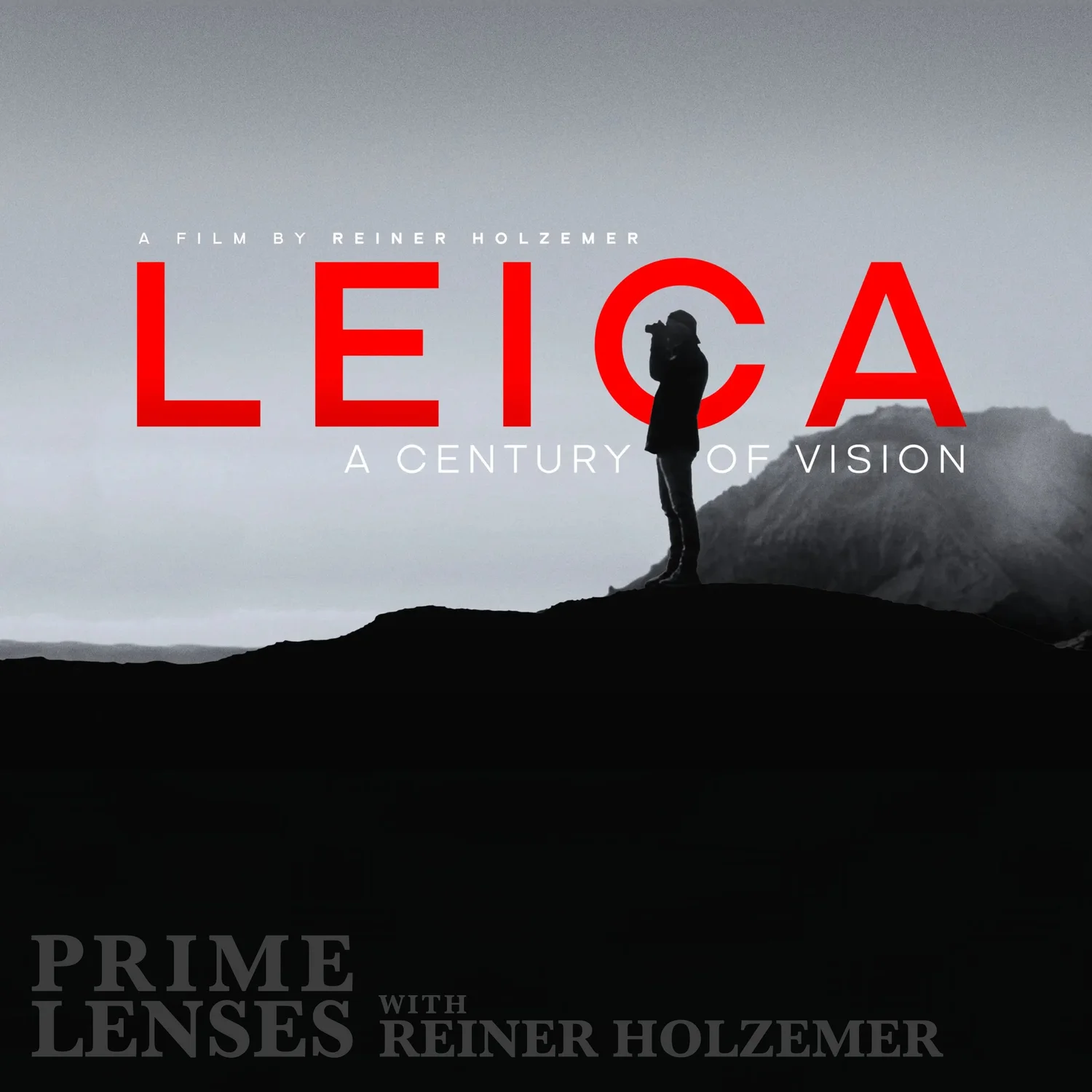
Reiner Holzemer discusses Leica A Century of Vision, a documentary marking 100 years since the 1925 production of the first serial Leica 35mm camera (Leica I) and how 35mm changed photography and the industry.
Holzemer is the film’s director. The documentary features photographers including Joel Meyerowitz, Sarah M. Lee, Anne Harriman, Jane Evelyn Atwood, Ralph Gibson, Steve McCurry, Sebastião Salgado, and also Sir Jony Ive (via Mark Newson’s Leica one-off design collaboration). Andy Summers (Police guitarist) appears as a Leica photographer; Greg Williams and Ragnar Axelsson are also mentioned.
The film is an homage to 35mm photography, not a commercial Leica brand piece. It emphasizes photographers’ philosophies and the “first-person” experience of a successful image. Holzemer says he avoided Third Reich/Leica controversy because he lacked evidence and focused on photography’s evolution.
Salgado’s early on-screen appearance at a screening; Barnack’s “sideways” use of cinema film; Andy Summers improvising guitar during Venice Beach shoots; audiences reacting emotionally and learning Leica’s historical importance.
0:01Hey everyone, welcome back to Prime Lenses. I'm Ian. Today, my guest is Reiner Holzemer. Reiner is the director of Leica A Century of Vision, a documentary made last year to celebrate the 100th anniversary of the production of the first serialised Leica 35mm film camera. The film is not, as you might expect, just a film about the Leica brand, but more of a celebration of photography and recognition of the momentous impact that the invention of the 35mm camera had and the industry it spawned, giving photographers a capability that they'd never had before. Ryan is fortunate enough to speak with some great photographers in this doc, previous guests of the show that you may recognise like Joel Meyerowitz, Sarah M.
0:40Lee and Miss Anne Harriman, but also people like Sir Johnny Ive who worked with Mark Newsome on the design of a one-of-one Leica camera, as well as legends in the field like Jane Evelyn Atwood, Ralph Gibson, Steve McCurry and of course the great Sebastio Salgado. I was lucky enough to see the first film last year at a screening as part of the 100th anniversary, and it was fair to say that a room full of people who'd just had dinner and were looking forward to Jamie Cullum coming on stage did not particularly want to watch a 90-minute documentary. However, within minutes you could hear a pin drop in that room, and the early appearance of Salgado on screen in a room filled with people who had known and worked with him was a very big moment that I won't forget.
1:22You can hear my conversation with Reiner after this clip from the trailer. A successful photograph is a picture that you can put on the wall and at a certain point you realize it's looking at you, you're not looking at it. You give your audience a first person experience. To get the photograph, it takes a lifetime. Photography has never been so powerful as nowadays. A camera saved my eyes, a camera saved my life. I feel like this is more than a job, this is a mission. Photography for me was a way of life. It's connection, it's intimacy. You put that finder to your eye and it's an aerial image.
2:07It looks like the world. Like everything in all art is about balance. It just becomes an extension of the eye. There's nothing like it. Thank you for joining me on the show, Ryanair. I'm really excited to speak to you. Can you tell us a little bit about how the project came about? Was it something you wanted to make? Did Leica approach you? How does it start? How did it start?
2:35Reiner Holzemer: I have a friend who was the CEO of Leica at the time when I was thinking about the movie. And he was more like a businessman. He did not know much about the history of photography. I know some parts of the history of photography because I made 14 documentaries about various photographers, portraits. I met Anzit Cartier-Presson in person, René Boury, the magnum photographers, William Eggleston, Anton Corban, Jürgen Teller, August Sander. I haven't met in person, but I made a documentary about him. So I really did a lot of work in the photography field. And once Matthias, the CEO, told me that there will be an anniversary at the Leica company a hundred years ago, it was last year, 1925, 2025 sorry, yeah but it was 1925 when the very first serial Leica was produced, the Leica 1, and this was the invention of the 35 millimeter, with the small format in cameras.
3:46Reiner Holzemer: And I immediately said to my friend Matthias, I said, we have to make a documentary about that. What do you think about it? I can try to get TV and sponsors and whatever, but you have to give me the permission. And for me, from the very first moment, it was clear that this is not a commercial piece of work or documentary, because of course you can say, Leica can hire you and make a nice movie about how brilliant we are, how fantastic we are. That was not the idea from the very beginning. The idea was to make this homage to 35mm photography. And that's how it all started. So then he connected me to the family, to the Kaufmann family, the majority owners of Leica, because you need the permission to make such a movie.
4:39Reiner Holzemer: you cannot just write Leica in a title and then get in trouble. So I had to get them on board and we shared a lot of common ideas about photography. And I said, I want to make a movie and should be more about photography, a little bit about the history of the brand. And yeah, they said all yes. And then we tried to get the money, the budget together. And also that took a while and finally worked out well. And so we have a movie now about Leica and the history of photography. But I think that that's the key thing as well, is that it is about the history of photography. I think the fact that it's filled with photographers who prefer Leica cameras actually matters a lot less than you would imagine for a film called Leica A Century of Vision.
5:28And the time you spend at the beginning, I think, detailing what a big deal it was, what Oscar Barnack did, taking cinema film, turning it sideways, putting it in a small body. that I think is the bit that often gets overlooked was it hard to I mean that's kind of I suppose if you're making a film about the history of Leica that's an obvious place to start but then in terms of talking to the photographers that you do speak to how did you go around making that short list and tracking them down because I imagine this had to come together quite quickly Kind of, yeah, but it was not so difficult. I always say, first of all, they all share the love for Leica, for the camera, for the lenses and so.
6:11And then the other thing that was an advantage, I mean, I did not make documentaries about photography for about 15 years.
6:23Reiner Holzemer: so I was a little bit out of that world I did not follow young photographers I did not know who the guys are who do the best work so I had to rely a little bit on the advice from Leica, there was Stefan Keil who was working for the Leica brand but he's the guy who's connected to the photographers, to the celebrities and I must say honestly, first of all he wanted to sell me a lot of celebrities who photograph. But I always said, no, I'm only interested in good photography. If a celebrity does good photography, then we can think about it. But not only because it's a celebrity, because it should be really about the essence of what photography is and what photographers are doing, how they do their work, how they approach a subject or how they go to war, what the philosophy and all the ideas behind behind us so what played a little bit in my favor was i was not aware of that because very often i'll give you an example like ragnar axel some i i must admit i feel ashamed i did not know his work before i had a zoom or a telephone call with So then he immediately sent me like 10 of his most beautiful books from Iceland and Greenland.
7:48Reiner Holzemer: And I felt so ashamed that I was not aware of that. But probably the days when I made those movies, I had an overdose maybe in photography. So that I really had to cut off. And maybe you know the problem. When you are into that world, it's almost like an addiction. and you buy one photo book, you buy the next one, the next one, the next one, and you look into it once and then it's in the shelf and you never look, or maybe 10 years later, you pick it out again. But that's also a good concept. So what happened was Ragnar sent me all those books and I said, oh, this is so fantastic. So I wanted to give something back and I said to him, shall I send you some links to my movies?
8:31Reiner Holzemer: Do you want to see my movies? Because I want to introduce myself. And he said, it's not necessary. I know all of your movies, they're all brilliant. Oh, wow. Cool. And that was such an honor for me and such a surprise. And it did not happen only once. Greg Williams was the same each time when I had a first contact, a Zoom call or a Teams call. Then I said, shall I introduce myself? They all said, no, it's not necessary. We know all work you did about photography. And we feel very honored to be part of that. And I think that was key also for them taking part in that documentary. Because if it would have been Leica to approach them, then it becomes more commercial idea than it's about money.
9:17Reiner Holzemer: Are you an ambassador? How do you sponsor me? All that stuff. So this was done like a real documentary. It's the same as I do all my documentaries. Very independent. I make all the decisions. Of course, I was depending on some advice from Leica also. And I got all the historical footage from them, which was fantastic. And I love those old images, the 16 millimeter. I really love it. The factory, when you see the images of the factory and it's such, it's all has such a value. And it's also beautiful. I cannot find another word for it. No, it really is. I mean, it's stuff that you won't see, you know, short of going to Vetsla where they have that fantastic museum.
10:02I was there a couple of weeks ago and short of visiting again and seeing that stuff. There's really no other way to see that material other than other than in the film. When you're talking about writing it and producing it all yourself, you know, it's a very small team that put the film together. Did you go into it with an idea of what you wanted to say or the kind of the route through it that you wanted? Or did that very much come together as people signed on and said yes? It's both ways. Of course you have a concept, the basic concept was, okay, we have an historical moment, an invention, and what did this invention do to photography?
10:40Reiner Holzemer: And then, first of all, you think, are you looking for art historians, are you looking for, do you need somebody like an expert on art history or photography history to talk about it? But I thought I liked it much more when it's all coming from inside the photography world. Okay, so we have two people from Leica who talk about the invention, more or less the owners. But mainly you have a guy like Andy Summers who was the police guitar player. But he's a passionate Leica photographer and he has shows now, solo shows playing guitar and showing his photography slides moving in the background or screened in the background.
11:24And I love it when Andy talks about the history of photography and what the achievement of Barnack was because they are the ones who benefit from that. And what I realize now because at the moment I'm on a cinema tour, promotion tour for the movie in Germany and we had the start yesterday in Berlin and it was fantastic. We had one of the biggest, most beautiful cinemas, Kino International, Cinema International. It's a gigantic cinema. And it was almost sold out. There were maybe 20 seats left on a Sunday morning, 11 o 'clock. And I thought, I'm not sure who's really going to be interested in that movie.
12:11But we also had a screening today where we have this call in Wetzlar, in the city where the Leica manufacturing place is in the museum, the center of Leica, if you want to say so. But we had a screening in a regular cinema here which opened three days ago and they were very happy of course to show that movie. And of course there were also a few people from who works for Leica in the audience and we had a Q &A after the screening of the movie and you cannot believe how many people who still who even work there who are familiar with the camera with the technology and everything are not aware of the history and how important this development that Leica did was for the history of photography and once they realize this they feel actually very very proud so you get comments oh I didn't know that we were so important and that's that's that's very beautiful to hear so the plan now is you're doing the tour around Germany obviously the film opens officially next week doesn't it at the time we're speaking November 12th it will be and it's also amazing so we have a cinema distributor who is also our world sales representative for the movie so he also would like to sell it to the UK, to America, to all the countries.
13:38We are in close contact with Spain. It will already be in cinemas in Austria, probably Switzerland, Asia, Japan, because there's also a big Leica and photography community there. and and in Germany it will start on November 12th and the crazy thing is he will start with 100 copies of the movie which is for a documentary incredibly big a big number so I'm very happy about that yeah no I am too and I'm really hoping it comes to the UK soon because I want to to shout about it I've talked to filmmakers before the um the couple that made the film with Joel and Maggie uh my yes um yes wonderful people yes brilliant and i had them on the show and that's how i got to speak to joel and maggie as well when when you look back on the film now is it kind of different the outcome different to what you thought so when i spoke to them the thing i took away from the film in a way was that it was maggie's film actually in some ways more than you would you would imagine going into it a joel myowitz film about you know probably more joel than maggie but But the thing that makes that film interesting is actually it's more Maggie's film as she later in their life, their relationship is rebalancing a little bit.
14:58I'm curious with your film. You kind of shook your head as you as I was asking the question. But did it kind of come out as you expected if you'd written down on day one what you imagined it to be? Was it kind of what you imagined by the end?
15:12Reiner Holzemer: Yes, I would 100 % because from the very beginning, you can do two different kind of movies about this subject. You can make like a portrait of the company with its ups and downs and maybe also the good and bad sides during National Socialism. So, for example, yesterday in Berlin, a woman asked me, I did very honestly not know about it. She's talked about there were some, how do you say, some prison workers in the Third Reich working for Leica. Why did you not include this aspect in the movie? and I said I think if this is true I have no knowledge about it I haven't read anything about it I think it's of course a very important subject to talk about or maybe to put it in a movie but my movie is focusing on photography how photography has changed and what what motivates what are the ideas that photographers have in the back of their heads when they work with the small 35 millimeter format and this is also the response that I get and that makes me very happy and for example Steve McCurry said very beautiful things on Instagram about the movie and Sarah M.
16:35Reiner Holzemer: Lee the Guardian photographer you cannot believe how proud she is to be in that movie not only because she wants to put her face into the world, she's more shy she thinks no she's not a good talker but she's a person who is really familiar with the history of photography I think she even did art history at university and she said there's no movie and that's not only her that yeah how do you say focuses or emphasizes really the focus of what photography is about for people who work with it in a very profound way, in a very thoughtful and honest way and do it as a profession. And this is a response that makes me, of course, very very happy.
17:27Reiner Holzemer: And I hope this is also what the audience will take away from that movie. So, of course, sometimes you think it would have been nice to shoot this guy also doing this project. You think we should have had a few more women maybe in the documentary but we shot some more but then it didn't work out we could not follow the project anymore so you know all the practical reasons that you have in the end but I'm very very happy and you won't believe it but meanwhile we had three screen screenings in Germany two screenings in California because the movie came out at its world premiere film festival there and I watched it all the time from beginning and I mean the thing is also the movie has been finished a little bit earlier, you saw it already last year and meanwhile I did another one on a fashion theme that comes out in Belgium this week in cinemas and then you're a little bit more free to judge your own work because then you come from the fashion world now six months or whatever working on that intensely that project.
18:47So we come back to this movie and you can see look at it with fresh eyes and I love the music. The music is composed by Andy Summers and a very talented younger film composer from L.A. Ben Brunema. It's the best score I have ever had. I don't know it's just also the way the movie is edited, the rhythm, I really love it.
19:14Reiner Holzemer: It's not always like this. I'm very critical. And most of the people who take their work very serious are very critical about it. They see all the mistakes. I read an interview with Tom York recently. And he, I mean, he's the head or singer of my most favorite band radio in the world. And he says he often when he goes on stage, he's afraid he will fail. And that's the biggest motivation for good work, in my opinion. There are people who think I'm the best, I'm the proudest. I know, you know, we know politicians also in the world who are like that. And I prefer the ones who are self-perfectionists, want to achieve the best result, but in a decent, humble way and also with a fear of failing.
20:12And that's a very good motivation. So I'm not always proud of my movies, but this one, I say very honestly, I like to watch it very, very much. And that's also the response I get from the audiences. Yesterday was more an elder, Berlin was a young audience. Yesterday was more an older audience. but the reaction is always the same people are touched there are moments also full of emotion I think but you there's also laughter so it's the beautiful perfect mix that I need for a good documentary it's human stories people who you can can meet and afterwards think maybe you you learned a little bit more about the professional photography but also about the person who you just saw on the screen, how he suffers in certain moments and things like that.
21:05Yeah, it's wonderful. And I will embarrass Sarah on the mic and say she's a total badass and should have far more confidence. She's wonderful. Yes. Love her work. She's really good. Lots of previous guests of the show in the film. You mentioned there the score is fantastic and you mentioned Andy had contributed to music. Was that something that came about really organically? I was going to ask about that because obviously he's a big deal and for him I imagine you didn't go into that conversation like you know do you want to do us a jingle Andy no no I mean I didn't know him in person before we met in Los Angeles and so then first we were shooting in his studio in Venice Beach where he put on a screen and showed his
21:48Reiner Holzemer: slides in the background and then he was improvising on on the guitar and I mean I loved the way he played guitar in police and in his solo shows and everything and he's a master with the guitar of course and I love that style of music so then we that was it for the first day we were shooting then we arranged meeting the following day because you know sometimes it happens spontaneously you don't know in the beginning people often say oh I have only limited time two hours and then we have to finish whatever. So but then he liked the conversation, he felt comfortable, he thought it makes more sense than maybe than he expected.
22:34Reiner Holzemer: So I said it would be great to see you photographing, walking around to street photography. He said, yeah, I often go to the center of Los Angeles where he lives and take some street photographs and then I asked, can we do that tomorrow together? And he said, yes, of course we can do that. So and on the way back we sat for one and a half hours in the car together, it was a long way back to his house, and then I said, have you ever done movie scores? I didn't know. And he said, yes, yes, yes, a couple of movies and so and said, yeah, maybe it's an idea that you could do a score also for this one, or work on that one.
23:23And then he immediately said, oh, I would feel very, very honored because he loves and admires photography. He's a big admirer from Ralph Gibson, who is also in the movie. Ralph Gibson admires Andy Summers for his guitar playing because Ralph Gibson is not only a photographer, so he's also a guitar player. So that's a very nice story on its own. So and then he said, yeah, yeah, yeah, but you have to, I can connect you to my agent. All those people, they have agents, so it's not so easy. And then they sent me some scores that Andy did for other movies. But to be honest, that was very different from what we have now.
24:07And I could not imagine that kind of music that he did for those fiction movies, for my movie.
24:12Reiner Holzemer: I thought it would have to be a little bit different. And then you also have to talk about money. So what do you get? And then the agent is trying to get as much money as possible. And then I said, so, okay, let's make a deal like this. But we were all always positive. And I understand their point of view, of course, too, because the agent cannot say, okay, you get a big star for nothing because he also has to protect his value and that the work is paid in a proper way. So we found an arrangement, and I also thought I cannot do the whole score only with electric guitar, and that was the main focus that we wanted.
24:54So it was a perfect mix in the end. Andy contributed like six, seven pieces, and Ben did all the rest of the score, the strings, the pianos, the electric pianos, all that stuff but i really love it and did not already a few people after screenings came came to me and said will this be available on whatever spotify or so and we are thinking about it on at least honestly to release it on on on a spotify list good well i'll keep an eye out for that and if it does release let me know and i can put it out in a newsletter and let the listeners know as well reiner thank you so much for taking the time to talk to us we're excited about the film it's in German cinemas from the 12th yes 12th of November 100 cinemas to start with and then it's in December it's in Austria that's for sure the rest will come next year probably
25:52Reiner Holzemer: and we hope to get it all over the world of course yeah fingers crossed well if it comes to the UK I'm getting a Blu-ray or a DVD or whatever I can get my hands on it was great thank you Ian thank you for having this beautiful talk with you
Today, my guest is Reiner Holzemer, the director of Leica A Century of Vision, a documentary made last year to celebrate the 100th anniversary of the production of the first serialised Leica 35 mm camera. The film is not, as you might expect, just a film about Leica the brand, but rather a celebration of photography and recognition of the momentous impact that the invention of 35 mm cameras, the industry that it spawned, and the capability that it gave photographers.
Reiner is fortunate enough to speak with some great photographers in this documentary, previous guests of the show that you may recognise, like Joel Meyerwitz, like Sarah M. Lee, and like Misan Harriman, but also people like Sir Johnny Ive, who worked with Marc Newson to design a one of one M camera, as well as legends in the field like Evelyn Jane Atwood, Ralph Gibson, Steve McCurry, and of course the late great Sebastião Salgado.
I was lucky enough to see the film last year at a screening as part of the 100th anniversary event held in Wetzlar in Germany, and it's fair to say that a room full of people who’d just had dinner and were looking forward to Jamie Cullum coming on stage did not particularly want to watch a movie for 90 minutes. However, within minutes you could hear a pin drop in that room and the early appearance of Salgado on screen in a room filled with people who had known and worked with him was a very big moment that I won't forget.
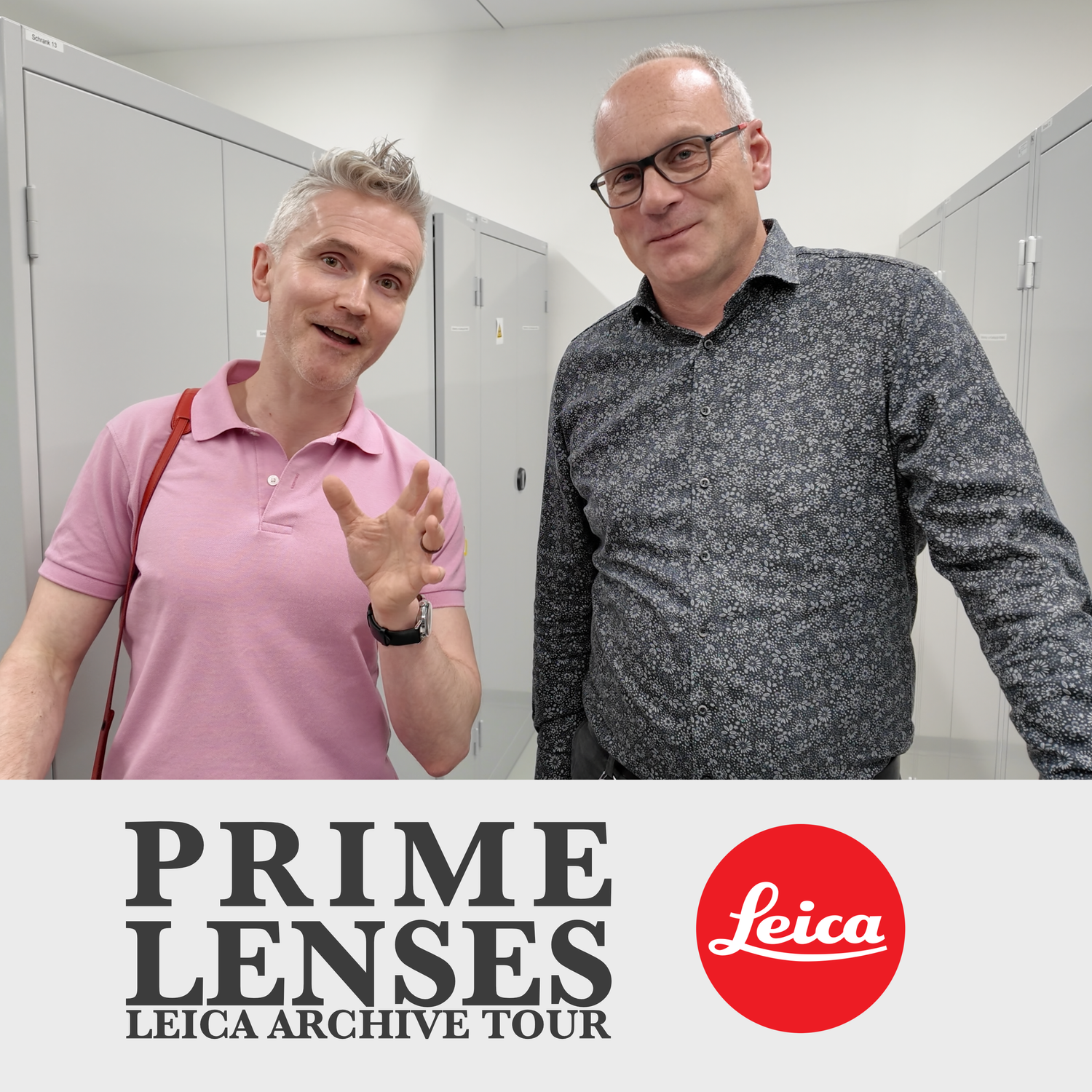
Leica: A Century of Vision, with Reiner Holzemer
The director on making a documentary about 100 years of 35mm photography, and why it isn’t a film about a brand.
Guest: Reiner Holzemer, director of Leica – A Century of Vision
In this episode
A short, special episode. Reiner Holzemer made Leica – A Century of Vision to mark 100 years since the first series-produced Leica, but it is a celebration of photography far more than it is a brand film. I saw it last year at the centenary screening and the room went quiet within minutes. Reiner tells me how it started with a friend who ran Leica, why he insisted on making it as an independent documentary, and how the photographers came on board once they knew his earlier films. We talk about the Wetzlar archive footage, the books Ragnar Axelsson sent him, how Andy Summers ended up co-writing the score, and the film’s opening in German cinemas on 12 November.
Highlights
Early: Reiner explains how a friendship with Leica’s then CEO led to a meeting with the owning family, and permission to make the film.
Early: He had no interest in a commercial piece. He wanted a homage to 35mm photography, made the way he makes all his documentaries.
About a third in: Why the photographers said yes. Several told him they already knew his earlier films, so he never had to introduce himself.
About a third in: Ragnar Axelsson sent ten of his books straight after their first call. Reiner admits he hadn’t known the work.
Around the middle: The Berlin screening at Kino International, a near-sold-out Sunday morning, and Leica employees who didn’t know how important the company’s invention was.
Around the middle: Asked in Berlin why the film omits Leica’s history during the Third Reich, Reiner says he has no knowledge of it, that it’s an important subject, and that his film focuses on photography.
Two thirds in: Fear of failing as a motivator, with a nod to a Thom Yorke interview, and why Reiner prefers humble perfectionists.
Late: How Andy Summers came to write six or seven pieces for the score, with composer Ben Brunema writing the rest.
Close: The release plan: Germany from 12 November on 100 copies, Austria in December, and the rest hoped for next year.
Chapters (approximate positions, no timestamps in the source)
Start Intro, and a clip from the trailer
~11% How it began: a friend at Leica, and the Kaufmann family
~22% A film about photography, not a brand film
~26% Choosing the photographers, and Ragnar Axelsson’s books
~34% Working independently, and the archive footage
~39% Wetzlar, and what the film adds to the museum
~52% German release and plans for other countries
~56% Did it turn out as planned? Audience reactions
~81% Andy Summers and the score
~97% Release dates and wrap-up
Mentioned in this episode
The film
Leica – A Century of Vision — official page | leica-camera.com
Reiner Holzemer Film — director’s page for the film | reinerholzemer.com
German cinema listing — release 12 November 2026 | city-kinos.de
People in the film
Andy Summers — guitarist, photographer and co-composer of the score | andysummers.com
Ragnar Axelsson (RAX) — Icelandic photographer | rax.is
Sarah M. Lee — Guardian and Observer photographer | sarahmlee.com
Joel Meyerowitz — photographer | joelmeyerowitz.com
Ralph Gibson — photographer and guitar player | ralphgibson.com
Steve McCurry — photographer | stevemccurry.com
Sebastião Salgado (1944–2025) — photographer | contactpressimages.com
Jane Evelyn Atwood — photographer | agencevu.com
Quotes
“I’m only interested in good photography.”
— Reiner Holzemer, Early
“This was done like a real documentary.”
— Reiner Holzemer, About a third in
Mentioned but not linked
• Jony Ive and Marc Newson’s one-of-one Leica camera (intro)
• Greg Williams, and the Leica contact Stefan Keil
• Oscar Barnack and the original Leica I
• Reiner’s earlier portrait films on Henri Cartier-Bresson, René Burri, William Eggleston, Anton Corbijn, Jürgen Teller and August Sander
• The Ernst Leitz Museum and archive in Wetzlar
• Kino International, Berlin
• Composer Ben Brunema
• Reiner’s new fashion documentary, released in Belgium this week
• The earlier Prime Lenses episode with the makers of the Joel and Maggie film
Credits
Host: Iain Farrell. Guest: Reiner Holzemer. Subscribe to Prime Lenses wherever you get podcasts, including Apple Podcasts. Sign up for emails at primelensespodcast.com.
Scan the code with your iPhone camera
Listen in the app.