Ask ChatGPT
 Problem Solvers
26 Oct 2026 · 27m · 14 chapters
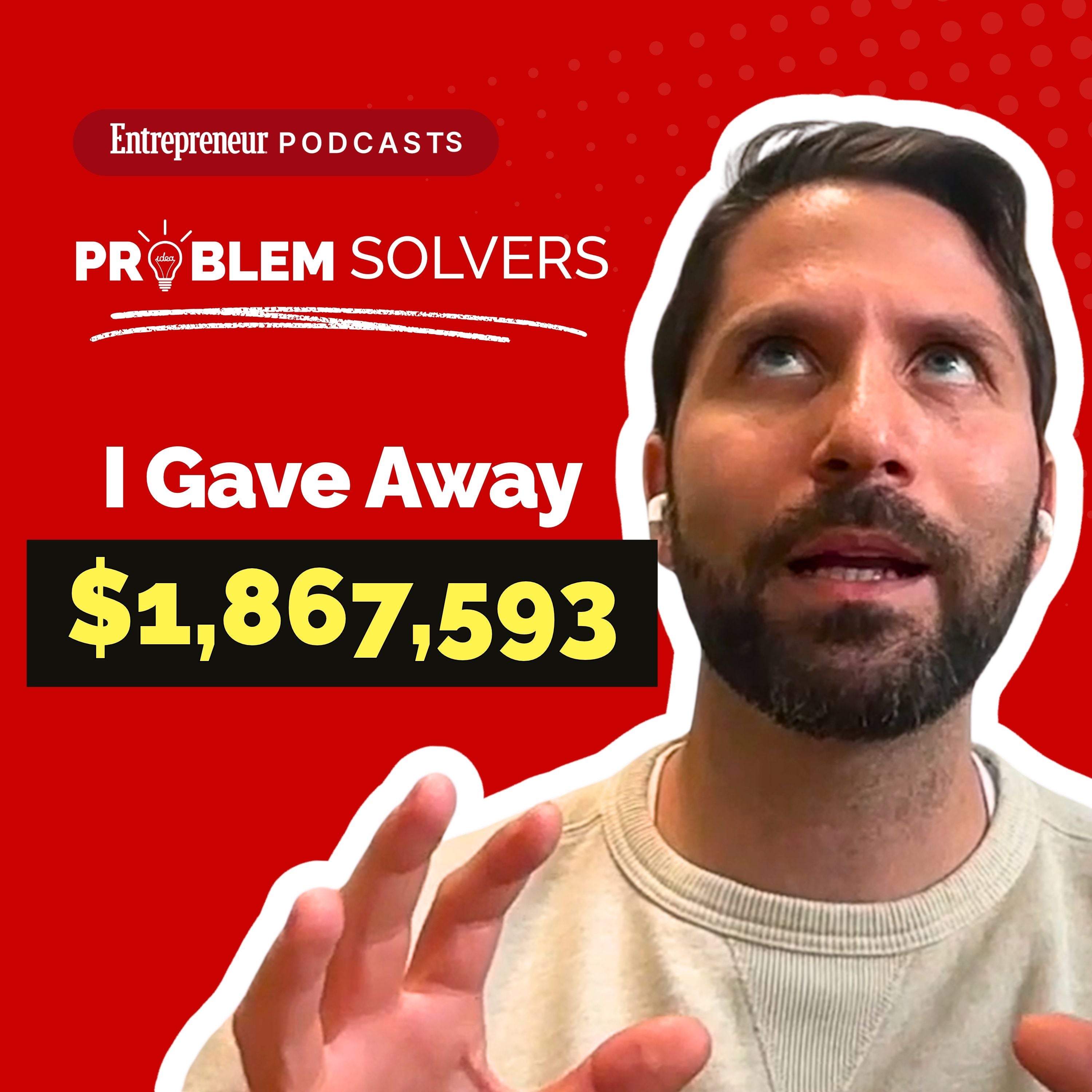
Whether a for-profit business can give away 25% of net profits to charity and still scale, and how to design a mission-driven model without killing margins.
Stephen Dime, co-founder of Flowers for Dreams (Chicago-area; serves the Upper Midwest). Background: started selling surplus flowers on street corners while studying; later built a flower business that donates backpacks/supplies to low-income students; founded the company after seeing kids receive donated backpacks.
Give-back must be supported by a great product and competitive pricing; mission can’t be the primary purchase driver. Flowers’ high spoilage creates room for markup to fund donations. Early “over-giving” mistakes were made; scaling was funded by customer revenue. Investors struggled with the 25% profit donation; a nonprofit foundation was created for structured giving (501c3) while the company remains for-profit.
Mother’s Day/graduation street-corner flower sales; donating backpacks via rented school bus; donating 25% of net profits to local charities; 1% for the Planet; foundation grants to small grassroots nonprofits.
Written by AI. May contain mistakes.
Discussion on the challenge of balancing profit with charitable giving.
“And if you don't mind for a moment, it's funny you triggered a funny memory.”
Introduction of guest Stephen Dime and his company Flowers for Dreams.
“I'm gonna say something that is not shocking here, which is that, you know, when you launch a business, you wanna make money.”
Stephen shares the backstory of starting his flower business.
“That is what we are talking about today because I've got a guy who's doing it in a really unique way.”
Discussion on integrating charitable initiatives into business models.
“And I still am a bit of a reluctant CEO.”
Stephen addresses the challenges of scaling a business while maintaining values.
“a lot of organizations that want to work with you.”
Stephen discusses how customer revenue helped scale Flowers for Dreams.
“And if we could do it, we could have room in our margin and still be competitive on price to give back.”
Stephen reflects on early mistakes and the balance between passion and market demand.
“warriors and the people who make up most of our recurring revenue.”
Learn how to design a business that combines passion and revenue.
“where I, and I certainly recommend the former because you're gonna stick with it through the tough obstacles and difficult turns longer, but you have to have a mix.”
Discover the origins of a unique profit-sharing model in business.
“for the planet that gives 1 % of our sales to environmental efforts and environmental justice.”
Explore the challenges of maintaining a giving model while ensuring financial health.
“I mean, has there ever been a moment where you questioned whether or not you were doing the financially responsible thing with your business by keeping it that large?”
Understand the complexities of maintaining both a for-profit and a nonprofit.
“And certainly I prefer having a business where we don't have to answer to as many and we can be really noble and steadfast in our mission.”
Learn how a nonprofit structure enhances effective charitable giving.
“And as I said, profit and performance engine are purpose.”
Find out the tax considerations when incorporating giving into a business.
“Are you raising money through the nonprofit now?”
Explore the importance of genuine passion in charitable business endeavors.
“So if you're thinking about this from a tax beneficial, now there are a handful of states.”

Get the gist, explore an idea or ask about something said.
 Claude
On Problem Solvers, what are the key points of this episode?
Searching your listeningAutomatic transcript. May contain errors.
0:00Steve Dyme: At CLA, we're in your corner and on it. We coach tax strategies and Little League First Base. We help you adopt AI data tools and we adopt rescues named Buddy. We walk your factory floor and jog the local 5K, though sometimes we walk that too. Wherever you're coming from, we're right there with you. Wherever you're going, we'll get you there. CLA, CPAs, consultants and advisors. Learn more at claconnect.com slash with you. And if you don't mind for a moment, it's funny you triggered a funny memory. We had this wonderful and random opportunity to join Megyn Kelly on the Today Show. And she looked at me.
0:42I always remember this line. She's like, don't you guys think you could be a better business if you just kept a little more of that profit? I've wrestled with that question my whole career. And I think as an entrepreneur, you have to set the stakes and the goalposts for yourself before anybody else first. What business do you want to design? Running a business means solving problems. I tell you how the smartest entrepreneurs do it. Hi, I'm Jason Pfeiffer, editor-in-chief of Entrepreneur Magazine, and this is Problem Solvers.
1:17I'm gonna say something that is not shocking here, which is that, you know, when you launch a business, you wanna make money. You wanna make money. Of course you do. Why? Well, number one, because otherwise, you're not going to have any time for this business. Number two, because this business has to sustain itself. But I think there are many, many, many people out there who I've heard from so many of them. I have friends who are these people who feel like, you know, business is not just about money. It has to be about more. It has to be about serving people. And a very appealing way to do that is to take this engine of making money and then make that money work for somebody else.
1:58Build in some kind of give back program where the money that comes in, a portion of it goes out to causes that you care about. And there's a problem with that. And the problem with that is that, you know, it's not easy to build a business. And sometimes businesses are running on really tight margins. How do we create a business that does well for itself, does well for the people who have built it and can do well for others. That is what we are talking about today because I've got a guy who's doing it in a really unique way. His name is Stephen Dime, and he is the co-founder of Flowers for Dreams.
2:38Flowers for Dreams came onto our radar, onto my radar, because the company landed in our America's favorite mom and pop shops list, which you can find in the September issue of Entrepreneur Magazine. We do it every year, and it's a way for us to recognize incredibly powerful, impactful, most beloved local businesses around the country. Stephen has built just one of those and has done an incredible job of building something that gives back in a really meaningful way. I'm gonna let him talk about it. Stephen Dime, welcome to Problem Solvers. Thank you so much for having me, Jason. I'm humbled by each of those adjectives.
3:21It's humbling to hear that people would think we're beloved or aspirational in any way. So I'm happy to be with you to talk about it. Well, look, I'm going to give a couple statistics here, which is that you donate 25 % of net profits to local charities through your foundation. You've given more than$1.8 million to over 200 organizations. You sell flowers. Flowers is a difficult business. I've heard that from many people, including people who are on this show. So before we get into exactly how you've built a business that's been able to do that, take me to the beginning because the beginning of Flowers for Dreams, I feel like is a perfect example of how to just recognize unmet opportunity inside of your own local community.
4:10Yeah. I mean, the origin stories for me in entrepreneurship and in flowers were both totally accidental. And I still am a bit of a reluctant CEO. And I think that's part of our sauce is that we don't always think about the bottom line as you led in there with the intro when making good business choices that are best for the people or best for our environment or even best for our supply chain and so forth. But I started as a 19-year-old looking for ways to pay my way in college. I started hustling flowers on street corners. I was buying surplus flowers from my friend's dad who was in the wholesale flower business and wholesale florists have lots and lots of waste.
4:53So surplus is a generous term, but the spoilage, I would go pick up loads of bouquets at the end of their week that they couldn't sell any longer. I had a flower cart, a little fanny pack with cash for change. And I would start selling them on street corners at a local gas station on Mother's Day, and then later at graduation ceremonies in my area. And I grew up on the north side of Chicago. And so I got a few of my buddies with me and we had a lot of success. People needed flowers for their graduate at graduations and no florists were kind of serving that market. And then we started doing flowers for proms like corsages and boutonnieres.
5:31And then we incorporated really opportunistically originally this kind of giving model where every bouquet we'd sell at a school event once we had actual contracts or at a prom or a concert, we would buy a backpack with school supplies to a local low-income student in need. But I was really energized. Really, I think the biggest piece for me that made me decide to go full bore into flowers post-college was we actually rented a school bus each summer to deliver those backpacks that our flowers were able to donate. And seeing the kids receive backpacks that were like sharing them with a sibling or didn't have their own set of textbooks, it was, you know, surprisingly powerful.
6:15And I realized this is whether it's still with flowers or not, this is what I want to do. I want to use it like, could I make money and make a difference? That's kind of filling both of those buckets in one. By the time of graduation, you're looking at this thing and you're saying, right, it's too big to give up on, but it's too small to make a living off of. And I feel like that right there is the trap that I was describing at the beginning of the episode, which is if you have a give back model that's really meaningful and generous, you will attract a lot of organizations that want to work with you.
6:52I'm sure that the reason that everyone wanted to work with you, aside from that you had very affordable flowers, was that they also felt really good knowing that there was going to be this donation made and it fit into everybody's mission. It just felt really good. But also, that meant less money for you, which meant that you were hustling a lot. It sounds like you were working your tail off. You were moving a lot of flowers. And the margin on those flowers was really small to begin with. And you were giving away some of that margin. And so you ended up in this kind of trap? And then I thought, I figured as you had to scale this business, you had to figure out how to get out of this trap.
7:27Well, I think it's more akin or analogous to the solopreneur trap than the give back trap. I mean, I was doing this on the side of my studies. I graduated in three years. It was not my sole or main priority. I think a lot of solopreneurs, right, they're doing as a side hustle and it's really difficult. That first giant step is probably the hardest step at any level of scale, in my opinion, for a business. And so I think it is the give back was really our engine. And I'm lucky to be in an industry where spoilage is so rampant that it's a problem. And so solving for it, the markup ends up being huge.
8:01Flowers have a large markup because the spoilage is so endemic. And that was a big, speaking of problem solvers, that was a big area where I thought there was a big opportunity to solve a big problem. And if we could do it, we could have room in our margin and still be competitive on price to give back. And that thesis was largely proven from day one of our full-time business when I graduated, started Flowers for Dreams with the same premise that every bouquet would benefit an amazing local charity. Yeah, I mean, you're right. That solopreneur trap is really challenging. It is it is this moment that I've heard so many people describe where they have figured out how to monetize their time, which is an incredible thing.
8:47And yet then they become the bottleneck for any kind of growth because they only have so many hours in a day. And if they walk away from serving people how they might, I was just talking about this, for example, with a woman who's built a therapy practice and everyone wants her. And even though she's now hired some other people. Everyone wants her. And so how can she possibly shift these clients away from her without losing them? But if she doesn't do that, then she never frees herself up to actually build a business. And so she's in this box and she's not sure what to do. So you had a version of that as well.
9:23Talk to me about how you actually started to manage to scale this thing while also being really mindful of scaling and not losing the give back program. Yeah, it sounds a little weird to put it this way, but originally and for the longest time, we scaled on the back of customers. So we scaled on customer revenue. And luckily for my business, we had revenue from day one. There was no innovative technology day one. There wasn't some kind of pie in the sky, 10x idea. our business was very, the economics were pretty simple. You have to sell a bouquet to make X amount of dollars to sell, you know, buy the next amount of flowers to sell two more bouquets.
10:08And so we used like that, the original college business funded our first cooler, our first beater van, and every dollar we earned, I kind of, I don't take this for granted that being a college age or early 20-somethings without the family and the mortgage. And a lot of those commitments allowed me to make no money for many years. I think the solopreneur trap, just to get back to that, is a challenging one because if you've established your career and it's identity-based business, it really is difficult. Luckily for me, it was not an identity-based business. Nobody cared about me. The product was not me and the product wasn't my wisdom or expertise.
10:47The product was beautiful flower bouquets, beautiful, largely local flower bouquets that advanced causes of justice and charity. But I often say that the give back is how we built our brand army and our warriors and the people who make up most of our recurring revenue. But when we've pulled, and we've done this a couple of times, when we've pulled the general audience, our general customer base, it doesn't even rank in the top three of the reasons why they buy from us. And I think that's exactly what describes an amazing or powerful social enterprise, which is the business is designed to give back, designed to do good.
11:25And the people who are proselytizing it and really making it good and big and great are the people that are going to kind of go to war for the mission. You're reminding me of a conversation that I had a while ago with a guy who launched a gum, like a chewing gum, with a charitable component to it. And at first, when he went to market, the charitable component was the primary sell on the packaging and the branding was all about the charitable component. And it was just really hard going. And the reason it was really hard going, he found, was because people might buy it once because they felt like it was a donation, but they weren't going to buy it always because that's what you do with gum that you just like because it's delicious.
12:10And so they had to, they spent some time reformulating the gum, but then also they completely changed the packaging and the way in which they pitched this product so that it was really just a delicious gum. And the charitable component, it was there, but now it was tiny. But it's not the number one reason that anyone's going to go for it. And I think that people often forget that when they're thinking about building some kind of charitable component into their business, which is that even though consumers will say they want it and they'll say they like it, it is not what moves their purchase. That is absolutely right.
12:44What we have found is that it is a small fraction of our pie that has enabled the large pie that continues to come back again and again and again. They are our most valuable customers because of the mission. But to be a business that has any scale, to has any master broad appeal, you have to have a brilliant product. You have to have a competitively priced product. You know, there is some studies that, you know, Unilever has a famous one where customers are in the data are willing to pay some small premium for a mission driven or values aligned business, but it's a premium of maybe 10 or 15%. It isn't one and a half X the competition or, and, um, you know, that that's a great, you know, asset, but you have to have a great quality product first.
13:26Yeah. Yeah. So was that surprising to you, Steven? Did you expect that? Yeah. Did you make any mistakes on the early side of this business where you, you were, you were over indexing on the charitable stuff? Yes, absolutely. Our early investors would tell you the same. We've bought out some that felt that way. I think, you know, as an entrepreneur, and you've talked to so many, you're constantly, the truth of it is, I think you're constantly waffling between designing a business that you like and that you'd love and that you'd order from and designing a business that your customers demand and want.
14:02And I think that's been an area where I, and I certainly recommend the former because you're gonna stick with it through the tough obstacles and difficult turns longer, but you have to have a mix. You have to design a business that you're gonna be passionate for. I tell this to each of my teams when they say, hey, we have this project idea. We're gonna do a street flower installer. We're gonna join a flower fashion show and things that don't provide revenue. I'm like, listen, if you're passionate about it and you're gonna knock it out of the park, I can find a way to create value from this experience.
14:35But if you're not passionate about it, if it's a throwaway idea, even if it's a revenue driver, it's probably less likely to succeed. And I think about that in the whole business's scale. And so yes, I've made mistakes over indexing, over giving. I mean, we certainly gave some years when we didn't have profit. We give between 3 % and 5 % or 2.5 % to 5 % of our sales revenue regardless. We're also 1 % for the planet that gives 1 % of our sales to environmental efforts and environmental justice. And so, but having those North Stars have really motivated me to design a business that can keep doing those things I'm passionate about.
15:17How did you come to a quarter as the amount that you're donating? I mean, that is a very large number. Because we were foolish and young. Naive is the nicer way to do it. But I think there's a lot of things I'd point to our naivete as, in hindsight, our best assets and never a crutch. We would never have designed, I mean, it was on a bar napkin. It's a true story in Northfield, Illinois, myself and still my co-founder, thinking about how we're going to kind of divide up the pie. And we said, we want to do what we did with our seasonal business with some of our friends, which is a quarter of our profits to the community, a quarter of our profits to our team.
15:56It was a quarter, a quarter, a quarter, and that's largely still intact 15 years later. And had we not done that at square one or square two or square three, it probably would have been impossible to do and to justify. Yeah. I mean, has there ever been a moment where you questioned whether or not you were doing the financially responsible thing with your business by keeping it that large? absolutely and if you don't mind for a moment it's funny you triggered a funny memory please we had this wonderful and random opportunity to join megan kelly on the today show the the when she was briefly there and i remember we're on tv right on uh christmas and holiday time celebrating entrepreneurs are getting back essentially and not just entrepreneurs but people neighborhood heroes and stuff came back and we were on the show and she looked at me I always remember this line.
16:52She's like, don't you guys think you could be a better business if you just kept a little more of that profit? Wouldn't you be in a few more cities and then a little bit larger? And I've wrestled with that. I need Meghna Talley to ask that question, but I've wrestled with that question my whole career. And I think as an entrepreneur, you have to set the stakes and the goalposts for yourself before anybody else first. What business do you want to design. Yeah. How's that conversation gone down with your investors? It was hard. So we didn't have many investors. We just raised from some individuals, all of whom we still talk to and respect.
17:30But I think they felt the over-indexing thing you brought up, which is a totally reasonable concern, is that we're giving too much before we're making very much. And so luckily, we did have enough cash flow and wherewithal to be able to give them reasonably nice buyouts. when the time came. And certainly I prefer having a business where we don't have to answer to as many and we can be really noble and steadfast in our mission. But yeah, it's a difficult, especially in the business that's giving as much as we are, it is definitely, I'm empathetic and sympathetic to other entrepreneurs considering it because it will often make finding investors hard.
18:13So if you're building a business just for investment or just for liquidity and just for a sale, it may not always be the best first choice. Right. Yeah. I mean, you're making this very conscious decision, which you've articulated here of what kind of business do I want to build? Yes. And if you wanted to build a scale business and just take a run at the national players in flower retail, you're doing a very different thing. At that point, you are you're running around, you're finding dollars, you're trying to get into lots of different markets, and you're expected to eventually return that money in multiples to the people who are giving you the money.
18:55And I think people, especially when they're just starting out and if they're thinking local, misunderstand what it means to raise money and why somebody would give you money. It's not because they don't believe, it's not because they believe in you or even believe in the business. It's because they're looking for a return on their investment. And if you're going to do something like give 25 % of your profits to charity. Well, that is wonderful. But that also, if I'm an investor, that's going to make me think, well, I mean, I love what he's doing and God bless, but like, that's not going to turn into money for me.
19:26So I'm not sure that this is where I want to put my money. Well, one of our investors on the way out said, well, why don't you guys just turn into a nonprofit? And three, six months later, we started our own nonprofit, but we stayed a We're a for-profit. I mean, we definitely make profit and we do well. And as I said, profit and performance engine are purpose. But for sure, one quarter is a really difficult thing for an investor to wrap their head around. Tell me about the decision to start a nonprofit but maintain the for-profit. What is the structure here and why the two different forums? Yeah, it's kind of two things.
20:03One was just compliance. So because we were getting to a point where our checks were no longer just$500 or$1 ,000 to our favorite nonprofit from last month's sales, and they started being$5 ,000 and$10 ,000, it made a lot more sense to have an actual foundation, a nonprofit, a 501c3 private foundation. And second, we thought these two, we could actually engage nonprofit leaders and the people who are doing the hard work on the ground to help us find better and more nonprofits. And as we expanded, we're now not only we started in Chicago, as I mentioned, but we're also in Wisconsin, Michigan. We have locations in Detroit, Milwaukee, and we serve the whole upper Midwest.
20:40It was important for us to engage the nonprofit community in almost a separate and independent way to find awesome grantees and orgs to support. So we're giving in a very similar way as we were before our nonprofit, but our nonprofit's now like our force multiplier. So does this mean, and this is me being completely ignorant of how this kind of stuff is structured, so just treat me like a five-year-old, but does this mean that the for-profit essentially is donating the 25 % to the nonprofit and then the nonprofit is distributing that money? Is that how it works? Exactly. And then there's a staff there that's more expert on how to both grant give and grant write and identify good nonprofits.
21:28And we definitely made our fair share of mistakes of writing checks to nonprofits that were not great. And we felt icky about writing a check to a nonprofit. They either failed, which happens. because our whole mission around our nonprofit giving is to support small grassroots nonprofits. So intrinsic in that mission is there's a lot of failure with any small for-profits or small nonprofits. These are orgs that have one, five, 10 employees and small, small budgets to do their nonprofit work. So we wanted to formalize all that and just get better at giving. Yeah. Are you raising money through the nonprofit now?
22:06No. No. It's all 100 % funded by the business. So, I mean, in a way, you're able to, I guess I'm thinking about this, it's like, number one, you're able to do what you would do on the for-profit side in the nonprofit side, which is to say, figure out the most efficient way to make the right decisions. Uh, so now instead of the for-profit trying to figure out the right way to donate, you're able to designate space and mission to that, uh, on the, on the nonprofit side, which just makes the giving, I suppose, more impactful. And also, uh, there's probably less waste in the amount of money that you're, uh, kind of spending to figure out how to spend the money.
22:48Exactly right. And we get more input from people who know, you know, we have a board now for our nonprofit with external leaders, you know, people who've run the Chicago Women's Health Center or Detroit's a girl like me who actually have built nonprofits and can help us generate. And I will say back to the business piece, there is a symbiosis that is wonderfully beneficial to the business when you do have an impact-oriented business and you're bidding on whether it's just B2B contracts or government contracts. There is often a discount that they will give in their awarding process to an organization that gives back because that's at least a small fraction or small channel in their big business, whether it's a law firm or a state agency, in deciding who they're going to give their money to.
23:37And so we do benefit from that as well. And we've kind of were your nonprofit's favorite florist as well. So we do a lot of the galas and nonprofit events, too. And it's all kind of, again, works with with each other. Yeah, I feel like there's a accountant in my ear who's saying, ask about taxes. What does having this kind of charitable component in your business do for your taxes? I hate to inform you, there's not a lot of huge tax benefits. So if you're thinking about this from a tax beneficial, now there are a handful of states. I think it's actually closer to half of the states that have benefit corporations and L3Cs where there are – I'm not certain that there's necessarily tax incentives.
24:22But one example where – related to tax, where we do benefit is Cook County, for example. They often – depending on what type of service or products you're selling, they'll give a discount on your bid, which I was kind of just mentioning. But there's really no intrinsic tax benefits in our code like a nonprofit. profit, the giving, the donating, just like it would for a household or a family office, that is a write-off, just like any marketing expense. But beyond that, nothing really distinct. And this is everything. I talk to business owners and entrepreneurs all the time, which is like, I'm thinking about incorporating giving into my business, or how did you guys do it?
24:59How can I do it authentically? And that's the point I really drive home is like, it's probably, it's not going to work unless it's done from the heart. And it sounds cliche, but it's true. And it's the same thing for a for-profit, whether you're a beyond profit or a for-profit or a non-profit, if the leader or the senior leadership and managers aren't obsessively driven by the mission. And the mission doesn't just have to be, we're going to make the world a better place or the community a better place. It could be, we're going to make the best widget in X or Y, but if they're not obsessively driven by the mission, whether that incorporates giving or good or environment or not, it's probably not going to succeed.
25:39Steven, this has been so great. If people, I suppose, throughout the Midwest and those areas want to get flowers from you, tell me how they can do it. Yeah, go to flowersfordreams.com. We serve eight states around the Great Lakes region with next day delivery. We do flowers for weddings, flowers for events. and you can see our impact report, see all this impact I'm talking about at impact.flowersfordreams.com. Awesome. Stephen Dime, Flowers for Dreams. Really appreciate your insight. Really appreciate all the great work that you're doing for serving your community and just kind of helping people who might be thinking about doing the same today.
26:16Thank you, Jason. Thank you, entrepreneur, for telling these great stories about good businesses.
26:27Thank you.
Flowers for Dreams gives away 25% of its profits. In the flower business, where margins are already brutal. Co-founder Steve Dyme sketched that number on a bar napkin 15 years ago, and he’s kept it through investor pushback and on-air skepticism from Megyn Kelly. The result is more than $1.8 million donated, and a spot on Entrepreneur’s America’s Favorite Mom and Pop Shops list. But there’s a twist. When he surveys customers, the giving doesn’t even rank in their top three reasons for buying.
This episode is brought to you by CLA. With you on every step of your financial journey. To learn more, visit CLAConnect.com.Timestamps:
0:00 Intro
0:48 Can a business give back and still make money?
2:48 Selling leftover flowers on street corners
5:58 The solopreneur trap
9:05 Scaling on customer revenue alone
10:27 Why customers don’t buy for the mission
13:10 The mistake of overgiving
14:48 Where the 25% came from
15:54 Megyn Kelly’s tough question
16:54 Why investors pushed back
19:23 Why start a nonprofit too
23:21 Are there tax benefits?
24:24 Giving back only works if it’s real
25:10 Where to find Flowers for Dreams
Learn more about your ad choices. Visit megaphone.fm/adchoices