Ask ChatGPT
 Problem Solvers
19 Oct 2026 · 26m · 14 chapters
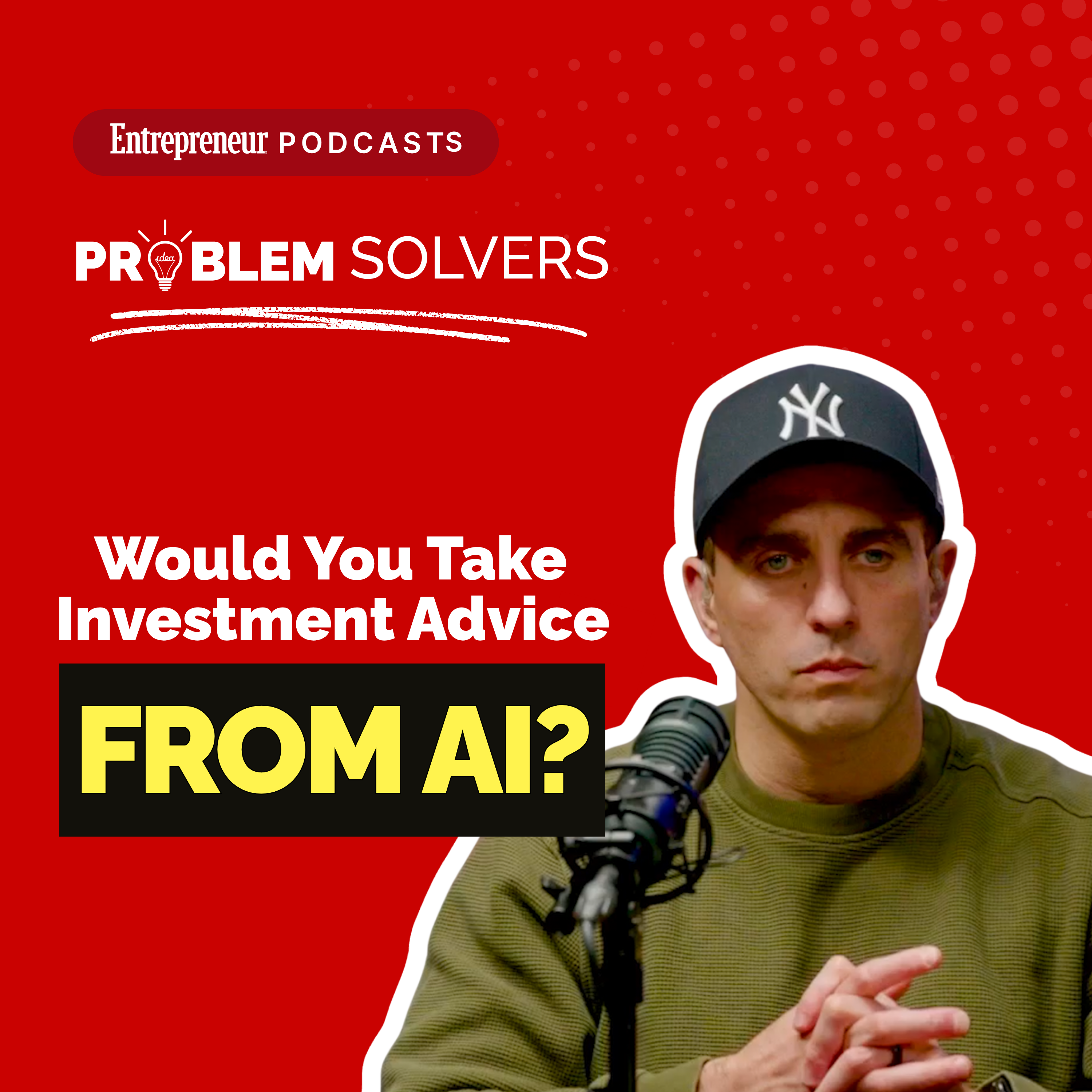
How to handle “power users” who love your product but cost you too much—using Sylvia’s AI CFO as the case study. The episode connects the idea to a “breadsticks” unit-economics story (Olive Garden serving breadsticks/salad too early can reduce orders and hurt margins) and frames entrepreneurship as creating a “better problem.”
Anthony Pompliano, entrepreneur/investor (20+ years), early investor in SpaceX, Airbnb, Ramp; author of How to Live an Extraordinary Life (letters to kids; Volume 2 coming out).
People pay for helpful, non-annoying value; don’t let the most engaged users destroy unit economics. Use “bracketing” and experimentation to cut costs without harming user experience.
Sylvia routes queries to cheaper/faster models via a sub-1ms model router (predicts query effort from first 500 characters). It also fine-tunes/train its own models, cutting inference cost ~97% (500M tokens ~$5,000 frontier vs ~$97 own model). Power users were initially free; a $20/month paywall started with top ~3% users, reaching ~25% of monthly active users paying.
Written by AI. May contain mistakes.
Exploring what customers are willing to pay for and the essence of problem-solving in entrepreneurship.
“People are not willing to pay for things that they find annoying, that they don't find valuable, or they find ineffective.”
Discussion on the nature of problems in business and how they evolve.
“I'm obsessed with this idea in entrepreneurship, which is this.”
Guest introduction and overview of his background and current projects.
“about breadsticks because my guest today, I don't think he serves breadsticks, but he'll tell you about them.”
Anthony discusses his entrepreneurial journey and how he developed his book.
“Anthony, okay, let's get to Sylvia and that problem in just a second.”
Exploration of the cost implications of highly engaged customers in a tech-based service.
“They're all like, hey, man, this one's way better.”
Discussing the capabilities of Sylvia and its unique approach to personal finance.
“Yeah, well, if you think in AI, every time that you ask a query, Basically, you're using compute, right, or consuming tokens.”
Strategies used by Sylvia to manage costs while satisfying user demand.
“And so ultimately, this PowerPoint basically showed, hey, if when you greet the person after they sit down at the table, do not bring the breadsticks and the salad yet.”
Introducing the bracketing concept from military strategy as a metaphor for business decision-making.
“And before we get deeper into your solutions, can we just spend one more moment talking about how you made the decision to pursue the solutions in the first place?”
Learn how to effectively calibrate decision-making by exploring extremes.
“So you shoot the first mortar and you shoot it a hundred yards and it falls short of the target.”
Understand how to view solutions as experiments to improve outcomes.
“And if we're to continue the metaphor with the military, when you're shooting 100 yards, 1 ,000 yards, you know you're not going to hit the target.”
Discover how fine-tuning models can drastically reduce costs.
“a really interesting solution by implementing a model router.”
Learn effective strategies for converting users from free to paid.
“It's actually got to be better than the frontier model at answering our specific types of questions.”
Explore how to assess and address hidden costs in service delivery.
“But we know that as long as we get water in the bucket, it ain't going anywhere because there's no holes, there's no leakage or churn for the product.”
Learn how to empower teams to identify cost-saving opportunities.
“That there is many ways, maybe invisible costs.”

Get the gist, explore an idea or ask about something said.
 Claude
On Problem Solvers, what are the key points of this episode?
Searching your listeningAutomatic transcript. May contain errors.
0:00Jason: You know, running a small business, your internet isn't just for email. It's how you process payments, manage your team, and stay connected to customers when it matters most. Whether you've got one location or five, reliable connectivity helps keep your transactions moving, your team connected, and all the tools you rely on within reach. Because when your connection just works, you're not busy troubleshooting. You're focused on your customers and growing your business. AT &T Business can help you stay connected and ready for what's next. Visit att.com slash smallbusiness to learn more. Right, people are very willing to pay for things if it solves their problem.
0:41People are not willing to pay for things that they find annoying, that they don't find valuable, or they find ineffective. And so it's kind of like advertising. People don't hate ads. People hate ads that don't matter to them. But have you ever seen like an amazing ad? Look at the Super Bowl ads. People literally tune in to watch the ad. People are willing to pay for products as long as it is helpful to them. They expect to pay for products that are helpful to them.
1:02Jason: Running a business means solving problems. I tell you how the smartest entrepreneurs do it. Hi, I'm Jason Pfeiffer, Editor-in-Chief of Entrepreneur Magazine, and this is Problem Solvers.
1:16Jason: I'm obsessed with this idea in entrepreneurship, which is this. you know, we're all trying to solve problems and we work on them and we work on them and we work on them. And sometimes we step back and we're like, oh, it's still a problem. And somebody once said to me, no, no, no. The way to think about it is, do you create a better problem? Like it's always going to be problems. The whole journey is problems. So the way to track progress is not, did I solve this problem? But rather, did I create a better problem? Today's episode is really about a better problem, which is this. In many businesses, in many ways, whether it's technology or breadsticks, we're going to come back to that, you can have the problem of a customer is so engaged, they like the thing that you have so much that they are costing you too much money.
2:05Jason: What are you supposed to do about that? Isn't that supposed to be a good thing? The customer is there. They really like your thing, but it's costing you money serving them. What are we you supposed to do about that? Today, we're going to talk about AI, but we're also going to talk about breadsticks because my guest today, I don't think he serves breadsticks, but he'll tell you about them. Maybe he does. He'll tell you. His name is Anthony Pompliano. He is a prolific entrepreneur, investor. He's had his hands at all sorts of things. Extremely impressive and author of a book called How to Live an Extraordinary Life.
2:37Jason: Today, we're talking about his company, Sylvia, which ran into this exact problem. We'll talk about it in a second. Anthony, welcome to Problem Solvers. Thanks for having me. Anthony, okay, let's get to Sylvia and that problem in just a second. But quick, let's just back up here. Tell me about you. Tell me about this great book. Yeah. Entrepreneur investor for probably the last 20 years or so. And as I've gone through my life, I've always tried to seek out great ideas. And usually it's learning from somebody else or from making a mistake myself. And so in my phone, I've got a whole Apple note And basically, anytime I come across an amazing idea, I read it, I hear it, I learn the lesson myself, I just write it down in those Apple notes.
3:19And about three or four years ago, I decided that I was going to sit down and write some of these into a book. And so the first volume of How to Live an Extraordinary Life was 65 letters. And I was trying to think of how do you kind of share these lessons? And I thought, well, the people that I care the most about that I want to learn this are my kids. And so why don't I just write it as letters to them? Each chapter is a single letter and it has, here's the idea, here's how it impacted me. And here's how I think you can apply it to your life. And the beauty is that those letters, they apply to a 75 year old, you know, person who's retired and just wants to read something on the beach all the way down to, you know, a teenager who says, Hey, I want to learn as well.
3:57And the volume two that is coming out this week, that was, uh, 50 more ideas. And what I learned, I think is, you know, writing a book is a skill and is a skill that when I wrote the first one, I don't think I really had, I kind of just wrote and then we just put it into a book. With the second one, I'm almost ashamed of the first one, you know, in terms of the structure, etc. But with the second one, I've had some people read it. And, you know, whether it's the Robert Kiyosaki's, you know, kind of famous authors all the way to some of, you know, my friends who are financiers, etc. They're all like, hey, man, this one's way better.
4:31So I'm excited for people to read it.
4:32Jason: That's awesome. You know what? As a guy who's written a book, I can tell you, number one, you haven't grown as a person unless you're ashamed of your first book, because it just means that you grew so much more than it. But also, I did the same thing. I wrote the first four chapters of my book, and I'm a writer by trade. I wrote the first four chapters of my book, and I sent them to my editor. And his feedback was basically, so you wrote four magazine articles, and they don't feel like they have anything to do with each other. It's not a book. You're not writing a book. You're writing a bunch of magazine articles.
5:02Jason: So I had to learn how to write a book, and you did too, and that's growth. But look, just to be clear, when you're talking about great ideas that you come across, that you identify, people should understand, we're talking about the kind of person who was an early investor in companies you might have heard of, SpaceX, Airbnb, Ramp. You've raised more than$750 million for your businesses, haven't you? So you've got your eye on really sharp ideas and what progress really looks like. We're trying every day to figure out how to solve problems. So this is the perfect podcast for us to come talk about it.
5:38I appreciate it.
5:38Jason: All right. So you've got this company called Sylvia. It's an AI financial assistant, works as a personal CFO. Take me into this challenge that I had teed up at the top here, which is that you built the thing that people loved, and then your power users were actually costing you too much money. Yeah, well, if you think in AI, every time that you ask a query, Basically, you're using compute, right, or consuming tokens. And so that costs money, whether it's your own model or you're using one of the frontier models. And so when we first launched the product, it was free. And we felt like that was really important is to have people come in, try it, understand how it works.
6:17Now, with Sylvia, what the, you know, kind of the pitch, the value proposition is basically when you come in, you attach all of your financial accounts. So your bank account, your brokerage account, your crypto accounts, you can attach your credit card or your alternative assets. So private investments, real estate, cars, collectibles, et cetera. And then you begin talking to Sylvia, but she has the context of your personal finances. And the best way to understand the value here is if I go to Google and I just ask, how do I get my tax rate down? Google will return me a bunch of very general links to websites about taxes, but it has no clue about my personal situation.
6:48Same thing with all of the most popular LLMs. With Sylvia, when you ask that same question, she will go into your portfolio and look asset by asset and say, hey, this stock, you're underwater, you could tax loss harvest this one. Hey, this piece of real estate is in an opportunity zone, or you could bonus depreciate it. Now, your point about the problem is your power users, they're asking a lot of questions. They ask the most amount of questions. Well, every time they ask a question, it means it's costing you more money. And so you want people asking as many questions as possible because that ultimately means that they are engaged.
7:21They are your power users, right? They're the most valuable ones. But at the same time, every time they ask that query, your expenses are going up. So how do you settle this? What I remember is a couple of years ago, maybe a decade ago, there's this famous PowerPoint that went viral online. And it was a private equity analyst had gone to a bunch of Olive Gardens. And he basically put together this entire PowerPoint. And he basically said, hey, they're serving too many sticks of bread and too much salad.
7:48Jason: And so because Olive Garden was known for the unlimited breadsticks and salad. That's certainly why I went as a teenager. I grew up in a family with five boys. We're Italian. And it sounds insane, but it was like a treat. Let's go to Olive Garden, right? Like, you know, when you have five kids, you don't exactly go out to eat all the time. And so one of the places that you can go that seems like it was really upscale, but probably was less expensive than if we went to a really nice place, was an Olive Garden. And so part of the beauty of going to Olive Garden is your parents knew that they're going to bring tons of breadsticks and tons of salad, which means that you're probably not going to order that much food, right?
8:24Or you're going to order less food. Well, the opposite side of that is Olive Garden is feeding you tons of breadsticks and salad that they're losing money on, and you're not ordering as much food. And so ultimately, this PowerPoint basically showed, hey, if when you greet the person after they sit down at the table, do not bring the breadsticks and the salad yet. Instead, take their drink order. Go away. bring the drinks back. Then you can ask them for their food order. And then only after they've put in their food order, then bring out the breadsticks and salad. So they're still getting it before the meal.
8:55They still feel like there's a little bit of this brand promise of free breadsticks and salad, but you have taken maybe the first 15 minutes of them sitting at that table and they don't have breadsticks and salad in front of them, which means that they're less full. So they're gonna order more food. And then it also means that you're not gonna run through two or three turns of that food. And so naturally, this just changes the unit economics of those people who come into your restaurant.
9:18Jason: Right. So, okay. So I appreciate that you have done exactly as I promised. We have connected AI and breadsticks. But now loop me back in here because you've got this problem where you've created this really useful tool in Sylvia. And just the way you explained it and the way in which it's going to understand at a nuanced level somebody's finances, of course, if somebody's very interested in their finances, they're going to be asking all sorts of questions. And so how do you now do the breadstick thing, which is to not pull back or, well, actually, let me say, let me say, let me not even ask that.
9:51Jason: Let me say, what was the first thing that you thought to do? Because some people might say, we need to just limit maybe the number of questions that people can ask or somehow squelch down people's usage of this tool. So we basically said, what are all of the options available to us to address this, right? One, should we just let people keep using it as much as they possibly can, spend whatever it takes and just raise more money or just pay for it and it's worth it. The second thing was, are there things that we could do where they're still asking the same number of questions, but maybe we don't need to consume as many tokens.
10:23So in essence, get the cost down on a per query basis. The third thing was maybe rather than send all of the queries to the most powerful model, could some of the lower cost models actually answer the question just as well. And so we could kind of address the cost that standpoint. And then fourth was, should the user actually bear some of the burden? Or should the user actually pay for some of this as well? And long story short is we basically got to the point where a little bit of everything ended up being the solution. So today, when you come in and you ask a query, one, it is completely free to use unless you're a power user.
10:57But two is that we actually will take your query and we will route it to the model that is best suited to answer the question. So one of the aspects that people don't really realize is if you ask the most high powered LLM, what's today's date? It usually takes a little bit longer than if you just ask your friend, but that's something that your friend knows almost immediately. What your friend can't do is, you know, a Monte Carlo simulation or some crazy calculation that AI is really good at doing. And so the AI goes through a lot of the same kind of infrastructural sequence to answer what is the date as they would do to do some crazy calculation.
11:32And so it's just slow. So if you can answer it accurately and faster and cheaper, it's a win, win, win. The user gets a better experience. This latency is lower and the cost is lower. And so that model router is really impactful because it basically routes queries to where they need to go.
11:48Jason: And that didn't, I'm just going to ask like a dumb technical question here. But so I assume that that model router, as you're calling it, didn't exist in the earlier version of Sylvia. And so what you had to build here was a layer that essentially assessed the complication of the question and then made a decision about which model to use. Is that right? Correct. And if you look today, there's companies like Open Router and many others. They basically provide the ability to do model routing, but the intelligence of which one do you route to is very specific to your infrastructure or your use case.
12:22And so we built this from scratch. Our engineering team is very proud of the fact that there's kind of two core components. They use the first 500 characters of a query to predict whether it will be high effort or low effort. And they do that with incredible accuracy so that they're able to route it to the right model. But the second thing is that they are able to make this decision in sub one millisecond, meaning that you don't increase the latency for the actual model router to be inserted into this. And so that alone was able to divert quite a bit of cost because now all of a sudden we were able to take a double-digit percentage of queries and say, hey, we don't need the most powerful, most expensive model to answer this.
12:57We actually can give the user a better experience and it'd be lower cost for us by routing that.
13:02Jason: Yeah. And before we get deeper into your solutions, can we just spend one more moment talking about how you made the decision to pursue the solutions in the first place? Because you just laid out a really useful breakdown of all the different ways that you could attack this problem. But what were the internal conversations that you guys were having? Because I assume there has to a cost benefit here. It's like, if we do this, then what is going to happen to the user experience? If we do that, like, are we going to impact something that we've spent a long time now building habit or trust on? What were those conversations like?
13:34There's a concept from the military called bracketing, which I think a lot of people should know about, but don't use quite often enough. And the idea of bracketing is basically, let's say you're shooting a mortar. For most people, just think of it like you're shooting a rocket, you know, towards a target. It's very hard to aim these or kind of dial it in. It's not like the movies where, you know, you just kind of lock onto the target and the missile just follows wherever it goes. And so when you're doing this, let's say that, you know, you realize that there's a target you want to hit. So you shoot the first mortar and you shoot it a hundred yards and it falls short of the target.
14:07You know, in your head, that target is at least 101 yards, if not further. And so you could say, well, I think I was pretty close. Let me try to do 150 yards and see where you land. Well, the better thing to do is say, okay, I know I'm at least a hundred. My next shot, I'm actually going to try to shoot past the target. So I'm going to shoot a thousand yards. And when I shoot a thousand yards, I go over the target. Great. Now I know that my target is somewhere between a hundred yards and a thousand yards away. You're calibrating where the target is. Correct. So now what I'm going to do is I might shoot 600 yards.
14:44Am I short? Am I long? Did I hit it? Oh, I'm short. Okay. Well, now I know that I'm somewhere between 600 yards and a thousand yards. Let's shoot 800. And you just kind of walk yourself into where is that target? That's a much better way to do this than go from a hundred yards to 110, 150, 200, 250, 300. And all of a sudden you realize, oh my God, you do that all day. Correct. Same thing with a lot of these kind of decision-making. So in this example where we are spending a lot of money on users, we say, okay, okay, what is the most extreme example where we do not change a single thing about the experience for the user?
15:20What are all of the ways that we could potentially solve this problem? Then you go to the complete opposite end extreme and you say, well, what would this look like if we pretty much made it impossible for people to answer any questions or ask any questions? Okay, now I understand kind of the extremes. What's everything in between? You start to kind of fill in, right? Okay, well, what if we change some architectural stuff? What if we change some interface stuff? What if we actually told people how much money they're spending? Would they just being aware of it, spend less, ask less questions, like all of these things.
15:50And so you kind of get like a buffet of here's all the things we could do. And then very importantly, you go back to what do we care about? What are we optimizing for? And for us, we want people to be able to use this new technology to grow their net worth faster, which means it's really important to us that people can ask as many questions as possible that are necessary for them to accomplish that mission. So we have to cut off the tail of the decisions that would require us to slow down the user or prevent the user from using this product right after they sign up. And so that removes some portion of the buffet.
16:24And now you're left with, okay, there's a bunch of different things that we could do where they basically have unfettered access up until some point. And it's on us on the backend. We got to do something with the product to get costs down in order to make sure that we can solve the problem, but keep the experience exactly how it's been.
16:41Jason: And if we're to continue the metaphor with the military, when you're shooting 100 yards, 1 ,000 yards, you know you're not going to hit the target. The point of it is actually just to measure your distance from the target so you, in a way, can think of every shot as an experiment. Is that how you were thinking about some of these early solutions as well? It's not that we're going to hit the bullseye on this particular solution right now, but we're running an experiment to see in a way what happens so that we can calibrate to where the true solution is. And if that's the case, first of all, I just want to say that is often not how people think about solutions.
17:20Jason: They want to get it right the first time. And it's scary to think of launching something as functionally an experiment. And then two, I just love to know how you thought through that. I think there's two things. There's a bucket of experiments, and then there's a bucket I call it like an archaeologist. The archaeologist is you go into the analytics and you're looking for something. You're looking for where is the concentration of token consumption coming from? How much of that is based on is it just five users are using up all the tokens and everyone else has a low amount? Is it when they ask a specific type of question?
17:49Is it a specific type of tool call? Is it when they're on mobile versus computer? You have no clue what the answer is, but you're on a kind of a discovery journey. An archaeologist is literally digging through this mountain trying to find the fossil. We're doing the same thing, trying to figure out, hey, what is the data that we need to understand here? so that then we can make an informed decision. On the testing side, you basically start with a hypothesis. And so you say to yourself, listen, I think that there could be a really interesting solution by implementing a model router. Okay, what is the shortest path from us to go to hypothesis to we can test this?
18:22And so the beauty of these organizations is if you get this right, is you create this massive flywheel where you actually accelerate. You're able to run more tests, get more data, more data leads to more ideas, more ideas leads to more tests. And that just rapidly starts you down this path of improving the product. And once you hit that, you do it really well, then it's pretty hard not to solve problems because you're just taking enough shots on goal where you'll eventually kind of stumble upon what is the solution to this problem.
18:48Jason: All right. So you had laid out the model router as part of the solution here. Just take me through the rest of what you rolled out and the impact that you had. Model router is an easy one. Second one is we started to fine tune and train our own models. So when we process tokens from one of the big frontier models, 500 million tokens cost about$5 ,000. When we process those same 500 million tokens on our own model, on our own hardware, that costs us about 97 % cheaper. Wow. Well, how do we get more queries over our own model? Well, our model's got to be good. It's actually got to be better than the frontier model at answering our specific types of questions.
19:26And so we spent an immense amount of time. And today we now can boast that Sylvia is the number one product when it comes to accuracy on tax, mortgage, credit cards, and other personal finance topics. And so not only, again, is it 97 % cheaper for us to be able to use our own model, but actually, again, for the user, it is a better experience. We are more accurate at answering the tax questions than the frontier models.
19:48Jason: Did you ever try to pass along any of the cost to the user? I mean, I think there are a lot of services out there, particularly in AI right now, that will essentially charge you more depending on how much you use. We started a$20 a month paywall or subscription. And the way we rolled it out is pretty interesting. We started with the top, I think, 3 % of all power users. We showed it to them first. How many of them are going to convert? I think we got as high as 40 % or 45 % of our top 3 % users all started to pay. Makes sense, right? They love the product. Then we rolled it from 3 % to maybe 5 % or 7%, then 10%, then 15 % of users, then 20%.
20:28And we just slowly started to kind of crank down on what that level was until eventually we covered a majority of the user base. And we said, hey, who's willing to pay? The numbers that we've publicly released are now 25 % of all monthly active users are paying members of Sylvia. So still relatively small numbers on the aggregate basis, but growing quickly and really world-class level of conversion from a free user to a paid user. And then our retention has been really strong on those paid users. And so the way I think about this is we have a bucket, that bucket doesn't have any holes in it. It is ready to be filled.
21:04And now our challenge is we got to go fill the top of the bucket with water and make sure that, you know, we end up with a bunch of water in that bucket. But we know that as long as we get water in the bucket, it ain't going anywhere because there's no holes, there's no leakage or churn for the product.
21:18Jason: What did you learn in that process, or maybe what you learned from some previous company that you brought to this process, about how to get that user to convert and pay? How to make sure that they're seeing enough value that they're willing to draw that line? Ultimately, it just comes where you're solving their problem, right? People are very willing to pay for things if it solves their problem. People are not willing to pay for things that they find annoying, that they don't find valuable, or they find ineffective. And so it's kind of like advertising. People don't hate ads. People hate ads that don't matter to them.
21:50But have you ever seen like an amazing ad? Well, look at the Super Bowl ads. People literally tune in to watch the ads, right? It's amazing, like awesome. Like in what world are we watching the ads? Well, because they're good ads. And so same thing here is people are willing to pay for products as long as it is helpful to them. They expect to pay for products that are helpful to them. And so I think that's really the ultimate kind of test is do people find this valuable? Can you actually solve their problem? If you can, then you've got a great business. If you can't, you know, you've got some trouble and you may have a hard time actually getting people to pay.
22:21Jason: So we've dug deep into the way in which this works in AI and breadsticks. But, Anthony, just finally here, I'd love for you to zoom out and maybe think about all the different ways in which somebody might be listening to this and thinking about how it applies to their business. That there is many ways, maybe invisible costs. It could be not in the amount of money that is being spent to sustain a service, but it could just be in maybe the amount of time that it takes your own team to facilitate some user's need. But you want the user to keep coming back. You want to keep them happy. And so maybe it's okay.
22:59Jason: Maybe it's okay to just kind of keep throwing time at it. So just give folks some way to assess whether or not they're stuck in some kind of death spiral here where they ultimately are serving their best users at their own peril and how they should think about getting out of it. Well, I think, again, you should use that bracketing approach. Go look at the top 1 % of users that you have that are doing the actions you want them to do. What's the unit economics look like? Now go look at your bottom 1%. usually most businesses, they could probably fire, I don't know, 10 to 20 % of their bottom customers and actually end up making more money.
23:33So if you look at the tails, then you kind of know the full picture. And then you have to decide where is it that I should go and address this. The second thing is, I think most people do not look in enough detail in their cost of goods served. Usually you can pick up significant, sometimes double digit percentages of cost savings by simply just going line item by line item by line item and saying, how are we getting this? What does it cost? How can we get it down? And frankly, for leaders, I think that you've got to make it a company priority. So for me, how do we get the cost down? I made sure every single person on the engineering team knew this is a problem.
24:14This is the number one thing we need to solve is we need to keep serving users the way we want to serve them, but we need to get cost down. We start to have people show up finding all kinds of stuff in the code base. Hey, what if we did this? I think I can get cost down. Hey, if we did this, I think it'd save us 500 bucks, a thousand bucks. Hey, we had one engineer who found an entire thing in the code base, saved us like 150 grand. Amazing. How do we complain about that? Right? And so I think that's ultimately what you have to do as a leader is just make sure everyone's on the same page. They understand what the priorities are and then empower them.
24:45Hey, go, go see what you guys can find. And people find it fun. Everyone wants to be an archeologist, you know? And so, uh, if you, if you let them do it, then, uh, they'll surprise you with the results they come back with.
24:54Jason: Amazing. Anthony Poppliano, the book is called how to live an extraordinary life volume two. Is there anything people should know about how to get the book and for that matter, how to get Sylvia? No, just go to, uh, go to Amazon or wherever you want to buy books. Um, You know, I spent a lot of time on it. I think that folks will like it. So go check that out. And then when it comes to Sylvia, if you want to use the latest, greatest AI product to manage your finances, grow your net worth, and make sure that you're informed about what you actually own, then just go check it out at sylvia.com. All right, man.
25:26Jason: Appreciate your time. This has been really informative. Thanks so much, Jason.
25:37Thank you.
Anthony Pompliano built an AI financial assistant people loved. Then his most engaged users started costing him too much money. That’s a good problem to have. But it’s still a problem. His solution came from an unlikely place. Olive Garden’s breadsticks. Here’s how Silvia cut costs without cutting what users love, and got 25% of monthly active users to pay.
Find Anthony's book here!
This episode of Problem Solvers is presented by AT&T Business. To learn more about how the right connectivity can help support your business as it grows, visit att.com/smallbusiness.
Jason wants to help solve your impossible problem! Click the link below to sign up:
https://entm.ag/levelup2026
Timestamps:
0:00 Intro
0:38 The idea of a “better problem”
2:05 Anthony’s book, How to Live an Extraordinary Life Volume Two
5:00 Silvia’s power-user problem
6:50 The Olive Garden breadstick lesson
9:15 Weighing every possible fix
11:07 Building a model router
12:55 Bracketing: a military trick for making decisions
16:50 Experiments vs. archaeology
18:15 Training their own model (97% cheaper)
19:10 Rolling out the paywall
20:40 Why people pay
21:45 How to spot this problem in your own business
24:16 Where to find Anthony and Silvia
Learn more about your ad choices. Visit megaphone.fm/adchoices