
In short
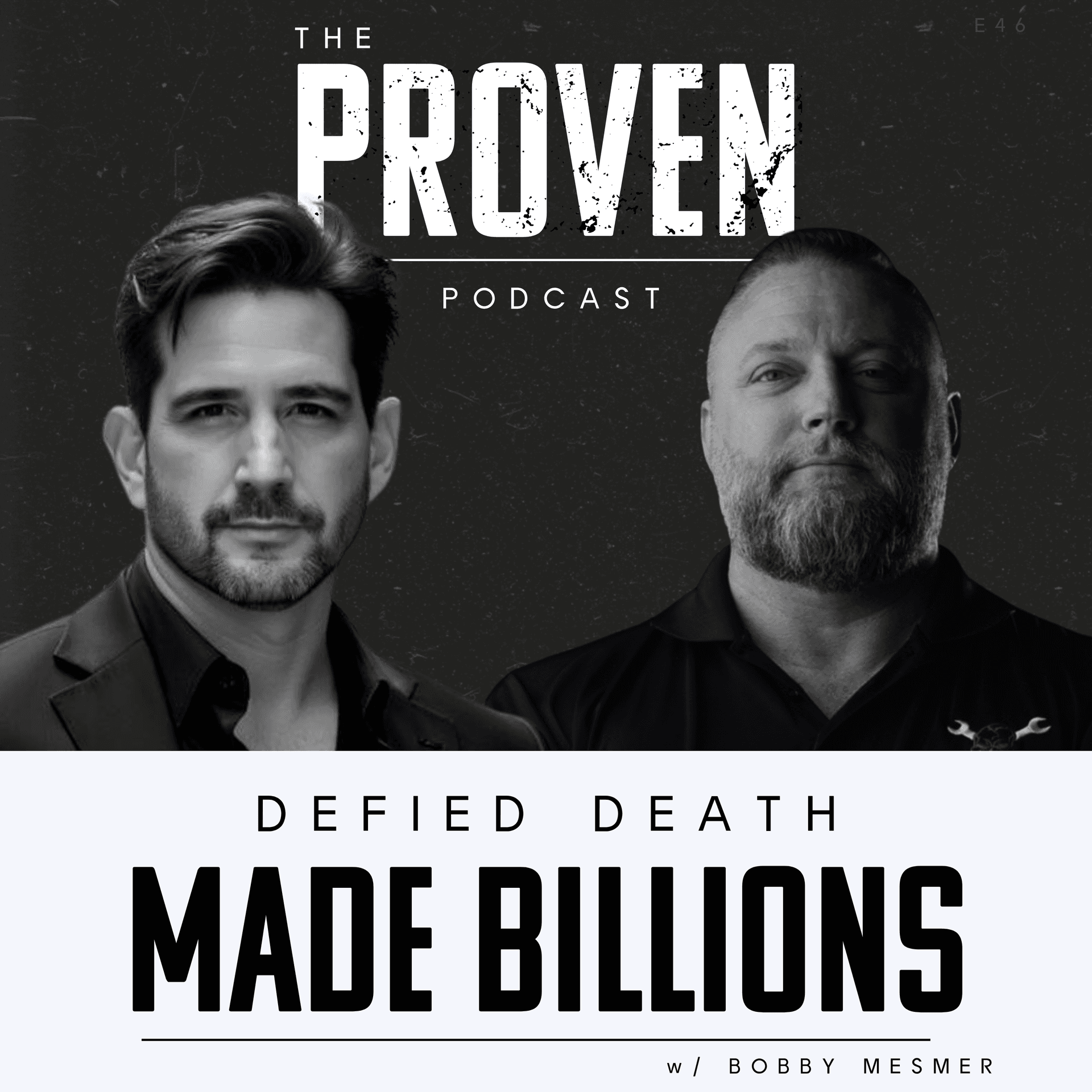
Proven Podcast Episode Summary: Defied Death, Made Billions - Bobby Mesmer
Episode Overview In this compelling episode of the Proven Podcast, host Charles interviews Bobby Mesmer, the founder and CEO of RMG Erectors & Constructors, LLC, a company now valued at $4.5 billion. Bobby shares his extraordinary entrepreneurial journey, emphasizing his bootstrapping approach, the challenges of surviving life-threatening health crises, and the personal growth that followed.
Key Themes Entrepreneurial Resilience
- Dummy Tax Philosophy: Bobby introduces the concept of "dummy tax," which refers to the lessons learned from failures. He emphasizes that failure is essential for growth and learning in business.
- Bootstrapping vs. VC Funding: Bobby asserts that bootstrapping fosters resilience in business owners compared to relying on venture capital. He believes that taking capital creates a crutch, preventing entrepreneurs from fully understanding the operational aspects of their businesses.
Personal Transformation
- Facing Mortality: Bobby candidly discusses how multiple strokes and a heart attack shifted his perspective on life and business. He experienced feelings of fear and unworthiness but ultimately found purpose in surviving these challenges.
- Vulnerability as Strength: The episode highlights the importance of vulnerability in both personal recovery and business growth. Bobby shares that admitting weakness can lead to unexpected strengths.
Learning from Failures
- Operational Excellence: Bobby details his company’s operational strategies that helped it become an industry leader. He emphasizes the importance of understanding true costs and focusing on operations as a means to turn around struggling businesses.
- The True Entrepreneur Test: Bobby defines true entrepreneurs as those who confront adversity head-on, learning and adapting rather than making excuses.
Key Takeaways
- Bootstrapping Builds Resilience: Bobby argues that entrepreneurs who bootstrap tend to develop stronger business acumen over those who rely on external funding.
- Health Crises and Business Insight: Personal health setbacks can lead to profound insights about purpose and the importance of self-care.
- Need for Self-Belief: Believing in oneself is crucial for overcoming challenges and achieving success.
- Culture and Leadership: Bobby stresses that a company’s culture is derived from its leaders, who should foster an environment of collaboration and support.
Notable Quotes
- On Learning from Mistakes: "If you're not failing, you should be, because that's the only way you're learning."
- On the Importance of Self-Belief: "Nobody believes in me more than I believe in myself."
- On the Dummy Tax: "It's basically learning from your mistakes and then having the energy to get out there and share what you learned."
Episode Timeline
- 02:13 - Introduction of the Dummy Tax Philosophy
- 06:00 - Discussion on the Scale of Success
- 09:44 - Bobby's Views on VC Funding
- 13:01 - Identifying True Entrepreneurs
- 35:53 - Bobby’s Health Crisis Experiences
- 37:46 - Wrestling with Feelings of Unworthiness
- 50:02 - Finding Purpose Through Pain
Conclusion The episode encapsulates Bobby Mesmer's journey of resilience, emphasizing the intersection of personal hardships and business success. It challenges the conventional mindset of entrepreneurship, encouraging listeners to embrace their vulnerabilities and learn from failures. This powerful narrative invites entrepreneurs to redefine their perceptions of success and worthiness.
For more insights and to implement the strategies discussed, listeners can download the exclusive companion guide available at [Proven Podcast](https://provenpodcast.com/).
Written by AI. May contain mistakes. Listen to the episode to check what was said.
Transcript
Automatic transcript. May contain errors.0:00Welcome to the Proven Podcast, where it does not matter what you think, only what you can prove. Today's guest, Bobby Mesmer, proves that's the path to mediocrity. He built the largest pre-engineered steel erection company in the world with a$4.5 billion valuation. Not by playing it safe, but by bootstrapping through failure, paying what he calls the dummy tax, and getting back up every time life knocked him down. The show starts now. All right, everybody. Welcome back to the show. Bobby, I'm excited for you to be here. Thanks for having me, Charles. Good to see you, man. Absolutely. Um, we talk about the dummy task on a high level and a lot of people don't know who you are.
0:35I'd love to talk about a little bit of your story, how you had to pay the dummy tax on a high level for most people who don't know what that is. You paid it on a really intense level. So for everybody who's listening, let's get into it. Yeah. Multiple times, man. Dummy tax. I made the mistakes learn from me, right? Like, and you know, it started anybody in business. If you're not failing, you should be, because that's the only way you're learning, right? That's the only way you're progressing. And that's what the dummy tax is. It's basically, you know, learning from your mistakes and then and then having the energy to get out there and introduce what I learned to people so they can learn from my mistakes and maybe not do it.
1:14that's really what it is. And, you know, so like you go back 10 years ago, I took a major business hit, multimillion dollars, you know, basically just put, you know, did the business, didn't get paid for it. Guy told me to go pound sand, you know, that multimillion dollar hit doubles itself because now I lost the money, but now I got to take the money out of my pocket to pay all my vendors and make myself clean, which is what I did. Integrity is all I got left. Right. And so, you know, what did I learn from that? What did I learn from that experience? You know, reflect on it, take it and then understand it and say, you know, yeah, this guy might be a scumbag.
1:47I might want to like go to this guy's house and rip him out and beat the crap out of him. But at the end of the day, like I still have to look at myself and what was my responsibility to what occurred. And, and that's, that's the tax. That's what it is. And, you know, then it fast forwards to other things, you know, um, I, you know, things that are out of your control, uh, had a heart attack, had a stroke, lost the whole left side of my body, recovered from it, had another stroke last year in the eye. And, you know, you look at those things and you look at what, what that does to you in, in just a normal world in, in your professional life, in your personal life, um, in operating a business and you're like, what are you trying to tell me?
2:26You know, whether you're, whether you're spiritual, whether you're not, whether whatever it is, but you still have to look at it and say, something's trying to tell me something, what is it? And what do I do with it? And, and, but those are all the mistakes that line up. You know, I wasn't taking good care of my health. I wasn't watching myself. I was overstressed. That's all the dummy nonsense that I've created in my world that have, that pushed me into a position to, to, to have a heart attack and to not be healthy. And okay, what do I learn from it? Change the way I'm eating, be a healthier lifestyle, change the way my lifestyle is not, not have so many drinks when I go out on a Friday night, you know, and, and, and that's, you know, so now I go out there these days and and i want to educate everybody i want to say to them look here's here's what happened to me here's how i got there but here's what i learned from it take it from me try to change now try to try to have perspective try to take your business and and do something a little bit different with it still accelerate it still put your energy into it but even yourself personally if you have personal goals put your energy into it but don't make the same mistakes that i did that's where it starts right so you you had a lot of mistakes but you've also had a lot of success could you kind of get the audience caught up on what type of success you had yeah so um my my business i've been in business 25 years um the business that i currently have um is my long running business rmg erectors and constructors um we're the largest uh pre-engineered steel erection company in the northern hemisphere um so if actually the world at this point right now So great success there.
4:05We developed that business into also manufacturing and engineering and design. So we're manufacturing our own steel, we're engineering it, detailing it, and then erecting it. So we're the largest purchaser of fabricated steel in North America. So, you know, and that's great success in that business. over the last 15 years, I've had two other companies. I formed a distribution company that I sold to, to a publicly traded company. And then over the last five years, I had another franchise company that I built up and ended up selling that as well. So a lot of success there. And really what I did was, is it's about finding avenues.
4:42You know, my success was, was driven by just being a driven person, you know, putting yourself in the right positions, you know, growing uh strategically um i bootstrap everything in my business which makes me in my opinion a better business person because anybody can start a business and take on capital from somebody but that doesn't make you a good business person it's easy to run business when you have money right worrying about payroll really you know and how you're going to make it next week that's what changes the ballgame charles you know what i mean like you gotta you gotta go through that in order to deal with it.
5:15So yeah, we've, we've built a, you know, we're, we're have a four and a half billion dollar valuation right now in our company. I'm looking to sell in the next five years and, but it doesn't come without struggles. You know, I tell everybody they're like, they're like, Oh, you've been on a great trajectory. I'm like, man, I've been almost bankrupt every three years. You know, like if you're not almost bankrupt in your company, you're doing something wrong, in my opinion. Absolutely. And we talk about this all the time that you're never going to succeed your way to success. You're only going to fail your way to success.
5:42It's kind of like When you have a little child who's walking and you're first going to walk, they're going to fall on their tush a lot. That's good. Luckily they're in diapers at that point, but that's the only way they get it. And society changes that ball game. You've done that and had radical sex success while also having radical health problems from strokes and heart attacks. When someone sits here and they want to know the proven stuff on how to get started and how to get moving. Cause I agree with you taking on capital, whenever I hear someone, Hey, I I'm doing my next round of VC range.
6:08I always disconnect a little bit of that. I'm like, if you're, for me, if I can make enough money, then I scale. If I can't make enough money already with what I'm doing, why am I going to go get capital in order to scale? So it's always this paradigm that is a little different for everyone else. You've done this where you've bootstrapped it on your own for the people who come in and they say, Hey, I want to go through angel investors or VCs and all that. Why for you is bootstrapping better than the VC world? Because it's too easy, right? Right. Like anybody can have an idea and take that idea and then take money and then try to develop that idea.
6:41But if you look at the amount of companies that have failed, like just Google, Google the companies that failed last year and look at the amount of capital that they took. Hundreds of millions of dollars and you failed. All that meant is to me is that you had a good idea. Look, there are people that are meant to be business people and there are people that are not. I think I think that everybody has the aptitude to try it and I think everybody should try it. That, that, that's not naysaying and making people stay out of it, but, but there are business people and business mindset, which are, they are non risk adverse people.
7:09And then you got the risk adverse people and they're the ones who shouldn't be in business because you're too worried about the risk. Right. So I think the, the, when you take on capital, the problem with that is, is, is you have a great idea, but all you're doing, in my opinion, a lot of times is, is, is, is your, your, your, your, your, your, your creating a crutch with the capital you're taking on because you're not going through the heartache of running a business and and learning how to grow and you're not learning the things because when you take on the capital those people are coming in and they're implementing people from their business they're saying well we're going to put put a controller in place or we're going to have a cfo manage this or you're not learning how to manage your books you're not learning how to pay bills you're not learning how to read a p &l all you had was the idea so what kind of businessman really are you from the start you know and and it goes back to the beginning too a lot of people like who start business, right?
8:01Typically, they work for somebody, you know? Like, so they work for somebody, they learn that business, and they say, I could do this on my own. But then what they are is, they're a rubber stamp of the business that they came from. Well, I always say to you, what are you doing different? How are you changing the market? And what are you doing better that your competition isn't doing? And a lot of people can't answer that question because they're not doing anything better. You're just the same company competing in the same market with the same pricing with the same margin. Well, how about create, differentiate yourself, differentiate yourself in the market, differentiate yourself in what you offer and differentiate yourself as a person and as a business that makes people look at you and say, wow, I really want to deal with that person.
8:41And when you take on money, unfortunately, it stops that vision because you're also curtailed to the way that the people who are giving you the money want you to operate. Yes, absolutely. And I think there's a couple of things that hit there when you take on that money, It does kill all the lessons, but it also kind of puts the pin back in the grenade. And what I mean by that is if I asked you to sing happy birthday, please don't, you could probably sing happy birthday relatively well. But if I put a live grenade in your hand and then ask you to sing happy birthday, you're probably not going to be executed as well.
9:10Having other money come in takes away that drive, that intensity that, as you know, entrepreneurs don't have bad days. We have days where we don't want to have any more days. And entrepreneurs run into situations where 80 hours a week is a nice day. It's light. It's light. That was light. That was a light week for us. We put in some serious hours. When someone's sitting down and they're like, okay, this is someone who's radically successful, where whatever you believe in, tried to kill him multiple times and he's still successful. How does someone sit down and go, you know what? How do I identify that I am one of those individuals versus how I'm not one of those individuals?
9:41Because I agree with you. I think there's entrepreneurs and there's then there's people who have entrepreneurial like traits. They are not the same. And I walk them through a very specific test. For you, how do you identify and how do you, you know, figure out, hey, this is a business owner. this is an entrepreneur versus someone who's not? It's, it's very simple. What are you doing in the face of adversity? It starts there. When that adversity hits you, what, what are your actions? Either you're sticking your head in the sand or you're, or you're pulling yourself by your bootstraps and you're like, I'm going to figure this shit out.
10:11It's that simple. It's, it's one or the other. That is a true business person. The guy that says, I'm going to figure this out. And then when the adversity hits, it's the person I say, guy, guy or lady. It's, it's, it's the individual that literally says when the adversity hits, what am I going to do about it? Right? Too many people are making excuses and they're not reflecting. They're not, I mean, you hear me say that a lot. Business is all reflection. What do I do? How do I change? How do I migrate? What, you know, and everybody makes an excuse. Oh, you know, I can't pay my bills because this, this guy didn't pay me and this and that.
10:43Well, why didn't he pay you? You know, like I get a lot of people that don't pay me, but I look back and I say, well, why didn't he pay us? What can I do different that, that allows me to get paid on the next one, you know? And, and, but I, we keep chugging forward. I, I'm not, okay. Yeah. I, I lost, I'm not getting paid a million dollars over here, but business has to move on. What am I going to do? Go hide in my closet and rock in the corner, you know, but that's, you can't, that that's the difference between the two types of people. And it's really because there's too many business owners I mentor a lot.
11:12And some of these business owners, they're like, ah, you know, I'm, I just don't know what to do. And like, how about like hold on suck it up yeah get yourself together and make some decisions and move this forward yeah but that's just going to require me require you to what to do some work you know look man get out there and get to it you know this is what you chose to do get out there and get to it nobody else is going to do it for you but they're just they're the people that are they're down they're going to fail they're going to fail we talk about this all there's a great quote it's called out which is latin for either i will find a way or make a way and i agree when they go into that when they have those things and they want to get started or because you've had intense adversity, you've had multiple heart attacks, you've had multiple strokes.
11:52There was that one thing we won't talk about publicly. Um, you run into those. What are the ways that you do pick yourself back up? Cause we could talk about it in hyperbole. Like, Hey, you know, you just, you pick yourself up by the bootstamps or here we go. What is it? The ways that you have found that when you've been physically beaten down, like, Hey, you can't move to the left side of your body anymore. What are the ways that you found to survive that, that was struggles? Yeah, that's a really good question. I, I, I like for me, it's, it's nobody believes in me more than I believe in myself.
12:24And it's, and it's realizing that and, and knowing that I have more to prove to myself. Right. Um, for me, it's, it's, it's always about, it's not about the money and everybody says that they're like, well, that's easy to say because you already have it. You're already making, you know, millions and millions of dollars, but it's not, it's about proving to myself how much further I can go. So I, and I remember, you know, my wife and I had a real, real, real honest conversation. Like the last time that I had one of the strokes and she was like, you need to maybe take, start taking a step back. We need to maybe sell a little bit sooner.
12:59And I'm like, no, I'm like, I'm not done yet. Like I haven't proven to myself that I can be what I want to be. And she said to me, she goes, what more do you want to be? You're, you're the biggest at this. You're the biggest at this. Like, and it's no comparison. Like you've already set records. Like you've already are the, the modern day Carnegie in this business. So what is it that, that you more you want? And I said, I, I haven't hit the level of Carnegie yet. Like I want, I want my name to be synonymous with that. And, but not from a monetary standpoint, from a control standpoint, from how much I'm doing.
13:35I need everybody in the world to know what we're doing and who we are. And, and that's what drives me. And so that's where I get it from. And, and, and it, and it's about the belief. And look, my wife is my biggest believer. She's my biggest advocate to me, but she's also concerned about me. She doesn't want to lose me. So I understand where she's coming from, but at the same time, I'm no good for me or I'm sorry. I'm no good for anybody if I'm not good for me first. And so for me being good for myself, it's about knowing that I'm accomplishing and that every day I'm pushing my envelope and, and, and pushing myself to the edge.
14:13And if I'm not doing that and I can't do that, then I'm worthless. I, I, I might as well give up. And, and so I think that everybody has that in them. I think that a lot of people though, in the business world, or even personally with whatever they're doing, they, they're trying to do it for somebody else. And I think when you convert that mindset to, I need to do it for me, what happens is, is, is your, your push and your energy becomes a little bit different, you know, because you're not trying to impress everybody else. Now you're setting goals for yourself and those goals really change where you're trying to go.
14:45I also believe those goals change as you get closer to them. It's, it's the never ending hunt because all of a sudden I remember when I was like, Hey, one day I'm going to make a million dollars. I'm like, this is, and then everything is going to be wonderful. And butterflies are going to fly out part of my body and everything's going to be great. Like, nope. And then I was like, okay, I need a wealth ratio and the wealth ratio for those of you playing at home. If you make$5 a month or your bills are$5 a month, then you have$10 in the bank. Your wealth ratio is too early, simple, and easy. And I was like, I had needed to have two months.
15:11And I was like, no, I need two years. So they five years. And so it keeps, it keeps changing to become the best and to become elite at what you've done. There's some tactical steps that you've done. There's some things that you do differently than other business owners do. There's things that are proven for your success. If you sat down and you could talk to you 20 years ago, 25 years ago, what would it be? It's okay. These are the tactical things you need to do now. To talk to myself, I would, I would tell myself to pay more attention to differentiation. I think that that's, that's super key in anything, any business, you know, differentiate yourself.
15:4620 years ago, I don't know that I believed in myself as much as I do today. You know, know, I'm 48 years old, you know, so 20 years ago, um, you know, I was five years into running this business. I, I believed, but I was more headstrong in my belief as opposed to more calculated in my belief. And I, there's a distinct difference between the two, right? How do you get calculated like that? That's, I think that's where I'm going to push towards is that tactical calculation. Yeah. I think it's, it's, I think it comes with maturity. I don't know that I, I, I maturity changes a lot, right? You start to settle down.
16:17You're not as angsty or, you know, you're not like angry at things like, you know, and that's just, that's just maturity. The tacticalness comes through, through the, through the trials and tribulations of not only what you deal with in life, but what you deal with in business. And so you, and if you're, and the only way to become tactical is to take all that information, absorb it and use it to your, to your benefit and to make it, make it like a superpower to yourself. That's the only way that you become tactical with that. Because if you're ignoring it all, you can't, you're not going to have that savviness because you've seen it, you've been there, you've done it.
16:54So I think that answers your question, but that's, you know. I think we're, you know, when business owners come to you and you talk about you mentor and you connect with people, what are some of the first things you look at? They're like, hey, I want to be like you. And if maybe they have the drive, maybe they don't. Maybe they have the get up and go. Maybe they don't. But when you're sitting down and you're going into a business and you're taking a look at it, what are the first things you attack? Is it finance? Is it marketing? What are the things you go after first? Yeah, I think it's after you get a general understanding of the business, you know, what is it?
17:26What is it that you're doing? Where are your struggles at? Where are you trying to go? You know, get all that format down. First thing is, number one, where are you financially? Yes, definitively. That's a good snapshot of the whole health of the business. You know, most businesses that are coming to me to mentor are are struggling financially. So it's not news, but, you know, I want to see how bad they're struggling. And then the main thing, operations. Operations is everything. And everybody misses that point and how you delve into the operations. And any business could turn itself around through streamlining operations.
18:01And that's really where I start. I dive into it, look at how they're structured, look at how many employees, look at how they're doing things operationally, how the workflow moves? Do they have clear and decisive process and procedures? Um, you know, are they, are they billing appropriately? Are they even estimating projects appropriately? Cause a lot of them aren't, you know, like they, they give an estimate and then, but you know, and I'll, I'll ask them, well, what is your true cost to, to what you're proposing? And they're like, what do you mean? I'm like, how do you not know what your true cost is against what you're proposing?
18:33You know? And like, so, so that's where you dive in because you can fix anything through operations because it's the operations that get messy that that spill over that are what costs are costing you the money and mainly because what i see is a lot not a lot but some business owners that i do consult with they start making money and they think that being a business owner is sitting back putting your feet up on the table or going golf golfing every single day and letting the business run itself where look you got to be in it you know no matter what size business. So when you look at operations, do you see a differentiation between operations and systems?
19:08Are those two different things for you? Um, I, they, they, one requires the other, but yes, they are two different things in my mind, right? Because your, your operations require systems to be in place that your operations has to follow and, and it can't, one can't drive the other. So your systems have to drive your operations and, you know, that goes into process and procedure. Your systems are your process and procedure. And if that's not clear and really delineated and really laid out for your team, then your team isn't going to be able to do what you're expected to do because they're going to be a mess.
19:44They're going to be like, when is my next turn? If you're handling something on the legal side and I'm handling something on the operation side, but your legal side has to be come first and mine come second, if there's not a clear process and procedure about how that flows. How do I know when I'm supposed to do my job when your job's done? So how do you build those out when you're working with people? Because the biggest thing, I know you came in on the financial side, whenever I've helped people out, I always go mentally first. I'm like, okay, who's showing up? What type of version of you is showing up?
20:15And then we can pivot from there. Because I've always thought that if I give all the strategies and everything that's made me on relative success over here to someone who's mentally not showing up in an effective manner, it doesn't matter what I, it doesn't matter what I do. So when you're working with the human behavior side and you're working with that and you're trying to build those, those procedures and walk those through that, how do you deal with that? Well, I think, you know, you're going to find out real quick operationally, like when, so when you know what everybody's job is from an operational standpoint, then it's a matter of putting the onus on those employees within that company and saying, okay, this is your job, right?
20:49Okay. So So my first step is always, especially when we take a deep dive into the company, it's always to sit down with each and every person in each and every department. What is your job? What is your job function? Make sure that they have a clear understanding of what their job is. Okay. Do you need anything to do your job? No. Okay, great. Then you don't need nothing. Then I'm going to monitor you for the next two weeks and I'm going to amplify what the expectations are of you. And then that's how you learn the mentality of the people. Because in my opinion, you learn it through what they're producing.
21:23You learn it through, you'll see their attitude in their work product very, very quickly. So I, I just take a different approach than you do. If you're taking it from, from there first, I'm taking it from their second. Cause I'll, they'll show their true colors very, very quickly. And so, so then it's, so then it's going back and saying to them, like when they're not producing and they're not being efficient and they're, they're having a bad attitude or showing up late or whatever, it's being able to sit down with them again and say, remember when we sat down two weeks ago i asked you specifically what you need to do your job and you said nothing well you're failing in all these in all these areas so i'm going to ask you one more time is there something that you need because this is the last time because if i have to ask you again then you're going to get fired because you're you're dead weight at this point and you're not wanting to be here we want people that want to be here and so and that's a hard conversation to have but people start to really get into and they're like well wait a minute i'm gonna lose my job Well, yeah, because you're not being efficient.
22:16Efficiency requires this. This is what your job requires. If you're not willing to do it, I'll find somebody else that can. And that's the reality of it. And I feel like the second part of that is we live in a world where everybody wants to sugarcoat everything nowadays. Like nobody wants to have those hard conversations with people. And I find that most employees inherently want to do good. They inherently want to be good for the company. And likewise, they want the company to be good for them. and they want to be pushed. They want to be valued. And so not enough people are doing that because it's like, oh, you know, I know you've been coming in late the last five days and can you really just stop doing that?
22:52Listen, I'm docking your pay now that you've been late the last five days and this is the reality of the situation because it's considered theft at this point. If you don't like it, you can find another job. I think there needs to be that harsh conversation every once in a while. There's also like, you know, if you're in a situation like, oh, I really don't want to have that conversation. No problem. Don't have that conversation with that employee. I don't mind whatsoever. go over to the other employee and tell him that he can't feed his kids so that's that's the two conversations you can have because that's what we're really doing here we're here to make absolutely so and and one person's a drag and one person's a drag you're you're dragging down everybody else you know and then you're making that one person becomes a cancer because they're making the other employees miserable because they got to pick up the slack for that other employee and it's just you're creating a culture that doesn't exist you know you know that shouldn't exist and and you need to have that's where the culture side of the business comes into effect so how i was just going to go there?
23:42Because once you get through the process, you know, how do you build or redesign a culture when you come in? Because people think, well, I'm going to write some things on the wall or get some posters and that's going to be our culture and it's going to be great. Like, how do you actually build a culture that does get to be the biggest and the best and where you are get those billion dollar valuations? You know, the culture is driven by the leader, you know, and that's, and that's just my firm belief. You know, if you're whoever the CEO is of the company, the culture is driven by who the CEO is.
Read the full transcript
24:08Um, and because everybody wants to follow that. a true leader will come in and create a culture that people are happy to be a part of, that people can get with. And it starts with a leader and a CEO who is somebody who gets in it with the people, who knows what's going on. Too many CEOs, especially in large companies, small companies, no, but really large companies, extremely detached. They have no idea what's going on at multiple levels of their company. And you hear it all the time. You watch these guys, they testify in front of Congress and all that, these big CEOs and all they are is paper CEOs.
24:42They don't know any of the first thing about their businesses, you know, and, and that's a problem. And that's why they have a cultural issue. Um, you, you need to lead from example. You need to be in it with the people. You know, I, I know for myself, I, when I am all my offices, when I visit it, I spend time with each and every employee. I walk around, I talk to each and everybody, you know, what can I do for you. I listen to what they're dealing with and I interject and say, Hey, you know, I heard you have this conversation. I heard you're having a little bit of trouble. Here's my recommendation.
25:12Maybe next time, try this, see how it works. If it doesn't, you know, then it doesn't, but try it. That interjection makes them feel, makes people feel like they're part of the team. You know, too many business, too many business owners, CEOs, even middle management. I I'm responsible for this. Well, I did this. I know. How about the we factor? You know, I talk about that a lot. Like I use we all the time. This isn't me. Yeah, it's my name on the door. The buck stops with me. I'm responsible, but it takes a team. And it's the we factor. We're all involved in this. We are going to look into this.
25:44We are going to try this. We are going to do this. That creates a culture where everybody feels like they're involved. I ask for feedback. Here's what I'm thinking. I don't make demands on anybody, and neither should anybody else. Look, this is what I think that we should be doing. What's your thought process? And most of the time when the team believes in you, they're going to say, yeah, I like that. You know, and if they don't believe in you, that's when you're going to get 10 people in that same room saying, well, no, I don't think that'll work and this and that. It's, you know, so it's hard to create the culture, but it's about being part of the team.
26:16And I don't think that leaders spend enough time with their teams to develop that culture that they should because they're so, they keep themselves so separated. I'm the CEO and I belong here at the top and you belong down over there and you work for me and I pay your bills and stop, man. What are we talking about? It just becomes a lot of nonsense. It's interesting when we talk about leadership and leading. I learned from an operator. He sat down, he goes, he asked me, he goes, where should leaders lead from? And my default knee jerk reaction was the front. He goes, nope, you failed. I'm like, excuse me?
26:49He goes, your team needs to know that you can lead from the front, but they don't want you there. They're going to pull you out so that you can make decisions over here. But if you haven't built a culture where they know like, hey, if I fall down, even the CEO is going to come in and install computers. Like, are you still in an IT company? Everyone who worked for me knew that I was going to dive under those desks with them no matter what. They just didn't want me there. Like, if you're diving under desks, you're not putting out other fires that are way beyond my pay grade to understand and do.
27:14But if you haven't built that culture of, yeah, we know our guy is going to lead and he's going to jump in there. We just don't want him there. It's a completely different narrative when it comes to. Totally different. You're a thousand percent correct. And they want you to dip in and dip out. Yeah. Come in, dip in, help, and dip out. That's valuable to them. You know, not micromanaging, not stand over top of them, not do anything else. But yes, put out the fires, biz dev, be the head of the company, but know that you can be there when they need you there. You can't replace that. That is the ultimate culture icon right there.
27:47And having your employees, and I know it's a really wild thing, the people you work with tell you to get out of your way. Like, okay, I got to move. That was one of my favorite things in the world. I'm like, okay, cool. My bad. But building that is hard. And I think it starts with hiring people. And that's not an easy process. When you start doing this and you're hiring individuals, what are the things you're looking at? Let me, let me give you an example. Whenever I hire lawyers, I always want to hire the guy I'm terrified of. I'm like, pull, that's my, that's my guy. Whenever I would hire IT guys, I wouldn't want to hire the guy that was annoyed by me.
28:16If I asked him a question during the interview, I'm like, all right, tell me how to SQL database. How do I build an active directory? He'd be like, ugh. and they were just telling me and I'm like that's the guy I want you know because now I'm annoying I want the guys who are on spectrum in that one when you're hiring leaders what are the things you're looking for yeah that's a hard question I tend to think that I'm not very good at hiring like I like you know you I I really I say that you know like I think you get a gut feeling about people right and I think you got to go with your gut I feel like that's the one time when you're hiring somebody like like because it's not always about like everybody wants to look at a resume or everybody wants to look at your schooling and this and that.
28:50Like, I got to be honest with you. I rather hire people without a college education than with a college education, because in my opinion, the people without the college education are going to work harder for you and be further in it and not so expecting of things where the people with a college education, they're too expecting, they demand too much money and they have no experience. And they say, what? I went to college for this. You have no real world experience. So I think for me, I look at that And then it's about a gut feeling. Like it's just, you know, when you sit down with me, do you understand what we're talking about?
29:21Like, I like to talk a little bit technical about the business, you know, and, and do you have a concept? You know, I don't ask all those cliche like questions. I don't make you take the personality tests that I think are stupid in my opinion. And I think there are scopes for entrepreneurs is what that is. Oh my God. It's dumb. I don't know why companies do that. Like, it's just, it's almost like somebody came up with the idea and convinced somebody to pay for it. And it's just, it's, it's, it's, you know, it's just a money scheme in my opinion. I mean, I think it goes back to what you were saying about CEOs being completely disconnected instead of sitting down and putting the energy and learning the personality of the individual.
29:55Oh, they're going to take this test, which we've already scientifically proven is just bupkis. It doesn't work because if you show up angry and you take the test, you're going to get one result. If you show up joyful and you just had a lot of fun with your missus and had a lot of fun. Right. Exactly. That's going to create a whole different personality. Right. It's a completely different result. So I think that goes back to the leadership's not showing up and wanting to fight the fight. Right. Yeah. It's, it's hard, right? It's, it's hard to, and it's hard to pick people, especially because again, there's so many personalities out over there and you don't want to leave out certain personalities because there's some people where you think they're not going to be great for you.
30:29And then they end up being phenomenal for you. You know? So hiring people is hard nowadays. I will say that. I don't envy that process in anybody. And anybody who's a hiring manager, it's difficult because even we've hired temp agencies or headhunters to find certain level people for us. They do all the legwork. They give you the applicants and they're like, we vetted these people, this and that. They come in and they suck. And I'm like, absolutely. Like, like, like, oh my God, like, what did you vet them based on? Because they're horrible. Like, so like, I think too many people can be fake out there, which I think is also a problem.
31:10And that's become more challenging in the social media world. So I think the hiring process is just, it's, it's about a gut feeling. And like, let's go back to this. Like, I, I have an example. Like we had some kids come in from an engineering school, um, to be engineers in our company and they're coming in and they're coming through the door and they're like, you know, I have an, I have an engineering degree and I have a construction management degree. And I'm like, okay, like, well, here's the job. And they're like, and they're like, yeah, well, you know, I want$150 ,000 a year. And I'm like, listen, okay.
31:36I don't ever hold anybody back from wanting what they deserve. And I'm, and I'm okay with that. But here's the thing. This job doesn't pay 150 grand a year to start. You have zero experience. Oh no, but I have a degree. Okay. You have a degree. No problem. You pull out a spec book and I'll throw it in front of them. And they're like, what is that? Get out. Yeah. Like you have no real world experience. That is the Bible for what we design and what we got to do. And you don't even know what it is. You know, like get out. Like what? So that's, that's the hard part, right? That's what you're dealing with in this day and age.
32:09And it's, and it's too much to like overvaluing people. Like I love to pay people more than what they're worth. I love that because you get a lot of value out of somebody and it really adds to the culture. Like we talked about of, of the business, because you're not overpaying people, but giving them more than what them definitively, what they're worth. it says to you, I'm valuing you as a person. I value your position and I value what you do for the company and let's continue to do this. Right. And I noticed that you get a lot out of the people when you do that. But at the same time, I'm not just going to overpay you right off the bat because I have X, Y, and Z.
32:42And that's the hard part is trying to figure that out. Well, I also think there, it's not always just financial. So there are certain people who they don't want just the financial or they want the flexibility going, listen, I got to go pick got my kids at three. I'm like, okay, then come in earlier. Having that, having that loyalty to the, your, the person you're working with and vice versa, there are all these soft benefits that work and you need to know the individuals. But again, to your point, if you're not in there, if you're not in the, we're working with them, that's never going to happen.
33:06I think the best advice I ever got on hiring is like, if you have one job, hire five people, tell all of them that you've got 30 days. One of them is going to survive. Probably none of them. And then, cause that way you're just speaking out that process cause you're churning and burning. because if I, I know if I have a, uh, an opportunity in my org, I'm like, I'm going to hire five people all at the same time. They're like, wait, what? I'm like, all five of you at the same time. Let's play the game. Cause we're outsourcing a lot of this stuff for graphic design. I'm like, all right, all five, we're going to create stuff.
33:29One of you might be good enough, but I'm trying to catch up time-wise. So, you know, people talk about all the time that your most valuable thing you have is your time. And having spent eight years in hospice, I can tell you it's not in any way, shape or form. Time is not your most valuable thing. And the reason I tell people is if you were, if you got polio from the neck up, you're doing great from the neck down and your body doesn't work. You're stuck in a, in a Coke can for 90 years, tons of time, zero health. I believe health is above all else because again, I've just been around death so much because of hospice.
33:58You've had your health ripped away from you multiple times. Walk me through that process as someone who, you know, you're hitting the ball that, you know, you're, you're making the millions, you're successful. You have someone you're madly in love with. You guys are going through that process. And then all of a sudden, whatever you want to call it decides, okay, we're going to, we're going to numb half your body and we're going to give you a heart attack and we're going to give you another stroke. And congratulations, your eye doesn't work anymore. And then when your ear falls off or whatever it is, when you're, when you're running into those, what are you doing?
34:25What does that feel like to have that going? Oh God, I can't wipe my own butt anymore. Yeah. It's very defeating. You know, like I'm, I'm a six foot four, 280 pound guy. Like I'm a big guy, you know? And so, you know, I'm a presence. I I'm powerful. I, I, I can lift a lot of weight. You know what I mean? Like I demand a room, like it's all those things. Like I got to tell you, man, it beats you down. It gives you perspective. It's, it's, it's hard to go through, you know, like it's hard. You have a lot of, um, you have a lot of, you know, self-awareness that comes about you through that. I mean, you know, you know, you, you, you've been through it, right?
34:58Like, so it's, you know, you start to, you start to question things and you go through so many emotions of, you know, am I really this strong? Should I really be doing this? should, you know, I'm not worthy. I'm not, I'm not good enough for my wife. I'm not good enough for my kids. I'm not, you know, like, and then, you know, and then you got to snap yourself out of all that. Like, that's just human nature, right? That's, that's just what you deal with. And, you know, I mean, and, and the fear, I mean, I, I, I can tell you as a person, I'm, I'm not scared of really anything, you know, first time in my life, I was really scared.
35:31You know what I mean? Like really, really scared. Like I felt what, that was the first time in my life, especially when I had my stroke, like, cause when I had my stroke, I lost the whole left side of my body. Like I couldn't move my face and I still have an eye droop, you know what I mean? Like, you know, a lot of people can, can see it once I pointed out, but, um, that was the first time in my life, like I felt real fear, you know, like I was like, holy shit, like this is, this is real. Like life is, life is really coming at me and, and, you know, you know, and I'm a spiritual guy. So like, I'm like, you know, God, what are you trying to teach me?
36:02Like, what, what's, what am, what am I supposed to learn here? And, um, you know, so yeah, it's, it's, it's, uh, it, it changes your, your perspective on life. It changes your perspective on people. It changes your perspective on relationships. Um, you know, my, my relationship with God changed my relationship with my wife changed, you know, and, um, and, uh, and it's just, it's a, it's, it's not fun, you know, it's not, and it's not supposed to be, but you're constantly living. And like, I, I still live in a world like, you know, again, a year after my stroke, I have a stroke in my eye and I lose partial eyesight in this eye.
36:38And, and it's like, you know, again, like what do like, and, and again, like you start losing when you, it's one thing to have a stroke and then come back from it. And, you know, and like, okay, I got some numbness in my face, but now I'm losing my eyesight and it's like, you know, that becomes even scarier. You know, you don't realize how dependent you are on your eyesight until it's gone. Right. And then you're, you're dealing with that. Well, I mean, anything. I mean, I remember when I sprained my wrist and all of a sudden I couldn't use my hand. I was like, I use this for everything or sprain a finger.
37:05But what I want to kind of celebrate here is most people, especially in our industry, especially in our niche where we're sitting there, we are entrepreneurs and this world of alpha males and that nonsense. Most people don't show up and have worthiness conversations or vulnerability conversations. Most people will not do it. And they don't understand that on the absolute or complete vulnerability is, is, is utter strength because that's how you show up. and one of the, cause we get pinged all the time for people to come on the show. The fact that our first call that we had, we talked about this.
37:35I was like, I want to have that conversation about vulnerability and I want to talk about worthiness because there's a lot of people who go through the equation of if I do this one thing, I'll be enough. And if I'm enough, I'll then be worthy of love, which is a broken equation from the, from the base of it. It's completely broken, but that's what we're taught, right? If you make your bed, if you do your homework, if you get good grades, well then I will be, I'll celebrate you as a parent. Therefore you're enough. When you had that all ripped away because i know you're horrible in school um when you have that all ripped away and you're having that i'm unworthy i'm unworthy for myself i'm unworthy for my kids my wife and all that that's not an easy conversation to have i've had it multiple times multiple times like we were talking before we started recording that you know you're an open water diver i'm an open water diver and i get seasick on a massive level and i'm out there as a support diver trying to rescue these guys bringing them in making sure that they're relying on me and I'm sitting on the boat throwing up everything I've had since kindergarten.
38:28You have these unworthiness conversations. And, you know, we talked about the only way to succeed is to fail. Every time I fail, I'm like, God, what am I doing here? What is it? What is this? What am I not listening to? Anytime I go on up on stage, if you're ever seeing me on stage, for those who are listening, just look at my right knee. It vibrates because there is that unworthiness conversation. That's imposter syndrome where you're like, you get nervous. And I love that part of it because I use it as a fuel source. I haven't had to face it on the levels you have. When you have to face those, you know, when you're having the conversations with God or whatever it is about, I'm not worthy as a husband, a father, a man or whatever it is.
39:02Those are tough conversations. How do you walk through that? What is the proven path out of that? I don't know that there's a proven path to it. I think it's individual for everybody. And, and it's, I think it's, you know, for me, it was, it was, what am I taking out of it? Right. Like, like after you go through all that emotion, you kind of start, you know, again, it's all the levels of emotion that you go through, right? You know, the, the anger, the hatred, the, the, the sorrow, the, the, you know, and then, you know, and, you know, for me, I think it was just, I have more to do, you know, like I have more to do.
39:43Like, like I, I know that I've been gifted with a gift in, in a lot of ways. Um, you know, I've been gifted to, with a gift that I need to give back to, to people. Um, and, and that is not just through entrepreneurship. It's through philanthropy. It's through me educating people on business and educating people on just, just, you know, telling them that they're worthy enough to keep going and to keep doing. And so if, if my survival through what I went through is that gift that I need to give back, then I need to give that back until it's, until it's done. And so for me, that's what it is. It's, it's, it's just continuing to, to do and to give to people, to be a better receiver.
40:29Um, you know, I've always been bad at that, like receiving gifts and receiving accolades from people. You know, everybody's like, oh, well you're out there and people are telling you all these great things all the time. Yeah. But it's hard to receive, you know, because I'm always the one that, that should be giving. That's the way I've always thought. And I still think that way, but I have to do better at that. So I need to take, take from people more and be able to take what they're, what they want to give to me, because that's a form of giving back. You know, I never realized that until, you know, I really thought about it.
40:58And so I need to be better and I need to give, I need to give more of myself to people, which is why I do stuff like this. And I speak and, you know, because that's me giving myself to people, because if I can help somebody through their journey by them listening to my journey, then that's me doing what my purpose is here. Um, so I think it's that, and, and, and it's just believing in that and saying, And like, I, like I'm, I'm, I'm blessed and I'm capable and this hasn't stopped me. And I think that everybody, I, I'm being used as an engine and as an example for people to, to look at and say, man, my, my problems aren't so big after what he went through.
41:43And if, and if I can help that person, if even if it's just one that then I'm, I'm on the winning side, that's it. it's a conversation that i learned from my grandmother leave the planet better than you found it that's simple yeah and i think you and i both shared and it's a coping mechanism or at least i believe it is and i'd love to have your insight i it's very hard for me to receive gifts and for a long time it was because i grew up very poor and i was like i'll buy it myself i don't want to take money from you and that was the external reason versus the subconscious reason the conscious reason was i don't want to take from someone you know i don't want to reject them i I want to say, okay, you bought me this thing.
42:16I really don't want it. That was my whole external BS. But the subconscious was, I don't think I'm worthy of receiving this gift for whatever they were giving me. Have you, have you had that experience as well? Oh, absolutely. Yeah. I don't, I don't, I think that even to this day, like, you know, when somebody does something for me, you know, yeah, that's, that's the underlying factor that you have to bring to the surface and know that's exactly what it is. I'm not worthy of it. You know, I'm not, I didn't do anything to deserve that from you. So, you know, so now I need to go out and do something to deserve what you know.
42:49It's transactional. Right. And, and it shouldn't be that way because what you're doing is you're stripping away the benefit of the person who did something for you or gave you something. You're stripping away what they got out of giving that to you. And, and that's what we have to remember on our side, right? Because you and I, we look at it and we're like, Hey, I want to do this for you. and because what what like because i know it's going to help you and i and it's gratification to my side to say i'm i'm doing a good thing and all that so if they reject it they're stripping that away from our what our need is and giving that gift so so it's very secular right and you got it so you just have to remember that but yeah no it happens all the time i say the same thing i'm like no i'm not worthy of that why are you doing that for me it happens because you speak on stage and you mentor as well there's so many times where you know someone will come in and i'll get them to whatever goal they want, or they have it from either being on stage or working or any of that.
43:41And they're like, man, you changed my life. This is amazing. And the first thing that goes through my head, it's like, no, no, this wasn't me. This was you. You did this. Cause I will automatically push it away. Cause I'm like, I'm not worthy of this, this, you know, this praise. And it's something that. Well, you don't know what to say, right? Like sometimes you don't know what to say. Thank you so much. You changed my life by what you said. I was really going to, like, I was going to quit doing this, but now I'm not because you gave me inspiration. I don't know what to say to that. I thank you.
44:07You're like, I don't, thank you. Like I don't, cause I'm not deserving of it. I can tell you that. Like, I'm just, I'm just a guy. Like I'm not like, but, but like we have to move past that as people. And, you know, we have to be able to, again, give them what they're looking for in that. Like we did truly help them, but we're, we're truly not looking for anything out of it. Like, you know, and that's hard. It's a hard place to be. It really is. It's very, and it's part of the evolution. I think as you talked about when you were younger and you talk about maturity coming in, the first thing is, you know, we have this anger.
44:36We're like, oh, I'm going to prove everyone around. Let's go. You want to go? Let's go. And there's this, again, we're guys, you know, yay testosterone. And you're getting into people's face. And then all of a sudden you reach a level of success. You're like, okay, I'm safe now. And then you have this abundance and you're like, okay, I want to give back. And it's just weird as you mature as you go into service to others. And it's a wild transition. but, and hopefully knocking on as much wood as I can find, uh, that I don't face some of the trials and tribulations that you've gone through because I've seen a lot of that on a higher level.
45:05So when people have, you know, survived cancer or, you know, loss of limb or those type of things, and you walk through it and you're like, how, how, I know there's a, there's a bunch of speakers out there. There's a gentleman that I can think of. I don't remember his name, no arms, no legs. I'm like, okay, I'm not allowed to complain about anything anymore. I'm like, he's got an itch on his nose, he's screwed. It's over. Yeah. I mean, like you're talking about, oh, I'm going blind in one of my eyes. He can't scratch his back. He's got a itch in his ear. It ain't so bad anymore, is it? It's not so bad.
45:36So I think perspective is important, humility, but also I think one of the biggest lessons that I took out of our conversation is being patient with where you are with what's going on, that you're always going to have insecurities and you're not going to feel worthy. Because if I walked up to most people and said, here's bobby he's a billionaire people were like okay i'm like and he doesn't feel worthy they're like wait what seriously right because they think that money defines the man and i think it's the service to others that defines the man how you leave and this is where i'm not religious uh my my family is jewish the idea when when you die that i go i would ask my grandfather before i said what happens he goes you die same thing happened when you when you were born you what was it like waking up having never gone to sleep and i was like okay he goes well that's what it's gonna be Like when you go to sleep, when you die, when you just like go to sleep and never wake up, it's really, really simple.
46:21I said, well, then what's the point? He goes, cause you will be remembered of how you impacted and affected other people as you go through it. And that's always been kind of the, the, the shoreline for a lot of what I do. It's a lot of self-absorbance when you're younger, you know, and it's getting away from that self-absorbance to, to understand how you need to impact. And when you're younger, like I have a 17 year old and he's self-absorbed and he's just, you know, it's his world. We're just living in it. But, but you know, like, and I remember being that way. You, I'm certain that you were that way.
46:51Like we all were. Listen, we're guys. We're, we're, we're, we are the quintessential self-absorbed idiots. We still are. I love that you added idiots there. Cause that's important for the ladies listening. Please understand that we can't help it. We're naturally this stupid. We are, we are predisposed to be idiots from the time that we come out of the womb. That's what it is. Accept us for what we are, please. We are simple things. And I'm sorry. We are. On behalf of all men, I'm sorry. Me, me, man. Me need a woman. That's it. And we're just dumb. We're just simple creatures. So when you understand that this is where people are going through, going back to the business side, there's a lot of people who will never get to have this conversation with you, never get to sit down and talk to you and have this one-on-one.
47:38When you meet with people and you're like, hey, this person's suffering, be it they're trying to figure out their business. They're trying to scale. They're, they're not, they haven't had this evolution. What is the wisdom that you can dispose, share with them English first language, um, that you can share with them that is like, Hey, this is what I've gone through. I wish I would have known this because then you can go through and you can rock and roll with it going forward. Yeah. I don't, I don't like, I don't know that there's any individual piece of wisdom because again, I think it's catered to the individual type of person, right?
48:09I did a mentoring session yesterday and, and woman business, been in business for 20 years, you know, been ups and downs, you know, and she's struggling right now. And, you know, so I walked her through a lot of stuff, gave her a lot of stuff. And at the end of the conversation, I said to her, I said, look, here's the thing. I see what you're struggling with. And I literally called out her struggles every single one. And she, I could see like, she started tearing up a little bit. And I'm like, here's, I believe in you. and and it only takes one person to believe in you for you to move forward and do what you got to do listen you have the capability to do this i believe in you pull yourself up by your bootstraps get your shit together and do it and that's what i said to her and she her face just lit up and changed and i think that that's a lot of what it is i don't it's not about wisdom you know anybody can instill wisdom and a lot of people think that they have wisdom and that they they know what they need to say to people.
49:06I think it's more about like, look, you're not doing bad. You're, you're where you need to be. You know, we just need to clean this up. You're doing great. I believe that you can do this. If I believe in you, I need you to believe in you too. I can't be the only one that's believing in you. I think that's the biggest thing. You know, you talked about when you were sat there and you had the strokes and you had all the stuff and you decided that you should probably eat healthy. Just saying, uh, fast food is bad. So as you're going through that, It's yummy, but it's bad. Is that self-belief. And I know it sounds cheesy and I know it sounds weird, but take it from someone who's worth more than I will ever be.
49:42That, um, and I'm okay with that. So that you've got to have this self-belief. And I think you rise to your highest belief system. And the reason I said what I just said, which was, you know, more than I will ever be is because I know a lot of people who are hard Bs, right? There's a lot of people have a lot of money. So for those who are playing at home, there's millionaires and then there's billionaires, billionaires are hard Bs. It just is what it is. That's what we call it in this world. I know a ton of them. I know what it takes to get there. That's not me. I know that there's people who make it to the NBA.
50:09That's not my, that's not my gift. That's not my journey. I'm not willing to sacrifice X to get Y. When you're doing this, there's a certain point where I'm like, this is good. I think you rise to your standard and your expectations. I think you also fall to your standard expectations. If you look at the number in your, in your bank account, you look at the number on the scale. Those are absolute representations of your standards on the highest level. So I think having people go through and share that, Hey, this is the belief system of how it works is phenomenal. Now, if, if people are tracking you down going, all right, Charles, you talk way too much.
50:41I want to talk to Bobby. I want to get ahold of Bobby. I want to be mentored. I want to have these conversations. How do people get ahold of you? Where do they reach out to you? Where are you speaking? What is the best way to get in your circle and get through their energy? Yeah. Social media as with anything else, right? um you know bobby mesmer on linkedin bobby mesmer on instagram bobby mesmer on tiktok um message us contact us through there reach out we'll you know my team will get back to you um and you know we'll happily you know open up some dialogue and some conversation social media is the best way you know you can see what's going on in my life you can see where i'm at um we have a i have a ton of podcasts and speaking engagements coming up this year which will all be talked about on the social.
51:23So anybody who wants to be a part of that, I did an event with Dave Meltzer yesterday, co-hosting with him. So I'm always out there, always doing, you know, different types of podcasts and live events all over the place. So yeah, anybody, feel free to reach out, please. I welcome it. You know, I would love to hear your stories, love to hear more about what you got going on and love to help you if you would love help because, you know, that's what this is about. You know, I love to mentor, love to coach and, And, you know, love to just have a general conversation if that's what you need. You know, sometimes people just need to have a conversation that just uplifts them a little bit.
51:54And I'm happy to just have that too. So when is the, we talked at the moment of sign where it's like, okay, I've made it. This is enough. We talked about for you that you might not have that. Is there a, and I think I'm asking this more for your misses than anyone else. Is there a moment where you do sit there and go, okay, I'm good. I can exhale. Yeah. I don't know that I've hit it yet. That's a no. Yeah, no. Yeah. That's a hell Bobby. I really appreciate it. I just wanted to squeeze that one in there. Yeah. That exhale was 100%. Nope. Yeah. It's, it's, you know what it is. It's, it's, I look, 55 is I'm done.
52:30You know, I know that I'm 48, 55. I've always said that I've said that for the last 15 years, 55 is my number wherever I'm at, when I'm at 55, I'm definitively done. Um, so I am setting myself up for that. And you know, so, so if that answers your question, that's where it's at. So wherever I'm at, broke, bankrupt, on the top of the world, wherever I'm done, that's it. It's over. I think the missus will be really happy with that and we'll send her a countdown clock. I appreciate you going on. I really do. Thank you so much. Thank you so much, man. I love being here, man. I appreciate your time.
53:02Real entrepreneurs don't just survive failure. They seek it out because that's where the learning happens. Every three years, every setback, every moment when you're almost bankrupt is just another tuition payment in the University of Business.
From the publisher
In this insightful episode, Charles explores the entrepreneurial journey and personal resilience with Bobby Mesmer, founder and CEO of RMG Erectors & Constructors, LLC, now valued at $4.5 billion.
Bobby reveals his path from bootstrapping his business to building one of the largest steel erection companies in the world, sharing how multiple life-threatening health crises transformed both his personal outlook and business approach.
The conversation shifts from business strategies to profound personal reflection as Bobby opens up about facing mortality through multiple strokes and a heart attack that left him partially disabled and questioning his worth as a leader, husband, and father.
Rather than focusing solely on business tactics, Charles and Bobby explore how vulnerability and self-belief become essential components of both personal recovery and business growth.
Together, they challenge conventional entrepreneurial wisdom, emphasizing that true success comes from learning from failures and sharing those lessons with others—what Bobby calls paying the "dummy tax."
Key Takeaways:
* Why bootstrapping creates more resilient business owners than seeking venture capital
* How near-death experiences can reveal your true purpose in business and life
* The operational excellence formula that transformed Bobby's company into an industry leader
* How embracing personal vulnerability after health setbacks can become an unexpected source of strength
Head over to https://provenpodcast.com/ to download your exclusive companion guide, designed to guide you step-by-step in implementing the strategies revealed in this episode.
KEY POINTS:
02:13 - The Dummy Tax Philosophy: Bobby explains his core business philosophy: "Dummy tax. I made the mistakes learned from me, right? Like, and you know, it started anybody in business, if you're not failing, you should be because that's the only way you're learning."
06:00 - The Scale of Success: Bobby reveals the impressive scale of his business achievements: "We develop that business into also manufacturing and engineering and design... We're the largest purchaser of fabricated steel in North America."
09:44 - The Problem with VC Funding: Bobby shares his strong view on bootstrapping vs. seeking investors: "When you take on capital, the problem with that is, is you're creating a crutch with the capital you're taking on because you're not going through the heartache of running a business and learning how to grow."
13:01 - The True Entrepreneur Test: Bobby explains how to identify real entrepreneurs: "It's very simple. What are you doing in the face of diversity? It starts there. When that adversity hits you, what are your actions? Either you're sticking your head in the sand or you're pulling yourself by your bootstraps."
35:53 - The Health Crisis Reality: Bobby opens up about his devastating health challenges: "When I had my stroke, I lost a whole left side of my body, like I couldn't move my face... that was the first time in my life, like, I felt real fear, you know, like, I was like, holy shit, like, this is, this is real."
37:46 - Wrestling with Unworthiness: Bobby reveals his deeper struggles after health setbacks: "You have a lot of, you know, self-awareness that comes about you through that... You start to question things and you go through so many emotions of, you know, am I really the strong? Should I really be doing this? I'm not worthy? I'm not good enough for my wife. I'm not good enough for my kids."
50:02 - Finding Purpose Through Pain: Bobby shares how he found meaning after his health crises: "I have more to do. I have more to do. I know that I've been gifted with a gift in a lot of ways. I've been gifted with a gift that I need to give back to people... if my survival through what I went through is that gift that I need to give back, that I need to give that back until it's done."