
In short
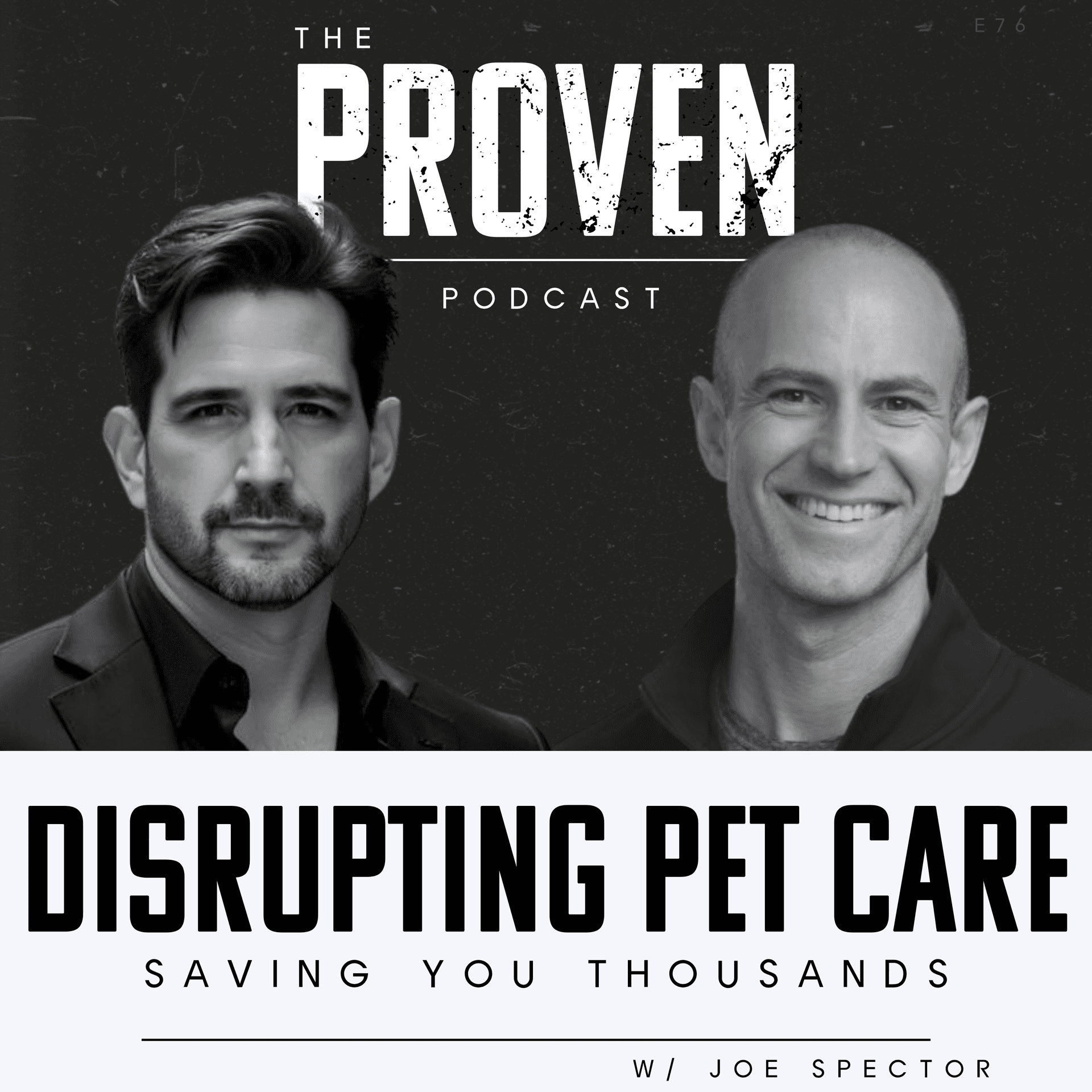
Joe Spector (CEO/founder of Dutch) explains how Dutch uses pet telemedicine to deliver faster, lower-friction vet care, save pet owners money, and scale a venture-backed business. He also contrasts his earlier direct-to-consumer healthcare company, Hims & Hers, including how he pivoted after early failure and how he markets to overcome industry pushback.
Guest backgrounds
Joe Spector is CEO/founder of Dutch (pet telemedicine). Previously, he was a co-founder of Hims & Hers, which he helped take public at a $1.6B valuation. He describes 15–20 years of failures/iterations before Hims launched.
Key claims
Dutch saves “hundreds of millions” for pet owners via phone-based visits; 90% of televisits happen by phone; vets have ~15 years experience; AI reduces vet admin time from ~30 minutes to <5 minutes; membership is ~$100/year for up to five pets with unlimited calls; telemedicine is often the first step because many owners otherwise delay care.
Notable examples
reverse sneezing misdiagnosed as seizure; a rash/flea-and-tick use case; Hims pivot from “Clubroom”/poor product-market fit to a rebranded, trust-focused relaunch (including new photography/packaging and customer service). He cites a “shit in, shit out” early marketing/product approach and a “giant penis cactus” NYC subway ad for Hims.
Written by AI. May contain mistakes. Listen to the episode to check what was said.
Chapters
Tap a time to open that second in VOJoe Spector's Journey and Achievements
0:30 to 3:20
Joe Spector shares his background and the success of Dutch in pet telemedicine.
“All right, everybody, welcome back to the show.”
Lessons from Building HIMSS
3:20 to 6:20
Insights from Joe on the challenges and key lessons learned in creating HIMSS.
“It was a lot of blood, sweat, and tears and learning that got us to that place.”
The Importance of Pivots in Business
6:20 to 8:10
Discussion on the necessity of pivots in business and examples from Joe's experiences.
“I'm going to burn it all to the ground, rebrand it, repackage it and go with it.”
Team Dynamics and Hiring Challenges
8:10 to 12:40
Joe discusses the challenges of hiring and managing a dynamic team in startups.
“going to be willing to be crazy with you and go down this road with you?”
Marketing Strategies for Pet Care
12:40 to 14:00
Joe explains effective marketing strategies for launching pet care brands.
“What marketing, what approach, what, how do you get in and penetrate a market that fast?”
The Effectiveness of Uplifting Marketing in Pet Care
14:00 to 15:20
Learn why happy pet imagery resonates more with consumers than negative portrayals.
“What's interesting is when it comes to pet care, that type of FOMO marketing doesn't work.”
Navigating Industry Norms as a Disruptor
15:20 to 18:00
Explore strategies for overcoming industry resistance as a new market player.
“They're not going to show you pictures of the phone or the wee wee not working or their hair falling out, but they're going to show you pictures of their dog.”
The Power of Focusing on Supporters
18:00 to 18:30
Discover how targeting your most supportive customers can drive success.
Understanding Telemedicine for Pets
18:30 to 20:40
Unpack how telemedicine uniquely caters to pet care and improves accessibility.
“So like, do I chase him around the house with a laptop?”
Emotional Connections in Pet Care
20:40 to 23:20
Learn about the deep emotional experiences of pet owners seeking care for their animals.
“and most of the, you know, you got home from work and you finally realize that your dog has a rash or there's some gook coming out their ear or their eye and you're just like, shit, what do I do?”
Show all 22 chapters
Addressing Common Pet Health Issues
23:20 to 26:10
Understand how telemedicine handles typical pet health concerns efficiently.
“ever I mean I've you know in all these other ventures I've done I don't think I've ever had like this level of intense emotional connection to what we're doing and how awesome it is as I've had a Dutch.”
Integrating AI and Security in Telemedicine
26:10 to 28:04
Discover the role of technology and AI in ensuring secure telemedicine solutions for pets.
“where the alternative often is that people do nothing.”
Telemedicine in Pet Care: Bridging the Gap
28:04 to 29:16
Explore how telemedicine and AI are transforming pet healthcare operations.
“How are you doing these things to make sure these things are secure?”
AI's Role in Streamlining Veterinary Practices
29:16 to 31:06
Learn how AI reduces administrative burdens for veterinarians and improves efficiency.
“And so anything related to security is going to be built in-house.”
Cost Dynamics of Pet Care: Comparing Models
31:06 to 33:56
Understand the cost structure of pet care and how telemedicine offers savings.
“So there's lots of cool things that we're going to be launching with AI going forward that I'm excited about.”
When to Use Telemedicine vs. In-Person Vet Visits
33:56 to 37:38
Discover the circumstances that dictate the use of telemedicine versus traditional vet visits.
“It's incredible value and it's the power of telemedicine.”
Scaling Pet Care Services: Insights from Dutch
37:38 to 42:05
Learn from Joe Spector about scaling a pet care business and creating consumer awareness.
“Is it when there's blood coming out of the animal or how do you, what's like the clear divide for most pet owners?”
Understanding Remote Team Culture
42:05 to 43:47
Learn how to build and maintain a cohesive culture in a remote work environment.
“Someone had a rash and that was fixed for this$100 membership.”
The Importance of Team Retreats
43:47 to 45:28
Discover the value of in-person gatherings for remote teams and building connections.
“But I would say it's a lot of it's over communication.”
Navigating Employee Performance Issues
45:28 to 47:30
Understand how to address underperformance in employees through results-driven discussions.
“You've had a, you know, this is beyond the 90 days.”
Lessons from a Billion-Dollar Exit
47:30 to 50:28
Gain insights on the key changes to make for a successful business exit.
“I don't think this is a fit for us anymore.”
Building a Customer-Centric Business
50:28 to 53:06
Learn how to create a service that prioritizes customer needs in the pet care industry.
“And then I think one of the lessons from hymns that I took here is dreaming big and dreaming bigger than you've ever imagined.”
Transcript
Automatic transcript. May contain errors.0:00Welcome to The Proven Podcast, where we don't care what you think, only what you can prove. On this episode, Joe Spector, the individual who did a billion-dollar exit at HIMSS, talks about how Dutch is saving hundreds of millions of dollars for pet owners all over the world through telemedicine. What it's like to go up against a market that doesn't want you there, who the established challenge you, but all that matters is that you're in service to your clients on the highest level. At the end of this episode, you'll know exactly how to leverage pain into systems and turn those into profits as he builds another empire.
0:30the show starts now. All right, everybody, welcome back to the show. Joe, I'm really excited to have you on the show. Thank you for having me. Absolutely. So for the four or five people who don't know who you are, you've done some pretty radical things. Can you kind of give everybody a debrief of who you are and what you've done? I'm currently the CEO and founder of Dutch. We're the leading telemedicine player for pets for healthcare. And prior to Dutch, I was one of the co-founders of hims and hers which is a direct-to-consumer health care company that i helped start and take public at a 1.6 billion dollar valuation jesus so you've done two things you're saving animals and you've you've done a billion dollar evaluation that's it's insane there's a lot of people who can never get to to make a hundred grant, let alone a billion.
1:25It's a wild thing. What are some of the things that you've run into? Because to do that, you know, people are listening to like, wait, what? You did this with what? How did you get to a billion dollar valuation? What are some of the lessons you ran into that people can implement today? Well, first of all, it's at the start, making sure that what you're working on, that you feel that the world needs it and really being honest with yourself. Because sometimes you could find a cool project, but the reality is it's not really scalable and you're an N of one. So you have to be honest. The other thing that I learned, and this is from now 15, 20 years of failure before HIMSS came to be, which is A, you need to, if you're going to build a venture-backed business, it's a very relationship-driven market.
2:20And it takes years and years to build relationships, credibility, and trust for a VC to give you millions of dollars in any kind of funding. And the other thing is, of course, execution. And what does execution mean? It means often perseverance when it comes to failure it means being able to quickly iterate and pivot which can often be hard because there's ego involved there's lots of time that went into a project and it's being able to kind of give that up and potentially starting all over again and it's on being creative and taking a new approach. It's dealing with a lot of nose, so having a lot of thick skin.
3:12So it's a lot of things that came to be by the time HIMSS launched. It was a lot of blood, sweat, and tears and learning that got us to that place. So people talk about this all the time. Like, oh, this is what happens in business. This doesn't happen in everyday life. And I would like to tell the audience the amount of failures and iterations we've had just in doing this podcast between power outages, between cameras overheating, between headphones need to be redone. Just we've been trying to do this for so long. And what I've loved about this dynamic is you can see your experience showing up here as well, where you just pivot.
3:53And I think people undermine, they don't understand how powerful the pivot is. Can you give me an example of a pivot either in Dutch or in hymns where you've had to pivot on the spot? Because I've seen you pivot just in talking to you now for the podcast where, oh my God, so many pivots, so many pivots, where you've had to do it in business where people can kind of relate to it and say, oh, that's a pivot. And these are kind of the steps on how they do that. Well, both at Dutch and hymns, we went through periods where we were basically failing. We were not acquiring customers, even though there were millions of dollars in VC dollars at play.
4:34At Ems, we were in stealth mode for about a year. And at the time, it was called Clubroom. And we wanted to just quickly see if there's a product market fit. And so we were just shipping something that looked like crap and marketing something that looked like crap. But we thought, is there a spark there? And the reality is there wasn't. And it fits the adage, shit in, shit out. But when we took a step back, there was still this belief that the hair loss, erectile dysfunction market is huge, and we were going to come at it in a new way. what we realized is the thing that was going to make it special is making these issues destigmatized and building trust and so we doubled down we raised five million dollars in venture capital and shut everything down and started all over again with brand new photography marketing packaging, doctors, a customer service team that was going to delight customers.
5:47And when we did that, that's when things really took off. We went from, I remember we launched in November of 2017. And by December, like a month later, we raised capital at a$200 million valuation just off of being live for one month because things took off so fast. So walk me through that process of, okay, we have this thing. It's somewhat working. I'm going to burn it all to the ground, rebrand it, repackage it and go with it. Even though I've taken VC money and I've got millions of dollars about, you know, how does, how do you convince your team of that? how do you work with your team with that how do you get through that process because that's a terrifying thing to do say hey remember this thing that you built that you love yeah we're getting rid of all of it how do you do that with your team how do they survive that it's still it feels it has a feeling to me of when you jump off a cliff and you hope that no stones get in the way and you land in the water.
7:03And it is a feeling of, well, like, why would this work later if it kind of didn't really work now? Correct. But I think it's a combination of a, I have no choice, like, what else am I going to do? and be a really strong belief of the future is better, that this alternate state is so much better, and an insight that you had of why the current state didn't work. And I think the team is kind of the people who are there in the early days, it's like the crazy people. and they're so crazy that they're excited and willing to try a couple more times before they give up so how do you how do you attract those people right so because we and we've talked about this before that there's different type of people who come into your orgs and you and i both know from building businesses some people stay some people get told to leave and some people you know what are we talking about the reason season lifetime how do you find the people that are going to be willing to be crazy with you and go down this road with you?
8:16It's hard. Partially, it depends on people's backgrounds. Often, if someone's been in a stable job for a long time, or if they need a stable paycheck, that's probably not the right kind of person. at the same time there's no rules i've been surprised at dutch we hired someone who came from walmart you know a huge company with a huge org and stability written all over the company and she has been a rock star she was in her bones made to be a startup leader so So I, like I said, I say one thing, but rules are always meant to be broken. And at the end of the day, you just have to give people a chance.
9:08You have to be honest with them of what to expect. And I think it's kind of like dating where, you know, in the first five minutes, you'll kind of know if they're ready to be crazy or if this is not for them. And they'll know as well on the other side. Yeah. And then what do you do when you make a hire and you thought initially, and we'll use a dating example, because my grandmother used to say, you know, within the first three weeks, and if you don't know, you know, that's what, that was what she said. And she was a thousand percent right. A thousand percent right in business and employees. It's kind of that same thing.
9:40You know, there's, there's companies that have policies that like, listen, we'll pay you to go away. If you stink within 90 days, if you stink, we'll pay you, please take the money, go away. What do you do when you think you've hired that rock star, that amazing person? Like, yeah, this is my person. It's amazing. And they end up being kind of poopoo caca. What do you do? How do you deal with those iterations? How do you pivot on the employee level? It's so hard because, like you said, it's so emotional and it affects the rest of your culture. People look to you as a leader. How do you react in these tested situations where you're tested?
10:21And then, of course, people have families and their whole situation. I definitely think, you know, it's really my wife who has made me the most ruthless in this, which is just, A, you have to prioritize this company, Dutch, because this company has investors. This company has all these other employees who took a risk. And so you have to consider doing right by them as well. And for me personally, I want to give people second chances, which I think comes from my own personal experience where I feel like I often didn't get second chances, and I wish I did. And so I think I give people chances, but up to a point.
11:15And like you said, I think the 90 day mark is a really good point. And at some point it's a win-win for both sides, because if they're not ready to lead, to exceed for what they were brought on for, it's not going to be great for them in a year. And I think the other adage, I don't think I've ever regretted that I let someone go. and if anything i think another common adage is you know i wish i had done this earlier correct yeah i agree i think i wish i've done this there's not a single person i've ever had to fire because there's just been fire and letting go there's budget cuts that happens sometimes but anyone i've ever fired remember and into that i remember there was a situation where there was someone i was i deeply cared for i was like this is this person had been with us and she's got a family and her husband and i know her husband and i know her kids and i was like oh this is gonna be so hard.
12:11And then I had my VP sit down and say, okay, great. You're worried about Susie. What your place name? Susie's kids. But what about these 15 other people and their kids? Do you not care about their kids? And this person's going to poison the ship and having that pivot, it's hard. It's really hard. But if you're trying to scale and do what you're trying to do, sometimes you got to do that, which is heartbreaking. Now, the next thing people we're going to ask is, you know, you're penetrating in your new brand, you're doing this, be it with Dutch or with HIMSS. What marketing, what approach, what, how do you get in and penetrate a market that fast?
12:48Because everyone's like, oh, I just need to go take pretty pictures. It's so much more than that. What are the things that most people don't understand when you're launching a new brand that they're running into this issue? So on, so again, both of these brands are on the consumer side and they actually have really two interestingly divergent tactics with hymns the tactic was to kind of be slightly cheeky controversial in order to get attention and i don't know if you remember but we had this giant penis cactus ad that we ran in the new york subway and that definitely and new york has so many journalists and investors etc that live there so that campaign i still feel like people come up to me and recall it and um that got a lot of attention and then for um and i think the other kind of tactic a lot of times that we used is like FOMO, which is, you know, if you lose your hair or if your penis doesn't work, you know, you're not going to have the best life.
14:04Right. What's interesting is when it comes to pet care, that type of FOMO marketing doesn't work. People don't want to see sad pets who are, you know, in a giant rash or, you know, ruined by flea and tick infestations like no one wants to see that um and we tried and we saw how much that doesn't work uh people want to see happy uplifting pets like they don't want to see sad pets so that that's a whole different um set i do think with the other thing that's different with Dutch beyond being uplifting is that pet owners love talking about their pets and I think that has been our advantage is for people to see how Dutch helped save them money and having those real conversations play out um it's not something hymns can really like people don't really want to talk about you know again my penis didn't work and now we're like that's not something anyone wants to see and that's not something people want to really talk about um and and so with dutch we get this benefit of how much pet owners love to talk about their pets and people want to hear about it um so it's been there are two different tactics but they're tactics i would say that try to break through the noise and get people to identify um for me you know i have i'm bald so like i identified with hymns on that front as a hair loss customer and i think other guys do too and then on the dutch side i think lots of pet owners identify with those pet issues and that creates a human connection with the brand on that side i think i think the purpose of you know being signal versus noise being the lighthouse amongst the fogs is super important but also understanding that understanding your niche right like there's not going to be a lot of people want to talk about the wee wee.
16:08They're not going to show you pictures of the phone or the wee wee not working or their hair falling out, but they're going to show you pictures of their dog. They're going to show you pictures of their cats. They're going to show you pictures of the fur babies and the protection of their fur babies and tying into that. One of the things we were talking about before we're recording is there are some challenges, right? There's some challenges when you go to market, there's going to be industries and industrial norms or things that are in the industry that kind of push back. And without going into too much detail.
16:34What do you do when you run up against the fact that, hey, we've done it this way for a hundred years. You're, you're a disruptor. We talked about this offline where, cause we're both old enough to remember when like Napster and LimeWire and MP3s came into play and Lars from Atalica lost his mind. And there's these huge lawsuits and Senate hearings and all this stuff about, no, you can't do this. You'll destroy the industry. And then And Apple came in and said, yeah, for this month, for$100 a month, or sorry, for$14 a month, we're going to give you unlimited access to all the data. Or you could buy songs for$0.99.
17:07And the market changed. And what do you do when the market's changing with or without the old guard coming with you? How do you run into that? How do you survive some of those hits? There's a quote from Mark Cuban that has resonated with me. and he said, there's going to be always people who hate you. You have to find the people who love you and focus on them. And in this case, it's really finding the people who love you. It's the customers who are saving money or oftentimes haven't seen a vet since the pet was born. and those are the people and those are the stories that you want to focus on because if you focus on all the people who hate me or who hate you know i i would uh yeah i would be so depressed and i wouldn't be able to get out of bed and um and then at the same time if you focus on the people who love you and the stories where we saved millions and millions of pets and gave them care then that's the thing that you're that i'm like oh my god i'm it's 5 a.m i'm ready to rock and roll um and you gotta build for them and you gotta um spread the word of those stories yeah i think having spoken to customers that you've had done the research and what we've done and even our first call it's being able to see how much you absolutely love the animals and how much you absolutely love the pets and the pets i mean the the pet owners are almost a side effect like we just want to take care of the animals that everyone i've spoken to talks about how dutch just is in love with the animals and with pets that even aren't aren't there so when you get the naysayers it's like i'm gonna help the out these animals and give them a voice uh one of the people i was talking to um he's he's like most people right he's got a huge family he's got his kids he's got multiple pets i think he's got cats he's got dogs he's got all these things and he couldn't get in to see the vet so he went through and i'll let you tell the story of how he did this walk me through how dutch works and why and you know i can try to tell the result of this of why he liked it but how how does how does that experience how did you decide how does telemedicine work differently for animals than it does for pets definitely and you know we get this question so many times people will say, you know, my dog can't talk.
19:42So like, do I chase him around the house with a laptop? Like, what do I even do? And this, so much of Dutch came from me building hymns, as well as then my own personal experience with my dog, Eddie, and seeing how this can be connected and then now bringing it to life. Most of our customers, as well as on the other side, our veterinarians are using their phone. Like 90 % of these televisits are happening by phone. And the phone is obviously quite mobile. And what's awesome is that the dog or cat is at home in their natural environment, we get about two-thirds of our calls at night. And it's kind of like that's when shit goes down because it never happens kind of nine to five.
20:37It always happens at night when everything's closed and most of the, you know, you got home from work and you finally realize that your dog has a rash or there's some gook coming out their ear or their eye and you're just like, shit, what do I do? and up until Dutch most people either kind of were like okay I'm gonna lay low until the next day and see if I can get in or I'm gonna take my dog to urgent care and that's gonna cost me a fortune plus um like I I you know I had this experience you sit on a parking lot for four hours until it's your turn to come in so it's just kind of a nightmare scenario either side and so what dutch is if you go to dutch.com you're able to with same day get on a call just like the one we're having right now and there's a real human veterinarian and again i think in this world of ai where we're used to now chatbots but you get a real human who has our vets have an average of 15 years of experience.
21:49So you get a real human who, for whom most of the time, 90 % of the time, our vets can solve this issue. And they're like, oh yeah, it's this. Like I had something that was going on with my dog one time. I swear I thought he was having a seizure. He was like convulsing. And it kind of went away. and then it came back. I literally was about to grab him to do the same song and dance with Urgent Care. I got on a Dutch call and the vet was like, oh, this is reverse sneezing. And she showed me videos and it's like nothing. It's like totally common. I would have never known that. She just saved me like, again, half my night, a thousand bucks.
22:37And I was able to go on Dutch, same day talk to a vet and she was like this is nothing to worry about this is what it is and it's so and and we now get to see this over and over again thousands of times where people can talk to a vet and most of the time get their issue addressed and have this you know massive peace of mind um i'll say the the thing because a lot of our videos are recorded and i'll watch them and almost like a fourth of the time the person on the other end is in tears in tears because their pet is getting care for the first time like that is the coolest thing ever I mean I've you know in all these other ventures I've done I don't think I've ever had like this level of intense emotional connection to what we're doing and how awesome it is as I've had a Dutch.
23:38It's interesting because when we talk about what's proven and what works over and over again, we talk about always going after the pain and you hunt the pain. If you're going to do a marketing, if you're going to scale, you always want to hunt the pain. And one of the things when I spoke to other people that work with you, the pain of having two, and you skipped over it so quickly, they're doing the call in their home. You don't have to take the dog. You don't have to take the cat, put it in a cage, drive it somewhere. We all know what it's like when animals go to vets, they freak out. They're not happy about this.
24:05And they, the screaming and the yelling, and somehow they know as soon as you leave the house, they know the difference between the dog park and going to the vet. So you're adding all this stress. And then when they get back, they end up pissing or shitting in your shoes, which happens because they're mad at you. There's not any of that. And I think we've all been on FaceTime calls with animals and the animal just doesn't react. It's like, it doesn't even know that it's there. So it's like, whatever. It's just, you know, you know, mommy, daddy's just on the phone right now. So it's no important.
24:31But I think the pushback that people get when they do this is like, yeah, but you're not talking to a real vet, or if you're not in the office, you're not getting real care, or this is going to cost me more because in, in my world with telemedicine, because of, I grew up in Florida, I lived in Florida, every house in Florida has mold. It is what it is. And with a nose the size of mine, it means you get sinus, you know, chronic sinus infections. So I was going and I'd go in and I have to pay each and every time to get the same medicine each. And I'm like, just give me the antibiotics until I was smart enough to move out of the house.
25:05Luckily my doc and I, that I used to work with, we used to do triathlons together. So I would just call the office and I'm like, yeah, I need another round. Like, ain't no big deal. You don't have to come in. Don't worry about it. I know that's how it works in telemed for me, where I, if it's a sinus or a cold, I am not getting in my car and driving because a, it's not safe, but B I'm just going to click, click with my, my healthcare provider and it's done. I don't know anything about telemedicine for dogs. And I know you're going after pets and you're trying to help them with this because you, you focus on people's pains when you're scaling.
25:34If it was a pain of your wee, we didn't work, or you didn't have any hair or the focus of, I think my dog's going to die because it's doing reverse coughing or reverse sneezing, but it's actually, you know, it is what it is having that ball game. When someone goes in and meeting the pain is one point, giving a solution that works is another point. How does someone know and how do you teach a market that they're getting XYZ level of care? What is that care compared to going into the office? In some ways, it can be better because it's happening faster and it's happening where the alternative often is that people do nothing.
26:15Like I was saying, there's a stat out there that 75 million pets have completely delayed getting care because of cost or the friction of going in. So oftentimes, and that's in this upcoming pet report, it's not a question of like, oh, is it? Of course, sometimes it's better to come in. But oftentimes, the reality is what people do is they do absolutely nothing. And doing nothing is definitely worse. in terms of the solution you know the other kind of insight I had is that you know there's a lot of shit that happens to pets and they live shorter lives so it happens more frequently so we might have someone that well they ate something and now they're vomiting but then that same pet probably needs to be on flea and tick or half the households have two or more pets.
27:18So if one gets a rash, the other dog gets a rash or one gets flea and tick, the other gets flea and tick. And all this massively, massively adds up. And for a lot of these conditions that people come to Dutch, they're pretty common conditions. Again, it's like an allergy, you see redness spots, flea and tick. You know, you see that. I think there's a lot of things that are low-hanging fruit where telemedicine can really do magic. Of course, there are many things like a vaccine, a wellness checkup. If the animal is bleeding, like we should obviously, you know, telemedicine will not solve those issues.
28:04but there's a lot of things that people completely ignore and that's where telemedicine can shine and bridge the gap so how do you there's two conversations i want to have the difference between kind of telmed and then in-person vet but more important the tactics of this because i want to give the people who are doing remote work because you brought up ai things are changing dramatically how do you process through and what are you using to make sure that things are secure Like, how do you, what software do you use? Are you using AI at all? How are you doing these things to make sure these things are secure?
28:37And how did you set up these systems in your org? Because let's say I'm not going to detail about a SIN for Pets, because I'm not going to detail about a SIN for Pets. But I am recording these phone calls. I am rolling an AI bot out versus a regular bot. What is the software you're using? How are you integrating AI into this? Are you? So many questions. So you mentioned you've built your own EMRs. EMRs, I've built my own EMRs. We built our own EMR at HIMSS. We built our own EMR, electronic medical record, for Dutch. And part of that was we're iterating way too quickly to rely on a third party to do these things.
29:16And so anything related to security is going to be built in-house. In terms of AI, man, every week, every month, there's a whole new level. So we had started to really use AI to save on all the administrative tasks that vets were doing. So before a call and after a call, a typical vet would spend about 30 minutes in getting ready for the call, taking all the medical notes, sending emails to the customer. And now basically AI does that. We do, you know, the human spot checks it before it actually goes out. But it took 30 minutes worth of work and made it less than five minutes. And it's also more accurate because, you know, a typical vet, has, you know, let's say 10 visits.
30:12And by the time they're doing all their write ups at the end of the day, they probably forgot half of what they said. And AI doesn't. So it's better for the patient, they get a notification much quickly and a summary of the visit much quickly. And then it saves the pet, the vet a bunch of time. So that's kind of been the first use of AI. going forward I think what's awesome is we now have had almost a million telemedicine appointments interactions on our platform and so the level level of data we have is you know incredible and that's gonna really start to connect the dots on outcomes and also just create an opportunity for the pet parent to really understand the health history of their own pet.
31:06So there's lots of cool things that we're going to be launching with AI going forward that I'm excited about. So two things when you mentioned AI that you always have someone check it because people don't understand that AI doesn't mean artificial intelligence. It means always incorrect. So you have to have that human to kind of babysit and keep an eye on it. What software are you using? Because people are looking at it like, hey, I need to use this as well are you are you using clod are using open claw are using chat gpt what what are the stuff are you building in house how much of this stuff are you doing on your own we're the um we've played around with a couple things just because i think things are changing so much we have played around with open ai and gemini and clod and right now kind of clod is the flavor of the month um but i think we're still playing around with um and testing kind of all the different llms that are out there and i think that's interesting yes because a month ago i was all in on codex and i was like i'm doing this on codex and then i found manis and i was like i was like this is faster here i'm like okay but this one does this well so yeah i think it is a free-for-all right now it's very much because we are both older we remember when the internet head boomed and there was all that and people were jumping around for different companies and doing all that i think it's it's having that adaptability saying hey we're gonna try this and maybe well maybe open air is gonna be better later and then maybe clog into this there's gonna be this moving thing whenever it goes into it though so back to the conversation that we have with dutch and back to telemedicine when i do telemedicine through my insurance company and it's the only thing i can relate to because i don't have pets and i call up it costs me nothing because it's part of my plan and then i just drive over to wherever i get cvs walgreens or whatever it is for my stuff and then i get my drugs i'm like any drugs what is it like in the pet world is it you know what is this is it more costly i mean how does this work in pet it's all cash even less than three percent of pet owners have insurance but even when you do it's a reimbursement model.
33:19So it's effectively 100 % cash pay. So every dollar that you pay, it's a dollar out of your pocket. So, you know, typically, you're going to pay anywhere from 50 to$100 for the visit per pet. So again, if you have more than one, you're, you know, that's double, triple the cost. And then you're going to pay for any kind of blood work or x-ray, wellness etc so a typical visit can easily start to add up to several hundred dollars for the client and that's money that's going straight out of their pocket with dutch our membership is about a hundred dollars for a year for up to five pets with unlimited calls so it is the deal of the century yeah i don't understand how you guys stay in business because everyone i know who has pets calls 700 times to their vet because their dog it's the first thing that's ever happened to that dog in the history of dogs and they think it's their parents it is what it is it's like newborn kids they're super protective and it's harder because the pet can't talk how do you stay in business when it's a hundred dollars for a year for unlimited calls.
34:35It's incredible value and it's the power of telemedicine. So like I mentioned earlier with AI, our veterinarians can be quite efficient. A typical in-person exam, maybe you can do like one pet every 30 minutes. It's very high touch. Whereas there's lots of things that are done before and after and that's automated and doesn't require the vet's time. And so the actual call lasts about 10 minutes. Everything else is pretty automated. So there's a way to really drive down costs. And then, you know, the power of telemedicine, we don't have to pay rent. We can have people living in parts of the States that have a lower cost of living.
35:20So there's lots of optimizations and that helps to drive down costs and we pass that on to the consumer. so they pay 100 bucks for the year which is wild what about the cost of flea and tick medicine do you is there a markup on that or is the same cost as if it's at the vet how does that work how fast do they get it i don't know if they have walgreens for pets i don't know how that works what i've never thought about it so yeah no so by the way that is like that was super eye-opening for me You cannot get animal prescription products. There's not a Walgreens CVS for an animal RX. The only way you can get it is if your vet gives it to you, which back to you have to spend money and time to see that vet in person, or like a mail order pharmacy.
36:14And actually what's awesome with Dutch is once you have a visit, if you're getting medication, then that order goes straight to a mail order pharmacy for fulfillment. What a lot of people don't know, if you're getting your order from some other mail order pharmacy, they might take almost a week of back and forth between them trying to contact the vet, trying to get the prescription, trying to get the authorization. And so all that time is lost and it's frustration for the pet owner uh with dutch it's seamless you know as soon as you have the call if there's a prescription it goes straight to shipping basically and you'll get it in like two to three days and in terms of markup we you know first of all we have a price match guarantee so if you find the lowest a lower price will price match it um our goal is to you know drive happy customers so it we're not built for you know massively marking up our medications so unlimited calls same prices they regularly do now let's talk about the fact that this isn't poopoo cacca in on vets that you've got vets that work with you and there's vets on your board and there's vets that connect with you when if i'm doing this when would i go to see a vet versus when would I do telemedicine?
Read the full transcript
37:41Like what's the divide? Is it when there's blood coming out of the animal or how do you, what's like the clear divide for most pet owners?
37:51So there's not necessarily black and white. I mean, of course, if your pet is bleeding or hasn't been eating or drinking or hasn't urinated or, you know, they're limp, like you should go to urgent care right away. And even if you get on a call with a Dutch veterinarian, they would probably tell you the same thing. Where it gets gray is, and again, I think telemedicine, it's not an either or decision because like I said, 90 % of the calls are happening on mobile. So if you want to race to urgent care and sit there for an hour while you're being waited to be seen, you can join Dutch and see if you can talk to a vet faster and sooner.
38:35so it can often be an and and then there's so many things like flea and tick medications or like i was mentioning a rash those are things that you can go to dutch as a place to start and then the veterinarian can go to tell you okay this is something we can start on or you know what you need to go see someone in person so there's lots of times where dutch can be kind of the first step. It doesn't have to be the last step, but it can be the first step in getting care. So it sounds like it's an and thing. If my, if my animal is acting up, I would literally just be FaceTiming while I'm driving, pointing at the dog and they're going, here we go.
39:18As you're driving in, it sounds like it's an and thing. So I think we, I think we get what Dutch is. I think we get why Dutch works. The next steps are, how do you scale this as someone who scaled things before? What are the tactics that if you're a business owner right now, then okay, hey, he's got a product market fit. He understands the pain. He is signal versus noise. You know, we've gone through all those things. We've broken it down. These are the proven formulas to do it. A lot of people have that, but they can't scale. They can't get to where you are and what you've done. So to take it, that 30 ,000 foot view, you know, zooming out because, you know, I hope the audience is listening going, okay, he's really done his homework.
39:55He really knows what's going on. Now, how did he scale HIMSS? How is he going to scale Dutch? How does this go forward? Because they're different brands and they're different. They're different targets. There's different verbiage that you use. You know, there's different staff expectations. How are you managing all of this all at the same time to get to that next level? Both at HIMSS and at Dutch, it is about creating this aha moment for the consumer. So at HIMSS, by the way, I wish I knew about HIMSS in my 20s, but there is this aha moment that we needed to communicate to guys to say, you know, you don't have to lose your hair.
40:41Like there is an FDA approved treatment that the hair loss medication works 85 % of the time. Like if you start it in your 20s, like it is tested, you will not lose your hair. It's incredible. Or Viagra, like Viagra works. And so I think a lot of times guys didn't realize that this is something that they can have access to. and then furthermore that they can have it from a trusted source at an affordable price. And so if you like map that out for them, that was the big unlock for HIMSS with like, oh shit, I don't have to lose my hair. Like, can you believe that? And I don't have to spend$10 ,000 to keep my hair.
41:29It's only, you know, like$10 a month. Like it's super affordable. I would say it's a similar lesson with Dutch, which is oftentimes I think pet owners, again, I think we're in the earlier stages now where I think pet owners are like we were saying, oh, is this something that even a televette can do? because I grew up thinking, you know, something's wrong. You go to a vet in person. And so it's really creating this unlock by sharing stories to say, you know what? Someone had a rash and that was fixed for this$100 membership. Or someone had flea and tick and they got really affordable flea and tick medication in two days and it didn't cost them an arm and a leg.
42:21so i think the more people again it's having that same though unlock of people understanding oh yeah these are like the use cases and this can save me like several hundred bucks oh that's awesome for this i'll use dutch i'll use telemedicine so when you're dealing with staff that's spread all over the place because you're having them in different locations that is a culture design that that's new right you know i guess and it blows me way that COVID started six years ago, but this is normal for us now. We're just in this, this world of everything's remote as a founder, as a CEO, how do you build that culture?
42:59How do you unify a group that some of them are never going to meet in person? How do you scale that? Well, I will say one of the things I'm most driven by is results. Like one of our values a Dutch is behavior, not words. And we have lots of pretty transparent dashboards where we know how different parts of the business are performing and we know the owners of those different parts. So that kind of transparency and accountability, I think is certainly the biggest glue ever. Of course, I think there's also emotional connection. And we do that on a weekly basis where we kind of come together live.
43:48But I would say it's a lot of it's over communication. We have a weekly update email. And then there are for some of the most meaningful stats, there's like a daily communication on that. so it's that transparency and the communication that serves as the glue how do you do you guys have events where you get together do you fly everybody out do you have corporate events what because that's what we have found with with our stuff that we run the remote environment they need to be in the same room everyone's in a while we need to have retreats which normally is just an excuse to give them way too much pizza and beer but they love it that's what they want we're gonna go put you on an island you're all gonna get sunburned we're all gonna laugh at each other here's some pizza and beer enjoy the moment are you finding those type of huddles to be something that you guys are doing as well absolutely and my my cfo hates it and at night um but we definitely have those moments once a year where the whole team gets together and we try to be super, what's the word?
44:58I'll still have those, like this last time we had it in Sausalito, we brought in a coach to make it meaningful, but we also had an outstanding cooking class. So it's kind of that combo of still work and some play when we're all together. there yeah we have found that the work is in quotations when we do these events we're like we're gonna work but the real reason we're just let you guys burn off steam and goof off and connect and have that because we have found with the people who work remotely they want to have the autonomy they don't want to drive anymore in traffic they don't want to spend the time they hate it but they also want the connection but they don't need the connection as much so finding that balance, um, has been really interesting for us.
45:44So we've got the carrot. We then have the stick. So let's, let's walk through the stick. You've had a, you know, this is beyond the 90 days. You've been dating for a while. All of a sudden this employee, for whatever reason, a purple dragon came out of their mailbox, whatever the reason is, isn't executing as well. And this is a core person in your org. This person is now needs telemedicine themselves. They are no longer viable and they are a sickness to your org how as a founder do you deal with that and is it different when you deal with that a lower level versus a higher level
46:20i um well i think i think the higher the level the more impact they're having to the rest of the organization and for me i try to lean into being curious and understand the why and it could be be who you know are they set up for success in terms of what they're doing who is their manager setting them up for success are we reporting on the right metrics and like you were saying at some point um I try to at the end of the day measure things simply by results and that kind of makes it a little bit more black and white and takes the emotion out of it what i do try is to make sure i've conveyed that the results are being missed at first and then at some point you just have to make that decision that this person is not is not helping the organization move forward and that's kind of when you have to make that tough call yeah i think i think the important thing there is it's not emotion-based we're doing this by results space like here it is this is what's going on it's black and white is this working for you anymore and and i think that has been the open-ended question that i've used for years which is is this working for you and nine times out of ten they're like no like awesome what does it look like if this was working for you and they'll give an answer that probably doesn't serve your org then you follow up with another open-ended question was like okay well how does that work for us in our org and then they'll get to the point where like, you know what?
47:59I don't think this is a fit for us anymore. I'm like, you know what? I don't think this is a fit either. So getting them from a results space versus an emotion base is huge. I want to talk about one more thing, which is the emotion-based stuff of you've done a billion dollar exit, my friend. Most people have never done that. Walk me through that experience of what you wish you knew when you were building the org from the beginning versus what you were doing now. Like, okay, God, this would have made this exit more achievable and faster if you had done these things for sure in kind of the the moment that we rang the new york stock exchange bell is just like a pinch me moment for anyone you know i i i remember uh you know going to college and studying business and i think i thought okay maybe once in my lifetime would i ever, like, if I'm so lucky, I'll get to do that.
48:57And so that was super cool. And I think some of the things I'm changing are things I'm taking into Dutch, which is I'm trying to surround myself with people who not only can execute, which is important, but also people who overall make me happy because I think there were moments when, um, if it's simply to, it's kind of like the reason why I became an entrepreneur in the first place. You know, I started my career at JP Morgan as an investment banker thinking that, you know, money is the most important thing and I was miserable. And, um, what I love about being an entrepreneur is the end result right now, making customers happy.
49:46But I also love the making the sausage with my team and being in the trenches, iterating when potentially if things are going wrong or, you know, pouring gasoline on fire when things are going great. And I think there were many times at HIMSS where it was, it was a tough environment, I should say. And so I think that's kind of one of the things I'm taking into Dutch of making it more fun and leaning into those moments and surrounding myself with people who are a lot more positive. So I think that's a huge change. And then I think one of the lessons from hymns that I took here is dreaming big and dreaming bigger than you've ever imagined.
50:39One of the most inspirational entrepreneurs, Elon Musk, has these grand visions that seem crazy, like going to Mars. And then, you know, surely one by one, they become reality. And I think to your question of like, what could we have done like better and faster at HIMSS is to be even crazier in our dreams. And I think that's definitely something I've taken into Dutch is to dream crazier and bigger earlier than to feel like, oh, I can't do that right now, or I don't believe I can do that. And by the way, I think with the power of AI, there's even more reason to be thinking big these days in order to scale, in order to enter new categories.
51:34There's just so much that we're seeing the power of AI that what we can do. And it's allowing us to dream bigger than we ever dreamed before. Yeah. I also think one of the biggest things, and this is important, is you've tied this to a mission. We were actually in service to others. And I think that's why we're here for all this. That's the whole reason we do this, but you've set up in an environment where it's a hundred bucks for the whole year for unlimited calls. And that's going to protect you from having, you know, again, we talked to one of your customers that came in that says, listen, I don't have to take my cat out of the house.
52:08That alone, I would pay a bazillion. I got immediate results. I didn't have to wait two, three days. It's take out your phone, point it at your animal and being able to do that and have price match guarantee. So I'm not paying extra money for this. and what he loved about it was because you know you're taking i think he had four or five animals four or five different visits and they have to go and then they have to have follow-ups the amount he's like the amount of money i saved just on that it just makes sense he goes but more than anything because in his environment his his spouse gets worried the ability to pick up the phone and say what's that doing and then having the vet go that's a cat that's normal just like with your dog with Eddie, like that's normal.
52:47That's what dogs do. I think having the function of your business be driven by a goal of being in service is huge. So I guess the question that I have is, you know, Joe, if people want to track you down and people want to find out more about this and they want to either scale to a billion or God, I never want to go to vets for the basic stuff. I mean, the big stuff, we are pro vet. Let me get the references. We are pro vet, but we're also more pro pet than we are pro vet in this situation. How do we protect the parents as well? How do we do that? How do people track you down? What's the best way to get ahold of you?
53:19You can find me on LinkedIn. You can find me on Dutch.com. Um, I do think kind of like you said, you know, this podcast and your listeners are all about things that are proven. And I would say, you know if you can create something that is faster and cheaper and a widget or a service that's better you will never go wrong and i think as entrepreneurs it's making sure that you have a passion and you're potentially an expert to execute on that but you will not go wrong being faster cheaper and better i appreciate it joe more than you could possibly understand This is amazing. Thank you so much for coming on.
54:05Faster, cheaper, better. That's it. Joe built a billion-dollar company and a telemedicine platform for pets by staying obsessed with that formula. Pivot without ego. Dream bigger than you think is possible. And build with people who actually make you want to show up. We'll catch you next time.
From the publisher
Most people dream of building one company worth a billion dollars. Joe Spector has done it twice. As a co-founder of Hims and Hers, he helped take a direct-to-consumer healthcare brand public at a $1.6 billion valuation. Now as CEO of Dutch, he is reshaping how pet owners access veterinary care through telemedicine. Joe has spent 15 years learning what it actually takes to build something that lasts, and in this episode, he holds nothing back.
Charles and Joe dig into the real mechanics of building a venture-backed business, from knowing when to burn everything down and start over, to hiring the right kind of crazy, to leading a team through failure without losing them. Joe breaks down the pivot that took Hims from a product nobody wanted to a $200 million valuation in a single month, and what he would do completely differently if he had to do it all again.
Together, they get into why execution beats ideas every time, why dreaming too small is just as dangerous as dreaming too big, and why the best businesses are built on a simple formula: faster, cheaper, better.
This is not a highlight reel. It is a masterclass in what entrepreneurship actually looks like from the inside.
KEY TAKEAWAYS:
- Why execution and perseverance matter more than the original idea when building a scalable business
- How Joe took Hims from a failing product to a $200 million valuation in just one month after a full rebrand
- The hiring mindset that separates startup survivors from people who need stability
- Why dreaming too small is one of the most underrated mistakes founders make
- How faster, cheaper, and better remains the most reliable formula for building something people actually want
KEY POINTS:
- 01:12 : Building venture-backed businesses: Joe breaks down what VCs actually look for, while Charles connects it to the grind most entrepreneurs overlook.
- 03:49 : The power of the pivot: Joe walks through the moment Hims almost died and what it took to start over, while Charles explores why most founders wait too long to make that call.
- 06:21 : Leading a team through uncertainty: Joe shares what it feels like to jump off a cliff and hope for the best, while Charles digs into how you bring your people with you.
- 08:49 : Hiring for startups: Joe explains how to spot someone built for the chaos of early stage companies, while Charles challenges the conventional wisdom around who makes a great hire.
- 48:06 : Lessons from a billion dollar exit: Joe reflects on ringing the NYSE bell and what he wishes he had known sooner, while Charles pushes him on what would have made it faster.
- 51:58 : Dreaming bigger: Joe makes the case for setting goals that feel impossible, while Charles ties it back to building a business that is genuinely in service to others.