
In short
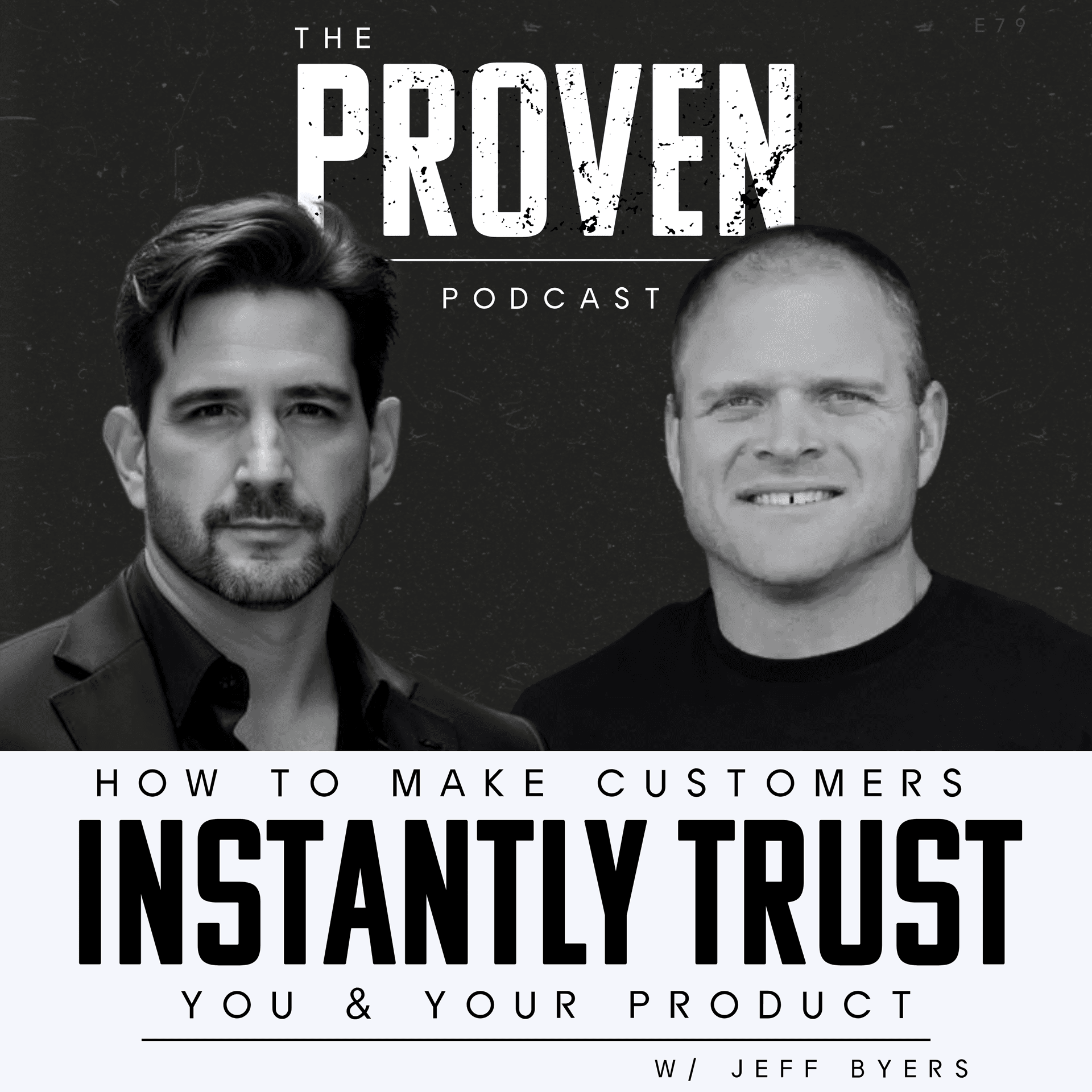
How Jeff Byers (Momentus CEO) builds instant customer trust in a hype-heavy, lightly regulated $200B+ supplement market through relentless consistency, culture, long-term standards, and “trust but verify” testing.
Guest backgrounds
Jeff Byers played four years in the NFL as an offensive lineman, then moved into biotech and co-founded Momentus. Momentus serves elite military units, pro athletes, and high performers; it entered supplements via acquisitions/mergers in 2021. His co-founder/president Erica built Momentus’s internal operating system.
Key claims
Trust comes from predictable daily leadership and an operating cadence (scoreboard, meeting rhythms). Culture is enforced with non-negotiable values, “three strikes” performance conversations, and self-policing. Differentiation is sourcing/transparency plus batch-by-batch verification testing; generic “TikTok/Meta” marketing and proprietary blends are noise. Foundational products should focus on protein, creatine, and omega-3s.
Notable examples
Jeff personally visits Momentus suppliers (e.g., whey dairy in Ireland, omega-3 distillery in Norway). Momentus rejects three full raw-ingredient containers for failing specs, and was out of stock for 3.5 months on a comprehensive multivitamin; co-man doesn’t cover lost sales. They also pulled a product in 2023 that made the company unprofitable in 2024.
Written by AI. May contain mistakes. Listen to the episode to check what was said.
Chapters
Tap a time to open that second in VOJeff Byers: From NFL to Supplements
0:32 to 2:06
Jeff discusses his journey from NFL lineman to CEO of Momentus.
“All right, everybody, welcome back to the show.”
The Messy Supplement Industry
2:06 to 2:58
Jeff shares insights on the confusing state of the supplement industry.
“want to be in it is kind of why we're having a talk is like, our industry is messy.”
The Reality of Supplements
2:58 to 3:15
A humorous take on the misconception of supplements offsetting poor diet.
“fundamentally believe there's something broken and that has to do with trust and transparency and efficacy and cutting the noise and the BS out of a really big, big category.”
Lessons from Athletic Culture
3:15 to 7:48
Jeff talks about how lessons from sports culture apply to business leadership.
“But again, you're an office of alignment.”
Building a Team in Business
7:48 to 11:16
Discussion on aligning team efforts and maintaining culture in a business environment.
“and the operating system within Momentus, right?”
Navigating Performance Issues
11:16 to 14:02
Strategies for handling underperformance and maintaining team accountability.
“You have your thoroughbred athletes that go out and play.”
Creating a Self-Policing Culture
14:02 to 15:10
Learn how to establish a high-performance culture where accountability is shared.
“And so it's, it's kind of creating that culture, but the team knows performance matters.”
Competitive Advantages in Management
15:10 to 17:12
Discover the importance of hard conversations in management and fostering competitive advantages.
“And then we sometimes forget the bad also as a leader and a manager.”
Understanding the Supplement Industry
17:12 to 19:56
Explore the issues of commoditization and the need for quality in the supplement market.
“understand their sourcing and their supply chain.”
Momentous Standard: Quality and Sourcing
19:56 to 22:28
Learn about the three pillars of Momentous's sourcing and quality standards.
“I have these massive marketing partners too, that are massive to us and I go see them too, but understanding how things are made and being able to look in your eyes and say, I know where my creatine comes from.”
Show all 29 chapters
Long-Term Thinking in Business
22:28 to 23:38
Understand the importance of long-term planning versus short-term gains in business.
“And it's like product portfolio, product category, sourcing all of those things, because ultimately maybe it's a wash and then you don't make, then it doesn't matter to that decision.”
Cutting Through Noise in Health Claims
23:38 to 26:00
Find out how to navigate conflicting health claims and focus on foundational health.
“of the health and wellness and optimization of society.”
Tailoring Supplements for Individual Needs
26:00 to 28:00
Discover how to customize supplement offerings to meet diverse consumer needs.
“You, you spent your professional career in car accidents over and over and over, and then willingly getting back in to do it.”
Building Trust Through Simplicity
28:00 to 29:10
Learn how to simplify marketing messages to build customer trust.
“Say, let's build around so that we can solve 90 % of that.”
Challenges in Fulfillment and Supply Chain
29:10 to 31:35
Understand the complexities of managing product fulfillment and vendor relationships.
“We have standards that are uncompromisable, right?”
Maintaining High Standards and Quality Control
31:35 to 34:28
Discover the importance of strict quality control in product manufacturing.
“I mean, I think it's all around like this last core pillar of the standard is trust, but verify everything that we do, right.”
The Evolution of Momentous and Its Market Strategy
34:28 to 37:23
Explore how Momentous evolved to become a trusted brand in sports nutrition.
“But, like, from a business perspective, our multivitamin is one of the most comprehensive multis on the market.”
Building Relationships for Market Penetration
37:23 to 42:04
Learn the importance of relationships in penetrating competitive markets.
“We built a little small DTC business on the back end.”
Building Trust Through Consistency
42:04 to 43:30
Learn how continuous investment in relationships fosters trust with customers.
“And then it has to do with like showing up continuously the same way, right?”
The Cost of Authenticity
43:31 to 45:22
Discover the sacrifices and hard choices required for maintaining brand integrity.
“And, uh, in 2024, that, that made us unprofitable the whole year.”
Facing Criticism Head-On
45:23 to 47:41
Understand the importance of addressing criticism directly and transparently.
“Like there, uh, there was a consumer reports report that came out and it was like, like a complete hit piece on a lot of, on a lot of people.”
Dealing with Employee Challenges
47:42 to 49:59
Learn how to manage difficult employee situations with compassion and professionalism.
“And yeah, there's always going to be attackers that will be to the end, end of time.”
Making Tough Decisions in Business
50:00 to 51:56
Explore the necessity of making swift decisions for the health of the business.
“And it was like, oh, I, we, we napalmed the shit out of that one.”
Navigating the Supplement Industry
51:57 to 54:50
Gain insights on what to avoid in supplements and how to choose wisely.
“And then we talk about, you know, getting mentors and getting in that situation.”
Understanding Omega-3 Supplements
54:51 to 56:00
Learn about the importance of quality in omega-3 supplements and their sourcing.
“Like there are so many other things right now that can solve it.”
Understanding Fish Oil Quality
56:00 to 57:36
Learn about the significant differences in fish oil products and their health implications.
“A, from a dosage perspective, but B, from a quality heavy metals, toxins perspective as well.”
The Importance of Sleep for Entrepreneurs
57:36 to 1:00:06
Discover strategies for improving sleep quality and the importance of sleep hygiene.
“I sleep really well over there, you bastard.”
Connecting with Jeff Byers
1:00:06 to 1:02:16
Find out how to connect with Jeff and learn more about his brand and offerings.
“There are things that help you downregulate, right?”
Jeff's Entrepreneurial Journey
1:02:16 to 1:03:52
Gain insights into Jeff's background and philosophy in building a successful supplement brand.
“And I work very hard on getting off social media.”
Transcript
Automatic transcript. May contain errors.0:00Welcome to The Proven Podcast, where we don't care what you think, only what you can prove. On this episode, Jeff Byers, the former NFL lineman turned CEO of Momentus, who's built a brand trusted by elite military units, pro athletes, and high performers inside a$200 billion supplement industry plagued by hype and broken promises, lays out how to lead with relentless consistency, cut through the noise of a messy market, and earn trust where
0:29Jeff Byers:almost no one else has. The show starts now. All right, everybody, welcome back to the show. Jeff, I'm excited to have you on here, man. Yeah, likewise. So you've done some stuff that most people haven't done before. You're going after a complete bazillion dollar industry, one that, regrettably, I know a lot of it. For the four or five people who don't know of what you've done, both professionally in the corporate world, but also in the professional sports world, can you kind of tell us a little about who you are and what you've done? Yeah, I'm Jeff Byers. I'm the CEO and co-founder of a company called Momentus.
1:01Jeff Byers:We're leading a nutritional supplement and sports nutrition company. My background is a bit different and unique. I had an incredible opportunity. I played four years in the NFL. I was an offensive lineman, journeyman. I say I did a lot of practicing because I did do a lot of practicing and I was lucky enough to play in a handful of games and all that. But if you know who I am from my NFL days, you were a pretty big diehard Panthers fan as a whole. But when I retired, I always knew there was life after football. I jumped into an early stage biotech that ultimately led me to Momentus as it is today.
1:40Jeff Byers:But my vision and goal was never to be a supplement company CEO. I actually said no for a long time. And the business I started, we didn't transition into a supplement company until 2021, the middle of 2021 when I acquired and merged two businesses together that really thrust us into this sports nutrition nutritional supplement category. And it's been an incredible journey. But the reason why I didn't want to be in it is kind of why we're having a talk is like, our industry is messy. My industry is messy. There's a lot of BS. People don't know what to believe. It's confusing. There's no oversight on air.
2:20Jeff Byers:And so you can really do whatever you want, say whatever you want. but the industry is over$200 billion. And the state of society is as sick and as unhappy as it's ever been. And when you think about what is the role of a supplement is to help you be more healthy and be more happy. And that's a lot of things what people are claiming that supplements do. The fact of the matter is supplements are supplemental to everything else you do in your life. Um, and we've got to fix that other stuff too, but there is no way that, right. The health and happiness of society should be declining while my industry is skyrocketing.
2:57Jeff Byers:Um, so I fundamentally believe there's something broken and that has to do with trust and transparency and efficacy and cutting the noise and the BS out of a really big, big category. So what you're saying is I can't eat dairy queen nonstop and then just take a supplement to offset at it? God, you're ruining it for me, Jeff. Dude, come on. I am ruining it. You're ruining it for me. I appreciate it. I appreciate it. So, okay. There's a couple of things I wanted to chit chat about this because you've attacked an industry and a lot of people go after industries where it's not as big and it's not as aggressive as the industry you've gone into it.
3:31But again, you're an office of alignment. This is what you do. You have a different exposure to things. One of the things, you know, you played professional sports. I played semi-professional sports, one of the things we're taught really early on is we get access to resources and tools and just everything across the board, be it people that are the average public doesn't see that, you know, they look at someone like Usain Bolt, they're like, oh, if I get up every day, I'm going to run every day. And it's the same as what he's doing. It's not even remotely close. Can you tell me where the things in business where you've walked into saying, Hey, you know, I've had these elite things in the NFL, these elite training things my entire life.
4:06What are some of the elite things that you've done in order to attack this industry?
4:10Jeff Byers:Yeah. I mean, I think it kind of goes back to the leaders that I was around. Uh, and one of those coaches was Pete Carroll, who's a legendary coach and watching how he built and managed culture. Um, and what makes elite and pro sports so special is a lot of that is culture, right? You have huge egos and huge high performers all around, but you get them all pointing in the same direction, rowing in the same direction really special things happen um but there's an insane amount accountability there's a super short memory um overall and uh also like me as a leader one of the things i learned most from pete carroll is like you have to show up consistently every single day right doesn't matter what type of leader you are or how you show up but like a leader who is unpredictable is the leader who no one follows or it's a, it's a crap show, right?
5:05Jeff Byers:Because if, if you just won the Superbowl, you want that person to show up the same and predictable as if you just lost the Superbowl. Right. And I think those things I've taken from a leadership perspective really at heart and look back of like, what are the things that I saw in locker rooms that work really, really well? But then I guess from like an athlete perspective, what did I like? I have this saying, like, the ball always gets snapped, right? When I was playing, it doesn't matter. The game never waits for you. The business game never waits for you. The ball always gets snapped. The lack of movement is ultimately what we'll call everybody's failure here.
5:43Jeff Byers:And time is the greatest asset and the biggest enemy that any company has, especially companies that are trying to do it really differently and grow and disrupt right because time is our friend if we go fast and if we don't go fast and so the ball always gets snapped it doesn't wait for you time does not wait for anybody you better be ready to go and you better give your best effort regardless right and then right you have a very short window to evaluate make a decision and the ball gets snapped again and so it's like this short memory being really really resilient because you're always going to get beat.
6:22Jeff Byers:You're always going to have a problem, right? And you got to learn and move forward. And if you let that problem or that mistake linger, it just drags down more and more mistakes. And ultimately your ass gets benched or like your business stutters out and fails. And so it's like, how do you move fast, right? In those moments. And then I think the other thing is showing up matters, right? And like getting to the gym when you're training matters, right? Putting the time in the training room matters, right? In the film room matters. It matters. And you can't do that by not showing up. Half the battle, you got to be there.
7:00Jeff Byers:You got to be in person. You got to make the effort to do it. And what I learned is once you're there, then you can go optimize. But getting there, a lot of people just don't get there. They aren't willing to do that, right? And it's like, go see your biggest partners, whether they're your raw ingredients, your manufacturers, or your marketing partners. Showing up matters because that's how you ultimately drive differentiation. So you talked about culture and having everybody kind of row the same way. In sports, it's relatively easy to do that. When you're on the field, it is a clear enemy. We understand what we're doing.
7:36Yeah, there's a little bit of infighting here and there, but in a corporate America, how do you get everybody rowing the same way? Because this is a challenging ballgame.
7:44Jeff Byers:Yeah. My co-founder and president of the org, Erica, has really built the process and the operating system within Momentus, right? And why is it so easy to get a team on the scoreboard for everybody is clear. You know what winning and losing is like on every position, right? Because that's what sports is. Business, you're playing over a really, really long period, right? But what guides you in sports is a the practice plan the meeting schedules right the game plan how you call plays right all of that matters and i think a lot of people forget in business you have to have that core underlying operating system right when do when do you lift weights when do you go to film session what does your practice schedule look like right like how often how much do you do x to do y and so it's like this operating system that you have to invest time in and resources just a meeting cadence as well.
8:43Jeff Byers:I would love to take credit for this. That is my co-founder that she has built this internal operating system. And we've taken from a lot of different people, which you always do, but she's been able to just build our culture around, right? The rhythm of business, right? And sport is the same rhythm, but ultimately we have a scoreboard and we talk about the scoreboard a lot as a business. And everybody knows that they have a number on their head. That's part of what we installed. Like the numbers are softer for other people, but like, what are, what matters to you the most? What is the most important thing that this individual can do to hit the number that we're trying to target in 12, 24 months?
9:22Jeff Byers:It's hard because there's some disconnect, but meeting rhythms, right? How often does marketing and ops get together? How often does the leadership team get together? How often do we do offsites, right? All that rhythm creates that process and creates, right? People getting on the same page because the problem with business, unlike sports, I mean, I think sports have this huge history of like, right? Processing systems. And like, you know, you practice, you know, you do this, but in, in business and as you're building business, you forget about some of that. Cause early days, Eric and I, we made every decision.
9:58Jeff Byers:We did everything right. And we were that bottleneck, but the only way you're able to get through that is by having founders that drive everything. And then you get to the stage where, oh shit, we only go as far as our team can go. And that means you have to build system process rhythms. And that's how we've really got around that is like, you build that in place that gets people on the same page, rowing in the same direction. Right. And in sport, it's a little different, but if you take a bigger step back in sport, you have the athletes that are playing on the field and you have all the coaches, you have all the trainers, you have all the front office, that's a business, right?
10:39Jeff Byers:Like that's how a business is. Like you have your thoroughbreds, we have our thoroughbreds that are, that have a very specific role, right? And then we have our support staff that do very unique things, right? That those thoroughbreds, if we don't have that growth engine, right? With support, that growth engine never works. And so it's, if you think of it just as sports and just as the game and the players, you fail, right? You got to think about coaches, GMs, right? Like the community aspect of it, like all of these things, because those athletes can't go out and play if they don't have that support.
11:14Jeff Byers:And that's like business, right? You have your thoroughbred athletes that go out and play. Then you have the people who cut the grass, right? Make sure we got fricking tough, right? And those people are just as important. You just don't always think about them. So what do you do when you have someone who bucks the system? Because in sports, it's easy. If you get in a situation where you're not, you know, executing on a way we need you to, if you're not, because again, I've come from a baseball world. If you're not pitching, you're not throwing strikes, you're going to get a little bit of grace period, but not much.
11:44And then we're just going to rotate somebody else in because there's a million people who want your spot. How do you do that in business as well and keep the culture alive.
11:52Jeff Byers:It's that is, that has been the hardest thing to figure out, right? Cause in sports, it's black or white, right? And, uh, and there's always like the next man up or the next person up mentality. Um, and you, you had to build that over time. And so I think number one is right. We've focused and we've from day one had a very, very clear set of values. And these are how we behave and how people operate. Our values are non-negotiable. We hire solely based upon them and we fire based upon them very, very often. And then we have like, gets it, wants it capacity to do it. That's like, can you throw a curve ball?
12:33Jeff Byers:Can you do this? Like those are the actual technical and do you want to do it? That's that kind of core values, non-negotiable. Gets it, wants it capacity to do it is like, can you do your job? Do you want to do your job? Can you grow into your job? And that's part of, can we build that? And so what we do is, right. I talk about the cadence and the end of rhythm of meetings. Then you, what you have is right. Touch points with people, right. We grade our people on our core values and right. Gets it wants the capacity to do it of that role, specific role four times a year. And if somebody feels off, we have that conversation right away.
13:14Jeff Byers:We call it a three strikes policy, but it's, it sounds way harsher than it is Charles. But like what, what it is is like, what we found is when you give feedback and like a one-on-one and all of that people here, oh, I'm doing a great job and moving these projects. Here's all the tactical things. Oh, you need to get better at X. Like it's just like, okay, I get better at X. Right. What we found is when you say we are having a conversation of what we need you to do better right now, that is hurt. And people choose one of two ways. They choose to lean in or they self, they, they vote themselves off the Island.
13:49Jeff Byers:Right. Both things are the right outcome. Right. And it's like, you rarely ever get to two or three strikes because like either that person's like, Oh, I'm hurt. And they're like, I'm in, or they're like, I'm out. Right. And that's what we want. And that's what we need. Right. And so it's, it's kind of creating that culture, but the team knows performance matters. And the best thing that we've created, I think over the last year, year and a half is it's self-policing now. Right. Whereas like, right. We have people, like people on a team are like, oh, they're too slow. Right. And they're, and it's like, let me see if we can get them.
14:26Jeff Byers:Like people are taking other people, their peers into like, bring them along because they know that we have to go, we, we demand, right. Uh, to go fast and we demand a hundred percent responsibility. It's like, we need people to show up and do their jobs. And so we do culturally, we've established, this is how we hire. This is how we fire. This is how people move in and out there. There is no ambiguity, right? So people know, Hey, I got my, I am, I have a strike conversation. I get better to change my shit. Right. Um, Um, and rather than, oh, I just had a one-on-one and I got a minus on this thing and it's like, okay, whatever, I'll get it figured out.
15:03Jeff Byers:But like, I got seven other pluses or like, um, because that's how like we hear humans, we hear the good. And then we sometimes forget the bad also as a leader and a manager. If you're not forced to have the hard conversation, it's like strike, like we require like three examples or the things that we can do better. Anyways, I think it's the systems and processes. And again, like my co-founder has just crushed these things. Yeah. I think you, you hit there, you know, as a manager, that's your job, your job is to have the hard conversations. You're, you're not there to be cute and fun and hold people's hands.
15:39You're there to find the competitive advantages in the market, your competitive advantages in your workforce as well. And say, listen, this is what's going on. We're not going to have a BS conversation about it. Let's get to it. You know, we can be friends another time, but at the end of the day, I'm your boss and we need to get some. And I think having that intensity matters. Now that's, that culture is not for everyone. we run into situations in orgs where one of the first things that i do when i'm brought in i tell hr i'm like you're fired i will wipe the entire hr immediately i'm like you're gonna hate me you're just gonna get in my way i'm like just for the next six months you're fired go on vacation go do something else because i'm reading raining fire but you also have found a way in your industry which is so saturated with bs and fillers literally that you found a way to have a competitive advantage there as well and it's a story that when we had our you know we do our intro calls when we connect, you told me this story and I was like, dude, send me stuff with it.
16:30Send me stuff now because you did something that most people haven't done. And I want to steal your thunder from you on that one, but can you walk me through that story? Yeah.
16:37Jeff Byers:I think at the end of the day, our industry has been perceived and is operated as very commoditized, right? You just go and say, I want vitamin D or I want creatine and you just get generic BS. Um, that's not how food works. That's not how any of the rest of, of, of when we think of health, wellness, optimization, nutrition, that is like, you're just not going to buy generic BS right on there. And what has happened over the last 40 years of this industry, is it just like, it's just been this race to the bottom. Right. And what does that mean is like very few companies understand their sourcing and their supply chain.
17:17Jeff Byers:They don't know where things come from. They're literally just going to a manufacturer and saying, I want protein. And they're like, here's your done protein, you know, versus like what, what dairy, what, what region is this coming from? What, how are the cows treated, right? Where, what's their average age production, all of these things that matter so much. When you think about the output, quality and transparency, it all starts with the raw ingredient. And if all you do is focus on the putting multiple raw ingredients together to make a final product and you aren't focusing on what are the quality of those raws going in, then you have an inferior product.
17:53And for us, it's our, we call it the momentous standard.
17:57Jeff Byers:It's three pillars and it starts with the science-backed curated portfolio, right? Which is like science-backed, right? We have our elite advisory board help us craft and all that. And we have the right products in there. Then it's all about sourcing, right? It's like, where are we sourcing from? When does it matter? Does it matter what type of vitamin D we get? Yes or no. Can we get the highest quality? Does that have an impact or not? Right? Sometimes it matters and other times it doesn't. And sometimes it matters a lot. And so for us, where we focused on sourcing is, is going to put eyes on facilities of our major products, going to understand what is the purities?
18:35Jeff Byers:What is the process, right? Are they using a water wash or an acid wash? Because ultimately that has to do with impurities on it. That has to do with cost and ultimately the end quality. And we believe our category is not something you do for a day or four or 20. It's something that you do for a lifestyle, for a lifetime. And if you're going to invest in your health and wellness and you're putting an inferior, lesser quality product in your body over years, decades, that has implications, right? That's why people eat organic versus not. That's why people eat grass-fed natural beef versus not. They're making conscious decisions.
19:16Jeff Byers:And we believe if you're making a conscious decision and you're investing in your health and wellness, you probably care about those things. And so for me, like getting on an airplane, like in two days from today, day and a half now. I fly to Ireland to go to our main dairy. There's two dairies in the world that manufacture our specification of whey protein. And then I go to Norway to visit our Omega-3 distillery that makes our incredibly highly potent Omega-3 that we are really, really proud of. But those things are really uncommon in our category, right? Maybe somebody in the ops team goes, for me as the CEO, right?
19:59Jeff Byers:Like that's my business. Yeah. Right. Those are my biggest partners. I have these massive marketing partners too, that are massive to us and I go see them too, but understanding how things are made and being able to look in your eyes and say, I know where my creatine comes from. I know where my protein comes from. I know where my omegas come from, right? I know where these things come from is important to me, but also it allows us to uphold our momentous standard in a way that doesn't. So when we say, Hey, we have the highest quality protein that we can find for our business. That's true. I believe that because I've went everywhere.
20:37Yeah. I think you said it, you know, in the earlier call, you said you flew out and you met with the distributor and the supplier. And I cool, what, you know, what else have you seen? What else has everybody else you've shown this to? What did they say? And they were like, no, one's ever, no one's ever come and seen us before. No one flew out to that part of the world and did that, which I was like, okay, now this is a different conversation because people want to know, right? You know, again, this is a$2 billion industry at the bare minimum. It's taking off $200 billion, sorry,$200 billion industry.
21:03People are like, well, how do you penetrate a market like that? Do you have the fancy, you know, model doing this? Or do you show up and have an Instagram thing? Like, no, this is my USP. I'm going to sit there and tell you, this is exactly where my stuff comes from. Not out of theory. I have stood and touched the machines. And I think that's something that most people don't understand when they're trying to get success and they're trying to have proven growth, they're not going to have that USP.
21:27Jeff Byers:Well, I think the challenge, especially in my category, is it's really easy to build a business fast, right? And our thought process is if we want, we have an internal saying, we say we want to be the anti-supplement supplement company, right? We want to challenge an industry to do better. And we talk about 15, 20, 30 years. The only way you do that is by building a foundation on quality and transparency and sourcing, right? We could, like, we don't work on TikTok. Why? Because we won't say crazy things because that is not our brand DNA and our brand ethos. And most businesses in our category are like TikTok's the holy grail unlock.
22:09And it's like, okay, great.
Read the full transcript
22:11Jeff Byers:That is not how you build a brand that is still leading in 20 years. And so the hardest thing that we do is that I think we do as a business is when we are making big decisions, what does this do for our business in 20 years? Is this help us or hurt us? Help us or hurt us. Right. And it's like product portfolio, product category, sourcing all of those things, because ultimately maybe it's a wash and then you don't make, then it doesn't matter to that decision. And then you make a decision based on economics or marketing or growth. But ultimately, when you make big decisions, you need to look forward on what it is.
22:47Jeff Byers:And that long-term thinking is sometimes at odds with short-term profitability. 100%. And that is hard. And most people in our industry aren't always looking. Some of the CEOs in our space, it's their seventh supplement company. They just rinse and repeat, rinse and repeat, rinse and repeat. because it's an easy place to make money. Now, like air quote, right? Like it's so big and there's, you can build a business that's seven people that can do$50 million in our category. But that brand is not here in 10, 15 years as leading. Like that's the difference. I believe what I want to build because I want to create change.
23:30Jeff Byers:What we talked about early on is like, the industry is massive and it's doing a huge disservice. I want to help change that trajectory. I want to be a positive part of the health and wellness and optimization of society. I just don't want to be a blip on the radar. So how do you deal with the contradicting science, right? So there's a lot of people out there that's like, oh, you need to be purely plant-based or you need this supplement or you need that supplement. And you're making these universal claims to different body types, different blood work, different environments. How do you handle that onslaught?
24:01Jeff Byers:I think that's why we don't work on places like TikTok or traditional meta-influencers. right because we won't say those things and ultimately we're all more alike than we are not as humans um but at the end of the day what we all have different goals different challenges and therefore what we need to supplement and how we do that matters right some people like oh i'm carnivore and it crushes for me great you found something that works oh i'm a vegan great i don't really care, right? What I care is that you have found things that are sustainable over long periods of time that drive optimal health.
24:43Jeff Byers:And the research is always, right, going to ebb and flow on there, right? Guess what? We know protein is important, right? Creatine has almost been irrefutable based upon the amount of research out there. Omega-3 fatty acids, right? Same. And it's like, focus on the foundational things. And that's like for us, like we don't have a, you know these crazy products that are out there that very few people have ever heard of or that are fixing it or proprietary blends because that shit doesn't matter right those are that's that can be noise unless you get blood work or you're trying to fix a specific problem within your your end of one human and so like plant-based all of this and people have strong opinions and for me I'm stoked.
25:28Jeff Byers:Opinions is what matters in the world. And like, but you got to realize that I'm different than you. Like I played, I was an offensive lineman playing the NFL. You might have a messed up shoulder. I got messed up back, hips, foot, right? All these things. Like we have different things that we do. Therefore we approach the gym differently. We approach the things like, why would we say, oh, once anyways, that's part of the challenge is the noise is so loud. So how do you, this is really important. How do you cut through that noise? Right. Because we do have different things. You, you spent your professional career in car accidents over and over and over, and then willingly getting back in to do it.
26:07You know, I've got a torn labrum in my left arm. So it changes how I work out and how I train. I didn't get into, you know, car accidents seven times a day during practice. Even when we come to business, you know, we, we approach things differently. I come from a tech background. I come from a systems and service provider background, so I can scale those in my sleep. That's easy for me. This is a product background. This is a different conversation. How do you approach these differently and plan to trade through?
26:33Jeff Byers:Yeah. Yeah. I think if we, we haven't done it great all the time, right? And we continue to get better. And I think, you know, like people used to ask me like, oh, what should I take? And I just told them what I took and I realized, oh, that's really wrong. That's not going to work. Right. And so what we did was we started asking the smartest people, the pro sports dietitians, the exercise physiologists, the researchers, hey, what are the core foundational items that matter? When we think about things that you can supplement. And that's, we built what we called Momentus 3. Protein, creatine, and omegas.
27:09Jeff Byers:It's like that is a foundation that you can build on. And if you do those things over long periods of time, they have immense amounts of clinical data and research. Then everything else is condition specific, right? And you can get protein from a lot of different sources. Awesome, right? Creatine, a little bit harder. But like creatine is relatively inexpensive for the highest quality stuff out there, right? And like it's really hard to get from your diet. And then omegas is the same way. But like invest in what matters and when you can add. And so for us, like we have a plant protein, we have a whey protein, we have unflavored, we have flavor.
27:45Jeff Byers:So like, how do we meet consumers with where they're at, right? Creatine, we have different form factors, right? Omegas, we have a vegan omega and we have a fish omega. And it's like, how do we meet the consumer where they're at? If we say these matter the most, hit that consumer, right? Say, let's build around so that we can solve 90 % of that. And then build the biggest buckets around them, the biggest conditions. It's like, Charles, you have an issue with sleep? Cool. Right? Have you tried these behavior things, et cetera? Boom. And so, but what we try to do is like, we don't try to go out there and be like, oh, sleep, everybody needs to take sleep because it does X, Y, and Z.
28:23Jeff Byers:It's like, I don't take sleep. Why? I sleep great. Right? I don't know why. I just do. I always have. Right? It's one of my gifts on there. Other people sleep like crap. Right? And that's just the nature of the game. Yeah. Yeah. And right. We, we give and take. And so it's like, how do you break it down? Simplicity. Right. And what we try to do from a marketing perspective is talk about the foundation. Right. And then we try to bring in behaviors, product guides, right. And, and create that education around why and how, and then leverage our partners. Cause I think the biggest thing for us is people are going to take what they think they want to take, not just when we say it.
29:07Jeff Byers:And so we want to be known as the high trust brand and low trust category. We have standards that are uncompromisable, right? And we're going to certify what is in the product is actually in the product every single time, because that's what we do. And so if you need vitamin D, Momentus is clearly the answer. If you need, right, if you need a sleep product, let's go to Momentus first. And that's our goal. And what we want our partners and our like large ecosystem of people to say, momentous is the standard right so and you're going through this as a as a business owner and as you're creating this because a lot of people are trying to bring product to market right they're like okay we've got we've got an acquisition but fulfillment on this is a challenge because you know we've got a very intense political environment right now that's about as about as intense as i'll talk about that but we've got an intense political environment we've got immense amount of things going on with tariffs.
30:03We've got countries that don't like interacting with us the way they used to. How do you go through? Because again, acquisition is acquisition. And again, and I'm skipping ahead and I'll get the audience caught up on this. When you're playing collegiate sports, when you're playing semi-professional or professional sports, you're not eating the same food as everyone else. You need to understand that's really important. You're not taking the supplements. You're not sleeping on the same beds. You're not using the same blue light glasses. you're not doing any of that. Everything is very much through a filter and using the best of the best stuff.
30:35So a lot of your brand and a lot of it is used in environments where performance matters because everyone looks at college football and like, oh, that's fine. It's just a game. No, it's a huge industry that makes an immense amount of money and they're very much putting things in in a specific way. So for everybody listening at home, yes, we're all cheating. We're all using supplements. We're using, I remember when I, you know, I played college ball, all of a sudden they looked at my cleats like you're not wearing that anymore i'm like why like well we molded your foot and this works better for your foot and this metal works better on the cleats i was like you're talking about the metal on the damn cleat what are you talking it's a pair of cleats what are you talking about so there is a competitive advantage that most people don't have and momentous has penetrated into that market now we're running into an environment of bringing them more to the public versus to that environment how do you handle fulfillment how do you make the relationships with vendors how do you find the manufacturers where yeah maybe they go out they do nice things to you because you were there on a Tuesday, but as soon as you leave Wednesday, they're going to put chalk and, you know, piss in there.
31:34How do you deal with the fulfillment and all of that? Yeah.
31:37Jeff Byers:I mean, I think it's all around like this last core pillar of the standard is trust, but verify everything that we do, right. Every finished product off the line in a jar like this, we test it, right. It is test every batch every single time, right. Because it's one thing for a wrong, like to go see a wrong ingredient supplier. And they say, Oh, this is how clean it is. This is how good it is. Look at our great test results. And everybody will show you great test results. The fact of the matter is what comes out on the other end often is very, very different and changes batch to batch. And so like for us, it's like you have wrong ingredients that come in.
32:15Jeff Byers:Then they hit a, then they get shipped sometimes across the world or across the country. And then they hit a manual, a co-man, right. That blends and packages. Lots of things happen in that warehouse, right? Lots of things happen on that blender. Lots of things go through those pipes. And then you have your container that you put it in. Lots of things happen in that manufacturing process too. And then you have your finished goods and you're like, well, there's a lot of steps. And so what we find in those step processes is cross-contamination. If machines aren't cleaned correctly, if it's stored next to something that it shouldn't be store next to you or if it's shipped in a container right all those things matter to us and that's why you always trust but verify at the end right it's like hey we believe we found the best manufacturing partners and the best sourcing put the money where the mouth and if it doesn't test a spec we reject right so how do you do in your industry when you're doing that and they're sending garbage and it happens to be a vendor that you've worked with for a long time you have a great relationship with them but they're screwing the pooch they're cutting corners they're doing that how do you address that?
33:20How do you, what is the step-by-step in that? Do you just bring a hammer or what do you do?
33:25Jeff Byers:They know we have zero tolerance. Okay. Right. And they, they, they, it's the same part of your culture with the three strikes. It's that same thing. It's like, listen, we're not here to be your friend. Yeah. But, but I like lots of art, my employees are our friends, but they know when it's a, when it's time to perform, it's time to perform. And if you don't perform, that's a different conversation than a friend conversation we go hang out, have dinner, go work out do all that you have to show up and perform for us and so everybody across the supply chain put in perspective in the last month we've rejected three full containers of a raw ingredient just sent it back because it didn't meet our spec and guess what our supplier was like yep, okay They're just going to sell it to somebody else at the end of the day.
34:18Or, I mean, but it doesn't meet our standards.
34:22Jeff Byers:And they know that if we've told them these are our standards, contractually, if it doesn't pass these tests, we do not accept this production run. But, like, from a business perspective, our multivitamin is one of the most comprehensive multis on the market. it. We, we were out of stock for three and a half months, almost of it because we failed three production runs in a row. Um, on it, right. Our co-man doesn't pay us for our lost sales, uh, on there, right. Like the people putting together the blend, right. We eat the lost sales and it was about$700 ,000 in Q1. Right. And that's, but that's, that's our standards and we're okay with that.
35:05Jeff Byers:Hey, we could have, we could have just said, ah, it's okay. Right. Like it was one ingredient that was a tiny ingredient that didn't meet our spec. Right. And it just is what it is. And we had to go find a new raw ingredient supplier, like for one of like 70 different ingredients in that product. Um, and that's just our, that's who we are. And our co-man understands it. They are like, yep, yep. This is momentous. They have other businesses that don't, hey, I'm sure we pay for it. I mean, I know we pay for it in our costs. But for me, yeah. So you've got this standard, both internally and externally with your suppliers and the people that are working with you on a day-to-day basis.
35:46How do you apply that level of standard to growth then? Because if you have this bar that everyone must meet and you're trying to connect with people and you're not advertising the way that normal people do in the rest of the world, which is just regrettably your industry is, and I say this with as nice as a way possible. I've, I've been around this industry for 34 years, 33 years, you know, cause I was, my, my dad was senior vice president of badly subtle fitness. He was senior vice president of GNC. And I knew the trash that was going in there. I mean, we would sit there and I'm like, don't eat that.
36:17He's like, what? He's like, don't like, I go to, I go visit him in at one of the stores. I'm like, I'm going to grab one of these bars. He's like, don't eat that. He's like, absolutely. He goes, don't put that in your mouth. So we knew back then, and it's only gotten better. how do you market how do you penetrate into a market and what's your branding cycle look like
36:33Jeff Byers:yeah i think because our roots i mean we didn't really talk about the roots of the business but the underlying business right we started with a 1.8 million dollar contract with the department defense and combined that with venture capital funds um and that was in 2018 and we were in the consumer biotech space um and we ultimately didn't get into the into right the supplement space until 2021. Um, and our roots are very, very different, right. As a whole. And so, right. We come from this background of clinical research of working with the best. Um, and we were in pro and college sports in that time.
37:12Jeff Byers:And like this really unique space. And when we went into supplements and all of that, it was like that, like that is our roots. We are born. We like people like, Oh, you're a DTC native business. I'm like, I'm a pro and college sports, U S military native business. Like we were wholesaling to those. Those were our customers. We built a little small DTC business on the back end. And then in 2022, we blew up in e-com land. And that was because what we did was we continued to serve the best people in the world and do it right over and over and over again. And so then when we got into this huge TAM, that is Sports Nutrition Supplements, and the Momentous brand was born in pro and college sports, it was really natural for us to start partnering with these big voices in health and wellness that are PhDs.
38:01Jeff Byers:And they're like, oh, my friends at so-and-so trust you. I trust you. And they know, as you know, man, it's hard to put my name behind something here. My brand is my name. and if I'm repping a BS brand, that's high risk. And so we became this high trust brand in a low trust category. Like challenge your mindset as you can see, but like really focus on the best. And we still sell to every NFL team. Every one of them is their customer. We sell to nearly every other professional and college sports team in this country. We have some really unique things with the Department of Defense. We've won nine contracts with them to date, right?
38:37Jeff Byers:Like those are our roots. Those are the people that give us this really deep keel, right? Like that keep us centered and grounded and make us do it better than it's ever been done before. And so that flywheel has spun off, right? Not low, low funnel, lower funnel marketing. It's spun off big top of funnel, middle funnel marketing. So we have big voices that are saying momentous is the best. And right. Whether that was Dr. Huberman or or Tim Ferriss, or a Rich Roller, or a Dr. Stacey Sims, these people who are helping set the culture. And now we have a guy named Arnold Schwarzenegger. But those things took three plus years, a lot of those relationships of showing them that we are different, showing them that we will make hard decisions to cut products, change products that are better for consumers for them.
39:29Jeff Byers:And so it's like this flywheel of what I say, being at the forefront of high performance, spun off all these big name people. And now all these influential people, like we want momentous, how do we work with momentous? And rather than saying like, Oh, we're going to go after, you know, the transactional tick tock or meta or whatever, we're going after people who are authoritative, right. That have transcended those types of things or who are key opinion leaders, right. Ultimately that drive that. And what that has allowed us to do is now work into these other spaces they're like well the people i trust trust momentous so that's why i rent yeah well very early on when when the podcast took off there was a specific brand i'm not going to mention the brand uh that wanted me to sell their stuff it's a i'll say it's a green brand let's always go with that it's got green it's got green covers and i immediately rejected it even though it was a huge deal because the product that's inside of there was absolute trash because i I asked them, I said, give me, show me the science.
40:29They're like, what? I'm like, show me the science. Show me someone that you've worked with where you saw their blood work before. And we started blood work after show me walls of studies with that. They're like, well, we can't, but we'll pay lots of money. I'm like, no, that that's not proven to me. That's a different conversation. So when you're going in that, I'm curious when you're working with contracts, like the DOD, when you're working with contracts of professional sports, what are the things that their, their litmus tests that they're asking you, because there are other business owners that we work with that are going to ask like, Hey, I want to penetrate a market like that.
40:59I want to fill the top of my funnel with that. What are the things that you've done in order to do that? It's a purely relationship base or is it just because you're a good guy or how do you do that?
41:08Jeff Byers:It, it, uh, I think it starts with doing the right thing over and over again. Like for, for me, like I had a really clear litmus test of like, it has to be like the, the people who nobody knows that are the leaders had to be able to be behind it. And so it's like doing that right thing. Right. And being very core, like there was a lot of people that were like, oh, you should like, you should source your whey protein different. It's way cheaper, way more accessible. And it's like, nope. I've just fundamentally, like it was a no. Right. And it's like, oh, you should do this or you should go here.
41:43Jeff Byers:And it's like, no, no, no. Why? Because like, I always had that long-term picture of like, we're trying to do it different, not like everybody else. And so when you really want to be a challenger, the second you start accepting what everybody else is doing, right? And you're just on your way to that. And that's not, if you want to be a challenger brand and you want to do it better than it's ever been done before, you got to make those decisions. And then it has to do with like showing up continuously the same way, right? And for me, the investment in the relationship is an investment in saying, this is what we do differently.
42:17Jeff Byers:And yes, if you ask for X, I'm going to do X, right? Or I'm going to say, Hey, X doesn't make sense. What about Y? And there have been countless steps along the process where somebody is like, you won't do that. You won't get that certification. I was like, why not? Right. And he's like, Oh, it costs too much money. It's like, boom, got it. Right. Oh, you won't, you won't do that clinical research. You won't show up to this thing. I was like, yeah, we will. Like, why wouldn't we? But the problem is most people don't think about those things. They're like, how do I get a deal done? How do I get a deal done?
42:45Jeff Byers:How do I get a deal done? Right. Arnold's a great example. Like it took almost three full years to get a deal done with Arnold Schwarzenegger. And it was just this constant showing them we're doing it better and different. It wasn't a day one, let's do a deal. It was like, oh man, it'd be cool to partner together. And what you learn while you get to know those people is what matters to them. And when you build these big, rich, deep partnerships, right? It is not just a transaction. It's about how do you build something that's meaningful to them, right? And meaningful to you. And so it's like, but that takes time and effort to do that.
43:22But again, it takes doing it
43:24Jeff Byers:over and over and over and over again. Right. And it was, there were years that were real hard at momentous. Like we pulled the product off the market, uh, in 2023 that just single-handedly, that was a 20, what year are we in? 24, 25. And, uh, in 2024, that, that made us unprofitable the whole year. We pulled one product in Q2 and it took all of the EBITDA out of our business. That was a, and we knew that when we did that, it was going to do that, but it did not in our portfolio. It was duck, duck, duck, duck, duck, goose. Right. And it was like, get the goose out. Right. And we got the goose out and ultimately, right.
44:06Jeff Byers:Maybe we'd be way more profitable than we are today. But in that short term, it was really hard. I have investors, I have a board, right and we had to say hey we're gonna lose four million dollars in profit by one product that we're choosing to not do anymore and here's why because it doesn't fit our brand creation and it's a goose in a portfolio of ducks and we believe that long term it will set us up better doing those things partners like oh that's interesting they're not just money first oh that's interesting they actually care about their standards oh that's interesting and whatever those standards are Whatever your vision is for that business, when you start making decisions away from that as a founder, as a CEO, then this does not become authentic.
44:51Jeff Byers:This becomes transactional. And transactional relationships, they work, but they don't work long term. And I've found that the transactional relationships always end the worst. I think you're talking about this as a relationship. Yeah, sure you've got Arnold, but I guarantee you that in three months, if you don't keep that standard that he agreed to or solved for the last three years, he's gone. absolutely disappear so when you're a disruptor in the forest when you're you're being signal versus noise when you are that lighthouse amongst the fog you're going to get people get pissed off at you there's just no way around you're going to get people to get grumpy and they're gonna hunt you and regrettably if if for those of you who are listening who haven't broken certain figures yet um just understand when you do when you break certain figures they're going to come at you it is what it is and it's expected it just it is what it is it's to put it in a sports thing a sports analogy you're fine until you catch the ball the minute you catch the ball everybody wants to kill you so you've caught in a lot of these industries you've caught in that ball you you are the tallest blade of grass and it's got to try and get cut can you can you share some of the examples of that and the ways that you've survived that hit yeah i think number one is always hitting it head on, right?
46:05Jeff Byers:Like there, uh, there was a consumer reports report that came out and it was like, like a complete hit piece on a lot of, on a lot of people. It was like, here's a reality. Yes. Right. We've always like, you can see these test results on our, on our website, right? It was about plant protein and like spoiler alert, plant proteins have a little more heavy metals than whey protein. Why? Because it comes from the ground and that's what happens. but it was like you will die if you eat plant protein i was like this is like this is just noise noise noise noise it's like here's our perspective like here's what we believe we've always shared these results with you never tried to hide them and this is the actual reality of what we're talking about and just always being genuine and not being like they're idiots they don't know what they're talking about it's like hey context is key in everything and when you take things out of, out of context, it hurts.
47:02Jeff Byers:And guess what? People are going to knock us. They always will. And you also just have to have a thick skin sometimes. And it's like, Hey, you know, be unkillable here and being unkillable is sometimes taking the higher road. Sometimes knowing not what to engage sometimes just being genuine and being like, Hey, we effed up. And like, it is what it is. And sometimes, you know, being, being really, really, really transparent and like, here's why we made a decision. Here's what, why it matters, um, as a whole. And sometimes it works, sometimes it doesn't, but what, what, what we care about is building a brand that consumers resonate with over long periods of time.
47:41Jeff Byers:Right. And yeah, there's always going to be attackers that will be to the end, end of time. And it's an honor to be attacked, to be quite. Yeah, it really is. And I also think understanding that not every customer is your customer. Not every person is your person. I think it's a really important thing because you know, when this comes out or when my book came out, when all this other stuff came out, I'm going to get attacked by my call. You're not my people. And that's okay. I was on stage this weekend with a group of people and some of them, we did a seven figure and they loved it. We did seven figures right from the, they loved it.
48:16It was this thing. Awesome. And there's other people in the group that are like, oh, these guys are SOBs, which we guarantee, we're like, here, here's your money back how can i say we don't care not everybody you want to work with is your is going to do it just like not every supplement that you're going to take needs to be at this level there are some supplements out there that you could if it's for you you could take a different path but when you hold that standard it seems like one of the reasons you guys are so successful and are are doing this is if you've held a standard not only for your products and your supplements but also for your people and you're going to get resistance in there as well so what happens when you have an employee and how do you deal with an employee that bucks that system who you've trusted and then that trust is violated just like a vendor's trust is violated how do you you dealt with those people are as you know charles people are the hardest
49:05Jeff Byers:right because at the end of the day they are humans and there's more than just a job typically as at play uh and we had a mentor i don't know how long like two or three years ago and he was like you just got to do it out of love right and remember that they are human and sometimes you don't say everything you want to say um and as as the founder leader you sometimes just to get to eat it and you know like we we moved on from somebody and i just gotta shut up and just take it right because we're already moving on it doesn't do me any good right and on there and it was really hard to just like bite my tongue get lashed for all the things that i did wrong right and some of them have truths to them but some of them are context and you walk away from that and it's like always take the high road when you're getting when you're moving away from people always because the right one of the greatest things we've had is we've had two people that we that left this business that ultimately have come back to this business they've taken like two and a half two years off and right i one of them i i would have sworn to god they would have never come by a friend right friend of the family like got close with my wife, right?
50:37Jeff Byers:All of these things. And it was like, oh, I, we, we napalmed the shit out of that one. Um, and I handled it terrible and right. Some water went under the bridge, some more water. Right. And we just, and, and what it turned out is we both needed to grow. And now she's like our chief marketing officer and she's a baller. Right. And, but it was one of those things when, you know, when we were looking for a new leader in marketing, I called her and I was like, Hey, do you have anybody in your network? And she's like, what about me? I was like, you want to come back? Right. You know, it was like, but that's try to take the high road.
51:13Jeff Byers:Right. And it's hard, but you have to have those conversations. And what I've always, the regret that I always have is when you know, you know, and make that decision. Then I always am like, damn, I wish I would have done this three weeks earlier. Right. I wish it would have like, right. Because you just don't, that doesn't change once once you've made the decision it's done and there's no better time because then it's all like they then you then people start like oh man three weeks ago it was kind of awkward was did they know and they not tell me um and so it's hard it's hard and in a young growing business everybody matters but guess what you figure it out right if that means i got to work a little harder the next three months before we backfill great but also what that means maybe you prioritize your shit a little better um anyway i i just people are really hard and like approach every hard people conversation out of love remember right they are the ones that are suffering like as much like the deserts decisions been made have it just be done and and like you're also going to just very few uh some people are very gracious a lot of people right in the heat to battle say a lot of bad things and mean things and they might try to come after you and you just always take the hot road always take the hot road try to take the hot road like do right because at the end of the day the world's fucking small and yeah it's it's the idea that the longer you take to make a decision the more it's going to cost you it's it's just that simple it's it's like being on a train heading in the wrong direction get off as soon as you can because it's less way to head the other way back.
52:57And then we talk about, you know, getting mentors and getting in that situation. One of my mentors taught me, you know, cause I was having a moment, one of the first people I ever had a fire. I was like, you know, this person's got a family person's got kids. How am I going to do this? And he sat down and he goes, look at this. You've got this one person and yes, it's going to be devastating to their family, but you have 40 other families that you need to protect. So you have to make that decision and they're never easy and it's never fun. But again, being that outlier and keeping that level of net standard has been really challenging.
53:26What is one thing in your industry that the other supplements do? And I'm not naming other companies, but you're like this one supplement for the love of God, if you never buy it from anyone else, please don't buy this trash. This is the one you can't mess around with. Don't put blah, blah, blah on your system unless you know where it comes from, because it's just, we've seen the research because you're, you're, you know, you're the tip of the spear when it come to this? What is one that you're like, good God, don't put that in your system?
53:53Jeff Byers:Oh God. This is a dangerous question. Uh, I'll, I'll go, I'll kind of go, uh, two different directions here. I'll give you two different answers. Like, um, I think the peptide world is really dangerous right now, right? It's everything is research grade, which means there is nothing about it and we don't know we really really don't know and uh like i i would say we are we are years if not more away from understanding the true implications of what some of these research peptides can or cannot do or have problems well so yeah the long-term effects of as well, because I just don't think injecting Windex into your butthole is probably a good idea.
54:43You might want to have some other stuff on that.
54:45Jeff Byers:So, so I'll say like, I'm just like a complete, people ask me all the time, like, Oh, peptides. I'm like, why? No. Like there are so many other things right now that can solve it. Right? Like if you have a crazy cancer and there's a peptide that can help potentially help, you don't like, yes. But if you're trying to optimize and live healthier and longer? Like no research, nothing. And then I would say on the supplement side, the one that I think has the, it's like as deep as the Grand Canyon, as wide as the Grand Canyon from like a quality efficacy perspective is an omega-3, right? And when you think about that as like the efficacious dose of omega-3 fatty acids is about 1.5 grams or more per day.
55:28Jeff Byers:And that's DHA and EPA, right? Combined, we do a one-to-one ratio, which we believe is the best ratio because it's the lowest taxing on your body and has the best benefits. But overall, most omega-3s or most fish oils are just fish oil, right? And not heavy in the omega-3s. And fish also have a lot of heavy metals in them, right? And the processing, the temperatures, how it's stored, the capsules, all that really, really matters, right? In there. And so you truly get what you pay for in an omega-3 supplement, A, from a dosage perspective, but B, from a quality heavy metals, toxins perspective as well.
56:09Jeff Byers:And, you know, like my dad was like, is my greatest example of this. And he's like, oh, I've been buying this. I've been buying 180 servings from the big box store, you know, for the last 20 years. And it's awesome. And I was like, pull it out, take a picture of it, and let's compare labels. And he was like, well, it has the same amount of fish oil in it, but it has one-tenth of the amount of omega-3s. And I was like, so you have to take 10 of these serpents to match one of ours. And I was like, what fish is it coming from? Where is the fish oil? The krill, what is it? Yeah. Yeah, right? Like you want small fish, right?
56:54Jeff Byers:Sardines, anchovies, mackerels, because they're small in the food chain. They have less mercury, less heavy metals, right? right like you don't want it to go bigger up and like some fish some fish oil you can buy off the shelf you have no idea what fish they come from or how they're distilled or they cold process oh anyways so fish oil is the one that i think is the gap is wide and there's some great companies out there we are really proud of our our omega-3 like really really proud and we have like the most potent uh vegan omega-3 on the market too but like that is one that i find is just like as deep and as wide as the grand canyon in terms of differences and there's some people on one side and there's a lot of people on another and the bottom is ripe with craziness so gross all right so i'm going to selfishly ask for sleep because i've all my listeners are entrepreneurs we're all founders we're all small business owners uh we run an environment where we just don't sleep well it is probably the biggest thing that we run into in our this specific niche when we go in when i talk to angel investors, we're going to talk to VCs when we all get around like, Hey, when was the last time you slept?
57:57You're like, what's sleep? I don't, I don't speak Sanskrit. I don't know what that word is. What are you talking about? Is there a magic thing? Is there something, because Mr. I sleep really well over there, you bastard. For the rest of us who don't sleep well, what are the things that you would look at for sleep?
58:12Jeff Byers:I thought, well, I think I sleep really well because I get really, I burn really, really hot. Right. And like, I just like, go, go, go. and like i just shut down like i can't like i literally i literally can't and that's part of like my training routine like i'm a really high energy person um overall and like i also have really good um hygiene when it comes to right when i train when i work out how i do those things that right what you find is the hygiene throughout the day actually really matters um as a whole and uh right for me how do i protect my time and my day and all of that like my sleep hygiene is is good but like i would say my my my circadian rhythm is what's good um across that and like how do you optimize that it's like when you eat how you eat caffeine all of those things and it just like i've naturally done that but honestly like charles like back when i played in the nfl before sleep was a fucking thing i was like tracking sleep right i'm like did i sleep good did i not sleep because it's so like i just realized it was so correlated to everything as a whole so when i think about sleep i think uh the number one thing is sleep hygiene before bed right and i know like the nights i don't sleep well it's because i'm staring at my computer till 11 or 12 o 'clock at night.
59:38Jeff Byers:Like I'm up ripping and my brain's going, right? It's really, really hard. When you're going, you're going, right? And for me, it's like, how do I create habits that change that is super important. And a lot of times that's not realistic. I choose to work early. Like I always rather wake up and work than stay up, right? Like I try to go to bed and if I need to wake up at four to get stuff done, I wake up at four, right? That's just my MO on it. I would rather not. Um, so I keep my bedtime consistent. There are things that help you downregulate, right? Uh, as a whole, like apigenin, L-theanine can really help you downregulate at night, right?
1:00:18Jeff Byers:That I think is really important to some people who burn really hot or have a hard time doing that, uh, uh, as a whole. So that downregulation is super important. Um, as a whole, I, uh, uh, I, I, anyways, I think that's, that's, that's important. So when we're going through and people want to track this down, because obviously you come from, you come into this industry with a very different perspective, not only is professional sports, but also your previous, you know, clients are DOD. They are professional sports or there are people who it matters because, you know, you go to a, a big box store, they don't really care if you're performing on that high level.
1:00:54When you're talking about the clients that you've grown with, if they don't perform well, some of them don't come home. So performance matters in that environment. If someone's tracking it down, they're like, man, Jeff, I want to know more. I want to get access to how do people track you down? What's your personal home number? What's your personal, I'm kidding. You know, what do we do? How do we, how do we connect? How do people find you? What's the best way to go forward?
1:01:13Jeff Byers:Yeah. Uh, for me, I'm like pretty off of social media as just an FYI, just something I've chosen not to do with my life. Um, and, uh, but I'm on LinkedIn. It's kind of a dumpster fire for me as a whole, just to be completely transparent. But I'd also say like a lot of me comes out in our brand, right? And our team does a wonderful job of really breaking things down. Like find me on LinkedIn. I'm, you know, like it's easy to find me on LinkedIn on there. And that would be the best way to do that. But also like customer service gets a lot of questions that are directed towards me that I actually answer.
1:01:54Jeff Byers:um, on there being like, Hey, you know, I, you know, saw Jeff in the airport or I met Jeff here, or I listened to the podcast here. Like, can you ask him this? And it's like, yeah, why not? Like easy, um, as a whole. So I would say that's super important, um, as ways like just navigate through it. Like I've tried to not be on social media because I find that when I am on social media, I go down black holes. So yes, yes. I, I, I have found that as well. And I work very hard on getting off social media. I'm the opposite than you are. When people reach out directly to me, you're going to run into a bunch of gatekeepers that I put there on purpose.
1:02:29People are like, oh, I didn't know I was on LinkedIn for over a decade until I, they're like, hey, you know, you've been on LinkedIn for a decade? I'm like, I haven't logged in since, you know, it's been a while. So working on that. But, and if, and if someone wants access to your brand or, you know, where do they go, what's the best website to take a look at it?
1:02:45Jeff Byers:Yeah. Livemomentous.com is, is the brand uh we're on amazon we're sold in vitamin shop now as well which has been a big coup for us because we've become like this high quality brand in there and done really well uh but yeah live momentous.com is the best place to find us amazon super easy our whole product portfolio is there you can get it most places by this afternoon perfect i appreciate you coming on jeff and sharing some of the wisdom on how you you know kind of disrupt the 200 billion dollar our industry. Awesome. Thanks, Charles. Jeff plays the long game. He treats time like an opponent, engineers operating systems where most people slap on marketing and refuses to let his label cash checks his ingredients can't honor.
1:03:29A four-year NFL lineman who never planned on running a supplement company, now ships to the military and stocks vitamin shop shelves. And the takeaway is this one. The ball always gets snapped whether you're ready or not. Leaders who waver lose the locker room and a real brand gets made in person at the factory with the partner in the room. We'll catch you on the next episode.
From the publisher
Jeff Byers turned a $1.8 million Department of Defense contract into a sports nutrition brand trusted by every NFL team, nearly every pro and college sports program in the country, and a long list of operators inside the world's most performance-driven environments, all while disrupting a $200 billion supplement industry where the average competitor is winning on hype and losing on quality. Now he is opening up the playbook on exactly how he did it.
Charles and Jeff dig into the real mechanics of building a category-leading brand in a category where customers have learned to assume the worst, from the leadership rhythms that keep a fast-moving team aligned, to the three-strikes feedback system that turned company culture into a self-policing engine, to the supply chain standards that have cost Momentous seven figures in lost sales and bought them a reputation no competitor can match. Jeff lays out the three supplements that should anchor any stack, the brand-building flywheel that turned college sports dietitians into long-term distribution, and the specific habits that wreck more entrepreneurs' sleep than anything else.
Together, they unpack why the cost of standing for something is far lower than the cost of pretending, why authoritative voices outperform paid social by a wide margin when you are playing a long game, and why the hardest people decisions get easier the moment you stop confusing kindness with avoidance.
This is not a sales pitch for supplements. It is a field-tested breakdown of how to build a brand customers cannot afford to doubt.
KEY TAKEAWAYS:
- Why the leader who shows up the same way after a loss as after a win is the only kind of leader anyone follows for long
- How a three-strikes feedback system strips ambiguity out of people decisions and lets a culture self-police without micromanagement from the top
- The single supply chain habit that separates a brand customers trust from one they tolerate, and why every batch matters more than every marketing campaign
- Why protein, creatine, and omega-3s are the only foundational stack that holds up under actual research, and why most everything else on the shelf is condition-specific at best
- How to take the high road with people you have to let go, and why your reputation in those moments compounds harder than any deal you will ever close
KEY POINTS:
03:53 The Pete Carroll lesson on leadership: Jeff describes the trait that separates teams that win championships from teams that fall apart, while Charles ties it to the founders who lose their best people without ever knowing why.
05:40 The ball always gets snapped: Jeff lays out the mental model from the NFL trenches that maps directly onto how startups either move or die, while Charles pushes him on what that looks like the moment a decision starts going sideways.
11:34 Three strikes, no surprises: Jeff walks through the feedback system that forces real conversations instead of vague one-on-ones, while Charles connects it to the moment every founder realizes avoiding the conversation is the more expensive choice.
26:44 The Momentous three: Jeff names the only three supplements that have enough clinical research to justify daily use for almost everyone, while Charles digs into why the rest of the shelf is mostly noise.
35:22 The seven-figure standard: Jeff explains why Momentous walked away from $700,000 in lost sales in a single quarter rather than ship one questionable production run, while Charles unpacks what that level of discipline actually does to a brand long term.
39:25 The flywheel of trust: Jeff breaks down how Huberman, Tim Ferriss, Rich Roll, and eventually Arnold Schwarzenegger ended up behind the brand without a single influencer deal, while Charles challenges him on whether that playbook still works for a founder starting from zero.