
In short
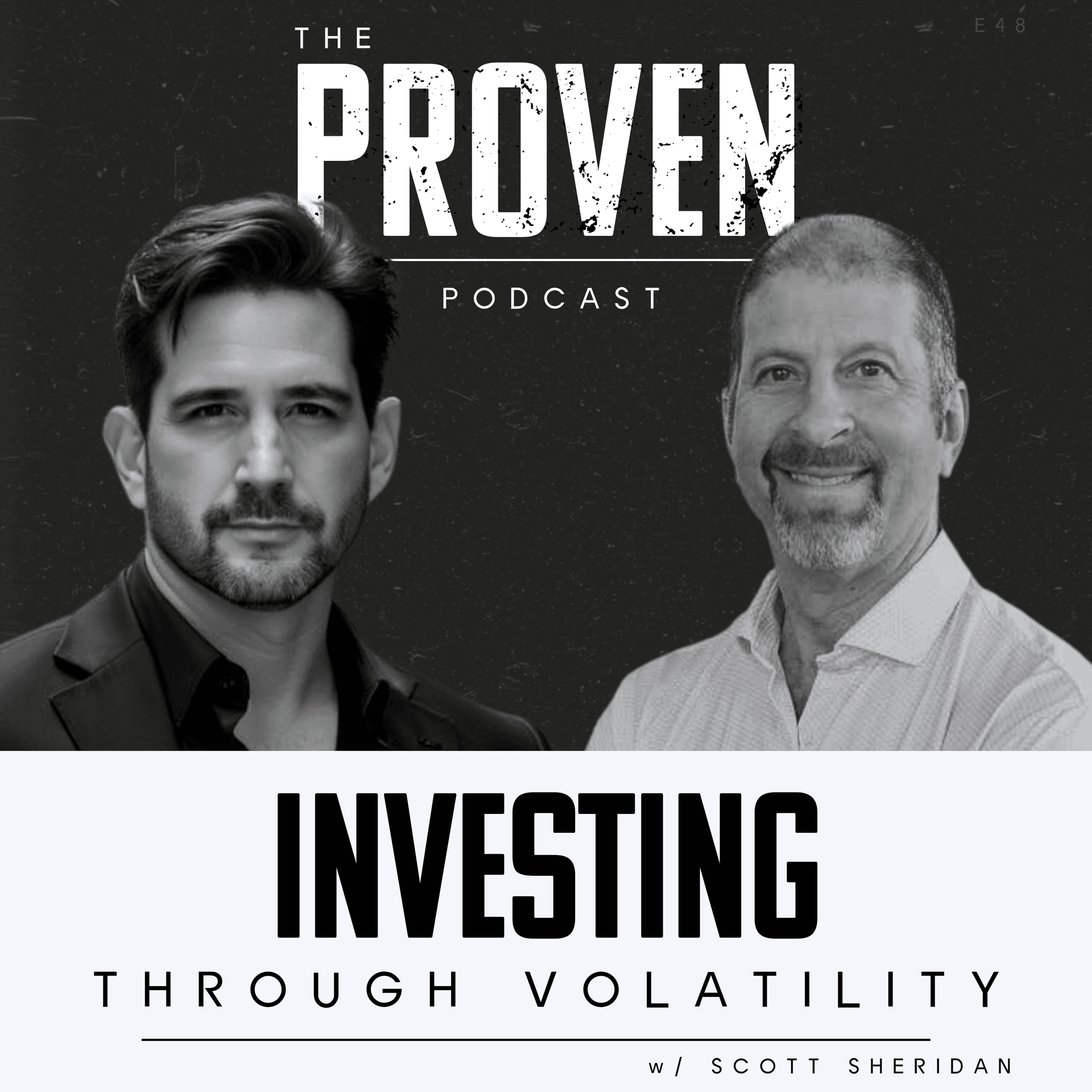
Proven Podcast Episode Notes: Investing Through Volatility with Scott Sheridan
Episode Overview In this episode of the Proven Podcast, host interviews Scott Sheridan, CEO of TastyTrade and co-founder of Thinkorswim, discussing his extensive experience in navigating volatile markets, the significance of options trading, and insights on investing strategies in uncertain times.
Key Topics Covered
- Scott's career trajectory from floor trader to tech entrepreneur
- The current market volatility and its unique factors
- Investment strategies for young investors
- The importance of risk management
- Building company culture and team dynamics
- The evolving landscape of cryptocurrency and gold as investments
Key Takeaways
Scott's Background
- Career Journey: Transitioned from trading at the Chicago Board Options Exchange (CBOE) to co-founding Thinkorswim, which was sold to TD Ameritrade, and later founded TastyTrade.
- Market Insight: Experienced multiple market crashes, providing a contextual understanding of current volatility.
Market Volatility & Investment Strategies
- Current Market: Recent volatility is described as self-induced, primarily due to political decisions rather than inherent market flaws.
- Young Investors: Encourages those in their 20s and 30s to take risks; they have time on their side for recovery and gains.
- Investment Approach:
- Consistent market participation through dollar-cost averaging.
- Advocates for selling puts on quality stocks during volatility, taking advantage of elevated option premiums.
- Stress on psychological aspects of trading; individuals should understand their risk tolerance and avoid trading sizes that cause stress.
Risk Management
- Key Principles:
- "Trade small and trade often" to manage risk effectively.
- Focus on what you can control and practice strong risk management strategies.
Company Culture & Team Building
- Leadership Philosophy: Emphasizes the importance of hiring individuals with complementary skills and fostering a culture of trust and empowerment.
- Mistakes: Encourages a forgiving environment where mistakes can be corrected with time and money.
Entrepreneurial Insights
- Advice for Aspiring Entrepreneurs:
- Start businesses with passion and readiness to pivot based on market feedback.
- Understand the financial implications of fundraising and maintain control over your business model.
- Emphasizes the importance of not fearing failure and learning continuously.
Cryptocurrency & Gold Investments
- Skeptical of Cryptocurrency: Sees crypto primarily as a speculative vehicle; does not believe it will replace fiat currency.
- Gold Investment: Questions the long-term value of investing in gold as a hedge, citing that it may not hold practical value during economic collapse.
Important Quotes
- "You need to learn how to take risk. Take a lot of risk."
- "You cannot predict what the market will do; only engage with it responsibly."
- "Hiring the wrong person is worse than not hiring at all."
Episode Highlights
- 02:34 - Scott's transition from floor trader to tech pioneer.
- 05:35 - Discussion on the unique aspects of the recent market crash.
- 06:09 - Young investor strategies and the importance of market engagement.
- 39:40 - Building company culture through trust.
- 52:54 - Entrepreneurial regret and the importance of pursuing business ideas.
Conclusion Scott Sheridan illustrates that success in investing and entrepreneurship is rooted in understanding risk, maintaining a long-term perspective, and engaging actively with the market. The episode emphasizes that while predicting market movements is impossible, consistent and educated participation can yield positive outcomes over time.
---
Additional Resources
- [Proven Podcast Website](https://provenpodcast.com/)
- [TastyTrade Website](https://tastytrade.com)
- [TastyLive Educational Content](https://tastylive.com)
For those looking to deepen their understanding of investing and trading strategies, visiting the TastyTrade platform can provide valuable resources and educational insights.
Written by AI. May contain mistakes. Listen to the episode to check what was said.
Transcript
Automatic transcript. May contain errors.0:00Welcome to the Proven Podcast, where it doesn't matter what you think, only what you can prove. People say you can't beat Wall Street. They're wrong. Today's guest, Scott Sheridan, co-founded Thinker's Whim, sold it to TD Ameritrade, and went on to build TastyTrade, proving you can disrupt an entire industry with education, innovation, and relentless execution. The show starts now. All right, everybody. Welcome back to the show. I am excited to have Scott on with us. Scott, thank you for joining us. Happy to be here. For the two or three people on the planet who don't actually know who you are, let's get a couple of updates and share kind of what your story is, what you've done, the success you've had.
0:32Well, I'm sure there's more than a few, but my whole career outside of my first year out of school, my whole career has been spent in the market. So I traded the floor of the CBOE from, I went down the summer of 86. I left in 2003 officially, but my partner and I had already started before I left. We had started Thinkorswim, which was our first brokerage firm. We sold that to TD Ameritrade. It is now part of Charles Schwab. And 10 years ago, I actually just had my 10-year anniversary, we started another brokerage firm to compete. It's called Tasty Trade, and that is currently where I am. I am the CEO of Tasty Trade, which is another online brokerage firm.
1:16Gotcha. Just because I'm curious, what is the massive difference between Thinkorswim and Tasty? Great question. Both firms, well, for sure, when we started Thinkorswim, we were focusing on derivatives. So options, equity options was really our sweet spot. That's still the case today. So of course, we do offer stock trading, but we specialize in options and futures, crypto. So it's a full platform, you trade wherever you want to trade. The big difference is how thin or how light our platform is today compared to what we built at Thinkorswim. And the way I describe Thinkorswim, I say it's my baby.
1:53Love my baby. But we moved on and we've come up with what we believe is a cleaner, simpler, faster way for people to trade. Gotcha. All right. You're talking about options. And we're not talking about puts and calls at this point. We're talking about options with the world, where things are going. And, you know, you've had an immense amount of success. You've had multiple exits and create an immense amount of wealth. For some people, the world seems very volatile right now. And we're going to try and leave all the politics on the sideline, which is not easy for you and I to do, but the camera's rolling.
2:20So we get to do that and talk about where the market's going. And there's a lot of people who are terrified. You know, you mentioned before the cameras are rolling for the people in their early twenties into their mid thirties. They've never seen a collapse before. They've never seen a pullback. They've never seen a downturn. For those people who are going into this, what are some of the things that you're seeing and how the market's changing? And then more importantly, how to survive it? Well, I'm taking a deep breath right now because having done this for as long as I've done this, I can say without question what we went through in April, we've never seen before.
2:52That was an absolutely insane period. You know, somebody could talk about, you could go back and say 08, 09. You could go back and say, talk about the dot-com bubble, you know, in 2000. You could go back to the crash in 87. The big difference from my perspective, this one was 100 % self-induced. So the other ones, there were reasons, and maybe somebody would argue that 08, 09 was a housing bubble, and you could say that was self-induced because we allowed it to happen. I could go with that argument, but for sure, with this one, this was President Trump making a decision on tariffs that he believes in or did believe in.
3:30I don't know if he still does, but did believe in it. And the market said, we are not going to buy into this one. And you saw literally, you know, 20 plus percent sell off fast. And the volatility that we saw both up and down because we had some crazy updates, you know, it's all of a sudden tariffs on, tariffs off. So one of the comments when I talk to a lot of younger people, one of the comments that, you know, that I make is you need to learn, especially at a young age, you need to learn how to take risk. Take a lot of risk. Now, what does that mean for you? Everybody has a different tolerance for risk.
4:09So people have to understand what that means because what might be super risky for one person might be just run of the mill for another. But if somebody is just getting going in their career, they have some investable assets, you need to be engaged with the markets. I know it seems crazy right now to say, why would I want to be in the market when it literally just sold off 20 % and just snap back. Today, we're back, not at highs, but we're not far off. I think we're 400 or 500 points here in the S &P, so it's not that far away. But the markets, as crazy as they are right now, one thing I will say with certainty, and I will preface this with, nobody has any idea where the markets are going on a given day.
4:51But unless another world war breaks out and something happens that would be an oh my god situation, the markets are going to be significantly higher in 10, 15, 20, 30 years. So if somebody's just starting their career and they're in their 20s and they think they have a 40-year horizon before they want to retire, you need to have exposure to the market. Now having said that, exposure needs to be controlled. So don't go crazy and take all of your money and just put it in today because all of a sudden you might need some of the money in the market could go lower. So people have to take a, you know, a reasonable approach.
5:27Again, what does that mean? Maybe somebody decides I'm going to put X number of dollars in every week or every month, but whatever that number is, make sure that it's money that you don't need for the foreseeable future. So when you're talking about there's a lot of different ways of investing, you know, you talked about you were on the floor in 87 when things went kaboom, there's a lot more things in here. We've got crypto in here, you know, you've got, you know, a lot of different things for options and you've got a different type of trading, be it fundamental or technical, when you have this varied amount, a lot of people say, if you want to be really conservative, you go with the S &P 500, you put it in there, you invest and you call it a day.
6:02What are things that people should be looking at? How involved should they be? Should they go to brokers? Because there's all these different ideas and now we have AI as well. Another really good question. The answer to using a broker, what you mean, let's just be careful because you need to go through a broker to make your trades. So if you're coming to Tasty Trade or you're going to any of our competitors, whether it's Schwab, Fidelity, Robin, it doesn't make a difference. They're all brokers. So you need to have a broker technically for the trades. I think you're referring to what our parents had, where our parents had somebody that would help manage the account.
6:38That's a dying breed. Everybody, you know, you could do whatever you need to right now, right here. It does. You could do it from the train. You could do it from your desk. You could do it from an airplane. It doesn't make a difference where you are. But would you recommend still using what our parents did or for some people, grandparents? No, absolutely, absolutely not. I think there is so much information out there. The platforms have basically been commoditized. Obviously, I'm biased towards ours. I think ours is the best, but it doesn't matter. All the platforms are at least good, if not very good.
7:11Let's say most of them are good, if not very good. So there's plenty of choices out there. On top of that, one of the things that we have led to charge in for the last 25 years is education. And our education is free. You know, there's no, we don't charge for it. So somebody can go on online, they can watch live or we record the shows. We do about 15 hours, five days a week of live programming. Amazing stuff. Everything from a, complex math. So whatever your range is, we've got stuff out there. Other firms have information, they have education. So my ask is that people take time, put effort into this.
7:50This is not an easy business, but whatever business somebody is in, it's probably not an easy business. It took time to learn whatever they needed to learn to do whatever their job is. This is the same thing. The stock market is not something, in my opinion, that you can just put five minutes a week into and say, well, I hope I make a lot of money. Now, if somebody doesn't have the time or the interest, but they do have the money, your comment about just buying the S &P or QQQ, something like that. So you have NASDAQ exposure, S &P 500 exposure works, low expense ratio. So you're not paying somebody two, three, 4 % because to me, you just don't need to do that.
8:30And if somebody says, well, paying 2 % or 3%, it doesn't really make a difference. It really dozen. We've done studies. Massive amount. Over time, you could see the returns over time and how much they change. If you have an expense ratio, if you're paying 30, 40 basis points, 25 basis points. So it's there for the taking if somebody wants to put the effort into it. So there's a lot of issues where people, A, they don't have the bandwidth. So either time, intelligence, whatever it is, it's just not their couple of teams. For example, I'm phenomenal at baseball. I'm horrible at basketball. So I don't try and I don't try and do it.
9:05So I outsource it just, it is what it is. So if someone's like, Hey, I know I need to do this. There's real estate, there's options. There's, you know, all these different things that are coming in. If they don't have the time with, they don't have the bandwidth. Is it, again, I'm just trying to help people out. Do they go in and just SMP QQQ, whatever it is, walk away from it? Or do they say, no, this is important. And I can make a living from this. Cause there's a bunch of people who, again, they've never seen the pullback. And you've got these crypto bros who think Bitcoin's always going to rise and take off and we're going to eliminate our currency by going to a cryptocurrency which drives me nuts so where do you how do you help those basic people versus the the people are up here who are moving things around for sure when people are starting do not quit your day job that's that's going to be a huge mistake so for sure when somebody's starting they need to just put their toe in the water start start investing start making some trades there's no better way to learn anything, trading for share of anything, than to do it.
9:58So the great news about trading is you can trade tiny. And now you could even trade under one share. Most firms have fractional shares. So if you wanted to go in and buy$10 or$20 or$50 of Apple, you could go do that. So what I say to people is there is a huge psychological aspect to trading. And you need to find your comfort zone. One of the first rules, somebody taught me this about gambling, One of the first rules of gambling, if you're playing somebody in a game, not gambling, not a casino game, but if you're betting on yourself in a golf game or in basketball or whatever it is, you're betting your friends, you're doing something.
10:36First rule, get your opponent to play for more than they want to play for. Because if you get them out of their comfort zone for the amount of money that they're betting, they're no longer thinking about the action of a golf swing or a putt or a free throw. They're now thinking, oh, wow, this is a lot of money. if I don't make this. Same thing with trading. You will know right away whether you're trading too big. If you're sitting at your computer and you're sweating, you're going, oh my God, I don't feel well. Like I can't believe I just did this. You're trading too big. So with options, you can't trade less than one, but you could do spreads.
11:11So you could put a spread on and a lot of people are fearful of options just because they don't know what they are. But somebody can put a trade on where you're risking, you know, 40 cents to make 60 cents or you're risking 60 cents to make 40 cents, but the probabilities are in your favor. When I say cents, that's dollars. So somebody would say, oh, I could do that. I want to risk$60 to make$40. And somebody would say, why would you do that? Well, I have a 75 % chance or 80 % chance of that working. So the odds are in my favor. So everybody going back to everybody's risk tolerance, everybody has to figure out their own size.
11:47So they're going to find certain strategies they like, whether it's strictly stock or an option, stock's two-dimensional. So there's not much you could do. You're either long or you're short or you're out. Whereas with options, because there's puts, there's calls, there's long, there's short, it becomes a 3D puzzle. And for me, part of that puzzle, I felt like every day I got to go to the floor when I was on the floor at the CBOE, I felt like I got to play a game for a living, which was awesome. Right. Yeah. I adore options. It's one of my favorite things in the world. I remember when I first discovered the puts and the calls and I was like, Ooh, it was just a lot of fun.
12:20But to your point also, you need to be a certain breed and you have to understand your risk levels. And I, it was terrifying. I was like, okay, we can't do this anymore. Cause it's, I didn't have it. And I found other ways to do it when someone comes into this. And I, it's a huge question I have about cryptocurrency. Cause I, there's only two major business mistakes I've ever done. One of them was, was Bitcoin because someone came to me and they're like, Hey, there's this weird thing. It's like world of Warcraft money. It's like a hundred bucks. We should buy some. And I'm like, I am not buying virtual stuff.
12:46And I've had a rule. I learned this from Melvin Simon, which was don't invest in things you don't understand. And I've continually not invested in crypto because I just don't understand it in any way, shape or form. So I get the idea of it. I understand the technology behind it. I understand the blockchain of it. But when you look at governments who control their currencies and how you take China, for example, who manipulate their currencies on a constant basis and they use it as a way to, I don't want to say weapons of war, but it's almost as close the way that they can change things and trade, change trade deficits.
13:18It's hard for me to think that the United States is going to leave a fiat currency, which is the dollar and go over to a cryptocurrency. When you looked at the entire crypto world, what are you seeing and where do you see it playing out? Is it a fad or is it here forever? I am not a believer right now. It's here, right? It's here for sure. I don't own any and I have traded a little bit. it's funny because when we started this business when we started tasty trade 10 years ago we were operating out of a space that the food hall had a an atm for for bitcoin and it was 275 and i'm like i should buy some of those and just forget about it and then i remember saying myself now i'm gonna go off lunch like where's that possibly gonna go like 275 so now at all you $100 ,000 obviously, talk about making a mistake.
14:12But you could have bought it anywhere along the way and made money unless you bought it at, I think it traded$110,$115, something is the high, and then it pulled back to$75. So there's a lot of really smart people within the walls of TastyTrade that know a lot about crypto, and I've had a lot of conversations with them. They have not been able to convince me as to why it's trading where it is and why it's anything other right now, anything other than a trading vehicle. So if somebody is looking at it strictly from a speculative standpoint and they want an asset that they can trade that moves. Right.
14:51Absolutely. There's plenty of opportunity there. But when somebody sits down and tries to lecture me about how this is going to replace the dollar, don't see it. And, you know, my concern here, a couple of things, one with Bitcoin, there's, I believe, 23 million that are potentially mined. So that's it's a finite amount. And that's one of the arguments for the people that like it. They go exactly right. So you can't just print dollars. Not going to get into all economics discussion about, you know, printing of dollars. But so far it has worked for us. We'll see the bond markets a little bit iffy right now, hopefully that we get through this.
15:22I now have learned of a use case. I'm not saying it's enough of a reason to go in and buy it, but it is a use case, which is stablecoin. And the stablecoins and what it's been explained to me and why somebody would want it, because I still don't see a value in stablecoin. I've got dollars in my pocket. I've got a credit card. What do I need a stablecoin for? At least with Bitcoin or Ethereum or any of the other coins, I've got risk. I've got upside. So I could make some money at stablecoins tied to the dollar. quickly i didn't think about this you have a lot of people outside the united states that want to own dollars they can't get dollars so buying a stable coin would be a way for somebody outside the united states to get their hands on usd so i will offer that up as a reason but in its current form right now i don't see crypto as being anything other than speculation and a tradable asset perfect thank you makes me feel a little bit better next one i want to talk about is gold There's all these people out there for years, they buy gold, buy silver, buy gold.
16:24And my narrative to that's always been, if we get to the point where you're at the McDonald's and you've got to scrape off gold in order to get a burger, my lead is going to take your gold. If we get to that point, that's always been my narrative. You have people out there who have been preaching about this for 15 years. Like, oh, the economy is going to collapse. The government's going to fail. You need to buy gold. You need to buy... And they've been pushing it on certain news channels, which I'm going to watch my mouth for years and years and years and years and years. Walk me through gold.
16:49Does investing in gold make sense the way they sell it? Not in my mind. And it's another one that does not make sense to me. It didn't make sense to me in 2000. It definitely does not make sense to me over 3000. My partner and I, you mentioned we had two huge successes, which we did. We had some losers along the way. And I'm laughing right now. One of them was we bought, not making this up, we bought a gold mine in Mali, Africa. And it was real. It was legitimate. Okay. It was, it was real. We had the government's backing. We had people over there. And at the time I want to say gold was 200 to 25, 250.
17:32This would have been, uh, mid nineties, late nineties, something like that. Um, we wound up giving up on it, but we were laughing because we're like, if gold goes to 350, we're going to make so much money off of this. You know, so you can imagine gold at 30, I think it was 30, it might have ticked 3 ,400, 3 ,300 for sure. Again, does not make sense to me. Other than nobody, all your shorts are out of the way and the natural lungs are holding this and they're absolutely gold bugs. My partner was a gold bug for years. For years, he was a gold bug. I'm with you. So if you need gold because the dollar has gone in the toilet, I'm not saying zero, but whatever, we got hyperinflation and you need gold to go out and buy something, you're going to need guns and ammo.
18:20And I'm not a guns and ammo person, but you're going to need that because it's just going to be the biggest, strongest person is going to be taking your gold. So if somebody wants to own it because it gives them comfort, great. That goes back to the psychology of trading. If it feels good to you to own some gold in your portfolio, awesome. But if you're asking me my opinion, is there a reason to own gold other than speculation and a trading vehicle? I don't personally see it. So we've talked about a lot of things that have gone against what most people are saying. Bitcoin, gold, things of that nature.
18:54And people are like, why am I listening to this guy? Let's talk about those two successes you've had and the exits with that. Because you've done things as an entrepreneur that most people will never do. And they won't even understand the concept of it. So can you walk me through a little bit of that? So people right now are like, who is this guy? get more of that going okay this is why i should trust them sure and i would just like let's start off where i was on the floor so i traded my partner i came out of the floor of this chicago board options exchange cboe uh we traded in the oex which was the smp 100 versus the spx which is the smp 500 i think it exists but i think there's one person it's not a tradable product anymore so please don't go looking to trade the options in there one thing i will say for sure most market makers which is what we were we were market makers most market makers are contrarians why because when the paper is coming in we're taking the other side of the paper so when the paper is coming in and the market's going up we're taking the other side of it now we're trading and there's always hedges there's other things you can do against it but when the market's at all-time highs we're always looking to get short and when the market it breaks, we're going to be on the other side when people are panicking.
20:04So that's why when you say that it looks like I'm a hater, I'm not a hater. I just don't see the value in it. But again, I want to be perfectly clear. If somebody sees it and it makes them feel good to have it in their portfolio, put it in your portfolio. There's nothing wrong with buying, again, an amount of gold or amount of crypto that if you said, look, if this goes to zero, my life's still fine. I just wouldn't take all of your assets and say, my friends are in Bitcoin or Ethereum or some other coin and say, I have to be involved because you just don't know where it's going. Nothing wrong with having a piece, but I'd be careful.
20:39So in the late nineties, my partner and I saw that things on the floor were changing, that it just didn't seem like the local, the individual market maker, or also known as locals, that there was going to be a future. And we saw things going to a screen. And at the time, the internet sounds funny now, but in the late 90s, the internet was really in its infancy. So one of the things that I will say is that being naive can be really, really helpful. So if you're not really sure what you're walking into, but you have confidence, just keep going and keep going until you just can't go any further. Pivot if you need to.
21:16Figure out another way to get to your end game, but don't let people tell you that this is, you know, it's never going to work or it's a horrible idea or if it was a good idea, somebody else would have done it. I hate all those answers. So we came up with the idea of Thinkorswim late 90s. So we hired somebody who we needed somebody to build a website, which sounds funny today because all these things, 25 years later, you go, okay, big deal. Go build a website. It's not that hard. Right. 25 years ago, it was not the easiest thing in the world. Well, that person went on to become our CTO, both at Thinkorswim and at Tasty Trade.
21:52So he was with us for a long time. He retired about a year ago. But we went on to build, to me, what was the premier platform at the time. I mean, it really changed. It changed the way we didn't create online trading. We changed the way that people were able to access the markets. So I'm sure you're familiar with Robinhood. Most people are. The guys that started Robinhood learned the business by going to my partner's shows and watching him talk about trading. So the impact that we have had on the industry, we, when I say we, think or swim, we began the revolution of lowering commissions. What we did was we attacked our competitors by saying, you know what, we really came out with a program that said basically whatever your commission rate is, tell us, we'll match it.
22:43We didn't care so long as we knew you were telling us the truth. So what you saw, and a lot of people might not even remember this, ticket charges went from$9.95 to$8.95 to$7.95 to$6.95 and gone. So stock trading now is zero. So my partner likes to say, I don't think we've ever run the numbers to prove this. I don't know how we would get the information, but we have saved the industry. We've saved retail traders billions of dollars in commissions. And I'm sure we have because we led the charge. When I came back and started Tasty Trade, within the first month, all the big four lowered their ticket charges.
23:20And I smiled. And I said, well, I guess they know we're back. And to me, that was the highest compliment that they could have paid us. So it is what we have done in the industry. And again, our technology today, I love. I think it's the best of the business. but there is so much good technology out there that wherever you're trading, you should be able to have, you should have a platform that will allow you to do what you need to do, whether it's software, web, or mobile. And hopefully the firm you're trading with has really good education because most firms do have at least solid, if not really good.
23:54And when you have these exited, because that's what I think people are going to be concerned about. They're like, okay, well, he's not doing this. He's not doing the IPOs and he's not doing gold. He's not doing all this laundry list. I really want to just give a chance for you to say, I've done this type of money. I've actually been really, really, really successful. That's what I'm trying to get because there's going to be people who are listening to this going, all right, well, how proven is he? He's telling me what not to do. Why should I listen to him? And I really kind of want to let you show off for a second.
24:21Well, it's not really in my wheelhouse to show off, but we have had huge success. And it's been a tremendous amount of effort that has gone into that success. You can't be successful without putting in crazy amounts of effort, and you can't be successful without a team around you. So it's always a we, not a me. It's an us, not a me. And I think when I hear people come out and say, well, I did this, I did this, I'm like, well, you were involved. You might have been leading the charge, but you had a group of people around you. And we've had the really good fortune at both of our companies of having friends or people who have become our friends.
25:02And it's family, really. That's the way we treat people. They've worked here. And not big operations. Thinkorswim, probably we had about 250 employees when we sold it. And same thing, we're about 350 people here now with Tasty. So for me, Thinkorswim was a once in a lifetime. Really, truly once in a lifetime. We had no idea when we set out to do this what it was going to turn into. We just figured that as traders, we'd have the ability to create a platform that retail customers might be interested in using. But we built it in a way that was sophisticated enough that as former floor traders were going, we like trading this, but we made it easy enough that retail could do it.
Read the full transcript
25:45And we did the same thing with Tasty. So I took three and a half years off when I left in 2012. three years. I took three years off. Anyway, I left in 2012. And when I left, people would ask me, when are you going back to work? Because my wife had a retirement party for me, but I was laughing. I'm like, I'm definitely doing something. I'm not stopping now. I hope to never stop. I want to keep working for the rest of my life because I enjoy it. But I took three and a half years off. I didn't know if I would like it after six months or I'd hate it after a week. I loved it. Loved it. And because I had spent, we went, my partner and I spent the first five years, we didn't have a day off.
26:23We were working 80-hour weeks, and it was craziness. My wife, I remember, asked me one day, are you sure you're good with this? And I said, no, I'm not sure, but I'll tell you when it ends. We'll look back on it. We'll see whether it was worth it. So people would ask me when I was going to go back to work. I had a simple answer. The day I don't want to have lunch with my wife is the day I'm going back to work. So my partner called me, said, you got to come back. We're going to start another brokerage firm. And I agreed to it. My wife and I were in the car going to dinner. And she said, what did you just agree to?
26:53And I started laughing. I said, I'll tell you at dinner. So I told her and she looked at me. She's like, you don't want to have lunch with me anymore. And I said, no, I do want to have lunch with you. But to do something like thinkorswim, which again, we didn't create the industry. We changed it. But to do that was life-changing and truly once in a lifetime to try to do it again. I said, I have to do, I love challenges. I have to do it just from the challenge perspective. and it's been an amazing, it's really been an amazing ride. You've talked about when you first started investing or anyone that you have to put the time in, 80 hours a week.
27:29I was like, oh, he had a late week. As entrepreneurs, we know that that's not a long week in that situation. That's just the beginning of it. Most people who have entrepreneur-like tendencies are like, hey, I don't want to have a nine to five. I'm like, well, you're going to have a five to nine. You're going to be working constantly. As people start learning these and start investing in it, there are different ways of trading and there's different ways of investing And I'm going to try and get people to understand what it's like to trade in a time of volatility. There's fundamental trading. There's traditional training.
27:54There's different indicators. There's lagging indicators. When you're looking at those type of things and there's all these different robots and all these things that come involved, how do you learn your style of trading that works with all this inundation of information? Great question. And my answer is, again, whatever works for you, keep doing that. Just keep doing it. doesn't make a difference. When people call me, I can't tell how many times I've had people tell me, you know, can I share my strategy with you? And I say, nope, don't care. I said, not being disrespectful. I've got my own. You keep yours.
28:28All I care about is that it's working for you. Now, at the network, it's really interesting because technical and fundamental would be the two most common ways for people to go about making trading decisions. our network is strictly based on math. It's just all math. It's probability based. And to me, math is math. So if somebody wants to go spend time, go watch videos, you'll start to pick up on the trading strategies that our on-air talent use. And it's a lot of large numbers, but their mantra is trade small, trade often. Trade small, trade often. So you're trying to make little pieces along the way rather than hitting that home run.
29:12Nothing better if you happen to buy a stock and it explodes. I mean, it's amazing. But those are few and far between. So to have more of a consistent approach, what do you need to do? Got to be in the game, got to constantly be trading. And all the information, again, free, available, tastylive.com. Go check out the content. So from my perspective, and let's go back to the volatility question because it's perfect for what's going on right now. You and I were talking about before we started, you know, before we started this conversation, you made a comment about, you know, well, a stock's 100 now at 60.
29:48Is this a good time to get in? Or should I, you know, should I be concerned? You know, maybe it's going to go lower. Nobody knows anything. So you don't know anything. I don't know anything. The quote unquote experts know nothing. They can't know where the market's going. So all I can tell you for sure is that if a stock was 100 and now it's 60, 60 is definitely less expensive than 100. So you know you're at least better off than you would have been had you bought the stock at 100. It still doesn't mean that it's a good buy. One of the approaches that I am taking right now, because I do want market exposure, I do want to buy some of these stocks that have been beat up, some of the big names.
30:24So for anybody that has traded options. You will understand this. If you haven't, it's going to probably be a little complicated, but volatility has exploded. Obviously, we're doing this now instead of little chops. So what happens when volatility explodes, market makers, the firms that are making the markets for all these options, they go, wait a minute, I got to get paid for the risk I'm taking because there's so much more volatility now. So the prices, the options go up because they pump volatility into the options. What does that mean? Well, in simple terms, a put gives somebody the right to sell.
31:02One put gives somebody the right to sell 100 shares of stock at a particular price at a particular point in time. If you sell that put rather than buying it, If you sell the put, you now have the obligation to buy 100 shares of stock at that price within the next whatever your period of time is, 45 days, 37 days, whatever it is. So because volatility has gotten pumped up so much, I have not gone out and bought the stocks because in my mind, I'm like, I don't know if they're going higher, they're going lower. I don't need to own the stocks right now, but I'm okay owning the stocks right now. So I'm selling puts below the market and getting paid.
31:44I am selling somebody else insurance. That's the way I explain it. I'm the insurance company. And what I think I'm doing right now is I am selling flood insurance after the flood. That's the easiest way to do it. If somebody's ever tried to buy flood insurance, if you live in a zone that just got flooded, you're going, you either can't get it or it's prohibitively expensive and you're not going to pay whatever they're asking for it. Right. When option volatility gets into, historically, we're in the upper teens. But for years, we were in the low teens. We have just gone through a period where we were basically locked in the 25 to 30 range for a while.
32:25Now we're back in the 20 range. But imagine what that does to the premium. So now, again, I'm selling flood insurance to somebody who just had a flood. I'll take my chances. And I'm going to say, you know what? I'm comfortable buying Apple at whatever price or Google at whatever price. So I'm not doing right at the money. I'm going out of the money. So I'm giving myself a little bit of room. And for me, these are stocks that I'm comfortable owning and I'd love to own down at those prices. So, you know, a lot of people with options don't understand that you put down call up. So you can sell them at different prices in different ways and get in and out of different taxes.
33:04There's a lot of different ways. And with the volatility that we're going to see for at least the next two or three years, at least, is options is something that you double down in and that's something you feel real comfortable with versus, again, the cryptos and the other things? Or where are you putting your assets and your availability? For me, yes, options. Again, primarily on equities that I am looking to own for a longer period of time. but plenty of really good trading opportunities. Just if somebody is just interested in trying to make some, you know, some passive income, when I say passive, it's active, but I'm not saying you're, I'm not saying you're trading every day.
33:43You put a trade on and you let it sit for hopefully, you know, a few weeks and you let the premium come out and then you get out of it and move on to the next trade. So from my perspective and in fairness, if Ethereum got back down when I traded the one time I traded, I bought it a thousand and I sold it on the way up. It got to 4 ,000. And the way coming down, I'm looking, I said, you know what? If it gets down to$1 ,000 range again, I'll buy some. Okay. So I'm not opposed to trading those products. They're just not my go-tos. Right. And I think it also goes back to what you said, you know, being willing to invest only what you're willing to lose and you're going to be a comfortable.
34:17We talk about all the time, if I ask you to sing happy birthday, you could sing it. If I put a live hand grenade in your hands and say sing happy birthday, you're probably not going to do it as well. If you're at the point where you're freaking out on that level, don't do it. And that goes, again, back to my comment of everybody has to figure out what their level is, what their tolerance is for risk. And you will know. If you say, how will I ever know? You will know. And one of my favorite lines is when somebody said, I have no idea how to evaluate risk or reward, so I don't even know what you're talking about.
34:45And I'll say, okay, let me ask you a question. When you cross the street, do you look both ways? And they look at me like, of course I look both ways. I said, okay, then you know how to evaluate risk or reward. 100%. Right. And people don't understand that, you know, they live in their demo trades, which is great. And it's fun to play there and you can do it. The minute you get out of your demo, I remember I did this with Forex. I was like, oh, I'm going to learn Forex. I'm going to trade Forex and be great. And I made fortunes in Forex in a demo account. And then I went live. I was like, oh, OK, this is a different ballgame.
35:12Because same thing, same charts, same environment. But since it was real and I had to pin out of the grenade, I couldn't function anymore. And there's just, it just, it is what it is. You're not alone. And that's why the mantra of the network just rings so true to me. Trade small, trade often. But small is the key. And I learned that my risk came on, to your point of looking back and forth, if I could understand how a road works of what car was going to hit me or not going to hit me, I can invest in it. So I only invest in things that I understand. And regrettably, when I look at stocks or options or puts or calls or Forex or any of that, I don't fully understand how much of it is self-fulfilled prophecy, which like people like, oh, it's Fibonacci.
35:55So it's going to go here. And therefore it's going to do this. And they do that versus how much is actually happening versus what happens when a certain politician says something and then things change radically as well. So for me not having that, I only invest in things that I understand. One of the things I understand not nearly as well as you do is growing companies. And you've done it on a really impressive level and you've walked through and you've done things that are, it's, it's, it's a bit like Gibson hitting the grand slam or hitting the home run. It just, it's wild what you've done. It's really, really impressive.
36:25What are some of the things that you've done and you talked about it and I love that you brought this up and as hard as I pushed you on the opposite way, you immediately went back to the truth, which is it's not just me. You have to hire a team. You have to be surrounded by people that you, you know, you like working with, that you're connected with, or you're doing something fun where you treat them like family. But there's a lot of people who immediately want to go into systematizing and not understanding that you have to build culture and you have to build all those other things along the way.
36:50And they just like, well, we've got AI. I'm just going to systematize it. I'm going to robotic out and shoot it. When you're building a company and you're going to that environment, what are the things that, you know, you sold Thinkorswim and then you get invited back into Tasty. What are the first things you do when you go into this? Okay, I'm going to do this. I'm going to start missing some lunches with the missus. What are some of the first things you do? we need a lot more time to really dive into this one but you know at a at a top line level if you're not truly passionate about the project it's not going to work that's for starters so you have to truly believe in what you are doing you have to really enjoy the people you are working with because there can be some really stressful times along the way and we've had plenty i mean we were close to going out of business early on a couple of times.
37:41And that's really, really alarming when you watch all the work that you've done and you're like, oh my God, it was out of our control and something happened and you're almost out of business. So one of the things that my partner, that Tom and I are really, really good at is pivoting. So I think where most people get into trouble is they get fixated on a concept and they say, here's my concept. It's a widget, It's a gadget, whatever it is. I have a new idea for a widget. Here's my widget. And they keep running into issues, but they don't modify it. And at the end, it doesn't work. And they say, well, you know, the market just was against me.
38:20You know, something just didn't happen. Versus if they had a widget and the market said, you know what? If you make gadgets, we'd be interested in gadgets. We're not interested in widgets right now. You go, great. You know what? I was going to make gadgets and now I'm making gadgets. listen now i want to i'm going to contradict myself so i'm going to say listen to the marketplace because if you don't have something in the marketplace is going to adapt you're not going to go anywhere i don't care how much you believe or how passionate you are about the project having said that as you are building it you need to make sure you are maintaining your vision on what you think this is going to be because if you allow too many forces to come at you you're going to dilute the product and it's not going to be, my guess is it's not going to be what you were hoping it was going to be.
39:07And it's a bit like standing outside the ocean, telling the waves when they're supposed to come in or out. You don't tell the market what to do. So when we launched, when we launched Thinkorswim, it was right after the dot-com bubble. And I remember how many people said to us, oh my God, we feel so badly for you. Couldn't be a worse time to launch a brokerage firm. And my partner and I just looked at each are like, what are you going to do? This is the cards we got dealt. These are our cards. You got to play them. Turned out to be an amazing time because what we quickly realized was people that had accounts at other firms were looking for alternatives because they had issues with their existing firm.
39:43When the market's going straight up and everybody's making money, why are you ever going to change? You're like, I love where I'm trading. I'm making money. What do I need to go look at something new for? So sometimes you turn lemons into lemonade because you look at it and you say, oh my God, what am I going to do? It's a disaster. Sometimes you take a disaster and you turn it around, you turn it in your favor. You go, that was the greatest tailwind I've ever had, as opposed to most people would look at it as a headwind. Right. But you have to pivot your sail. And I think as you're talking before, you've got to be able to move it.
40:11You have to be liquid in that environment. So one of the things that we're good at is we say, look, that MVP, minimum viable product, get it out. Right. Okay. There is no such thing as perfection. So get it out, make sure it's workable, whatever it is, get it out there and you modify as need be. But with the understanding that there is a version one, there's a version two, and there's probably going to be a version 10, 15, 20. One of the things I'm sorry that I didn't. So Woody was our CTO in our first hire and he had the original build for Thinkorswim. And I would love to see what that looks like just because.
40:46Just for fun. Just for fun, because it was probably like this. And then, you know, eventually we built it up to this. So just crazy to be able to see something like that. But we just, you know, you need to be able to evolve. You need to be able to adapt. And I think what most people make the mistake, the first problem for most people is they don't know how to put one foot in front of the other and say, okay, where do I go? So how do I actually get this going? Once you get this going, for most people, the blocker is money. Totally get it. So what you need to do, right? You got to be really careful with whatever money you raise.
41:18Typically it comes from friends and family or your own and you say, all right, I have X number of dollars, whatever you think you're going to need, you're going to need more. Whatever you think, the amount of time you think it's going to build to take to build it, it's going to be longer. So when somebody says I have X number of dollars and it's going to take me a year to do it, I say, you better make sure that that amount of money will get you at least one and a half X, if not two X in time, because you do the worst thing in the world is to have to go out and raise money when you're desperate for money.
41:48So that's the next lesson is if you're fortunate enough to build a business and there are suitors, people want to come out and invest in you, take the money when you don't need it. You get your best valuation from the investor when you don't need it. When you need it, you go, basically, I'll give you whatever I have to give you because otherwise I'm out of business versus if they come to you and you're fortunate enough to have cash flow and say, you know what? I don't really need your money, but I'll take it because it's always good to have some extra money in the bank and you hope you never need it.
42:20That was our first round of funding. We took the funding, didn't need it, but they were really pushing us. And at the time it was the largest investment into a private company in Illinois. We took the money. We never touched it, never needed it, but you know what? Awesome to have. No regrets for having a little bit of dilution because it gave us the peace of mind that said, look, if we do have a hiccup, we're going to be more than fine. So when you're going through that and you say, okay, I've got the money and I want to hire my first Woody, right? You want to hire that first environment of hiring the employees that become family.
42:52It's really a challenge for a lot of people. How do you weed out the people? Is there a process when you're trying to build these type of things and build the team that's going to be with you and be in the foxholes with you to survive the hits? Because they're going to come. How do you find those individuals? Is there a process that you perfected? so I definitely take a less traditional approach with my hiring and I've hired hundreds if not a couple thousand I've heard a lot of people and as I said I don't it's like in my wheelhouse is not to self-promote I don't miss on hires by bringing in people I might miss on not hiring somebody but that I will never know for me and you made a comment earlier in the conversation about culture.
43:37And I think for most people, culture is a buzzword. They say, oh, we have to have a really good culture. I actually do create great cultures within the businesses and people have asked me, how do you do it? And my answer is I just lead by doing what I do. I'm just myself. You can't teach culture. You can hopefully get people to adopt the culture. But the culture that we have, that we had at Thickerson, that we have at Tasty, is you try to hire really good people and you really challenge them. Now, when I say challenge them, my partner, the way I describe my partner is he lives to work and I work to live.
44:16So to me, I want to go out and enjoy a lot of other things in life. So I try to be as effective as I can be in the hours that I'm working. But then when I'm not working, then I go on and do the other things that I want to do. So what we do is we challenge people, we push people, but what we also do is we give people enough rope that they can go out and say, I get to go do this. And I challenge people and I get people to do things that I'll say, I want you to go do this. I'll say, I can't. And I'll say, why can't you? And they say, because I've never done it. And I say, okay, well, I'm not going to ask you to do something that I can't fix with time and money.
44:51And when I tell somebody that, and I say, I trust you, I believe in you to go do this. All of a sudden they go like this, their head explodes. They become a better employee. They become, you know, just a better, better, better, better. And it's a win, win, win. Whereas most managers, I think what most managers try to do is keep everybody in a box because they say, I don't want you showing me up at some point in time. So you just stay over here and work in your little world. We're the exact opposite of that. Somebody has an argument or it can make a compelling argument for a project that they want to go work on.
45:22We'll say, go ahead, go take a shot. Let's see what you can do. When you run into the idea of risk, I get it on the financial side. I get it when you're investing, how do you handle the risks in business environments when you've got to take those leaps of faiths? How do you find that balance? Because when I'm risking my money, that's pretty easy. If I start urinating on myself during a trade, I probably have invested too much money into this one. How do you do it in a business environment? How do you manage those risks? Because sometimes, as you said, you've been a business owner before, people don't get that we're the last people that get paid.
45:53We're the last on the line. We're the last people at the buffet. How do you manage those? My mom, she used to say about me that I could win an Academy Award because you can't tell anything about whether, you know, how my day has been. I have a massive risk tolerance. I don't know if it's good or bad, but it's what it is. And it's, I am who I am. So I can take crazy amounts of risk that to me are calculated. So I'm not like, I'm not a big casino player or sports better. I mean, for fun, you just dabble a little bit here and there, but I'll basically bet everything I have on myself. So when we see something, my partner and I have had plenty.
46:34We've been together. It's a long time. This is our, I think our 36th year together, which is crazy. And we've had some of these, some of these, and obviously some huge successes. But from my perspective, you have to have the stomach. You have to have the internal fortitude to say, I can tolerate not getting paid. I can tolerate this, this, this for some period of time. Obviously, you can't go into perpetuity without getting paid. But when we started Thinkerswim, we took basically a bare minimum salary and we just bet on the upside. So we had stock in the company. We said, you know, if this works, the salary is going to be irrelevant.
47:13it. So I can't tell you what problems somebody's going to run into, but most problems are solvable. And what I say to my team, I say, don't worry about making a mistake because typically if people start panicking about they're going to make a mistake, they make bad decisions because I don't want to do this because even though it might be better in the long run, if it doesn't go well, it's going to look badly on me. That's a bad, for me, that's a bad mindset. So my feeling is take a lot of risks, but like in baseball, so long as you only have two strikes, you're still in the batter's box. It's when you get your third strike that you're going back to the bench.
47:50So you need to be careful. And again, calculated risks. So there are things in one of the comments I've said to my kids since they were little, control the things that you can control because you're going to have to deal with things out of your control that are going to take a lot of your bandwidth. The ones that are going to trip you up are the ones that are out of your control. so you've got to make sure that you've got some you know some juice left in the tank that you say okay i can go navigate that problem now my partner and i it's also really really important if you do have a partner pick somebody that has a different skill set you don't need somebody that you don't need somebody that does it's the same as you because you can do what you can do so my partner's skill set is very different than my skill set but we have mad respect for each other to the point where we don't even need to talk you just go do you i'll go do me when we need to talk we'll come back together, we'll figure it out.
48:41And that's why it's worked for as long as it has worked. So when looking for, first of all, you said when hiring people. So hiring people, I will finish with this. Hiring the wrong person is worse than not hiring somebody. So if you are not sure, don't do it. Because when I say it's worse, what happens is it takes a while to figure out that you have the wrong person. Once you have the wrong person, now you got to put time and effort in to figure out how you're going to get rid of the person. Then once you do that, then you got to start the process over to backfill that role. So again, hiring the wrong person worse than not hiring somebody.
49:17Now, going back to my partner, I can't stress enough about how critical it is that if you do have partners, pick partners that you literally would hand your checkbook or your credit card to and say, I have total confidence with what you're going to do with this. I think the best advice I've heard about partners is hire the person that if you fell into a coma for three years can make sure that your kids eat. And if that's not your person, you walk away from it. Really, really simple. I totally agree with that. As people are walking into this, if there was one piece of advice when they stop by, and obviously I'm going to ask on how they can get ahold of you.
49:50If they're looking at in their personal lives to how they move forward, and then how to deal with the times right now, which I will be as politically correct as I can are unprecedented is the nicest way I can say what's going on right now. What is the piece of advice that you would walk in and say, Hey, this is what's going on. This is what you should do next. As far as investing goes, we're seeing investing and also personal life. Cause there's a lot of people right now who haven't seen, you know, you've seen it from 87 all the way up to now, right? We're walking into this and we're like, we get it's impressive.
50:22Where's the world going? What are we doing? As far as investing goes against somebody who has some disposable income, obviously if you need your money to live, then you don't have disposable income, But hopefully if you've been working for a few years and you've been able to put a little money away, I can't tell you how important it is to just put money away on a regular basis, whether it's every couple of weeks, whether it's every month. And it could be$50. It could be$100. It could be$500. Whatever. Just start getting money to work in the stock market. You know, we talked about earlier talking about the S &Ps.
50:54So you own an S &P 500 or the QQQs. That's the NASDAQ. Those are really simple. You can buy fractionals. You can go out and buy$25 worth. So it's critical that people are engaged. If you have a portfolio, if you have more money right now to do something, take a look at what I was just talking about earlier. Might not be the right strategy for you, but for me, selling puts in stocks that have elevated volatility, selling puts that are out of the money. I'm typically looking around at 25 delta. So I've got some cushion in case I'm wrong. But again, do it only if you want to buy the shares. So don't go do it because, oh, well, the market was down.
51:35Now it's up again. And it's just going to keep going higher. Nobody knows where the market's going. And you've made the comment that we're in for many years of volatility. And I agree with you. Are we going to be higher than this in the next year or two? Maybe. Are we going to be lower in the next year or two at some point in time? Probably. So don't pick one spot and say, I'm just going all in today. because I think today's the day, but also try not to panic. You know, so the S &Ps went from 60, almost 6 ,200 down to 4 ,800. You know, I'm sure there were people that are like, I just want out.
52:08Just get me out. Now we're back up to, right to 5 ,800. You go, then you probably have positions that are too big if that's the approach. There's also, if we do enter another 15 plus year bull markets, there's nothing wrong with having mental or actual stops in. So if you do buy stocks and you have a great run, you could just keep raising your stops. So if you buy a stock at a hundred and you know, a handful of years, it's now 200. You can say, you know what? I'm going to let it go. But if it gets to 180, I'm out. I'm going to get out. And that's, if you put an actual stop in on the stock, your broker will take that order.
52:45And you just say, you look, set it and forget it. I Coming back to the business side, if somebody has the opportunity to go start a business and that has been a dream to do it, I can't stress enough. If you have the ability to do it, go do it. Even if it means that you have your regular job and you're doing this on nights and weekends to get going, don't have a regret in your life in 15, 20, 30 years to say, I really wish I would have done it. What's the worst thing that happens is you fail. And you go get a job. Worst thing that happens is you have to go work for someone else. Everyone ignores everything else you just said, Scott, for the last 30, 40 minutes here.
53:28Go do it. Find your own way. Just please, for the love of everything. There is nothing as scary as it can be. And it can be scary. When you only eat what you kill, that's very different than getting a paycheck and a corporate credit card. but there is nothing in the business world that is more satisfying than starting a business and watching it grow and develop and build into something and my last comment to that is if you do get to that point and you do have suitors you have people that are knocking on your door that want to invest in your company somebody told us this early on as a private equity firm with with uh when we were taking money for thinkorswim we did not go with this firm but one of the comments from the partner of private equity firm said whoever you go with Make sure you get whatever you want in writing before you sign the deal.
54:16It's really easy to fall in love with the concept of, oh my God, these people want to invest money in our business. Just remember, when they do that, you're going to lose some, if not most, of the control in your business. And that's something you need to think about because if you don't want to lose control, don't take the money. If you want to take the money, get what you can. I'm not saying they're going to give you everything, but don't say, I'll wait until I sign the deal and then go back and ask for something else. you're not getting it. With the last thing I want to ask regarding the change of control, AI is coming in and it's changing the world.
54:49And there's a lot of different people who have different opinions about it. What is your opinion about AI, especially for future business owners and investors in the future? From what little I know, amazing, awesome. And I think it really is going to change the way that many of us operate going forward. Having said that, I don't see it is going to be the technology or the technological feature that's going to put people out of business and change everybody's lives and nobody's going to have a job anymore. I don't see that happening. Will some jobs go away? Yes, but that's just, you know, that's just technology moving forward.
55:27You know, when you hear about people complaining, well, I might lose my job, you go back and look at jobs that we've lost over time due to technological advancement. So, you know, you have, name things. When the internet took off, you know, Sears Roebuck doesn't exist anymore. Kmart doesn't exist anymore. But now all these other jobs, people are making money from sitting at home on eBay. So I remember when dot coms were starting to show up on ads on billboards. It was weird to see ad email. I mean, email addresses and web addresses on billboards. So a lot of jobs were lost. A bazillion more jobs were created.
55:59It's going to happen again. That's right. So and that goes back to being flexible. So whatever your job is now, maybe part of that job or all of it, modifies, changes, goes away. It doesn't mean that there aren't going to be other opportunities. And, you know, for me, I try to learn something every day. I try to pick up some piece of information that's new information for me. And as scary as it can be, I try to recreate or reinvent myself in different ways and say, how can I go do this better or do this better? What can I do to improve? And if we have something that is available, and literally you get it on your phone right now, so you can get AI anywhere and the models are just going to become better and better and better, I would try to embrace it.
56:41I wouldn't run from it. It's not leaving, that's for sure. So if someone wanted to embrace you, if someone wanted to track you down and do all that other than going to Velvet Taco, if someone wanted to embrace you and connect you, how do people track you down? How do they connect with you? Email is the best. It's scott, S-C-O-T-T, at tastytrade.com. And if they want to learn more about Tasty Trade and all the education, you guys are doing 15 hours a day, where do they go? So tastytrade.com is the brokerage side. We do have help and learning center. But if you really want to watch the videos and check out all the on-air talent, that would be tastylive.com.
57:15T-A-S-T-Y, live, L-I-V-E, dot com. Great stuff. Scott, I really appreciate it. Thank you so much for coming on. My pleasure. Thank you for having me. That's a wrap on this episode. from surviving market crashes to building billion-dollar brokerages, Scott proved that success isn't about predicting the future. It's about learning to take risk, staying engaged, and playing the long game. Don't just watch the markets. Get in the game. Because if you're not trading on proven principles, you're just gambling with guesses.
From the publisher
Options disclosure: "Options involve risk and are not suitable for all investors as the special risks inherent to options trading may expose investors to potentially significant losses. Please read Characteristics and Risks of Standardized Options at tastytrade.com/disclosures before deciding to invest in options."
In this insightful conversation, the host sits down with Scott Sheridan, CEO of TastyTrade and co-founder of the revolutionary trading platform Thinkorswim, who shares his decades of experience navigating volatile markets and building successful financial technology companies.
Scott discusses his contrarian approach to current market trends, explaining why he remains skeptical of popular investments like cryptocurrency and gold while emphasizing the importance of options trading during periods of high volatility like we're experiencing now.
The interview explores Scott's entrepreneurial journey from floor trader at the Chicago Board Options Exchange to creating two major brokerage firms, focusing on how he built strong company cultures and the critical importance of timing, team building, and maintaining vision while staying flexible enough to pivot when necessary.
Scott and the host delve into practical investment strategies for uncertain times, with Scott advocating for consistent market participation through dollar-cost averaging and his current preference for selling puts in quality stocks during high-volatility periods.
Key Takeaways:
* Trade small and trade often - consistent market participation with manageable risk beats trying to hit home runs, especially for those just starting their investment journey
* Focus on what you can control and maintain strong risk management - whether in trading or business, calculate your risks and never invest more than you can afford to lose
* Build businesses and hire teams based on trust and complementary skills - successful partnerships require people you'd trust with your financial future, and company culture flows from authentic leadership rather than corporate buzzwords
Head over to https://provenpodcast.com/ to download your exclusive companion guide, designed to guide you step-by-step in implementing the strategies revealed in this episode.
KEY POINTS:
02:34 - From floor trader to tech pioneer: How Scott transitioned from trading at the Chicago Board Options Exchange to co-founding Thinkorswim, revolutionizing online trading by creating sophisticated platforms that retail investors could actually use.
05:35 - Why this market crash was different: Scott explains how the recent volatility was completely self-induced by political decisions, making it unlike previous crashes and creating unique opportunities for prepared traders.
06:09 - The young investor's advantage: Why people in their 20s and 30s need to take significant risks and stay engaged with volatile markets, since they have 40-year time horizons that virtually guarantee higher returns.
13:01 - The psychology of trading size: Scott's gambling wisdom about getting opponents to play for more than they're comfortable with, and how to know immediately if you're trading too big by your physical reaction.
35:00 - Selling flood insurance after the flood: Scott's current strategy of selling puts during high volatility periods, explaining how elevated option premiums create profit opportunities for patient investors.
39:40 - Building culture through trust: How Scott creates family-like company environments by challenging employees beyond their comfort zones while promising that any mistake can be fixed with time and money.
52:54 - The entrepreneur's regret insurance: Scott's passionate plea to anyone considering starting a business - the worst outcome is working for someone else again, but the regret of never trying lasts a lifetime.