
In short
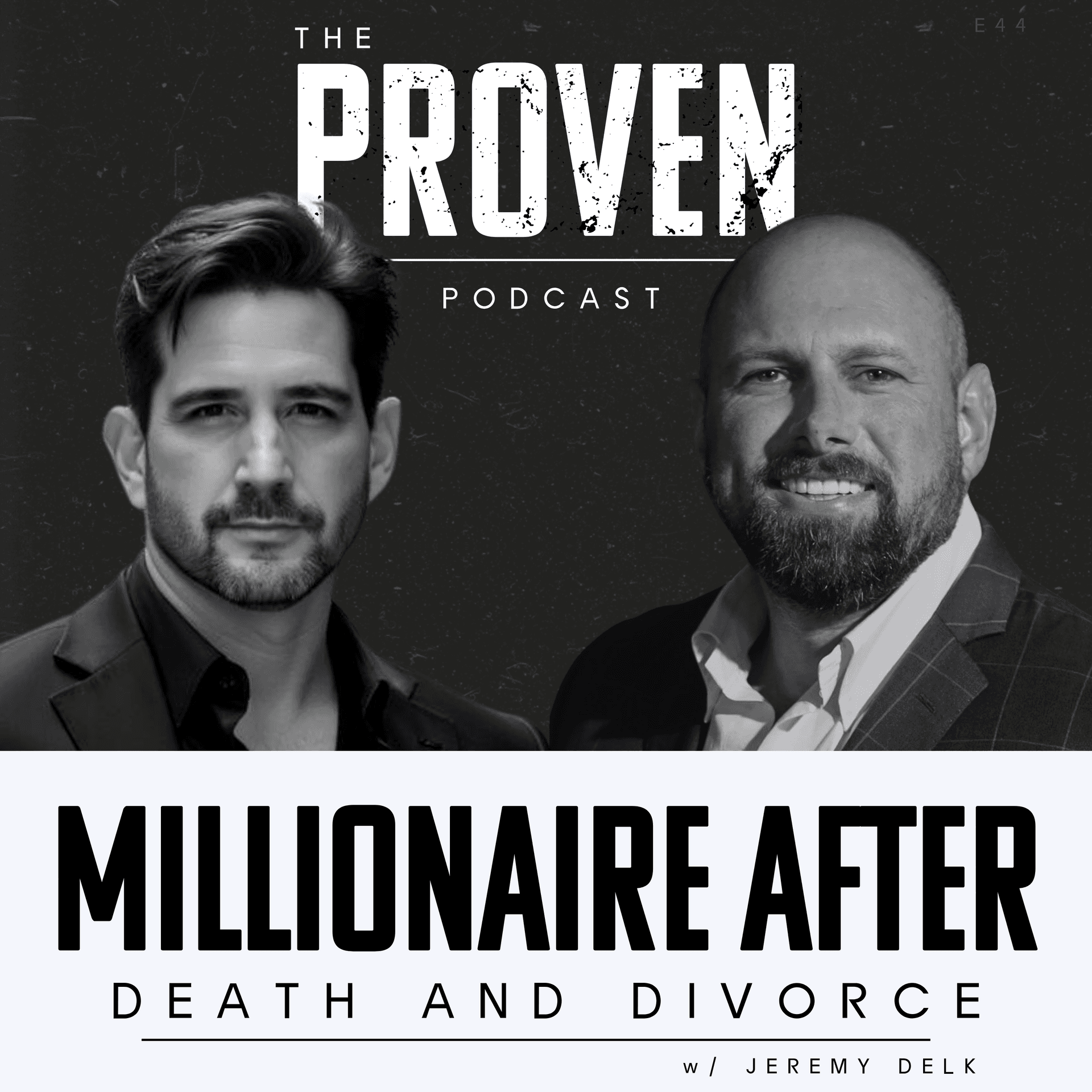
Proven Podcast Episode Notes: Millionaire After Death and Divorce - Jeremy Delk
Episode Summary In this episode of the Proven Podcast, Charles interviews Jeremy Delk, a successful entrepreneur and venture capitalist who shares his remarkable journey from personal tragedies to extraordinary business accomplishments. Jeremy discusses his early life challenges, including the loss of his father at a young age and subsequent financial failures, emphasizing how these experiences shaped his resilience and approach to success. He offers insights on the importance of embracing failure, finding true fulfillment, and his unique coaching methodology aimed at helping high-achieving individuals, particularly in the medical field.
---
Key Concepts
- The Power of Resilience
- Jeremy's early life struggles, including the death of his father and the subsequent financial instability, taught him resilience.
- He emphasizes that failure should be seen as a learning opportunity rather than a setback.
- Embracing Failure
- Jeremy experienced a significant financial loss early in his trading career, which he reframed as a pivotal learning moment.
- He advocates treating business failures with curiosity to discover unexpected opportunities.
- Personal Relationships and Fulfillment
- The conversation shifts to personal relationships, with Jeremy discussing how emotional barriers can lead to isolation.
- He stresses the importance of vulnerability and connection in both personal and professional relationships.
- Shifting Perspectives on Success
- Jeremy challenges conventional definitions of success, arguing that true fulfillment comes from internal satisfaction rather than external validation.
- He emphasizes the need to prioritize purpose and meaningful relationships over mere financial gain.
- Coaching Methodology
- Jeremy shares his approach to coaching high-achieving professionals, particularly those in the healthcare sector.
- He assists clients in identifying their true passions and finding fulfillment beyond their professional identities.
---
Key Takeaways
- Failure as Opportunity: Treat business failures with curiosity to uncover new paths and opportunities.
- Mental Resilience: Personal struggles can foster resilience and drive entrepreneurial success.
- Importance of Vulnerability: Embracing vulnerability leads to deeper connections and fulfillment in relationships.
- Redefining Success: True fulfillment comes from within and should not be solely measured by external achievements.
- Empowerment Through Coaching: Helping clients find their passions and align their lives with their values is crucial for personal and professional growth.
---
Segment Highlights 3:30 - The Ripple Effect of Loss
- The impact of losing a father on childhood stability and the subsequent financial struggles faced by Jeremy's family.
10:45 - The Power of Perspective in Business Failure
- A major loss of $2 million in four days led to a significant career breakthrough due to a mindset shift.
16:15 - Breaking Emotional Barriers
- The realization that vulnerability is not a weakness but a necessary component for connection and growth.
23:22 - Setting the Standard for Future Generations
- The importance of creating a loving environment for children, as they learn from witnessing adult relationships.
27:40 - The Truth About Success and Imposter Syndrome
- Acknowledgment that even successful individuals experience self-doubt, emphasizing the importance of perseverance.
39:00 - Walking Away from a $600M Deal
- The decision to decline a substantial offer resulted in unexpected challenges, illustrating the unpredictability of business.
40:30 - Embracing Failure as the Ultimate Growth Tool
- The narrative that failure is not an endpoint but rather a crucial aspect of growth and resilience.
---
Conclusion In this episode, Jeremy Delk shares profound insights into the entrepreneurial journey, highlighting the significance of resilience, embracing failure, and cultivating meaningful relationships. His coaching philosophy encourages individuals to look beyond traditional success markers and find true fulfillment in their lives. The conversation serves as a reminder that setbacks are not just obstacles but valuable lessons that contribute to personal and professional growth.
---
For more resources and to download the exclusive companion guide, visit [Proven Podcast](https://provenpodcast.com/).
Written by AI. May contain mistakes. Listen to the episode to check what was said.
Transcript
Automatic transcript. May contain errors.0:00Welcome to the Proven Podcast, where it does not matter what you think, only what you can prove. Jeremy Delk proves failure is actually your fastest path to fortune. This serial entrepreneur built two in 500 companies within four years and has taken companies both public and private. But his secret weapon isn't avoiding mistakes. It's leveraging them. The show starts now. All right, everybody. Welcome back. I'm excited about bringing Jeremy on for this one. We're going to talk about success and failure. Some of the things that I talk about all the time, which is the only way to succeed is to fail.
0:29You're one of those people that do it better than anyone I know. So welcome to the show. Thanks so much, man. I'm excited to be here. So for the people who don't know who you are, and let's talk about your success first. And then we'll talk about all the failures and all the things that got you to that way. So tell me why, you know, what makes you unbelievably successful? Yeah. So, you know, the CV business card, right? The two Inc. 500 companies, 24th fastest growing was the first one. And then I think this last one was like 120th fastest growing companies, two different businesses inside of four years, which is pretty cool.
1:03Taking companies public, taking them private. We invest in venture capital opportunities, industry agnostic, a lot in healthcare, have had a lot of success in real estate as well. So we've got some really cool properties down in the Caribbean and some commercial conversions to resi in the state. So, yeah, so investor, venture capitalist, and I speak a little bit and do some podcasts like this. And, yeah, that's me. So I'm curious, did you start out successful? Like, what was your background growing up? Were you just born with a silver spoon and money came out of your – or did your dad give you a million dollars to start your empire?
1:41Where are you? I wish. No. So, no, it's definitely not silver spoon. So I'm from Kentucky. I'm talking to you from Lexington today. But I grew up about an hour away called, it's on the ground called Bardstown, Kentucky, which is like the bourbon capital of the world. So super small population. We moved there actually when I was in fourth grade. We lived in Louisville, which is a bigger city before that. My dad unfortunately passed away when I was young. So he passed away when I was seven. And he was a mechanic, engine shop, so entrepreneur. He had his own little thing. And I always talk about this a lot.
2:17you know you could talk about stability um but you can't teach a kid stability and it's hard for them to understand it right because it's like oxygen it's like omnipresent like are we stable not say was there enough oxygen in the room like that type of thing um but you can really um feel instability so um it was definitely the opposite so for spring like we had like a family that loved us and and you know friends and like you know aunts and uncles and all that that nuclear family and then all of a sudden just went away. So you have the loss and that's a whole thought we can dive and understand like how you deal with loss and grief and all those things.
2:53But that's one piece. But it's really the ripple effect that you don't really think about that happens after. So it went from the three bed, you know, two bath house to a smaller house to an apartment to a shittier apartment. So like that's those levels. So I think no, it was not always successful. um i i got an inheritance at 30 grand when i was uh turning 17 um and that started my career on wall street and i started day trading and i had massive success and a massive failure very early at age 20 um but i think the drive for me um came out of really two two main um viewpoints i guess one is understanding cognizantly like hey um it sucks not having resources because that's what we were at.
3:39Besides grieving all that stuff, now my mom had to go to work and we had to figure out how to have aunts and babysitters who could help look after the two kids, a seven-year-old and a two-year-old for a young single mother now. That was like, okay, that was a resource or lack of resource problem. Fucking let's fix that shit and make a lot of money. I think that was the motivation piece. I think the other, which unfortunately I had experience at a young age, um, a very hard lesson that we all learn that we're not promised tomorrow. So I think that's probably that that drive. And then like the determination point of like, let's just go and take action is probably from that.
4:15Cause like, dude, we don't know, like who knows after this podcast, what happens, God forbid. Right. So I think you just got to seize every moment and every opportunity and, you know, look at it as a blessing every day. You get to wake up. Yeah, I agree. People talk about this all the time about being able to succeed your way to success or fail your way to success. And I always talk about with a child, if, you know, cause you've got little ones, if you're sitting there and when your little one was first learning how to walk and maybe the first 10 times she fell and, you know, she landed on her tush and it didn't work out so well.
4:43I know you just like every other parent was like, you know what? She's never going to walk. We're going to buy a wheelchair. That's going to be the end of it. It doesn't make any sense at all. And we sit down and we teach our kids from very, like, just keep doing it. You're going to learn how to walk. It's just unacceptable to give up. And I think for a lot of people, they expect that every time they go up to bat, they're going to hit a grand slam every time they're going to hit a home run and they're going to crush it. And that's just not the reality we're, we're brought into. You know, I very similar to you.
5:06I did not, I came from a broken home for different reasons. You know, you, uh, ran into a little bit of different one. And then I spent eight years in hospice watching people die. People don't understand how motivating that is to really get going. And I am grateful all the struggles and all the failures because that's what's made me successful. And there's a lot of people right now who are listening, going, wait, what you, you know, you're, you're grateful for all this pain. I wasn't grateful at the time that it was happening. I was like, this sucks. I really don't want this i would have it the other way yeah no it's it's so true and it's and it's hard to take and learn the lesson in the moment that's why i tell people like it's okay you don't have to like you know be some fake person that has like some tragedy like okay it's all great like this is meant to be like it's okay to like grieve and like when when i you know lost two million bucks in four days like i drank myself you know to bed every morning i woke up with me i was like for like four days and you know i was like okay this ain't fucking fixing it right so like like so so now it's more like all right buddy like cry do it then get yourself through it but just hurry up whatever you scream punch a wall just go through because once you realize that none of that's fucking productive right it's okay to do it but just don't dwell on it and be cognizant enough like it just the more you do that is the longer you're going to delay fixing the damn thing there's this thing in in judaism which i'm not religious in any way shape or form it's called shiva which means if someone dies you've got a week yeah you're not allowed to do anything and everyone shows up and they feed you and other than wiping your tuchus they they do everything for you and then after the week they're like all right let's go let's get back to it let's get so i think there is value in that but you've talked about some big hits and how to go through it you know you've lost the parent you've lost a ton of cash you've you know you've run through these hurdles and done these things.
6:53Can you kind of give some people more ideas and dive into those a little bit deeper so that people can understand what loss and failure looks like? And then obviously, because we've just heard that we heard the CV side, right? Like, Hey, fast is growing and I've done this and I trade in and I make all this money and blah, blah, blah. Yeah. People always see the end. They don't see the process. They always see how the end result of the cake. They don't show the years it took to learn how to build, make that cake. So if you could share some of the trials and tribulation. Yeah. It's, you know, I always say my overnight success 25 years in the making, right?
7:23And even when I'm coaching, when I'm coaching clients and talking to them about what's going on with their challenges, it's not like I'm that smart and I've just read every book and I have all the fucking answers. All the answers I have are product of my environment and my experiences. And a lot of the lessons you really learn, that you really keep, are the ones that you get your ass kicked and the failures. That's the piece. It's hard to learn from the success because you're just patting yourself on the back. I'm a great thing. Let's face it. Most things, including me and you, there's a massive amount of luck.
7:56Now I would agree that, you know, you make yourself more lucky by the more reps you're doing and the more things like luck finds you. I think that that's a piece, but it's just doing the actions kind of going through and then understanding it. So I think the first big lesson is, you know, I wasn't, I told you I was drinking for four days, you know, at my townhouse that I bought as a college freshman when I lost all that money. And I didn't see the lesson other than, you know, probably two or three years later when, well, the first lesson was I was day trading, lost all that money. And, but I had a condo at all these expenses.
8:32So I had, I had a choice. I could like pack it in and go home with my mom or like figure it out, buddy and buck up. So switch to night school and started doing things. And through, I talk about this in the book, but through a series of odd jobs, like all of that self-taught chaos, but I was so entrenched in the market, I learned a lot, was like a little bit of a tool that you can't pick up. So think of it like as you played Zelda or playing a legend game or something like that. It's like another little thing that you pick up on your journey that's going to be valuable to you that you don't maybe know it, but whatever.
9:01It's like, hey, I'm a massive failure. I lost all this money. But that led me to have a conversation to my future boss at Fidelity to make me the youngest trader in Fidelity Investments history, right? That was pretty cool. 37 license and before I even graduated college. And it was because I was this young, cocky kid, but I had a lot of market knowledge and depth. And that was very impressive. I could kind of go through and do it. So like, that was like one thing you don't ever know how one experience is going to lead to it. And, you know, one of my, I talk about the book, my early dreams was to kind of make it to New York.
9:33And that's what took me there was ended up going to wall street, the bigger lesson. And I think this is what people forget about with loss or failure. is you know you said shiva for five days or you know whatever whatever the time period is or seven days like the three days of me drinking for four after we go through it like we want to block that shit out because like our humans are so as we're innately self-protective like fuck that shit sucked let's not let's not think about that and i'm definitely not one to look at life in the rear view but you need to look at those lessons and understand the strength that you have inside is fucking massive because I was the biggest and everyone you listen to the same thing.
10:12I was the biggest failure ever and I lost two million dollars. But then I got through it and I ended up getting a job in Wall Street and going to all these things. So when it was a time for me to start Delkin Enterprises and I left my high paying job, which my mom thought I was crazy for, like, dude, you just fucking, you just saved yourself. What the fuck's wrong with you? But it was the courage. And I asked myself one simple question. Is there a model or a scenario that if I go out and start my own company that I will lose$2 million in four days? And the answer was no. There was no path for me to do that.
10:43A little hard to do that. Yeah, so if I don't do that and I fucking got through it, what's the worst that can happen? I can always go back and kind of go. So you use that as the fuel and the energy and really the courage, the belief to kind of, all right, let's go through and take that next step. Because the fear is all internal. A hundred percent. It's all what we're telling ourselves and that negative self-talk. I think that's the big driving piece. Yeah, I think when you're talking about loss and you're talking about failures, you know, you've been around death intimately in your family. I've lost members of my family and I've been around death immensely.
11:14Understanding that you dive into it and you don't live in it every single day, but you don't watch it away. It's something that you always tap into. It's something that always comes in. It's always top of mind because there's always a lesson in that. And there's this whole idea that if what you resist persists and there's times where I am just not firing all four cylinders. Well, some have six, but you know i'm just as i get older i lose some of this but you know as we go into that ball game where i'm just not firing and there's part of me that just wants to scream and yell and say you're a failure and all that and i will jump into it i will sit down and i will for lack of a term feed that wolf and i'm like okay what's going on where am i failure where am i where do i suck what have i done because it's probably trying to tell me something it's probably saying hey you're not prepared for this you're not prepared for that so when someone's going through these there's very specific tactics and questions i use when you're going through these type of loss let's go with the basic financial loss.
12:01And we talked about this before that you're not an entrepreneur until you've lost your first million. Just when you lose your first million, you're like, oh, welcome to the club. Wait till you lose. Okay. Then once you lose your first eight, then wait till you lose your first 80. That's entrepreneurship. And society's made it all sexy. Yeah. It's like a shark tank. Yeah. Once you lose your first million, you're like, oh, welcome to the club. Yes. Hello. Hello. It is what it is. It's going to happen as entrepreneurs. And it's, I've been ridden, I've rode motorcycles for years. We always talk about it.
12:28You're either in the process. There's only two types of riders. People have gone down and people going down. If you haven't gone down yet, you will soon. Don't worry about it. If you haven't lost your first million, don't worry. You will soon. You will lose it from family betrayal, from partner betrayal, from bad business deals. You will lose it. Just being understanding that's part of the process. It is what it is. Just like we talked about the baby falling down and busting our butt. What are some of the questions you immediately address when you're like, okay, I'm in a place where I'm spinning out.
12:53I completely don't think I'm enough. I'm completely failed. What are the ways that you go through? so the first thing i i try to do is find the humor in a bad thing um and i turn it into a curiosity so like you most people dwell on the thing i just got like a bill for a million dollars like i don't know one point let's say this is at 1.15 1.7 million for a project or either like it's more than i thought like that sucks but like okay i can just keep staring at it the numbers aren't going to change? I keep like, wow, what am I going to do? And then like, oh, what am I going to do? And you can just go down that path or you just like, all right, well, whatever.
13:32Like it's, that sucks. It's, it'll be interesting how this works out. And then like, you just find it. Like, I mean, the secret to being in business is just staying in business, like stay alive one more day, one more day in business. Cause you know how things happen. Like, oh my gosh, like, oh, I've got nothing. And then all of a sudden, like literally this happened to me. This happened to me, uh, um, two weeks ago. I, one of the business we invested in, I see the bank accounts but I don't really pay attention and you know he wasn't doing a ton and he changed his business model a little bit and like I kind of literally was about to kind of have a conversation about like hey let's just probably write this business off or I'll sell my equity back for a little bit whatever and he's like hey you just confirmed your bank details?
14:11I'm like why? I got a hundred thousand I'm wiring you for I'm like oh yes I can confirm it so like you just don't know what can I go through so I turned it into a curiosity of like this is going to be funny this will be interesting how it works out and then it does and that's that's kind of how it is so you turn that in that curiosity that's how i look at business and investments i'm a consummate learner and i'm genuinely curious and like to create and understand and have those breakthroughs that's why coaching is so much fun for me because like you know i do it for myself but seeing people have those big breakthroughs of like it just it's magic you see that you're like yeah let's now now let's go and it's really them that are doing it.
14:49So you're just helping them ask those questions and process it a bit. It's funny as, cause I've coached for years and help strategize and scale companies. Everyone thinks that you're coaching your client. You're not, you're coaching you. You just happen to be coaching you the whole time. And they're like, Oh, this is great advice. I'm like, yes, that is great advice for myself all the time. You know, this idea of imposter syndrome there, there's, I've been on stick four times that I can possibly tell you every time I walk out, I'm like, why are they listening to me? Cause there's always a little fear, right?
15:16That's the imposter in the back going, I'm just this poor kid from Hialeah. What am I doing? Why am I here? So staying curious is important, but when you deal with loss specifically, and we're going to get a little dark here, but when you deal with death on a high level, especially at such a young age, I found ways to go through it because I was exposed from first to stranger side, because I just watched it so much at hospice. And then when I was actually, when my family members died, I know there's certain things that I've learned that I'll speak about in a second, but what are the things that you know when you have death hit you on such an intense level when it was your father what are the ways that now that's that's changed you but also that you can process that because there's people going through massive loss yeah well i mean the way i mean the way i actually process it was i mean you know probably um mid six figures of a lot of a lot of therapy because i didn't i i'd tell you how not to do it like i i did it um you know this actually i think it's a great good question because i don't think i've been asked to that that specificity so what a natural instinct to do um at least what i did was what's the best way to not get hurt again right like that was the thought right like how do you how do you not get hurt so it goes into like mass like self-protection mode and i did that fucking very successfully for years the trick and i can everyone write this down just have no actual real connection in your life like that's that's that's that's that's and you're and you're good you will never ever get hurt ever just that's the answer and that's what i was doing so like what so i would have drinking it or i'd go you know probably whatever some people like drinkers are upset or like want to forget like i would drink to almost feel it's like i wouldn't allow myself to actually feel because like that shit sucks like let's just not feel it.
17:03So it was when like, as opposed to people drink, I was like more like losing inhibitions to let me be vulnerable. So I think that's the piece. So you have to look at it as nothing is happening to you or for you. Like this is a process is a natural thing. Just like going, you're either down or going down, right? We are all headed to the same place, right? Different times at checkout, but we're all headed to the same place. So once you get comfortable with that then i think you have to look at the same thing just like a bad business thing it didn't happen to you like my hat my dad died wasn't my fault right but there was a period of time you absolutely thought it was yeah yeah for sure so i think that's the that's the that's the way to to look at like hey understand this is a natural thing understand that your feelings are um okay and it's okay to experience them but like don't let them define you from that piece and again i'm I was clearly joking about not having a meaningful relationship, but my therapist actually said this to me.
18:00And it was the most genius aha thing because I was like fighting. I'm like, dude, no, I'm good. Like I can love people. I can be nice. I can do that. But like, don't want to get too close or be too vulnerable because then I get hurt. So the way she framed it for me, which was just like, wow, a ton of bricks was like, this is dark. But like, okay, you've got a kid. I've got three kids. you've got children, imagine, God forbid, something was going to happen to one of your kids in two years, three years, whatever the event is. And it's certain, like it's going to happen. Like it's a medical thing.
18:40It's an accident, whatever. And they're no longer with you. Like, you know, that's going to happen. So by your logic, Jeremy, should you now stop loving your kid or like slow? Yeah, it blows your mind. And it gives like, of course not. But that's what you're saying if you don't want to have a meaningful relationship. So I think that's the piece of like, of course not, that's asinine. So you would never do that. So you have to take that preposterous example to look back and like, no, let's just have, let's be vulnerable. Let's have deep connections. And understand that all you can do is control what you can control.
19:16And that's who you love, how you love, who you are, your character, all those things. And once you get comfortable with who you are as a person and you're like, you're, you're happy, you love yourself, you're up with yourself, then you can start loving others and go from there. Right. I love that. You know, you got individuals who are very, very successful and it's be, it's still going against the grain a little bit to talk about it, but how powerful therapy is. And I've been, I think therapy is the gift you give yourself. And I, very similar to you, I was an individual was like, Hey, I got hurt.
19:47I'm never gonna let someone else in. I'm going to build these walls and walls are great. They're very good at keeping people out, but they're also very good at locking you in and you isolate and learning through my own ways and my own path through therapy of going, you know, that we are worthy of love. Because the equation is really simple. Everyone thinks it's, if I do this, I'll be enough. And if I'm enough, I'll be worthy of love. And that's just complete shite. It's complete and utter garbage. Because if you think about the person in your life that you love the most and you ask yourself, what does that person have to do to be worthy of my love?
20:18What do they have to, you know, or also the answer is nothing. but then when you reverse it and say okay what do i have to do to be and then you'll create this laundry list as soon as you can break that pattern life gets really easy um yeah so i love that you're strong enough to share about therapy one of the things that i ran into a therapy was how fast therapists are to label you how fast they're going to say hey you're this you're that you're this and how fast i wanted to have those as well i'm like oh yeah this i am this because then i had an exit strategy i'm like oh yes i am this type of person you can't blame me anymore i've got my escape versus shit.
20:51I need to work on my stuff. I need to honestly. And because until you, until you embrace radical forgiveness, until you look in the mirror and say, Hey, you know what? There are people out there who genuinely authentically want to love you as you are, and you don't have to change the ball game. That is a hard thing to do because you're just going to hurt a ton of people. And that's a hard lesson to learn because you're going to push away some of the greatest gifts that you've ever had in your life. And I can, you know, for those of you watching the video, you can see on Jeremy's face, he's experienced that as well.
21:16Although done that We have lost people who we desperately wish we did not lose. So if you haven't gone through therapy, do it now. Just it's a gift you give yourself. Other than the lesson she gave you, what are some of the other lessons as you've gone through therapy and as you've gone through loss? Because that's really what this is about. How to survive failures, how to survive loss and become successful. What is another one that just immediately just smacks you in the face? You're like, oh, wow, that, okay. Yeah, so I went through a really bad divorce. And that was like I was doing therapy, like intense.
21:46like two hour sessions every day it was like some deep shit i was going through because i was like go figure obsessive entrepreneur like let's just solve it like let's just absolutely let's just fucking i can't wait a week for this that's fucking hamburger go i probably would have eight hour days if she would have left me but probably wasn't healthy but um i struggled a lot um with because to me a divorce was a pretty big ultimate failure like i mean like big like you you are like that's like it was so i struggled um if i'm honest with like what are people going to say and think right that was like partly it bigger the longest what took the longest was um my kids like because everyone you've heard this so many times like parents get divorced when the kids go to college and like the kids say like dude why the fuck didn't you do that earlier like Like we, cause they see misery, but you don't know that.
22:42Right. So, so I was really struggling with that. So the two things that she told me, because my ex-wife and I, we didn't have like, we weren't like fighting or yelling. It was never talks about, there was just no love or no true connection. So I've got, you know, three kids, boy, girl, boy. And she just, another thing that was just like dropped the bomb on me. like you like what your kids see especially your daughter how they see your relationship with their spouse is the exact thing they're going to emulate absolutely right absolutely so like if if you have a if that's that's the example you want to set and that's like a loveless non-passion joking like i had a win of my wife and i had a water fight last fucking week i mean that kind of playfulness is it can it's contagious you see it on the kids and they're kind of going through so so that that kind of reassured me on on that piece and like now and i talk about some stories in the book that really get me choked up of like you know it was the right decision because like you can see your kids like so much happier so that's number one but then the the secondary piece was like what are people going to say and it was through that breakthrough that really i think set me free and i talk about all the time is she like and i say what i say like no one cares about you and that seems harsh but like they don't they don't they you know what they care about is themselves and like yes you're divorced and your people know you okay it'll be a thing for a few days or a week but then like it goes like the new cycle 24 7 it just it just it cycles through so quickly and you're right and it does so that that i and i talk about that now I'm coaching.
24:25So like, yeah, that was my, my fear of like, Oh, what do people want to say? And I, I never looked at it in business. Cause I always have such confidence in business that you could, you can't beat me. You fucking just can't. I won't work. You can't, you can't kill me. I just will cook. I'm relentless. You cannot beat me in business. So I never saw it. Cause I never like, if I've offended someone, I don't give a fuck. Like I'm just doing me. So I've never saw that piece from a very, what do people think? What will people say until that piece? But it's actually helped me in business as well when you kind of like hey like i'm doing my right thing this is my north star i'm i'm i know i'm doing this the right for the right reasons and that's it and you're okay with it who cares and i also think there's going to be times you're going to miss your north star none of us are perfect some of our times our characters are going to fail we're not going to do what we you know the ideal version of us would do we're gonna miss fire and that that's okay too and just having honor with it we talked about it in the beginning of this where it's like if you haven't lost a million dollars yet then yeah we're probably not going to be doing business together because it just this is the reality and we we expect the failures i'd i would rather hire the person that just lost everything and completely screws up and learn how to come back from that than the person who's never done that because they come back stronger and we do it in business versus anywhere else no i i don't know if we talked um i don't know if we talked about this in the green room or not but like yeah 100 like whenever i'm interviewing um and getting pitched deals like especially these days like later in my life like it's very rare i will invest in someone that hasn't went through a cycle right it's like you just get some scot like you you want some grit like you you want you want that like that's super super important especially where the economy is going now you know it's it we're gonna have some bumps people it is what it is no matter what happens no matter who whatever soap opera be it's the left or the right whatever you're listening to we're gonna have some bumps and being able to handle that's so important i i'm gonna throw you for a um a big open-ended question but we were just having a dialogue last night we had a big barrel pick of some really cool fancy bourbon at some buddies and just great conversation with some good guys and like yeah probably drank too much bourbon but it's really really good conversation and i'd love to get your thoughts on um where is the future in the next five to ten years um with what's coming with with ai right i mean i'm we use ai we've spent a lot of money in AI, we invest a lot in AI, we use AI in our business every day, everyone is using AI, we put 750 ,000 last year on a LOM that's now like not even worthless anymore because now it's moving so quickly we have a couple of things we're working on I think it's the biggest like in the sense of the wheel that's how kind of big it is my, and I think you kind of gather from me, I'm a pretty fucking glass half full optimistic guy and I'm so excited for what it can do and some of the applications we're going for.
27:15But there is a part of me. And like, okay, you hear like Elon talking like, yeah, the drone monster robots that just take over and kill everybody, right? I think that's not the worry for me. I mean, it's a real concern. The concern or question that I'm curious about, would we have 320, 350, 360 million people in this country? I think there's a real world where the haves and have-nots and the separation of this wealth gap, I think there's a world where we could be India, I think, right? You look at the mass disparity in wealth just on the jobs, like with robots and AI, just the amount of work we're starting happening at Tesla with manufacturing and stuff.
28:07I'm just really curious on your thoughts. Again, I'm the most glass-house-full guy, but it's just such a disruptive thing. I mean, it's the wheel, it's electricity. I mean, it's such an omnipresent thing that's only going to excel. And I don't think it's going to excel 20 years from now. I think it's the next five to 10. I'd love to get your take on that. Yeah, so I'm not an optimist, nor am I a pessimist. I'm a realist. I'm like, is it half empty? It's a glass of water. Get over it. It depends on how fucking thirsty I am. If I'm thirsty, then I need more water. If I'm not thirsty, then it's fine.
28:39So I'm very much a realist. And I think one of the things that we go into as you get into this ballgame, you have to talk about, you have to get the soap opera out of the way. So if you're extremely left-leaning or extremely right-leaning, you need to put that away, right? That's not what we're talking about here. You need to have conversations that are unchangeable. So, for example, geopolitical. If you look at birth rates, the birth rates that are happening right now in China are less than what the Jews had during the Holocaust. Period. it. In order, and when I talk about birth rates, if you have two children, your birth rate is two.
Read the full transcript
29:09If you have three children, your birth rate is three. If I have zero children, we do the difference between you and, you know, if you had two and I had, because I don't want to know, you have three and if I have none, the answer is 1.5. In order to sustain a species, you have to have a birth rate of at least two to 2.2 to continue to do that. That hasn't been the case in the modern world for 60 years and most of well europe's been 1.8 to 1.6 so no matter what happens and there's a great guy named peter zahanna talks about this in detail if you just look at the data this is the last decade for china this is the last decade for russia this is the last decade for um germany this is the last decade for for italy it's there's this it is what it is because they stopped banging 40 to 60 years ago, even if we did forced birth camps right now, where basically we forced women to have babies, you're still looking at 20 years out.
30:01So no matter what happens, we don't have enough people. And when you look at this on, on this level, yeah. So when you look at this, like right now, we get less than 4 % of our oil from the Middle East, period. We get less than 4%. We do not have enough people to govern the world the way we used to, period. So even if we wanted to protect the Middle East, which we don't, there's no benefit for us doing that. We don't have the ability to do it. just it is what it is so we have to look at practical numbers when you look at like evs taking over and i will get back to your question when you look at evs take over you need four times the amount of lithium that's ever been mined out of the world in order to make that accomplished it's not going to happen we just don't have the science for it right now so when it comes to ai we're running into you know again germany's got the oldest population it's ever had china's got the oldest population it's ever had italy's got the oldest population russia's got the oldest population.
30:50They're aging out. There's nothing you can do that's going to change that. We've never dealt with this as a species before. This happened because we industrialized. We went from agricultural to industrial. And when you go into industrial in this situation, you don't have those horrible little breaths because they're expensive. You have less of them because you don't need farm workers. And then sooner or later, you're like, we don't want any of them because they're annoying. So we've had that change as you industrialize. But to answer about AI, we started agricultural. That's what we did. And then that revolution came in and we didn't have to be hunter gathers anymore.
31:19And that changed. There were jobs that were created that had never been thought before. From there, we went into industrial, which means bazillions of jobs were wiped out, just completely exterminated on the agricultural side. Then we went in industrial, and then we had that. Then we had the technology boom. And it was like, oh my God, tech's here. It's going to wipe out jobs. And it did. It crushed jobs. When I was in college, the job I had was not the job that they were training me for. So when you come into these things, when you have these era of changes. The technological revolution wiped out industrial-based jobs.
31:48Just crushed them. Look at Amazon. Look what it did to Walmart and Sears and all of that. Crushed them. AI is going to do the same thing. It is going to exterminate walls of jobs and it's going to create walls of other jobs. And I guess that's the heartbeat. So that's fair, right? They have very good examples with especially agricultural revolution and industrial. But I just don't trying to look forward to it though like i could see that right and maybe it's easier to see because it's retrospective like okay that was a pivot and this is a new job creation but i just don't see with again with the humanoid robots that are coming and ai i don't know what that because what is it it's like compute like the machines are doing that work so i i don't know that the i mean we're looking at from out of real estate side we're looking at like you know who any any facility that has like grandfathered in high amounts of voltage and volume like that's those those sites are worth a lot of money because like that's where it all is data centers in this country compute compute compute so like i see that that's just a asset play i don't see the so the job the job yeah anything that's content creative any of that it's over it's absolutely over and you talked about you know five ten years from now no we know we just ran a bunch of stuff through AI.
33:09We had a program that, cause we were like, we need to do photo shoots. And one of my students is like, no, we don't. We took photo shoots that I had before we'd load it in the AI. And we're like, well, that just saved me thousands of dollars on photo shoots. We're just going to use those. And they're just better. You know, we have, we digitize my voice. So we got podcasts that are automated. And it sounds like me talking to someone else. Google does that. We, so those are, those are being eliminated. Those jobs are being exterminated. But when we go into, so anything creative, it's gone. I think your blue collar workers, the people who can, you know, fix things and plumbers and build things that that will come back on a high level because we're going to need that especially here in the united states as the united states you know because we've had nine presidential elections that have elected presidents that are more isolationist than the previous ones they're all just isolationists they did we don't care anymore about the rest of the world so i think where the the new jobs will come that we've never even thought of before but we're running into problems that we've never had before so there will be massive new jobs to replace nurses and doctors and all that.
34:06But robotics, we're not anywhere near that. If you have any doubt on that, I mean, we're recording this 2025, I think at this point, recording this 2025, go into chat GPT and play the game of 20 questions, which is if you don't know what the game of 20 questions is to say, hey, I'm thinking of an animal. And it'll say, is it a mammal? And four seconds later, it's going to ask you again, is it a mammal? You're like, oh my God, it's just not there yet. Now in two, three years from there, absolutely. But when we had this fear about technological revolution. Look at the people who made all this money on Bitcoin or crypto or trading at home.
34:36You know, you did this, you were a trader. If I told you a guy could sit in his PJs at home and do seven, eight figures. If I told you that 20, 30 years ago, you're like, you're out of your mind. Now that's normal. I'm working on with another guy who's going to come on the podcast. He has a robot that just does a Forex. So for those of you who's playing at home, Forex is for an exchange or trading currencies. You're allowed to do a very high leverage. He built a robot, he's getting 6 % a week on it. And it's just consistently like clockwork, it's 6.3 % on this one, no matter what he's been doing it for like seven, eight years.
35:08And it just, it just rocket firing like crazy. So the idea to be able to make that money and to do those things, if you're walking into it being, okay, I'm afraid of this, then you lose. It's like those people who don't let their kids get on the internet and don't have tablets. What world are you preparing them for? So I think AI is going to be phenomenal for creating massive amounts of jobs, but it's also going to crush an immense amount of jobs yeah yeah we'll see i mean i just know like you know you're familiar with kurtzwell ray kurtzwell so um it's a good book um old book it's called the singularity is near and like that that's the idea like the whole idea of like you know when man and robot kind of combine in that humanoid type of type of thing and with these nanobots and that that's it that's the idea how to live forever and um i think we've got some you know we've been more right now we're more divided at least here in the united states than we've been since the civil war that no matter what side you're on, as you pull away rights from a person and you take away something that they used to have as a right, um, which we don't have the bill of rights.
36:07We have the bill of options or the bill of temporary conveniences because we don't actually have rights. Um, if you don't believe me, go look up 1940s Japanese containment camp for Japanese Americans. It'll tell you all about your precious bill of rights. We live in a world where we're taking away rights from people. If you agree with them or don't agree with them and you're forcing your belief upon them, those people ultimately revolt. So in order to get to where we want to get to with the humanoid and the singularity and all that, you've got to deal with the fact that 70 % of the country's pissed and they're not going to walk away from this and it's going to get nasty.
36:44So you also got, you know, Europe in this situation has a, they're, they're upset with us right now. And as they pull back, how long do you think Germany, as we destabilize away from them, how long do you think Germany is going to pay for Greece's debt? You're going to go back to what it was 80, 90, a hundred years ago before the world war II, Germany is not going to pay for this stuff for long. So you have a destabilizing of the entire idea, but you know, kind of going back to more of what we're talking about, how to be successful through failure. When you, you know, we talked about personal loss.
37:12We talked about, you know, the divorce from the parents, I mean, from your wife, we've talked about the, you know, the loss of, you know, of your dad. What do you do when you have business losses and what are some of the business losses you had um i mean you know a podcast um all kinds um i mean i i turned down um 600 million dollars for one of my businesses that i was sure i'd get a billion for um ended up getting rated by the fbi fines by the fda and and i sold it for six million so like half a billy lost. How do you deal with that? What are the ways that you pushed that? Laugh. It's a story.
37:54It's part of the journey. I looked at it and I would do it again which is probably why I'm crazy but at that time I was making more money than I could spend. I have billionaire friends and we weren't living any differently other than I was chartering my jet and he owned his. That was literally the only difference. And you know some you know hillbilly kid from small town kentucky few people get a shot at take it down to billy like a few people so that was me like fuck it like what what's going to change other than tax bill whatever like what am i going to do like this is my opportunity let's go do it and i just punted and and uh kicked it down so when all that should happen in the moment did I feel smart no I feel like the biggest idiot ever but again if you let time and reflection guide you and know that there is a lesson come no I don't know when you're going to learn it but there's a lesson that's happened and it's going to it's going to come to you so for me in that instance um it's having confidence to know that like there's you know this too will pass if it's really really good this too will pass if it's really really bad this too will pass so the lesson on that is that happened.
39:12That was an E500 company. Disastrous, whatever. This was right during COVID. I actually got an offer for 12 million, but it would have shut down the company and I would have cost 120 jobs during a fucking pandemic. Six million wasn't worth that to me. I live in this town. No way. That company is still operating and going and just did a massive renovation. So jobs are saved. All is right in the world. Six months before all that happened, we had an idea for another company to look at diagnostics and biological age and what have you. We'd spent a million dollars on equipment. That's how much cash we had.
39:50That equipment had been setting in our warehouse for nine months. I don't know if we ever would have fucking set the equipment up, but after all this stuff, like, okay, well, maybe we should start to look to pivot. That was my second Inc. 500 company. And I think, you know, talk about when there's failure you don't feel very smart like god i'm an idiot there's this big failure yeah i i'm curious if you've had the similar experience i've had where there was massive success and you turn around i'm like i have no idea how this happened i because there's deals i've closed where i'm like i'm not that smart how is this so as you said earlier on it there's a little bit of luck with this there's a little bit of luck it's just putting out there and swinging yeah there's a ton of luck but but no one's any different than you like anyone that you're i mean well maybe elon elon is just next level.
40:36He's not from this world. I don't think. He's something different. But no one else is any different than you. And I think I've been in the rooms. I've been on the stage. I've been there. I've met them. I've done deals with them. And they're just like you. And they took a chant and they had passion and they wanted to make an impact. And they fucking said no to failure and said, fucking, it ain't gonna stop me. They accepted it's part of the process and you can fight it. But you're not going to win embrace it and make it part of your your tool belt i think the most powerful lesson i learned in business and scaling and being able to survive is you don't matter and it's nothing personal to anybody out there i don't matter no one else matters and this happened because there were two guys uh they both went to ivetlake schools brilliant absolutely brilliant and they went and they bought this pickling packing company so they pickled uh pig's feet and they pickled eggs and i was like what the heck they bought this company and it was two guys and we were, I was 27 at the time.
41:36I come in to run the IT division. And I was like, dude, it's one computer. What? You don't need us. He's like, yeah, but we need someone to make sure their computer works. I was like, you make enough money, set up seven computers. What are you talking about? So I just set up a computer, had a spare one and put everything else in the cloud. We did all that for him. And I was like, what are you doing here? He's like, well, we bought this company. It was complete caca. It just wasn't doing well. He goes, but we connected and we, we now distribute our stuff through Costco and all these other places.
42:01And I was like, So what's production look like? He was, we have these containers and we drop in pig's feet and we drop in eggs and we fill it with the fluid. We seal it up. We leave it in the warehouse. And I was like, well, what about your product? He was, it pickles. The longer it's in, the better it is. And I was like, son of a gun. I was like, do you guys study this or do that? He's like, no, we just saw the deal. We thought it was easy and we just went for it. And they're multimillionaires and they ended up selling the company and they made a solid fortune, but they took themselves out of the equation.
42:24So I think when you're running into this and you're worried about, oh, how am I going to fail? How am I going to survive? How am I going to rebuild? Take your butt out of the equation. Because if you're not scaling, if you look at the numbers, either in your bank account or on your scale, your actual weight scale, that is a result of your discipline and who you are. You've chosen to get there. If you are a large individual who eats 700 cakes a day and you're wondering why you can't run a triathlon, ta-da. If you look in the mirror and you're blown away with how you look, that's on you. Same thing with your bank account.
42:52Sitting down, we yield to our fear and we yield to comfort. and if you can't push through those you lose just all day every day um when you're coaching people and you know you talked about you've started doing that what are your normal clients when they come to you and what are some of the questions you ask right off the bat so um because i'm in healthcare for whatever reason i have a lot of doctors um that come through because they just they're good at doctoring but suck at business and they didn't learn that so that's that's the um that's where it starts and they all come to me for the wrong problems um and like that's part of it like getting them directional like okay what is it because like why are you is that really your problem or that what you think the symptom is or kind of going through it so a lot of it is how to optimize the business and the process where the business runs without you just to what your point is like that business is its own own entity and what that allows you to do is get the fuck out of it right like i do and like let the system in the process that you like that that kind of run then you can be whatever you want you can do podcasts you can be more creative you You can go to real estate.
43:55You can do other things. So that's the first piece. Sadly, it's pretty easy for me, but it's a lot of value for them, so I do it. After we kind of get that piece or in parallel, it's a lot of the internal self-regard. I just enjoy that. I enjoy helping people have those breakthroughs way more than business. Business is fucking easy, and I'm not trying to be passive. It's just business. I really loved seeing that breakthrough. Like, okay, now we got that sorted. How are you? What are you going to do? I got you all kinds of time now. What's your passion? And then you would not imagine most of the time.
44:33I have no idea. I don't know. What? Because they've been running away from the wolf for so long. They've been trying to get away from the lion. And now they're like, well, what do I do? I don't have to run anymore. Like, that's it. You talked about running before, you know, becoming a billionaire, becoming a man, doing all of that. I remember the day that I first had seven figures in the bank. And I was like, okay, sex wasn't better. Food wasn't better. My car didn't fly. My health didn't radically better. I was like, son of a gun. So it just, it doesn't, all money, money cannot buy happiness.
45:00Money buys options and it buys the ability to do what you want when you want. And that will give you parts of happiness. But at the same time, you, you're, everything changes. It gives you options is for what I've said to people. Yeah. I had a buddy, we were doing business. This was in, I was in New York city still. and he had a line that the only difference between money and not is where you go, how you get there, and where you stay when you arrive. And that's pretty fucking accurate, right? Are you driving the kids to fucking Florida in a car going back through? Are you taking a PJ to St. Barts?
45:36And then staying at a rental. That's it. Where are you going? And guess what? We've been to St. Barts. We've all these great places. If you're there on a yacht, there's someone there on a fucking beach in a tent looking at same fucking stars for one hundredth thousandth of a price that you fucking paid same stars same experience same experience you know not the same experience but i remember i decided i wanted to be wealthy when i walked i was on a plane i grew up very poor that i walked on a plane and i didn't know what business class was and i saw these people sitting in business class and i'm a decent sized guy so i'm foot just over 200 pounds and the seats ended basically before my shoulders begin so if you and i are sitting next to each on a plane one of us is leaving off that flight pregnant.
46:18That's just how big. So for me, when I saw business class, I was like, I don't care what it takes. I'm doing that. I don't care how much it costs me, what I need to sacrifice. I am not being jammed up to some complete stranger where him and I are, you know, sharing the sweat. It's gross. So I agree. I also think that money is an amplifier. So again, I don't drink, but if you were a jerk and you started drinking, you're going to be a bigger jerk. If you're a goofball and you start drinking, you're going to be a bigger goofball. 100%. Money's the same thing. as you go into it. So what are some of the things you're talking about breakthroughs with your clients?
46:50What are some of the breakthroughs that you've had where, or one of the processes that you get your clients to have that breakthrough? So, um, first you got to get them aligned with the realization of like, you know, if working more hours, um, and harder was the answer, you would have already been there. Right. Like, and like, but they don't see that. Like, so you got to be like, yep. Okay. Well, cool. That's not the answer. Or you wouldn't, you wouldn't be here. Well, I think it's because we're taught that, right. We're taught that from a very beginning, work hard work hard you'll make more money that then if that was the case then a janitor would be a bazillionaire so no that's not the answer no for sure so um usually kind of comes down to trying to diagnose what they perceive their problem is right and kind of going through that whole process and like okay let's fix that because of the business but then i really start going to the goals like what's because like what's important to you and it's funny that people don't often have that like to me i can tell you my family like whatever like my family wants that's fucking what's important to me yeah and legacy of course but like legacy is kind of selfish but also for my family so like that's that's it and that's a knee-jerk answer but so many people don't really know like why am i doing all this what what what is the whole purpose and they feel lost and they they kind of lost themselves and identity in their job in their career and like forget it like think about it right and especially like in the doctors that we we work with that's an easy example they all like they all went through the exact same cycle something in them as a young as a youngster said hey they were obviously very smart but like hey i want to help people get better i don't want to have i want to help sick people that's the basis premise like when the kids are playing doctor like that's the basis premise they went to school medical school all this debt to find out you don't really fucking help people like it's like it's like it's like it's but it's like kind of like so then they go out like well fuck that shit i don't want to do that And they go and do 10 years in ER medicine or whatever they do.
48:40And they leave and they get into like concierge medicine and cash. So they've now, they've got halfway there. They're now back in there. They're rejuvenated because they're happy because they're actually helping people. So they've got that. So they feel purpose. But then after a while, they're like, well, now I'm just chained to my phone. It's a different thing. Yes, I'm helping people. It's better. But now I'm kind of changed. So they just lose themselves. And then helping them kind of find that working back through like, okay, you are chained up here. this is your thing, but it does not identify.
49:09It doesn't define you. Unless you want to leave this forever, but it's hard to do with medical practices because usually it's a person. So what is your life after this? After you sell it, I can help you sell the thing. I can help you keep it and just have a cash machine. You don't have to worry about it. What do you do over here? That takes some time. It takes some time for them to really kind of go through and do that and do that work. And they have to do it. You can help them and kind of probe and whatever, because like but everyone else's you know what my dreams are are fucking different than your dreams man and they should be so i can't project my dreams on you like do this i can tell you like hey i've got similar ideas or similar paths i want to do and this is what i what's worked for me and sharing those experiences but yeah just getting them to kind of dig in but it's tough because you gotta build rapport so like the business thing helps me because like okay maybe i'm smart i've got cb successful solve a business problem like fuck i didn't think that would work that gives me a lot of authority when i when they see that like okay cool you want to fucking fix you now right and like that's that's the fun part yeah yeah i would i would say most people have no idea who they are and they don't you know there's this great line from the movie the fight club says you're not your fucking khakis so they don't know who you are and then i've had i've worked with a lot of doctors and they're like hey you know i want to heal sick people i want to do this thing i'm like cool do you want to do that every single day of your life they're like no i'm like okay you just put yourself in a situation where that's your reality and i think having residual income, having success, picking yourself up from those failures is realizing that there's a bunch of people who are doing seven figures a year who are miserable because most of the time they show up, at least in my world, entrepreneurs don't have bad days.
50:44They have days where they don't have any more days. They're having days where they have a gun in there. And the goal is to help pivot them because there's times where they want to discontinue living. It's the nicest way I can say it. And I'm like, cool, let's do it. They're like, excuse me? I'm like, 100%, let's do it wait what i'm like hunt let's do it this life you let you don't like it anymore let's get rid of it and they're like okay well what do i do i was like well first off do you want to still be married to your husband or wife and they're like what i'm like no let's really let's do it if you're saying what are we going to require what are we doing let's get rid of it let's only keep what we want with the idea that in five six months what you want's going to change but you don't know who you are and you don't know what your truth is we talk about this all the time life is imagine most people go to a bar and as you can tell i don't drink they go to the bartender say, Hey, can I have some chocolate milk?
51:29And the bartender's like, here's a glass of orange juice. And they're like, no, I'm sorry. Can I have chocolate milk? And then, oh, here's three gallons of orange juice. Now here, okay. Can I have a glass of chocolate milk? Here's a hundred thousand gallons of orange juice. That person's never going to be happy because they didn't get their chocolate milk. Most people have no idea what their chocolate milk is. And understanding that what you think your chocolate milk is today, once you get it, you're going to want something else later. It's just the nature of the beast. It's, it's part of it so if you think a successful business or anything the process of success is further of hey i got this cool this work now what do i want next because if you took a look at your life in my life right now and you rewinded it 10 years ago and told us what you have right now 10 15 20 years ago that version of it's like oh my god you're a complete amazing you made it you're a god how did you do that and then we forget that with here like oh well actually what I really want is this, what I really wanted that.
52:23And then when you finally get off that treadmill of if I get this, I will then be happy. And so I'm just going to be happy now for a dear friend of mine found out that he's got TBI, which is traumatic brain injury. He's a former vet. And he is arguably the happiest individual I know, which is wild to me. I was like, your brain doesn't work. It's just wild to me. Anyway. So when you do this and you work, what are the, some of the first questions you ask a client when they say, Hey, I want to have you successful. What are some of the first questions you ask? successful or just like fulfilled what do you so i love that you brought that up there's there is it's way different that's way different let's explain that difference real quick for everybody yeah yeah because like you know they everyone has this outwardly um thing of success as what you just described it is um you know hey we you know got this award we hit this revenue number we think that that's what success is but when you hit the markets like you just said 10 years ago and you get there, not really that cool.
53:25So working them through that understanding that like, hey, that's just part of the journey and trying to change that look at like, hey, this is truly not a destination. We're not going to end up anywhere. We're just going to keep kind of going and progressing. That helps reframe their idea of success. And I actually use a very similar thing. Like, hey, five years ago, were you happy? No. But were you happy if you were, it's like you just kind of work that piece out. the fulfillment piece is what's been a lot of fun because like that's a harder question to ask and that's when you kind of get into like well why did you start doing this right what what's this what what do you want to do after this and that's an interesting question because after they always think about it as this future thing that always is kind of pushing out why isn't after now right i think why why after why why do we wait and you just change that construct of how we're kind of built like oh i'm going to retire so i worked at 55 like why why why not like there's a great book that from the mind wrote bill perkins i'll die with zero and it's literally just about like you know give the kids the money now donate to charity now like don't wait right if you want to make that impact you can do it now so you look at fulfillment and how like the resources right like the money to your point can be used solely for fulfillment like that that's what like and And then you need to figure out what those times are.
54:45Are those experiences? Are those things? And most of that is experiences with the people they love. And then, okay. Then you can start, this goes dark, but negative. Like, I'm taking my family to Italy next year. I'm sorry, next May. So two months, something like that. 45 people, gonna be super expensive. It's my 45th birthday. Not really, it's kind of a weird milestone. Like, my parents are getting up there. I mean, you just don't know, like, what's gonna happen in five more years, right? so i'm gonna have that experience fucking is it is it typical no but it's like give a fuck no i'm gonna i'm gonna kind of do it so getting them to understand what fulfillment is but then to start receiving it earlier and just starting to take it and a lot of times it's just giving them permission to take it giving them because they already they already can do it they just they don't think that it's that right time and then you you just start to change that framework so i think there's part of that permission is feeling worthy enough feeling like i'm enough and you know you've gone through you know we talked about this before we're on before we're on camera you went through a pretty roof so you know really intense divorce how do you sit back and you go you know what not only i get it i'm learning i'm healing i'm doing the therapy which again if you don't doing therapy go do therapy now so give yourself it's so unbelievably important uh there's and if people like oh it's not it's not manly to go through therapy i'm like i can get you responding to the you know tier one operators who have been in therapy these are warriors they're in therapy So if you don't think you're, it's, oh, I can't do that.
56:09It's not hard. Okay, princess. So welcome. But when you're going through that, how do you refine your worth to say, you know what? I have failed in business. I have failed with my, with my kids, with my wife, with all that, where you step back and say, you know what? No, I'm going to have a relationship. We're going to have to work on fight, or I'm going to be able to do this and, and go to Lee. How do you go through that process of regaining your worth? well i think you can't change the past i mean i've tried if someone knows alia i'll take suggestions but you can't undo it um so what we do are these these losses and these failures and these mistakes that we make you know a lot of times it's you know we just dwell on them and we're miserable whatever and i think that's a natural thing but if you can go and change that to be okay use that as a lesson to to make sure like hey that's not who i want to be and not over correct but just make that course correction to kind of go back and like hey i want to have that meaningful relationship i want to be connected i want to be home for dinner i want to do those things because once you do it then you just take action and do it and and giving yourself that permission to be able to kind of go through um the other piece is like okay you go through a nasty divorce there's two fucking people in it and like it's very easy to put blame but you and this is true with life, with business, deals, whatever, it's way easier to get to a result and to a negotiation point and get business or relationships personal when you just put yourself on the other perspective.
57:37And I know that's not so simple, but just understanding like, just like you guys said, why am I having this visceral action? Why is this so important to me? What's their side? What's their truth and understanding? And then if you can do that, it's selfless and kind of going through it. You can get to a meeting point. quite easy. There's a study that, there's a thing, I don't know, I haven't in all law schools. I know what happens at University of Kentucky here. As, I think, second year of law, they do like moot court. And they give the prosecution and defense, it's about oranges. And it's an intellectual property dispute.
58:15And you know, it's about IP violations. Who owns the IP? And they're just fighting over it. Can't get to an impasse. And the Moot court goes on for, I think, three weeks and basically goes to a judge. They're both kind of fighting out and the judge renders a result that's kind of shitty. They both say neither of them get protection IP, so it's not a free for all. So they actually lost protection against themselves to everyone else. They had notes of what was important to them inside. prosecution had a groundbreaking business idea that can revolutionize um food source with orange pulp right defense had a remarkable technology in defense for fuel with orange peels had they talked there was no dispute right you take the oranges i'll take the peels we're fucking golden right Right.
59:13And we do that in negotiation. I learned negotiation from Harvard and we talk about, you know, this, we divide the groups up. Group A wants this, group B wants this, but group A doesn't know what group B wants, group B doesn't know what A wants. And you have to negotiate with each other and you do this one-on-ones. And one of the worst things you can do in negotiation is talk because the other person has already, all their stuff that they prepared this whole time is stuck in their head. So they're not going to listen to anything you say at all until they get the crap out of their head. So you walk in and then you're just listening to their pain point?
59:42What do they really want? And then just assume, and again, this is the only time I will talk about pronouns. That's when you start using, you don't use you and use we. It's like, how do we get to a point? And you become the same people on the same team to go after a certain thing. And like, I wrote a book called Without a Plan and like, it pisses my staff off. But like what you said is a hundred percent, right? I don't go into, I don't prep for meetings. I'm not unprepared, but I don't prep. And like, this is how it's going to go because every time it doesn't go that way oh so like but it can go better you're going in for a distribution deal and it can turn into a merger right i mean there's but you have to be open to it and that's it so i agree 100 going silence is as magical and then you identify their pain let's identify what their pain is identify what they want and then in the process of giving them what they want you get what you want happens every single time but these are techniques and strategies that most people don't know and they need to sit down and they need to work with someone.
1:00:43They need to find a coach. They need to find someone that they can strategize with. They need to find someone that they can connect with who's been there. And again, if you're searching for someone as you're going through this, find someone who's proven by having failures. So if people want to track you down and people want to get ahold of you, what is the best way to do that? So I'm Jeremy S. Delk on all socials. Jeremydelk.com. Check out the book. It's on Audible and Barnes and Noble, Amazon, wherever you get books and yeah reach out um jeremy.com you can go book a discovery call and um you got a really interesting business idea you're you're going through something um you know if you're just starting out um probably not the guy for you um if everything's going really well not the guy like i like the dumpster fires and like shit's fucking falling apart like man like that's that's fun all right man i i really appreciate you coming out and being so vulnerable and talking about it because there's a bunch of people who will just show you the shiny stuff and there's not authenticity, but the people who are actually proven, the people who actually have done this.
1:01:42Oh yeah. We've had our, we've had our bumps and our bruises. And, you know, I think the biggest takes away are, you know, get your ego out of the way, get to understand. Yeah. And just keep fighting the fight and getting back up. That's right. I mean, I really appreciate you. Thanks so much for coming on. I appreciate it. Thank you. Success isn't about avoiding the fall. It's about how fast you get back up. Every setback is data. Every failure is fuel. And every loss is a lesson waiting to be learned.
From the publisher
In this compelling episode, Charles dives deep with Jeremy Delk, a seasoned entrepreneur and venture capitalist who transformed personal tragedy into extraordinary business success. Jeremy opens up about his journey from losing his father at age seven to building multiple Inc. 500 companies, revealing how failure became his most powerful teacher.
From watching his childhood stability crumble after his father's death to losing $2 million in just four days as a young trader, Jeremy's story showcases the resilience that ultimately led him to become the youngest trader in Fidelity Investments' history. He candidly shares the pivotal moment when he turned down a $600 million offer for his business—only to later sell it for just $6 million after regulatory challenges.
Charles and Jeremy explore a refreshing philosophy on failure, discussing how embracing setbacks as part of your growth story creates the courage to take bigger risks. Their conversation unpacks Jeremy's approach to business losses, personal relationships, and finding fulfillment beyond traditional success markers.
Jeremy's insights shine when he breaks down his coaching methodology, revealing how he helps high-achieving professionals—particularly physicians—move beyond the grind to discover real purpose. He challenges conventional thinking about success, advocating for a shift from external validation to internal fulfillment.
Key Takeaways:
* Learn why treating business failures with curiosity rather than despair creates unexpected opportunities
* Discover how therapy and self-awareness transform personal leadership capacity
* Understand the powerful distinction between outward success and genuine fulfillment
* Master the negotiation strategy of listening first to identify others' true needs
* See why purpose—not just profit—creates sustainable business and life satisfaction
Head over to https://provenpodcast.com/ to download your exclusive companion guide, designed to guide you step-by-step in implementing the strategies revealed in this episode.
KEY POINTS:
3:30 - The Ripple Effect of Loss: Losing a father at a young age forced the family into instability, highlighting the stark difference between having resources and struggling without them.
10:45 - The Power of Perspective in Business Failure: A $2 million loss in four days became a turning point. Instead of dwelling on failure, shifting the mindset toward learning from it led to a major career breakthrough.
16:15 - Breaking Emotional Barriers: Years of emotional self-protection made vulnerability seem like a weakness. In reality, avoiding it only led to isolation and deeper struggles.
23:22 - Setting the Standard for Future Generations: A therapist's advice reshaped the understanding of relationships—children mirror what they witness, making it crucial to create a loving, connected environment.
27:40 - The Truth About Success and Imposter Syndrome: Even the most successful people battle self-doubt. The key is pushing forward despite it, recognizing that no one is inherently more capable.
39:00 - Walking Away from a $600M Deal: Turning down a massive offer in hopes of reaching $1 billion led to unexpected legal battles. Instead of a life-changing fortune, the business sold for $6 million.
40:30 - Embracing Failure as the Ultimate Growth Tool: Failure isn't a setback but a training ground. The most resilient entrepreneurs are those who have lost and come back stronger.