
In short
```markdown Proven Podcast - Episode Summary
Episode Title
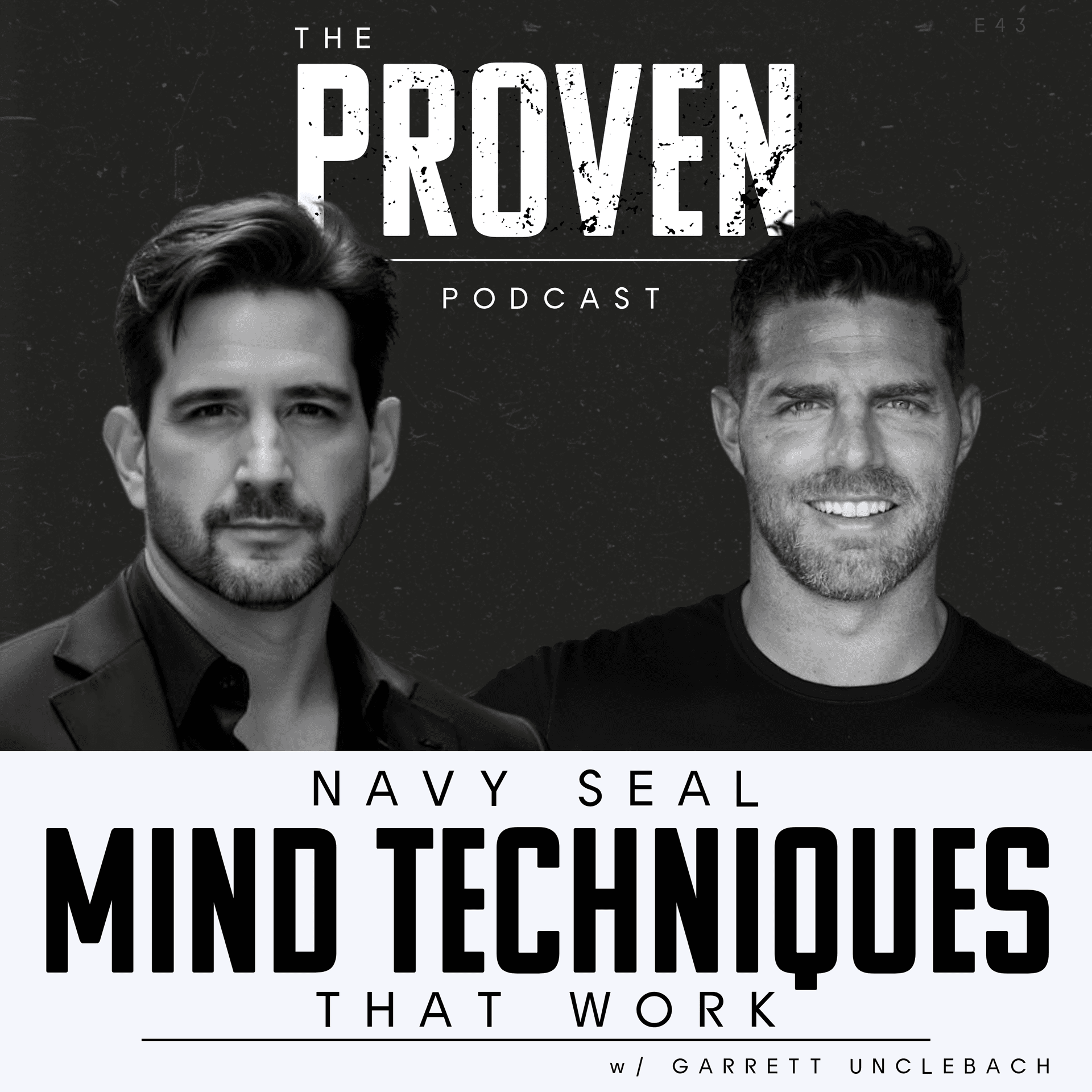
Navy SEAL Mind Techniques That Work - Garrett Unclebach Episode Description In this episode, Charles interviews Garrett Unclebach, a former Navy SEAL who shares his insights into mental mastery and leadership, drawing from his military experience and business success. Garrett discusses the importance of purpose, the techniques to maintain composure under pressure, and the philosophy behind sustained success.
---
Key Themes and Concepts
- Purpose vs. Motivation
- Purpose: Garrett emphasizes the significance of having a deeper purpose rather than relying solely on motivation, which can be fleeting.
- Infinite Potential Unlock: A belief instilled in Garrett from a young age that one has a purpose and potential, propelling him through challenges like SEAL training.
- The SEAL Big Four Techniques
Garrett introduces four mental techniques that help in overcoming extreme challenges:
- Breath Work: Essential for maintaining calm and clarity during stressful situations.
- Visualization: Creating a detailed mental picture of success boosts confidence and performance.
- Segmentation: Breaking tasks into manageable parts to avoid feeling overwhelmed.
- Self-Talk: Positive verbal affirmations to counter negative thoughts, particularly during high-pressure scenarios.
- Equanimity in Leadership
- Leaders should maintain a balanced mindset regardless of external pressures.
- The discussion emphasizes that leadership is about influencing and inspiring others, not just exercising authority.
- Strength and Warmth
- Effective leaders embody both strength (capability) and warmth (care for their team).
- Authentic leadership involves demonstrating genuine concern for team members and the mission.
- Resilience and the Importance of Preparation
- Resilience is built through preparation and mental rehearsals for challenges.
- Garrett shares personal experiences from SEAL training that illustrate the power of mindset in overcoming adversity.
---
Key Takeaways
- Mastering Mental Techniques: To thrive under pressure, individuals should practice the SEAL Big Four techniques.
- The Role of Purpose: A strong sense of purpose can drive one to achieve extraordinary results.
- Leadership Dynamics: Successful leaders are those who can inspire others through strength and warmth.
- Preparation for Challenges: Mental preparation is crucial for addressing tough situations effectively.
- Self-Talk and Visualization: Utilizing positive self-talk and visualization can significantly improve performance.
---
Notable Quotes
- "Running towards purpose is an infinite path."
- "The hardest battles aren't fought with weapons, they're won by mastering yourself first."
- "You can have anything you want in life if you're willing to pay the price for it."
---
Conclusion Garrett Unclebach’s insights provide a powerful framework for personal development and leadership. By focusing on mental mastery and the pursuit of a purpose greater than oneself, individuals can unlock their infinite potential and navigate life's challenges with resilience and clarity.
---
Further Resources
- For more insights and actionable steps, visit [Proven Podcast](https://provenpodcast.com/) to download the companion guide for this episode.
- Connect with Garrett Unclebach on social media or through his podcast, The Impossible Life, for additional content on leadership and personal growth.
```
Written by AI. May contain mistakes. Listen to the episode to check what was said.
Transcript
Automatic transcript. May contain errors.0:00Welcome to the Proven Podcast, where it does not matter what you think, only what you can prove. Everyone thinks leadership is about giving orders and expecting results. Today's guest, Garrett Unkelbach, proves that's exactly why most leaders fail. This Navy SEAL cracked the code on purpose-driven leadership, proving that real authority comes from demonstrating both strength and genuine care. The show starts now. All right, everybody. Welcome back to the show. I am really excited about this one. This is an individual who's coming on who builds men. And he talks about purpose and can really change your life and has done things that I could only dream of.
0:33So first and foremost, welcome to the show. Oh, Charles, I'm honored. Thank you for having me. Appreciate that, uh, that intro. Um, you know, I was built by a great man. People, a lot of people look at me and they go like, oh, you know, Navy SEAL. Wow. Right. That's so impressive. And one of the first things I like to remind people of, whether it's on a podcast or I'm in front of a small audience or a large audience, and I'll tell them, I said, look, the things that you think of me as a Navy SEAL has nothing to do with me. Right. Yes, I did go through their program, of course, but the reputation that the SEALs have, they had it before I ever got there.
1:07Right. And all I get to do is help uphold that. I get to be a part of it. Really, what do you think of Navy SEALs? I didn't make that reputation, but I do get to walk in it. And I take that as a it's a weight. One of my instructors early on, you know, in SEAL training, he pulled me to the side, pulled a few of us to the side. and one of the things they would always start kind of all of these like mentorship talks with is they would preface with in the unlikely event you make it through training because they're talking which is like a great way to start every conversation they would say in the unlikely event that you make it through training and then they'll give you some wisdom right wisdom for the SEAL teams and he said for the rest of your life this will be a curse right that you that you're a SEAL and he didn't mean that in like a negative way a curse usually like implies a negative thing what he meant was you'll carry this for the rest of your life.
1:54And wherever you go, people will compare themselves to you. People will count it as a great victory if they can just beat you in a game of ping pong. I say that to say, I know where I've come from and I know what's built me. The SEAL teams helped built me and having a great father in my life who spoke into me, who cared for me, who was consistent, who took me everywhere that he went, has helped shaped me into who I am. And so one of the things I'm so passionate about is helping men become not not just men, but be great men. I got the opportunity to do that mentoring students going into the SEAL program.
2:26And now I do that with guys today, helping them deploy into life in their greatest capacity. I love that you, you bring that humility as your forefront. You know, we talked about, you know, when we talked about private leagues, whenever we connect with people, we always have an intro call and we talk. And I think you and I had one of the longer calls I had. And I remember we, we chatted about, um, you know, being the last person to pick up the sword. That is like, listen, I don't, I don't want to fight. And every person I've ever known who's an operator, um, who's ever served is always like, listen, please do everything possible.
2:54Do everything possible. So you don't send me my, my brothers don't make me pick up the sword. Cause if I do, I'm going to wreck some shit, but big fan of Teddy Roosevelt's foreign policy. Yes. Big fan of Teddy Roosevelt, period. It's arguably my favorite president. It's between him and Lincoln. But one of the things that, that helps you do that. And we talked about a lot was purpose. And I think you define purpose in a way, and you do it really well on your podcast as well. you talk about purpose in a way that is different than what I've heard other people do this. And these are things, and one of the reasons I wanted to talk to you was the fact that these aren't ideas.
3:26These aren't concepts. These have been proven where nothing else matters. And, you know, one of the examples I give to that is there's an individual named Chris Voss. He's the former head of the FBI's hostage negotiation team. Yeah. Yeah. And Chris is a great guy. And we talked about negotiation and I was learning negotiation at the time at Harvard and I was learning negotiating at the same time from Chris. And I was like, I'm going to go with Chris. And I remember the professor was like, why are you refuting what I'm talking about? And I was like, well, if your negotiation tactics don't work where they were born, maybe I don't get 5 % on the deal.
3:57Maybe I'm off. If his don't work, someone dies. So I'm going to go with that. So a lot of what you were taught has been proven where if this doesn't work, someone doesn't come home. Right. So having these, this proven way of doing things, especially when it talks of purpose, is huge. And it's one of the major reasons I want to bring you on. So if you could, could you kind of describe how you entail purpose and where it comes from? Yes. Well, one of the things that's going to have a big influence, you know, I love this understanding that we're both a physical and a spiritual creature. And, you know, if you haven't experienced that in your life, you're, there's an encounter coming for you where you'll begin to figure that out where we're more than just a piece of flesh.
4:36And so that's something that you have to wrestle with. And people put different terms and different meanings and different beliefs behind that. But your beliefs are going to shape your life greatly. And there's a nature, there's a part of the world that we can put clear terms on, that we can call science, that we can call fact. And there's also things that we can't really explain. We still struggle to explain how the brain works. We still struggle to fully explain how gravity works. So there's things that we know and there's things that we don't. And what you believe about the things that you can't call certain is going to have a massive impact on your life.
5:08My personal definition for beliefs is the things that you know are true, but can't prove, right? And I mean, prove in a scientific sense, right? Verifiable, demonstratable, repeatable. There's things that you can scientifically prove and there's things that you can't scientifically prove. I would say one of them is some people believe themselves to be lucky, right? And this is beliefs inform your perspective and perspective is going to shape your life. You may believe yourself to be lucky. You may not believe yourself to be lucky. There's some evidence that you can put around that, but you can't necessarily frame it specifically.
5:45And for my own life, one of the beliefs that I've had, and this is something that my parents said to me all the time as a little kid, you know, and this is just a great little nugget for you if you have kids, is you have a great ability to influence them by the things that you repeatedly say. I can go back and look at my dad. I can look at some coaches, some men who helped shape my life and I can kind of like put them in a box of five or ten quotes that they said all the time and so if you have little kids you know there were things that my dad said when I was five years old and it didn't mean anything to a five-year-old I couldn't comprehend the sentence he was telling me but he said the same thing from when I was five until I was 25 and when I was 25 thinking I've been hearing this for 20 years I've seen it be consistent in his life and now it's showing up consistent in mine it starts to have a little bit more impact So one of the great things you can do in your children is plant those seeds in them.
6:34One of the things that I heard all the time growing up is two things, right? And I call this the infinite potential unlock. This is what propelled me through the SEAL teams. This is what pushed me into some of the new areas I'm in today. And it's two beliefs, right? Remember, beliefs are things that you know are true, but can't prove. And beliefs are going to shape your life. Number one belief, my parents would say it to me all the time. They'd say God has a plan for your life, right? Meaning that like, there's a reason that I'm alive. I may not know what it is, but there is a reason. There's something that you're supposed to do.
7:05And that purpose informs like a sense of duty. I like the way Charlie Kirk says it. He says, there is a God and it's not you. The way I would say it is, you have a purpose and the purpose isn't about you, but there is a purpose that you have. And so if you kind of grow up thinking that way, it almost sends you on somewhat of the hero's journey of like, man, there's something that I'm supposed to do. There's a part that i'm supposed to play. There's people that i'm supposed to serve I don't know what it is So I should develop myself to prepare for this moment One of my favorite abraham lincoln quotes is I will prepare and my time will come Lincoln knew there was a purpose on his life.
7:41He didn't know what it was He knew he was supposed to be great. And so he prepared for us That's the first thing my parents would say to me all the time God is a great plan for your life The second thing they would say to me is you can have anything you want in life If you're willing to pay the price for it And some people may not say that's true. I, um, I wrote a paper in high school about a quote that shaped my life. Uh, Henry Ford said, whether you think you can, or you think you can't, you're right. That's a belief. And I wrote my, uh, I didn't, I didn't do well in school because I always ended up arguing with my teachers.
8:12And I wrote a paper my senior year in high school about that quote. And my teacher said, uh, that's not true. And I said, you're right. It's all I can, it's all I can say to her. I said, you're right. because if you don't believe that, it's not true for you. For me, I accepted that. And I said, this is true. I can have anything I want in life if I'm willing to pay the price for it. Like Henry Ford says, I think I can, right? So I'm gonna go down that road. And when you put those things together that I have purpose and that I have potential, right? You're not owed anything. No one's gonna give you anything, but you have potential.
8:42When you know you have purpose and you know you have potential, you become infinitely capable to go out and do what you've been put on the earth to do with the understanding that, hey, it's not about me. right i think you know it goes back to the idea that there's a bunch of people go out there and what you say matters and some of us have been given the gift of faith some of us have not so it's always fun to have this conversation where it intertwined with each other but if i sat down and i said hey i can't lose weight i can't lose weight i can't lose weight i can't lose weight and then you try and go why can't i lose weight i'm like well your belief is that you can't lose weight if you're like i can't stop smoking i can't stop smoking i can't stop smoking if you keep saying that over and over again your beliefs as you said multiple times influence your life one of the things that is is ridiculously impressive for what i know of your community is the ability to embrace the suck to somehow push through that and when you're doing these exercises especially because the seals are known for this and this is a burden as you said you carry so everyone's like how do you do this how do you continue to make it through each one of these evolutions and how do you make it through hell week and how do you make it through phase one and phase two and phase three when your body has completely given up when it's just it's not you're running on fumes.
9:48I think it's the biggest question I always get because I've done it on a much, much smaller level. I will never compare myself to anyone who's ever been an operator, especially for the United States. That is a different evolution of humanity. And I'm just, I'm not, I haven't, that's not me. I ain't got that. But I've done triathlons and I'm just being honest. I don't got that. I've been to Coronado. I put my feet in the water. I'm like, nope, let me go back to the hotel. So it's a lot of people that, Oh, that water is cold. And I ice bath almost every day. So in this narrative, when you're, when you're doing this and you know, when I'm a, so I do triathlons and I understand that after I get off the bike, it's purely a mental game at that point.
10:25And you just play a juggle. You're just juggling around different games and you're doing different things. You're distracting your mind. And there are times during the run. Cause for anybody who doesn't know triathlons, you go swim, bike, run. That's just, it is what it is. The swim fries your upper body, the bike fries your lower body. And then your run it's just pure mental at that point, no matter what the distance is. When you're going to push through that, because the ability to have mental mastery is so important when you're doing that, when you train people and when you've done it yourself, what are some of the tactical ways that you've done it?
10:56What are the practical ways that you're going to into this and say, I need to push through this. How do you handle those mental games? Yeah. Great, great question. There's a lot of stuff for us to jump off into that. One, you know, people ask all the time, they're asking hey what's this especially related to seal training you know people ask me about hard things or the or i have a lot of we call them tadpoles right you want to become a frog man it's a colloquialism for a navy seal you want to become a frog man so we call these guys tadpoles tadpoles wannabe frogmen a lot of tadpoles they'll ask me they'll say like man what's the secret what's the secret to buds and if you're asking what the secret is you're asking for the hack you're asking how could it not be hard, right?
11:33What do I need to do to, so that I can do it? Um, and so really this relates to like anything that you'll do hard in life. Most people aren't going to try to go through SEAL training, but everyone I know has been put up against something that's very challenging for them. So let me, I will talk through some of the symbols and then I will talk through some of like my favorite part. And I think some of your favorite part too, Charles is really some of like the philosophy and the thinking behind doing these things. Well, for one, um, every single person that I saw quit in SEAL, like in Hell Week, specifically in Hell Week, but more so in SEAL training was that there was a common denominator.
12:08Because of the way I grew up and some of the people I grew up around, like I was questioning people in my class, like, hey, why are you thinking this way? Like, what's helping you prepare for this? And they would just sort of like, what the heck are you talking about? A lot of these things I studied and questioned as I was going through, but I saw a great common denominator in people who completed training and people who did not. get through hell week, which is like the hardest part of SEAL training, just really quick. Like it starts on Sunday, goes all the way till Friday. So you're going to be awake for five and a half days.
12:37You'll sleep a maximum of two hours in that five and a half days. You'll run over 200 miles. Most of that with a boat on your head, wearing a full uniform on the beach. It's, it's tough, right? Go watch the Buds Class 234 Discovery Channel documentary if you want to see more about that. But anyways, people get through this, the hardest week in military training, and you ask them why they made it. How did you do it? How did you get through the toughest week of military training? And the people who made it, they'll begin to tell you a story about something that's not them. He'll tell you about his mom.
13:08He'll tell you about somebody in his boat crew. I talked about my dad. All of them will begin to tell you some story that's not them. Talk to the people who quit. People who quit. All of their answers I could summarize into this statement. I just decided I don't want to do this anymore. right i think we said it when we were having our previous conversation you talked about hey if anybody comes to you and they ask for the hack you're like yeah you're not gonna make it well and because here's what you're trying to do right or people will ask how hard is it and when you're asking how hard is it you're trying to estimate the difficulty level and then makes it make an approximation that based upon what you say the difficulty level is and based upon how strong i think I am, I need certainty that I could make it through this program, right?
13:58If it's hard, you know, just put it on a scale for a second. I know I can do a seven out of 10 difficulty. So as long as you tell me it's a seven or less, I know I can do it. And when you're trying to estimate how hard it is and you want that, the answer to that, you are determining there's a point when, which I will quit. Right. Right. Whether it's getting through pregnancy, whether it's launching a business or it's going through SEAL training. If you predetermine there's a point that it would be so hard I would walk away, there's a high likelihood that you will walk away. The other way to step into difficult things is you say, like, this is what I went into the program with.
14:33I feel like I'm supposed to be here and I know it's possible, right? I'm not Edmund Hillary trying to be the first person to climb Everest and wondering, is it even humanly possible? What I knew prior to me going through SEAL training is that there's a few thousand men who've done this before. So it can be done. The only question is, am I willing to pay the price? And if you have something that gives you that fuel to say, especially more than yourself, right? Money is, and this is where I kind of talk about purpose and we'll transition to that a little bit is like, what is that fuel for you? What's driving you?
15:09Hey, Zig Ziglar said, money's not the most important thing and it's, but it's second only to oxygen. You know what money is? Money is important, but there are things that are more important than that. And no one's willing to die for money. And my friend, Charlie Keating, behind me died May 3rd, 2016, gave his life for this country and did so with a smile on his face. He didn't do that. And he didn't have a smile about it because of the$400 ,000 death benefit his brand new wife was going to receive. He did it because he believed in something that was more important than himself. And so in the same way, right, if you want to go far in life, if you want to do really difficult things, you've got to attach the journey that you're on to something that's sacrificially meaningful, right?
15:52We're all gonna die. Most of us won't die from a bullet, but all of us will die for something. You will have lived your life on a journey. And what you have to answer, hopefully now, and not at the end of your life, was my journey a journey worth giving my life to, right? And the thing that I don't think anybody's willing to die for is money. Hey, we'd all like to make more money, but no one's willing to die for that. There are things in life that you would say, this is actually a thing that's worth dying for. And so you'll go far in life when you're chasing after purpose. You will limit your ability to go in life when you are either running from pain or running towards pleasure, right?
16:30Both of those are short loops, but running towards purpose is an infinite path. Correct. And there's so many of us that are driven by fear. And there's so many driven by, I don't want to be in pain or I don't want to, and that's a normal loop, especially in our society. And you can make a lot of progress that way. You absolutely can. But pain, I was talking about this before, pain won't sustain you. When I, when I was pitching as a kid, I would listen to Rage Against the Machine and I would sit there and I would vibrate because I was 16 years old, listening to Rage Against the Machine, vibrating on the mound to throw a ball.
16:55And it worked out great. And I was like, Hey, I'm going to use this fuel source to go now take a social studies test. I didn't, I didn't work so well. It's just different, different fuel sources and different things. And I laugh at the saying of breakups make bodybuilders. Right. And it's, it's true, right? Like guys break up with a girl and they become bodybuilders. And I've known a few that they became a bodybuilder and they went three or four years down that journey and then said, well, wait, why am I even doing? I got on this journey because I broke up with that girl who has nothing to do with my life anymore.
17:25I just gave four years of my life to something that was really just felt good because I was making progress. But this wasn't the journey I wanted to be on. Correct. And there's a lot of people I know on my side of the world have become multimillionaires or even billionaires who are miserable. absolutely miserable because they were serving something that wasn't their truth in any way, shape or form. And most people don't know what their truth is because to your point, they're running away from pain, right? They're running towards pleasure, whatever it is, whatever that dopamine fix is, be it your little iPad playing video games or stuff and stuff up your nose or drinking or chemical induced, whatever it is, that is going to burn you out.
18:01You're going to crash into a wall, no matter which side you're on. So if someone's sitting there right now going, okay, these are two individuals that have a certain level of success and they've worked with individuals who have had an immense amount of success and have done hard things. What are the kind of the tactical steps that you walk through and you say, Hey, I understand where you are now. You've been through this before. Cause a lot of people come to you. A lot of people come on your podcast and they've done coaching with you. And it's okay. I clearly have been spending my entire life running away from pain or running towards pleasure or trying to serve my own needs and be all about me.
18:31I have no clue what my truth is. Um, which I think, you know, you would call purpose. What my truth is. I really don't know who I am as a whole outside of this person who runs away from pain or whatever it is, if they weren't blessed with a parent lottery where you had an amazing father, what do you, how do you walk them through that to say, okay, I've reached this awareness. How do I do this? How do I start pivoting my life and who I am as a being and pivoting my purpose so that I can start living the rest of my life as the best of my life? So, um, I'm going to talk about, I'm going to answer that question and I'm not going to answer it maybe the way that you want me to answer it, Charles, but I promise it's, it'll be beneficial for every audience member.
19:10I'm gonna talk about two pieces that come from scripture, but you don't have to believe in scripture to see the truth in this, right? Because here's where I think purpose really comes from. The way that I see it is God made us with a purpose, but if you are into scripture, you'll be like, well, hold on a second. It says I have a purpose, but it doesn't say anywhere in here what mine is. Why isn't he telling me, okay, if I believe in God, why isn't he telling me what my purpose is? Why did he put me in this place and didn't tell me what it is. And that's because really the greatness of life is discovering that.
19:42And I don't think scripture or life leaves us blank on what those things are. It's where multiple things that we have come together. And I'll talk about two things that I think will guide you into your purpose. Number one is what's in your heart, right? This is real, like the heart is, you know, in a biblical sense, the heart is the desire center, right? Where your treasure is there, your heart will be also. The things that you desire is the type of life that you're going to get, right? If what you care about most is relationships, that's the types of problems you're going to have, right? Out of the heart flow the issues of life.
20:14If you like those things, you're going to get those kinds of problems. If you chase money, you're going to get money problems, right? But whatever kind of things are in your heart, that's one thing that'll guide you. The other thing, I'll come back to that in a second. The other thing that's going to guide you is what's in your hand. What are the resources that you've been given? You may have wanted to be, you know, an NBA player, but if you're five foot one, maybe you're supposed to take that desire to be an NBA player and do something else with it. It was a part of where it was taking you, but maybe you didn't get the resources for that.
20:43What you and I both know, Charles, is that life isn't fair, right? Some people get given more than other people. But I think what makes life beautiful is when you realize, um, it's, I'm supposed to play my part. I re one of the greatest, uh, conductors I'm, I'm blanking on his name. Cause it's a German name that's hard to remember. And he says, someone asked him, what's the hardest position to fill in the orchestra? And he said, second chair. He said, everybody wants to be number one, but it's hard. And everyone knows who number three and four are. You know, you're a number three, but the hardest position to fill is the second chair.
21:18And, but what, what I mean, what I'm getting at is I think the greatness in life is finding the place where it's like, this is exactly where I'm supposed to be. No one else can do what I'm doing. And so I think where that comes from is unique desires in your heart and the things that are in your hand. It's an interesting, uh, biblical story where God asked Moses a question. And if God's asking you a question or the universe is asking you a question, it's not because he needs the answer. He's, he's knocking on your forehead saying, Hey dummy, this question's for you. So when it comes to those questions, I think, you know, people really want to know if they have the gift of faith or not, if they're, if they're Judeo Christian or if they're not in that, that ball game.
21:59Um, they, I think people will regrettably, they're looking for hacks. They're looking for a place to start. Some people are not coming from a place of, I want to cheat the system. They're coming from a place of being lost in the wilderness going, you know, I was educated in a system that is faulty at best is the nicest way I could say it. what are some of the things that someone sits down and say, Hey, you know, I, I'm going to journal this stuff out. I'm going to start climbing this. I'm going to start eating this elephant, which is done one bite at a time. What are some of the questions that you, you ask yourself and you say, okay, well, what is in my heart?
22:32Because, you know, you talked about it earlier. I'm six foot two Oh two, two Oh three and size 13 feet as a white kid. I am not dunking a basketball. It's not happening. I wanted to be an Ironman. I've got, you know, 17 inch calves. Can't run with those things. It'll blow out my leg. I'll never finish the Ironman. It just, it is what it is. That's what I got. So when the people come in and it's, okay, this is the guards I was dealt, which I think, and I think you could, you could speak to this. We far underestimate our capacity as human beings, but just, we have no idea. I think most people die with a full tank because they never really tap into anything.
23:08And even the stuff I've done, I still think I've got a 95 % full tank, even with everything I've accomplished. I barely touched my capacity. So when people are looking at this going, okay, these are my cards, you know, because life's an equation, there's constants and there's variables. I know what my constants are. I am this, I am this, I am this, I am this. Those I cannot change because those are constants. Everything else is variable. What are some of the ways and the questions when you sit down and you journal or you sit down and you work with your clients and you sit down and you work with the people that you've had the blessing to instruct?
Read the full transcript
23:39What are some of the things, what are the processes that you walk them through in that? Um, so you just mentioned one of the beliefs that you and I both share, right? You're saying, Hey, I got 95 % more in the tank. And that's because Charles shares the belief that I do, um, that I can have anything I want as long as I'm willing to pay the price for it. Really? That that's what Carol Dweck would call a growth mindset. And I had a master chief in the Navy who told me all complicated problems are just a bunch of simple problems put together. and but until you get great at the simple problems complicated problems will always seem complex to you when you get really great at simple problems you just go oh this is problem a c and f and i know how to solve all of those individually it just looks funky when you put them together right so what the journey that that you and i both go on is us having to decide what one what is it that i want right where if you can't tell me what you want i can't help you get anywhere that you want to go.
24:35Right. But if you'll decide this is what I want and I don't really know what I'm capable of, but I know I'm willing to pay whatever price is required for me. Yes. That, that pivot right there is, it's so important. And this, I, this is why I'm interrupting you. I don't care what people want. What are you willing to do? Like I want to lose, right? Cool. Are you willing to go to the gym three times a day? No, I don't want to hear about it. Yeah. The coaching question, the start of a progress is what do you want? But in parentheses, What do you want that you're willing to pay the price for? A hundred percent.
25:03And that goes back to the things that you believe. You can have whatever you want if you're willing to pay the price. And I think a lot of people don't understand what it really means to sacrifice and deal with that temporary inconvenience because we ban the word problems in my world. Not a lot of call them problems. They're temporary inconveniences. You'll get through it. But when you go through that, knowing who you are and what your truth is, do I have the capacity in my core and my being, if I went back when I was 20 years old to do and become what you guys and what your, your brothers did maybe, but it's not my truth.
25:36And anyway, here's where you'll, here's where you'll fail in your journey is have a transactional. And this is, you know, whether you believe in God or not, faith shows up in this because when you have a transactional relationship with success, you'll never get there. You have a transactional is I will only do this. If I get this back, if this is, if this is guaranteed to return to me, Right. When you have a purpose, when you're going after something that leads you, that prepares in you a lifestyle, a philosophy, a mindset that you would live sacrificially, what you can do is potentially get massive big bet outcomes in your life because you decided whether I win or lose, this is a pursuit worth following.
26:18Right. And when you live in that way, only then will you reach some of these mountaintops that people aspire to. You'll never get to those great places with a transactional mindset So you're gonna have to say this is the thing that i'm willing to give it all to I hope I win, but even if I lose this was the right thing for me to pursue And it's part of the process. We talk about this all the time You know, you you've got little ones and I you know When your little one was first learning how to walk and it fell down for the fifth time You're like nope, that's it. I'm just gonna put in a wheelchair Of course not you actually said all right.
26:49Well you keep going keep going But our school system says hey you failed you are a failure when we're learning how to walk we just keep going and going and going and going as an entrepreneur as the person i've become in my life i've had a wall of failures and the only reason i've succeeded is because i failed i cannot succeed my way to success i can only fail my way to success every day i go to the gym i have fail 100 i fail it just it is what it is i try to my mate my form isn't proper or this isn't or i didn't stretch out it's part of the process is to fail your way to success. And as long as to your point of not being transactional, it's important.
27:23So I always try and get people to identify their truth for you. I think truth and purpose are very similar for you. I think we're, we're using those interchangeably. How do you get people to towards that purpose to find out what's truly in their heart? So what purpose, when you get a purpose, that's what shifts your perspective, right? Perfect purpose and beliefs and truth, these things all connect, but eventually it's like, right. The way that you think turns into the way that you act. And so we, okay, so we shift some thinking, we've got to shift some action. And let me talk about perspective for a second.
27:56Um, really the question of your life is not like, what does everyone else see? The question is, what do you see? When I was going through SEAL training, I was one of the, I was one of only two in my class and are 20 years old. Most people are 24 or 25. I went through at 19. I was also, I thought I was an athlete until I met one. Um, Then I got there and I was like, oh, those are athletes, not me. I'm not. I was a high school athlete. Bunch of the guys in my class were all NCAA athletes. So where that left me was bottom third of my class athletically, one of the youngest people in the class. So you know what that meant?
28:29When we did peer reviews, peer rankings, I was always in the bottom third of my class. I was not as mature as everyone else was. And I had a lot of people tell me from my recruiter getting into the Navy to bootcamp, to my first instructors, to my roommates, they all said, Uncle Bach, you have no chance here. How did you end up in this place? And so all throughout my journey, I'm continuing to hear this. But I'm remembering some of the things that my dad said. Now, what they're saying is true. I was bottom third of the class. It's a fact, right? And so they have evidence in their sayings of you don't belong here.
29:03I'm relying on some other things that I believe that are also true that maybe they don't see. We get to, we get later on in the program and we're before hell week. We're about to go into hell week. Now, let me back up for just a second. When we had first gotten to San Diego, which is where SEAL training happens, I got to see a class who had just finished hell week, right? So it's like, you're, you're like, man, these are the guys, they did it. And this whole class of guys who just finished hell week, they could, they looked like a bunch of zombies. Uh, some of them, their heads are swollen up.
29:32Some of them, you know, their fingers are literally two or three times the size. They can't hardly walk the inside of their legs and their waist is chafed, looks like hamburger meat. They're on crutches. They're coughing up blood out of their lungs. They all look like they've been, you know, run over by an 18 wheeler and then the 18 wheeler backed up and ran them over again. That's what the whole class looked like. And I remember seeing that for the first time, this was the thought that I had, Charles. I said, I'm going to finish this program, but I won't look like that when I do it. And I began to visualize for myself what completing this, what completing hell week looked like and how I would look when I finished, not just visualizing success, but visualizing the entire picture.
30:11And so fast forward, I've been getting all of this discouragement. And now we're on Sunday night, we're about to start hell week. And the guys start asking each other, Hey, do you think you'll make it? Do you think you'll make it? Everyone's asking each other. At this point, I didn't really talk very much because when you're not popular, it's best for you to just stay quiet. Right. But my, my classmates or my, my boat crewmates, the guys, I'm about to go through hell week, they ask me, uncle Bach, what do you think? I said, I don't think I'll make it. I know I'll make it. And when we finish next Friday, um, when everyone else is busted.
30:43And then when we go to med checks on Saturday and people are on crutches and coughing up lungs, I'm going to go for a run by myself on the beach on Saturday. It's what I said to all of my classmates. And they're like, okay, whatever. Well, fast forward, that was, that is what happened, right? I completed hell week. And then on Saturday I was perfectly fine. I didn't even have any chafe on my body, believe it or not, Charles. Okay. So I need to ask you how you did that. Cause I, cause I know what sugar. So for those who don't know sugar cooking, sugar cooking is very simple. Actually, you know what?
31:12You're the seal. You explained getting what it means to be sugar cookie. Yeah. Sugar cook like, uh, instructors don't really call it that very much, but that is what they say to that. They did. The instructors say wet and sandy, but that's essentially what a sugar cookie is, they want you, the sand in Coronado has gold flakes in it. So it kind of turns you into a snickerdoodle cookie. What they want you to do is get wet completely, not one dry part on your body, and then cover your entire body in sand. Not that there's sand on your clothes that the instructors say, I don't want to see your skin or your uniform.
31:45If I can see your uniform or I can see skin, you're wrong, right? So we get really good at this through lots of repetition. So how did you not chafe when they turned every aspect of your body into sandpaper? I don't have, I honestly don't have an answer for that. I have no practical guide for how I didn't chafe. I can just tell you. I was like, I don't know how you did that. Cause even on some tries that I've done, I chafe. I'm like, how the hell is he doing that? That was pretty selfish. I didn't chafe in hell week. And on Saturday after med checks, I went for a run by myself on the beach and I ran down to the rocks in front of, and I got, you know, it's about a mile down there to the rocks in front of the dell from the base.
32:23I ran down there and stopped, you know, to sit for a minute, climb up on the rocks in front of the dell. And I sat there, Charles, and I realized it didn't really matter what anybody else saw. It mattered what I see. Right. And so really, one of my favorite stories in the Bible of, you know, this is history of when the Israelites come out, God takes the Israelites out of Egypt, takes them to the edge of the promised land. It's a great story, right? Takes them, hey, I'll bring you out of slavery and I'll bring you to the edge of the place that's your destiny. It's the promised land. And so through all of that journey from slavery to the edge of the promised land, God does everything, performs every miracle.
33:00But then he says, okay, it's time for you to go on the promised land. You go and take it. And what's really interesting is at the beginning of this journey, spies go into the promised land and then they come back. 10 of the 12 spies gave a report. Hey, the land's beautiful. It's wonderful, but there's giants there, right? I don't know how we could take it. Only two men said, this is the land. This is for us. And that 10 convinced 600 ,000 other Israelite men that, Hey, I don't, I don't know how we could take this land. Thus 40 years of lapse in the desert. And so fast, again, it's a very great, it's a great story.
33:39Fast forward 40 years later, the only two men who left Egypt that are still alive are the two spies who had said, this is our land. And now they're talking to the sons of all the men who left Egypt, who died, who left the slave mindset behind. And they said, here's what it's going to take for you to go into the promised land, to be strong and courageous, right? You're going to have to look at your situation and say, we can do this. The question isn't what is the reality? The question is, what do you see in your reality? So your reality has been one side of it's been a seal. you now have transitioned over and you've done other things you've gotten into business you've become very successful in business could you share some of your stuff on what you've done i know you've done some amazing speaking as well can you share a little bit with the audience of what that looks like yeah so um when i left the military i worked for i did one job my dad told me he says you're gonna says you're gonna you're gonna figure out really quickly you just want to work for yourself, um, which I did.
34:36It was a fantastic journey. Got to help, uh, do the it portion of a billion dollar divestiture, did that. And then transition, they, I'm about to sign up for round two. And I realized I had a lot more value than what they were paying me. And I had that conversation with them. And I came to the realization that many entrepreneurs have to come to, it wasn't that they weren't telling me that you're not worth more. What they were saying was that's that they didn't help me understand this. My framing the situation helped me understand this. They weren't saying I wasn't worth more. They said the role that you're in isn't worth anymore.
35:08Right. We only pay the role this much and I can put someone else in the role. They weren't defining my value. They were defining the role's value. And what I realized was I had greater value than the role. And so what I said was if I'm, and this is what I said to myself, if you're worth it, then prove it. Right. Right. If you're really worth it, you're worth it. So go prove it. And so thus I went on a entrepreneurial journey, done a few different things, started off with a ax throwing mobile trailer at the same time as getting into just trying all the things I could try, got into real estate development and construction, have loved that.
35:45At the same time as I was doing construction and real estate development, I was doing coaching and speaking specifically around leadership and teamwork, get to work with people like Oracle today, on those topics. And then today I'm also, I lead a large, uh, men's movement in Frisco, Texas. We have over 400 guys that meet every Saturday. And today I'm also involved in a defense tech company, uh, where we're changing what the future looks like in the manufacturing room. So you went in and you say, Hey, I know my worth and I know my value, but you also had a belief system because there's a lot of people who don't want to leave that certainty of a paycheck.
36:22This is why we call them wage slaves or you call them the golden handcuffs because it's a tough thing to do. It's a tough thing to take that leap of faith. But when I sat down and I was taught, you're never going to retire. You're never gonna have the life you want working for someone else. That was a really hard thing for me to listen to and have. I want people to have some mercy for themselves if you've had that thought that, you know, you're stuck in the wage slave mode because some of my peers, guys who lead the SEAL teams who are willing to run into machine gun fire. I've watched them get out and they fall victim to the same thing.
36:57Money has a great level of control on the way that we think. And if you can separate the way that you think from money, you'll free yourself. I had to help some of my peers see this. I'm like, dude, you are not afraid to die. You've proven that. But you're acting like if your bank account hits 0.00 for one second that you will die instantly. I'm like, bro, you can lose all of your money. You could lose it all. And I promise your family will still eat. And I promise you'll still be safe because I know what type of man you are. He'll figure it out. And yeah, your worth as a human being isn't dictated by your bank account.
37:37That's it. It's not how it works. And there's individuals who believe, Hey, I have X, Y, Z balance in my bank account. Therefore I'm worth this. And it's, it's not, it's, it's not in any way, shape or form. So if it's not true for them, that they are this elite ooh-la-la because they're billionaires, then the opposite must be true as well. Worth has nothing to do with money. Money, I tell people all the time, it's an amplifier. It's very much like alcohol. If you're a really funny guy and you drink a bunch of alcohol, you're probably going to be a really funny guy drinking when you get drunk. If you're a putz or a schmuck before you drink alcohol, you're just going to be a bigger schmuck.
38:10Same thing with money. It's an amplifier. That's all it is. But getting over that fear factor, I think what I always tell entrepreneurs when they go around and they go, well, I'm an entrepreneur. I'm like, have you lost your first million yet? And they're like, no, I'm like, no, you're not an entrepreneur yet. Don't worry, you will. And then I get into rooms where I've had clients who are like, oh yeah, wait till you lose your first 8 million or your first 80 million. And we're like, oh yeah. And everyone's got these stories where they've lost just immense amount of wealth and it doesn't matter.
38:37It's a bit like having your bicycle stolen. It doesn't matter. You still know how to ride a bike. You'll just get a different bike. This is what it is. You get smarter through the process. You go and you purchase sustainable companies versus agencies or things of that nature. So you can scale it indefinitely outside of you. And you learn the systems and you learn operations and you learn human behavior. Those you learn along the way. You mentioned you worked with Oracle and you teach them leadership skills and you, and you go into that environment. What are some of the things that people go, okay, you know, I see his transition.
39:06I see how he went from as a kid and then his dad influenced him and then he became a seal and he uses those, that those things. And now we're into leadership going, okay, I'm in this role. how do I, I'm learning how to lead myself from what everything you told us in the first half, how do you start leading others? How do you still start showing up authentically to lead them? Yeah. One, let me talk about one of my favorite, uh, qualities that it's a team quality. It's leadership quality. Cause you said it, you've got to be able to lead yourself before you can lead other people. Um, it's from the Bible.
39:34It's also Jordan Peterson, one of his rules for life. Don't tell other people how to manage their household before you learn how to manage your own, right? It's a great rule for anywhere in life. And so if you can't lead yourself, you're not worthy of leading anybody else. And so let me, let me talk about like one of the first places that starts. It shows up in many ways. We could talk about fitness. I'll talk about for me, what I think is one of the most important leadership traits, one of the most important self-control traits, right? Is that you can govern your attitude. Your attitude is your response to what happens to you, right?
40:06It's not, no one assigns it. No one makes you act a certain way. People will say that you say, you're making me angry, right? My daughter, she's four years old and she loves the, she loves the inside out TV show with all the different characters of, I don't know if you know that show with joy and anger. Yeah, the movies. Yeah. Right. And so she'll say like, you're making me angry. And I, and I help her understand. I go, no, you're choosing to be angry. I may have done things that you don't like, but you choose. And that, this is one of those beliefs that you have to take on, that you get to choose your thoughts, your attitudes, your response to things.
40:38As Viktor Frankl said, between stimulus and response, there's a space. And in that space is your freedom, which is your ability to choose. And in the military, we called this equanimity, right? We didn't use a lot of$10 words in the military, but this was one of them, right? Equanimity, meaning it comes from two Latin words, meaning even soul or even mind, right? What that means for the military, what equanimity was is that you don't panic when you're getting shot at. It's a pretty important character trait for what I used to do. But what I like to help people understand is that you got to have equanimity.
41:14Doesn't matter what you do. Doesn't matter where you come from. And there's two pieces to equanimity. One side people see a lot of, which is the don't panic when you're getting shot at. Right. That's a big deal. Meaning like that you can sustain like great difficulty, that you can sustain despair and you that you're always going to be someone who is not a thermometer. Right. Where you tell the temperature, but where you're a thermostat, where you determine what the temperature is going to be. Things are going horrible in my life and it's not going to make me act a certain way. That's, that's the bottom side.
41:43I call it no pity parties. Literally, uh, believe it or not, this is a true story, Charles. When I was dating my wife before we were married, um, her father was away working and I was out of town on a training trip. And she calls me, she's living in California at the time. She calls me, she's living in California. She's pulled over on the wrong side of the highway in California, which is a dangerous place to be with a flat tire and she's crying, right? Telling me her situation. And I literally, I said like very quickly in this conversation, and you would think I wouldn't be married to this girl, but very quickly in this conversation, I said, stop crying.
42:20No amount of tears is going to change that flat tire. I'm going to help you. Because what I knew was the longer she sat there, yes, you know what? You, maybe you are worthy of crying in this situation, but crying is a risk to you. And what I cared more about than, right? Like you've got to be able to hurt your business partner's feelings. You got to be able to hurt your spouse's feelings sometimes. Other than that, you don't have a relationship. Relationship is your ability to walk in truth together, right? So I told my, I told, she wasn't my spouse at the time. I said, stop crying. I'm going to help you fix this.
42:51Because what I cared more about was not seeing my girlfriend, future wife get run over on the highway in California, right? So, Hey, we needed to stop crying because crying is going to impact our safety is going to impact our livelihood here. But there's the other side of equanimity. The other side of equanimity, Charlie Munger talks about this, the late Charlie Munger, so wise. He talked about to be a great investor, you've got to be able to govern your mindset. You've got to be able to govern your relationships, that you can sustain despair. But also, he said that you can sustain great success because success can influence you and manipulate you the same way that great despair can.
43:31And to be a leader means to like, if you're leading yourself, it means you're directing yourself. If success is leading you, if despair is leading you, you're no longer in charge. And so what you've got to be able to do is govern your emotions to have an even mind in any situation and then make decisions. And this sounds incredibly hard to do. And it is, uh, getting shot at and staying calm. It's not an easy thing to do, but it starts with believing that you can right so how do you how do you do that if you're in a situation where you are taking rounds and you're in you're being engaged and you're having that hurdle how do you sit there and recenter your emotions and say listen there's a time and a place to be panicked and there's a time and a place to be scared there's a time and a place to cry right now none of those things are going to get me through this i'll get to do that later how do you do that how do you actively because we've all had road rage how do you end up doing that?
44:23How do you find a way to pivot? You'll never, you'll never, uh, be ready for that battle. If you didn't prepare to be ready for that battle, I cannot show up with you on the battlefield untrained and coach you into survival. It's too late for you, right? You're going to, you're going to get whatever happens to you. What you've got to do is begin to prepare for every single one of these situations. The first time I got shot at, I had been there before. I hadn't actually been there before, but I had been there before because they had trained me and prepared me. I had mentally rehearsed when this happens, here's what I'm going to do.
44:57Everything in the military came down to like emergency procedures, right? Or EPs as we called them. When this happens, what do you do? Right? When my parachute malfunctioned, I didn't say like, oh my God, I'm going to die. I said, okay, I need to release this piece of equipment and deploy the next one. And so it's preparation that prepares you for those moments. And so it starts with, right? I've got to believe that I can, that I can govern myself, that I can govern my emotions. You won't do that perfectly, but you're 100 % capable in any situation you're in of governing yourself. And then you begin to train accordingly so that when these moments come, because there's two different types of, uh, men on the battlefield, Charles, there are the men who wish that the battle would never come for them.
45:39There's, there are people who are hoping that the dark side of the world never shows up at their door. And then there are the other men that prepare and prepare and prepare, hoping it's never going to come, but they're 100 % ready. And on the day that it does, you're like a 19 year old Spartan young man. If you, great book I love called Gates of Fire. It's historical fiction about the Spartans talks about their level of preparation and training. And when a 19 year old man stands on the battlefield for the first time, he's drooling because he says, I've waited my whole life for this moment to come.
46:15The moment where many people are pissing themselves, the most scared they've ever been in their life, a person's level of preparation brings them to the same moment and says, I've waited for this. My time has come. One of the, I think the, one of the best examples I've ever seen of anyone regulating their emotions, they're going through it and their toddler actually had a massive breakdown, screaming, yelling, just because they're toddlers and whatever it is, they're going to go through that. And he went into this mode where he was like, okay, I've got two choices. I can be either this type of dad or I can be this type of dad.
46:47And he went in and he did what's known as box breathing, which is four in, four and hold, four and out, four in, four and hold. It just, it's a routine. And he sat there and he got down to the kid's level and he just started breathing in front of the child. And the child's freaking was like, watch me breathe. And then all of a sudden his toddler started doing it and he started regulating and it got the breathing under control. And I've always learned that when I'm having, cause I live in South Florida. So I think it's a rule when you come into Florida, you tear up your license and you turn into Mad Max down here.
47:13Just, it is what it is. It's wild. And I used to respond in a very specific way when I was a teenager because I didn't know. And I remember I was outside of this very, very nice place. And I was talking to the valet and I was like, what is the one thing about the, that would surprise me? He goes, the amount of guns that are just sitting on the, the, the side seats that are just out there when you're driving around. I was like, are you serious? He's like, probably 90 % of the cars out here have guns. And I was like, okay, I need to approach my emotions now differently. When Susie cuts me off, all of a sudden I'm not going to go drive home and light her catfish on fire.
47:43I'm like, okay, I need to start regulating my things. Like, listen, it's not really that important. And I've started to learn how to do these type of breathings when you're doing it. You know, I'm a scuba diver. So we learned very quickly how to regulate your breath because sooner or later, you're going to see a shark. Sooner or later, you are going to have equipment failure. and to your point of talking about it we go through that all the time before you get certified as a diver they take your mask away from you they turn your rag off they take they take one of your you know your flippers away and as i was working with individuals and we were recording things they would mess with me all the time i thought i was being hazed i was like you bastards they would swim by and they turn my air off slowly when i was like jerks or they'd pull my weights or they'd sit there and they just mess with me the whole time and i didn't understand why they were doing it.
48:31I just thought there were being guys being jerks and they weren't, they were preparing me for that when it did happen and they weren't around because I have a torn labor in my left arm. You know, I was in Galapagos, my arm ripped out of socket. And for me, that is paralyzing. I cannot, there's just, I cannot function when that happens. And the only thing I could do is because I'd gone through it so many times, I got to relax my breathing and it's the only way I get it back in the socket. I relax and it slams in and it sucks. It's not fun. It really hurts. oh but i know i know you love tools and and tips right and so maybe some of the other seals you've had on your show uh mentioned this maybe they didn't but one of the big tools and tips they teach us is what they call the seal big four okay and you mentioned one of them breathing is one of them right and exactly what you there's if you go hire like a breath coach they'll teach you like some better breathing but just like with working out the best workout is the one that you'll do with breath work, the best breath work is the breath work that you'll remember, the breath work you can utilize.
49:29So what you said, the four, four in, four hold, four out, four hold, that's a four second box breath. That's one of the tools that they teach us, right? This is tools for extreme difficulty, right? When you're getting shot at, deploy these four tools. And they actually taught them to us at the beginning of SEAL training. They want you to have this, like they're not trying to hold you back. I practice all of these things through buds, right? It helps you get to those moments. So breath work is one of them. Another one is visualization, right? Similar to what, uh, what I talked about with my own visualization of, of completing hell week.
50:02You can do that in like a midterm. You can do it in like a way longterm. You can also do it in like a short term, right? Like you're angry and you got to step into a meeting, visualize yourself performing correctly, having the right attitude, and that'll help you step into that attitude. So visualization is one of them. Uh, segmentation is another one. So we've, we've talked about breath work. We've talked about visualization. Segmentation is the third one. And that's breaking it down into bite sized chunks. Like the saying goes, how do you eat an elephant? One bite at a time. Well, first, you have to kill an elephant, which is not a small undertaking.
50:34But after you complete that task to eat an elephant, you do it one bite at a time. Or as Mark Twain said, if you have to eat a frog, eat it first thing in the morning. If you have to eat two frogs, eat the biggest one first. right and so but you have to make it take big stuff break it down into meaningful pieces in SEAL training it wasn't like oh man I got to finish today or only one more week or no it was hey I'm going to make it to breakfast right because they've beat so much out of you by 5 a.m you're just like say man if I can just make it to breakfast that'll be a good milestone for today and then the last one is self-talk two of these four specifically have a biological physiological impact on you.
51:16Breath work is one of them. Self-talk is the other. You probably are familiar and your audience is probably somewhat familiar with amygdala hijack, right? When you start experiencing fear, you go into the weakest, smallest survival portion of your brain. You cannot think clearly. You cannot process logic. Small motor function goes away, shortness of breath. And this is all you do is see red or see fear. And there's two ways to get yourself out of amygdala hijack. Number one is intentional breathing. And the other is self-talk. And so I know you probably talk a lot about self-talk with your audience and I know you teach and train on it.
51:53But really the big piece is that it's intentional versus passive, not listening. And really like my podcast co-host, Nick, who does The Impossible Life with me, one of the first things that like he finds me peculiar. And so he finds interesting things about me. And one of the things that he thought was so interesting is if you're around me, you'll hear me talk to myself. Like in third person, sometimes I will talk to myself because as much as self-talk works, I've found it's even better when you verbalize it. Yes. Because you're actually hearing it twice. When you talk out externally, you hear it, it's going to rattle inside your head and then it's going to come back through your ears.
52:31You're actually hearing it. And we've scientifically proven that you're going to hear it twice. as a man speaks so is he right and so the the four things like four tools to address like any difficult circumstance you're in so breath work right we got that visualization you got to see it create a picture in your mind segmentation break it down into small pieces and then self-talk start talking to yourself and start saying the right things gotcha it's funny because as you were going through that because we all have this self-talk going on our heads all the time we have different versions of ourselves we have a version of ourselves that doesn't think we're enough.
53:02We have a version of ourselves. It's a word. We have all of that. And being able to listen to it is important. And I've talked about this for years because you went through like, Hey, there's these four things that you talk about. And there's a version of me that popped up. They're like, okay, the four things that seals talk about, I was like cookies, ice cream, chocolate cake. And I was like, no, shut up. So you'll have those things and those that'll come in. You get to have those conversations because where that one was a humor one, we'll have that in a negative way, a negative loop as well.
53:25They'll sit there and say, Oh, well, you shouldn't be here. You're not enough. You're going to fail. Those will still come up. And the same way I laughed away the cookies, ice cream, cupcakes, whatever it is, whatever you have to be able to pivot that and choose what you listen to as well. Cause there's multiple voices that people have in their heads because it's different versions of you and they're all designed for the same thing. It's all the lizard brain trying to keep you alive. And what you say out loud over and over and what you reinforce allows you to get there and allows you to do that.
53:54There's a duality there's a duality within us and a lot of the natures that we have and um the way i kind of see it is the one that's going to lead the most is the one that you feed the most right you know the rest of that story by the way rest that famous story so it's the story of the wolves for those who guys aren't playing at home i'll catch everybody up there's a there's a story about the two wolves that the grandfather's sitting with his granddaughter and he says oh right right yeah yeah yeah um i'm just gonna get the audience caught up so they sit there and says you know you know there's a war inside you there's these two wolves and they're battling for your existence One is the one of doubt and fear and hatred and violence and blah, blah, blah.
54:29And the other one is the one of hope, joy, love, and all that. And the little girl says, well, which one to a grandfather, you know, grandpa, which one wins? And the thing that most people think is it's the one you feed. It is not the true original story. That it was done by in the 1940s, late 30s, late 40s. It was done by a pastor. That was the ending he did. The original story comes from indigenous people, Native Americans, that It sits here and goes, she goes, well, which one do you feed? He goes, both. You need them all. You need to be able to hear this one of doubt and pain, because that will tell you what's happening.
55:04And then you need these other versions of you to come in and get there. So we need to listen to it all. And it teaches you how to balance the yin and the yang, to listen to those and to be part of that process. I would agree with that almost entirely, but I would say there's probably some wolves in us that need to be starved. There might be some natures. Contained. I would say contained. Yeah. Yeah, because there's some versions of us that, again, back to when I'm driving, there was a video game that I'm not allowed to play anymore because I have an addictive personality to nothing in my life except video games.
55:35It's the only thing that I have, so I'm just not allowed to play them. But I would play GTA 6, 5, GTA 5, 6 hasn't come out yet. And people are like, why are you playing this? I was like, I can skydive into a military base and fly a plane. Why wouldn't I play that? But when I was driving, I would sit there and in the game, you drive around and you can do all these things. But someone would cut me off in the game and I would get out of the car and I'd fire an RPG at them or blow them up. Because I was like, oh, you cut me off in the game. Because it's NPCs. They're not real people. Giving that version of me an outlet.
56:10It's okay. You can contain here. You can have that. But I'm going to go to the supermarket. it. And I remember one time I'd been playing for way too long and I spun my tires coming out of the garage in my actual house because that's how I normally drive in the game. As soon as that happened, I had the discipline enough to turn the car off. I was like, I'm done. I'm going back inside. I'm having delivery dudes. I don't get to do this. So finding a way to feed it because whatever you, whatever you repress, it will come out sooner or later, like it or not, you're going to have your willpower. You're going to do something with alcohol or whatever.
56:41It's coming out. So having a place that you can contain it and release that, so important, so important. So, but we don't allow it to do certain things. On the, on the nature of alcohol, really just like with the duality within us, I think within most people, there's a voice of you that like, you know, would, wants to consume alcohol, sees the joy in alcohol. And there might be another voice in you that says like, Hey man, this isn't good for us. We don't need this. And the more you lean into one, the, the, the voice changes in the other, right? If you lean into the voice that says, Hey, you don't need alcohol.
57:15Um, it does nothing for you. You'll, you'll begin to hear the other voice that's screaming saying, what do you mean? We could never have this again. Right. And that's a different conversation. And it's the conversation that, that I found that works really well is like, okay, who do you want to be? Yeah. That's what I, that's what I was getting at. Yeah. Yeah. Who do you want? Who are you trying to become? And what are you ultimately trying to achieve? Will this help you and you have a choice absolutely here it is here is because for me i'm allergic to alcohol i take three sips of it comes right back out it's a gift from my grandmother i just it views it as sour milk that's how my body views it but sugar so i sit down and i have you know a cannoli or whatever is in front of me i'm like okay does this serve who i want to be and the life i want to live and the answer norm to that is no oh man and then it's like to your point can i never have this again you can have it we just have to decide if this makes sense do we eat three cannolis do we have a cannoli?
58:06Do we have it four times a week? Do we have it once a month? It's a different conversation. You've talked about self-mastery on a high level. I'd love to have your conversations about how to motivate and how to lead and how to connect with other individuals who haven't gone through these evolutions, right? There's a, there's a large group of the population who've never done this work. This is for a lot of people, even this podcast and how your podcast, you know, it's, it's very new to them. They're like, I've never done this. I've always done this through brute force or relied on raw talent or been the smartest person in the room.
58:36And that was easy, which again, the comment that we have all the time of, if you're the smartest person in the room, get the hell out of that room. You're in the wrong room. So as you're leading and you're going to this environment and you have to lead individuals who maybe aren't operating at their best or haven't gone through and haven't done the visualization and the self-work and the self-talk, how do you motivate them and connect with them? And how have you learned how to do that in an effective manner? uh so how do i motivate and lead people help give me uh clarify the question for me so you're in charge of a team you get assigned to it you're brought into a company very similar to i am you're there to scale them to help them out to reach whatever their goal is normally when i'm brought in an organization they're like hey we're making seven figures how do we get to eight and i'm like all right well i need to see who your team was and how they work with each other and then people who i know nothing about their industry i have to get them to completely pivot their systems and their operations fall behind a different way of doing it that is just proven.
59:31It is what it is. You just walk through the process, getting them to pivot. There's very specific things I do in that process. When you come into those environments and you're teaching places like Oracle, it's like, Hey, this is how you lead. This is how you, you know, you motivate men or women teams. How do you do that? So I'll start with some quotes that kind of frame my parameter on leadership. John Maxwell says leadership is influence. Eisenhower said that leadership is getting people to do what you want them to do when you want them to do it and they want to do it right and that's really the hard part of leadership is to get them to want to do it right so to be a great leader you need to be someone who's very followable leadership is not just about authority um history has shown us that regardless of title and station your authority can be taken away from you if you're not a worthy leader um and so what so So what instead, what you got to think is, how do I be someone that people would want to listen to, that people would want to follow?
1:00:26And I think you can drill it down to two basic qualities. Number one is strength. Strength is I can do what I say. If I say I can open this door, I can open it. If I say we're going to, I can climb this mountain, I can climb it. I've proven to you that I can do what I say, that I'm capable, that I have ability. That's one quality. the other side of that. And this is where, again, I like talking about the duality because I think there's so many natures within us that you have to learn how to work with both of them, right? You have the strength, but then the other side of that is warmth and warmth is that the people on your team believe that you care about them because it doesn't matter how capable someone is.
1:01:06If they don't, if you don't think that they have your best interest in mind, if you have a few people in your life that you truly believe have 100 % your best interest in mind, you are blessed and living in a wonderful life because most people don't have that. But as a leader, if you can demonstrate those two qualities that like, hey, I'm capable, I can do this, I can fix problems, and I care about you, that's where people will follow you. The other way, like care is such a great and important piece of leadership. The other way that you can demonstrate care if it's not specifically about your people is care for the mission, right?
1:01:41And so there's multiple ways to come across in that, but you have to have strength and warmth if you want to get people to follow you. There's, there's a lot of people who will follow us in our lives. And you talked about having certain people in our lives that give you blessings and that if you have enough of this, you are one of the most blessed individuals in the world. There's people behind you, um, who are no longer with us. And I'd love to be able to kind of speak about them and share their story because these are some of the most blessed individuals that you had the opportunity to meet and who have given more than any of us will ever understand the sacrifice they give.
1:02:19So I, you know, you talked about one of the individuals early on. Yeah. I'll just mention, uh, I'll mention Charles, um, won't, won't go into all of them, but I will talk about Charles, Charlie Keating again died May 3rd, 2016. He was someone that to me was a great leader. So much of what I learned about leadership, I learned from people who weren't great leaders, but also learned from some incredible leaders. And Charlie was someone who was a general, you know, a phase ahead of me in his time and in his leadership and the SEAL teams that took time to speak into me, that demonstrated what excellence looked like.
1:02:52Yeah. Charlie Keating was, he was a leader in my own life. And it was, it was very hard to me. If you look him up, you'll see it was very hard in the entire community when he passed because of the man that he was, but served at SEAL Team 3, died in Operation Enduring Freedom, May 3rd, 2016. Can you, can you remember one thing that Charlie told you that first, you know, really inspired you and then maybe also made you laugh so hard water came out of your nose? Um, I would say one of the quality, uh, not something that he said, it was more so the qualities that he lived with. And Charlie was a guy that always had a smile on his face.
1:03:26Like I said earlier, died with a smile on his face. And even when I watched things in his life, not go the way that he wanted them to, when he was disciplining me, when he was just being an instructor, he always had a smile on his face. He was a guy that had a love for life, but also had like a huge dedication to the mission, which I think is as a leader, that's one of those qualities that it makes you want to fight. It's one of the magical qualities I would say of leadership that makes you want to follow people because it seems like life isn't such a burden to them. You mentioned that he, he was an instructor to you.
1:03:59Can you remember outside of always having a smile? One of the lessons that he'd shared with you or that you really just like, wow, that, that really resonates still to this day. Uh, one of the biggest lessons I learned from one, from Charlie was how to follow, uh, leader leadership and follow instruction that was really poor. Um, he, you know, my, my team went through a transition. Charlie was in a team next to me, right? I didn't get along well with some of the people in my team, but he was someone that I looked up to. And I had people in my life that, that would tell me, find the people you admire and do what they do.
1:04:32And Charlie was one of those people. I, I, a lot of things that he would do the time that he got there, what he did with his time. I learned a bunch of those things from him, but I'd say one of the best qualities that he taught me was when, when you, when you're following a leader who's not a great leader, it's not about their level of leadership. It's how well that you guys can all row together for their level of leadership. My first leader in the military was not really a great leader, but all of my platoon said, Hey, we're going to row as hard as we can for this mission. And it doesn't matter how great their leadership is.
1:05:02If we all row together, it was a patent who said, um, strategy and tactics, right? Strategy is knowing what to do. tactics is knowing how to do it right strategy is take the hill tactics is like the techniques that you're going to use to take the hill and and patten who was known as one of the greatest strategists he said good tactics can save the worst strategy bad tactics will destroy the best strategy so here he is the greatest strategist of all time or one of the greatest battlefield strategists saying it's not about how good my plans are it's about how good your level of execution is. And Charlie taught that to me.
1:05:38So one of the, there's a lot we could go on. And I know if I don't put a cap on it, we're going to talk for another two hours, like we did the first time, which was a lot of fun. Um, how do people find you? How do people reach out? They were going to want to know more. They're going to want to learn how to do what you've done and to have some of the success you've had. You know, you, you're one of the few that I get to, it was a no brainer to have you come on. I was like, no, he's proven it. This is an individual who's proven this time and time again of his success. How do people track you down?
1:06:04How do people get ahold of you, what's the best way? Uh, best place to find me. If you want to hear more is the impossible life podcast. You can find us on Apple podcasts, Spotify, YouTube, wherever you listen to podcasts, whatever platform I promise we're on there. So the impossible life, uh, you can find me there. You can find me on Instagram, Garrett uncle Bach. I put a lot of my like individual message and content out there. Uh, you can also reach me if you want to shoot me an email. We'd love to hear from you. You can hit me up at coach at Garrett uncle Bach.com. And Garrett, I really appreciate it.
1:06:34Thank you so very much for taking the time out and also for sharing the story of Charlie with us. Charles, thank you so much for having me. Honor and a privilege. Garrett proved that the hardest battles aren't fought with weapons. They're won by mastering yourself first. When you align your actions with purpose bigger than yourself, when you choose your response instead of letting circumstances choose for you, that's when you become truly unstoppable.
From the publisher
In this episode, Charles plunges into the battlefield of purpose and mental mastery with Garrett Unclebach, a former Navy SEAL who's transformed elite military tactics into powerful business and life strategies. Garrett reveals his playbook for maintaining composure under extreme pressure and finding the deeper meaning that fuels sustainable success.
From his grueling days in SEAL training to building multiple successful businesses, Garrett's journey showcases the transformative power of purpose over mere motivation. He dissects his evolution from a young man shaped by his father's consistent wisdom to a leader who trains organizations like Oracle, revealing the DNA of his "infinite potential unlock" philosophy that's helped numerous men deploy into life at their greatest capacity.
Charles and Garrett engage in a riveting dialogue, exploring the four pillars of Garrett's mental mastery strategy: breath work, visualization, segmentation, and self-talk. They unpack the game-changing approach of "equanimity" in leadership, the power of perspective over circumstance, and why having purpose beyond yourself trumps transactional thinking in today's high-pressure world.
Garrett's insights radiate with battlefield-tested wisdom as he breaks down his unique leadership framework built on strength and warmth. He challenges conventional thinking about resilience, advocating for a fundamental shift from running toward pleasure or away from pain to pursuing purpose with unwavering commitment.
Key Takeaways:
* Master the SEAL Big Four techniques to maintain calm and clarity in any high-pressure situation
* Learn why visualizing success with specific detail creates a powerful framework for achievement
* Discover how leading with both strength and warmth creates followers who genuinely want to follow you
* Understand how replacing transactional thinking with purpose can unlock your infinite potential
Head over to https://provenpodcast.com/ to download your exclusive companion guide, designed to guide you step-by-step in implementing the strategies revealed in this episode.
KEY POINTS:
6:11 - The Power of Core Beliefs: Garrett explains how our foundational beliefs shape our potential, sharing how his parents' consistent message that "you can have anything you want if you're willing to pay the price" created his unlimited mindset.
16:46 - The Purposeful Journey: Garrett reveals his transformative perspective on purpose-driven living, explaining why those who chase after meaningful missions rather than fleeting pleasure achieve extraordinary results. "Running towards purpose is an infinite path."
27:34 - Beyond Transactional Thinking: Garrett distinguishes between transactional approaches to challenges versus the sacrificial mindset that enables "big bet outcomes" by pursuing worthy goals regardless of guaranteed results.
42:50 - True Resilience in Action: Garrett shares his remarkable Hell Week experience, visualizing not just completion but thriving while others struggled - demonstrating how powerful mental framing creates physical outcomes.
50:30 - The SEAL Big Four Framework: Garrett unpacks the elite mental toolkit that powers Navy SEALs through extreme challenges: breath work, visualization, segmentation, and self-talk - actionable techniques anyone can implement immediately.
52:14 - Mastering Self-Talk: Garrett details how intentional self-talk can immediately pull you out of amygdala hijack during high-pressure situations, emphasizing why verbalizing thoughts creates double the impact.
1:01:34 - Leadership Through Strength and Warmth: Garrett reveals his dual leadership framework that creates genuine followership - demonstrating capability while genuinely caring for your team or mission.