
In short
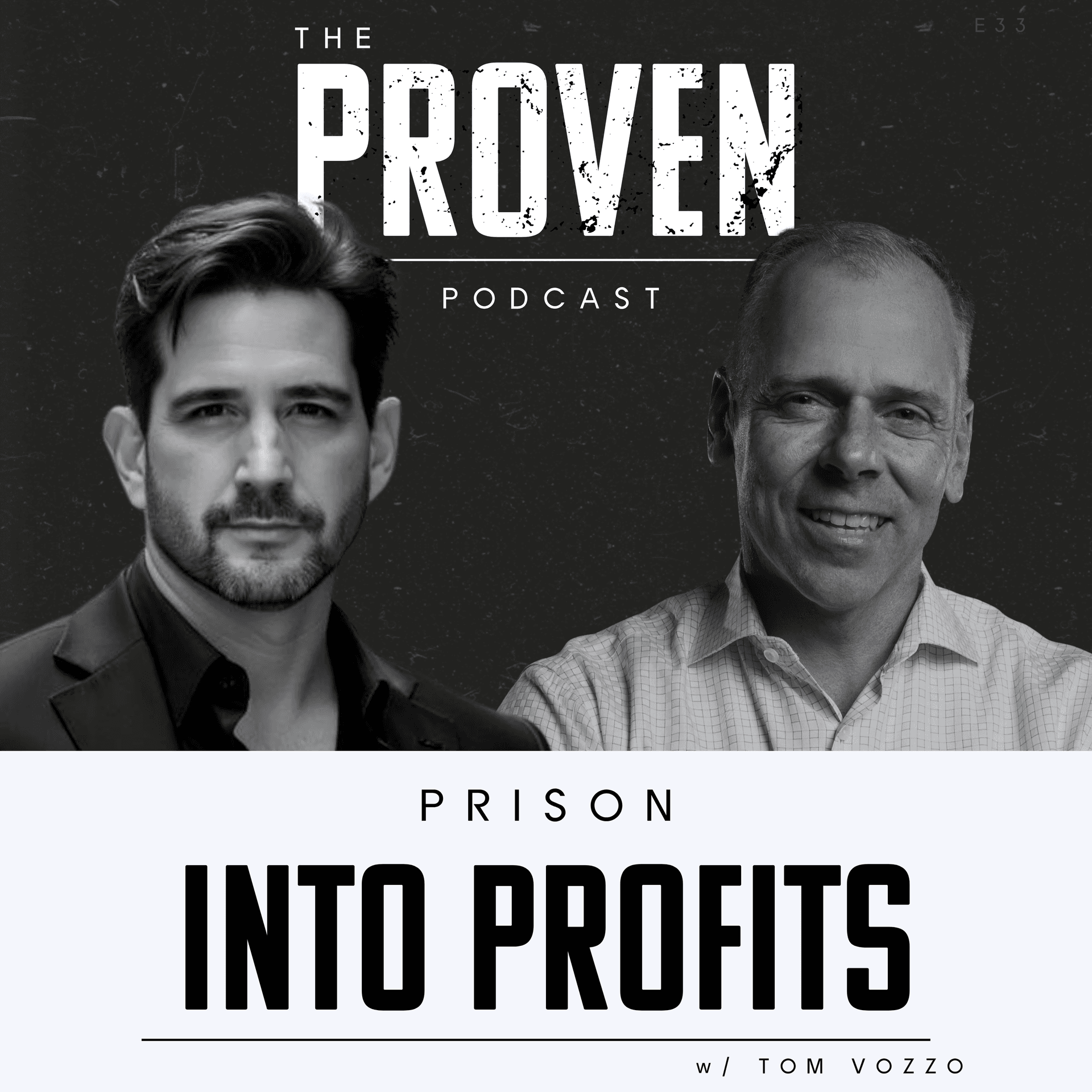
Proven Podcast Episode Notes: Prison Into Profits with Tom Vozzo
Episode Summary In this episode, Charles interviews Tom Vozzo, a former corporate executive who transitioned to lead Homeboy Industries, a nonprofit focused on reintegrating former gang members and felons into society. Tom shares his transformative journey from running billion-dollar businesses to advocating for social impact, emphasizing purpose-driven leadership, empathy, and the importance of seeing potential in individuals regardless of their past.
Key Themes and Discussions
- Corporate to Nonprofit Transition
- Background: Tom Vozzo's shift from managing a $2 billion corporation to leading a nonprofit organization.
- Catalyst for Change: The 2008 financial crisis prompted Tom to question the sustainability of shareholder-first capitalism, leading to his epiphany about the importance of valuing employees and societal impact.
- Redefining Hiring Practices
- Challenging Stereotypes: Homeboy Industries advocates hiring former gang members and felons, demonstrating that potential should be evaluated based on current capabilities rather than past mistakes.
- Breaking Barriers: Tom discusses the societal stigma around hiring individuals with criminal backgrounds and how businesses can transcend this mindset to find loyal and hardworking employees.
- Empathy and Leadership
- Individualized Approach: Emphasizes the need for leaders to treat employees as individuals and understand their unique challenges and needs.
- Stories of Resilience: Personal anecdotes illustrate the complex lives of Homeboy employees, highlighting their determination to rebuild their lives despite facing immense societal hurdles.
- Organizational Culture and Development
- Investing in People: Homeboy Industries employs many former clients in managerial roles, showcasing the effectiveness of nurturing internal talent.
- Creating a Supportive Environment: Emphasis on building an organizational culture that prioritizes trust, empowerment, and individual growth.
- Faith and Humanity in Business
- Moral Leadership: Tom discusses how his faith informs his leadership style, pushing him to see the humanity and potential in others rather than judging their past.
- Transformative Potential: The belief that everyone deserves a second chance and that businesses can thrive while contributing to social good.
Key Takeaways
- Purpose-Driven Leadership: Effective leadership is rooted in empathy, understanding, and a commitment to developing people.
- Potential Over History: Businesses should focus on the current abilities of candidates rather than their past, recognizing that untapped talent exists in unconventional backgrounds.
- Empowerment Through Trust: Leaders must build a culture of trust and support to empower employees, particularly those from marginalized backgrounds.
- Social Good and Profitability: It is possible to integrate social responsibility into business operations without sacrificing profitability.
Important Timestamped Moments
- 2:15 - Tom's transition from a corporate empire to Homeboy Industries, highlighting his disillusionment with traditional capitalism.
- 7:40 - Explanation of Homeboy’s hiring practices and the evaluation of potential candidates.
- 12:55 - A story illustrating the hardships faced by employees, emphasizing the systemic issues that complicate their lives.
- 18:30 - Discussion on empathy in leadership and the importance of creating a supportive workplace.
- 24:15 - Highlighting the unique culture at Homeboy, where two-thirds of management are former clients.
- 29:40 - Exploration of how personal faith shapes Tom's leadership philosophy.
- 35:20 - Key lessons on scaling organizations through understanding finances and investing in people.
Conclusion Tom Vozzo's journey from corporate executive to nonprofit leader provides valuable insights into the importance of empathy, purpose-driven leadership, and recognizing the potential in individuals who have been marginalized by society. His experiences encourage business leaders to rethink their hiring practices and foster a culture that values human potential over past mistakes.
For more insights and strategies discussed in this episode, listeners can download the exclusive companion guide available at [Proven Podcast](https://provenpodcast.com/).
---
This detailed summary highlights the key themes and insights from the episode with Tom Vozzo, providing a structured overview for readers interested in leadership, social impact, and transformative business practices.
Written by AI. May contain mistakes. Listen to the episode to check what was said.
Transcript
Automatic transcript. May contain errors.0:00Welcome to the Proven Podcast, where it does not matter what you think, only what you can prove. Everyone says ex-gang members and felons are unemployable. Today's guest, Tom Vozo, proves that's the biggest hiring mistake you can make. After running$2 billion in businesses for 26 years, Tom pivoted to lead homeboy industries and discovered that the people everyone else won't hire become the most loyal, hardest working employees you'll ever find. The show starts now. All right, welcome back to the show. Today we're talking to Tom. We're going to talk about diversity and his history and how you can really change how it works in the workforce.
0:30Welcome to the show. I appreciate you being here. Thanks, Charles. Good to be with you. So let's get the audience get caught up on who you are and what you've done. You know, off camera, we were talking a little bit about getting your history. You've done some really impressive stuff. Let's get the audience caught up. Yeah, sure. I grew up a middle class kid. My brothers and I are first generation college graduates. I go right into graduate school from my undergraduate. And then I land in a small company up in Boston. Family run business. And, you know, we at that time, it was about a$50 million business.
0:59in my time there we scaled the 300 million dollars uh run by the family had all the attributes of a family-run business a lot of other family members in there but also bringing professional managers they sold her a bigger corporation which then launched me into my corporate career ended over 26 years my last eight years i ran a two billion dollar set of businesses for the corporation and uh and now what i do is i do a non-profit and i run homeboy industries which We're a nonprofit in Los Angeles helping gang members and felons leave gang life behind and life of crime behind and heal and mainstream back out to society.
1:37That's a huge change. First off, Boston to LA is a completely different change. I'm from Florida, and I don't know. You might be able to explain this to me. There's this white, cold stuff that falls out of the sky in Boston. I'm not really sure what that is. It's a huge change when you go from Boston over to LA. But more so going from what you used to do, you know, going to multimillion dollar, billion dollar industries into this not for profit that is homeboy. What was the drive for that? Why did you decide to pivot over into that? Yeah, you know, I sort of say it this way. I had my epiphany moment back.
2:12And if I can give you a little longer story to this. Back in 2008, which is now a while back, was the Great Recession of 2008. and our corporation we were a private corporation for a number of years then we went public and then and then public for five years then back to being private again so i had the fortunate to be there for those transactions and did well for myself and my family but now this is the first couple years of being a private organization private equity owned us and so we had to deliver upon our numbers so the big 2008 recession comes along employment levels dropped by 10 which means the businesses we're in, revenue dropped by 10%.
2:50And all of us as executive leaders, executive officer of the corporation had to do all we can to get our businesses right-sized for the recession. And so at that time, my set of businesses, again,$2 billion on the top line, about$150 million of operating profit on the bottom line. That was the budget. I thought we did a good job. We were coming to come in at$140 million, only missed by$10 million in the middle of the quote-unquote Great Recession. And I still remember two days before Christmas being on the phone with the chairman of the corporation. He was essentially berating me and yelling at me.
3:26It wasn't good enough. I needed to get that next$10 million. I needed to get back on plan. And I'm thinking to myself, we've been at this a long time. I know to get that next$10 million, how many more people I have to lay off. And I also smart enough to know about the business that once coming out of the recession, I'm going to need all those people back. And so it got me thinking, what's the long-term commitment we have to our employees? If we're an employee-based organization, how does that all play out? And so something said to me, shoot, in this capitalist society we're in, where shareholder value dominates the caring for the employees, that's not so good.
4:06Because well-run companies have three things. it does well in the marketplace of shareholder value customers want to give you money for the products or services and and you have a great place to work for for your employee base and i felt like that all of a sudden things were out of whack now listen i'm a committed capitalist even today when i do speeches on behalf of homeboy which is a non-profit i'm in the audience i say i'm a committed capitalist or murmur goes across the audience about homeboy he's one of them but Again, well-run companies are good for people. But something clicked in me saying, there's got to be a better way.
4:41And so, listen, I wasn't the final decision maker. So I did what I needed to do. But I knew that, so thereby, a couple years later, when my golden handcuffs were uncuffed, I wanted to do something different. Something in my mind says, how can we run businesses where employees are just as important in the long-term value as the shareholders and do that in balance? All right. So that's what was behind me. So I left the corporate world. Friend of mine invited me to come down to have lunch at the Homegirl Cafe. We're here in Los Angeles. He's my friend. We were on the board of Salvation Army in Los Angeles.
5:17We've always thought, you know, give back, be on boards, be part of charities, right? So I'm having lunch at Homegirl Cafe. And I'm thinking, and I'm looking around, and I'm looking at the employees. And the employees are working hard. They're smiling. They're engaging with the customers. And by the way, my background, my last eight years, I bought 40 companies and sold four in my for-profit world. And so you get a sense of employee base. And so I'm having lunch. I'm looking around and I'm realizing I would have not hired one of those folks in my prior job because of the tattoo on their face, because of the felony, because they were gang members.
5:57And yet here's this workforce that's actually working hard and doing good. And so it challenged my notion that I'm a hotshot business guy. I think businesses are good for society. But here, a homeboy, in the context of a business, we're helping people change their life in the most dramatic way. And so when my friend asked me to get involved, I had time on my hands. I want to know, can my business skills be used in a different way? And so I signed on as a volunteer. And I thought I would be there for, you know, five, six months and help them out and move on. Now I'm here 12 years later and still helping out and still loving my life.
6:29A long six months. I think there is this idea that you have to serve your shareholders, but that means you cannot serve your employees. And that notion is just fundamentally wrong. It has been wrong for an exceptionally long time. I'm similar to you. You buy businesses, you scale businesses. It's all about systems and you do all that. But you also have to build a core. You have to build a culture. And people will automatically dismiss based on either their history or their mental capabilities or anything else. They dismiss that immediately. it is a bit of a jump for people to say, Hey, yeah, I'm going to hire this individual based off their criminal background.
7:04How do most businesses, when they look at that, how do you make peace with that? Because it makes logical sense. Like, Hey, they sell phenomenal value. These are still amazing human beings. Not everybody had a straight path, not everything gift. And, you know, there's a lot of people who don't have, as you were saying, the tattoos on their face where I would like, no, I'm not letting that person in my house. So just because you don't have tattoos or you do have tattoos, you know, there is this judgment thing. How do you help business owners get past that so hey you know what yeah you're right there is value in these individuals at homeboy how do you get them through that how do you walk owners through that yeah i mean it's a it's a multi-part uh answer to your to your good question first of all just sort of set the context you know businesses need people right they need people who are good they need people who are loyal people are going to work hard absolutely right and the way the work world is out there, it's hard to find enough good people along the way.
7:56And so, uh, there's this sort of on tap amount of folks out there. Uh, uh, so at homeboy, I mean, that may take a long answer to your question at home, folks we work with, they're all victims of complex trauma at a young age. That's why they joined a gang. They think, you know, cause they didn't have a family. The parents told them not to go to school. The parents told them be the, be on the corner for the drug lookout. Their second, third generation gang members, they join a gang thing and that's They're a true family, false hope. They do something bad. They go to prison. They come out of prison.
8:27And they don't want to go back to that situation. They want to be better. It's just that society has a lot of these sort of challenges for them that it's hard to get a job. You can't get a job. You can't pay for rent. So you're back into this cycle of going with the gangs because you can't survive on your own. and so fundamentally to your then to your question so oh owners managers supervisors need to recognize that the working poor of america have these challenges that they're good workers not that they don't want to do the work just that they they either got to go see the parole officer they have to sort of go back and sort of do something different to get rent paid they're dealing with their with their kids doing all sorts of things and so it's about hiring people leaning in and investing with resources, not a lot of resources, but resources that if someone needs to go take care of their business, that they're allowed that day off.
9:22And so it's, let me just back up. To summarize, if you're looking for this workforce, it's a good workforce, but you recognize you got to do it a little bit differently. You got to, then that they have their challenges. Let me give you this one quick story. So at Homeboy, we have all sorts of jobs filled with our population that we serve, right? And so there was, you know, I've had a number of executive assistants now over the years here and teaching them to be executive assistant in the for-profit world. So one of them, young woman in and out of youth camp, youth jail here in LA County, mother at age 17, hardcore gang member, just sort of hated her life and very mad at the world.
10:03But through Homeboy, she's able to find herself and be a good mother. But she was my executive assistant with a young child living in a shelter, but she still showed up every day on time, did her work. Well, we're a homeboy. We're a nonprofit, so we have a board of a director. And so quarterly, we have board meetings that start at 730 in the morning. And so she would get here at 630 in the morning, making sure the tables were set up, papers were in place, the water was out. So I remember this one day, the night before one of our board meetings, her parole officer calls her up and says that she needs to report in to his office next day at 8 a.m.
10:40And she's saying, can I come at 10 because I need to be here for the homeboy board meeting? I have a job. And essentially says, no, if you're not here by 8 a.m., I'm going to violate your parole, which means she will go back into prison. Now, knuckleheads, right? So, of course, we're homeboy. We're saying, you know, go take care of your business. We'll be here. We'll get by, right? But how many other businesses would sort of let her – maybe they would let her off that morning if they knew the situation. But would she have so much shame she couldn't tell the situation? So, my point is the people we work with, they want to do it the right way.
11:18There's just a lot of hurdles in place that us as employers need to recognize that we've got to treat people not the same but individually. and give them the chance to do their job well. And if they give them that chance, they'll do their job really well. It's interesting because we always talk about if you're going to hire someone, hire the hungriest person you can. So normally if there's a job opening between one person who is a single mom and has kids versus someone who's married, they have the same skill set, the same character, and even across the board, hire their single mom with the kids because she's going to hunt and be there for work.
11:53She wants the job and she's going to run the road. This to me kind of takes that to an even higher level. They're trying to break out of what you know now know and you've explained is generational issues. This isn't just breaking out from, hey, I'm in this one situation. This is generational trauma. So they go through. What do employers need to know? Because obviously a lot of people don't have this way of thinking. A lot of people are like, no, I want the person with the college degree and so on and so forth. How does someone go in as a business owner and say, hey, okay, I've got two people in front of me.
12:22I've got Bob and I've got Mike. and one of them is not a homeboy candidate, one of them is a homeboy candidate, what would make you, if you were a business owner on the outside, because you've been on the other side, say, okay, I've been on both sides. Why would I choose a homeboy candidate versus a non-homeboy candidate? Yeah, I understand your question. Let me kind of like a little bit, flip it a little bit. I would say you as a business owner, hire the person you think is going to do a great job. So just as in your story, the single mom who has to hustle, you have a sense that that person is going to work harder.
12:53pick the person who's going to work hard to but also recognize that that you're gonna just like my story you're gonna have to give them time off in different ways you're gonna have to sort of support them in different ways for them to do the job well and and that's it so it's a mindset shift is is what do you got to do to help somebody succeed in their job and what i'm saying is what you got to do to help somebody who's been the working poor to see in their job is different from I'm a college-educated, blah, blah, blah, blah, blah person who are more self-sufficient, have more of a safety net, have more resources around.
13:31Totally different. And if I can say a second lesson is that when you hire those folks, it's very hard for us as humans to always judge. Let me, if you have time for another story. Absolutely. So we at Homeboy were a nonprofit organization, mostly funded by two-thirds of donations and foundations. 25 % of our social enterprise businesses and a measly amount of government money. Social enterprise businesses. We have a bakery. We have a cafe. We have a bakery. Artisan made bread. Listen, there's nothing better than break down barriers of two rival gang members standing at the bread table, rolling dough, shoulder to shoulder, knowing how much bread they got to get done.
14:12You can't demonize somebody in relationship with them. That's why we have, we don't deal with gangs, we deal with gang members, right? That's why we have rival gangs working among themselves one of the businesses is we go to farmers markets we sell bread at the farmers markets and their interaction with customers and all so early on my time i'm you know trying to do management by walking around and getting to go people and so i walked through the bakery and i heard one of our best um farmers market guys george asked for his bakery manager for the for the weekend off now as you can imagine weekends are busy for farmers markets and he's one of our best guys every no matter how much bread he takes out he always sells it he's got a good gift for gab and and interacts with customers right and people come to see george and talk about him so uh and so we so the manager gave him time off and i come up to him i'm really a newbie at this point hey you know what's going on i'm like in a glib way hey what are you going to do this weekend right and he says i'm reporting in and i said reporting in what's that mean he He said, oh, I'm reporting to county jail.
15:18And I take a step back and look, what do you mean reporting to county jail? Well, he owed money. And so back in L.A. County at that time, when you come, well, look on a sidebar. The nutty thing about society is we release tens of thousands of prisoners a year, and they come out with debt. Not just restitution costs, but parole costs, court costs, fines, and fees. And so how do we think a prisoner in prison is making money? How do we think once they get out of prison, they're going to be able to get enough of a job to live and to pay their debt? Nutty, nutty, nutty. But George wanted to do it the right way.
15:53He didn't want to go ask his homies and his gang for money because then he was going to be indebted to the gang. He didn't go to a loan shark. At the time, you can report in for three days of county jail, which is not the safest spot, and earn money off your debt. All right. So I'm talking to him. I'm amazed. I walk away really amazed by him that he's doing it the right way, that all these societal challenges are stopping him, but he's going to still do it the right way. Well, so all week and I'm long, I'm thinking about it. I'm thinking, should I have given him money? Should I have loaned him money?
16:24Should I have done some other thing? I make a beeline in the next Tuesday to see how it went. And I go right to George and I see the stress on his face asking how it went. I said, what happened? He said, well, George has custody of his 10-year-old and eight-year-old, It was pretty unusual for a male to get custody as soon as they leave the prison system. And the caregiver who was supposed to show up or watch his kids didn't show up and he still had a report into county jail. Yeah. And so imagine leaving your 10-year-old in the apartment by themselves for three and a half days. A year in jail. Now, the kids end up being fine.
17:07So nothing went wrong with the kids. But imagine the stress as a parent. So I'm telling the story for a couple of reasons. One is the rest of us in society can't imagine the challenges that the poor in our society face every day, the choices they got to make. Whether it's George trying to choose to go to jail to pay off debt and leave his kids alone, or the homegirl who comes in, one of our employees doesn't eat for breakfast or lunch so she can save money for diapers. Impossible choices. and so we have to recognize that our folks chase impossible have to make impossible choices and we have to resist the urge to judge just the urge to think what would i have done what i've done something differently so i tell the story in relation to your question is as you hire these folks don't judge just just lean in and help and know that they're working as hard as they can and they're trying to get through it but lean in and help and don't sort of judge them by their actions in their private life in that sense.
18:03No, I think something you said earlier really resonated with me as well. Understanding that each one of your employees, either if they're coming from homeboy or they're coming from the other side of the tracks in this situation, you've got to treat each one individually. And this is part of decent leadership. You have to be able to identify what people's basic needs are. There's human needs and there's a different scale on how it goes. And there's mavso hierarchy of needs. You have all of that. Being able to understand that you're building a culture and how you interact with Susie from accounting is going to be very different than how you interact with absolutely right from marketing and being able to do that and balance that and have decentralized command as you go through that one of the things that you know i love implementing because i have a background with the military is so much towards decentralized command that you empower the people beneath you but in order to do that takes an immense amount of trust you're talking about not judging and you said it's very hard not to judge individuals who have certain backgrounds you know we do background checks and we do drug tests we do that for all the organizations that I underneath my command.
18:56How do you get past that saying, okay, I know they're not going to pass a background check that we normally do. I'm hoping they're going to pass the drug test that we do if we're in a drug-free environment. How do you get a business owner? You know, again, you've been on both sides. How do you get the business owners? Okay. I'm going to give this a shot. I'm going to risk the ability to feed. Cause I always tell this to people all the time. Whenever you're in a situation where you're firing someone, I'm not firing that person. I'm making sure the employees that still work for me can still feed their kids.
19:22If this individual is hurting the process, I'm sorry, I have my duty to these children. How do you take a business owner and be able to walk in and say, okay, I'm going to risk these other employees' ability to feed their kids and take this risk off all this judgment that I have, which is my problem, not the potential employee's problem. How do you get them through that? How do you get them through that hurdle and take that risk? Yeah. Yeah. Good question. I want to come at it at two ways, right? And I just want to be clear to the folks listening. Like I've been in the business world 26 years.
19:57I've been doing this nonprofit 12 years. And I know when I tell these stories, people are saying, well, that's true in the nonprofit sense. But I'm running a for-profit company. And, you know, what you guys do is nice. But I got to still do the bottom line, right? And so I recognize that. And so what I want to say is like even the way you framed it up, like if someone's not doing their job, That's going to impact the whole organization. And we have to feed the whole organization. People got to put food on the table, right? And so even at Homeboy, look, ours is about a mission. It's a people-oriented business.
20:29It's a mission of helping people leave gang life behind. So if someone's coming in every day, now we have 500 people on payroll who we pay to work on themselves. In addition, we have another 150 staff, right? But if someone's coming in and they're still running with the gang, they're not programming. We're saying, come back when you're ready. So we have our limits too. But the other part I want to say is to your question, and it's funny. I've never really said it this way, but listen, there's no exact science to this, right? Now, if you're a good leader and your company's successful and you're growing all that, you can have a sense for people.
21:10You have a sense whether they can do the job or not. And so when you're interviewing, just focus on whether you think they can do the job. forget everything in their background just forget it it's no impact now you sense where they can do job sense do they are they you know stable enough to show up and get there and obviously you're gonna have their challenge you're gonna lean in and help but just it's about can they do the job today and don't worry about what was in the past so my question is there takes different leadership skills and it all talks starts with empowerment you know leadership is about empowering the people with that how do you is there a different way of empowering these people in a for-profit environment versus a non-for-profit environment with the extra spice that comes with it in this one is there because you've done both you've been able to you've been able to empower and lead under both environments and you know when you had you were talking this when you first started when you had the individual who said i want the extra 10 million dollars uh during an economic collapse uh it hits you you're this is this isn't home this is this doesn't resonate i'm not this isn't where I'm going to be much longer.
22:15So you, you have this, you know, core being that aligns with very specific morals. How do you find the balance to empowerly lead in this environment? Is it different for for-profit versus not for-profit with the extra spice that this comes in with? Well, you ask good questions. I try. I try. Right. Question you got to think about. Um, you know um let me see if i can get the words to it if you want while you're thinking i'll give you an example uh we had i was i was working with an organization that brought me in to help them scale and the owner of the business goes i am never going to hire anybody that's a murderer i refuse to do that that is absolutely acceptable that violates my moral code i'm like cool this is i'm gonna make up a name this is david he has killed an immense amount of people you're never going to hire him?
23:08Like, yeah. I go, he's a Harvard grad and he's a former Navy SEAL. You're still not going to hire him? And they're like, oh, no, that's a, that's a, that's a, that's a, that's a different, that's a, that. And I'm like, okay. So there's different nuances to this conversation and people get married to this one idea and they, it becomes this hill they're going to die on. I'm like, you need to look at things differently. You need to look at the individual. You need to have conversations about can, to your point, can they do the job? And then I get in the face of the senior command and I'm like, can you lead them?
23:34Cause that's very different conversation. Can you empower these individuals? Because if you're going to come in, you're going to bark orders at individuals, it's not going to work. If you can meet their needs, understand their pains, empower them, and then help them do through decentralized command, you're going to do a lot better. So when you're coming into these and you have these two different worlds, because I worked at a hospice for a long time, they were not for profit. And I remember, I'm like, well, it doesn't matter if we make money. And I remember the CEO, she's no longer with us, an individual named Trudy Webb.
24:00She's like, that's a dork. We still have to pay the bills. I was like, oh, great. I love it. That's a very cute little one. And I was like, oh, we have to make money? She goes, yeah, we're not going out of business. And I was like, oh, so the bottom line still matters in a non-for-profit or a nonprofit. You still got to pay the damn bills. Yeah, right. And there's completely different leadership styles based on the individual, what I have found, based on the individual versus based on the organization. Again, when you come in, you're building a culture and people lead in different ways. There's different types of leaders out there.
24:31And some are really good in some cases. Some are very good in other cases. But going back to where we were, is there a different way in leadership and empowerment when you run into these two different environments with the spice that homeboy comes with? Yeah. So, boy, another add-on to your good question. I want to actually dive in the middle there and talk about your example that you used about the murder type of thing, right? And I want to be careful about the words I choose. it comes down again not to be judging like we don't know what people have carried in their life we don't know situations of where they've been at and the trauma they've been under and what caused them to do certain things right and so um we're not ever we don't condone violence we never accept that you know uh but let me jump a little bit people leave the prison system they've they've done the time for the things they did right they serve their time so you know always sort of judge them for the rest of their life right and so so that at the on the intellectual side no we're giving people chance we're not judging them from their past now to your question of the management style and how that comes about right you know it is where i've actually you know interestingly i've been on my own faith journey by being here at Homeboy and learning about how faith in God and God loves us all, how that affects how I think and how I think as a leader, right?
26:02And so I've kind of, Homeboy and Greg, our founder and all that kind of comes to this point of understanding that I'm finding joy through others. My being, my moral being is not about these hard, firm rules. My moral opinion is about being in relation with others and leaning in to help others. And so, like all of us in society, we have these sort of rules we have in place. I'm not hiring this type of person. No, let that go. Look at the person in front of you as a person. This may not sit well with everybody else. How I say this, God loves that person too. I learned this on the way, God loves all of us, no matter what we've done.
Read the full transcript
26:42He's too busy loving us to be judging us, right? And once you sort of, it's the obvious thing, but it's my session. Once you know that God loves that person across from me as much as God loves me, way easier. It's way easier. But it's on two planes. I'm saying all that full throttle. I'm also saying, hey, you're running a business. People have to meet the caliber of the job. They still got to do their job. They still got to do the job, right. You've got to be clear about expectations and all those things. but just let all the other stuff that may cloud your vision about a person go just treat them for the person they are today and they're doing the job how they're doing the job you're talking about you know finding faith and i think one of the great gifts of this because i haven't i'm not blessed with the gifts of the gift of faith at this point um and it might happen one day it might not i've made peace with that it's one way or the other so as you go into these environments i remember sitting with ironically a rabbi and we were talking about this and he's like you don't question enough for your things.
27:42I'm like, I'm sorry, what? Because again, when you're working in a hospice, you're around multiple religious leaders and you're having this conversation. Like, why do these things happen? Why, why does, why does a child get born with an operable cancer and everyone, he's six months old. Explain this to me. And he goes, you know, you're, you're pushing so hard on questioning all of these things, but you don't question yourself. And I was like, okay. He goes, and to use the example, he's an extreme example that we used earlier. He goes, would you kill someone? And I was like, absolutely not. He's like, okay, would you kill to save a life?
28:09And I was like, yeah, because it's a little harder. I was like, all right. And I did the avoidance, which we all do. I'm like, well, what do you mean? That's avoidance. And he says, okay, who is the person you love the most in the world? If I was going to shoot them in the face, would you kill me? I'm like, yeah. He goes, would you kill 10 of me? I was like, yes. He goes, okay, now we're just arguing about the number. So he made you challenge your belief system. And I think a lot of what Homeboy does is it allows people to get away from the judgment and allow them to go in and say, hey, can the person do the job?
28:37Stop judging them. Don't judge them on what they did. Can they do the job? Are they effective to do that? Are you giving that person a chance to really get into this? You know, Tom, as someone who has scaled multiple businesses and done some numbers that most people will never see, most people will never get become in the billionaire environment ever. As far as working in organizations or being part of a billionaire organization, they just won't. You know, most of my clients are at the seven figures. They're trying to get to the eight figures. Getting beyond that, they're like blue gods. So when you get to somebody, people, we call them hard bees, hard bees are a very different planet than someone who's an M.
29:09It's just the nature of the beast. What are the biggest lessons you learn in those kind of those huge environments where again, it's this hard shift when you go from, hey, this is a multi-billion dollar company all the way into, hey, we, oh, it's not for, shit, how do you get the lights on? So having that hard pivot, where is a leader? Because you've done this and you've been on both sides. You've been on both sides of this battlefield. Where do you see the commonalities and where do you see the challenges that you could, you know, the audience who are listening right now going, crap, not only do I need to look at people differently, I need to hire differently.
29:39But where else can they take lessons from you and learn differently? Yeah, I've been very fortunate to be part of lots of different type of size organizations, right? And without a doubt, the big corporations have a lot of resources and bandwidth. And look, the businesses we were in, it was uniform businesses, food businesses, facility cleaning. So no special technologies or patents. It was just how well you led your team is how you got future business, right? And so I was sort of taught very early on about a lot of managerial skills, leadership skills, you know, executive coaches, really the overemphasis on the making me a better leader.
30:18Because if I was a better leader, my teams were going to do better, corporation does better, right? And so what I've tried to do is bring that aspect to Homeboy. And I view Homeboy as a small business, as a small family-run business. It has that dynamic. It's a sort of grassroots-based founder. I took over for the founder, that type of thing. And so, you know, and then at different levels, as you go from, as we went from$10 million to$20 million and$30 million, you got to bring more skill sets in and you got to grow the team. I'm very proud of the fact that, so as a summary of how to do this, the key lesson is, it's not any great insight, it's hiring the people, getting the right people in place and developing the people.
31:04Two-thirds of our management team now are former clients. Think about that. They were in our program, coming in, out of prison, no clothes, no food, no anything. And we've helped them heal, helped them become resilient. and then they just blossom in terms of their ability to be the next generation of mentors, to be the next generation of business leaders. You know, people who run our cafe and our bakery, they're all former gang members, right? And they all lived in that lifestyle. So they have this natural leadership skills, but they didn't have the managerial skills. So then it's bringing a lot of trainings that teach them the managerial side of this.
31:44And so to me, it's always been about to scale an organization. You need two things. You need funding and you need people. Will people scale with you? And a lot of times when I see other organizations that don't succeed is because they didn't put enough time on the people side. That the entrepreneur, the leader did almost everything themselves, didn't spend the time to teach the next generation and to move the next generation along. And not really, and then thereby not having a shared vision. So it's really about developing people and bringing in outside trainers to make that happen as well. Yeah, I think that speaks to your leadership skills about, you know, you built a culture.
32:21If two thirds of your org is people that used to be clients and you had in there, that's a culture you built. You built something where they're dined into it and they have a vested interest. That's right. If there are certain things when it comes to leadership, if someone comes up and says, hey, listen, I don't have the experience. I'm not in this flavor, but I have these other things. are there certain things that you've learned over your career for leadership skills that you're like, hey, go do this. These are the leadership skills that you need to do in order to not only hire individuals who you have to look past your own judgment, but also lead individuals from all walks of life.
32:50Because again, you were in Boston where that cold white stuff fell out of the sky, very different individuals in that environment. Cause been to Boston many, many times go socks. And you come over here into LA, which is a different group of individuals. How did the leadership skills that you're like, hey, this works in both environments. And maybe these are some of the tools or books or things that you've come across. You're like, hey, if I could go back and I'm trying to make myself a better leader and I'm trying to scale my organization and I'm trying to level it up, this is what I would either read or these are the lessons I would start working on immediately.
33:23Yeah, I would, two, one I'll do quickly and the other I'll spend more time on. I had a mentor early on in my business career, and he said, Tom, show the organization you know how to make money, right? And he just understood. My point is understand the finances. Take a finance course. You don't have to be a financial expert. You don't have to be an accountant. Just understand the numbers of a business. I mean, that's sort of, to me, that's the entry fee. All right. And then the other way to be a great leader is listen. just listen you don't always have to have the answer you don't always have to rule the room you don't always have to sort of if you want to build a culture and have people kind of take the responsibility and run with it listen I'm older now it's easy for me to say but also the dynamic homeboys are a very diverse population it's a gang population and so for me when I took on the homeboy role It was different.
34:26Like Father Greg, our founder, Jesuit Priest, the mission was strong, but the organization was failing because management didn't know the strategy, didn't know people in the right positions, all that stuff. So I come in and listen. I'm not coming in to improve how to get gang members out of gangs. I'm coming in to actually see how the organization goes along. So it's a part about listening and piecing it all together. And same thing in the for-profit world. All the great leaders I've worked under, they've listened. They don't come in and start telling. It's sort of listening and thinking, listening and thinking and probing.
35:01If people want to get involved and they want to help out Homeboy, either by hiring people that work for you or donating or being a part of this and helping the calls along to give these people a second, or as you were saying earlier, even just a first chance that somebody's never had because they're generational into this. How do people find you? How do they track you down? What is the best way to help out and be a part of this? Yeah. Thank you for giving me that pitch. So Homeboy Industries, we have a Facebook page. We have a website, homeboyindustries.org. We have a lot of content on there. What's amazing is how our folks have changed their life, the transformation, and they tell their story in the first person.
35:35And look, we are blessed with donors. We need more donors, so please donate. But people donate to us because they see, because every one of us, I think, in our world, have some type of brokenness in us. And if our folks who have massive amount of brokenness can kind of get through that and not transmit that pain, but transform that pain, move that forward, it is sort of something to learn by and to sort of invest in. So through all that, on the business side, I wrote a book, The Homeboy Way, where I kind of take the things I've learned at Homeboy and apply that back to the business world. So please buy the book along the way.
36:12And then we have social enterprise businesses, you know, buy some cake. And if you're in Los Angeles, come for a visit. We have 8 ,000 people visit us each and every year. Love it. Thank you so much for being on and sharing this in a completely different perspective, you know, going from one to the other. I really appreciate it, Tom. Great. All right. Thank you. Success isn't about perfect conditions or perfect people. It's about recognizing potential where others see problems. The best leaders don't wait for ideal candidates. They develop the talent in front of them.
From the publisher
In this compelling episode, Charles explores the transformative journey of Tom, a seasoned business leader turned advocate for social impact. Transitioning from managing billion-dollar enterprises to leading Homeboy Industries, a nonprofit dedicated to reintegrating former gang members and felons into society, Tom's story is a masterclass in purpose-driven leadership.
Tom recounts his evolution from scaling corporate giants to reshaping lives at Homeboy, where his business acumen meets grassroots change. He candidly reflects on the epiphany that inspired his pivot—a moment of disillusionment with shareholder-first capitalism during the 2008 recession—and shares how he applied his expertise to create a culture of empowerment and resilience.
In this episode, listeners gain a front-row seat to Tom's leadership philosophy, from fostering trust and individual growth to navigating the challenges of integrating marginalized individuals into the workforce. He provides actionable insights for business owners on how to transcend judgment, hire for potential, and balance compassion with profitability.
Key Takeaways:
* Discover the leadership strategies Tom used to transition from corporate to nonprofit management.
* Learn how to identify and nurture untapped talent, even in unconventional candidates.
* Understand the importance of listening, trust-building, and individual-focused leadership.
* Explore how businesses can integrate social good into their operations without compromising performance.
Head over to https://provenpodcast.com/ to download your exclusive companion guide, designed to guide you step-by-step in implementing the strategies revealed in this episode.
KEY POINTS:
2:15 Corporate Transformation Journey: Tom reveals his pivot from running a $2 billion corporate empire to leading Homeboy Industries, sparked by a critical moment during the 2008 recession when he questioned the traditional capitalist approach to employee management.
7:40 Breaking Hiring Barriers: Explains how Homeboy Industries challenges conventional hiring practices by recruiting former gang members and felons, demonstrating that potential employees should be evaluated on their current capabilities, not their past.
12:55 Impossible Choices of the Working Poor: Shares a powerful story about George, an employee who had to report to county jail to pay off debt while managing custody of his children, highlighting the complex challenges faced by individuals trying to rebuild their lives.
18:30 Leadership Through Empathy: Discusses the importance of treating employees individually, understanding their unique needs, and creating a supportive environment that allows people to succeed beyond their past circumstances.
24:15 Organizational Culture Revolution: Reveals that two-thirds of Homeboy's management team are former clients, showcasing how investing in people's development can transform an organization.
29:40 Faith and Leadership Intersection: Explores how personal faith journey influences leadership approach, emphasizing the importance of seeing people's humanity and potential rather than judging their history.
35:20 Scaling with Human Potential: Shares key leadership lessons about understanding finances, listening deeply, and developing people as the core strategy for organizational growth and success.