
In short
Proven Podcast Episode Notes
Episode Title
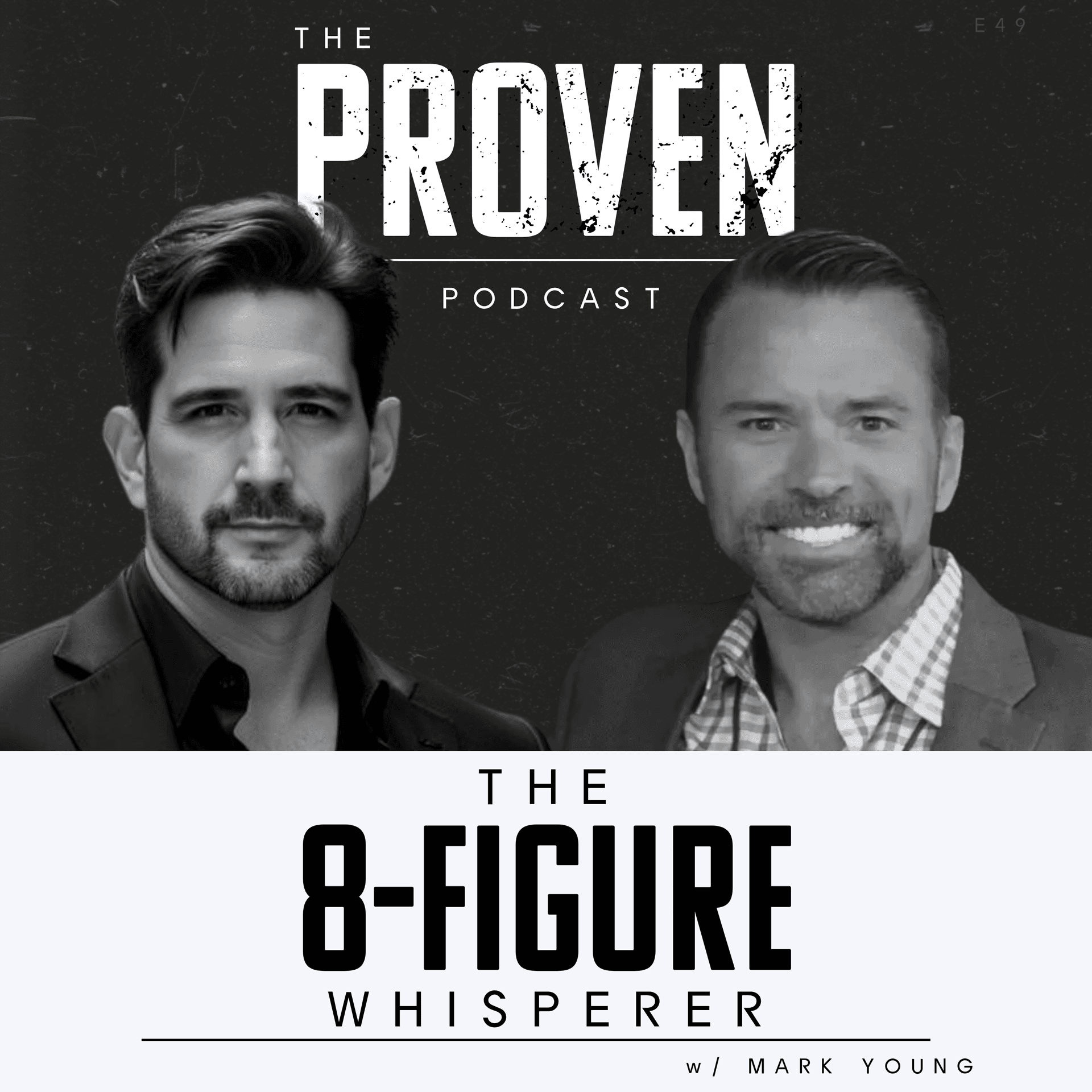
The 8-Figure Whisperer - Mark Young
Episode Description In this episode, Charles speaks with Mark Young, the founder of RYZE Agency and creator of the Fitter Over 50 movement. The discussion revolves around the psychology of authentic entrepreneurship, exploring Mark's transition from clinical psychology to marketing and how his understanding of human behavior informs his approach to business.
---
Key Concepts and Discussions
Journey of Mark Young
- Background: Transitioned from clinical psychology to marketing.
- Core Philosophy: Authenticity in business relationships is crucial in a commoditized market.
Key Themes in Entrepreneurship
- Emotional Rollercoaster: Entrepreneurs experience extreme emotions daily, affecting their decision-making.
- $10 Million Threshold: Many entrepreneurs struggle to scale beyond this point due to inefficient spending and a focus on revenue over profitability.
Marketing Insights
- Email vs. Social Media: Email databases outperform social media followers in conversion rates by 5-10x.
- Vanity Metrics: Relying on social media followers does not translate to customer engagement or sales; algorithms significantly limit exposure.
Psychological Barriers to Growth
- Family vs. Professional Relationships: Treating team members like family can hinder scalability, especially when changes are necessary for growth.
- Omnichannel Marketing: Effective marketing requires understanding the interplay of channels (e.g., Google for conversions, Meta for intent).
Authenticity in Branding
- Being Genuine: Authenticity is crucial for marketers; being loved by a few is more beneficial than being liked by many.
- Problem Awareness: Successful marketing starts with addressing issues that potential customers are unaware of.
---
Key Takeaways
- Emotions in Entrepreneurship: The emotional ups and downs of entrepreneurship are universal, regardless of success levels.
- Scaling Challenges:
- Many entrepreneurs struggle with the transition from gut-feeling operations to data-driven strategies.
- Chasing revenue without profitable sales can lead to business failure.
- Value of Email Lists:
- Email lists are more effective for conversions compared to social media followers due to algorithmic limitations.
- Team Dynamics:
- Successful businesses require the right team for their current growth stage, and those who resist change may not be fit for future growth.
- Omnichannel Strategies:
- Understanding how different marketing channels interact is essential for maximizing return on ad spend and overall marketing effectiveness.
- Authenticity Matters:
- Authenticity fosters deeper connections with customers and builds long-term loyalty.
- Addressing Unrecognized Problems:
- Marketing should illuminate problems that consumers may not even be aware of, leading to greater engagement.
---
Episode Highlights
- 03:52 - Emotional spectrum of entrepreneurship; highs and lows throughout the day.
- 09:03 - Discussion on the $10 million threshold and the dangers of aggressive spending.
- 12:48 - The inadequacy of vanity metrics in marketing, particularly social media followers.
- 25:47 - The pitfalls of treating teams like family in terms of scalability.
- 31:47 - Importance of an omnichannel approach for breaking through revenue ceilings.
- 38:52 - The advantage of authenticity in business communications.
- 42:52 - The need for marketing to raise awareness of latent problems consumers face.
---
Resources
- Website: [Proven Podcast](https://provenpodcast.com/)
- Mark Young's Agency: [RYZE Agency](https://ryzeagency.com)
- Fitter Over 50 Movement: [Fitter Over 50](https://fitterover50.life)
Call to Action Listeners interested in learning more about scaling their businesses or obtaining a free audit can reach out through Mark Young's website: [themarkyoung.com](https://themarkyoung.com).
---
This markdown file serves as a comprehensive summary of the podcast episode featuring Mark Young, highlighting key themes, discussions, and actionable takeaways for entrepreneurs looking to scale their businesses authentically.
Written by AI. May contain mistakes. Listen to the episode to check what was said.
Transcript
Automatic transcript. May contain errors.0:00Welcome to the Proven Podcast, where it does not matter what you think, only what you can prove. Everyone thinks the secret to scaling past$10 million is better funnels and bigger ad spend. Today's guest, Mark Young, founder of Rise Agency, proves that's exactly why most brands get stuck. The show starts now. All right, everybody. Welcome back to the show. I'm really excited to be on here. Mark, thank you so much for joining us. I appreciate the invite again. Again, yes. We had a little bit of a kerfuffle the first time. We're glad to be back. We'll have to talk about that where my systems completely break down, which, hey, you know what?
0:33That was on me. I apologize. So mine do it too. So for the few people who don't know who you are, tell us more about you. What do you do? Who are you? Yeah. So again, I appreciate the invite. I am obviously Mark Young, as you just said. I hate that question. Is that terrible? I'm just such a non-self-promoting person that when someone's like, tell me about yourself, I'm like, you know, I'd really rather talk about you. Who am I though? I'm a guy who just likes showing up in the world as a real version of me, I think, And especially I'm an advertising and marketing guy. And I own an agency that is we specialize in direct to consumer and e-commerce marketing.
1:13So a lot of e-com stuff. We're media agnostic. But I like showing up a genuine version to me, which, by the way, I use that, which sounds like real fluff language. I acknowledge that. But the reality is, is as a marketing guy, you kind of have the skills to show up however you want. And I think it's a special skill set to not show up as someone you aren't. I think that's actually a skill set, if that makes sense. In the beginning, as an entrepreneur, you try to put your hat and put on different hats at the same time. Then you have to get back to going, well, who am I really? And have that authentic thing.
1:43Most people along the way. Yeah, I don't want to be a chameleon. Like, I don't want to just fit into a situation. Like, I want to genuinely be me because I think there's, especially in the marketing world, and this is a lesson that I really, really, really double down with because the majority of the brands we deal with are entrepreneurial. And I say that we really double down on the storytelling of that founder's story because the reality is, is in the e-com world specifically, like we have commoditized darn near everything that a person can buy. In a commodity world, we need to really focus.
2:17And I know we may disagree a little bit here on some of this, but in a commoditized world, relationship matters much more than transactions because relationship leads to transaction. trends and actions don't lead to relationship. And I think we just need to prioritize the way those things go. So I say that with the founders and the entrepreneurs that I work with and coach on a regular basis, that's one of the things that I really, really emphasize with them is genuinely be yourself. Quit trying to chase an audience that you're never going to resonate with, that we need to get this loved by few rather than liked by many down.
2:56and I think the only way to do that is to be your authentic self and one of the things your marketing agency does differently than a lot of the other ones is you the people you interact with on a high level these are high performers these are high earners these are people in exceptionally high side yeah these are business owners these are entrepreneurs these are in many cases we work with a lot of brands I would say 80 percent of our of our our book of business is all working with health and wellness brands that and I would say that they're they're swimming upstream because these are countercultural-type brands that are supplements.
3:26They're medical devices. They're not big pharma. They're not insurance-covered things. They're patient-paid things, right? Like you're not getting this covered by insurance. We're not selling knee replacements. We're selling red light therapy devices that actually lead to reducing joint pain. Like very, very different sell. and authenticity is so important in that conversation. So they're actually studying things that actually help people is what you're saying. Strangely, yes. Imagine that. So like H5 and all of those things. Yay, good stuff. Yeah, good times, good times. Yeah, really, really helpful, healthy stuff.
4:04Before we get into all that health stuff, I wanted to talk about, you know, in that environment, that is a different niche that most people go into. And it's different languages. For example, if I was going to create a dating website for women in their 20s, it would be very different verbiage and copy than a dating website for women in their 30s. very different environment. You're talking to entrepreneurs who are ultra successful, who have now reached the point where they've got the lion that's been chasing them kind of in a cage. They've got funds under control, but now we're trying to penetrate a market that is that ultra, that deck a millionaire, that cent a millionaire, that environment that are in that.
4:34There's a different way of communicating to that. How do you instruct and how do you work with your clients and what do you have them say? Well, I'm going to say this, that is, it doesn't matter to me how much money that the entrepreneur has. I believe that every one of us experiences that same spectrum of emotions. And that is, I love there, there was a meme online years ago that was, you know, I'm, I'm crushing it. Oh my God, I'm going bankrupt. This is amazing. You know, I'm, I'm the best at what I do. Oh no, the world is going to end here. If I don't finish this report, it's like, and it's captioned a day in the life of an entrepreneur, right?
5:09Like this was not the entrepreneur's month week year this this was literally a day in the life of an entrepreneur and um and i will say that the thing that that that i enjoy and i laughingly say it's because my my educational background is actually in clinical psychology and i say that i'm i tend to be the entrepreneur whisperer um and a lot of that is that entrepreneurs high performers anybody that gets to that that top position in their space and it could be because you've got a top position in your company, right? So no one understands where you're coming from because everyone else is on payroll.
5:46And it could be that in your family, you're the highest performer. So no one at Thanksgiving understands the day you're having because no one around the table has your experience. And it could be in the friend circle that you're part of. But the one thing about high performers, these entrepreneurs, these people that I work with on a daily basis, there's a lot of rooms that they walk into that feel lonely yes um and and i i mean i'm sure you can relate to that in a lot of ways too right yeah we i've got something called eo in my 20s and i've never i don't drink i never have it's not my thing but it really felt like like aa for entrepreneurs where you stand up you're like hi my name is charles i don't know the difference between my business life and my personal life oh yeah it's well because that's yeah exactly welcome charles welcome welcome here yes you are in the right place and it is very lonely being a successful entrepreneur.
6:32So getting in with them and connect with them, you'd have to be a whisperer on some level. Well, and to that point, when I when I actually meet with new clients or, or, you know, even have conversations with people I've worked with for years, the the reality is, is I always start with the human on the other side of the call. And that is, you know, when I'm telling them, look, like, in order to make our next step, like, you've got a 10 million dollar business, and we're trying to grow it to 100 million dollar business at this point. And telling them, like, I'm going to give you a couple of options here on where we need to go with this.
7:05But please understand that me blue, you know, throwing a blue ocean kind of kind of plan to you doesn't mean that I don't understand your concerns with cash flow. Like I'm a business owner as well. I realized that there are a lot of good things. And usually that's where the conversation goes is this. And I tell them like, there's a difference between a good business decision versus a good cash flow decision. And usually they're at odds. Yes. Because a good cash flow decision. What is it? Yeah, very, very often those two are at odds. Absolutely. And I mean, the idea that, you know, growth is fantastic, but it comes with a cash cost.
7:39And sometimes that cash cost means borrowing. And sometimes borrowing means giving up margin and the growth isn't worth giving up the margin for the borrowing. Like, sure, you can grow the business, but you just gave away any incremental profit that you just earned in interest from the borrowing. Like, why grow? You know, I deal with with entrepreneurs on the regular who for for most entrepreneurs and I'm going to say that 10 million is really where I see the break point. Like, that's a number like that is a number where when I have clients that are under 10 million, like that is the target. Like it, eight digit is their world.
8:15And unfortunately I'm having a, a conversation with them on the regular because I'm trying to throttle them back. Let me give an example. We may spend media efficiently or aggressively, but you can't do both. Right? Like when we're buying, whether it's digital media, radio media, whatever, whatever it is, and, and I will get an entrepreneur. I have one in particular, in fact, true story. I just fired her recently because she was just a bad client. But it was a bad client that I must have this and this and this. And you're trying to explain that we can spend aggressively because 10 million is your number and you want anything to hit 10 million.
8:57But in doing so, we're going to lose all of the efficiency. And your accounting is so bad that you're not even making profitable sales at this point. You're just chasing a$10 million number and then you're upset. Like you have to scale smart. So I'm often putting plans out saying, look, we can get to your number, but it's going to come at a cost and, or we can make you a lot of money, but it's not necessarily going to get to your number at the rate you're trying to get there because there is scaling, there is testing, there is all of these things that need to go in there. and unfortunately I will say that where I find most entrepreneurs fail particularly in the e-com world is lifetime value and that is they are so busy trying to get a new customer on the books and transactions transactions transactions that they fail to realize that your best customer is the one who's already bought from you and we call it life cycle marketing and it's like trying to explain to them that making a wreck of your follow-up is the fastest way to lose a customer.
10:06And there was an example recently given. It was in a book that I just read. You know Joe Polish? I'm sure you know Joe. Genius Network Joe. Joe's a good friend. And I just recently read one of his older books. And Joe's big deal in carpet cleaning was his big deal, right? And his book, Piranha Marketing. And he gives the example of a guy who was so overwhelmed by the just the incredible work that this carpet company had done. And he just loved it and he paid extra for it and so on and so forth. And the next time he needed his carpets clean, he forgot the name of the company and hired someone else.
10:41It's funny because we both live in South Florida and we drive by something that says, your wife is hot. There's a, there's a billboard that says, your wife is hot. Yes. And it's an air conditioning company. Yeah. I was like, what's the name of the air conditioning company and they're like, uh, you have no idea. Everyone knows the billboard, but it's a complete failure because they don't remember the name of the company. So to your point with carpet, you're not doing the followup. You're not building that relationship. You're not building that rapport. So it's absolutely. If I bought from you once, I gave you permission to keep talking to me.
11:10And if you don't, it's a snub, right? And the followup is horrible. And it doesn't have to be a great deal of things. Like what are the ways that you had encouraged people to follow up with previous clients? So there's many, and it really depends on the vertical that they're working in. Probably the way that I talk to my clients most often and encourage them to do is a well-managed email database. And that is, I will say that there is a false reality that Instagram followers are the way to go. And I... Huh? Thank you for saying that. I've been trying to get this in people's ears for... about. Oh, it's a joke.
11:49And the problem is it's a vanity metric and nobody wants to talk about it, that followers on social media is fine. The problem is, I'll draw this comparison for your listeners and say that it's a vanity metric. And the problem is that the algorithm is stacked against you to begin with, because let's assume you have 10 ,000 followers on your Instagram feed at a high, high, high number. The algorithm is only going to ever show your post to 5 % of your audience. I said, except so I think you need a period in front of that five, two to two to three is normal. Right. Cause I'm in, so I went live the first time I ever went live and I just got a hundred thousand followers.
12:28I was like, this is amazing. I'm going to have like 20 people on here when I go live. Five people showed up. And I had like, yeah, like 40 people. I was like, what's that? And I felt horrible. I was like, what's going on? And then I watched Dwayne Johnson, the rock go live and he's got millions of followers. And there was like 2000 people. And I was like, all right, I feel better now. And I logged off. I was like, Well, the thing is, and that vanity metric is so, so terrible because you take a 10 ,000 followers, that's 500 people are ever going to see your post. And yet we spend so much time curating that post so beautifully and making sure that the image is just shaded correctly.
12:58And it's like, and then the worst part about it is of the 500 people who ever see your post, again, 500 is a really generous number because it's probably closer to 200 to 300, but we'll play it generously. The reality is, is most of the people that are part of the 500, the algorithm will find the people who usually engage with their posts because they think that those are your most active, engaged audience. Well, that includes you. That includes me. That includes my marketing director. That includes the receptionist. That includes my friends, my wife. And you run through this entire list and it's like you're going through the list of your people and it's like, oh, this post has higher engagement than normal.
13:37And I'm like, literally, you're just entertaining yourself. As opposed to 10 ,000 people on my email database, let's say on our super low side, I mean, a 25 to 30 % open rate, and I would be putting triage on your email database. But a 25 to 30 % open rate on email list means I just got 2 ,500 to 3 ,000 people to hear the whatever message I wanted. And we spend so much time trying to get followers and not get a database signed up. Right. And we don't actively build that database. So like, for example, we're getting 1000 downloads a day on the podcast, which is wild, but we are doing nothing to capture those people.
14:21That's tragic. We're starting to work on it. So in those situations where it is tragic and you have to do triage, what are the things that you immediately tell people? Say, hey, hey, you've got this, you've got this audience. People are coming to you. You want to build it. You want to sell more. You want to hit numbers that like, because there's a big difference between what I want and what I really need. And that's a conversation you're having before. Like, oh, I want to make 10 figures. I want to become a tech millionaire. Congratulations. But what I really need is if I had a half a million dollars of residual income coming in every year, I wouldn't show up for my job anymore.
14:53So that is a conversation that most entrepreneurs aren't willing to have. And that's where people like you and I come in. I'm like, no, what do you really want? Let's have a real conversation. And people just aren't having that conversation. So for those people trying to do that, how do you capture those? How do you gain, what are the best ways to get a hold of those people? Oh, gosh. So I'm going to get into what I refer to as social exchange, which is a sociological term that talks about the I give to you, you give to me, because there's what we call reciprocity. And the easiest way to actually work on building a database is this act of reciprocity.
15:25Like I generously give you something and then in exchange, you intuitively feel the need to give me something in return. So usually what we find in those email data, I mean, one, let me back up quickly and say, usually, usually the way that most people end up building their databases, they just, it's an entire list of past purchasers. Right. So congratulations, all the people who you talked into buying from you are on your list, but where are all the people who've never engaged with you? That becomes the bigger problem is how do we engage the people who are not there because those are the ones you still need to convert.
16:02That's your colder list. but we really really push again it really depends on the brand but i'll give you an example i have a a list that i run called fitter over 50 and it's a newsletter it's 100 a newsletter and i actually put about five thousand dollars of my own money a month into just getting leads from instagram and, and Facebook. So all meta platform where I pay about a dollar for an address and, and people get a promise that leads to a page that literally just says, you know, uh, and I want to say that the sub, I'm going to sound terrible. It's fitter over 50 dot life is the website, but it's a blog site.
16:46And the entire blog site is 100 % filled with articles about aging defiantly. And it's, and i use the word aging defiantly because that actually so that that is an opt-in word because i don't want to age gracefully i have zero interest in aging gracefully charles like i turned 50 in about three four weeks and oh so i made it this far right um but but literally turning i got you by about a month and a half i did 48 so i'm chasing out oh there you go there you go same demo um but the but the reality is is like turning 50 i'm like one of the things that was going through my head was like, this is a thing.
17:24So for quite a while now, I've been running this Fitter Over 50 database. I have tens of thousands of people on the database already, partially because I bought them in. But what I measure on it isn't how many people I can buy. What I measure is the open rate. Because the engagement that I get out of this audience is great. So I have thousands of people every week end up on this database who open this and read the articles. And I can see how many people are clicking through. But the whole point of the articles and again, aging defiantly, the voice of this newsletter that I write myself, um, is all set up and, uh, you know, screw what everyone else says about aging.
18:00Like, uh, this is ridiculous. Like I have no interest in, in growing old. I have a, you know, I want to grow great and die suddenly. Like I have no interest in living forever, but I also have no interest in living in a feeble state. Like I'm going to do everything versus quantity of life. You know, I spent eight years in a hospital. I want both. And it's, it would be great to have both. And with my, I think there's things that are changing that. A friend of mine has, you know, intense TBI and he got into HBOT and all these other therapies and it's completely reversing all of that. And his biomarkers are changing and it's really cool stuff that he's done.
18:35So when you're going into that, you know, I know you mentioned you were buying the list when you're providing value to that, since you're specifically writing, you know, you're, you're using the laws of reciprocity when you're providing value, how many value offers do you give before you ask? How many, how many do you go? Yeah. So, so I will say that the, the unusual thing about that particular list is because the, I'm only asking the more information you ask from, from a person, the less likely do you already to get it? Right. Right. If I ask you for your name and email address, all right, you can block me.
19:08You can unsubscribe. Like the, the exit is pretty quick. If I ask you for your phone number also, whoa, the stakes just went up, right? People are a little bit weirder about that. I asked for your address. All right, delete. Like we're done with this relationship. So there is a way to stage that. Um, for me, I'm not looking for any of that information. I just want you to name and phone and email address. Um, and the reason is it says, I'm going to promise you value from the beginning. That's a, that's a get in on the list, join the movement, um, become part of this. And every week I literally just provide value for zero ask.
19:39Now, what we do with that list is over time, I build this list that's got tens of thousands of people on this list. Well, now I end up throwing in a this, you know, this email sponsored by, like maybe I do an aging hack that is, you know, related to cardiovascular fitness. And then at the end of cardiovascular fitness, I give you the recommendation of a nitric oxide supplement that I strongly recommend. And by the way, here's a coupon code if you want to try it. now I'm playing the affiliate game. The affiliate game becomes passive income. But the reality is, is that, again, I'm doing that as a passive conversation with people.
20:19For entrepreneurs who are trying to sell their own products, it's about providing value. It's the reciprocity. It's like, how are you educating people? How are you engaging people? Because the people who aren't willing to buy right now are a different audience than the people who bought already. And the other thing that I find is that there is such a bent towards and part of its laziness, by the way, and part of its laziness on the part of your marketing department. So anyone who actually is doing this stuff and just doesn't see a result from it, it's because you got a lazy marketing team. Because the reality is the people who have bought from you are an entirely different database and they need a different voice.
20:59They need a different offer. They need a different conversation. um you know if i bought from you we're already friends and there's such a voicing difference between people who are part of the family versus the people who are not because i don't walk into other people's parties and just start talking as if we're familiar we're not right but at the same time if i've already bought from you three times and you're talking to me like i'm a stranger we clearly don't have the relationship i thought we did um and actually i'm gonna laugh at this Charles. My first book that I published was actually called date your clients.
21:34Um, and what's funny is like the entire book is this walk through how the way that we treat relationships and the way like you talked about, if I wrote the copy for a dating site for a 20 year old is very different on the way I would write copy for a dating site for a 40 year old date, your clients is the same thing. It's like, why are we doing so many stupid things in business that we intuitively know how to do correctly when we're, when we're in a dating relationship, like, like you make a first impression really well when you're going on a date, right? You spend an extra half hour, you do a few extra pick a pushups, you vacuum the car, like you do these things.
22:12Cause you just, you prep for it. Like, you know, guys, like I hate to sound terrible, but it's like, you make sure the house is clean because you just never know if you're coming back. Right. Like you just, you do these types of things intuitively. But when you go into a client meeting, like, do you take that same type of care to make a first impression or is it just another tuesday right like you don't people don't prep and what's what's horrible when we talk about this relationships all the time if you do what you did in the beginning there won't be a net and people talk about all the time in relationships we talk about in business relationships as well but a lot of people don't know how to value stack their offer either they don't know how to provide enough value and connect so when you're talking to a demographic that is the higher and they're at that higher level What is the advice you give them?
22:54You sit down and say, okay, I've seen your offer. What got you here won't get you there. Right? It's a Tarzan idea that, you know, Tarzan goes to the jungle blind to blind. He's got to let go of what used to get him or he stops immediately. Correct. So when you've got to let go, which is terrifying for a lot of people saying, well, no, this got me to nine million. Like, right, but that's not going to get you to 90. So let's pivot this around a little bit. When you're going through and you're working with them and you're helping pivot their offer and you're changing their value stack, What are some of the things and some of the questions and even some of the mistakes that they make?
23:24Yeah, good question. Well, the biggest mistake that I find most entrepreneurs make is that they start to treat their teams like family. And I know that sounds crazy from a guy who just said we need to value relationships more than transactions. Right. But again, it's where you are in the stage, right? Just where you are. Correct. Correct. But every business has a life cycle. And the reality is, is that the people you spend all your time with now aren't the people that you spend all your time with in the next stage of life. And part of that really boils down to, you know, you may have had a marketing team that got you to a certain stage, but that needs to shift.
23:58And you need to find out if you have the right leadership team for the current stage of your business, because I assure you, it's a different leadership team. And if you have a leadership team that people have been in your business for 20, 30 years, you have the wrong team. Like I just recently had to move my COO out of the business. And it was a painful thing. It was a long-term personal friend who had been with me for a long time through thick and thin. But it's like, you can't get me to where I need to go. And now you're hurting the business. and this challenge for most entrepreneurs in that space is that and this is the advice that I give you, if you have a good team, they know when it's their time.
Read the full transcript
24:43The team that resists that change is data telling you it's the wrong team. If you have the person on the other end of the conversation that says, look, I'm tapped. I'm as far as I can take this. You need what's next for you. The business needs a person better than me. That's maturity. And those people, I assure you, find somewhere else for them in the business because they add incredible value. But the person who's resisting the change is giving you the answer you need. Regretably. And that can be your marketing director. That can be, you know, I was on a call yesterday, a new business call actually, with a guy that I met at a conference.
25:22He's looking for an agency to help launch an amazing tech product. he and I connected at a conference totally you know just bromanced out just super cool guy very similar past trauma with the FDA um like all this all this fun stuff and and I mean he starts the call we met at another conference a few weeks later he was a guest on my podcast like go go go go we get on a call uh yesterday in fact and he invites his marketing director now he starts the call. She's not there yet. And he's like, look, you obviously know what you're doing. He's like, I'm not even asking that question. Like there's no doubt to me that you're an expert in your field.
26:04You come from every recommendation that I can imagine. Like you've spoken on stages with people that are, you know, literally like I laughingly say that I, the last conference that I was at with him, I spoke right after Callie Means finished speaking. It's like, so, you know, here's a white house advisor. Here's Mark coming up after him. He's like, I'm not even, And I'm not even questioning that you know what you're doing. How do we work with you? This marketing director joins the call and she takes the entire conversation into, well, I'm going to be preparing an RFP because there's a lot of agencies.
26:36And as I prepare this RFP, you know, and I'm like, and I'm trying not to whatever. And I'm trying to explain to her that, you know, you can RFP if you're looking for someone to do your graphic design. you're in a product launch and if you believe that doing an rfp for an agency to do your product launch is more valuable than the experience and relationship that's sitting on the call right now go do your rfp yeah you told me everything i need you to know yeah correct and i want to thank you so much for sharing everything yep and i want to call him afterwards because he got super weird as soon as she started saying those things and and i want to call him afterwards and be like dude you've got the wrong marketing director.
27:17Like, I don't want to sound terrible, but don't hire us. So that way I don't seem biased. Like find someone else. Don't hire me because that way it doesn't sound like I'm trying to sell you into what I do for your sake. This girl is going to hurt you. Yeah. A hundred percent. If there's that type of resistance, I guess we said before, what got you here won't get you there. There's just no right. And she's probably done great for him. Absolutely. She got him to probably the, you know, 9 million. That's wonderful. one muzzle time that takes that you're already in the top x percent but you're not going to get it just go find another company and help them get to nine million to that that's your gift go from there you know you're a you're a middleman you're not that you're not a closer go over there and the truth is is a business is a relay race yes and and the truth is is the first runner has a different skill set than the second runner has a different skill set than the closer like it's just it's a different point in the race right and i think your agencies as well there are certain agencies that i've worked for and they're hey you're doing great i can't get you farther than this and i've referred business over to those people all the time like hey this is more of a product fit this is a product go do that versus this because having that authenticity and showing up as your real self which kind of goes back to what you said in the beginning i i 100 agree with you and i have i have a very very good friend of mine runs a hundred million dollar operation and he's been like how can i how can we how can we loop you into all of this and And I'm like, the type, I mean, we can do graphics work for you.
28:40I'll gladly consult with you. But in terms of what you need as an agency, like we're very much like you're not a retail product as in terms of going to big box because it's a very niche novelty product. And I'm like, you're not going to go to major retail, which means I can't support you in television. I can't support you in mass media because that's not your thing. You're a relationship business that's going to be built on C stores and going to be built on, you know, duty freeze and all this other kind of stuff. Like you're not going to Kroger. You're not going to Target. And I'm like, and you're not a direct to consumer business either.
29:19And I'm like, I'm not your guy. Right. Like I'm not your guy. Like you've got a couple of niche brands that I can absolutely help you support. But your primary business, it's not, it's not my thing. I don't want to play a game. I lose. Right. Because it's a waste of everyone's time at that point. So when you run into those situations where people are trying to get to that next level and you have to redesign their offer, how much of that do you sit with them going? So, okay, you know, this is what you used to say here versus over here. Because there was a guy that I met at an event and he was talking about selling his product that didn't have any chemicals and it was all this beauty, skincare and all that.
29:56And how he was pitching it to me, I was like, that's not going to work in the market that you're trying to get into. So we had to redesign his whole offer. When you run into those situations, how do you pivot the offers and how do you work with the owners who might be married to something that again, got them here, won't get them there. Yeah. Again, I'm going to say there's a lot of contingencies in there because it really depends on the brand. It depends on what the product is. It depends if the brand is a premium brand versus a lower one. I've had a lot of brands that just run 20 % off, 20 % off kind of stuff.
30:30And I'm like, guys, like that's what put Bed Bath & Beyond out of business. You know, Bed Bath & Beyond became the place that everybody got their 20 % off coupon in the mail every month. And then no one ever went to Bed Bath & Beyond until the coupon showed up. And it got to the point that they just had a stack of them at the cash register, you know, and you went to Bed Bath & Beyond. And if you didn't have a coupon with you, the cashier just grabbed one out of the stack and gave you your 20 % off. It's like you're devaluing whatever somebody's buying. And yet what I will say is we work with some brands that are just gangbusters on Amazon because that's where they've made their niche, right?
31:03Like they've managed to be a commoditized discount brand. Most of the brands we work with in the health and wellness space, I encourage them to be premium, to offer incentives where incentives are necessary. But I think what the hardest thing to deal with right now, when you're talking about making that pivot on messaging is we live in a very omni-channel world. And too many brands who get to that$10 million have built their brand on very low-hanging fruit, single-channel outlets. They've found a big influencer in the space who was able to pump their sales up and get them an engaged audience. They found a meta funnel that was able to get them good sales conversion dollars.
31:52They found a really good lifetime value. So the same 3 ,000 people buy from them every month, like they found a way to get to that$10 million. I think the biggest challenge for brands that are trying to break that ceiling and where it's hardest for them is an omni-channel approach that works in harmony. Because for instance, what people don't get, I just had this conversation with a client the other day and that is sure your ROAS, Your return on ad spend on meta isn't as high as your return on ad spend at Google. But if we lower the meta spend, your Google ROAS is going to go down also because one channel is creating intent while the other one is actually getting the conversion.
32:29And as a weighted MER, your return is amazing. Right. Like they've got like five. It's omnichannel, which you were talking about earlier, is that you've got to be everywhere all at once in a lot of ways. Correct. And also, they're at trade shows. They're working with influencers. they're doing podcasts they're in all of these other places so they are getting a lift from everything which not only makes our job easier because they're doing a lot of the footwork in being present in places but we have other companies that we work with that trying to get them to even be a guest on someone else's podcast is like pulling teeth and we're like guys you're trying to build a business on the back of a Facebook landing page and if it doesn't work then the business model isn't working the landing page is broken the ads must not be attractive enough and we're like i mean literally this is a brand and for anybody who knows this stuff this will make sense and if not i don't think there's a lot of value in unpacking it right here but they're getting a like a three percent click-through rate on their on their ads with a four percent conversion rate on a landing page and talking about how you know this just needs to improve it's just not working and i'm like guys like those numbers like most of our clients would be begging to get those kind of click-through rates and those types of conversion rates like they would kill to have that now granted you're in a category that's making your cpms high and whatever but the reality is is you need to fix your offer or something but the problem is is you're you're literally trying to do business in this silo and measuring your silos silo by silo and that's not the way the world works anymore like this is you know i'll quote a hillary clinton and say like in order to build a business like it takes a village like we need to be all of this stuff needs to be working together so when we say omni channel it's not go get a tiktok influencer it's not get a better ad you know google ads it's and it's all together when some we always teach people in the beginning you know master one channel first lock into that get really good at least one and then start branching out when people go into that branching out and they try and do more things that that cover that more of that scope what are the ways that you have them present differently or just say hey you know what worked on tiktok keep doing that over in gram or what worked on the podcast really works in your email how do you tell them to show up differently or the same way it depends on the channel it depends on who the founder is because sometimes you get a really dynamic founder who can show up in all channels and be relatable.
35:07Sometimes you get a founder who needs to hire somebody to be the face of their company. And that matters. It very much matters how that person shows up, if they're even capable of doing what they think they're capable of doing. So yeah, in some channels it works, in other channels it doesn't. When you've got a TikTok talk influencer as a founder easy easy done i just i just had the navin sisters on my podcast recently and it's like i thought they were 25 years old they're 42 year old twins and i was like how in the world are you 42 years old and i mean statuesque beautiful ripped bodies perfect presentation and i'm like you are your own brand like you literally you think of a they've got a a healthcare coaching business for women as well as a skincare line.
36:01And I'm like, literally anybody who sees you is like, I want to be you. What do you do? Like, that's literally the way this is because they're the girls that, you know, every guy wants to be with and every girl wants to be. And like, you're your own ad, but I've got other clients that are 60 something year old bald men who no one wants to take health advice from you. Like, I don't want to look like you. I don't want to be you. And I tell my own, uh, I tell my own staff here on a regular basis. Like, as I just said to you, like I'm turning 50, you're turning 48, right? Like, I don't think anybody's guessing either one of our ages.
36:36And that's my brand, right? My, my brand is literally aging defiantly when we talked about fitter over finally. Yeah. If you were, I have to age defiantly or it doesn't work anymore. Correct. Correct. Like I leave work at six o 'clock every day to go to the gym. And for me, while I enjoy it and all that other kind of stuff, the reality is I'm leaving here to go to the gym, but that's a continuation of my work day. Yes, 100%. Absolutely. And that is part of my brand. Yeah, I think that's one of the mistakes that people make, is they don't understand that they, in a lot of ways, are their brand.
37:10And when you're talking really high-end deals, we were talking about this before we started rolling, that people will focus on the result before the person. When you get to those lower ones, you've got to buy the person first. It is what it is. It just depends on what you're going on. What are some of the mistakes? You just talked about, one, not looking like your brand. If you're selling a luxury thing and you're showing up in a pair of shorts wearing a Fitbit, it's going to be hard to sell that luxury item at that point. What are some of the mistakes that business owners make that you run into that you would wish they would handle this way before they ever showed up at your door?
37:41Oh, gosh. That's a wide open question. I tried to make it easier for you. Yeah. Good question. What are some of the mistakes that I think people make when they show up? I will, I'm just going to give you an answer on that. And I'm not even going to say that it's the superlative, but it is an answer that comes to mind. I don't close people. I don't make a point of trying to sell anybody anything I do. I make a point of showing up to add value authentically. And should that resonate with that person, we build a relationship from there. when I'm having a guest on my podcast, for instance. Like one of the things that drives me crazy is when the person shows up on the podcast and I'm like, hey, it's so good to have you here today.
38:25You know, blah, blah, blah. We do our little intro. And they're immediately, you know, they're holding their product. Yeah, they're trying to sell it. Like this is what I'm doing. I'm like, oh my God. And I'm like, what do you need to stop? No one wants to listen to this podcast. Like I didn't tune into the commercial channel, right? I tuned in because I wanted to learn something and you're not helping me learn anything other than you're trying to sell me something. I said, that's disingenuous. It comes across terrible. And the truth is, is when I, I don't know if you do the same thing, but we just had a meeting about it yesterday.
38:52In fact, with my production team, because there was a bunch of podcasts that we recorded when we were on location at a conference a month or two ago. And I'm like, nope, nope, nope, nope, nope. And what would have been episodes turned into bonus material. You're welcome to go throw them on the channel. They are not an episode. 100 % I just I literally just had that this was a very very impressive founder of a very famous or a company came on we did the whole studio thing we did everything but the individual we brought with him just pitched the whole time and I stopped the interview multiple times I was like listen you gotta stop doing that you're not providing enough value no I'll edit this part out you have to stop doing this and at the end of the day my my team edited this like we got nothing this isn't this we can't do this and I was like no one will ever see that episode because I'm Like, sorry, it's not going to happen.
39:40Well, and we'll edit them down into shorts and we will post them on the YouTube channel. And we'll get some shorts out of it. We'll do some reels that'll, you know, outtakes, whatever we want to do with the footage and not necessarily throw it away. But it's like if you show up on my podcast and you're just holding your product in your hand. And when I say, hey, so I want to get in this conversation with you about nutrition. Yes, my product is the most nutritious. Click, edit, done. And, you know, and I'm forever and I'm always trying to unwind that conversation with them and going, wow, you know, that's really cool.
40:13I want to get to that. Right. But I first need to understand why I have the problem before I care that you solve it. Simple marketing. Feel, felt, fix. Don't start with fix. Absolutely. Start with feel, felt. Absolutely. I use feel, felt, found. I use feel, felt, found. Those are my, you know, I totally understand how you feel. You know, other people have felt the exact same way. And what they found. Well, it's this, this, and this. Yeah. Yeah, 100%. Yeah. And it's these little things that prove it. Yeah, it's just that don't tell me the problem. I mean, don't give me the solution yet. Make sure I trust you and respect you.
40:44And like, I wouldn't say KLT. I was like, reverse that. Anyway. And I'll say this, like, it's not, and sometimes it's a matter of people aren't even aware that they have a problem. Correct. What's the brand awareness? You know, Eugene Schwartz talked about this before. This is the five levels of awareness that people go through. And this is psychology 101. When you say, just don't get it. And it's okay. Huh? How many people walk around all day and go, wow, I feel nutritionally depleted. Like nobody, nobody feels that way. Nobody thinks that way. Like nobody is just like, wow, spinach has so many oxalates.
41:17I wonder if I should. Nobody thinks that way. Look at all the oxalates today. Exactly. Nobody thinks that way. And trying to get so many products and so many people like I've got to come. It's these war stories. I've got a client right now that is selling a product that increases bone density. You know, it's like necessary. Yes. Like, should people be taking it? Yes. Particularly perimenopause and postmenopausal women. Absolutely. Taking care of bone density is an issue, particularly whatever. And I'm like, guys, like nobody walks around and goes, man, my bones feel fragile today. Like the only time I ever feel that is in the ER.
42:00Right. And you're not selling at that point. At which point it's too late. And I'm like, the only way to do this is to talk about, and we did this full advertorial that I thought was brilliant, to be honest with you. And the whole advertorial was written in the voice of a woman who was sitting looking at her mom in a hospital bed with a broken hip and having a conversation with herself about, man, I feel so helpless. There's nothing I can do for her. And the only actionable step I can do is never to be her. right and it's the conversation of advil like what advil doesn't sell ibuprofen advil doesn't sell pain relief advil sells a little pill that you can get back to your life the little pill that's going to be able to drive your kid home from school sell the result not what the product's made of this isn't complicated but people lose this all the time and it makes me want to drive a car into we just had car problems we'll talk about that later we already ran through enough car problems.
42:56I can't drive a car. I can't get through DMV. So I'm not even allowed to drive a car. What are you talking about? So if people wanted to get ahold of you and, and, and do this better and track you down and say, listen, I've already, I've done really well. I've gotten to the, you know, I've done the seven figure mark. I'm just about to get to eight. How, how do people get ahold of you? How do they get in touch with you? What's the best course of action? Well, I appreciate that. And I would love to have conversations with them. We actually, we do industry audits and stuff like this. So I'd offer a free audit to anybody who's listening, if they just want to see that normally, that's a$300 value free audit to anybody who reaches out and mentions your name.
43:33But our agency is rise agency, r y z e agency.com, or they're welcome to look me up at the mark young.com. All that it's probably easier to remember the mark young than it is how to spell rise. But if they go to the mark young.com, they can learn more about me. They can follow me on social. They can find agency links. They can see my books. Anything like that's all available there. It's kind of my whole life in a landing page. But yeah, that would be the easiest way. But anybody who's interested in just seeing what the industry looks like, we've got tools where we pull, what are the competitors doing?
44:07How are they marketing? What's successful for them? And then give some tips on that best roadmap. And that does not mean that they have to do business with us. We can also do one of the things I will say that most businesses that are reaching that eight to 10 million mark struggle with, which is another kind of an entry level tool that we use. They struggle because they've intuitively felt their way to eight to 10 million. Like there comes a point that you just kind of know what the bank balance is and you kind of know what the inventory in the warehouse looks like and you feel like you know the voice of your consumer.
44:42once you get past that eight,$10 million mark, where a lot of businesses struggle is understanding how to run a business from metrics and not gut feeling. Yes. I tell people, you can brute force your way to 10 million. You're not going to get correct. Past 10 million, past 10 million. There's no way to do it without understanding KPIs. And one of the things that we also do is, um, you know, we, we do NDAs and everything, but what we can do is actually take two years worth of your transactional data and actually back that in to KPIs and actually give you data on how your business has performed going.
45:19And it literally will just take all of that information and turn it into a KPI reference sheet, which will give you information about what is your lifetime value, what are your repeat customer rates, and give you some industry baselines on all of that kind of stuff too. So just some really good information that I think any business that's trying to turn that corner could really use. So we can bang those out. So anybody who's listening, by all means, reach out. We can give you some information on that and really give you some insight into your own business that you might not even have because you've brute forced your way to where you are.
45:54And I think it's time that people who are trying to make that switch start working a little smarter than harder because none of us are getting younger too, right? Even though some of us have better names, last names that are actually that. We don't. You have the last name of Young. It's kind of true. I do. I do. I'm the marketing guy who works in longevity. I'm Mark Young. This kind of wrote itself. Yeah, it's really easy. All right, Mark, I really appreciate it. Thank you so much for being on. I appreciate you, buddy. Good seeing you. Success isn't about chasing vanity metrics or trying to be everything to everyone.
46:25It's about showing up authentically, building real relationships, and understanding that what got you here won't get you there.
From the publisher
In this insightful episode, Charles explores the psychology of authentic entrepreneurship with Mark Young, founder of RYZE Agency and creator of the Fitter Over 50 movement.
Mark reveals his journey from clinical psychology to marketing mastery, sharing how his background in understanding human behavior shaped his approach to building genuine business relationships in an increasingly commoditized world.
The conversation shifts from surface-level marketing tactics to deep psychological insights as Mark breaks down why most entrepreneurs hit a wall at $10 million—and how the transition from gut-feeling operations to data-driven scaling requires uncomfortable but necessary team changes.
Rather than focusing on growth-at-all-costs mentalities, Charles and Mark explore how creating authentic connections through value-first communication transforms business outcomes and customer lifetime value.
Together, they challenge conventional marketing wisdom, emphasizing that in today's market, being loved by a few trumps being liked by many. Mark illustrates this through real-world examples from his work with health and wellness brands swimming upstream against big pharma.
Key Takeaways:
* Why email databases outperform social media followers by 5-10x in actual conversion rates
* How to use the "aging defiantly" mindset to build premium positioning in any industry
* The psychological reason why treating teams like family destroys scalability at the $10M threshold
* Why changing your approach from transaction-focused to relationship-focused transforms customer loyalty
Head over to https://provenpodcast.com/ to download your exclusive companion guide, designed to guide you step-by-step in implementing the strategies revealed in this episode.
KEY POINTS:
03:52 - The entrepreneur's emotional rollercoaster: Mark breaks down why every entrepreneur experiences the same spectrum of emotions regardless of their wealth level - from "I'm crushing it" to "I'm going bankrupt" - all within a single day, not a month or year.
09:03 - The $10 million threshold trap: Why Mark sees the critical breaking point where entrepreneurs must choose between spending efficiently or aggressively, and how chasing revenue numbers without profitable sales becomes a death spiral that destroys businesses.
12:48 - The vanity metric epidemic: Mark exposes why Instagram followers are worthless compared to email databases - revealing that 10,000 followers only reach 200-500 people due to algorithm suppression, while email databases deliver 2,500-3,000 engaged readers.
25:47 - The family business killer: Mark's brutal truth about why treating your team like family destroys scalability - good team members know when it's time to step aside, while those who resist change are telling you they're the wrong people for the next level.
31:47 - The omnichannel harmony secret: Why Mark's clients struggle to break the $10 million ceiling because they're measuring channels in silos instead of understanding how Meta creates intent while Google captures conversions in a weighted strategy.
38:52 - The authenticity advantage: Mark reveals why being your genuine self is actually a skill set for marketers who could present as anyone, and how this authenticity becomes the foundation for being "loved by a few rather than liked by many."
42:52 - The problem awareness gap: Mark's game-changing insight that nobody walks around thinking "my bones feel fragile today" - explaining why successful marketing starts with creating awareness of problems people don't even know they have, not selling solutions.