
In short
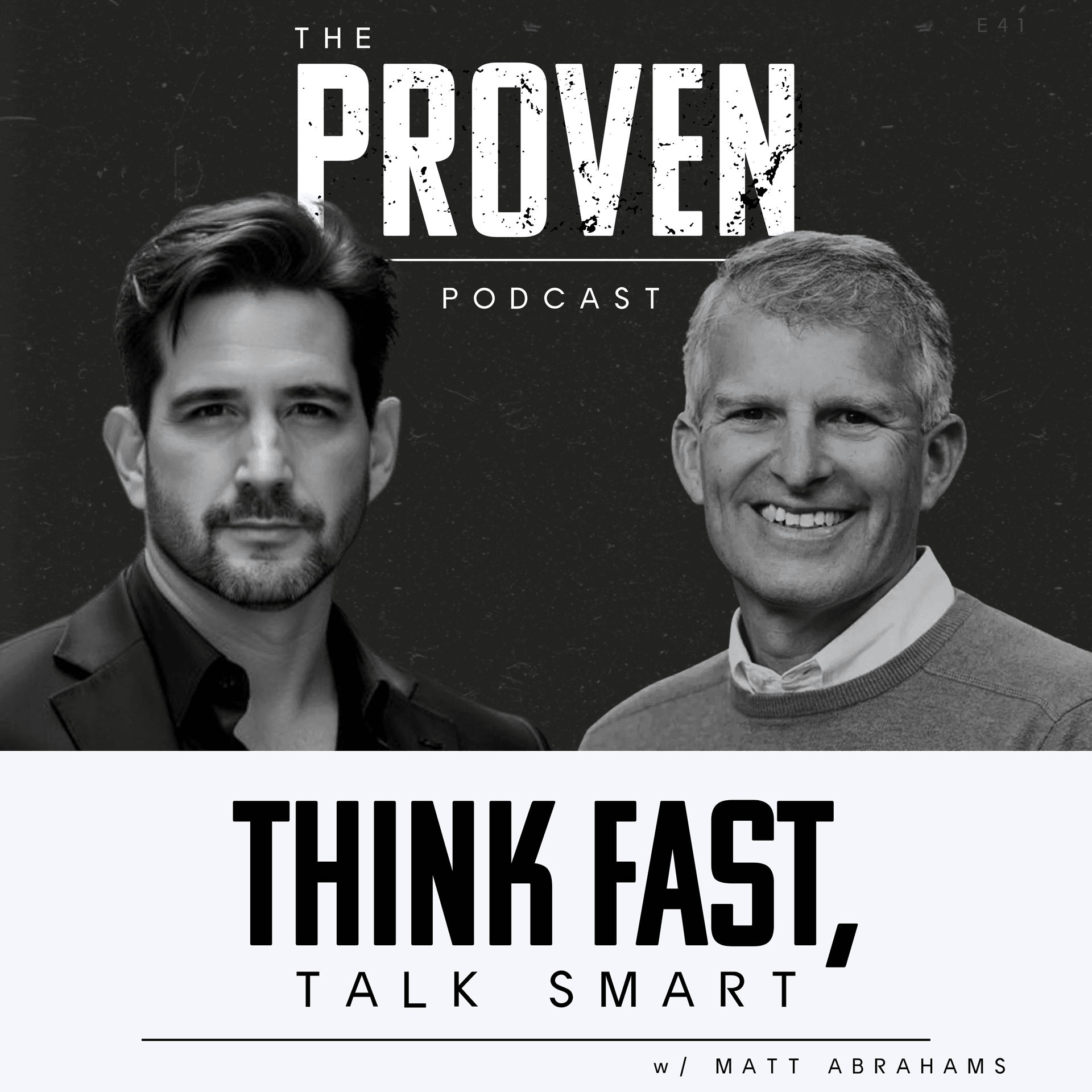
Proven Podcast - Episode Notes: Think Fast, Talk Smart with Matt Abrahams
Podcast Title: Proven Podcast Episode Title: Think Fast, Talk Smart - Matt Abrahams Description: This episode explores the art of effective communication with Matt Abrahams, a Stanford educator, communication expert, and host of the "Think Fast Talk Smart" podcast. He emphasizes that effective communication is a structured skill that requires practice and the right mindset.
---
Key Concepts
Communication is a Skill
- Learned Not Innate: Great communicators are not born; they develop specific skills through practice.
- Overcoming Myths: Common beliefs about communication often overcomplicate the process.
The "What, So What, Now What" Framework
- Structure of Communication: A powerful framework to organize messages clearly:
- What: What is the main point or information?
- So What: Why is it important?
- Now What: What are the next steps or actions?
- Versatile Application: Useful in various contexts such as presentations and everyday conversations.
Importance of Connection Over Perfection
- Authenticity Matters: Focus on being relatable and interested in others rather than striving for flawless communication.
- Engagement through Connection: Building genuine rapport is more effective than delivering a perfect presentation.
Practical Strategies for Improving Communication
- Practice Spontaneous Speaking: Like athletes, practice responding spontaneously to questions and scenarios.
- Mindset Shift: View communication as serving the audience, not just delivering content.
- Avoid Overused Phrases: Replace phrases like "Does that make sense?" with more engaging alternatives to check for understanding.
---
Episode Highlights
Key Takeaways
- The Three W's Framework: Essential for structuring messages effectively (4:45).
- Engaging Q&A Sessions: Ditch phrases like “Good question” to enhance engagement (10:01).
- Making Communication Work: Practical strategies for real-world communication (14:01).
- The Power of Connection: Techniques to build rapport, especially in virtual settings (20:01).
- Simplifying Complex Ideas: Methods to make sophisticated concepts accessible (27:08).
- Stand-Up Meetings: Implementing stand-up meetings for better efficiency (38:10).
Communication Techniques
- Reframing Mindsets: Shift from being interesting to being interested in your audience.
- Tonality and Cadence: Adapt your speech patterns to engage listeners effectively.
- Listening Skills: Quality communication involves actively listening and adjusting your message accordingly.
Implementation Strategies
- Breaking Down Information: Focus on bite-sized communication to avoid overwhelming the audience.
- Building Habits: Link new communication practices with existing behaviors, such as taking a deep breath before speaking.
---
Additional Resources
- Podcast: [Think Fast, Talk Smart](https://provenpodcast.com/).
- Companion Guide: Downloadable guide available at the Proven Podcast website.
---
Conclusion Matt Abrahams emphasizes that effective communication is achievable through understanding, practice, and a focus on connection rather than perfection. By using structured frameworks and engaging techniques, anyone can enhance their communication skills, making every interaction more impactful.
Written by AI. May contain mistakes. Listen to the episode to check what was said.
Transcript
Automatic transcript. May contain errors.0:00Welcome to the Proven Podcast, where it does not matter what you think, only what you can prove. Everyone thinks great speakers are born, not made. Today's guest, Matt Abrahams, proves that's holding you back from millions in opportunities. This Stanford lecturer and communication expert has cracked the code on spontaneous speaking with his what, so what, now what framework. Proving that the ability to think on your feet isn't a gift, it's a skill thousands have learned. The show starts now. Alright everybody, welcome back to the show. I am ecstatic to have Matt on. Matt, thank you so much for being on the show today.
0:29Charles, thrilled to be with you. Thank you. Very excited. There's so many things you do as far as, you know, you have a book, you've got a podcast. It's all about how to communicate better. And we're in a society now where it's all about social media and we have all these abilities to communicate, but people don't effectively communicate all over the place. So being able to have this conversation with you to help us get there is important. I think one of the things that most people don't know about you is you're very heavy into martial arts. Can you tell me a little bit more about that? Yeah, well, thank you.
0:58I don't often talk about it, but I've been doing martial arts since I was 13. There have been some little breaks along the way, and I've studied many, many arts. To me, it's very important, and I think everybody needs to find a physical outlet to help them. You know, when I'm struggling with something in my life, I find that in the dojo, the martial arts studio, I'm able to work it out in a different way. And similarly, when there's some challenges or issues that I'm facing in the martial arts, I find that they seep in and get some help from what I do in my day-to-day life. So I have thoroughly enjoyed it.
1:28I started the martial arts out of a desire for self-defense. I was not very secure as a 13-year-old, was in a new environment, and it really helped, and I've really connected with it and for many decades have studied the martial arts. What specific martial arts are you into on a high level? Well, you know, if your listeners know a lot about arts, uh, so, um, I started very young. The very first exposure I had to the martial arts was through judo. I took a class on judo. Um, my cousin, my older cousin who I've always looked up for, he, he has opened my eyes to so many things. I vividly remember as a 10 year old going to McDonald's with him, he was babysitting me or something and he ordered two hamburgers.
2:08Oh my goodness. You can have two. I thought it was one hamburger, one fry, one drink, opened my mind to possibilities of the world. Um, but he had studied a Japanese style called Gojon Ru and, uh, really got very interested in it. Um, there were no local karate studios where I grew up. So I started in Kenpo and have stayed with the same place for decades along the way. I've studied other styles, uh, Kodankan Jiu Jitsu, uh, Tai Chi, qigong, bagua, and some other styles along the way. My two children have studied martial arts, different arts on purpose. And so lots of exposure to lots of different arts.
2:48I love that you kind of bring what you've done in martial arts world into what you teach and how you share in the classroom because you've taught thousands and thousands of people, not only in the academic world, but also in the professional world. And there's these structures. We talk about in kimpo, there's five swords and there's twisted branch. And there's all these things that people who, if they know the Kimpo listeners right now, they're like, oh my God, yes, they're talking about this. For everyone else, they're like, what the heck? So more homework for you guys to go play with. A lot of what you do is structures and it helps people remember things and it helps you to think faster and to respond smarter and to do all these things in a high level.
3:23One of them that you do is called the three what's. Could you walk me through what that is, what the three what's are? Yeah. I love that you're connecting the martial arts or at least the form that I study to the communication. Because one of the things that really draws me to Kenpo is there's a science behind it. And there are a lot of structures. It's a series of movements that combine together. It's like music, where you put different notes together to form chords, those chords form the music. And Kenpo, many martial arts do this, but Kenpo highlights that and calls that out. And the same is true in communication.
3:56It's a combination of different parts that pull together to make the parts greater than the whole. And structure is a foundational principle. To me, a structure is nothing more than a logical connection of ideas. It's not a list. Our brains are not wired for lists. In fact, Charles, you know, when you go to the grocery store, how many items do you need to buy before you write it down? If you're like me, it's three. Anything over three, I'm going to forget something. You might be a little bit higher than me. It's hard. So when we just itemize information for people, we're doing them a disservice.
4:29Structure helps us help people learn. Our brains are wired for a logical connection of ideas. So there are many structures, myriad structures. Many of your listeners are probably familiar with star situation, task analysis results. All television advertising or the vast majority of it is in problem, solution, benefit Some issue, challenge, or problem Here's how the product or service solves it And then the benefits to you The structure I like the most because of its flexibility is Three questions What? So what? Now what? And these three simple questions allow you simply by answering them To provide a structured response in many situations I call this the Swiss Army knife of structures It allows you to give an update.
5:15It allows you to write an email. It allows you to give feedback and much, much more. Let me give one example. If you are in an update meeting, I hate those, but if you are, the what is your update. You just say, what have I been working on? And you answer that. Why is it important to the team, the project, the goals we have? That's the so what. You answer that question. And then the now what is, what are the contingencies and next steps that you'll follow through? So by simply answering these questions, you actually get a structured bit of information that not only helps you deliver it, but it helps your audience to remember it.
5:48And the goal of most communication is the F word, not the naughty one, but fidelity, accuracy and clarity. When I relay something to you, I want you to get it and be able to share it with the same clarity that I shared it with you and structure helps. And this is a great one. I love that you talked about the fidelity there, that you immediately said, listen, my opportunity is to give value to you. It's not about how good I look on stage. It's not about public speaking. It's about public communication, having that conversation. My goal is I have value to give. I'm going to give it to you the best I can with what I have.
6:21Now, if it delivers it in an awkward way, who cares? The goal is to kind of give that information. One of the other things that connected me really, when I was going through everything, I was listening to your book, which is a phenomenal book, the idea that you can be better and it takes practice. Can you talk to me a little bit more about that? Yes. So like any skill, music, martial arts, sport, whatever, you have to practice. Now, the interesting thing about spontaneous speaking, speaking in the moment is many of us think you're either born with it or not. You're either good at answering questions, giving feedback, making small talk, or you're not.
6:58And in fact, it is a set of skills that you can practice and learn and develop so that when you're in the moment, you can deploy them. And I use athletics athletes as a great example all the time. Athletes drill, practice, prepare so that they can then play their spontaneous game. And we all can do the same. Now, some of us, by virtue of our personality, by virtue of our experience, might start a little bit ahead of others. You know, my last name is Abrahams. My entire life, I have always gone first just because teachers always sat us alphabetically. So I had a little bit of a leg up just because I was always used to being called on spontaneously.
7:42But that doesn't mean I was great at it and nor does it mean I couldn't get better at it. The same thing is true with everybody. We can practice and get better at our communication in general, but especially spontaneous speaking. I think that practice, Just like martial arts or physical activity, that practice over and over and over again makes the spontaneous seem like it was actually, oh, it just happened. It was spontaneous. Oh, it reminds me of Larry Bird. For those of you who are old enough to know who Larry Bird is, he would sit there and he was just phenomenal. He was the Steve Curry before there was a Steve Curry, for those who are catching up.
8:18He would shoot 100 shots. And if he didn't make all 100 in a row, he would start over from the beginning. So that when he was and he went out and he prayed. He practiced on the court, but like, oh my God, he's such a good shooter. That was not by accident. That took an immense amount of kind of repetition over and over and over and over again. You have a couple of pet peeves and one of them, I think your number one pet peeve is something that I do all the time. So I'm going to be selfish here and I'm going to steal time on the podcast and do it. At the end of what I'm communicating, because I'm one of those individuals who does have a little bit of diarrhea of the mouth, I rapid fire information out.
8:53There's a lot that comes out all the time. I always try and check in with my audience and I do something that is just, it's just ineffective. There's just no way around it. I say, does that make sense? Yeah. And I know it's your pet peeve and it's something that I've been working on. I'm like, does that resonate? Can I go over anything more? How does someone who has this issue, me, how do we go through that and create a more effective way to kind of resonate with our audience? So thank you for, for disclosing. It is something that does bother me Your intent is wonderful And I want to reward the intent I just want to change the behavior At the end of you communicating Answering a question, giving information You want to check in to make sure That you served your audience well Did they understand what you were saying?
9:44Did you answer their question? Those are very laudable goals The problem is many of us default To the single phrase Does that make sense? And if you say that enough, so imagine you're in a meeting and you contribute multiple times. And at the end of each time you say, does that make sense? At some level of our primitive brain, we begin to think, does that person make sense? They're always asking, do they make sense? I would much rather you check in in a different way, in a varied way. So for example, imagine somebody asks you a question, you answer the question. You could say, did I answer your question?
10:21Can I tell you more to help clarify? What more can I provide you to help you understand? Lots of different ways to accomplish that same goal versus just asking, does that make sense? The other thing with does that make sense is it really puts the person on the spot. It's very hard to tell somebody who is an expert or in a position of power, no, that didn't make sense. So if you give them an opportunity to connect with you or to ask differently, you know, simply saying, do you have a follow-up question? is much easier for somebody to respond to than does that make sense. You know, there's another pet peeve I have that I'm going to, just because this is therapeutic for me, happens at the beginning of Q &A.
11:05Whenever people ask questions, so many of us go, oh, good question. Good question. Good question. Not every question is a good question. And I think what we're doing when we say good question is good. I know the answer. If you want to reward questions, reward the ones that are truly inspirational or insightful. And you can say that, but rewarding every question again, loses the value. And the problem is this Charles is you'll have four questions. I say, good question, good question, good question. The fourth question really is the good question. And you're so taken aback by it. You don't say good question when you should have, and the person feels bad.
11:43So I have pet peeves on both ends of Q and a there's the good question. and the does that make sense piece. Again, both have laudable intent, but we're just executing poorly. If every question is a good question, no question is a good question. It's kind of, it mixes it. I like that. Yeah, yeah, yeah. But you see, that's the martial arts right there. I cannot tell you the number of times my instructor, my sensei, who I've had for decades will tell me you did that wrong the right way. And, and you sit there going what, but in fact, It meant the move was wrong, but the intent was right. And in the martial arts, intent and focus is so important.
12:22The moves almost become immaterial. And the same thing can be true in our communication as well. And I think the practice of doing the moves over and over and over again allow you to kind of, as you say, to think fast, think smart, think faster, think smarter. It's all connected to it. I liked how you talked about an idea, and I'll give homework to the listeners. He did a little bit of an identity hold when he sat there and said, good question. Or do you understand? He did a little bit of identity hold there. So for those of you playing at home, we'll talk about identity holds later if you want.
12:50But I love how you did that. One of the things that we're running into and people don't understand it on a high enough level, if you want to think faster and you want to talk smarter, we're in an age where communication is rapid firing. And one of the things you did in your book, which is excellent, is you gave tasks at the end. Yet, much like people who have ever stood in front of classes, who have ever taught anything, whoever shared information, when you assign homework, for lack of a better term, it doesn't get executed on. We know that if I write a book, the majority of the population is not going to go past page 14.
13:22They're just, there's not, you've been doing this a long time. You've been teaching on an exceptionally high level. You teach at Stanford, which is amazing. You've done it professionally. What are some of the secrets that, okay, yeah, I'm thinking faster. I'm talking smarter, but how do I effectively execute? How do I effectively, how do I execute more effectively in my life? What are some of the things that you've done in that environment that can people can use it? Yeah. So thank you for noticing that in the book. I believe the best way to learn communication is to do communication. You don't just read about it.
13:54You have to experience it. At the very end of the book, there's a QR code that takes people to videos. And in fact, as an aside, the only reason my publisher was able to convince me to write the book was because of that. I told them, I don't want to write a book on communication in the moment because you have to do it. It's not something you read about. And they sent me a cookbook. I said, why the heck are you sending me a cookbook? They said, look at the QR codes. And I said, I get it now. You can actually see and do the communication and that's important. So to get to your question, which is very specific about how do we actually in our own lives develop these skills and how as a teacher, do I encourage people to do so?
14:32So it's about two things. First, making it bite size. It can be very intimidating to walk into a small talk situation or go into a big Q &A situation, but there are little incremental steps you can take that can help build up to that. Let me give one example. Let's say you know you're going to give a big presentation and Q &A is going to come and that Q &A is intimidating for many reasons. Well, first you do some mental practice. You think about what are the questions I might get? What are some answers I could give? Again, not to memorize, but just to sort of warm up. You know, if you're a golfer, you take plenty of swings before you actually go out on the course.
15:08So it's warming up. Maybe you then go to generative AI, whatever flavor you like, Gemini, chat, GPT, whatever. And you say, giving a presentation on this topic to this type of audience, what are three types of questions that might come up? And it generates spontaneous questions. You can then practice answering them. So again, it's by taking bite-sized pieces and chunks that you can practice that build up some of that skill. And then the other thing is about mindset. We really have to remind ourselves that being perfect is not necessary. Just being good and getting it done is important. so those two are fundamental to helping you and then the last thing i'd say if you can associate what you're trying to learn with an existing behavior already that's how new habits are developed rather than forcing yourself to say i got to do this new habit i got to do this habit just associate it with something you always do for example i i try to be very centered and present in everything I do.
16:13I have found for me taking a deep breath really helps me do that. So I now associate taking a deep breath with many habitual things I do. So when I go to access my phone, it does facial recognition. It takes it a second to do that. When I look at my phone, I take a deep breath. When I start my car, it takes a second for everything to get started. I take a deep breath. When I walk into my house after a day of work, when I unlock the door, I take a deep breath. In other words, I'm associating some existing behavior that I have with a new habit I want to develop. So by chunking things out into smaller steps, by reminding yourself, you just have to get it done.
16:51You don't have to do it perfectly and associating some behaviors with existing behaviors. You can develop those habits. That's how you make things permanent and get the practice that you need. I love the, we talk about in Bushido, the idea of meditation in every action. As you're going through it, you're doing it. So taking those breaths, taking those moments, that's something that I deeply enjoy. I also love that you brought up that, you know, kind of the idea of the perfection is the enemy of execution. There's so many times where I've been on stage where someone will ask me a question and I'll give them an answer.
17:23And I'm like, you know what? That wasn't the best answer. Let me take another swing at that. Because it's the only place in the world where people are like, you know what? Do it again. We're rooting for you to succeed. that's the joys of public speaking they're actually the rooting for you to succeed quick side note story i was helping someone do their their talk and she was very nervous had a lot of anxiety about it and before she went on on stage we had done a couple dry runs on smaller audience but this was her big show she's already mic'd up she's about to go on stage and she goes i have to pee and they had already called her name i was like go tell them she's like what so she walks out on stage and she's hi my name is yada and she's gonna kill me for telling this story she yours.
17:58Hi, my name is Yadier Yadier. I really have to pee. And everyone started laughing. And then it became not public speaking. It became public communication. Yeah. Yeah. Being able to build that rapport with your audience is so important. Absolutely. And being human is so important. We connect with people. And, and so not sure I would have given the same advice, but I love the outcome of that advice. And, and you're right. I mean, we connect with people and when we show our imperfections or our humanity, that's where we connect. There's so many places now with the way we communicate that we can't connect like that because it's not dynamic.
18:35It's very forward facing. It's very one directional, which makes it challenging when you're having people that are trying to communicate smarter and they're trying to do this over social media or an email or things of that nature where you don't have that, that tangible feedback, because, you know, I love the tangible feedback. I love, you know, I always say this all the time. People are okay, but individuals are amazing. I love to be able to read the facial reactions and see their breathing changing and all of that. When you're trying to do this, if someone's sitting down and they're trying to negotiate or they're trying to influence, they're trying to persuade, they're trying to build rapport and it's one directional, what are some of the things that they're like, Hey, this has proven that I can use this in an authentic way because there's so many people who have read certain books.
19:20I'm not going to call them out. Um, I will, you know, I am going to come out, you know, the, uh, you know, what is it? Think fast, grow rich or that. There's I'll leave that close enough with that. You get the idea. I'm not going to throw in the right under the bus. There's a book that people learn the manipulation side of it, which breaks the rapport. And it just gives me for lack of a better term and icky, you know, it's when people learn to say no in negotiation where they, they know stack. And then that went to yes stacking. And I was like, guys, just build that rapport. If someone's, if it's forward and it's one directional, what are ways that they can do this to be better communicators to talk not only smarter, but more effectively?
19:55Yeah. And, and it's, it's more prevalent, right? So a few things that we can do first expand the scope. The interaction doesn't just happen when you are with the person, even though you can't see them, you can begin that interaction and connection in the way you set up the engagement. You know, you do a great job, Charles, in how you reach out to your guests, how you connect through the emails, the language you use, the invitation is very warm. There's a lot that you can do in advance of ever interacting to set expectations and to set connection. I think the most underutilized communication tool is the calendar invite.
20:34We don't use them effectively. So that's the first step is you can connect before you actually meet. Number one. Number two, in the interaction, you need to make sure everything you're saying is relevant and salient to the person Which means we have to do some pre-thought We have to do reconnaissance, reflection, and research into the people we're talking to so we can make it relevant That engages them, that pulls them forward The most precious commodity, I believe, that we have in the world today is attention Getting at people's attention is really hard Especially when it's virtual or remote What's more difficult than attention is sustaining that attention Sustained attention is what I call engagement So you can engage early through meeting invites But in the moment of communication, even if I don't see you I can be saying things that are relevant for you I can use your name, I can use the word you I can invite you in through my language I can ask you to envision things I can say, what would it be like if picture this.
21:38What if you could, that language invites you to engage. And even though I don't see that engagement, it helps you engage with me. I can tell stories, use analogies, all of those help. Now, if we're virtual through a tool, as we are today, I can leverage some of the features of the tool, the reactions button, the chat feature, the breakout rooms. So there are things we can do. There are fundamentally three ways to engage people. Physical, get them doing something physical, mental. I've already talked about telling stories, using analogies, acting, asking questions. And then finally the language piece, the, I call it time traveling language.
22:15What if we could picture this, imagine. So that's how we can actually draw people in and connect with them, even if we don't see them. And these aren't manipulative techniques. These are connecting techniques. Anyone in your life who you feel is really connective and you really feel that simpatico with, I will guarantee you they're using some of these techniques. Not to manipulate, but this is just how they relate to you and others in the world. I think some of the things that, Matt, you do better than almost anyone else, and you do it smoothly, is your cadence just changed when you did that. Your tonality changed.
22:49And for those of you who aren't watching this, I recommend watching this because you'll see him actually change his tonality. It dropped about three octaves. He also changed the time in between the words. And these are subtle little things that again it's just like martial arts it's just like anything else it just takes practice it takes the ability to say hey if i talk really really fast what does that do in my audience does it do they withdraw if i slow things down does it withdraw we know this there's a famous study where if someone's getting very hyper you just talk a little bit quieter you're going to lock in their attention they're like what's going on so using the tonality using cadence those are really important when you're sitting there and you're teaching it's kind of the higher end things when you're talking to the professionals and it may be they're going to be communicating to a board member or they're going to be getting VC funding or those type of things.
23:36What are the struggles that they're running into outside of just the everyday insecurities, which people will be surprised that the hard billionaires have tons of insecurity, just like the people who aren't making those type of money. It's universal. How much money you have in the bank doesn't change the level of security or insecurity you have as an individual about yourself. Trust me, we all get embarrassed. still when I walk on stage, my right knee always shakes. It just is what it is. It reminds me that I'm still alive. It's just, I get nervous. It happens. When you're coaching these individuals, what are some of the things that have been the most effective to help them?
24:08And if you could give an example, that would be amazing as I just put you on the spot. Yeah, well, no, I'm happy to do that. So several things I want to say. First, when it comes back to tonality, our brains are wired for novelty, for things that change. Anything that stays the same, we stop paying attention to. So using variation in rate, in tone, in volume, that can really help keep people engaged. Again, it has to be authentic, not scripted, but it can definitely help. You are absolutely right. It does not matter your status in life. Imposter syndrome looms large for all of us, myself included.
24:45And I see it all the time in the executives I coach, in the students I teach, in my friends, in my family, in myself. It's ubiquitous. Some of the big things that people struggle with The more senior they get Is how do I make my thoughts My goals, my mission, my vision, my values Accessible to other people We marinate in them, we live in them We suffer the curse of knowledge and the curse of passion And you don't just have to be an executive to suffer from those All of us do What is very hard is how do I take what I know, what I'm passionate about, and make it accessible to other people? And beyond making it accessible, how do I make it motivational and inspirational?
Read the full transcript
25:32Leaders struggle with that. They have the passion. They have the vision. How do I make that accessible to somebody who hasn't had my life experience or the amount of time I've spent at the holistic level looking at all of this? That's a big challenge. And that's a challenge that I spend. I welcome that challenge because I find it really fun. It's a puzzle to solve, but there are a set of tools that we can use to help make it more accessible. I work with this one very senior leader of a company that we have all listened to what this company puts out. He's a genius and he's very creative and he's got all these ideas, but the people in his organization, they work on specific parts of what they do.
26:14And he's got this holistic view. How do you translate that holistic view so the individual understands, here's what my role is, but here's how it fits in the picture. And by the way, even though this task is mundane and repetitive, I need to be inspired to do it because it makes a huge difference. And so I work with him and his leadership team to help craft messages, to approach it, to make it accessible and inspirational. And that's fun for me. And the results are amazing when you find the right ways of doing that. It's interesting when you talk about the people at the high level, how do they pivot that at round.
26:48There's a concept called decentralized command, which allows no matter where they are, you're familiar with it, that pushes it upstream and downstream. And one of the things that I've, I've been very lucky to see over and over again is when people walk into environment, they don't make it about themselves. Okay. We have a goal. We know we have a goal, but what does that goal mean to you? And going back to the three Watts, you know, what does it mean specifically to you? Right. We've also done, you know, some work and you've talked about how people run into, they get nervous or they have anxiety.
27:15There's a couple of different ways to attack that when you are going on stage or you are speaking, or even if you're just writing an email in your house, when you're sitting in your boxers, what are some of the ways that you can kind of handle that, that you've learned to just say, okay, yes, it's happening. How do I address this in a, in a way, because a lot of us have a ton of knowledge in our head, but articulating it out of our pie hole is a little challenging at times. So how have you, you know, worked with people and the experience you had to teach us? Okay, you're stuck. There's a ton of information.
27:42You might be having some anxiety. You might be freaking out. You might have some lockups, right now. What are some tools that you've used to kind of help people get beyond that? So first and foremost, I want everybody to know I have pants on, number one. I'm not doing this in my boxes. I was hoping you didn't. But two, this happens to all of us. Anxiety is a separate topic. Happy to discuss that. Putting anxiety aside, when you have a lot to say and that the thoughts get jumbled, two things have to be your guiding light. Number one, what's relevant and important for the audience. You are in service of the audience.
28:15It's not about what you want to say. It's about what they need to hear. So you have to remind yourself and think what's most relevant for this audience at this time. And then to yourself, of all the things you could say, say to yourself, the bottom line is many of us, when we are experts or have a lot to say, we use that inverted pyramid where there's all this stuff and we eventually funnel it down. Well, we're taking our audience on a journey of our discovery of what we want to say while we say and the audience didn't sign up for that journey. Instead, we need to have the pyramid with the apex up top.
28:49That's the bottom line. And then expand out. So think about what's relevant and most important to your audience. That's where you start. Then say to yourself, the bottom line of all the things I want to say that's relevant for this audience is this. And then build your message from there. In other words, it's all about focus. The most effective communication is focused communication. focused in content and focused on the audience. And those are the two guiding lights to help you get there. There was a show called Mythbusters. Are you familiar with it? Oh, absolutely. When my boys were right in that sweet spot, we would watch that show all the time.
29:26I love it. So there was, it ties into this one. They were doing an Indiana Jones episode. Yeah, yeah, yeah. They were trying to set this up where they have a big ball, which was they were using a Zorb ball, which if you ever seen it, you just see horrible videos online where people are hurting themselves. Yes. They had it all set up and they're going to do the one where Indiana Jones runs away from the ball and they're doing all this work and they're setting it all up and all this. And then Jamie sat down and goes, wait, well, why are we doing that? They're like, what do you mean? They're like, no one's running away from this in life.
29:51This isn't one of the Miss Busters that makes sense. This doesn't, our bottom line is this doesn't line with our show at all. And they went, okay, we're not doing it. So all this work immediately in a one question went away. So it's prevalent for everything that you're doing. That immediately you say, what is the point? What is the main goal? What is the bottom line. And if you can't get to that, then it is what it is. Well, and the thing that's so impressive beyond the fact that you were able to link Mythbusters, I can't believe we've talked about martial arts and Mythbusters in the same year.
30:19Really cool that you can do that. But what's most important to me in that story, beyond asking the question, why are we doing this and how does it serve our audience, is the willingness to just cut bait. Yes. Right. Many of us are so committed once we've started something. And this is part of the problem in spontaneous speaking is we start and we go down a path and we say, well, I'm just gonna keep going down this path. No, stop, correct, readjust. You're supposed to be in service of your audience. If it will help them better to go this way, this happens to me all the time when I'm teaching. I can be teaching and then realize that my students are struggling or have some challenge with something I've said.
30:59I don't keep the lecture going just to finish the lecture. I stop. We correct the issue. We make sure people understand. Maybe I don't get through that lecture that day, but at least people are getting the value that they need. So that ability to recognize we're not in the right place, we're not serving the audience, and then to actually make the adjustment, that's critical. There's a huge thing in improv that it works to kind of pivot around is the idea that you have to commit to the bit. And it's one of the myths that they'll rip it apart. They're like, don't do that. If it's not resonating, if it's not hitting with the audience, If your partner isn't resonating with it, pivot.
31:32You know, what we talk about in the business side, I'm like, is spongeful. We're talking about, is your spongeful? If you're spongeful, we're done. Meeting's over. If you're working with people and you've downloaded so much information that their sponge is just full at the moment, take a break. Don't commit to the fact that, hey, I wanted to do all this during the meeting. Their sponge is full. There's nothing more you're going to get into that. Things are leaking out. having the ability to, again, read people, connect with people and pivot that around is just as important as speaking as fast as you can, as thinking as fast as you can, as being as effective.
32:01Sometimes you just need to take a breath and let people do what they need to do. Absolutely. That's why listening is such a critical part of communication. You know, if you talk about communication, most people focus on the broadcast, the information coming out, sometimes listening, observing and understanding. And that's how you can make the decisions that you just talked about. The only way you can see that the sponge is full is if you slow down and consider people's sponges. And you talk about a tool that does that really well. You talk about something called reframing, where you reframe the thing.
32:31Could you share a little bit more about that? Well, I think the way we approach our communication matters a lot, our mindset. And a lot of us see communication as something that has to be done right. It's a binary. There's a wrong way and a right way. And the reality is that's not true. There is no right way to communicate. There are better ways and worse ways, but there is no one right way. And when you fixate on doing it right, you actually get in the way of doing it well. Your brain is like a CPU. If you have a laptop with lots of windows open, if you have a phone with lots of apps open, each one of those windows and apps is performing less well because the others are open.
33:13It's just taking some of that bandwidth. And your brain works the same way. If I see this as a zero-sum game, there's a right way and a wrong way, that means I am constantly judging and evaluating everything I'm saying against whatever that standard is, which means I'm taking some of that precious cognitive bandwidth and directing it away from where it should be focused, which is the audience. So I always say it's about connection, not perfection. And the biggest take-home message from this is we should not memorize. When you memorize, you have created the right way to say it. And you have now created that thing that you will constantly be comparing to reducing your bandwidth.
33:51People then say, well, then how am I going to get through my material? Have a structure. A structure is a roadmap. I might not know every word I'm going to say when I use what, so what, now what, but I know I'm going to go from what to so what to now what. It's just like when you are in a big major city, you can get from point A to point C, maybe not exactly in the most straight line, but you're going to get there because you have that general path laid out. And that's what structure does. Let me give you a very concrete example. Many people get really flustered and dislike small talk. and we find it very pressure filled very awkward and it comes down to reframing we want to be the most interesting person in the room and i learned from a guest on my podcast this notion that it's not about being interesting it's about being interested yes and reframe it to being about connection about being interested rather than being right in the best all of a sudden small talk becomes easier, more enjoyable, and you can reap some great rewards.
34:55So this notion of reframing is really important in all of our communication. I love that you talked about it's not being about right or being the best. You know, you run a podcast where if you do this in isolation, if you do it in a vacuum, you're just listening to yourself speak. Being able to set up a podcast where you're bringing other people in and having their insights come in and be able to share those things is important. Can you tell me a little bit more about your podcast? Well, thank you. The podcast is called Think Fast, Talk Smart. The book is a derivative, Think Faster, Talk Smarter.
35:24There will be no Think Fastest or Talk Smartest. We're done with that. The podcast is all about communication skills and helping people employ those skills in their careers and in their lives. 20-minute episodes, bite-sized. We've won lots of prestigious awards, but the most important award I think we've won is Best Dog Walking Podcast because it's relevant, People can apply it and it takes 20 minutes. And we bring in experts, both practitioners and academics, to talk about specific skills. We just had somebody on who talks about gathering and how to run meetings and other types of gatherings effectively.
35:58We've talked about negotiation and influence and just confidence and communication. It really is an opportunity for people to hone and develop their skills. And selfishly, it's a wonderful opportunity for me to learn and to develop my own skills. And ultimately, I am a perpetual student. So as you've learned, Charles, hosting a podcast allows you a great opportunity to learn from other amazing people. It's the reason I do a podcast. Everyone thinks it's for the monetary value. I'm like, nope, I get access to individuals that I never would have access to. And we get to have conversations where I go back and I just think about it and chew on it.
36:34It's absolutely a blessing and a gift. When you're running into these and they give you these little tidbits, can you think of things from your podcast or guests or insights that they gave that really changed the ballgame? Let me, I'll try and give it a concrete example for something that came on mind. Yeah, please. Someone came in, they said, get rid of the table out of your meeting room. I'm like, I'm sorry. They're like, get rid of the table out of your meeting room. Everyone has to stand. But first you need to do a debrief, which is that has this little dock that everybody gets to go through that gets everybody caught up.
37:02And then you've got a 10 minute meeting. and by making everyone stand these 45 minute to three hour meetings all of a sudden turned down to these 15 minute meetings and things are getting done more effectively because i'm all about efficiency it's probably my favorite thing in the world outside of maybe ice cream but working on getting rid of that um they got rid of the meeting tables and it was just this simple thing i was like really i never would have thought getting rid of meeting tables would have done that and everywhere we've implemented it for these because we've all been in those meetings that Okay, today's, and there's this PowerPoint presentation.
37:31You're like, oh God, please no. And you're going through that process. Here's a document. We've debriefed. It has everything. It basically is the three what's that were laid out, but no one's going to sit down. No one's going to get comfortable. We're all going to share in the same space. That's something that radically changed how I do the majority of my meetings. What are some of the stuff that came from your podcast? I think that notion of standing meetings and the way the environment is set up is so important. I had a guest on who talked a lot about environment matters a lot and it's really changed the way I think.
38:00I hope that your drive for efficiency does not impact the savoring of your ice cream cones. I would hate for you to just plow through those. Enjoy it. I have every episode. Our goal on Think Fast, Talk Smart is you should each take away, every person should take away one thing that they can put into action right away to change or improve their communication. So there are lots of things I can mention. I'm going to share two. I had Julian Treasure on. Julian is a listening expert. He's got amazing TED Talks. He's one of the top five most listened TED Talk presenters. He said something to me that fundamentally changed the way I think about listening.
38:40And all he did was take this notion of communication is all about being in service of your audience. And he said, the question he always asks himself is, what is the listening I am speaking into? And I love that because that takes that notion of I'm in service of my audience, but reminds us that everybody listens differently. I have to adjust and adapt. I love that. Another one that really sticks out to me, I had Michelle Gelfin. She's a professor at the Stanford Graduate School of Business where I teach. And she studies lots of things among conflict and negotiation or among those. And she talks about metaphors and how the metaphors we use influence the communication we have.
39:20So if I'm negotiating and I see it as a battle, I'm going to communicate very differently than if I envision it as a dance. So she talks about minding your metaphors. And it really had impact on me because I approach a lot of my communication through a metaphor. When I'm interacting with my kids, I see it one way. When I interact with my students, I see it another way. And I see how it changes my communication. So I challenge everybody as I challenge myself to question, what's the metaphor that I'm using when I approach this communication? and might another one serve me better? I think the one that you've already given me that has fundamentally changed how I show up is don't be interesting, be interested.
40:00Yeah, that came from Rachel Greenwald and she's an amazing guest and person herself, yes. Yeah, that one, when you shared that, you know, doing the research, all of a sudden it hit me, I was like, oh God, I wrote it down. I was like, all right, that's staying on the computer for a while. I was like, that one, that reframed it. Two quick things before we wrap it up. um if if one of your students was asking you and they're coming into it and they want to be successful in your class because i was not a good student i was a phenomenally poor student i barely made it through my undergrad uh sorry but if they're like what are the tactics what are what are some things that they could be more effective in being successful in that stage of their life and then secondarily as people are beyond the school world and they're facing the world of being able to communicate and to to communicate more efficiently efficiently and talk smarter.
40:46Can't get that word out today. Um, talk smarter. What are some things on both those sides? Okay. These are the takeaways that I really would love you guys to have. What are those two? Yeah. So for, for younger folks, like my students, they come in with so much energy and so much excitement. So it's really about focus. It's about focusing. What is it you want to do? What is it you want to say? How do you take that energy and make it So somebody else can understand it. So people who are newer or more novice to life, to a position, to a role, it's really about focus. And that focus can help you improve your impact.
41:29So it's leveraging structure. It's thinking about relevance. These are the things that really help my students. Now, somebody who has a little more wear on the tires might be better served to think about how do I make my content more accessible? We talked a little bit about this earlier with leadership. A lot of people, as we get older, that curse of knowledge, that curse of passion really sets in. We know what we're doing. We've done it before. We make these assumptions. We use jargon and acronyms. These are things that distance us from our audience and our communication. So I would say earlier in people's careers and people's lives, it's about focus.
42:09And then later, it's about making it accessible. The bottom line in both of those, though, is the same. It's all about being relevant for your audience. You have to focus on that regardless of your experience, age, or tread wear on the tires. So when it talks about getting content and being accessible, how do people find you? How do people track you down? Where do they get access to the podcast? Well, I try to make it easy. So let me point people to two places. So faster smarter dot IO is the website that will take you to the podcast. We'll take you to a whole bunch of free resources, videos, et cetera.
42:42And then on LinkedIn, I do a lot of work on LinkedIn. So if people just search my name or search faster smarter dot IO, they're going to get access to the content, to the podcast, Think Fast Talk Smart, and other things. And I invite people to do that. I am all about building community and really learning myself, but helping others learn too. Matt, I appreciate you coming on. I really do. Thank you so much for taking the time out and sharing so much of your wisdom with us. Charles, thank you. This was wonderful. I appreciate the opportunity not just to speak with you, but to speak meaningfully about something important to me, the martial arts.
43:14Thank you for that. Absolutely. Matt proved that communication isn't about being perfect. It's about being present and focused on your audience. Structure beats memorization, practice beats natural talent, and connection trumps perfection every time.
From the publisher
In this episode, Charles explores the art of effective communication with Matt Abrahams, a Stanford educator, communication expert, and host of the "Think Fast Talk Smart" podcast. Drawing from his decades of martial arts training and extensive teaching experience, Matt reveals how mastering communication is similar to mastering any skill - it requires structure, practice, and the right mindset.
Matt challenges common communication myths, proving that being a great communicator isn't about natural talent but about developing specific, learnable skills. He and Charles dive deep into why most people overcomplicate their communication, how traditional presentation methods often fail, and why connection matters more than perfection.
Throughout the conversation, Matt shares his battle-tested "What, So What, Now What" framework, demonstrating how this simple structure can transform any communication scenario - from high-stakes presentations to everyday conversations. He explains how he's helped thousands of professionals, from Stanford students to Fortune 500 executives, develop the confidence to communicate effectively in spontaneous situations.
Whether you're a business leader, educator, or professional looking to improve your communication skills, this episode offers practical strategies you can implement immediately to think faster and talk smarter.
Key Takeaways:
* The "What, So What, Now What" framework for structuring any message
* Why standing meetings dramatically improve efficiency and engagement
* How focusing on being interested rather than interesting transforms communication
* The power of structure over memorization in spontaneous speaking
Head over to https://provenpodcast.com/ to download your exclusive companion guide, designed to guide you step-by-step in implementing the strategies revealed in this episode.
KEY POINTS:
4:45 - The Three W's Framework: Matt reveals his powerful "What, So What, Now What" structure that transforms any communication from confusing to crystal clear.
10:01 - Revolutionizing Q&A Sessions: Learn why saying "good question" kills engagement and discover better ways to handle audience interactions authentically.
14:01 - Making Communication Work: Matt shares practical strategies to execute effective communication, moving beyond theory to real-world application.
20:01 - The Power of Connection: Discover how to expand your interaction scope and build genuine rapport, even in virtual environments.
27:08 - Breaking Down Complex Ideas: Learn Matt's proven techniques for making sophisticated concepts accessible to any audience.
34:11 - Connection Over Perfection: Matt debunks the myth of perfect communication and reveals why authentic connection matters more than flawless delivery.
38:10 - The Stand-Up Revolution: How eliminating meeting tables and implementing stand-up meetings can dramatically improve efficiency and engagement.