
In short
Proven Podcast: Episode Summary
Episode Title
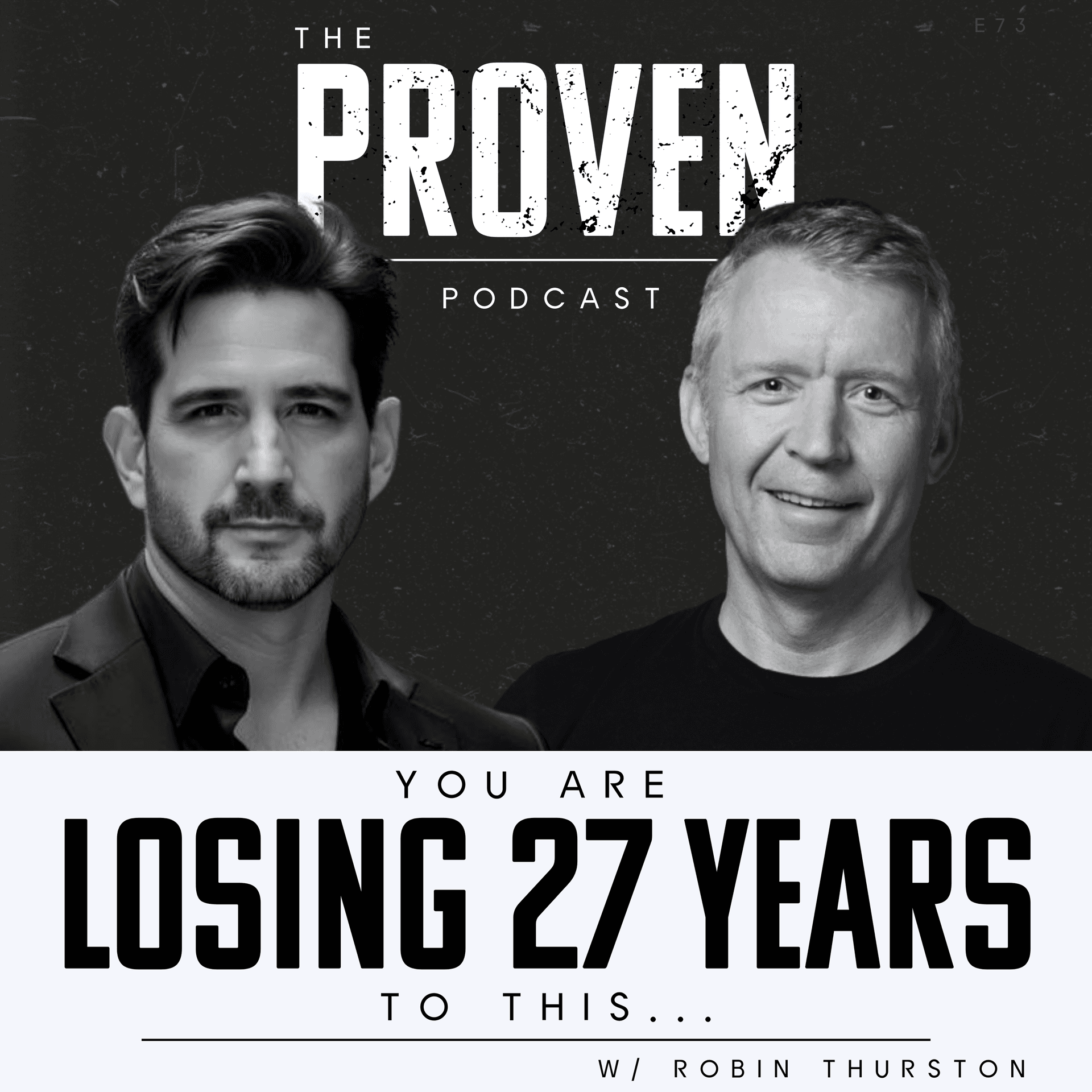
You are Losing 27 Years to this... - Robin Thurston
Episode Overview In this enlightening episode of the Proven Podcast, Charles interviews Robin Thurston, CEO of Outside Interactive, Inc. They delve into the intersection of technology, health, and human connection in a world increasingly dominated by screens. Robin shares his vision of creating an integrated outdoor ecosystem aimed at inspiring individuals to reconnect with nature, thereby enhancing their physical and mental well-being.
Key Themes & Discussions
- The Mission Behind Outside Interactive
- Purpose-Driven Leadership: Robin discusses the core mission of Outside, which is to encourage people to spend more time outdoors.
- Emotional Engagement: Highlighting how purpose-driven companies foster deeper emotional connections with their audiences.
- Alarming Statistics on Screen Time
- Time Spent on Screens: The average American spends 7-8 hours a day in front of screens, while children spend only 4-7 minutes outdoors.
- Impact on Health: Increased screen time correlates with rising mental health issues, including anxiety and depression.
- Reconnecting with Nature
- Simple Outdoor Activities: Robin emphasizes that meaningful outdoor engagement does not require extreme sports; simple activities like walking barefoot on grass can have significant health benefits.
- Forest Bathing: The concept of immersing oneself in nature for mental clarity and well-being.
- Balancing Technology with Wellness
- Practical Strategies: Robin shares tips on maintaining physical and mental health amidst digital overload, emphasizing the need for intentional outdoor time.
- Entrepreneurship and Human Performance
- Building Mission-Driven Companies: Discussing how entrepreneurs can create businesses that prioritize health, community impact, and business growth simultaneously.
- The Psychology of Outdoor Connection
- Biological Alignment with Nature: Humans are naturally inclined to thrive outdoors, and connecting with nature enhances creativity and resilience.
- Future of Technology and Wearables
- Emerging Tech: Robin discusses innovations like smart glasses and the importance of ensuring technology enhances human experiences, rather than replacing them.
- Redefining Success
- Wellness as a Metric for Success: Robin challenges leaders to rethink productivity through the lens of well-being and purpose.
Key Takeaways
- Outdoor Engagement: Encouraging simple outdoor habits can counteract the negative effects of excessive screen time.
- Community and Accountability: Engaging in group activities promotes commitment and motivation to spend time outdoors, as seen in the rise of running and hiking clubs.
- Data-Driven Decisions: Utilizing data from wearables to optimize personal health and wellness while balancing the use of technology.
Notable Time Stamps
- 01:08 – Mission behind Outside
- 03:42 – Hidden costs of screen time
- 06:11 – Importance of simple outdoor activities
- 08:04 – Balancing technology with wellness
- 12:30 – Entrepreneurship and human performance
- 17:05 – Psychology of outdoor connection
- 21:40 – Future of technology and wearables
- 26:18 – Redefining success through health and purpose
Conclusion The episode serves as a powerful reminder to reconnect with nature and integrate wellness into our lives amidst a digital landscape. Charles and Robin emphasize that taking intentional steps toward outdoor engagement can significantly improve mental and physical health, ultimately redefining what success looks like in both personal and professional realms.
For more insights, visit [outsideonline.com](https://outsideonline.com).
---
By summarizing the key points of the conversation, this markdown file serves as a concise and informative reference for listeners and those interested in integrating wellness and outdoor activities into their lives.
Written by AI. May contain mistakes. Listen to the episode to check what was said.
Chapters
Tap a time to open that second in VORobin Thurston's Journey
0:22 to 1:46
Discussion about Robin's background and his journey in tech and outdoor wellness.
“Robin, I'm really excited to have you here.”
The Impact of Screen Time
1:46 to 2:55
Exploration of alarming statistics on screen time and its effects on health.
“I started, you know, putting other parts of this puzzle that we're building together really to inspire people, you know, ultimately activate them and then have them celebrate what they're doing in the outdoors.”
Connecting with Nature
2:55 to 5:39
Discussion on the benefits of spending time outdoors and connecting with nature.
“They're not spending time outdoors adjusting their eyes to looking at something like their horizon.”
Simple Outdoor Practices
5:39 to 7:51
Suggestions for simple outdoor activities that improve wellness.
“And I don't think that in our current society that recognition about what it means to, you know, really touch grass means for people on a day-to-day basis and just how important it is.”
Integrating Outdoor Time in Daily Life
7:51 to 10:36
How to incorporate outdoor time into daily routines for better health.
“So we know screens and tech isn't going away.”
Building a Health-Conscious Organization
10:36 to 14:05
Discussion on creating a workplace culture that encourages outdoor activity.
“feel a greater connectivity and think about things like sustainability a lot more than if they aren't spending time outdoors.”
Building a Culture of Outdoor Inspiration
14:05 to 17:35
Learn how company culture can promote outdoor activities and wellness.
“we have about 400 people that are spending all of their time thinking about also how to get other people outdoors.”
Integrating AI and Employee Productivity
17:35 to 23:05
Explore the balance between AI integration and maintaining productivity in remote work.
“Charles is like, don't forget to celebrate.”
Finding Your Zen Through Outdoor Activities
23:05 to 27:05
Discover the importance of finding personal outdoor activities that promote mental peace.
“How much studying did they do around it?”
Acquiring Distressed Businesses
27:05 to 28:00
Understand the strategies behind acquiring and revitalizing failing companies.
“I'm not, I'm not a big climber, Charles.”
Show all 23 chapters
The Poolside Conversation
28:00 to 28:30
A humorous anecdote about a friend who watches TV while swimming.
“buddy of mine, he carved out the bottom of his pool and he put a TV there.”
Acquiring Distressed Brands
28:30 to 30:46
Discussion on the strategy of acquiring and optimizing distressed media brands.
“Well, I mean, to be clear, the, the many, I mean, there was two reasons why we ended up looking at, um, sort of things that were distressed.”
Transitioning to SaaS and AI
30:46 to 34:38
Insights into the shift from traditional advertising to SaaS and AI integration.
“60 % is in reoccurring either SaaS businesses or subscription businesses.”
The Digital Detox Trend
34:38 to 36:45
Exploration of the increasing desire for outdoor experiences and digital detox.
“But as an example, there are places where it has amazing use for us.”
Benefits of Nature for Well-Being
36:45 to 39:56
The discussion highlights the health benefits of outdoor activities.
“And I do think there is a bit of AI backlash in terms of like, you know, just technology.”
Engaging with Outdoor Communities
39:56 to 42:04
The importance of social accountability in outdoor activities and group engagement.
“So we have a zoom call every morning and everyone gets on their stupid thing.”
Finding Balance Between Technology and Nature
42:04 to 42:51
Explore the importance of balancing technology use with outdoor activities.
“Are there any things, are there any beneficial things that are on the phone that you could sit there when you are on a screen?”
Creating Connections Through Content
42:51 to 43:58
Learn how creating engaging outdoor content can inspire real-world adventures.
“But I'm just saying that we are out of balance, Charles.”
Curating Top Experiences: The Process Explained
43:58 to 45:24
Discover the methodology behind curating lists of top outdoor experiences.
“But I think what's more important for us now is that we create the connection to somebody actually going to do that thing.”
Favorite Tools for Cycling and Outdoors
45:24 to 47:20
Get insights on essential tools and gear for cycling and outdoor activities.
“When you guys are creating these lists, how do you guys narrow this down?”
Health and Wellness Tools for Outdoor Enthusiasts
47:20 to 49:34
Explore various health and wellness tools that can enhance outdoor activities.
“Like I love eight sleep, um, the product for your mattress, like, and how it helps you sleep.”
Listening to Your Body vs. Wearable Tech
49:34 to 53:40
Understand the importance of listening to your body alongside using technology.
“Like I would say that, you know, like I, as an example, I just got, um, this new pair of, uh, Brooks glycerin flex.”
Promoting Outdoor Wellness and Connection
53:40 to 54:49
Discuss the benefits of outdoor experiences for mental and physical wellness.
“I think for me, when I found out that I could just do blood working to my biomarkers back.”
Transcript
Automatic transcript. May contain errors.0:00Welcome to the Proven Podcast, where it doesn't matter what you think, only what you can prove. Our guest today is Robin Thurston, CEO of Outside Interactive Inc., a technology and media executive who has built and scaled digital platforms by combining data, community, and outdoor lifestyle brand into powerful business ecosystems. Robin has proven that strategic innovation and audience-driven platforms create lasting competitive advantage. The show starts now. Hi, everybody. Welcome back to the show. Robin, I'm really excited to have you here. Thanks so much for having me. For the four or five people who don't know who you are, let's give them an idea.
0:33Who are you? What have you done? My name is Robin Thurston. I'm the CEO and founder of Outside Interactive. Outside is a platform to help people get outdoors. That's really the core mission premise and sort of vision we have around the organization is we just want people spending as much time as they possibly can in the outdoors. But I've been in sort of tech and sort of health my whole life. I started very young in cycling. I sort of came up through the national team system. and went to Europe and raced and then spent a bunch of years in finance and then started my first company in health and wellness, Matt My Fitness, in 2005.
1:13And we just got really, really lucky, and we had two of the first 100 iPhone apps in the App Store in July of 2008. And those apps did incredibly well. I was able to sell that business to Under Armour. More recently, bought that business back from Under Armour, so I owned that business back at Outside. Again, Matt MyFitness, we bought back from them last year. And then I ran a consumer genetics company in between after I left Under Armour because I had a non-compete and then wanted to get back into the outdoors. And so I started Outside Interactive. I started acquiring distressed media assets.
1:47I started, you know, putting other parts of this puzzle that we're building together really to inspire people, you know, ultimately activate them and then have them celebrate what they're doing in the outdoors. So there's a lot that you talk about what you did publicly. What you don't talk about privately is you give people statistics that make themselves pee on themselves for about the last two, three weeks. Because when we had our first call, we first connected, you gave me a statistic that terrified me because we all know that we spent about a third of our life sleeping, which we get that. And I have tried to slim that down as much as I can.
2:22God bless being an insomniac, which is not healthy. Don't do it, kids. But you gave me another statistic that made it even worse. So can you give and ruin it for everyone else as well? What is that other statistic that we're talking about? Well, unfortunately, a child born today is going to spend about 30 years on a screen. You know, and I think that is really mind boggling when you think about it. I mean, the average American is spending seven to eight hours a day on a screen. The, you know, kids are only getting four to seven minutes a day outdoors, you know, across the U.S. And, you know, this has resulted in a whole bunch of health impacts like myopia, which used to be, you know, less than 25 percent of the population is nearing 50 percent of the population because people aren't staring out into the horizon.
3:08They're not spending time outdoors adjusting their eyes to looking at something like their horizon. But then you have really serious health impacts like, you know, certainly, you know, mental health right now, I think globally, I don't think you can talk about it just in the U.S. is, you know, really, really in a bad state. And I believe that that's been primarily driven by people on screens, social media, mobile, all of these things have had a serious impact to us as humans. it that when you told me that statistic originally it it shocked me we'd spent a conversation amongst my group that we've been talking about for a while and one of the guys came and we talked about when einstein died they dissected his brain and the main thing they found is that he had more folds or for those of you playing at home wrinkles in his brain and they said well this this must be something that leads to more intelligence we find that when we dissect intelligent brains if they have more folds they are normally more intelligent and we're finding with children now that and this isn't direct causation, but there's less folds, the more time you spend on screens.
4:11And that might be because you're sleeping a third less or your, your, your dopamine hits or whatever it is. So I'm not saying screens, if you stare at them are going to make your, your, your brain smooth, but it's all the habits that go in with it. So when you talk about getting outside, it, it, it isn't just a cure all for that as much as the screen isn't the main issue. It's all the habits that come with it. Am I, am I close on this one? Yeah. I mean, you know, even something like, um, you know, taking your shoes off and walking in the grass. Like this isn't, you don't have to go to like a big hike or, you know, some massive adventure.
4:45Just taking your shoes off and walking in the grass will reduce your blood pressure in 15 to 20 minutes, right? So just literally connecting to the planet through the, you know, basically the ground will have a material impact on you. And I think, you know, if you look at, you know, all of the, there's things like in In Japan, they call it forest bathing, you know, where you're just out in nature. You know, now there's a, you know, sort of trending on TikTok is like touch grass. You know, this idea that never in human history have we spent as much time indoors as we do right now, ever. And I think that people are realizing that, you know, we are part of this planet.
5:28Like literally we have the same makeup and fundamentals from a DNA perspective as, you know, other creatures and other, you know, certainly other people and humans on this planet. But we are connected to it. And I don't think that in our current society that recognition about what it means to, you know, really touch grass means for people on a day-to-day basis and just how important it is. But I fundamentally, if you look at some countries like Sweden and Canada are starting to issue prescriptions for outdoor time. Doctors are prescribing it. And I think that that's a real, you know, I think testament to how important it is for us as a society to spend some of our time outdoors.
6:12So when you're talking about going outside, this isn't because I know you're an avid cyclist and we were going to do this on a bike. Just didn't work out right now. We'll do this next time. we'll do it on the bike and I'll just huff and puff the whole time. So I have to prep for like six months. So when, when you're talking about this, you're not talking, you know, I'm a triathlete. You're not talking to be a triathlete. You're not talking, get out there, huff it out there. You're literally talking about, take your shoes off, go outside, stand for 20 minutes. Yeah. I mean, and, and, you know, I think there are things really simple things like, um, one of the things that during COVID was that, uh, there was sort of a pet boom, You know, people got a lot of dogs, right?
6:51And that meant that they had to walk them. And that is, frankly, very good for you. There's the process of taking your dog out for a walk and whether that's a mile or that's two mile and it's relatively slow, it doesn't matter. Again, you don't have to be a hardcore, what might be sort of visually considered somebody that's, you know, an outdoors person, right? I think it's just more, you know, being outdoorsy, like just wanting to go out and, you know, breathe the fresh air and, you know, connect, you know, in very, very simple ways. What are the ways that, you know, you're full of these statistics that make me lose sleep.
7:29So thank you for that. What are some of the ones that are more positive? Are there things like, you know, we've talked about, you're going to be inside. We're moving away from these little tablets, these little bricks, and we are going towards glasses-based. That's just, I was talking to a guy from Google Deepfake and he's like, yeah, phones are, it's over. Phones are not going to be here anymore. They're all going to be glasses and it's all going to be, you know, basically HUDs or heads up display. We're heading towards this. So we know screens and tech isn't going away. And we know that telling people that it's never going to happen, it's a deal with it.
7:57It's tech. What are the ways that you can, when you are stuck inside, that you can mitigate some of this? well i mean obviously i'm we're we're not suggesting that every minute of activity um that positively impacts you has to be outdoors you know i mean you just said you're in five inches of ice right so um you know i would still advocate uh you know a treadmill you know run or walk um you know jumping on an indoor bike um you know certainly uh strength training is you know really has proven to be one of the most critical things that you can do to, you know, extend not only longevity, but just like the quality of life, right?
8:40Just that. And especially, you know, after 50, I think it's so important. And all those things are things that you can do indoors. You know, then there are other, you know, sort of, you know, very, I think, very easy things that, you know, people wouldn't necessarily consider exercise, things like, you know, just even, you know, meditation of some form, right? Everybody has a different form and version of that. But just to calm your mind, right? To not be looking at the screen and staring at it, you know, sort of constantly switching from one screen size to the next, you know, whether you go from your phone to your laptop to your TV, whatever it might be.
9:17And, you know, the positive statistics are, you know, pretty clear. I mean, I mentioned, you know, just 30 minutes outdoors will lower your blood pressure. You know, basically you can see for just 30 minutes outdoors, you can see a 45 % increase in productivity. And the way that to me that's measured, like if you think about, you know, during the day, I don't know about you, but I spend some of my day, you know, on phone calls rather than Zoom, just going for a walk while I'm talking to someone rather than Zoom, because I know that when I get back, I'm gonna be more productive, more mentally alert.
9:51if I've been outside, you know, walking around for that 30 minutes with someone on the phone, rather than being on Zoom all day long for seven, eight hours, you know, staring at people, right? And so I think the other big thing that, you know, look, I know there are some people in the world who think that they're going to get off of this rock called Earth. I don't think I will be off of this rock. I think I'm going to be here my whole life. And I think that one thing about being in nature that's very positive is I think that people, you know, quickly realize that they are part of it and that they want to take care of it.
10:27And I think that's another big, you know, thing that we see when, whether it's kids, whether it's adults, spend time in the outdoors. They just feel a greater connectivity and think about things like sustainability a lot more than if they aren't spending time outdoors. So I think it's beyond just that as well. And you're a very successful entrepreneur. You mentioned that you went back and you bought your business back and you've done these things. How have you integrated this? Because I agree with you. I will schedule entire blocks of time where I'm like, I'm going to get my steps in. There's no way around.
10:59I'm getting my steps in every day, even if there's five inches of snow or solid ice outside, curse you, Lexington, Kentucky. I'm going to get it in. When you're doing this, how have you integrated this into your org? How are you doing this when you're setting the ins in your command and how does that work for you? Well, I mean, I think first on a personal level, and I think this really does extend out to, you know, not only my direct team, but how I think about the flexibility that we have as an organization to do these things. But at a personal level, I think for those of your listeners and viewers that know about sort of finance and how dollar cost averaging works, like it's probably one of the most powerful things in investing that has ever been created, right?
11:48Like you put a dollar away a week and then all of a sudden 20 years from now you look up and because you put it in, whether you put it directly in Google or you put it in some other stock or whatever you put it in, you're sort of surprised at the compounding effect of that, right? Well, health and wellness is really similar. You can't cram, right? Like, you know, what I'd call like, you know, somebody, you know, let's say you're in a marathon. If you try to train two weeks before the marathon, I mean, you're not going to have a great event, right? You have to lead in and build into it. And so the way that I think about fitness and, you know, you just said you just got done, you know, being active.
12:23I just got, you know, done off the bike is that I, I personally try to do it early in the morning when I'm certainly fresh, cognitively fresh, you know, and kind of can feel like I'm in sort of a meditative state, whether that's indoors or outdoors. and again you know then during the day like how do i take not necessarily breaks where i'm sitting around you know maybe you know eating something but like where i'm actually out doing something right um another thing that's uh been proven is like even a 20 minute walk after you eat is really really critical right for just your whole digestive system and everything and so those are some of the things when i think about personally how to keep that consistency going right like how how do you just keep thinking about paying yourself first rather than all of the other things in your, you know, sort of, you know, your ecosystem, you know, whether it's your family, whether it's work.
13:16When it comes to outside, I mean, one is we have, you know, 15 national holidays. Two of those happen to be outside days for the staff. One is in the spring, one is in late summer, where we actually give the day off for team to spend time, you know, going to do something that could be skiing, cycling, whatever it might be. We are, you know, a company that does flexible time away, which means the ultimate flexibility for employees to choose when they are going to take a break. And, you know, so we don't mind if someone's out, you know, doing something at lunch, and then they're back for meetings.
13:49You know, and then, you know, certainly we lean in with like, benefits, you know, sort of residual stipends for people to get like things like gym memberships or equipment or things like that as part as of the overall sort of benefits of the company. You know, and then obviously, you know, my view is that luckily for our team that, you know, we have about 400 people that are spending all of their time thinking about also how to get other people outdoors. So often they get inspired themselves, right? They see visuals, they're telling a story, they're doing something, they're at an event, and they're like, well, I want to come back and do this or I want, you know, I'm going to tell friends about it.
14:26So I think that we have set the company up in a way that really gives people the latitude to be able to think about outdoor time and how they think about their health and wellness. Not saying we don't work hard, we have lots of goals and KPIs just like any company, but ultimately I think our team is very aligned with what we're trying to do for the customers that, you know, connect with our platform. I think there's a blueprint there that a lot of founders are a little nervous about. When they go through and they have this conversation and they look at it, like, hey, I see what he's saying. I want to do this.
15:00This makes sense. But how do I tactically do this? What is the ROI that happens off this? If I'm going to sit there and I'm going to give my team the ability to do A, B, C, D, whatever it is, what is the ROI that happens with this? How does the culture change? How do we handle that along with integrating AI into this? because now with AI, I think there's two very specific camps. There's the fear of monitoring, oh my God, this is going to purge everything. We're all going to die. And then there's a, holy shit, this is really just going to performance-wise radically increase our ROI. So I think that's the kind of divide.
15:31When you're doing this, is there a specific ROI you could talk about that has come from giving people this? So other founders would be like, okay. And then also teaching other founders how to do this and how to integrate this into their systems. Yeah, I mean, I think, again, if you go back to something like the very basic research around productivity, just like if people do this, that they are going to be more productive. I think that's at least for me, why when we talk about it with the team, or, you know, when we when we put certain benefits in place, like I really lean back on to those statistics.
16:05But then ultimately, you know, we're we're fully remote, all 400 people, like we have a few small offices, but we are fully remote. And, you know, I look at, you know, last year's performance. And, you know, if I look at us as an organization, I mean, it was our, we were up, you know, 23 % year over year. You know, we were, it was the first time as for our organization, you know, we're well over$100 million in revenue. And, you know, it's first time for our organization to be profitable. And so to me, I guess the main thing I would say is that at the, you know, the flexibility that we provide and give people the latitude, as well as, you know, celebrate the fact that we want people to spend time outdoors, ultimately for us has translated into success for the business.
16:50Now, you know, Charles, I'm a typical entrepreneur. Things could always be better, right? I could always like, but I do think it's a balance. And, you know, I don't know, there's so many, you know, we went through this phase, if you think about the workplace, where everybody was like, you know, work-life balance is so important. And, you know, I would say that to me, it's kind of like, like building a company is kind of like, you know, whether it's running a marathon or doing a major event, it's like, there are periods where you are at rest, you are out doing the things that make you feel good.
17:22And there's other periods where you are going very hard, right? You are pushing yourself to improve. And I think that in my mind is the way to build a company. And, you know, the other thing I say to entrepreneurs all the time, Charles is like, don't forget to celebrate. Like the one thing, and I wouldn't say I'm necessarily good at it and I haven't been in building companies before, but now I think about it a lot. It's like when you have moments of success, make sure that your team knows that those are moments of success, because if they don't, they get sort of trained to just think that it's everyday life.
17:56And then they're not really, you know, sort of raising those moments up and saying, wow, that's something that we want to do again, right? Yeah, absolutely. I think it's a curse of being an entrepreneur. We're constantly thinking this could be better and what's next? Because we just grind and grind and grind. It's like, hey, I remember I became a Wall Street Journal of a seller. I was like, uh-huh. And I was with my aunt and my uncle. I'm like, this is amazing. I'm like, yeah, but it's not NYT. And I'm like, what the hell, man? And I was like, but I want NYT. There just became this constant loop.
18:22When you're hiring people, so I love that you, because we have transitioned to this and we are in an extinction level event for employees, the way that it used to be. They're just, things are changing with AI. We know this, but people are having a hard time hiring for individuals who can be productive at home because it's a mind shift, right? We went from, no, you have to be here. I have to physically touch you. We have to be in meetings. And then COVID got rid of that. And then the entire global workforce became everywhere. Now we're in the situation where people are like, how do I hire the people, hold them accountable?
18:52How do I get them to show up in a way that we can hit a hundred million dollars? Cause you're completely remote. You guys are doing a hundred million dollars a year. for most founders, most business owners, we didn't think that was possible. So one of the myths, again, this is why I wanted to have you on here, you keep people's minds with what's possible and also what's happening, terrifying statistic still. What are the ways that you hire? How do you do this where you're like, I know this person, I know Bob, Susie, Jimmy, whatever it is, they're gonna execute at home even if I give them all this freedom.
19:24How have you found a way to process that? Yeah, I mean, one is I really believe in people and I really believe in people, you know, even what I call in a, you know, as AI starts to permeate more and more, I still think the humans are essential in this ecosystem that includes technology, right? Right. But I I really I mean, there's a couple of things. One is I think you have to find people that are incredibly curious. Like that's something like when I'm when I'm interviewing people and I don't get to interview everyone that we hire now, but a lot of my do. And, you know, I really try to understand, like, is this person naturally curious?
20:06Are they, you know, thinking about not only the world around them, but like how they can improve themselves? And some of that might be from, you know, the activities they do. Some might be in terms of the discovery and education that they do on their own. But that's really important. And then I think for us, it's like, you know, really understanding how invested this person is in thinking about, you know, whether they're building a product for us, they're writing content for us, they're, you know, whatever function they're in, you know, frankly, I don't care if it's in finances. are they really behind our mission and thinking about ways that we are going to transform, you know, sort of these current statistics into new outcomes, right?
20:52And, you know, so I would just say that it's hard. You know, once a quarter, we're trying to get the teams together. The teams have budget to do, you know, basically, you know, call them off-sites, on-sites, whatever you want to call them, into areas where, you know, a grouping of people get together. But like, I just got back from one in Tucson for our maps team. And, you know, we were together for two and a half days. We did two big hikes together, like everybody was out there, you know, really using the tools and understanding, you know, looking at it from a discovery and recording perspective.
21:29But it also was a real social bonding moment when you're out there hiking that then makes the rest of the interactions that you're having even easier, right? Like whether it's in a conference room, whether it's, you know, out in other settings. And so I do think it's really important in a remote culture that you reserve the budget, even over hiring the next person, reserve the budget that allows you to get together in person. And it's something, you know, frankly, we've struggled with the times, but we're, you know, this year it's really important and high up in, you know, sort of our goal list for how the teams are going to interact this year.
22:03So getting together, having them play together, there's team building exercises, but how do you measure curiosity? Because I haven't had someone talk about this before in the hiring process. How do you measure if they're curious? Because I measure effectiveness. I measure speed. I measure, are they intelligent or not? Can they find the answers? Because for me, it's always out into an outfasting, which is either either find a way or make a way. I'm going to figure this out. That's something that I always look for. I'm like, here's a problem that I know you don't know the answer to because no one knows the answer to.
22:32What do you do now? That's always the litmus test I use. When you talk about curiosity, what is a litmus test you use for that? Well, I think, again, I think as you're talking to candidates, how they ask questions, how they think about a problem, you know, how much maybe discovery that they've done on their own. That could be things like travel. That could be local discovery. It could be any number of things. It could be, you know, how, you know, sort of engaged they've gotten in a certain activity. And that doesn't necessarily need to be, you know, an outdoor activity, but any activity, like how have they learned about that?
23:07How much studying did they do around it? How curious were they about that subject or was it just surface? Right. And I do think it's hard. It's very hard to measure. It's very hard. You know, it's much easier to measure, you know, whether it's like, you know, looking at somebody's experience, like, okay, they had X number of years at this company, did this thing, you know, and the same is true of other work that they've done. Like when you start to ask people about the work that they've done, like how deep do they go into that question? Like how naturally sort of curious are they about the subjects or the tasks that they were given even at prior roles?
23:46So when you get curious about certain things, one of the things I'm curious about is how, what outdoor activities have you seen that have the best ROI? What are the statistics that show ABC? see because again as a triathlete i i love running but i'm gonna miss my knees when they're gone so i've had to stop running and the bike's okay but i've found that swimming is just it's it's home for me it's it's what i love more than anything else i just get in the water and just put my head down and rock and roll and now there's waterproof headphones so i can actually listen to a bunch of things when i'm going or i just zen out i i adore swimming more than more than i could possibly tell you but what are some of the things that you found because again this is this is what you do this is what outside does more than anything else you guys study this and you guys are curious about these things i mean what are the ones that you recommend there are categories that are like exploding right now like you know if you look at something like trail running and gravel cycling they've absolutely exploded right i mean i know this sounds funny like disc golf is on fuego right like you know certainly um you know pickleball like you know if you look at the growth the pickleball and all the outdoor pickleball courts, right?
24:57I think what you said, Charles, is maybe the most important thing, which is you started with something like triathlon and you got to experience three different types of activities, right? And you found one that absolutely like you is your, you know, whether you want to, you know, your sort of Zen, your spiritual moment, it's like you can get into that and just be super focused without the noise, right? And I think Like that's the most important thing. It's like if you're hiking and you're just looking at your phone the whole time, which by the way is hard outdoors. There's a reason it's hard outdoors to actually look at your phone with the sun bouncing off of it.
Read the full transcript
25:33But if you're just looking at your phone the whole time, that might not be your Zen activity, right? So it might make sense to like try some other things. And again, that could be something more social. Like if you look at the explosion with run clubs right now, maybe you need a run club to like keep you motivated and keep you focused while you're out there. Other people, it might just be as simple as walking out your back door and doing a two, you know, two mile walk. Right. And that might be a moment where you can disconnect from everything. So I think the big thing that I say to people is like, yeah, for me, it's cycling.
26:07It always has been since I was a little kid and I was lucky to find it early. but like try things and try to find that thing that's going to create what you just said which is that very zen moment for you that is sort of something that you can retain and i think when you're finding your zen moment one of the reasons i like swimming so much is you can't lie because if i'm walking i can turn i'm like i can i can half-ass it or if i'm cycling i can do especially on triathlons i mean as long as you can sneak the motorcycle in and the the officials don't think it's a bike you're fine but you can't do that with swimming swimming is one of those rare opportunities that if you try and have fast you drown it just if you're like oh i don't want to kick anymore you're going to drown or you better get you better figure this out really quickly that's why i love swimming and i'm not i'm not hauling butt i've one of those endless pools that just keep going it's like a treadmill basically in water and i love them but it keeps me focused and i have to be completely centered in my body of what's going on and i'm I'm very lucky.
27:06It's interesting. I'm not, I'm not a big climber, Charles. I'm not a big like rock climber, but people say exactly the same thing about rock climbing that you, because literally if you fall, you're in big trouble, right? You are so zeroed in and focused, right? Whereas like there are other activities like walking, running, and cycling. I agree with you there that you can sort of zone out of it right now. Now, hopefully you're not doing that in traffic and, you know, other places. But, you know, I mean, but I totally hear what you're saying about swimming, which is you will sink to the bottom or you will just literally put your feet down and you're done because otherwise you're not going anywhere.
27:48And the reason I added in, you know, waterproof headphones was because it gave my brain something to chew on sometimes. Because there are times where my brain's like, OK, I've been staring at water. Can we do something else, please? And I'll just feed an audio book. And I'm like, all right, whatever. buddy of mine, he carved out the bottom of his pool and he put a TV there. So he'll sit there and watch, you know, YouTube or whatever it is while he's swimming with it. And he just sitting there and watching it as he's going up like, that doesn't count, dude. That doesn't count. What are you doing?
28:16He's like, I got to do it for an hour every day. I got to do something. I was like, God bless you, man. God bless you. You've, you've also done something that a lot of people haven't done. You've acquired a bunch of assets or a bunch of companies that were, or marketing that were, that were failing. Can you walk me through that? That's something I didn't know prior to having this conversation, when you go in and you're acquiring things that are not as optimized as one would think, how do you evaluate those and how do you make sure that you then integrate them into your, your, um, folder of business?
28:45Well, I mean, to be clear, the, the many, I mean, there was two reasons why we ended up looking at, um, sort of things that were distressed. One is that, you know, I, I knew, I mean, we have five brands that are older than 50 years old, right? Like Ski Magazine is over 80. Warren Miller is almost 80. Climbing is over 50. Vela's over 50. Outsides over 50. But, you know, the media business, forget about more recently with AI, even more stress because of what's going on with AI. But the media business has been in sort of a secular decline really since, you know, I would say mobile and social came out, right?
29:26Like just, you know, new ways for people to get information. So, but the brands had a lot of equity in them and a lot of, you know, big libraries, great stories that were, you know, part of these platforms. And we had to make really hard decisions. There was one, one of the ideas of bringing multiple media businesses together was to create scale, which in turn allowed us to switch from, you know, being one primarily advertising, but advertising within what we would call an endemic category. People like North Face and REI and Specialized Bicycles used to be the advertisers of the outside, you know, sort of brands, right?
30:08Today, our largest advertisers are autos and they're travel companies and they're insurance companies. So we've diversified away from being really, really dependent on the core outdoor category. Those people, of course, are still advertisers. But the other big thing that we had to do was we had to switch from, you know, really being dependent on advertising to being more dependent on reoccurring revenue streams. And so we've gone from at one point, you know, more than 70 % of the business was in advertising. And I would argue more than 85 % of the business was in non-reoccurring businesses. Today of our revenue, 40 % is advertising, 60 % is in reoccurring either SaaS businesses or subscription businesses.
30:54And we had to make that transition, but we knew that those businesses had great brand equity, great, you know, they had great teams, they had people that were part of them that, you know, knew how to storytell and knew these categories, whether it be climbing or running or whatever category one might be in the outdoor space. And by bringing that all together, to me, we've created an ecosystem that has much more sustainability into the future than maybe what it had before. So I was about to ask how you did that. How did you transfer into that? How did you pivot over into that SaaS model where you went away from it?
31:30Because again, Specialized, I rode on those for years. They saved my Tuchas many times. They're great bikes. Great bikes. And by the way, they're still advertisers. It's just different level of emphasis to what they used to do. You know, one is, again, scale, bringing the companies together, had a part of it. But then we rebuilt the tech platform and we started asking people to log in and we launched a digital subscription and we got rid, you know, we had to get rid of a lot of the print. We only have one print magazine left, which is outside magazine. We don't have Yoga Journal. We don't have Climbing.
32:02We don't have any of those anymore because those were really in distress. I mean, most of the media publication, the standalone subscription, like print magazines, were losing a million bucks a year each. I mean, it wasn't, it was like they were losing a lot of money. You know, and so we had to go through that. And it was a, you know, I would say a painful transition. I mean, we certainly had reductions in the team over the last three or four years. There were challenges with doing it, but ultimately to get us to this point where we have a very sustainable business that the business mix really can support these amazing brands and media that we have today as one of the divisions.
32:43As you've seen that transition from print physical copy into SaaS as an option, and now that we're heading into an AI-first model, and when I try to explain this to people, Amazon was an internet-first business, period. And everybody else tried to catch up. And then they tried to do a mixed model, and they just got crushed. We're heading to now an AI-first organizations, and that's where we're going. Where do you see outside heading towards? How do you handle that next onslaught? How do you handle that tidal wave that's coming? I mean, I think what we've tried to do internally as we've tried to educate the team, we've tried to give them the tools.
33:18You know, again, in the idea that hopefully we have very curious people on our team that are inspired to get people outdoors, you want to put the right tools in their hand. And hopefully then they'll start to really learn and figure out ways to, you know, leverage that into our own business. And so, you know, what we're seeing is that, you know, whether it's from engineering to marketing to, you know, even our, you know, GNA categories, things like legal is that there's a lot of experimentation in the use of it. You know, there's a lot of people thinking about ways to maybe accelerate certain parts of things that they did so they can spend more time on other areas that are of, you know, potentially higher value.
34:02But I think for what I'd call non-AI first organizations, which by the way, I mean, there aren't many, right? I mean, there are only so many organizations that quote started within the last three years that are really AI first. Every other business is going through a transformation about how do you use these tools and how do you integrate them, right? And I think that we're, you know, where do I think we are? It's a, you know, certainly it's a bit messy. I wouldn't say it's easy. You know, I think that it's, you know, again, I think you try to educate and put the right tools in people's hands and hopefully good things come out.
34:37And then I think on the hiring front, you try to find people that are thinking about AI first. But as an example, there are places where it has amazing use for us. Like one example is something like text to audio. Now all of our articles have audio because of AI, right? That's leverage from our perspective. Or text to text in every language. If I had tried to do that a decade ago, Charles, it would have cost me millions to do translation, right? Now, essentially, it's close to free. The tokenization and cost to convert a 3 ,000-word article just isn't very expensive to do that in every language on the planet.
35:17So, but on the flip side, we also have been very, very clear. We don't want, as an example, our written content to be written with AI, right? We want storytelling to be real storytelling. And so, again, there are places in our business, you know, it's quite an accelerant and there's other places where we want to, you know, sort of cautiously go into some of the uses and really, you know, understand the tools before we implement them, you know, at a broader and broader level, right? So I just think, again, it goes back to that curious thing. Like if you, if you have people that are curious, they will start to use the new tools.
35:54I don't care if it's mobile. I don't care if it's things like social, all of them, they'll start to use them. And that's what essentially I would say that our organization is trying to do and go through that transition right now. people who are curious to get outside and to really start doing this and start changing it because they're seeing things changing what are some of the statistics because we know this all the time if i if i put a million dollars in a room and make it really hard to get to the million dollars you're probably not going to go after it if i release a bunch of lions to chase you to go get in there you're going to go get in that room it doesn't matter about the million dollars anymore so sometimes we need to take that that hammer versus the hug in order to get people where they want to go you're you're the king of telling me some of these things and before we started recording you gave me more what are some of the things that if someone's on the cusp of you know yeah maybe i don't want to go outside or all of that that you get to him in and hawing what are some of the things that you're like hey this is this is what we're seeing because you know this better than god almost anybody i know what are some of the things that are going on yeah i mean i think we're in like i believe 2026 is like the year of the digital detox like whether you look at something like touch grass as a, you know, hashtag on, on TikTok or Instagram, you know, there's like articles and not, I'm not saying our publications writing about how unplugging is, is like the new luxury, right?
37:13Like getting that unplug time. And I do think there is a bit of AI backlash in terms of like, you know, just technology. But when I think about the real benefits that people need to think about is this like outdoors is medicine, you know, and I do think, look at Gen Z, they're not drinking, Charles, and they're not drinking because they understand the data better than they ever have, right? What's happening to them, you know, whether it's sleep and these types of things. And so, you know, when I think about like, you know, this, like when I think about what's happened, I think we have hit sort of peak screen time and people are thinking about ways and specifically escapes.
37:51Like if I, if I look at like the outside ecosystem, the average person in our ecosystem is, is going like on 14 days of trips a year, like they're going somewhere and they are trying to find places to detox, right? They're trying to find places where they might be offline, they might be disconnected, you know? And, and I, I, again, from my perspective, that's what's so important is like, it doesn't, again, it doesn't matter that you're doing an Ironman, right charles or like a marathon like if you want to go do that that's a great way to really have a disconnected type of experience but you know i'm using example like if you decide to go on a trip you know pick somewhere that is close to nature pick pick a place where you can easily just get out for a little mini walk or a hike or go down into the local town where you're you know might do some sightseeing and some souvenir buying but like make it far enough away that like you have to like, you know, pick yourself up and get out of the bed and get away from the hotel to go do that.
38:52Right. Yeah. It's the conversation of blue zones where we talk about some of the things that are in blue zones that make people so healthy. And one of the ones they found was getting outside, but there was a certain incline. If your environment forces you to walk up a certain incline in order to get food, you're going to be healthier than if you have to go downhill. It just, it is what it is. And having those and forcing it, it's, it's really, really simple. In that book, there's a really good example of, I believe it's Sicily, where there's a ton of stairs in town, right? It's the exact time I was thinking about.
39:26And everybody has to walk up and down the stairs. And, you know, again, to your point, like, just putting yourself in that situation is, you know, your blood's going to start pumping. You're going to start, you know, using muscles that maybe you don't use when you're just sitting around on the couch typing away on the laptop. I think you said it earlier really well. we live in a society right now where we are spending more time inside than we ever have in humanity and our bodies haven't evolved for this so it's unbelievably unhealthy for us and it's it it really became a challenge for a bunch of us we sat down and we're like okay let's all commit and be an accountability partners 20 minutes a day of what's known as a navy seal burpee which is a little different than a regular burpee we're like we're gonna do this and we were all slacking off on it we just we just weren't doing it i'm just being honest we're guys we just weren't doing And I was like, that's it enough.
40:12So we have a zoom call every morning and everyone gets on their stupid thing. And we're like, all right, let's bang them out. And we're just ripping on each other. Cause we're just having fun. We're just going through the 20 minutes and it's a bonding exercise. And I remember when we first started this, I am so glad those calls were not being recorded. Cause it's some of the most embarrassing things I've seen with my dear friends, you know, falling all over the floor, trying to do these burpees in our boxers. And just like, this is, this is embarrassing. But it became this bonding exercise. But it's that social accountability I go back to.
40:45Like if you are not good at getting yourself outdoors or doing some type of activity, like the social thing will have an impact. So again, find a run group, find a walk group, a hike group, a swim group, like find a group that is going to allow you to get some of that social connectivity, but also social pressure to help you go do those things because it does make a big difference, right? Like that's why, to me, I think we're seeing booms in these social running clubs and hike clubs and pickleball clubs and all of these things is because the social, you know, sort of, I don't know, pressure, anxiety, whatever you want to call it, is real and will help you, right?
41:30It's just longing to connect. And just because you join a group, just for everybody listening, doesn't mean you have to stay. I remember I joined a climbing group and we were working on something and the guy put his hand in a crack and then turned it and made a fist. And then he locked himself in there and he was working on something else. I was like, uh-uh, absolutely not. I'm doing that. I'm like, you're out of your mind. I was like, wait, if you let go of your... I'm like, I'm not doing that. I was like, ah, no. So finding what works and what doesn't work. I love swimming because it allows me to zen out.
41:57And I used to tell people this all the time. The reason I became a scuba diver was because my cell phone didn't work underwater, which the truth was my pager didn't work underwater. If that works to get you off the phone, I'm all for it. Get you outside. Are there any things, are there any beneficial things that are on the phone that you could sit there when you are on a screen? Be it wearables or some of the scientific data that you're seeing? I mean, look, you look at some of even our core applications like Gaia GPS or Trailforks. Like having a map to help you discover where the trailhead is, how far it is, where is that hike from your house.
42:32Like, you know, yes, there are, you know, nutrition trackers and other things on the phone that certainly, you know, I mean, if you're wearing a wearable like an Aura or Whoop, like you go get the data on the phone. So I'm not suggesting that there is no use for this technology and you should give it up altogether. But I'm just saying that we are out of balance, Charles. We are not connecting and spending as much time as we should be on, you know, away from our phones. you know again even socially families with you know the outdoors all of these things are just so important and you know i just think it goes back to how do you create more balance and how do you create that accountability how is outside making the balance between tech and outside you mentioned a couple pieces of software there what are the things that you have found like hey we're very intentional i know this about your org you're very intentional about what you deliver and how you get created as you're trying to you know not only does it have your company thrive but also have your customers thrive.
43:34What are some of those balanced integration that you guys are doing? Yeah, I mean, I'll use something really, really simple. You know, look, I mean, obviously, we write a lot of content, we create shows around the outdoors, you know, we have we license films, and, you know, obviously, you know, want people to be inspired through, you know, big adventure storytelling and things of that nature that people might, you know, watch or read on, you know, one of the publications. But I think what's more important for us now is that we create the connection to somebody actually going to do that thing. So as an example, like if you see us write an article about the top 10 hikes, right, we will embed the maps directly in it so that you can download those maps.
44:16And then we can see, did the inspiration of that story actually drive you to go do that activity, right? Like go out because you've now you've discovered it on one of the mapping tools and then you've gone out and logged it, you know, whether that's in Gaia, Trail Forks, or Map My Fitness, that you're out there experiencing it, that connection is super important. Or another example is like with our travel software, like we built it so that we could, if we write an article about the top 10 ski resorts, that we're directly getting you to book that trip right out of the article so that that experience is really seamless because there's nothing more than we want to take you from that moment of inspiration, like, oh, I really want to go to Steamboat and ski to actually booking it and going to do it, Charles.
45:02Like, that's what's most important to creating that connection between, you know, the use of technology and then actually, you know, separating yourself and going to do that actual activity. So I selfishly want to know, when you say, hey, these are the top 10 this or the top 10 that, because I've scoped it out for a very long time, because like, oh, these are the top 10 places. I'm like, no, those are not the top 10. I'm like, who wrote this? And I get authentically angry at this. When you guys are creating these lists, how do you guys narrow this down? Because I'm authentically curious. How do you decide these are the top 10 hikes or the top 10 this or top 10 that?
45:35Yeah, I mean, look, I mean, you can, I think you can debate. I could, I could debate with other cyclists about the top 10 rides in the world. Right. And, and it's based on my experience, right? Like, you know, I happen to believe that places like Switzerland and Northern Italy have some of the best cycling in the world, right? But I will tell you, like, I just got back from, you know, Maine, from the Maine Tourism and Outdoor Conference, and I can tell you that there are amazing places to ride in Maine, right? But to me, a lot of this is, if you're talking about, you know, us riding and curating these things, some of it's based on data.
46:12We'll look in our database, and actually, because we know where people are hiking, like whether that be in national parks or other places, we'll pull from that data and then use that data to disseminate into storytelling. Hey, here are places that are popular or here are places that are not popular, but beautiful because we have great photos and things like that from them. But ultimately, it does come down to some personal experience. So I think you can always debate whether or not your top 10 scuba diving places are the same top 10 that I would have. But I think more important than anything is putting that out there for people that maybe have never experienced it and don't know where to go that they can find places right i think the one exception to the rule is switzerland just switzerland just wins across the board yeah i lived there for four years it's beautiful where in switzerland were you i lived two years in new chattel uh and then two years in lugano oh my god all right yeah switzerland wins just for everybody's paying attention uh we could create outside online Switzerland and we just wait just just go to Switzerland it is what it is when we're going through this you're a cyclist some of the things that are proven for you and some of the things that rank out for you if you're like these are the top 10 tools because everyone will kill me if I don't ask you this it's the one thing when I when I told everyone that I was interviewing all right get his stuff on cycling we want to know what are his top 10 tools that he loves more than anything else when it comes to like like your favorite bike or your favorite this what are the 10 things with cycling that you're like you gotta do this this is your Well, I'll start with the broader health and wellness things.
47:45Like I love eight sleep, um, the product for your mattress, like, and how it helps you sleep. Um, I've been an aura user or ring user since the very beginning. Like I have over six years of data, daily data and aura. And I use it. I use it. The, the, the, the, the score that you get every day I use specifically to think about my cycling, like how I, how hard I'm doing. do I ride on a specific day? You know, there are certainly other, you know, like I use, I've used Garmin forever, you know, I use, you know, whether that be on the bike or even from a watch perspective. The nice thing about the new Apple watch, like one thing I love, I don't, I don't love things on my wrist.
48:31That's why I prefer something like the Oura Ring. But one thing I do love about the new Apple watch is that it has a UV sensor on it. So it can tell you how much time you're outdoors. It literally can measure how much time you're in sunlight. So like, I love that just from a ability to give you insights on, are you spending time indoors or outdoors? And, you know, that the impact that's potentially having on your health and wellness, you know, there's a lot of, I mean, look, I could go into detail about things like continuous glucose monitors and, you know, some of the devices that are coming in the future, like, you know core body temperature matters a lot when you're training and doing certain types of activities but you know the tools and equipment you have are really essential so like what bike do i ride i i ride like i i'm more i ride road mostly and gravel so but i ride specialized like i ride a crux for gravel and i ride a tarmac on the road um you know so the tools are super important to me about having that great experience when you're out there, no matter what it is that you're doing.
49:38Same thing in running. Like I would say that, you know, like I, as an example, I just got, um, this new pair of, uh, Brooks glycerin flex. It's like their brand new shoe. It's like an amazing shoe, right? So like having the right tools, no matter what you're doing, whether you're hiking, you know, climbing, riding, walking, whatever it is, is really critical so that you keep coming back because if you have a poor experience because of the equipment, then you probably won't do it again, right? So like, you know, that's what it just matters a lot no matter which activity you're in that you have the right equipment.
50:14You know, and by the way, doesn't mean you can't buy used equipment because there's a lot of good used equipment out on the market too. So like, if you're thinking about it from a sustainability or cost perspective, there's lots of places like we have this big marketplace called Pink Bike Marketplace, which is the largest mountain bike sort of transaction marketplace, kind of like eBay for, you know, bikes. And I think right now we have 60 ,000 used bikes listed on pink bike marketplace globally, right? So there's lots of places to find great used equipment, no matter which category or discipline you're in.
50:46I think there's also two things that was subtle. And what you just said was you've got six years of data on your aura ring. That's going to have a better idea. So if I got an aura ring right now, it's not going to have the same tenacity or same data in there because You're basing off yours, which is an alga based off six years versus I'm basing off what would be a couple months. So there's that. But I also think there's the concept of, you know, there isn't one versus the other. For example, when I scuba dive, I use zeagle. I like them because I prefer my secondary on my chest. I use a zeagle ranger because I know that what's going to probably kill me down there is not going to be a fish.
51:18It's going to be the other diver ripping my first stage out of my mouth. I'm expecting that. So normally when someone runs into it, we'll spit the rag, which means I literally, and then it'll fly to the other person. and then I could take my secondary, which is a foot away. I mean, it's eight inches away from my mouth. You're not going to take it away from me. So it's a matter of what comfortable. And the first one I ever had was a gift. It was a used one, which was wonderful. So it doesn't have to be brand new. It's just the gear you're using that makes you feel safe and makes you want to go outside and makes you want to execute.
51:47That I think is going to be really important. Some of the last type of things, you know, you have access to stuff that most people don't. When you're talking about core temperature and you're talking about, you know, maybe glasses that we're using, maybe blue light glasses. Are there other tools that, God, I wish people would use this or things that you're like, I use these every day and I can't imagine my life without them. Um, you know, I don't like, I I'm, I'm a huge advocate for things like, uh, saunas, even red light saunas. I know there's a lot of debate about real saunas versus red light.
52:16And, you know, but I, I, we have a red light one and I use it, you know, I'd say regularly. I mean, I wish I used it more cold pundling is another thing I think is really like If you think about, let's say you're doing a fairly intense workout, there's a lot of inflammation. So something like cold plunging really can help that. If you're out riding two, three, four, five hours and you get back, it's really good to do. So there are things like that that certainly I would say not only do we write about and certainly I advocate on a personal level, but I also think there's a there's you know and there you know there are many many apps that people can download whether it's for meditation like I said whether it's for food tracking whether it's for different performance and training things you know but there's also a case to be made for like really listening to your body like like almost disconnecting from the wearables at times to understand like what is what is just you know if you listen closely enough what is your core saying to you?
53:20Like, are you tired? Are you, like, even if your ring is saying, hey, Robin, you're ready to go get it today. Like your, you know, your recovery score is awesome, but I just feel crappy, right? Like you got to listen too, because there is, you know, oftentimes your body will tell you things that maybe the devices don't have a hundred percent perspective into. Yeah. I think for me, when I found out that I could just do blood working to my biomarkers back. That was huge because I was ice plunging like crazy. And they were like, Hey, you've got, you know, you grew up in South Florida. Therefore there's an immense amount of mold in your system.
53:55And I was like, whoa, whoa. And we said, okay, stop ice plunging. I was like, why am I stopped? They're like, go get an IR sauna, sit it every single day, twice a day. You've got to detox this stuff out. You've got to open your body up so you can get this. Well, it takes time. So getting those other data sets, getting those numbers that you can only figure out, you know, figuring out where your DNA is and your SNPs based off your DNA and figuring out how your body reacts to certain things and gluten and histamines and all of these things across the board that data is above and beyond and i think to your point the best way to do this and i know this is going to sound get outside my body i can hear my body better when i'm outside i'm hiking in switzerland than i can anywhere else so this just became a promotion for switzerland go to Switzerland.
54:40My tourism, Switzerland. Yeah, exactly. That's what it is for now. Go to Lucerne and just walk up and down. You'll be fine. You'll feel much better. Yeah, you'll feel much better. Yeah. So if people want to feel better and they want to learn more about this and they want to track you down and get more information about you, Robin, how do they track you down? What's the best way to get a hold of you? I mean, we have so many sites and so many products. I always tell people to just go like our one of our largest ones is outside online. and if you go into the nav, you can see everything that we kind of have to offer.
55:09But, you know, create accounts, sign up for a membership, you know, start engaging with the content and the services that we have, sign up for an event. That's a big way to sort of, you know, get you through the learning curve. And that could be everything from a, you know, a 5K to a 10K to, you know, whatever, whatever endeavor you might want to, you know, sign up for, but sign up for something because it will motivate you to do that. So, but you can find all that at outsideonline.com. Robin, I really appreciate it. It's always fun talking to you. Thank you so much. You too. Thanks for having me.
55:38That's a wrap on another episode of The Proven Podcast. Community builds momentum. Data builds direction. Execution builds results. Stop watching trends. Start building ecosystems. While others chase attention, you could be creating platforms that last. Remember, if your strategy doesn't create real value, it was never proven to scale.
From the publisher
In this energetic episode, Charles sits down with Robin Thurston, CEO of Outside Interactive, Inc. to explore how technology, health, and human connection intersect in a world increasingly dominated by screens.
Robin shares the vision behind building an integrated outdoor ecosystem designed to inspire people to step outside, reconnect with nature, and reclaim their physical and mental well-being. From the alarming statistics about screen time and its impact on mental health to the powerful simplicity of outdoor experiences, he breaks down why modern lifestyles are creating a disconnect from the natural world, and how intentional design can help reverse it.
Together, they dive into leadership, innovation, and the mission-driven mindset required to build platforms that don't just inform audiences but activate real change.
This isn't just a conversation about outdoor recreation. It's a blueprint for redefining wellness, technology, and human performance in an increasingly digital age.
KEY TAKEAWAYS:
-How Robin Thurston is reshaping the outdoor industry by combining media, technology, and wellness through Outside Interactive, Inc.
-Why modern lifestyles dominated by screens are creating a growing disconnection from nature, and how intentional outdoor habits can reverse it
-The science backed mental and physical benefits of simple outdoor activities, from walking to "touching grass" and reconnecting with the natural environment
-How entrepreneurs can build mission-driven companies that prioritize human performance, health, and community impact alongside business growth
-The future of technology, wearable devices, and digital ecosystems, and how leaders must balance innovation with human well-being
Head over to provenpodcast.com to download your exclusive companion guide, designed to guide you step-by-step in implementing the strategies revealed in this episode.
KEY POINTS:
01:08 – The mission behind Outside:
Robin shares the vision for building an integrated outdoor platform that inspires people to reconnect with nature, while Charles explores how purpose-driven companies create deeper emotional engagement.
03:42 – The hidden cost of screen time:
Robin breaks down alarming trends around digital consumption and mental health, while Charles reflects on how technology has quietly reshaped daily habits.
06:11 – You don't need extreme adventure:
Robin explains that meaningful outdoor connection doesn't require elite athleticism, even simple acts like walking barefoot on grass can have measurable health benefits.
08:04 – Balancing technology with wellness:
As screens become unavoidable, Robin shares practical strategies for maintaining physical and mental health, while Charles discusses adapting to an increasingly digital future.
12:30 – Entrepreneurship meets human performance:
Robin discusses how building Outside required merging media, community, and technology, while Charles highlights the importance of aligning business strategy with lifestyle impact.
17:05 – The psychology of outdoor connection:
Robin explores why humans are biologically wired to thrive outdoors, while Charles emphasizes how reconnecting with nature can improve clarity, creativity, and resilience.
21:40 – Wearables, AI, and the future of experience:
The conversation shifts toward emerging tech like smart glasses and digital ecosystems, with Robin explaining how innovation must enhance life rather than replace real-world experiences.
26:18 – Redefining success through health and purpose:
Robin closes by challenging leaders to rethink productivity and performance through the lens of wellness, while Charles reflects on building businesses that help people live better, not just work harder.