In short
Podcast Notes: Radical with Amol Rajan - Episode: Is Putin Playing Trump on Ukraine?
Episode Overview
- Host: Amol Rajan
- Guest: Fiona Hill (former advisor to Donald Trump on Russia)
- Theme: Examination of Donald Trump's recent comments regarding Ukraine, his negotiation tactics, and the influence of Vladimir Putin over him.
Key Topics Discussed Current Situation in Ukraine
- Duration of War: 1,157 days since Russia's full-scale invasion.
- Trump's Critique: Trump criticizes Ukrainian President Zelensky, suggesting that he should have fought harder for Crimea in 2014.
- Negotiation Pressure: Trump and his associates (e.g., Marco Rubio, J.D. Vance) are perceived as pressuring Ukraine to accept a proposed peace deal.
Fiona Hill's Insights
- Proposed Deal Dynamics: The proposed peace deal is largely driven by the U.S., with little consultation with Ukraine, complicating negotiations.
- U.S. Negotiation Tactics: Trump is characterized by a propensity to make threats and walk away from deals that do not serve his interests.
- Comparison to Previous Deals: Hill draws parallels between Trump's negotiation style and his past actions (e.g., walking away from North Korea talks).
The Role of Putin
- Manipulating Trump: Hill suggests that Putin understands Trump well and uses flattery and gifts (like portraits) to manipulate him.
- Historical Context: Putin’s strategy is likened to historical monarchs who used diplomacy and gifts to foster relationships with other leaders.
Implications for Ukraine
- Putin’s Goals: Hill explains that Putin seeks control over territories in Ukraine and will likely push to solidify gains that have been made.
- U.S. Stance: Trump’s framing of Ukraine as losing the war is countered by Hill, asserting that Ukraine has not lost, as it has not been fully overtaken by Russia.
The European Response
- Need for Solidarity: Hill emphasizes the necessity for European nations to collaborate with the U.S. to maintain support for Ukraine.
- Concerns Over U.S. Commitment: There are fears that the U.S. may withdraw support, which could embolden Putin to escalate aggression.
Key Takeaways
- Trump's Leadership Style: Hill depicts Trump as a monarch-like figure, surrounded by sycophants who interpret his often vague statements and threats.
- Understanding of Power Dynamics: Both Trump and Putin operate under the assumption that they can leverage relationships for their personal gain and political benefits.
- Urgency for Strategic Defense: There is a pressing need for clear strategic defenses to help Ukraine prevent future Russian advances.
Conclusion
- The episode illustrates the complexities of international diplomacy involving Trump and Putin, especially concerning Ukraine. Hill’s insights reveal the challenges of negotiating with a leader like Trump, who is influenced heavily by personal interests and external flattery.
Moment of the Week
- A light-hearted conclusion where Amol Rajan and Nick Robinson share personal anecdotes reflecting on their lives outside the political sphere, reinforcing the balance between serious discussions and personal reflections.
Additional Notes
- Future Episodes: The podcast encourages listeners to subscribe for more insights and discussions on important global issues.
- Contact Information: Listeners can engage with the podcast through WhatsApp and email for questions or contributions.
---
This summary encapsulates the discussion points from the episode "Is Putin Playing Trump on Ukraine?" of the podcast "Radical with Amol Rajan," focusing on key insights from Fiona Hill concerning the ongoing war in Ukraine and the geopolitical interplay between Trump and Putin.
Written by AI. May contain mistakes. Listen to the episode to check what was said.
Transcript
Automatic transcript. May contain errors.0:00This BBC podcast is supported by ads outside the UK. If journalism is the first draft of history, what happens if that draft is flawed? In 1999, four Russian apartment buildings were bombed, hundreds killed. But even now, we still don't know for sure who did it. It's a mystery that sparked chilling theories. I'm Helena Merriman, and in a new BBC series, I'm talking to the reporters who first covered this story. What did they miss the first time? The History Bureau, Putin and the apartment bombs. Listen on BBC.com or wherever you get your podcasts.
0:43BBC Sounds, music, radio, podcasts. It is, to borrow a line used each week by our friends on Ukrainecast, 1 ,157 days since Russia began its full-scale invasion of Ukraine. Call me a peddent, Nick, but I call it the re-invasion because I think that this war has been going on since 2014. But that's a little minor detail which we might come back to. It's definitely been 95 days since Donald Trump returned to the White House and there is still no deal to end the war, despite him once saying that it would take him just 24 hours to do that deal. In fact, he's now threatening to take a pass on the peace talks, take a pass being a very New York 1980s phrase for basically leave.
1:23And that perhaps shows how frustrated he is with the lack of progress. And if you wanted to censor that frustration, Nick, you need only look at his social media channel, Truth Social, which is home to a blistering attack on President Zelensky, in which he basically says that if he had a problem with giving up Crimea, he should have put up a fight in 2014, which I think it's fair to say, Nick, is not how Ukrainians see it. I don't think it is quite how they see it, but it is interesting that the courtiers to President Trump, and it feels relevant, and it feels right to call them the courtiers, as we'll hear from our guest, who is a Trump watcher coming up.
2:01the Secretary of State Marco Rubio the Vice President J.D. Vance have all talks about walking away from the talks if Zelensky doesn't take up the great deal that they claim is on offer and which Trump's golf buddy fellow New York billionaire Steve Witkoff seems all too keen to rush to the Kremlin fourth visit will be to put on the table in front of President Putin So that's what we're asking today is, should we take those threats to walk away seriously? Is there a path to peace without the Americans? Has Vladimir Putin perhaps worked out how to play Donald Trump? I've been speaking to Fiona Hill, who advised Trump on Russia during his first term, although is no friend of his now, about all of that and that relationship with Putin.
2:54Let's do it.
3:09Hello, it's Amol in Salford again, where I feel guilty about this because I'm dragging people all over the country. We've got Izzy and Georgia up here. Nick's at home. He's had about seven minutes sleep as ever. His work ethic is a source of some concern to us. But everyone's been fantastically flexible because I am indeed close to where Nick grew up-ish. No, actually, I'm not. That's a very southern thing to say. But I'm in Salford recording the new season. You are constantly the world's greatest football team, which is just temporary, having a blip at the moment. I'm seven minutes run from Old Trafford.
3:40Yes, exactly, the footballing stadium in Salford where I'm recording University Challenge, which is why I didn't have the privilege of talking to a guest that I would have loved to have spoken to because she is one of the leading experts anywhere in the world on modern Russia. And she, Nick, spent years advising President Trump on that very subject. That's right. Fiona Hill spectacularly fell out with Trump. She gave evidence against him in his impeachment trial. She is now helping to write the strategic defence review of Keir Starmer's government. What we wanted to get a sense of from her is are we any closer to peace in Ukraine?
4:19Because we've all been listening to Donald Trump. He's clearly not very happy. This is what he said on the campaign trail. Before I even arrive at the Oval Office, I will have the disastrous war between Russia and Ukraine settled. It will be settled quickly.
4:39I will get the problem solved and I will get it solved in rapid order. And it will take me no longer than one day. Compare that to this. This is President Trump speaking just on Friday last week after his Secretary of State, In effect, his Foreign Secretary, Marco Rubio, said the White House was prepared to move on from the talks. If for some reason one of the two parties makes it very difficult, we're just going to say you're foolish, you're fools, you're horrible people, and we're going to just take a pass. But hopefully we won't have to do that. And Marco is right in saying we want to see it end.
5:19Think of it. Every day, a lot of people are being killed as we talk about, you know, as they play games. So we're not going to we're not going to take that. And we will. We'll see. I think we have a good chance of solving the problem. Listening to that again, isn't it extraordinary that the president of the United States says to Zelensky as he plays games, a lot of people are being killed? I think he probably spotted that, don't you? Yeah, yeah, I really think he did. And I think there's something, this gets us to the, and I know this is what you've been speaking to Fiona Hill about, it gets us to one of the central problems with Donald Trump, which is that he is someone who rose to power, he's the most powerful man in the world, partly because he has tremendous gifts of communication.
6:06He's a very effective political communicator, whether for good or for ill, whatever you think about his politics. But he's also surrounded by kind of translators, people in his court, to use Fiona Hill's idea of him as a sort of kingly figure, he's surrounded by people who have to sort of make sense of what he means. So when he says what we've just heard, when he says that, you know, actually, well, he's prepared to walk away, does he mean that? Is he actually just negotiating? Is he actually going to walk away? And it's quite hard with Trump to know whether or not we should take him literally.
6:35There's the old adage about, do you take him literally or seriously or some combination of the two? And the thing I know you got into with Fiona Hill, I'm interested to know what she said, Nick, is whether or not what he's saying about walking away from Ukraine, he means whether or not it's actually the case that America's had enough. Well, that is the perfect cue for the conversation I did have with the woman whose official job title was Deputy Assistant to the President and Senior Director for European and Russian Affairs on the US National Security Council. She wasn't a close advisor to Trump personally.
7:07She was a leading figure in the foreign policy establishment in the United States. She is, of course, a Brit, which is why you're about to hear a woman with an accent from the North East.
7:23So I'm delighted to be joined by Fiona Hill. That one, the one that worked for Donald Trump, the one that advised Donald Trump about Russia, who crossed him, as we may turn to in just a few minutes. And we'll talk about the other Fiona Hill as well. Welcome, first of all, to the same podcast. We've wanted to talk to you for a very long time. It's a real pleasure to have you. No, it's great to be here. Thanks so much, Nick. Thanks. Now, I'm going to stress we're talking on Wednesday early evening. Who knows what will have happened by the time people are listening to this because things are changing so fast.
7:58From what you're hearing, from the outlines of a deal that we are seeing proposed, at least a proposed deal coming from the White House, what do you make of it? Well, I think you're quite right to stress that it's a proposed deal, because when we start talking about a deal, there's an expectation that something is going to get concluded. And, you know, you can really see that this is going to be a very difficult set of propositions that are coming out from the US itself. Let's just say this is being driven by the United States, by Donald Trump and the people around him. It's not something that's been necessarily, you know, kind of worked out in close consultation.
8:38with anyone else. There's been a lot of talking between Trump's envoy and the Russians. But, you know, the Ukrainians are really kind of getting this pushed on them. And that's kind of going to be the major part of the problem, because there's all kinds of discussions about territory, about language, about the kind of future disposition of forces, where the front lines are in the battlefield. And, you know, how this all kind of interrelates to, you know, broader security issues about Ukraine's role in Europe. And none of those details, you know, so far been accepted by anyone other than the United States.
9:12What about the negotiating tactics, which you're very familiar with? You're one of the very few people we can talk to who's been in a room when Donald Trump is talking about how he negotiates, the leverage that he wants to have. Do you see this talk of walking away that we've had from him, that we've had from the vice president, that we've had from the Secretary of State, Marco Rubio, are simply that, a kind of threat designed to get people to concentrate. Yes, it's that, but it's also entirely possible that he could walk away. He walked away from the deal in North Korea with Kim Jong-un when he realised that it wasn't a deal that was going to make him look particularly good and that could come with all kinds of complications that he hadn't necessarily thought about at the time.
9:56He just walked away from it. He's walked away from all kinds of deals that other people have made, of the presidents. I mean, he's ripped up the Paris Accords, climate accord. He ripped up the JCPOA, which was the Iran nuclear deal that, you know, many predecessors had spent, you know, hours and weeks and months and years of their lives. They never get back concluding. You know, he's quite willing to walk away from something if he doesn't like it. He thinks it won't reflect well on him. But yes, he's also going to use that as leverage. I mean, what we've seen and what I've seen of Trump, like everybody's seen a lot of him by now, is that he loves to make threats.
10:30He loves to cajole people. He likes to bully them, browbeat them. And if they don't, you know, kind of play ball, he, you know, basically doubles down. He's constantly ratcheting up the threats, especially where he thinks he has leverage. And in this case, he doesn't have a lot of leverage with the Russians, but he does think he has a lot of leverage with the Ukrainians. And you talked in your memoirs when you were recalling those conversations you had, for example, about NATO, in which in his first term, he constantly said he might not defend the countries who didn't pay their bills. When people like you picked him up on that, what happened?
11:07Oh, he just disregarded us. Oh, just, you know, told us to back off because he knew better than anyone else. I mean, when people say you're an advisor to Trump, that's a very loose definition of term. I mean, I technically had that kind of title, but it wasn't like he was ever listening to me. I mean, he only ever asked two, you know, direct questions, which I could tell he wasn't particularly interested in hearing my answer about. Which were? Well, one of them was, is Mr. Putin a nice man? Will I like him? And I, before I could even respond, because I was running through my head, how the hell do you respond to that question?
11:36Somebody interrupted. So, phew, I didn't have to, you know, basically, you know, respond to that question. And another question was about, you know, kind of basically some of the nuclear issues. And again, that kind of moved on before I was able to, you know, properly, you know, get out a response. But, you know, Trump's style is all about himself. It's all about him being the special source, the charismatic individual who carries these negotiations. Anybody else who is in the space is essentially an envoy, an emissary, in an almost 18th century sense of thinking of the monarchs sending out the bearer of their notes.
12:12That's essentially what everybody else is, and he gets deeply frustrated with anybody who might think, for example, by virtue of their position, say, Secretary of State, National Security Advisor, a, you know, director of intelligence, you know, for example, that they actually might have any freestanding role. And as you can see, you know, as time has gone on in this hundred days of his presidency, he's pretty much whittled away or discarded and sacked, you know, kind of or reduced, you know, kind of the role or the independent, you know, position of any of the people around him. So should we pay more attention to the words of a man who appears to be his special envoy for the entire planet.
12:50A man who's not just trying to do a peace deal with Ukraine. He's also trying to do a peace deal in the Middle East as well. Stephen Wyckoff, who is a billionaire property developer who makes him on the golf course. Well, that's it. He's an extension of self. He's, you know, somebody who Trump says, well, hey, Steve, you can just go and explain my position. And maybe Wyckoff understands Trump's position better than anything else. He's not there to understand what the Russians' position is or the Ukrainian position. and he's there to basically brok a deal for Trump personally. This is all personal for Trump, all of this deal-making.
13:25And whenever he would reference things, you know, the first administration, oh, look, every time we hear him speaking up, he's always talking about himself. My this, me this, I this. You know, basically in the Oval Office with Zelensky during that, you know, dreadful encounter that the whole world watched with, you know, some degrees of consternation to horror. Basically, Trump was all about nobody respected anybody else in terms of US presence, they only respect me. It's all about, you know, basically me and about you, Zelensky as well, making a deal with me and everybody else making a deal. And that's what Steve Wittkopf obviously is.
13:56He is the broker of a deal, the envoy, the emissary, the guy carrying the letters, you know, kind of these days. You don't have to do that quite so much, but still there's exchanges of letters. But it's just basically bringing back the portrait, you know, that very, again, 18th century, you know, kind of bringing back the best wishes and the prayers, you know, from the presidential, you know, person of Vladimir Putin to the sovereign back in the United States. I mean, we're in a kind of a world that anybody who's a buff for, you know, British, you know, films about, you know, the 18th century would be find very familiar.
14:29Does that mean, are you implying that Putin understands him much better than a democratically elected leader, much better than Zelensky? Wyckoff is, what, on his fourth meetings coming up with Putin. And as you say, that portrait of Donald Trump was produced as a gift to send to him. When Putin said that he wanted to see something change, he was getting impatient. What does Putin know? He suddenly says, ah, yes, we'll have an Easter truce. In other words, he's constantly looking to give him gifts to big up Trump to make him important. Yeah, I think he understands him perfectly well. And it's also because Putin himself has a big grasp of history.
15:07And, you know, back in the days of the Tsars, Ivan the Terrible, for example, had a letter exchanged with Elizabeth I. I bet Putin's actually probably had that requested from the Kremlin archives and had a look at it. They exchanged portraits as well. At one point, Ivan the Terrible suggested to Elizabeth I, seeing as she hadn't married, perhaps she might like to marry him and have a dynastic marriage. I mean, I don't think Putin is actually, you know, expressing his desire to marry Trump. But the portrait exchange, I mean, that's not different at all, is it? I mean, Hans Holbein, you know, famously had all of those portraits painted, you know, so that Henry VIII and others could look at, you know, the recipients of their letters or perhaps one of the intended many wives, you know, for example.
15:48We're in that realm. And Putin understands that perfectly because he has a sense of history. And also it kind of fits in, you know, to the way that he looks at the world as well. Now, your specialist subject has become Donald Trump. But of course, first and foremost, it's Russia. That's why you ever had a job in the White House. You are a Russia expert. So let's start this conversation about how we might get a path to peace with what Putin actually wants and thinks is practical to deliver in these talks, if anything. Well, what he wants and what he's going to get are actually very important. And if we're actually thinking about where there might be a pathway to peace, because if Putin has a maximalist view of wanting control of all of Ukraine one way or another, either by direct control of territory, because he does want to have recognized the territories he's annexed and now placed in the Russian constitution, there's parts of the Russian Federation.
16:41and that's the Donbass region, the two provinces that make that up. It's Crimea, which, of course, was annexed in 2014. And then it's two other provinces, Zaporizhia and Kherson, where the Russians don't control all of the territory there. The battle lines, the front lines go through part of that territory and some of the portions of Donbass as well. And he wants to, at the very least, control all of that because it's now constitutionally mandated, illegally, of course, for Russia. Now he's kind of suggested that he might allow the kind of front lines to lie where they are, but you can be pretty sure that, again, if you look at the sweep of Russian history, which again Putin has looked at, one way or another, Russia usually gets the territory that it's after.
17:24If it doesn't get it at one time, it might basically get it again. Now, the question is, what is he going to get? And this is where, you know, in all honesty, a peace deal should be focusing, because if you were really serious about thinking about a long term peace deal solution that would hold, you would want to actually deny Putin the ability to go further. You'd want, you know, basically him to have to accept the lines, you know, as they are, and then, you know, to give some possibility for later on for Ukraine, you know, at some point in the future, to be able to have some kind of chance through negotiations or, you know, other means to get back some of its territory.
18:03If you look at most of the peace deals in that regard, there has always been some limit to how far things can go. Of course, there are territorial stops. And if there's a case of an out-and-out victor or an out-and-out loser, then you would expect to see something different. But Ukraine hasn't lost. That's the whole point. It's Trump who's telling everybody that Ukraine has lost. None of us want this war to continue. The Ukrainians do not want this war to continue. But it is an absolute lie that the Ukrainians have lost this war because Putin's aims were to take control of Ukraine and he has not taken control of Ukraine.
18:42So if the offer from Trump is effectively land for peace, but it's Ukraine gives up land in return for Russia agreeing for what a temporary peace. The question is, what could the Europeans insist on, the Ukrainians insist on to try to deliver what you just discussed? In other words, to try to say thus far and no further. This isn't just a temporary freeze to a front line, followed by Putin launching another invasion or another campaign of influence in a few years time. What would Trump need to insist on? Well, if Trump were getting really serious about this, he would be doing this in proper conjunction with the Europeans, not just looking like he's just going to hand it off at some kind of point where either he's fed up with the lack of progress or whether he's got a ceasefire and then he kind of wants to move on.
19:43I mean, really what Trump wants more than anything is a ceasefire in the same way that we saw that he broke one in Gaza and Israel and then kind of moved on. He hasn't gone back, you know, into the kind of the fray in the Middle East. In fact, he seems like he's moving on to another front in the Middle East with negotiations with Iran. And I think we can expect that he's probably going to go on to negotiations with North Korea, you know, picking up some of the themes and ideas and issues that he left off in Trump 1.0, for example. But if he's really serious, he'd go along the lines that you've just laid out, Nick, which is basically saying to Putin, look, you're not going to be able to go any further.
20:17We're going to reinforce the lines of where Ukraine is now for them keeping on their territory. Ukraine is going to be integrated in European security arrangements. It doesn't have to be NATO, frankly. It can be through other mechanisms. There's all these bilateral security arrangements with Ukraine. And Ukraine's military is going to be maintained. and, you know, we're going to continue to provide weapons for Ukraine for it to defend itself, you know, to stop Ukraine from moving in again. And then, you know, you would be engaging in really serious political diplomacy. And frankly, Europe has a lot of leverage because ultimately Russia, you know, to be able to put itself on a different footing has to be able to trade with Europe, you know, kind of basically have political relationships with Europe.
20:58And both Trump and Putin have been operating under the assumption that Europe is just a bunch of, you know, feckless vassal states that can also be just kind of bullied into going along with whatever this says. It's kind of, you know, back to, again, 18th century style diplomacy. Isn't that because the assumption in Washington DC, or at least in the White House in the Trump circle, the assumption in the Kremlin is that Ukraine's got its back to the wall. If it hasn't lost militarily, as you put it, they think it's on the brink of losing because the United States can simply turn the money off, turn off the supply of weapons, turn off the satellites that Elon Musk helps to provide, turn off the air cover potential coming for the United States.
21:43And they think that Europe simply neither has the money or the will to fill that gap. Are they wrong? Well, that's absolutely right. That's exactly how they think. And of course, if Europe doesn't stand up and also engage in pretty intensive diplomacy of the United States to at least maintain some modicum of that support for a bridging period, then, you know, they'll be right. And who will have lost the war for Ukraine? It'll be the United States. Because we saw exactly what happened when Trump, from Mar-a-Lago, when he wasn't in office, basically affected the suspension of aid to Ukraine for six odd months for the supplemental during the Biden administration.
22:20And that's when Ukraine really started to lose ground. So yes, there is a kind of a cause and effect. And do you fear that we're about to see a repeat that if they really mean not just to threaten to walk away but to walk away if the outlines of this deal are not accepted by Ukraine do you fear that that's what we now see of course and I think that's what everybody fears in Ukraine as well and that's what Putin is anticipating because like Putin hasn't been able to prevail in a war of attrition the way that he thought he was he wasn't able to topple you know Zelensky and you know basically take control of Ukraine the first three days to a week to two weeks that he thought he was going to back in February of 2022.
22:57So lots of things haven't turned out in his direction. So it was always going to be the case that there was going to be a major shift in the international environment that was either going to put things one way or another. It could have been a doubling down of support for Ukraine. That hasn't happened. And it could be the kind of switch in circumstances. Putin was, first of all, betting that would happen in Europe. But elections didn't quite turn out the way that he wanted. If AFD had got in in Germany, for example, the alternative for Deutschland and not the CDU-led, the Christian Democratic Union coalition with Friedrich Metz.
23:29I mean, that might have been a different case if Nigel Farage was in with reform in London, although, frankly, reform tend to be more nationalistic. But the expectation would be that right-wing populist parties in big European nations would switch the script there and make it much more difficult to get a kind of consensus sense in Europe. Basically, what he got was the US flipping instead. What is interesting is to see the way in which Nigel Farage has tried to distance himself from Trump on Ukraine, having previously echoed what many people thought was the Kremlin line as well as the Trump line.
24:07He's now saying, oh, no, there's too much pressure being put on Ukraine at the moment. Well, that's what I was saying is that, you know, reform tends to be more kind of nationalistic, patriotic and, you know, much more in favour of kind of a more robust support for Ukraine. In In fact, I mean, most of the British public tends to be more supportive of Ukraine's position and not at all of Russia's. And given the fact that there is so much of Russian interference, sabotage attacks, you know, assassinations, poisonings, you know, you name it going on in the UK and in Europe, you know, kind of writ large.
Read the full transcript
24:38You know, it's hard to have sort of warm, fuzzy feelings towards Russia under those circumstances. But look, I mean, for Putin, it's just an incredible boon that Trump has flipped basically the whole script and the US position here. And so, you know, really, the onus is going to be on Europe again. And so Putin's calculations will have to shift as well, because he's betting that Europe can't step up. and I think you know basically for Europe and for the future of European security including UK security there's going to have to be proof that UK and Europe can step up to restore deterrence so that Russia's not going to go any further and you can see in Poland for example massive defence spending same are the Baltic states you know the Finns constantly on alert the Swedes the Norwegians you know the closer you get to Russia you know the more cognizant you are of this fact that you cannot just, you know, kind of let this all slide and that you don't want to be sold out by the United States.
25:37Now, you speak about this not just as a commentator, but you're now on the government here in the UK, Strategic Defence Review. Obviously, you can't reveal what you're discussing. It's not been published yet. It may well not have been determined yet. But you effectively, along with George Robertson, Lord Robertson, the former Defence Secretary, the former Secretary General of NATO, having to just rewrite all this now in the light of what we've seen in the last few weeks and months? Well, look, the review has actually come to fruition, I mean, to its conclusion. So we'll wait and hopefully get that released somewhat soon.
26:11But you are right in thinking that for every European country, let's just be frank, not just for the United Kingdom, what shifted is not so much the threat from Russia, which was also an already pretty clear, but the relationship with the United States. And, you know, that, you know, putting aside, you know, reviews or, you know, any kind of policy is probably the biggest challenge for Europe, you know, going forward. There was always the push from the United States, always, I mean, for decades, going back, you know, to the 60s and 70s and the times of the Cuban missile crisis for Europe to do more, even during the Cold War for its security.
26:47And of course, what we've seen since 1989 and the 1990s is most European countries cashing in on the peace dividend and doing an awful lot less, you know, for the homeland defence and, you know, the kind of defence of Europe and, you know, pretty much outsourcing it to the United States. That's been an enormous, you know, blow to Germany. You know, for example, you've heard Friedrich Metz, the new chancellor of Germany, saying some pretty astounding things for a German leader. Macron, of course, France, who had been pretty sympathetic to trying to find ways of having a reset also with France completely changing.
27:22And look, Giorgio Meloni, who one would actually think would be much more sympathetic to Putin and to Russia based on past Italian policy, actually still trying to work with Trump to take a harder line because Italy also sees a lot of its interests at risk here and worries about the United States going off in a direction in which European security is pretty low down, you know, perhaps somewhere around the bottom of US priorities based on things that United States is saying and doing. We await with interest the publication of the Strategic Defence Review, which you've just told us is finished. For people who don't get the jargon, who've never heard of a Strategic Defence Review, what's the purpose?
28:04If you can't give us the content, what do you hope it does? well look i mean the united king like many other countries us included always does reviews um and in fact there are a lot going on in the um the uk context is you know foreign policy and you know foreign aid um you know kind of all the future of the national health service for example transportation you know you name it because you know when a new government comes in they want to assess what governments have done before and then you know trying to kind of figure out um you know what um they can do with their own priorities and of course you've also got to cut your coat according to your cloth, as we've all been told.
28:38When you've got straightened times and lots of constraints, you have to really kind of prioritise what you're doing and trying to figure that out. And also if you've got major change. And of course, in this case, it's not just that the war in Ukraine has continued on now into four years, but also you've just had all these massive geopolitical shifts. The last kind of series of reviews that the United Kingdom did didn't factor in the war in Gaza. You know, they didn't factor in lots of these shifts in the Middle East. And they certainly didn't factor in the idea that the United States, you know, because of course that was during the Biden administration, was really reprioritising, restructuring and completely rethinking its role in the world.
29:20You have been in the room as Donald Trump is dealing with Vladimir Putin. Does Putin know how to play Trump? What have you seen? Absolutely he does but you know I think unfortunately an awful lot of people know how to play Trump because you know people can play to his vanity they can you know exploit his desires you know for success in kind of business and in politics you know exploit the fact that he always wants to have a deal that he needs to have some you know foreign policy triumph and also that he's just incredibly susceptible to flattery I mean we're talking about portraits and the fact that you know Putin expressed to Steve Witkoff that he'd been praying for Trump.
30:03Trump wants to be the center of attention at all points. And he also is pretty negative and burging on the absolutely vindictive if he thinks that he has been insulted and crossed. And so Putin doesn't do that. But Putin is very adept at giving him targets for his fury and his ire. And of course, Putin is exploiting the fact that Trump really doesn't like Volodymyr Zelensky, the president of Ukraine, and he keeps on feeding, you know, that animosity towards Ukraine as well. And he knows that obviously if he goes too far with Trump, that if Trump does kind of, you know, start to lash out, that he needs to be careful as well, because Trump is genuinely unpredictable.
30:45Putin is predictably unpredictable, but I think he's met his match in the terms of the unpredictability, because President Trump does go by his gut. And I don't think that, you know, Putin, In fact, no matter how good he is at manipulating people, can always be sure what Donald Trump's going to do next. And you've described Donald Trump, the man for whom you worked, as like a monarch surrounded by courtiers carrying out his wishes. Is it worse than that? Is he not really a Democrat at all? Is America now on a very dangerous path? Well, it depends what kind of monarch we're talking about. If we're talking about the British monarchy or the Danish or the Norwegian or the Dutch, Those are very modern monarchies that are well and truly framed in a democratic frame, and they don't have basically executive power.
31:36But basically what you've got in the case of the president at the moment in the United States is you've got this theory of a unified presidency, which is more like the old style monarchy. Ironically, more like the monarchy that the United States sloughed off during the American Revolution 250 years ago next year. and that's kind of how Trump sees himself to be honest he's made it very clear I'm not saying anything that people haven't heard from him or you know can't actually ascertain for themselves it doesn't take you know any great shakes of analysis you know to see I mean he's called himself a king you just have to go and look at the White House website and you know to see that it's all about Trump and all the various things that he's thinking and he has steadily eroded lots of the checks and balances of democratic checks and balances and institutions he's getting rid or trying to get rid of all kinds of alternative, alternate, you know, kind of sources of analysis and, you know, kind of basically free thinking in the United States, just utter destruction of all kinds of institutions that have been part of the US's civic fabric.
32:37He's basically completely and utterly subjugated the Republican Party, you know, to the point that it barely exists apart from the kind of a movement in support of him. So Congress has been, you know, kind of basically emasculated almost to a point of being a rubber stamp parliament that you might have, you know, seen in some, you know, monarchies in the past. And really, it's the judiciary that is kind of, you know, the other branch, because he's also attacking the free press. So, you know, the judiciary is pretty active. I mean, they're working, you know, pretty fast on all kinds of lawsuits, you know, coming from universities and institutions that are being closed and all kinds of things.
33:14So yes, I mean, he is absolutely moving very fast out of the frame that we would normally think of as, you know, democratic and moving, obviously, to another dimension entirely. Look, if this was another country in the United States, and it wasn't so important for the bilateral relationship for the UK, or for all the other European countries, I think there'd be a lot more people speaking out about this, if this was happening, you know, even in France and Germany, which are obviously very important relationships with the United Kingdom, there'd be a lot more kind of public outrage. But Trump is benefiting from the fact that the United States has dominated the international system.
33:57It was the creator of the international system, and now it's actually dismantling it. And so we're in completely different territories. is the first time in 80 years where the United States is really moving in a very dramatic fashion that we can't say is just a temporary blip, that we might have said a different point in that 80 years, but it looks like a much more permanent trajectory. What you're saying is going to make many people pause, gulp even and think very hard. We need to leave, though, with something that hopefully puts a smile on your and their faces. is the other Fiona Hill, for those who don't know, chief of staff to Theresa May for so long, came on the Today podcast recently and said you had finally met.
34:42We had, we had, yes. A mutual friend and former colleague of mine introduced us in London. And it's very funny because when I first started at the Trump White House back in 2017, it was after the visit by Theresa May and that Fiona Hill to the White House. And there was a, and I just kind of got there in my first week. And I was sent a transcript of the meeting with Theresa May and asked to verify it for accuracy because my name was on it. I said, that wasn't me. I wasn't there. I said, it's your name. You're very clear, Fiona Hill. I said, no, no, that's not me. It's another Fiona Hill works for Theresa May.
35:18And people said, how's that possible? And then for quite a while, we got melded together on the internet. People thinking I was simultaneously, or she was simultaneously, depending on who they thought we were uh but working for trump and may so it created a lot of uh confusion and i think you know uh for her i feel quite guilty actually because i'm not on social media and she's had a lot of hate mail she's got all the stuff that's meant to be directed at you feel quite bad about that i did apologize when i saw and i said i'm so sorry that you've had you know more than your fair share of vitriol you know kind of coming from the internet you know some of it was intended for me.
35:55Well, she quite fancies getting together with you for a podcast. So maybe, just maybe, we can facilitate that at some stage. Yeah, no, that's a great idea, actually. I mean, it could become a whole series of, you know, people who are always mistaken for the other person. Not that many in my lifetime, actually, of reporting on politics have come across two people that influential who have the same name. Well, the Fiona Hill, who advised Donald Trump, is now something of a critic of the current president. Thank you very much indeed for joining us on the Today Podcast. Thank you so much, Nick. It's great to talk to you.
36:29Thank you.
36:33Fiona Hill is an expert in Russia, in, of course, the politics of Ukraine as well. But what really stuck in my mind after that conversation was her insight into the relationship, The relationship between Trump, a man who should describe behaving like a king, surrounded with courtiers, who is so open to flattery, and the fact that Putin completely understands that, and therefore does all the things that powerful monarchs like to have. Gives Trump a portrait that makes him look good. Says how brave he is to withstand an assassination attempt. and says he's been praying for the monarch's health. All the things that we understand about how to play politics that Shakespeare understood, which are nothing to do with democracy, Putin gets it.
37:31And Fiona Hill has seen him play Trump and clearly thinks he's playing Trump now. What do you make, Nick, of what Fiona Hill was saying to you about what's actually going on on the ground there? Because there is a narrative which the White House has quite aggressively put forward, which is that thousands are dying on both sides. And it's quite hard to be clear, though, you know, journalistic organisations like the BBC try to work out whether or not Ukraine is putting up a strong fight. I mean, what's her sense and what's your sense, having spoken to her, of whether or not Ukraine has a chance to win?
38:02A very, very clear message was that only the White House say that Ukraine is losing on the battlefield. It is Trump that says that Ukraine is losing. It is Putin that says Ukraine is losing, but others don't say. Not because Ukraine is winning, not because they aren't having terrible losses, not because they don't face awful problems, both on the front line and, of course, people being attacked in their homes, in their towns and cities. that's all true but because Putin hasn't made the advances that he expected and you know forgive me remembering this I'm always going to remember it for the rest of my life but having been there on the day the invasion started having stood on the top of that hotel in Kiev hearing those attacks on the airport Putin thought he was coming into the capital of Ukraine he thought he was about to roll the tanks in and occupy Ukraine.
38:58It hasn't happened and it isn't happening now. And what, Fiona Hill, and what you're getting at there is basically a situation in which Russia is allowed to redraw or attempt to redraw the boundaries of a sovereign European democracy and essentially, not get away with it, but essentially there is an assumption from the Americans that if a deal is going to happen, it means Ukraine is going to cede land. And if we're still to believe what the Ukrainians are saying, What they have said in the past few days is that, no, we are not going to accept that an area of land as big as Crimea or other parts of this band of kind of territory in the southeast of Ukraine, which is now Russian occupied.
39:35We're not going to accept that it should be taken from us by force. And I think that the message that J.D. Vance and the Marco Rubio, Elon Musk and Donald Trump are putting forward, which you discussed with Fiona Hill, is basically if you want an end to the war, you're going to have to accept that those boundaries are going to be redrawn. And there's a kind of pragmatic way of looking at this, which is, you know, do you want to deal to end things and do both sides need to climb down a little bit? And there's also a principled way of looking at this, which is that if you do allow Russia by force to redraw the boundaries of a neighbouring country, A, that is undermining the fundamental global order that has ruled since 1945, and B, what might they do next?
40:13The key I took from the interview with Fiona Hill is her saying that what the Ukrainians need is reassurance about what happens next. of course they're realists they don't think they're going to take back crime here not now at least they don't think they're going to take back the land that has been occupied by russia in the east of ukraine but what they do want to know is that when the west's attention is elsewhere that to echo what you've constantly said to me and to listeners i'm all about the re-invasion that there isn't a re-re-invasion that in other words you freeze it now and then And in a few years time, when people aren't paying much attention, Putin takes the next step, occupies the whole of those four states that within the Russian constitution, he says, now belong to him and belong to the Kremlin to control.
41:04What, in other words, is the defence for Ukraine against a ceasefire becoming merely a pause before Putin moves again? Not in weeks, not in months, but in years. If journalism is the first draft of history, what happens if that draft is flawed? In 1999, four Russian apartment buildings were bombed, hundreds killed. But even now, we still don't know for sure who did it. It's a mystery that sparked chilling theories. I'm Helena Merriman, and in a new BBC series, I'm talking to the reporters who first covered this story. What did they miss the first time? The History Bureau. Putin and the apartment bombs.
41:50Listen on BBC.com or wherever you get your podcasts.
42:00It's always great to hear from you guys. The best way to get in touch is on WhatsApp. The number is plus 44 330 123 4346. Or you can email us on today at bbc.co.uk. It is time for the moment of the week when we share something from our week. with you. What about yours? Well, you're expecting me to big up various other things, interviews I've been involved in, but I'm not going to do that. Now, I'm going to talk about my Easter holidays because I had a moment last week in Cornwall where I had, to be honest, in the first quarter, the first three months of this year, I was pretty knackered. We're working pretty hard.
42:33Not as hard as the producers on the Today programme, but we're working pretty hard. And I had a wonderful, wonderful little break. And there was just this moment when I was staying with mates and our families on a beach in Cornwall and I looked around and I thought, you know what? I'm one of the luckiest buggers in the world. And that moment of existential satisfaction is one that is going to take a while to recreate because just in that moment I thought life was pretty good. And it was a genuine moment because I looked around and I was happy. And do you know what I did to celebrate? I went and bought a pint of Guinness which I necked in about four seconds.
43:02Am I allowed to say that? Am I allowed to promote Guinness on this platform? You are, but that's your favourite tip all? Well, I do. I love a Guinness. I love a Guinness. A creamy, big, top, cold Guinness. And actually, I find the non-alcoholic version tastes very, very similar, and I'm fine with it. I don't think it's going to be promoting Guinness in this way. Other brands are available. Of stat. What was your moment of the week? Well, my moment of the week, I didn't intend to use the Today podcast to tell people my family's life story, but I can't resist in this case because my daughter, my eldest child, Alice, announced her engagement, which was great.
43:41Yay! So, although it's no huge surprise She's been living with her boyfriend for a very long time. There was something very special about that moment for them, for us, for the people who love them, for family and friends to celebrate. We've no idea when it's going to happen, the big day. But it felt a big day to simply be there with them, enjoying that moment in which they were declaring to the world, we want to be together. I have some questions. Okay, so have you given much thought at this early stage to what, are you going to give a speech? Is that sort of the vibe at Alice's wedding? All these questions are not for me.
44:21They are for her. I know I won't be giving her away. Quite an old-fashioned concept, I think she would think. Speeches? Let's see. Who knows? It's all a great adventure. You say that, but I mean, I've got three daughters, and I've already worked out what I'm going to say at each of their weddings. Well, give her the wad's kind of barely speaking. That's quite early. My youngest daughter is 18 months old, but she's already given me enough ammunition for a lifetime of speeches, frankly, in which I can embarrass her interminably. But, hey, huge congratulations to Alice and to all the Robinsons. Is she the first of the Robinson children to have an engagement ring?
45:00She certainly is. She is the oldest. She would have been extremely irritated with her brothers if they'd gone first. And, yeah, she's the first. Please make sure you subscribe to the Today Podcast of BBC Sound so you don't miss an episode. We'll be back with another one next Thursday. Speak to you then.
45:23Hi, we're the Van Tullican The identical twin doctor Van Tullican's Chris and Zand In What's Up Docs We're diving into the messy, complicated world of health and wellbeing We are living in the middle of what I would call A therapeutic revolution But it can sometimes be hard to know What's really best for us Do I need to take a testosterone supplement? How can I fix my creaky knees? Why do I get hangry? Is organic food actually better for me? We're going to be your guides through the confusion. We'll talk to experts in the field and argue about what we've learned and share what we've learned. And maybe disagree a fair bit too.
45:56No, we won't. What's up, docs, from BBC Radio 4. Listen now on BBC Sounds.
46:05If journalism is the first draft of history, what happens if that draft is flawed? In 1999, four Russian apartment buildings were bombed, hundreds killed. but even now we still don't know for sure who did it. It's a mystery that sparked chilling theories. I'm Helena Merriman and in a new BBC series I'm talking to the reporters who first covered this story. What did they miss the first time? The History Bureau, Putin and the apartment bombs. Listen on bbc.com or wherever you get your podcasts.
From the publisher
Donald Trump has once again criticised Ukrainian president Volodymyr Zelensky and is putting pressure on both sides to accept a proposed peace deal.
Nick speaks to Fiona Hill, who advised Donald Trump on Russia during his first term in the White House, about that deal (7:26) and the US president's approach to negotiations (8:35).
She also explains what it was like advising President Trump (10:08) and how Putin manipulates him (28:38).
Plus Nick and Amol are reunited for Moment of the Week (40:40).
To get Amol and Nick's take on the biggest stories and insights from behind the scenes at the UK's most influential radio news programme make sure you hit subscribe on BBC Sounds. That way you’ll get an alert every time we release a new episode, and you won’t miss our extra bonus episodes either.
GET IN TOUCH: * Send us a message or a voice note via WhatsApp to +44 330 123 4346 * Email today@bbc.co.uk
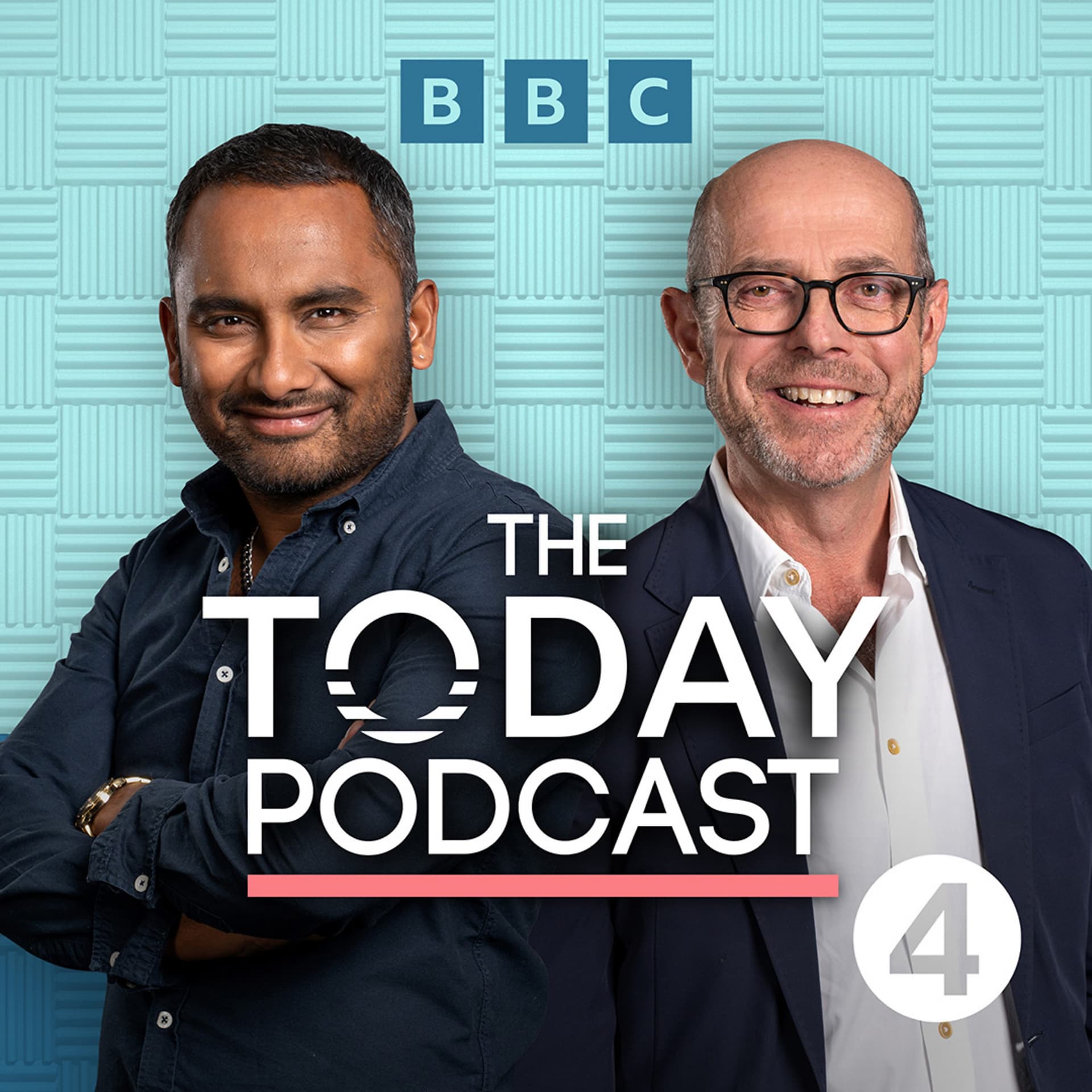
The Today Podcast is hosted by Amol Rajan and Nick Robinson who are both presenters of BBC Radio 4’s Today programme. Amol was the BBC’s media editor for six years and is the former editor of the Independent, he’s also the current presenter of University Challenge. Nick has presented the Today programme since 2015, he was the BBC’s political editor for ten years before that and also previously worked as ITV’s political editor.
This episode was made by Lewis Vickers and Tom Smithard with Izzy Rowley and Grace Reeve. Digital production was by Izzy Rowley. The technical producer was Abbey Wiltshire. The editor is Louisa Lewis. The executive producer is Owenna Griffiths.