In short
Podcast Notes: Radical with Amol Rajan - Episode: JD Vance: Does Trump’s VP Really Hate Europe?
Episode Overview In this episode of *Radical with Amol Rajan*, the discussion focuses on JD Vance, Vice President under Trump, exploring his views regarding Europe and recent revelations about his private opinions on international relations. The episode aims to understand Vance’s role in the MAGA movement and how his background influences his political stance.
---
Key Themes and Discussions
- Security Breach and Insights
- Recent leaked messages from Trump's administration highlight a lack of respect for European allies.
- JD Vance expressed disdain for European nations, labeling them as “freeloaders” reliant on U.S. military support.
- JD Vance's Profile
- Vance, a product of poverty with a background shaped by his Appalachian upbringing, has transitioned from critic of Trump to a key supporter and intellectual force behind Trumpism.
- His book, *Hillbilly Elegy*, reflects the struggles of the working class and resonates with the MAGA base.
- Philosophical Underpinning
- Vance's political philosophy aligns with national conservatism, focusing on America's national interests and the critique of globalization that overlooks the struggles of American workers.
- He represents a pragmatic approach to politics, emphasizing national preference and skepticism towards foreign entanglements.
- Vance's Evolving Opinions
- Discussion around whether Vance's shift in support for Trump is genuine or opportunistic.
- Comparisons made with past criticisms of Trump, raising questions about the integrity of his current views.
- Views on Europe
- Vance's comments about European leaders reflect a broader sentiment of frustration with European expectations of U.S. assistance without adequate contributions.
- He targets European technocrats, viewing them as disconnected from the electorate.
---
Key Takeaways
- Changing Dynamics of Leadership: Vance symbolizes a new wave of national populism that may persist beyond Trump’s administration.
- Crisis of Masculinity: The episode follows up on the previous discussion about the Netflix drama *Adolescence*, exploring the contemporary crisis facing young men today.
- Public Opinion and Response: Listener feedback reflects the ongoing conversation about masculinity, suggesting a societal turning point that needs continued attention.
---
Additional Resources
- Previous episode discussing *Adolescence and the Crisis of Masculinity*: [Listen here](https://www.bbc.co.uk/sounds/play/m00290bg)
- Amol Rajan's full interview with Stephen Graham and Erin Doherty: [Listen here](https://www.bbc.co.uk/sounds/play/p0ktfd2w)
---
Conclusion The episode provides a nuanced examination of JD Vance’s influence within the Trump administration and his ideological evolution, while also engaging with broader societal issues such as masculinity and the role of the U.S. in global politics. The discussion encourages listeners to reflect on the implications of Vance's views and the future of American conservatism.
Written by AI. May contain mistakes. Listen to the episode to check what was said.
Transcript
Automatic transcript. May contain errors.0:00This BBC podcast is supported by ads outside the UK. If journalism is the first draft of history, what happens if that draft is flawed? In 1999, four Russian apartment buildings were bombed, hundreds killed. But even now, we still don't know for sure who did it. It's a mystery that sparked chilling theories. I'm Helena Merriman, and in a new BBC series, I'm talking to the reporters who first covered this story. What did they miss the first time? The History Bureau, Putin and the apartment bombs. Listen on BBC.com or wherever you get your podcasts.
0:42BBC Sounds, music, radio, podcasts. Donald Trump and his team are, as we record this, playing down an extraordinary security breach that saw a top journalist from The Atlantic magazine added to a group on Signal, a messaging platform, where members of Donald Trump's team were messaging about actual plans to launch strikes on the Houthis in Yemen. And it seems to come down to whether those were battle plans or war plans, which tells you something about the state of modern politics. The thing that will bother politicians most on this side of the pond, though, is the disdain that's shown by leading US figures for them, for European leaders.
1:25not just from Pete Huxeth, the Defence Secretary, but critically from the man we're going to talk about today, the Vice President, J.D. Vance, who many people now think is Donald Trump's natural successor. Yeah, and J.D. Vance might think that. Listen, by any normal account or measure, J.D. Vance is one of the most interesting and obviously powerful men on the planet. We're going to get into his backstory. He grew up in extreme poverty. He's something of an intellectual figure. He served in the army. He's so extraordinarily interesting. And the thing that's so fascinating about his appointment as vice president and the way he's conducting himself is that he shows that there is a MAGA movement and make America great again.
2:06National populism that will outlast Donald Trump. Trumpism will, through J.D. Vance, outlast Donald Trump. And he has a worldview, which we want to understand today with the help of a very good friend of his. or if not a very good friend of his, someone who certainly is something of an ideological fellow traveller and who has spent time with Vance and who can help us understand the way he thinks. That is James Orr, a Cambridge philosopher, who I met last week on a live recording of the Today debate. And just talking to him during that debate, before and after, I thought James Orr was exactly the kind of person we need to invite onto the podcast.
2:39And so he'll be with us shortly. Should we do it? Let's do it.
2:56Hello, it's Amol in Salford. And it's Nick at home. And the reason you're Nick, you're being very flexible and kind. Welcome back, by the way, from your Keralyn jaunt. I've been keeping up with it on Instagram. If you come back from Keralyn, you're one of several things. You could be, you're going to be highly literate because it's got the highest literacy rate anywhere in the world. You're probably a communist, but our listeners would have known that for some time. and almost certainly you're deeply religious, either Hindu or Christian. Which one is it? Come on. Yes, all of the above, but I deny them all because of BBC impartiality.
3:26Yes, I'm just back from a glorious holiday in South India. I had 22 hours travelling last night. So if I just look ever so slightly kind of tired, that is why, but it's a joy to be back. But the thing that people need to know, Nick, is that you arrange your travel plans around the needs of our listeners, for which we are very, very, very grateful. And I should say that you've arranged your plans around my needs, because the reason I'm in Salford is because I'm doing University Challenge. So I'm hugely grateful to you and the whole team for showing your flexibility. And I should say that you missed an absolute corker last week, which is a real shame, because I don't know if you've had the chance to watch Adolescence on Netflix.
4:01It's the most talked about show in the world because it's just about the most watched show in the world. And we did an episode, Nick, last week, which I don't know if you had a chance to catch up on yet, but I know is a subject that you, not least because you've got two sons, have wanted us to focus on for a long time, which is what is going on, whether it's a crisis, it's toxic, whatever you want to call it, with modern masculinity. And I know that's a subject close to your heart. It is, and I've not heard it, and I've not seen it yet, but I'm going to tune in because it's fascinating. In fact, maybe it links, in a sense, to the political developments that we've been discussing ever since Donald Trump returned to the White House and J.D.
4:38Vance returned to his side, because there is a link, I think, between that. increase in anger amongst young men and the success of populist politicians. Don't much like the word populist, but we haven't found a language, have we? Far right, hard right populists. None of them are quite adequate, but people are not part of the conventional right wing of politics. And the reason we're talking about J.D. Vance particularly this week is because of those extraordinary messages we were talking about. Let's focus not on the breach of security, though, But on the content that they revealed, I just hate bailing Europe out again.
5:16That is the key phrase used by J.D. Vance talking about his European allies, America's European allies, and the fact that they would benefit economically from the U.S. Navy's protection of international shipping lanes. And in response, Pete Hegseth, the U.S. Defence Secretary, replied, I fully share your loathing of European freeloading. It's pathetic. And I say it that way because that was all written in capital letters. And because of that leak, because of that scandal, we now know what they really think. Well, J.D. Vance, as students of American history will know, is an unusual vice president in lots of ways.
5:54First thing to say is that there are lots of vice presidents who actually don't do very much, frankly. You know, you could say there is some people. I'm sure those vice presidents will be offended by that idea because they say they're the second most powerful people in the world. But even as recently as Kamala Harris, you get vice presidents who are basically there as a sort of backup, reinforcer, who sometimes get key issues. In her case, it was often the southern border and issues around equal rights. But J.D. Vance is fundamentally different because he is a supreme enforcer of Donald Trump's worldview and because he is in some ways providing the intellectual heft for Trumpism.
6:28And I think the first thing to say about J.D. Vance, who's really interesting for a few reasons, and we're going to get into this with his friend James Earl in a moment, is that he is an intellectual. He's had this extraordinary upbringing. He's a systematic thinker. And he has, in a way that maybe Donald Trump even doesn't, a coherent worldview behind his America first position. And the other thing, which is my main thought as a way of introducing what we're going to discuss, Nick, is that don't you think J.D. Vance is in some ways the supreme expression of the idea that's become quite popular in Western politics, which is that globalization created losers.
7:00He had an upbringing in rural Ohio. He wrote about it in a fantastically eloquent and moving book called Hillbilly Elegy, which said that globalization was great for rich people and poor people in the poor world. In the rich world, it was good for rich people. But for families like his who grew up with nothing, it was a way of sticking two fingers up. That's what he represents. I'm fascinated that you've said that he has this very clear worldview because I, along with lots of other people, remember that J.D. Vance used to be scathing about Donald Trump. He called him an idiot. He said he was reprehensible.
7:33He privately compared him to Adolf Hitler. Now, he's been asked about this again and again, and he's explained that he has changed his mind. But he didn't always think what he now thinks. Well, let's try and get inside the mind of the man. Is he an opportunist or is he now reflecting what he really thinks? And what is it that he really thinks? Welcome to you, Professor James Orr. Thank you very much indeed for joining us on the Today podcast. Great to be with you both. James, I was just going to say, when we were talking in the green room ahead of the Today debate, I think it was last week, I can't remember the time was going so fast, you kindly and generously said to me that in fact you should be referred to as a doctor, not a professor, because you're an associate professor.
8:13Is that right? Well, remember, this is the narcissism of small differences, very important in academia. Well, if you're married to an academic, these things matter. Tell us a little bit, James, about just to establish the basics. You know J.D. Vance, which is a wonderful privilege that Nick and I don't have and most of our listeners won't have. When and where have you spent time with him and gotten to know him? I first got to know him about six, seven years ago through mutual friends. Actually got to know each other in France. We stayed in touch closely over the years. He was in England for the summer just on a family holiday.
8:51Was it two years ago? Yes, summer of 23. and I saw him, had lunch with him in, well, D.C. quite recently. In fact, I had lunch with him in the Senate just about three or four days before he flew down to Mar-a-Lago and was invited to be Trump's running mate. The same day as it happens, 13th of July of the assassination attempt that evening in Butler, Pennsylvania. So, yeah, we've stayed in touch. I'm more cautious now that he's, well, the second most powerful man in the world on some readings. So I tend not I try not to bother him too much. But we like to stay in touch. And I try to be as supportive as possible.
9:32And if I can be a J.D. Vance whisperer for baffled Brits, I'm more than happy to have a go at that role. Well, let's start with the bafflement that there is, which I just described, which is here was a guy who was incredibly rude about Donald Trump and is now seems, if anything, more Trumpy than Trump. So what went on? I think the way to understand it, I mean, first off, I mean, Roger Scruton, the philosopher, has a line that to the effect that, you know, the willingness to change your mind is the only sure sign that you've got one. And JD or the vice president is nothing if not an independent thinker.
10:13And he's nothing if not somebody who evaluates positions very, very carefully on a case by case basis. He's much less ideological than one might think. You were talking earlier, Nick, about how do we understand him? What's his organizing horizon ideologically? And I think the truth of the matter, he is a pragmatist, where the ultimate sort of organizing horizon of his pragmatism is the national interest, and specifically America's national interest and the doctrine of national preference is really what what guides his thinking. And one key moment and a moment that a moment, a point of convergence between the two of us is to be understood through this idea of national conservatism, a movement that began under the influence of the Israeli scholar Yoram Hazony about six, seven years ago.
11:07It emerged out of Brexit. It emerged out of Trump 1.0. And it was a sort of a loose affiliation of conservative academics, eggheads like me, but also politicians, private citizens aspiring to high office, thinking through the sort of philosophical underpinning to pro -sovereignty, pro-nation conservatism. And that was a very exciting time. And I think it was I mean, I've heard J.D. say this in so many words that those early conferences were really where he began to understand not so much Trump as Trumpism. and where he began to start giving some intellectual flesh to, as it were, the intuitive bones that Trump had without really being able to articulate it, you know, to the to the wonks in the think tanks or in articulate op eds in The New York Times.
12:04And so I think really J.D.'s conversion was was to Trumpism and then he recognized that Trump was the only figure with, as it were, the electoral firepower and, you know, the the X factor with the American people to ensure that Trumpism was was here to stay. And I think a sort of return, you know, Trump returned that compliment in taking the great risk of inviting a, well, a young senator from Ohio who not had great press, who'd said some incocious things, had only been in office for 15 months. The question is, you know, why did he choose him? It's worth saying he was in his 30s. He was 39 when he became vice president.
12:49He's extraordinarily young. Very, very young. Well, it's the first, I mean, obviously the key thing about J.D. Vance, the most important fact is he's the first vice president of the United States of America who's younger than me. And I'm absolutely shocked and horrified by this fact that this is causing me tremendous internal conniptions. I really want to talk to you about that philosophical underpinning of national conservatism, particularly how it shapes his and Trump's thinking about Europe. Just before we get there, I think it is so important, James, because of what J.D. Vance himself has written about this, to understand the connection between, and we could do this briefly, but to understand the connection between his upbringing and his worldview.
13:25And I just wonder if you could briefly introduce for our listeners some of the themes of his upbringing as recounted in Hillbilly Elegy. It's worth saying that Barack Obama in the 1990s, long before he entered politics, wrote a bestselling book about his childhood, Dreams from My Father. It was a very literary book, lots of allusions to literary figures. J.D. Vance wrote this very literary book. I think it came out well over a decade ago. More recently, it's been turned into a Netflix series. But it's this kind of very elegiac, kind of melancholy reflection on growing up in really quite extreme poverty, from which he escaped to the U.S.
14:01Army and eventually tremendous power in business and politics. But just explain to us a bit about how that childhood shaped the Vance worldview. Yeah, I mean, Hillbilly Elegy, it came out in 2016, just a few weeks, I think, before the Trump 1.0 victory. And for a few years after that, Hillbilly Elegy was the book that coastal elites would read to try to understand what on earth had happened. And as you say, it's this incredibly wistful, moving, beautifully written, elegiac hymn to his Appalachian background, his upbringing in Ohio, the extraordinary struggles that he went through, struggles that would be recognized by at least a third of America, but struggles that, you know, affect flyover states and affect the dispossessed, the marginalized, the forgotten working classes, particularly forgotten white working classes in that the casualties of the great process of deindustrialization that America has undergone over the 1980s, 1990s, intensifying, of course, in the last 25 years as China has come on board as a much bigger player.
15:18and so he somehow just captured that voice in a way that the coastal elites new york times readers could understand and you know if not entirely get on board with it certainly sympathize with and you might say that just as jd jd is often said that he brings as you put it very well amol he brings the intellectual heft to trumpism but i think in those early years what was more interesting is that he brought the emotional heft to Trumpism. Trump is not somebody that easy to sympathise with and not that easy to empathise with. He doesn't really think of emotions and sentiment with him. But I think when you read that book, you can start to see the burning pain of the American underclass.
16:05Pain and anger, isn't it? I was struck that when he was talking about his own childhood, he said, I didn't know how to disagree without turning it into an earth-shattering argument. I get the idea that someone of that background might have a rage against the American elite, the people he thought ignored or were still contemptuous of people who came from areas like him. Why the anger at the European elite? Is it just elites that he objects to, or is there something specific about Europe that gets his goat. I should just preface that, Nick, by saying that, you know, he is both a creature of the working classes and the dispossessed and a creature of the elites.
16:50He went to Yale Law School. It's a very, very tough school to get into. He did incredibly well at Yale Law School. He then went off and had a high-flying job in Silicon Valley and moved very easily in the afterglow of hillbilly elegy among the coast elites. So he's, one misunderstands him if one just sees him as this sort of hillbilly. He's got this extraordinary capacity to understand the elites. And indeed, he married into the elites. Usher is very distinguished, I would say. She's certainly an elite. She's had a year in Cambridge in 2010, 2011. So he doesn't hate the elites. He just thinks that we need better elites.
17:27And he thinks that there's a dislocation between the elites and the dispossessed. And he thinks that those elites need to be more attuned to popular concerns. Now, on the Europe question, I mean, the first thing to say is that when he talks about Europe, and certainly when he talked about Europe in the group chat, I think the way to understand that is he's not thinking the European people, us Europeans, he's thinking specifically of what he thinks of as out of touch EU technocrats who are increasingly unaccountable to their electorate, who are increasingly unpopular with their own voters. I mean, if you look at the rise of the centre-right and beyond all across Europe, every electoral result that comes in from across the channel, you know, you guys on the Today programme are always scratching your heads and saying, what on earth happened?
18:25My goodness. There's this cry of protest, this cry of sort of resistance. We've seen it in Germany with the AFD. We're seeing it with the Rassemblement National in Italy, in France. We're seeing it with the Brothers of Italy in Italy under Maloney. So, you know, that's the way to understand that that interpretation of the group chat, I think, is very consistent with the tenor of the Munich speech. And the tenor of the Munich speech was that you, you, you leaders are not paying attention to the values that have made Europe worth defending? Sure. He, of course, is qualified to speak. He's the Vice President of the United States.
19:05He's qualified to be critical of European spending on defence. Of course he is. Many American presidents, not just Donald Trump, have been critical of that. What he is arguably not entitled to do is to go to another country and insult their elected leaders, to do it to their faces, to lecture them that they're not really Democrats, to suggest that the country he's visiting would be better off if they voted for someone else entirely. A party, incidentally, suggested by many in Germany to still have neo-Nazi roots. That, he's not really entitled to do, is he? Or let's put it a different way. No one else in that job has ever thought of doing anything like it in the past.
19:46You know, one of the big problems in understanding European-American relations since the Second World War is really just figuring out what the role of a president or a vice president is, and what is he entitled to say, and what is he not entitled to say. And I think the persistent illusion over the last decades is that we operate under a rules-based international order, when the truth of the matter is we live under a rules-based American imperium, a Pax Americana. And that means it's always very difficult when a president, I mean, Remember this with Trump making a pretty fiery, but I think very effective speech in Warsaw shortly after he was elected for the first time.
20:30Similar criticisms came in. What gives this man the right to tell us what to do and what not to do? I completely get that. And indeed, I sort of sympathize it. I sympathize with it. I'm a sovereignist. I don't like I don't think the special relationship has been that great for us, to be honest. but at the same time you look at the numbers you know 1.3 trillion dollars a year or whatever it is on on nato's annual budget america covers 830 billion of it at a time when it is reaching eye-watering levels of national debt there's poverty all over the place particularly in those places that are close to jd and to the maga movement and so i think their view is look You know, what are we paying for?
21:14And if we're paying for countries or if we're subsidizing defense budgets for countries that have forgotten what it is they're defending, forgotten the values that unite Europe and America, free speech, freedom of association, free assembly, free and fair elections, then there's a problem. and there needs to be some conditionality attached to American largesse. Now, every US administration has played something like this game. It's just to slightly different ideological ends. The Biden administration, we now know, and we knew at the time through the State Department, was pretty aggressive in imposing quite radical bits of gender and sex ideology, sort of rainbow ideology on countries, particularly in Eastern Europe, that simply weren't receptive to it, weren't ready for it.
22:12And, you know, there was a sense that certainly talking to some Eastern European friends that the State Department and the US ambassadors were effectively bullying them towards a kind of, you know, a much more celebratory, affirming public culture for issues about which there was still real division within those societies. So, you know, the Trump White House is not unique in having an ideological agenda via the State Department and wanting to press it. And it's perfectly reasonable for it to do that, particularly if it's paying so many of the bills. But you see, what you've articulated and explained in a way that's very useful for our listeners, James, is what I would say the systematic or coherent worldview that J.D.
22:57Vance has come to. But there's a different point on which his critics, including his conservative, what I would call moderate conservative critics in America, are alighting on, which is that his faulty to Trump is taking him to places which actually are rather undignified. And we have an interesting tradition, by the way, James, on this podcast, which is every week, I put in one of my favourite quotes and I see whether or not Lewis, our producer, would take it out. And this is a quote from Walter Badgett, who is the great Victorian liberal, former editor of The Economist. And he said in his writings on the...
23:28Snip, snip. Shut up, Nick. You've been away for two weeks. It was great. We didn't snip any of my Walter Badgett references out. He said, James, about the English Constitution, that a republic had insinuated itself beneath the folds of a monarchy. And I've said on this podcast a few times that in a sense, in America, a monarchy has insinuated itself beneath the folds of a republic. And there is something about the court of Trump that is king-like. And the fealty, the loyalty, the absolute determination of people to swear by what Trump's word is, is what goes, is taking people to rather strange places.
24:05And some of your fellow conservatives on the other side of the Atlantic, people like David Front, people like David Brooks, people who might write for the Wall Street Journal, are saying, hang on a second. Why have we got a Republican president who is being consistently rude about Canada? It's Canada, for goodness sake. This undignified stuff about the 51st state, it's not a question of are you taking him too literally. It's just a bit rude. And that scene with Zelensky, James, there's a lot of people who felt it's one thing to say in private, you know, you need to act in a different way. It's another thing to say to Ukraine, we're going to take a different view to the Biden administration.
24:41We're going to force an end to this war. But were you not a little bit uncomfortable when you saw J.D. Vance, who you know well, saying to Zelensky in front, in full view of all those cameras, offer thanks to the president who's brought you here and demanding him to show respect and sort of faulty to Donald Trump. Didn't that make you think, oh, that's a little bit sort of morally beneath him? Let's just start with the first one, the Badger, that brilliant Badger quote. Look, the increasingly monarchical character of the US presidency is not new to Trump. It really, you know, begins, let's say, with Roosevelt.
25:24The enormous centralization and pooling and expansion of administrative power really begins, has to begin with the response to the Great Depression and the New Deal in the 1930s is further accelerated by America moving to a war machine. turning itself into a war machine in the Second World War and then is sustained all through successive administrations. You see it with LBJ, of course, with the Great Society and Nixon tries to pull it back and so on and so forth. But it's caught up in the Cold War. And so the the monarchical question when it comes to Trump, I'd actually contest your reading of that.
26:04I also contest, by the way, though I love them both, that David Frum and David Brooks are conservatives. They're not seen as conservatives in MAGA circles, I can tell you that much, nor are they seen as conservatives in most mainstream GOP. David Frum? David Frum, who wrote a book called Comeback, Conservatism That Can Win Again. David Frum, who worked for George W. Bush and wrote The Axis of Evil Speech. David Frum, who is held up by people who work for Policy Exchange and write for The Telegraph. David Frum. Amor, this is actually a really important point, sort of personalities aside and David Frum aside.
26:36You've got to understand that for the MAGA movement, the neoconservatism, the forever warmongering of David Frum and Bush, too, is something that is loathed more within that world than than Biden and Harris and and and the sort of standard Democrat policy platform. So they do not see them as part of conservatism or the new right. They see them as a terrible road that shouldn't, a cautionary tale for conservatism in the 21st century. But just back to your excellent monarchical point. I mean, well, forgive me, I'm going to stop you going back to his interesting point, because I think you've raised an even more interesting point, the forever warmongering.
Read the full transcript
27:25And maybe that is something that Brits, that Europeans don't understand enough about J.D. Vance and the Trump movement. You see, when you went through your list of what J.D. Vance believes in pro-sovereignty, pro-nation, that sort of conservatism, I found myself writing down, well, not very pro-democracy, doesn't believe that individual governments should be able to speak up having won elections, not very pro-free press. But let's ignore those, park those for a second. Not anti the Kremlin, not in favour of the Atlantic Alliance. And maybe I've got that wrong. Maybe the key to this is that phrase you've just used, not forever warmongering.
28:10Is that what you say is the real explanation of Vance's messages in this chat, what he said to Zelensky? He's had enough of those people he wrote about in his book paying the bills for lots of young Americans to come back in body bags. I think there's a lot of truth to that, Nick. But I think that you could draw the wrong conclusions from it. And here's how. You could listen to what you've just said, agree with it all, and probably JD would agree with it all, and then infer that he's an isolationist, that his view is that America should cut itself off basically on the geopolitical landscape and just mind its own business.
28:48that would be a grave misunderstanding of his outlook to the rest of the world. He is an old-fashioned realist. That is to say, he is an American Palmerston. He doesn't believe that there are eternal allies, only eternal interests, the eternal interests of the United States. Those sometimes will converge with European allies. Most of the time, they probably will. and very often, more than any, they will converge with the interests of the United Kingdom, in their view, and that remains his view. But there is a kind of ruthless pragmatism that takes stock of America's dwindling military capabilities, its rising debt pile, and he asks himself, can we really afford as a nation to sustain global conflicts on three fronts, the Middle East, what he takes to be a regional Slavic war that risks escalating into the brink of nuclear war and sabre rattling in the South China Sea and in the Straits of Taiwan.
29:54That's very clear, James. The question some are asking though is, is he speaking for the president, as vice presidents normally do, or is he speaking for himself and pushing the president beyond where perhaps Donald Trump would go? Take the Zelensky meeting that Amal just asked you about, was that a pre-planned bout, a sort of tag wrestling in which Vance came in under some sort of agreement with Trump, you beat him up, or was Vance being Vance? Was he just losing his temper, saying what he really thought, going perhaps further than Donald Trump or anybody around Trump expected? I can answer that very straightforwardly.
30:35There was no planning before that meeting, There was no premeditation. There was no good cop, bad cop. Forgive me, how do you know that? I just do know it. I'll leave it at that. You know it because he told you. It was a spontaneous, freewheeling meeting. Probably shouldn't have happened in front of cameras, in front of the cameras. But one point that I would just draw your attention to, that if Trump was the monarchical, tyrannical figure, and J.D., the vice president, was simply his ventriloquist dummy, then you wouldn't have seen his, he wouldn't have felt permission to be as outspoken as he was in that meeting.
31:14If you noticed from the group chat, it struck me that he came across as thoughtful, independently minded, collegiate, not forcing his, you know, he was dissenting respectfully from the position very subtly. and I think you know the real scandal would have been as I think Amel pointed out was you know if we'd found from the group chat that they were saying wildly different things in private to what they were saying in public we often worry about the inauthenticity of politicians they're saying stuff behind closed doors they're always lying to us in public actually what the group chat told us is that there's total consistency in their approach in their thinking there's hard it's really hard to put a cigarette paper between their public utterances, at least on this issue, and what emerged from the group chat.
32:03So I think Trump 2.0, just to finish this point, Trump 1.0, you could see probably as a slightly anarchic, monarchical CEO figure presiding over increasing chaos. But I think with Trump 2.0, that's the wrong prism to look at, understand him through. Think of him as more of an avuncular chairman. Maybe there's a kind of court-like, monarchical atmosphere to some extent. But if you look at the people he's picked for the cabinet, it's a very wide range. Ideologically, you've got some Democrats, you've got some Republicans, you've got some MAGA people, slightly less MAGA people. Loyalty is a key currency.
32:43But he has entrusted them, he has entrusted his cabinet with more authority, and he's appointed stars than any president in living memory. And this is really a team of rivals. You think of Biden's cabinet. I mean, my goodness, you'd have thought given the state that he was in, that's when cabinet, you know, government should really kick in. I think it met a handful of times in during Biden's administration. So actually, I think the monarchical, you know, Louis XVI model for understanding Trump is the wrong one. I just wonder, it's interesting what you said. I was very struck by your point about the people around Trump see other conservatives.
33:18Perhaps they think of David Frum as a non-conservative or wrong about key issues. Similarly, they think about John Bolton, former National Security Advisor, as wrong. I wonder what they feel and you feel about the repudiation of what I would call Reaganomics and free trade. And at what point that's going to cause them some problems? Because my, I just put to you some, these are totally facts about the Trump economy after a couple of months. Inflation is going up. It's actually coming down in the UK, strangely. Inflation is going up. Economic growth is slowing. Consumer confidence is the lowest it's been since the pandemic.
33:50The federal deficit is growing. The dollar is weakening. The stock market is lower than when Trump took office. And even, I'm quoting from an Andrew Neil tweet about this, which is, I think, accurate. Even the fabled US job market is creaking. On all those measures, Trumpism is not looking too good for the economy. And I wonder at what point J.D. Vance might think, actually, this is because he's betrayed some conservative principles that a lot of conservatives believed in for some time. There is a sort of tectonic split emerging or has emerged on the right, and not just on forever warmongering, but also on free trade versus what the MAGA movement understands to be fair trade and similar sort of scepticism to unbridled free markets.
34:36It's not working out for them at the moment, though, is it? It's been pretty disastrous the first two months economically. So, I mean, look, I'm not here to defend their economic policies, but I think one of the points that they would probably make in response is that it's precisely deploying those metrics of national well-being that has led America towards economic policies that in the long term have inflicted disproportionate pain on those who can bear at least, particularly with the de-industrializing. is an obsession with GDP, an obsession with economic questions around trade deficits and so on and so forth, that in fact are the wrong ways to sort of think about national well-being and national flourishing.
35:22But James, in the campaign, Donald Trump himself talked about how in Trump 1.0 he had tremendous growth and he would bring tremendous growth back. He himself talked about how inflation was killing America and it was Biden's inflation. He's always been a tremendous advocate of a the stock market and be a strong dollar. So we're using Trump's own prism for economic success by which to judge him. And on all those metrics, he's failing, isn't he? So don't get me wrong. Listen, if by the end of Trump 2.0, all of those stats are the same or even worse than they are today, then, you know, Trumpism is going to struggle to get back in in 2028.
36:00No, I'm completely with you there. I think the way that they look at it, though, is that, first of all, the economic record of Trump 1.0 on employment, on inflation, on stock market indices and so on was pretty stellar, in fact. And there was the kind of covid coda right at the end that kind of confused the confused the picture quite a lot. But yes, I mean, I think probably what they would say is that we are undertaking an economic revolution here. We are fundamentally rethinking for the first time since the 19th century how to work out an economic policy that leverages our strength with trading partners to a degree that we have been ignoring up until now, that rethinks income tax, that rethinks employment, that rethinks how we streamline the public sector, how we think about government efficiency.
37:01And I think their view is probably, look, it's not fair to judge us by these economic matrices when we're barely three months in. Let's end this conversation where we began, in a way, which is his attitude to Europe and what we should prepare for. So you've made clear why he feels as he does, that he's not a forever warmonger, that he's frustrated with European elites for being out of touch and for not picking up the bill. But the big question they're asking, the big question the people want to succeed them in government in Europe are asking, is America out? Is this it? Would J.D. Vance be perfectly happy if Vladimir Putin was able to declare some sort of victory, control huge swathes of what used to be called Ukraine?
37:46would he be content with that because in the end he thinks it's nonsense as Mike Waltz the national security advisor said the other day that Russia wants to march into Europe I mean try telling that to the Estonians by the way and the Lithuanians but there we are that's what he says is that the Vance view and if there ever is a President Vance is that where we'd end up? First point to note in response Nick is that he is not at all a fan of Putin he is not at all a fan of Russia. And one of his great complaints since he became senator for Ohio about the Ukraine war is that it was breaking that cardinal axiom of American international relations thinking, namely, never let Russia rush into the arms of China.
38:32You have to keep Russia and China apart. This was Kissinger's great insight in the early 70s when he accompanied Nixon to China to open up relations with China to weaken Russia. The vice president's view is that the Ukraine war has drawn Russia and China together, and that is catastrophic for the balance of geopolitical power, specifically for the United States, but certainly too for Europe. And so he thinks that the faster we can de-escalate the Ukraine-Russia war, and de-escalation will mean probably biting your tongue, as he is biting his tongue, when it comes to saying what he really thinks about Putin and Russia.
39:09It probably means being a bit more short-tempered with Zelensky and trying to bring him down a peg or two than many of us would be comfortable with. But if there's going to be a pathway to a peaceful and prosperous Ukraine, which is what we all want, except for Putin, we have to start thinking about what is going to bring them to the negotiating table. And I think they're going about it in a pretty brusque and brutal way. But I think the fact of the matter is we're closer to getting on that path to peace and prosperity for the Ukraine than at any point since the war began in February 2022. There'll be some people listening who think this leak is the first big mistake by Team Trump playing fast and loose with national security.
39:54And they may think, aha, they've slipped up. What do you say briefly? My guess is that in a month's time, nobody's going to be talking about this. Can I just say it is genuinely hugely, hugely valuable to talk to you, not just about J.D. Vance, which is where we focused on, but also just the worldview that is dominant in Washington, which I think you do understand very well. So thank you for being so generous, not just with your time for the Today debate, but also the Today podcast. James, thank you. All the best. Cheerio. Bye-bye.
40:28I found that fascinating. It's the first time I've heard him. Someone trying to explain what J.D. Vance is all about. I don't think it will convince many of the people who've faced his wrath, have faced his ire, who've faced his sharp tongue, not least those people in Greenland at the moment, or indeed the country that is meant to have sovereignty over Greenland, Denmark, who will be deeply concerned by the decision of J.D. Vance to go and visit uninvited when the president has made it clear that he wants to take the country over on behalf of the United States. What is clear, though, is this guy loves a fight and we're not hearing anything like the last of him.
41:11Now, as we wind up this conversation, shall I try to compete with you for a preposterous old quote? Is that worth doing? To show what an intellectual I am. I was hoping you'd be able to recall the very moment in history when, for the first time, the vice president of America was younger than you. But let's not focus on that. No, go on. Give us a quote. Go on, a preposterous quote. Who said that America should be wary of insidious wiles of foreign influence? And President George Washington, it was. In other words, there has been a long history. Some people call it isolationism. Some people call it America first.
41:52Some people call it scepticism about involvement in foreign wars or what we just heard described as forever warmongering. J.D. Vance is new. He's a phenomenon. So is Trump. But he is also in line with a long, long line of American politicians. And I think that the thing about the nature of the court around Trump is courts are full of courtiers. And there's just the beginning. You were onto it with your final question to James or actually Nick. There's just the beginning of a sense that perhaps issues like this leak to signal or I think actually the economy are where the solidity, the coherence, the togetherness of that court might start to break.
42:33You know, how much more bad economic news will it take for people who are actually in the court of King Trump to say, hang on a second, these tariffs, maybe they're not working. Maybe insulting Canada is not necessarily the way to go. Oh, hang on. Inflation is going up, not down. Growth is going down, not up. This is starting to look like stagflation. I just wonder if in the coming months, that enormous, extraordinary burst of energy and history and negotiation that has accompanied Trump 2.0 will perhaps start to give way to a little bit more incoherence and a little bit more of a sense that actually maybe it's not quite working out.
43:07And the economy, which is ultimately why Trump was reelected, is not going in the direction that Trump or Vance would really like.
43:17As I was saying earlier, we got a really big, really positive, really deep response to last week's episode, which was about not just the hit Netflix drama Adolescence, but more this whole crisis of masculinity among young boys, or whatever you want to call it, crisis, the reimagining, the re-shaping, the reworking of what it is to be a modern man. And I'd just like to say huge thanks to all of you who got in touch. Shushanks, by the way, to Richard Reeves, who wrote the book of Boys and Men, to Catherine Carr, who did a brilliant series for Radio 4 about this for their time on it, and to all of you who have been in touch.
43:51Some of those include Adrian, Carolyn, and the first, Tom. Hi, Nick and Amal. Love the show. I've been particularly enjoying recently all the work you've been doing on masculinity. And I wonder, how do we make sure that this conversation keeps going? It feels like we're at a turning point where suddenly the world is waking up to the fact that, yes, we can do both. We can look after women and we can look after men and boys. How do we make sure that this is a moment? What can policymakers do? What can we all do? What can you and the media do to make sure this conversation keeps going? And this isn't just a flash in the pan.
44:30A book I was recently reading, it's a book called Addicted to Anxiety by Erno Kane. and he mentions that if we think about the more difficult emotions of fear, sadness and anger, fear and sadness are not always seen as very masculine characteristics and so instead they turn to anger and it just struck me when I was reading it and then you know a few days later I I watch adolescence. And is this at the root of many of our difficulties or many of the difficulties young men are facing these days? Hi, Amal. Having spent many years living with and bringing up some very forthright women, I was similarly conflicted as your guests on how we meaningfully engage with the issues faced by young men today.
45:23I had a very loud voice in my head saying, well, boo-hoo for the boys. It made me think that perhaps any program or campaign which focuses on one group risks alienating the ones who don't get attention but feel equally victimised. Anyway, thanks very much for your brilliantly insightful podcasts. Highlight of my listening week. Thanks a lot. Thank you to Adrian, Carolyn and Tom there. I really will have to listen to this now. Can I just quickly say, Nick, that the depth of engagement in those voice notes, what absolutely fantastic voice notes. Thank you so much. I mean, Tom, we won't get a chance to answer all these questions.
46:01Obviously, this is an issue that we've got to come back to. And I should say that Nick's too humble to say it, but for months he's been saying this is one of the great issues and we should get ahead of it and do this, not just on the Today podcast, but also on the Today programme. When, Tom, you talk about what the media can do, well, we are trying to talk about it. What policymakers do, well, there are people in central government right now who are talking about appointing ministers for men and making sure that men's interests and those of young boys are not lost in Whitehall policy. I haven't read Addicted to Anxiety by Owen O 'Kane.
46:30It sounds like a really interesting book, Carolyn. I will try and look out for it. And Adrian, I know exactly what you mean when you say, a little part of you is thinking, well, boo-hoo for the boys. But I guess the point that Rachel, sorry, the point that Richard Reeves, not Rachel Reeves, and they're not related as far as we know, the point that he was trying to make on the podcast last week is that you can do both at the same time. You can want female emancipation and empowerment, but also think something has gone wrong for boys. And it doesn't have to be that women getting on and entering the workplace is necessarily bad for boys, there's got to be a way in which men and women can both flourish at the same time.
47:01And by the way, that is the very theme of a long conversation I had with two of the main stars, lots of stars, but two of the main stars of adolescence, Stephen Graham and Erin Doherty. We on the Today programme, I was very lucky that they came around and had a long chat with us for the Today programme and we put that long conversation out on the Today podcast feed. So wherever you got this podcast, if you look a little bit lower or higher, I think it is, in that feed, you'll see there is a long conversation with Stephen Graham and Aaron Dorothy where we address a lot of the issues that have been raised by Tom, Carolyn and Adrian for which thank you so much.
47:35Now Nick, while you've been away, we've not been doing Moment of the Week partly because I know your moments have been staring at the beautiful seas or ocean of Kerala and also no doubt attending some of the fish markets that Kerala is so famous for. What was your moment of the week? Go on. That is exactly my moment of the week. Standing on a beach in southern India near Alepi in Kerala with a group of fishermen who'd just come off the boat. So I had woken up incredibly early, borrowed a bike, cycled down the road to go to watch the fish nets being emptied, the fish being poured into plastic buckets and being sold at auction there.
48:13I'm more happy, I have to say, in an auction than almost anywhere else. All of life is there. It was a great treat. Hang on a second. You're happier in an auction than almost anywhere else? Love them. Love them. Absolutely love auctions. I would go to any sort of market auction. Markets, that's what I mean. I don't mean an auction for, you know, Christie's or Sotheby's. I mean, when you go to a place where fishermen, farmers, butchers, there's just all of life is there. And I love the energy of it. I see a TV format emerging here. Nick on an antiques road trip off to Nick's bargain. No, not antiques.
48:55Robinson's Barking Hut. I had no idea. I'm not sure Nick's fish market is ever going to take off as an idea, but thank you. Don't give up the day job. My agent will not be feeling worried by the suggestion. I could hear them in the corridors of Netflix now, thinking we've got to get Robinson in a fish market. That's what we've got to do. He loves it. He'll bring out the best of him. Well, my very, very, very different moment of the week is partly from your neck of the woods. Old Trafford, I'm doing this in Salford, which is where the BBC and lots of other media companies have a huge campus, as it were, next to the University of Salford.
49:29It's where we do University Challenge. And I go for a little run every night. I'm very excited about it. Off to Old Trafford, which, by the way, there's a lot being written about because Andy Burnham and lots of other people, including Sebastian Coe, have huge plans, which Nick will be very aware of, to rebuild this iconic stadium of Old Trafford. And anyway, I've been going for a little run. It's only about six kilometres. And you know what? yesterday I went for a little trot from here to Old Trafford, the football stadium on to Old Trafford, the cricket stadium where in 1993 Shane Warne bowled the ball of the century against Mike Gatting which changed my life and I jogged all the way back and you know what Nick, I barely noticed it, I wasn't out of breath my legs didn't ache and I thought you know what maybe one of these days I could actually run a 10k run and I haven't thought you were going to say marathon oh come off it, have you ever run a marathon?
50:17certainly not I had the t-shirts printed when I was 18 for a group of us I think 10k listen when you've got my physique when you've got my physique 10k is plenty thank you very much indeed and then you have a nice big pina colada 10k and then a half marathon and then we think about what comes after that I'll be sponsoring you if it's a marathon that's it for us for this week don't hold your breath for that by the way thanks for listening we'll be back next Thursday with another episode of the Today Podcast and we shall speak to you then. Look forward to it.
50:55This is the football story of the century. It's pandemonium, it's ecstasy. It's an authoritarian regime. For the past 15 years, English football has been dominated by Manchester City. Eight Premier League titles, six League Cups, three FA Cups, one Champions League. And more than 100 charges. Somebody turned up at the Etihad Stadium and effectively served papers. I'm Clive Myrie and this is Football on Trial. The Manchester City charges. They believe they've got irrefutable evidence. Listen on BBC Sounds. If journalism is the first draft of history, what happens if that draft is flawed? In 1999, four Russian apartment buildings were bombed.
51:44Hundreds killed. But even now, we still don't know for sure who did it. It's a mystery that sparked chilling theories. I'm Helena Merriman, and in a new BBC series, I'm talking to the reporters who first covered this story. What did they miss the first time? The History Bureau, Putin and the apartment bombs. Listen on bbc.com or wherever you get your podcasts.
From the publisher
Messages accidentally sent to a journalist by senior members of the Trump administration reveal information about strikes on the Houthis in Yemen and what Vice President JD Vance privately thinks about America’s European allies. Nick and Amol talk to James Orr, who Vance once described as his “British sherpa”, about the vice president's views and how much influence he has on President Trump (7:12).
And after a huge response to last week’s episode we hear some of your messages about the issues raised by the hit Netflix drama Adolescence (42:35).
You can listen to Adolescence and the Crisis of Masculinity here: https://www.bbc.co.uk/sounds/play/m00290bg
Amol’s full interview with Stephen Graham and Erin Doherty is available here: https://www.bbc.co.uk/sounds/play/p0ktfd2w
To get Amol and Nick's take on the biggest stories and insights from behind the scenes at the UK's most influential radio news programme make sure you hit subscribe on BBC Sounds. That way you’ll get an alert every time they release a new episode.
GET IN TOUCH: * Send us a message or a voice note via WhatsApp to +44 330 123 4346 * Email today@bbc.co.uk
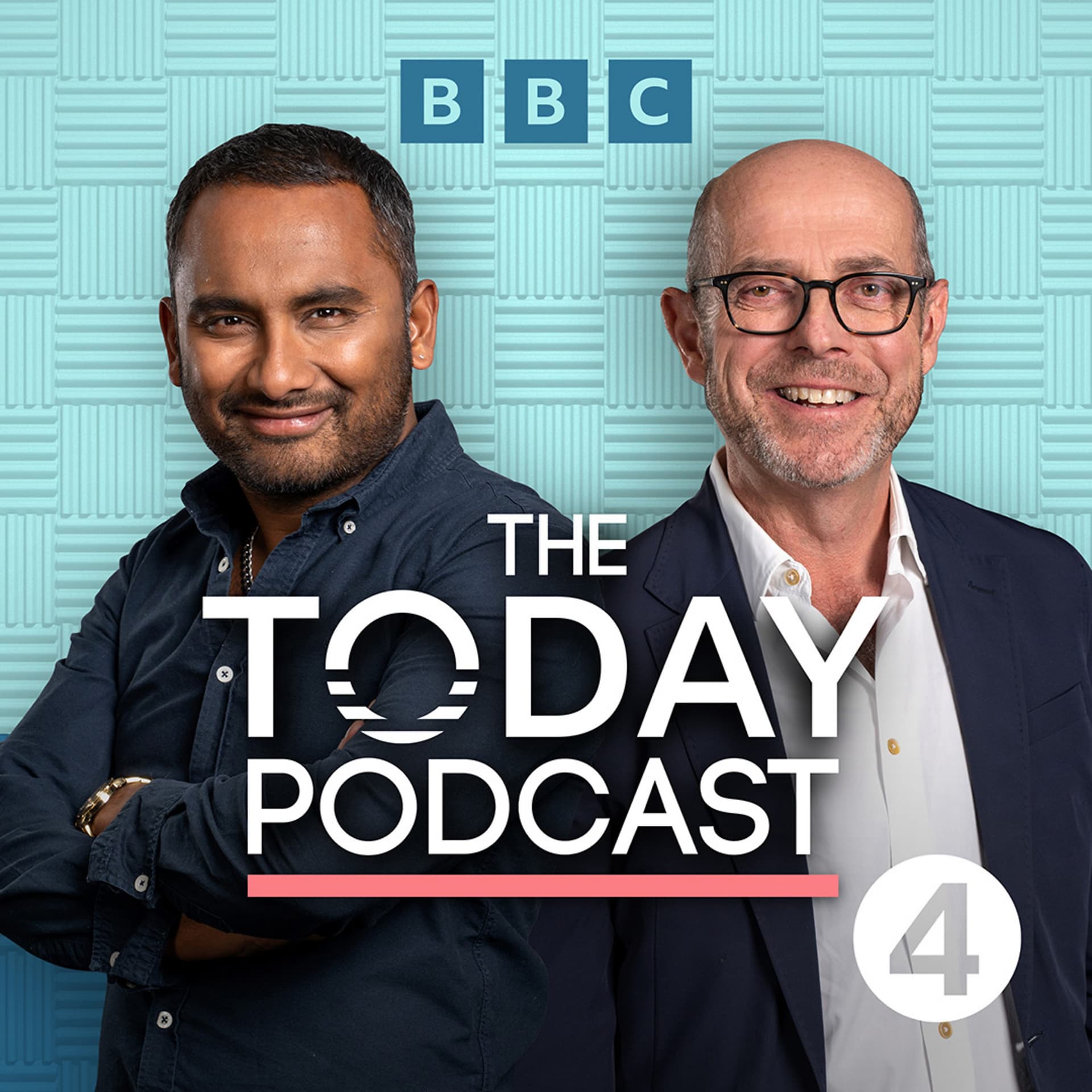
The Today Podcast is hosted by Amol Rajan and Nick Robinson who are both presenters of BBC Radio 4’s Today programme. Amol was the BBC’s media editor for six years and is the former editor of the Independent, he’s also the current presenter of University Challenge. Nick has presented the Today programme since 2015, he was the BBC’s political editor for ten years before that and also previously worked as ITV’s political editor.
This episode was made by Lewis Vickers with Izzy Rowley and Grace Reeve. Digital production was by Grace Reeve. The technical producers were Mike Regaard and Michal Gorecki. The editor is Louisa Lewis. The executive producer is Owenna Griffiths.