Ask ChatGPT

 Real Estate Rookie
30 Jun 2025 · 38m · 15 chapters

How Matthew Morneault built long-term wealth with only three “addresses” (five Maine short-term rental units plus other rentals), using VA loans, adding value via sweat equity (ADUs/RV pads), and learning from major early deal mistakes.
Matthew Morneault is an active-duty U.S. Army soldier. He bought his first property at 21 while in college, then moved frequently for duty. He later used VA loans multiple times and transitioned from long-term rentals to short-term and midterm strategies.
First deals are for education, not perfection. Investors should only buy properties with an “add value” path (e.g., RV pads, extra units, land options). Short-term rentals can be lucrative but require due diligence; financing and inspections matter.
Oregon first deal (2006) with subprime/interest-only mortgage, crushed sewer line, “meth house” renovation issues, crawlspace problems; later Maine lake cabins (Portage Lake, population ~300) financed via local credit unions with 15% down, seller concessions, and commercial lending pitch; grossed ~$91k first year. Arizona midterm rental using Furnished Finder/Airbnb/30+ day strategy; also discusses cost segregation and EV-charger grant (Efficiency Maine).
Written by AI. May contain mistakes.
Matthew shares the challenges he faced with his first property purchase and the lessons learned.
“So I was in a really bad car accident when I was 18.”
Discussion on how Matthew's early experiences shaped his understanding of real estate investing.
“But I think my biggest question is, after going through all of those challenges, what stopped you from saying real estate has to be the dumbest thing that anyone has ever done?”
Exploration of Matthew's journey from renting to investing in multiple properties.
“Eventually, in 2014, I got stationed in North Carolina, and we bought new.”
Matthew discusses how his approach to property investment has evolved over time.
“And you've obviously sold some of your primary residence those too.”
Matthew discusses how his approach to property investment has evolved over time.
“Most deals don't fall apart because of the numbers.”
Matthew explains his investment in lakefront cabins and how he financed the deal.
“Okay, welcome back from our short break.”
Learn about the process of financing a unique property and the importance of local lenders.
“So I read all these books or I listen to them as I'm traveling and I'm like, okay, I'm going to buy something that's going to pay for itself and it's going to pay me to own it.”
Discover the challenges faced with short-term rentals and the lessons learned.
“I'm a rookie and I was like, what's a commercial loan?”
Explore the benefits of cost segregation and how it can impact your taxes.
“During COVID, everybody went to the countryside, right?”
Learn about finding grants for EV chargers and potential revenue from them.
“I was frustrated that appraisals that I had paid for recently didn't separate the land value.”
Understand the reasons for choosing midterm rentals over short-term ones.
“And let me ask you that on the grant side of things.”
Hear about the process and challenges of getting a property ready for midterm rental.
“rental strategy to your portfolio as well.”
Learn about effective strategies for renting properties midterm, including multi-pronged approaches and networking tips.
“So Matt, just to make sure I'm tracking, so is the plan is to midterm rent the property that you're currently in, that you're currently living in?”
Hear about key lessons from real estate failures and strategies to overcome them.
“Okay, so what do you think was probably one of the biggest failures you had, but really taught you the most in the long run from your investing journey?”
Learn how to connect with the guest and key takeaways from their insights.
“Well, Matt, thank you so much for coming on as our guest today.”

Get the gist, explore an idea or ask about something said.
 Claude
On Real Estate Rookie, what are the key points of this episode?
Searching your listeningAutomatic transcript. May contain errors.
0:00Tony J. Robinson: Today's guest is an active duty U.S. Army soldier who bought his first property at 21 and didn't even realize he was a real estate investor. From a meth house disaster to a lake house short-term rental portfolio, Matthew Morneault's story shows how to take a messy first deal and turn it into momentum, even while moving every two years for the Army.
0:26Tony J. Robinson: This is the Real Estate Rookie Podcast, and I'm Ashley Kehr. And I'm Tony J. Robinson. And Matthew, welcome to the show, brother. Thanks so much for joining us today. Thank you. It's an honor to be here. So Matthew, take us back to your first deal. And I'm specifically interested in what happened with that house in Oregon. Well, that was in 2006. So I was in a really bad car accident when I was 18. And I got a settlement and I paid my reconstructed surgeon to rebuild my face. And I had about 20 grand left over. those were the hgtv days before streaming and i don't know everybody was like you need to buy you know everybody it was like buying a house was the thing you're supposed to buy a house and i was like 20 years old i was in college and i was paying rent so i'm a simple guy like yeah paying rent seems bad buying a house seems good let's do it i bought like a one and a half bedroom house that probably the other half of the house had burned down the attic had been converted into of a bedroom built in the forties.
1:25I had a really terrible realtor. She like, I think really gave me bad, bad advice all around. Um, I had a really, I was a subprime mortgage holder. Uh, if you guys remember that, um, interest only, uh, and I, I, I gave him student like scholarship, um, documentation and he used that as income. Like I never should have been able to get a mortgage, but in 2006, anybody could get a mortgage on anything hence 2008 yeah this house had a bad foundation it had all kinds of problems so I move in and I didn't have any money because I was in college so I had to learn everything myself so when the washing machine would back up into the bathtub I had to go figure it out and I realized that the sewer line had been crushed by the landscape company in three different places and I dug it all out by hand, repaired it all by hand.
2:19I realized that the kind of the meth thing that is mentioned, I think was from the owner trying to renovate it himself. All the water lines had been primed and put together, PVC, but no glue applied. So anytime anything went under pressure, it would come apart. And we had a well and so the well was erupting in the front yard. Now I was young. I, you know, you could sleep four hours a night back then and I had all the energy in the world. Um, so anyway, so fixed everything and it was livable, um, kept hearing birds chirping. That seemed really nice. And then eventually realized the birds were actually living in the wall.
2:58Uh, so got the birds out 2009. I graduated college, commissioned the army. It was like, okay, it's time to go get a real job. and I've got this house. And the crawl space was so low, you couldn't get a conventional mortgage on it. Now at this time, everyone's learned, right? The crash came down. I think I bought the house for$72 ,000. I put zero money down, but still ended up paying like 20 grand in closing costs. So like, again, totally bad, bad advice from everybody. And I actually ripped up the floor and with five gallon buckets, dug out the crawl space and carried it out bucket by bucket. Matt, I want to pause you, man, because the level of insanity that's gone into this first deal is otherworldly to me.
3:45But I think my biggest question is, after going through all of those challenges, what stopped you from saying real estate has to be the dumbest thing that anyone has ever done? Well, I think I learned a lot of lessons, right? And I had worked when I was 18 for a home builder. So I had seen new construction and he wasn't a, he was a custom home builder. So he wasn't doing, you know, subdivision factory homes. And it just gave me like, I believe like if you face your fears, then you're not afraid of it anymore. Right. So I had all these bad experiences, but now I was like, there's nothing, there's nothing that can scare me.
4:22And now that I've experienced it all that's value, right? That's value that no one else, that other people don't have. A lot of people haven't dug up their own sewer line, right? So when I call a plumber, I'm pretty confident in how I talk to the plumber, even though I don't really know much about plumbing by education. But Matt, I appreciate you sharing that because Ash and I talk about that so often about the purpose of that first deal. And it's not to retire yourself from that first deal, but it's to learn. Now, you had one hell of an education because you went through, I think, like every conceivable challenge from like a renovation perspective I've heard of, but I appreciate hearing that.
5:00But it's like when you go through those challenges, it makes the next deal even easier. Right. And I guess that does take us to your next deal, Matt, because obviously you kept going after that. But I think based on what I've heard, you actually took down a few deals before you even considered yourself a real estate investor. So I guess what was that shift that finally made you realize, OK, I'm doing this as an investor? Sure. Yeah. So we rented that house long term to try to pay the mortgage because it was 2009. The market hadn't recovered. I couldn't sell it. Then we moved to Fort Drum, New York.
5:32We lived on base. I went to Afghanistan, came back. Eventually, in 2014, I got stationed in North Carolina, and we bought new. I bought a brand-new house with a one-year home warranty. I was like, that sounds amazing. In one year, I can call the builder, and he's going to come fix everything that's broken. I'm in. Now, the realtor was like, there's got to be a full-price offer. and so we made a full price offer we bought a brand new house and we owned that house for nine years and i never made any money on it nine years um maybe it cost me 100 bucks a month you know needed a new microwave i had to pay for a new microwave whatever i mean and after nine years though and refinancing eventually we got down to a two and a half percent rate we had zero money down because there was a VA loan, which you can talk more about later, all the VA lessons I've learned.
6:27But I had$100 ,000 in appreciation. So about 30 % appreciation over nine years, plus my renters had paid down amortization. So I had about$150 ,000 in equity. And at nine years, I could sell that house because I had to move away from it for military orders with no capital gains tax. You have 10 years to sell your home with no capital gains. So I don't need to worry about 1031 exchange or anything and just sold it and took my money and then reinvested it in Maine.
6:58Tony J. Robinson: That's so interesting. I didn't know there was a 10 year time period. If you're in the military and have orders to move that, that timeline extends to 10 years. That's pretty cool. Yeah. I think the IRS kind of looks at it as, you know, most active service members are not investors and you had to leave your primary residence for duty to the U.S. government. And so they give you 10 years to sell it and it's kind of like a grace period. So that's kind of my new model is, every nine or 10 years I'll sell. So how many properties do you have right now in your portfolio? I have a long-term rental in Colorado.
7:31I have my primary residence in Arizona that we're turning into a midterm rental. And then we have the property in Maine. So really we only have three addresses, three properties, but in Maine, we have five units, four cabins in a cottage on a lake. And they're all short-term rentals. Was that five plus two, seven? Yeah.
7:51Tony J. Robinson: Well, congratulations on that. And you've obviously sold some of your primary residence those too. So you've done even more deals. Yeah. Yeah. We own a primary residence in Washington and owned it for only two and a half years. And we had such good appreciation at the time. And we had a renter need to move out for an emergency and it was just a good time to sell. So turned that appreciation into the down payment for the house we bought in Colorado, also primary resident. They've all been VA primary residences other than my first purchase in Oregon when I was a college student with no money and the commercial property in Maine.
8:30Yeah. And Matt, it seems like you've, even with the properties you purchased, you've experienced different types of properties, different asset classes. But as you go from the first property in Oregon to the new construction in North Carolina to what you're buying now. How has your approach changed when it comes to what you're trying to buy? Like, are you looking at certain things now that you weren't paying attention to on that first deal in Oregon? Like, what's your filter look like today? Yeah, I mean, big time. You know, I think Kiyosaki says, always get something extra, right? So I'm not interested in any property that doesn't have the ability for me to add value.
9:07If I can't add an ADU, or I can't add, you know, in Maine, I added three RV pads. Um, those rent for like 2 ,500 bucks a summer. People rent for the whole summer, um, or some land you could sell off. You know, I got a buddy, he just bought a house with enough land that he could build another house and then subdivide it. Right. Um, so that is kind of my main thing right now. And also I don't ever want to do short, do a single family home long-term rental. Like the cashflow to me is just not worth my time. Now I did it for a long time. Right. And that was just when I didn't, I thought I didn't think I was an investor.
9:44I was just trying to not go bankrupt and not have the, you know, the bank call me about the mortgage. I was like, if they can just cover the mortgage, right. That's not an investor. So I prefer multiple doors at the same address, I think is definitely something that's got to be just because it gives you more flexibility. Yeah, more economies of scale. And I've felt that same experience in my portfolio as well, going from single family, short-term rentals to our first hotel and just the benefits that come along with having multiple units under one roof. Well, Matt, I want to talk about how you bought lakefront cabins in a town of 300 people and you're able to turn sweat equity into almost$100 ,000 in actual annual revenue with properties that don't have bathrooms.
10:29So we're going to get into that story right after a short word from today's show sponsors.
10:34Tony J. Robinson: Most deals don't fall apart because of the numbers. They fall apart because of the financing. You find a property that cash flows, the deal makes sense. But then the lender looks at your personal income, your tax returns, your debt to income ratio, and suddenly the deal doesn't qualify. That's the disconnect. Because as investors, we're not buying based on our W-2 we're buying based on the asset. That's why Host Financial offers DSCR loans designed for real estate investors, where qualification is based primarily on the property's income, not your personal finances. So no W-2s, no tax returns, and no DTI requirements.
11:16Tony J. Robinson: And with loan-to-value options up to 80 % or even 85 % on eligible deals, you can keep more capital available as you grow. If you're buying rentals, refinancing, or scaling your portfolio, go to hostfinancial.com. That's H-O-S-T financial.com and see what you qualify for. A lot of insurance companies compete on one thing, speed. But if you're protecting an investment property worth hundreds of thousands of dollars, should speed really be the priority? NREG believes strong coverage starts with understanding the property, the risks, and the realities of ownership. That's why they don't rush the process.
11:54Tony J. Robinson: Their policies are designed for real-world claims, not just quick quotes. If you want insurance built to protect your investment when it matters most, visit nreig.com slash bplc and learn more today. If you own rental properties, you know the job does not stop at closing. There's tenant screening, rent collection, maintenance calls, and the paperwork that comes up with all of it. If you're managing more than one to two doors, that workload adds up fast. That's where Mind, BiggerPockets' preferred full-service property management partner comes in. Mind is built specifically for real estate investors with experienced property management teams, local market expertise, and purpose-built technology.
12:36They support leasing, rent collection, maintenance coordination, and reporting. Whether you're managing one rental or scaling towards your 10th, Mind is built to grow with you. It frees up your time to focus on finding your next deal instead of fielding maintenance calls. And it's not just about time. If you're a BiggerPockets Pro member, Mind will save you$500 for every home you onboard, up to$10 ,000 in your first year. Check Mind.co to save time, money, and frustration. That's M-Y-N-D.co.
13:08Tony J. Robinson: Okay, welcome back from our short break. We are here with Matthew. So, Matthew, you bought these cabins in Maine. Why this deal, and how did you finance them? Sure, yeah. Yeah. So I grew up in Portage Lake, Maine, population 300. My sister still lives there. My mom recently moved back there. I have four children. So anytime I go visit my family, you can't just show up with six people and invade their home with little boys. And it's just, that's not a fun, that's not a vacation. So I'm kind of a type A aggressive person. And so I was like, all right, I'm going to buy a place there. So I have a place.
13:50And then I started reading Rich Dad, Poor Dad, Why the Rich Get Richer, Bigger Pockets, Buy, Rehab, Rent, Refinance, Repeat. So I read all these books or I listen to them as I'm traveling and I'm like, okay, I'm going to buy something that's going to pay for itself and it's going to pay me to own it. And I had been watching this property on the lake where my sister lives, and they started at 670 ,000 and they came down and they came down and now we're down below 500k. And it was the right time to sell my house in North Carolina. And I had about$140 ,000 in equity and took that money and reinvested it there.
14:34But how we got it financed, the seller was really smart. It's a really small community, right? So they went to the two local credit unions. There's only two. And they basically kind of got the board of directors of those credit unions on board with commercial lending on that property. So when I called the bank, they already knew about it, that all lending decisions go to their board of directors, right? It's a very like, you're dealing straight to the top. And I basically had to pitch myself, right? Which I'd never done before. I'd never done a personal financial statement. And they weren't used to seeing pro forma rent projections.
15:13They didn't know what AirDNA was. And I was just like, hey, here's my BiggerPockets calculator printout. And here's my AirDNA rent projections. And this is who I am. I work really hard. Give me a loan. And they were like, okay, you need 15 % down. And I was like, I want 10, but okay, fine. And you're medium risk because you've never done this before. And I was like, medium risk, you know, and that made me upset, right? 7.7 % interest on a commercial loan. I've only ever, I just sold a house at a two and a half percent interest rate. And, but the number still worked out. They let me finance in some of my closing costs.
15:51They let me take$10 ,000 back from the seller and which was a concession for repairs. So we got that property for four at 80 and I got$10 ,000 back for repairs. And we came away with five rentable short-term rental units, waterfront, 300 feet of lake frontage, five acres. I added three RV paths. One of the cabins needed to be finished. But that's kind of how that deal came about in that community.
16:20Tony J. Robinson: There are so many things to touch on with this property. But the first thing is, if you are selling a property, what a great idea, especially if it's a unique property, to go to a local bank so that when you have buyers, you already have done some of the legwork to make it more appetizing to the buyer because there's already sort of financing lined up for the property in a sense. Yeah, I didn't know what I didn't know, right? I'm a rookie and I was like, what's a commercial loan? And so they educated me. And I think 15 % down too is pretty good. I mean, most of the time you see 20 to 25 % down for a commercial loan, but that's a great point with the small lenders where it goes just to the board of directors.
17:05Tony J. Robinson: There's so much more flexibility. And I did that same thing before I brought in my bigger pockets calculator report, showed the commercial lender and he was impressed also as to like, I've never seen anything like this. And for that deal, he offered me a 90 day unsecured loan to buy the property in cash. And then as soon as I closed, go and refinance with the bank with a longer term mortgage. So those bigger pockets calculator reports, you never know what they're going to do for you. And I was going to say, Ash, like, I wonder how many deals have been closed on the backs of these BP calculators.
17:46Like it's, it's gotta be thousands and thousands of deals that have been done because of those calculators. My first deal too, the first partnership I did was on the back of a BP calculator. So, but, but Matt, so it sounds like an amazing deal, right? Like you, you go from, you said one and a half bedrooms, which I'd never heard before to, you know, multiple lakefront cabins, RV pads. So there's definitely some progression there, but I guess like what were maybe some of the biggest challenges or mistakes or learning lessons with this deal? Like, was it, Was it easier than that first property in Oregon or was it maybe more difficult because there were more moving pieces to it?
18:21I think it was to get financing was similar as first property in Oregon, right? Because in Oregon, I was a college student with no real income and I was like justifying to Countrywide. If you remember Countrywide, they went out of business for giving people mortgages they shouldn't. And then this was this commercial loan, which required a little more legwork. But I definitely learned some lessons after purchasing the property. um one you you just have more infrastructure right so um more older infrastructure you're going to have more repairs and when you're doing short-term rentals you know you gotta immediately repair things um but i also learned um that i don't know why i i was in grad school during covid and and i took the air dna data and i was like this is great data if i'm half wrong I'm going to make money.
19:12And I was half wrong. During COVID, everybody went to the countryside, right? Everybody went and worked by the lake. Everybody went, any waterfront property that had wifi was booked. Occupancies were amazing. And then everybody went back to work and I didn't see that. And we also get a lot of revenue from snowmobilers. And that first winter was like, and I grew up there in the 90s. There was no snow. There were no snowmobilers. It was the worst winter that we've ever had. And so I lost a lot of revenue there also. Now we broke even that year, that first year we broke even. And I think people are saying it takes three years to really stabilize a short-term rental.
19:54And so yeah, AirDNA data, I should have done a little more due diligence there. And then I had a friend who's also a BiggerPockets member who's kind of a really good friend of mine and kind of the guy that I go to when I have questions, he talked to me about cost segregation. And that's really where I've made money is, oh, you're an active participant in this business. You can deduct this as an active loss from all your other W-2 income. And all you got to do is pay an accountant some money up front to basically front load your depreciation and take, I took about half the value and divided over five years and really reduced my adjusted gross income and got a lot of money back from my taxes.
20:40Tony J. Robinson: We actually just had somebody on the podcast who gave a nice breakdown of doing a cost segregation. And we have a guide. If you go to biggerpockets.com slash resources, you'll find the guide in there, you know, especially rookie friendly as to what is a cost seg, what do you need to do? I'm actually in the middle of doing my first two and I was completely unprepared as to what they would need from me, what they would want. And so it's been like, it's not anything difficult to do at all. It's just, I was very completely unaware of what actually goes into doing a cost seg. Yeah. I was frustrated that appraisals that I had paid for recently didn't separate the land value.
21:24So I had to pay for another land appraisal because that original appraisal didn't do that. And so that was frustrating. Well, Matt, those were some of the challenges, but I guess there had to be some wins along with this as well. So what do you think were some of the good things that came out of this big first commercial deal of yours? So we grossed$91 ,000 in revenue the first year, despite all of those setbacks. So that's a big win. I'm able to take my kids there and get out of the suburbs.
21:54Tony J. Robinson: Yeah. And Matt, I guess real quick, like how much do you actually get to stay there that you're making money and you get to stay there when you want to? Yeah. I take leave in the summer and go there and with my family, usually around the 4th of July. So once a year, I would say. And then in the fall and the winter, I'm sorry, in the fall and the spring, I've started going because I have to pull the dock in and out. Now, I've kind of built a team now that I can pay people to do things like that for me. But I also go visit my mom and things like that. So that's a pretty big win. And I have, like I said, I have four kids.
22:32So I really look at this as like a generational place we can go. You know, I want a place where my kids can bring their kids and like we can all stay and be comfortable as opposed to what I've learned in my life is like, well, we can go visit grandma, but after dinner, we got to leave. You know, I've also been exploring additional revenue opportunities. I just got a grant approved to put in some electric vehicle chargers, which will bring in revenue for me and my kids forever. Right. We just sell in electricity. You just got to buy the chargers.
23:03Tony J. Robinson: And let me ask you that on the grant side of things. What did you do to actually find out about this grant? The state of Maine has Efficiency Maine. They're an energy department of the government. And I just looked, I was really looking at, can I get any rebates for my heat pumps? Right. Because I buy heat pumps for the cabins and sometimes they have rebates. Or if you buy new insulation, they have rebates. and randomly I saw this thing was like, hey, we'll pay 80 % of your EV installation if you comply with these requirements. And you have to apply and show that you're going to come through. I never even thought about checking for that.
23:45We launched our first hotel last year and I wonder if we could get some sort of grant or rebate for installing EV chargers there because there's only one, I think two other hotels in that town that I'm aware of that have EV chargers. So yeah, it might be beneficial.
24:00Tony J. Robinson: You owe Matt a royalty if that goes through. I'll give you a free night at the hotel in Zion. I could use a BP Con ticket. Going even better. Well, Matt, it sounds like that deal learned a ton, started dabbling in the short-term rental space. But now you're in Arizona currently, and you've kind of transitioned or maybe added the midterm rental strategy to your portfolio as well. So why that strategy for the Arizona property? So like I said, I've moved 10 times for the Army in 16 years. I've had four VA loans, and I've always found myself having two at the same time, typically. A lot of people don't know that you can have multiple VA loans.
24:44The VA just is like PMI, basically, right? They guarantee you the lack of down payment. And they guarantee that your entitlement is up to the median home price of the nation, which right now is like$806 ,000. So I bought a$415 ,000 house in Colorado, and I was able to get another$415 ,000 house in Arizona. Now, there's a funding fee. So I always tell people, like, that funding fee puts you underwater immediately because you put zero down, and now you're adding$14 ,000 on top of it. You're already above your appraisal value. And the VA is like, that's okay because you're paying us. So if you put 5 % down, that'll reduce that fee to only 1.5%.
25:27So I always tell people, try to put 5 % down.
25:29Tony J. Robinson: And let's explain that real quick, why you would do it that way. Because that fee is going directly to the VA, where if you're putting that 5 % down, that's taking that amount and putting it towards your purchase price that you're going to have to pay anyway. So over time, you're paying less by paying that money to your mortgage, your principal, your purchase of the property, than to the VA for another fee. That's interesting. I didn't realize that. Yeah, exactly. And that's something nobody told me. I had two VA loans before a broker ever told me that. Interesting. Yeah, I'd never heard of that before either.
26:06So my buy box is very simple, right? The army says, hey, on this date, you have to be there and you have to be at work. and I have four kids. So I have to buy a house that I can live in. And so that rapidly becomes like, you're never going to find the perfect deal. You're never going to find a slam dunk deal, but you're going to find something that works. And then I pick us then two years later, when it's time to move again, I find a strategy that's going to work for that, you know, that property. And so I think in this area, I like the midterm strategy because it reduces the risk from, you know, compared to short-term rentals, because it's very seasonal here in Yuma, Arizona.
26:40It's 115 degrees today. Nobody wants to come here in the summer, but in the wintertime, the population doubles. So not really, I don't really want to subject myself to that seasonal fluctuation as much. And I think we've got a pretty good opportunity to take advantage of the growth in Yuma and our proximity to the hospitals and things like that. This will be our first time doing a midterm rental. And what I've learned from that, I was, like I said, 19 years old in a ditch digging a sewer line. So sewer lines, HVAC systems, concrete, that's fine. That doesn't bother me at all. I just hired an interior designer and she sent me all this stuff and we ordered all this new furniture.
27:29And that's where my energy and my motivation to be a real estate investor stopped.
27:34Tony J. Robinson: I think Tony has the same experience after watching a couple of Instagram reels of him and his wife putting together furniture. Yeah. Like, what do you mean I bought the wrong painting? It looks fine, but it looks amazing now. We did exactly what she said and it looks amazing. And in fact, we just had the photographer here yesterday. And if you want to talk about stress, one thing I'll never do again is try to get a home ready to be world-class photographed for a Furnished Finder listing while living in that house with four children. So Matt, just to make sure I'm tracking, so is the plan is to midterm rent the property that you're currently in, that you're currently living in?
28:08Right. Once we move out. So come August, we're going to move out. Gotcha. Gotcha. Okay.
28:13Tony J. Robinson: So they're just putting it up as a listing so they can start getting bookings already. Exactly. Right. Yeah. I don't want August 1st to roll around and then no bookings. And then which you mentioned Furnished Finder. So is that the platform you're planning to use or using any other methods to try and get folks into the into the property? So I was planning a multi-pronged approach. To me, one is none, like no single points of failure. That's kind of a mantra. So Furnished Finder, Airbnb with a 30 night minimum. I want to get connected to the local film bureau. We have a Goodyear test track here.
28:50You know, traveling professionals come to test things. We have a university. and I want to get connected to the HR departments at both the hospitals. So I'm going to cold call some people. I've got some connections through networking that I can, you know, basically give our listing to like, Hey, here's our Furnished Finder ad. Check it out. Also, it's a small town. There's only about a hundred thousand people in Yuma. So we've met some travel nurses so we can send them the listing and they love to share with their friends. Right. And I've heard that Facebook and Instagram is, is another way. I think Facebook Marketplace would probably put on Facebook Marketplace.
29:26Tony J. Robinson: We have one property right now that we have it listed as a short-term rental, as a midterm rental, and as a long-term rental. So we have it on our property management website and sent out to like Zillow, things like that as a long-term rental. Then we have it on Furnished Finder as a midterm rental. And then we have it on Airbnb for a short-term rental. And then we just like update the dates. So like as a short term rental, it does OK, but it's not like completely filled. So we'll say, OK, this is our last booking. Let's update our dates for, you know, the other websites on this date that we could have a longer term rental.
30:02Tony J. Robinson: But what we've had is the last three like midterm rentals were people who are moving to the area and didn't find a house yet. And or they were building a house. so like I think it's next week we have another guy that's coming to look at the property because they're moving back to the area and they want to find land and they want to build so they're like it will at least be a year that we would be here but they're willing to pay our furnished finder premium rather than what we would be charging as a long-term rental with no furniture or anything in it too. So we've kind of like are picking and choosing, like it's a little more work to navigate the calendars, but it's definitely helped us keep the property booked for sure.
30:51Yeah. We actually did that when we bought this property, we bought it in April, but we knew we weren't going to be here for a while. And the seller wanted to stay for three months because they were building a house. And so they immediately started renting their house from us. Interesting how that works. Matt, we interviewed Jesse Vasquez a while ago, and he's built a relatively good sized midterm rental portfolio. And one of the tactics that he shared that really stuck with me, I'd never heard it before, but he would drive for tenants. So he would drive around and say there's a Holiday Inn Express or something in Yuma, and he would try and find where are the construction crew trucks, where it looks like there's a bunch of guys from this construction place that are staying at this hotel.
31:39He would cold call those companies and say, hey, I just saw six of your trucks at the Holiday Inn Express. I can give you a five-bedroom property fully furnished for a fraction of the cost. So there's maybe something to test out if you haven't tried that yet, is just drive around town and see who might be a good fit for you. Yeah, that's a great idea, right? And I have, we just put a solar system installed. We've had contractors out.
32:02Tony J. Robinson: that's a great idea also too on the flip side like go to builders too and say hey if you have people that are building a house and need somewhere to stay before their house is complete like you know set up something where they can recommend you as to oh here's this place that you could stay too yeah and i plan to do it with um the realtors also for people that are waiting to close yeah oh yeah that's a great idea okay well we have to take our last ad break but when we come back, we're going to be talking a little more on the gritty side of Matthew's portfolio. So we'll be right back. You know, when I first started sharing my real estate journeys online, I didn't have a website.
32:44Tony J. Robinson: I had a spreadsheet, an Instagram account, and no idea how they'd ever connect. I remember thinking a real website was going to cost me thousands of dollars and take a developer weeks to build. So I kept putting it off. Then I found Hostinger. I typed in what I wanted, a site to show off my deals, share my story, and capture leads. And their AI builder had a working version live in minutes. No code, no designer, no developer needed. And it didn't stop at launch. Once my site was live, Hostinger's AI agent helped me figure out what to try next, acting like a built-in team of specialists for SEO, website copy, email marketing, and more.
33:25Tony J. Robinson: Domain, website, email, marketing. One Hostinger account covers it all, so you're not stitching together five subscriptions or wondering if they even talk to each other. Plans start at just$3 a month, so you can begin at your own pace and build from there. Hostinger builds your vision step-by-step. Create your website today. Go to hostinger.com slash real estate and use code real estate for 10 % off now. I just booked a ski trip to Park City and I've already got the whole thing planned out. Five days, first tracks every morning before the crowd show up. My knees reminding me I'm not 25 anymore by the second run.
34:04Tony J. Robinson: And an embarrassing number of overpriced burritos at the lodge. I don't even care. This is the trip I look forward to all year. But here's the part I actually appreciate. The practical side of my brain kicking in is that my place doesn't have to just sit there empty the whole time I'm away. I can list my space on Airbnb and bring in a little extra income while I'm out getting humbled on a mountain. And with the co-host network, I'm not the one handling all of it. You can partner with a vetted local co-host who can create your listing, manage reservations, message guests, and even handle the styling.
34:41Tony J. Robinson: So I get to fully focus on my trip and my place is still working for me the whole time. Find a co-host at airbnb.com slash host. Investing in real estate has always been smart, but it hasn't always been simple. Now it's both, thanks to the Fundrise Flagship Fund. The Fundrise Flagship Fund launched more than five years ago with a mission of delivering low-fee access to blue-chip private market real estate. Today, the Fundrise Flagship Fund has grown to manage more than a billion dollars of real estate on behalf of hundreds of thousands of investors, making it one of the largest funds of its kind.
35:18Tony J. Robinson: For those who believe real estate has an important role to play in their portfolio strategy, the Fundrise Flagship Fund has positioned itself as both a simple and a smart option. Whether you're starting with$10 or$10 ,000, The Fundrise flagship fund makes adding real estate's unique potential for both passive income and consistent growth. Just visit fundrise.com slash pockets to make your first investment today. Carefully consider the investment objectives, risks, charges, and expenses of the Fundrise flagship fund before investing. This and other information can be found in the fund's prospectus at fundrise.com slash flagship.
35:56Tony J. Robinson: This is a paid advertisement. Bigger Pockets Real Estate is brought to you by Mod. Mod prescribes a once or twice daily modafinil drink that can keep you energized, focused, and alert throughout the day. Here's the mechanism. Energy drinks with caffeine temporarily block udenosine, the chemical that makes you tired. It builds up, and when the caffeine wears off, it all crashes down on you at once. Modafinil works differently. It engages multiple pathways in your brain, dopamine, norepinephrine, histamine, and orexin, to achieve steady energy and alertness for 10 to 12 hours. Modafinil was invented in the 1970s, and since it's been used in the highest performers on the planet, soldiers, pilots, and astronauts aboard the space station use modafinil in high-stakes situations where full concentration and alertness are paramount.
36:44It's now available at mod.com to qualifying patients. Visit mod.com, that's M-O-D.com, for a free consultation and get 10 % off your first order plus free shipping with promo code B-P-R-E. That's promo code B-P-R-E at mod.com. See their website for important safety information, and we thank Mod for sponsoring the pod. An Airbnb deal can look great on paper and still become an expensive mistake. B &B Calc makes the numbers prove the deal. Use BNB Calc's Market Map to browse over 10 million Airbnb and VRBO listings, compare cities by revenue and gross yield, spy on top operators, and build comp sets.
37:23See how adding amenities like hot tubs or EV charges can boost your revenue. Enter any address to generate a complete property report. BNB Calc's AI visually analyzes nearby listings to estimate what it could earn and uses local data to estimate what it will cost to run. Find the best market, choose the right comps, and know the return before you buy. Start your seven-day free trial at bnbcalc.com and use code BIGGERPOKETS to lock in 20 % off for life.
37:55Tony J. Robinson: Okay, so what do you think was probably one of the biggest failures you had, but really taught you the most in the long run from your investing journey? Probably buying a house without an inspection. That taught me so much. It's one of those things where you're like, that sucked, but thank God it happened. I should never go back and get that inspection. If I could go back in time, think of all the value that I got from that horrible mistake. It gave me a lot of confidence. I learned if you take action and you can learn from all those things you were afraid of, and then you can turn that into value later.
38:37Tony J. Robinson: Matt, did you ever back out of a deal because the inspection came back bad or renegotiate because of the inspection results? We definitely renegotiated in Maine, right, on that property. There's a lot of infrastructure there. There's two different septic systems. There's an artesian well that we actually draw water from for all the cabins. It's drinking water. But so there's a lot going on. Metal roofing, everything's got metal. There's a lot of metal roofing, but the ice really beats up metal roofing. I would never recommend anybody in the Northeast. Don't get metal roofing. The ice is going to put holes in your roof and that's not what you want.
39:13So we, we renegotiated a lot of those things. You know, the main house is built in the fifties, so it has some electrical issues. And yeah, so definitely when I bought my house in Colorado, realtor recommended getting the sewer line scoped and cleaned. And so we went forward with that. definitely value. Like I place a lot of value in that inspection now for sure. Matt, now you've, again, you, you've moved, you said 10 times, um, as, as you, you've progressed in your career in the military, what advice would you give to other military service members who are thinking about investing in real estate?
39:51Yeah. Um, one, if you can do the full, um, do it yourself move, you can move all your stuff yourself. Um, that's gives you, you know, It's a serious side hustle. You're looking at$10 ,000 to$25 ,000 that you can make in that move. And take the stress out of it. You know, I was always so like, I got to hustle and do everything myself. Pay two guys to come, two movers. Like literally their business card says big guy moving. And for$250, they'll come and they'll load your moving truck with everything you boxed up. Right? So get some help. Don't try to do it all yourself. You're going to stress yourself out.
40:25You're going to stress out your family. and then take that money after you get paid and put that aside to your next investment. That's kind of been my biggest takeaway. And then don't be afraid. I had a seller back out on me at the closing table. I had to get an attorney to get my money back. Yeah. I mean, it's not without its challenges. And I think your story, if anything, Matt, is inspiration for the other folks who are listening, or maybe not even inspiration. Maybe it's more so just, it's a really good reminder. It's maybe a better way to phrase it, that the path to success is not linear.
41:06There's a lot of bumps and hiccups and peaks and valleys, but the goal is that when you zoom out, you start to see that upward trend. And I think you've illustrated that so, so beautifully. Yeah. And be patient, right? Like, like I said, you know, for nine years, I probably lost a hundred bucks a month and that wasn't a great deal, but it paid off in the end. And, um, I would also say like, I didn't know the concept that every property has a price. So I always thought, man, I'm just, this world is stacked against me. The realtors are stacked against me. The builders are stacked against me. You just got to pay what they're going to ask for.
41:42Well, no, you don't have to. And any market, you can go to San Francisco and there is a price for that apartment that'll cash flow. Now, maybe they won't sell it to you at that price, but then move on to the next one, right? And learning that gave me a lot of confidence that you can really mitigate a lot of your risk if you just get the right purchase price.
42:05Tony J. Robinson: Well, Matt, thank you so much for coming on as our guest today. And also thank you for your service to our country. We We really appreciated you coming on, sharing your story, giving great advice to rookie investors who want to get started. Where is the best place that they can reach out to you and find out more information? Yeah, probably contact me on LinkedIn or BiggerPockets. I'm not a big social media guy. I've been off social media since 2014. And those are the two places where you can get a hold of me. Well, thank you, everyone, for joining us today. I'm Ashley, and he's Tony. And we'll see you guys on the next episode of Real Estate Rookie.
42:44Tony J. Robinson: Brussels clean up nicely at Sweetgreen. Maple glazed, roasted, and edges perfectly caramelized. Sweetgreen's fall harvest is back on the menu, and the season's most overlooked little green vegetable is dressed to be devoured. You know what to do. Order on the Sweetgreen app. Fall savings are happening now at The Home Depot. Save up to$500 on select appliances. Plus, enjoy free delivery when you spend$998 or more. From prepping to cooking to cleaning up, Frigidaire has you covered. The custom flex temp drawer switches from fridge to freezer. With more than 15 cooking modes, including stone-baked pizza mode, you can enjoy restaurant-quality pizza in as little as two minutes.
43:23Then clean up with the Frigidaire dishwasher featuring the industry's fastest normal wash cycle. Shop false savings now at The Home Depot. Off and value October 21st. U.S. only.
43:31Tony J. Robinson: See store online for details.
Think you need a dozen rental properties to create generational wealth or retire with real estate? Today’s guest is proof that less is often more, especially if you’re not in a rush to scale your portfolio and aren’t afraid to get your hands dirty. Want his personal playbook? Then don’t go anywhere!
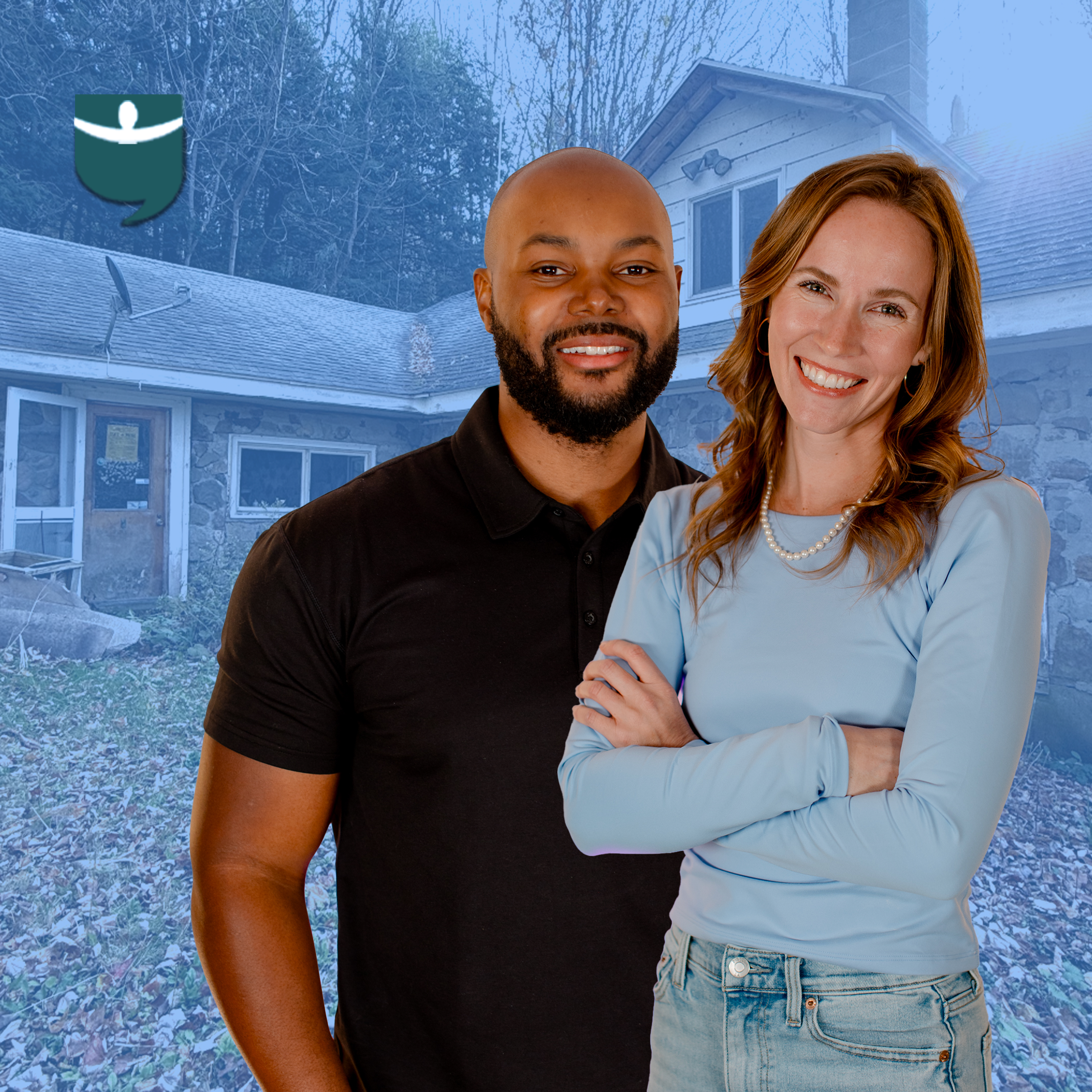
Welcome back to the Real Estate Rookie podcast! Matthew Morneault didn’t consider himself a real estate investor when he bought his first property, a former meth house plagued with all kinds of issues. But learning how to renovate on the fly, renting the property out, and eventually selling it for a profit gave him the knowledge and confidence to go out and find his next investment. Today, he has three profitable properties—including one that brings in over $90,000 in annual revenue!
As you’re about to hear, Matthew has targeted value-add opportunities with bigger margins, refinanced his mortgage at the right time, and pivoted to other investing strategies when things haven’t worked out. In this episode, he’ll show you how to build a modest portfolio that catapults you toward your investing goals!
In This Episode We Cover
How Matthew brings in $90,000 in annual revenue from just ONE rental property
Turning a “messy” first investment into three profitable properties
How to identify the best value-add opportunities for any investment property
Little-known VA loan hacks you can use to grow your real estate portfolio
The hidden value of building relationships with local credit unions
And So Much More!
Check out more resources from this show on BiggerPockets.com and https://www.biggerpockets.com/blog/rookie-581
Interested in learning more about today’s sponsors or becoming a BiggerPockets partner yourself? Email [email protected].
Learn more about your ad choices. Visit megaphone.fm/adchoices