Ask ChatGPT



Jason Manion’s path from tech layoff and a baby on the way to real estate freedom using just two deals: a condo house hack/live-and-flip that produced $220K+ tax-free profit, then a high-risk Joshua Tree hard-money flip that netted about $105K.
Jason worked in tech as an online community manager, earned 6+ figures, and pivoted after reading Rich Dad Poor Dad and listening to BiggerPockets. He later got his real estate agent license and planned to keep flipping in SoCal.
Data-driven deal analysis mattered more than “random strategies.” House hacking + living there enabled major tax advantages (primary residence exclusion after 2+ years). For the flip, risk was reduced by analyzing deals, hiring/contractor bids, sourcing materials directly, using hard-money draw structure, and doing labor himself.
Condo was a 2-2 corner unit; he rented one room and did cosmetic updates. During COVID he bought despite fear. Joshua Tree flip: $300K purchase, hard money with 30% down, ~$70K labor/materials, $520K sale after ~$410K total costs; hardest day involved 10,000 pounds of landscaping stone.
Written by AI. May contain mistakes.
Jason shares his transition from tech to real estate, driven by a passion for remodeling homes.
“And let's give a big warm welcome to Jason.”
Jason discusses the moment he decided to invest in real estate after learning about house hacking.
“I was getting into my first property and I knew I wanted to approach it from an investor standpoint.”
Jason reflects on his initial struggles and the cost of learning during his transition to full-time investing.
“And so that was a key moment where when I made this first purchase, even though I was living in I looked at it as a place that I could do some sweat equity and improved.”
Discussion on how the pandemic and a roommate decision led to Jason’s significant profit in real estate.
“but I feel like has made me a much stronger investor coming out the other side.”
Jason breaks down the factors that contributed to his successful condo investment during COVID.
“Okay, so Jason's on the edge, but instead of playing it safe, he pulls the trigger on this condo during a global pandemic.”
Jason explains the advantages and challenges of investing in condos, particularly with an HOA.
“The pros are, especially from a flipper standpoint, you don't have to worry about the outside walls as much.”
Learn how house hacking and tax advantages can lead to significant profits.
“owner of the condos because she owned like six of the eight of them or something like that.”
Discover the moment an investor recognizes their true potential and gains.
“how many years would you have had to work to get that after-tax income in your pocket?”
Explore how new investors often struggle with feeling qualified despite success.
“Like, I'm doing my first ever live and flip right now.”
Learn about unique strategies for house hacking, including college scenarios.
“Well, I think you just, there's like this mindset, like before I knew what real estate investing was, like you just think this is my primary home.”
Hear about the challenges and motivations behind taking risks in real estate.
“B &B Calc makes the numbers prove the deal.”
Learn about the risks and strategies taken by Jason when transitioning to real estate.
“LinkedIn and just applying to jobs, or I could lean into real estate.”
Discover how Jason minimized risks by thorough property analysis and contractor selection.
“Well, it seems like you don't regret that decision, Jason, but I'm curious, what are some of the things that you did to mitigate that risk that you learned?”
Understand the financing process using hard money loans and upfront expenses in flipping.
“And so I wasn't paying hotel costs until I cleaned up the property and then I slept inside.”
Hear about the challenges Jason faced during rehab and his solutions to overcome them.
“that sometimes with hard money, you still have to have some cash to front these costs.”
Jason shares the financial success of his Joshua Tree flip and future real estate ambitions.
“managed my risk, but saving on commission definitely helped and just helping me be more informed in the real estate industry that I plan to be a part of.”
Learn about the balance between quality and quantity in property flipping.
“And so it was just huge in so many ways because I had so much writing financially, but also my pride, my ego, my, my network knew that I was doing this.”
Discover strategies for addressing fears and barriers in real estate deals.
“that you were, and they've got this decision to make about which path to go down?”
Find out how to connect with Jason and explore his insights further.
“Where can people reach out to you and find out some more information?”

Get the gist, explore an idea or ask about something said.
 Claude
On Real Estate Rookie, what are the key points of this episode?
Searching your listeningAutomatic transcript. May contain errors.
0:00Ashley Kehr: What would you do if you were laid off from your job with a baby on the way? Today's guest actually turned that low point into a six-figure win and a new full-time career.
0:12Tony Robinson: Today we're talking to Jason Manion who used a data-driven mindset from tech to go from anxious beginner to confident flipper, turning one house hack and one scary decision into full-time real estate freedom.
0:30Ashley Kehr: This is the Real Estate Rookie Podcast. I'm Ashley Kerr.
0:33Tony Robinson: And I'm Tony J. Robinson. And let's give a big warm welcome to Jason. Jason, welcome to the show, brother. Thank you so much. Thank you, Tony. Thank you, Ashley. I am truly so grateful for the opportunity. I've been a longtime listener to the Bigger Pockets Podcast. I am going on, I think, around five years now and just excited to be here. So thank you.
0:55Ashley Kehr: Well, you know, you've made it when you're a guest on the Rookie Podcast. So Jason, give us a little insight on what was your day-to-day like before you got started in real estate investing? I was working in the tech sector as an online community manager, and I was actually pretty content there. I enjoyed my job. I had worked my way up the corporate ladder. At the time, I was making over six figures, which to me was the pinnacle of my professional and work career. And so I was happy there, but it wasn't my dream job. I had always had this deep underlying passion for real estate. Even when I go on my morning walks and I walk past houses and I go through the neighborhood, I can't help but think about how I would remodel houses.
1:49I love looking at how they could be their best, their brightest. And so I just have always been drawn to it. And that's always been the dream job. I always thought, oh, if I could start over, if I was going to make a pivot, then real estate and real estate investing was the dream.
2:04Ashley Kehr: So what actually made you pull the trigger and take action to start investing in real estate? I knew I wanted to buy. I was getting into my first property and I knew I wanted to approach it from an investor standpoint. Actually, I didn't know that I wanted to approach it from an investor standpoint until I read Rich Dad Poor Dad. I listened to Bigger Pockets. I started to get informed because it was such a big decision. I really wanted to make it right. So as I was doing the research, I learned there was levels to the game. I remember a big aha moment was that I was looking at condos to buy from my first property.
2:42And I realized that I could live cheaper getting a tutu and renting out the other room than I could if I was just going to get a one bath for myself. And so looking at this purchase from the investor standpoint, from what I learned to analyze deals and run my numbers, it became so much more approachable. And it just knocked me over when I thought I could get a better asset. It's a two, two, I get more square footage room to stretch out. I pay less to live day to day. Like this is a win, win, win. It just unlocks so many things in my mind of, wow, there's so much potential. And so that was a key moment where when I made this first purchase, even though I was living in I looked at it as a place that I could do some sweat equity and improved.
3:31I looked for something that needed some TLC. And I did this house hack where I rented out the room. And so those things together were strategies that I learned from reading books, from listening to Bigger Pockets. And it totally shaped the way that I approached this first purchase, not as a traditional home buyer, but more from an investor standpoint. point.
3:53Tony Robinson: Jason, we definitely want to get more into the house hack because I know that ended up being a big catalyst for you as you scaled up your investing journey. But I guess what was maybe the first time that real estate just punched you in the gut and made you wonder if you'd made a huge mistake by even thinking about investing in real estate? It was the first time I had fully pivot pivoted into real estate investing. So it was now my entire income. It was my bread and butter. So I had to make it work. And even though I had done all this research, now that I was doing this full time, I was learning my way, figuring out how to actually put it into practice.
4:34And so I went to a few seminars. I invested in some lead generating platforms. Some of these seminars were scammy. Some of these lead generation platforms didn't pan out. And to be fair, I felt like that was all the cost of business. Like it was painful to lose that money. I estimated that it was around like 5k I paid up front to go to real estate university and like really learn these hard lessons. But it was good too. In those seminars, I went door knocking and figured out that that was not the way that I wanted to go and it was brutal. But a lot of that shaped how I did want to approach real estate.
5:15I had to do a lot of stuff that didn't fit me, but are totally valid strategies for some other people as well. It was really learning about what appealed to my strengths and my personal work style. And so I definitely, at the beginning, that hit extra hard, that punch in the gut because it was so early on and I was still trying to prove to myself that I could do this. So taking missteps, going down the wrong path was lost time, lost money. And so it hurt, but I feel like has made me a much stronger investor coming out the other side.
5:49Tony Robinson: And Jason, I appreciate you sharing that because I think there's something to be said about experimenting a little bit before you truly commit. I do believe there's value in saying, my name's Tony and I'm going to focus on this strategy in this market, right? Because you can really start to build expertise around that. But I think before you can confidently say that, you have to maybe try a few different things first to understand what lane you really want to step into. Like before we went full force into hospitality, I did do traditional long-term rentals. I tried to do apartment syndication.
6:24Tony Robinson: I looked at other asset classes first before I kind of found my rhythm. So for all the rookies that are listening, I think leverage the podcast, leverage the folks that are coming on here and sharing their stories to listen and see and try and get a sense of what strategies make the most sense for you. Like we all know that Ashley, you love door knocking and cold calling, right?
6:47Ashley Kehr: Terrified. Someone's at my door, I got to hide, let alone go into someone else's door. We have to take a short break, but when we come back, we're going to dig into how a global pandemic and a roommate led to$220 ,000 in tax-free profit for Jason. But first, a word from today's show sponsors.
7:10Tony Robinson: There's a point where basically every investor realizes traditional financing stops scaling with you. At first, it works. You qualify with your income, your job, your tax returns. But as you grow, that model starts to break. Now, it's not really about your personal income. It's about the income from your properties. That's where DSCR lending comes in. And it's why a lot of investors end up working with lenders like Host Financial. Host Financial qualifies deals based on property income, not personal income. So you're not dealing with W-2s or tax returns or DTI constraints. And with 80 % to 85 % LTV, you can stay more flexible as you scale.
7:50Tony Robinson: It's just a different framework. One that tends to align better with how investing actually works. If you're buying rentals, refinancing, or growing your portfolio, go to hostfinancial.com. That's H-O-S-T financial.com and see what you qualify for. Some listeners may wonder why their insurance quote only took 30 seconds. Some listeners may wonder why their insurance quote took 30 seconds. A better question is, how long will that policy actually hold up when you need it? At NREG, the goal isn't just getting coverage in place. It's making sure your investment property is properly protected when a real claim happens.
8:30Tony Robinson: That's why they take time to evaluate each property's unique risks and build coverage design for the realities investors face. Because anyone can sell a policy, NREG focuses on standing behind it. Visit nreig.com slash bplc to learn more. If you own rental properties, you know the job does not stop at closing. There's tenant screening, rent collection, maintenance calls, and the paperwork that comes up with all of it. If you're managing more than one to two doors, that workload adds up fast. That's where Mind, BiggerPockets' preferred full-service property management partner, comes in. Mind is built specifically for real estate investors with experienced property management teams, local market expertise, and purpose-built technology.
9:16Tony Robinson: They support leasing, rent collection, maintenance coordination, and reporting. Whether you're managing one rental or scaling towards your 10th, Mind is built to grow with you. It frees up your time to focus on finding your next deal instead of fielding maintenance calls. And it's not just about time. If you're a BiggerPockets Pro member, Mind will save you$500 for every home you onboard, up to$10 ,000 in your first year. Check mind.co to save time, money, and frustration. That's M-Y-N-D dot C-O.
9:49Ashley Kehr: Okay, so Jason's on the edge, but instead of playing it safe, he pulls the trigger on this condo during a global pandemic. So let's unpack how that one decision set you up for a$220 ,000 win. So Jason, what was it about this deal that made it so successful? It was really approaching it from that investor mindset. So I really ran my numbers and found something that I could afford. Like I mentioned, when I saw that unlocking a 2-2 would get me a higher or a lower monthly mortgage payment and I could have more space. It was a corner unit. It was a really good price per square foot. It just checks so many boxes that I wanted to make sure that this property fit so that I could get a great return on it and have a great place to live.
10:42So doing the house hack strategy was critical. I mean, now I've learned that there's levels to the game. I could be looking for a 3-3 or a 4-4 and maybe lived for free. Like now I see that there's even further lengths that you can go to it. But for me, this felt really approachable and good. At the beginning, I had lived with roommates before. So one was manageable. This was also my first stab at being a landlord. So learning how to do leases and vet tenants. I just wanted to not bite off more than I could chew, but this felt really good. Like I was being intentional and thoughtful about this decision.
11:20And in the middle of COVID, it was so scary. It was really difficult for me to make this, this huge leap, what it felt like. But at the end of the day, I just came to the point where I felt like if the world's going to end, I might as well have a house. So I'm just going to jump in and figure it out and just buy this place, you know? and so um but that that gave me peace the house hack and then i was also looking for something that i could live and flip this is a strategy that i love i really like working on projects working with my hands i have some background in carpentry and and doing projects like that so i looked for something that needed some help in the areas that i get the best roi so a little dated kitchen bathroom not a full reconstruction but just something that i could do some cosmetic updates to.
12:07And so all those factors together really led to a win on this first property.
12:14Ashley Kehr: Jason, with a condo, what are some pros and cons of a rookie investor buying a condo with an HOA? The pros are, especially from a flipper standpoint, you don't have to worry about the outside walls as much. You really focus more on the interior. So if you're looking for a more approachable project, condos can be a good place to start because you just have to focus on the inside. If you can find more of a cosmetic flip, that's just paint and flooring and, you know, putting some new hardware in, that's great. But if it gets beyond that and you're doing some serious modifications, then the HOA becomes involved and then it becomes a much more laborious process.
12:55So if you're trying to move walls, if you're trying to do any heavy construction, that might be something that you'd want to take into consideration at least. But that's definitely a con is that, you know, if you're doing some basic stuff, HOA will usually let you run free. But if you're starting to do some pretty extreme things, then just be prepared to have a lot of conversations and have documentation and come prepared.
13:20Tony Robinson: Ash, I don't know if you remember, but we interviewed a guest not too long ago and her entire strategy was flipping condos in her like immediate area for a lot of the reasons that Jason just mentioned. Like the, the lift is a lot lower because a lot of the property is maintained by the HOA and you've just got to focus on what's inside of the four walls. So I think for, for a lot of rookies, we don't think about flipping condos, you know, but maybe there's something to be said there.
13:47Ashley Kehr: Was that Renee you're thinking of? Renee, we had on who was flipping condos and she was slowly buying each of the condos and her house where she, I think she was already like majority owner of the condos because she owned like six of the eight of them or something like that. So it was pretty cool. That's another way to deal with the HOA to slowly take over.
14:10Tony Robinson: Just buy the whole thing, right? Now, Jason, I think for most rookies, when they think about house hacking, the hope is to break even, but how did this one end up being a multiple six figure one for you? That investor approach of the house hack, the live and flip that helps really build up the equity as well. So putting in that sweat equity. But then it was also that tax savings. I learned about that through bigger pockets and it is massive. Instead of paying 30 % in taxes, something around that number, it was tax-free, but it was because it was my primary residence. I had lived there for over two years.
14:50And so you guys know this, but to me as a rookie, this was life-changing because just knowing how hard I worked at my W-2 and paying those taxes and seeing that money go out of your pocket and then having this being such a large financial move and not having to pay taxes on that because of the approach was just a big game changer. So So it was really the house hack, the live and flip, and then the tax advantages of it being my primary residence helped me net that big number after four years. But it was because of those three factors.
15:25Ashley Kehr: So, Jason, have you actually calculated what the profit was from that sale and not paying taxes on it? how many years would you have had to work to get that after-tax income in your pocket? Because even if it was, say you made$100 ,000 profit, that could be you making, you'd have to make$150 ,000 before taxes to actually net the$100 ,000. You know, so I was just curious if you ever calculated that because like that it's not just the profit you made that you're not paying taxes on. It's like how long it would take you to make it if you had to pay taxes from like your W-2.
16:14Tony Robinson: Or even from like a savings perspective, Ashley, right? It's like how long would it have taken you to save that amount? Just, you know, either plow money into your 401k or, you know, whatever it may be, wherever you keep your money. like I I guess maybe walk or see like what was the moment you realized that that this strategy could be the thing that unlocks everything else for you that really was the moment when I sold my condo and netted that profit because even though I had approached this first purchase as an investor I still didn't really think of myself as an investor because my net worth had risen on Redfin estimates, but it wasn't in my pocket.
16:56And so in theory, I had proven it to myself. I had watched my property value rise. I saw my mortgage getting paid down, but it wasn't until I sold that first property and I looked at the 200 plus K that I had netted. And then I looked at my 401k and I had been contributing to that 401k for the majority of my professional life. So 20 plus years. And I had netted about, or in my 401k, there was about a hundred thousand dollars. And in this first investment, I had doubled that in four years. And so it just really made me sit back and think about what I was doing.
17:41Ashley Kehr: No, Jason, that's incredible. Like, I'm doing my first ever live and flip right now. And you're just reinforcing even more and more things as to why this is a great idea. And like you had one roommate, did you have a roommate the whole four years? I did. Yeah. Okay. So you had one tenant, one tenant to worry about. You had to worry about your own property, your own roof, your own things like that, where it wasn't an investment property you also had to worry about. And worse, like if anyone's doing a live and flip, not even having a roommate or not house hacking, your worst tenant to deal with is yourself when you're mad because the bathroom is taking long to rehab.
18:25Ashley Kehr: It's not like you have to deal with anyone else really besides maybe contractors or whatever. But that's a part that I'm really realizing that I love about doing a live and flip is that I am not responsible to anyone else. If I don't finish a project on time, I suffer not having a fully renovated kitchen, not anyone else. I don't make promises to anyone else that this will be done or, you know. So I love that part of it is that I'm not responsible to anyone else. If I'm not ready to sell in two years, big deal. I live in this fully renovated house for a little bit longer before I go on to the next rehab.
19:06Ashley Kehr: So yeah, I think it's great to hear you reinforce what a great strategy a live and flip can be.
19:13Tony Robinson: And I also always think it's interesting how people who have completed deals don't see themselves as investors yet. And I just interviewed Chad Carson and he was talking about the build to rent strategy and he'd done it five times. And he's like, oh, but I'm not really all that experienced. So I'm like, Chad, you did it five times talking to the person that's done at zero. Like you were incredibly experienced in that frame. So I think it's something we all struggle with is that like imposter syndrome about like, okay, am I really an investor yet? But I mean, dude, you know, 200 plus K on your first deal.
19:45Tony Robinson: If that's not an investor, I don't know what is, right?
19:48Ashley Kehr: Well, I think you just, there's like this mindset, like before I knew what real estate investing was, like you just think this is my primary home. Like you don't think that, you know, it's an investment per se. You just, this is what people do. They buy a house and they sell it. Hopefully they make some money. And yeah, you just think of it as like, this is normal. But then when you start to really realize the gains and be intentional about it, I think that's when it tries, like starts to click. Yeah.
20:18Tony Robinson: Grant Cardone always says that your primary residence isn't an investment, but clearly he's never met Jason, right? You're going to put me up against Grant Cardone.
20:26Ashley Kehr: You know, one other way that I like love like house hacking in a sense, and I guess it could be a live and flip too, is like parents who go and buy a property when their child goes to college and then they rent out the rooms to all their friends or whatever. So it's like that, like, so the kid living there and they're like, that's experience house hacking, you know, and get all your buddies and fix up the place for your parents. So when you're done with college, they can sell it for even more money. But yeah, there's just so many ways that you can be a real estate investor.
21:02Tony Robinson: Well, Jason, I know there's more to your story and we want to uncover that because next you go all in, right? No job, new baby, massive flip project that could literally make or break your future. So I want to hear how this big bet worked out right after a final word from today's show sponsors. You know, when I first started sharing my real estate journeys online, I didn't have a website. I had a spreadsheet, an Instagram account, and no idea how they'd ever connect. I remember thinking a real website was going to cost me thousands of dollars and take a developer weeks to build. So I kept putting it off.
21:38Tony Robinson: Then I found Hostinger. I typed in what I wanted, a site to show off my deals, share my story, and capture leads. And their AI builder had a working version live in minutes. No code, no designer, no developer needed. And it didn't stop at launch. Once my site was live, Hostinger's AI agent helped me figure out what to try next, acting like a built-in team of specialists for SEO, website copy, email marketing, and more. Domain, website, email, marketing. One Hostinger account covers it all, so you're not stitching together five subscriptions or wondering if they even talk to each other. Plans start at just$3 a month so you can begin at your own pace and build from there.
22:21Tony Robinson: Hostinger builds your vision step-by-step. Create your website today. Go to hostinger.com slash real estate and use code real estate for 10 % off now. I just booked a ski trip to Park City and I've already got the whole thing planned out. Five days, first tracks every morning before the crowd show up, my knees reminding me I'm not 25 anymore by the second run, and an embarrassing number of overpriced burritos at the lodge. I don't even care. This is the trip I look forward to all year. But here's the part I actually appreciate. The practical side of my brain kicking in is that my place doesn't have to just sit there empty the whole time I'm away.
23:03Tony Robinson: I can list my space on Airbnb and bring in a little extra income while I'm out getting humbled on a mountain. And with the co-host network, I'm not the one handling all of it. You can partner with a vetted local co-host who can create your listing, manage reservations, message guests, and even handle the styling. So I get to fully focus on my trip and my place is still working for me the whole time. Find a co-host at airbnb.com slash host. Investing in real estate has always been smart, but it hasn't always been simple. Now it's both thanks to the Fundrise flagship fund. The Fundrise Flagship Fund launched more than five years ago with a mission of delivering low-fee access to blue-chip private market real estate.
23:47Tony Robinson: Today, the Fundrise Flagship Fund has grown to manage more than a billion dollars of real estate on behalf of hundreds of thousands of investors, making it one of the largest funds of its kind. For those who believe real estate has an important role to play in their portfolio strategy, the Fundrise Flagship Fund has positioned itself as both a simple and a smart option. Whether you're starting with$10 or$10 ,000, the Fundrise flagship fund makes adding real estate's unique potential for both passive income and consistent growth. Just visit fundrise.com slash pockets to make your first investment today.
24:24Tony Robinson: Carefully consider the investment objectives, risks, charges, and expenses of the Fundrise flagship fund before investing. This and other information can be found in the fund's prospectus at fundrise.com slash flagship. This is a paid advertisement. Bigger Pockets Real Estate is brought to you by Mod. Mod prescribes a once or twice daily modafinil drink that can keep you energized, focused, and alert throughout the day. Here's the mechanism. Energy drinks with caffeine temporarily block udenosine, the chemical that makes you tired. It builds up, and when the caffeine wears off, it all crashes down on you at once.
24:58Tony Robinson: Modafinil works differently. It engages multiple pathways in your brain, dopamine, norepinephrine, histamine, and orexin to achieve steady energy and alertness for 10 to 12 hours. Modafinil was invented in the 1970s, and since it's been used in the highest performers on the planet, soldiers, pilots, and astronauts aboard the space station use modafinil in high-stakes situations where full concentration and alertness are paramount. It's now available at mod.com to qualifying patients. Visit mod.com, that's M-O-D.com, for a free consultation and get 10 % off your first order plus free shipping with promo code B-P-R-E.
25:38Tony Robinson: That's promo code B-P-R-E at mod.com. See their website for important safety information and we thank Mod for sponsoring the pod. An Airbnb deal can look great on paper and still become an expensive mistake. B &B Calc makes the numbers prove the deal. Use B &B Calc's market map to browse over 10 million Airbnb and VRBO listings, compare cities by revenue and gross yield, spy on top operators and build comp sets. See how adding amenities like hot tubs or EV charges can boost your revenue. Enter any address to generate a complete property report. BNBCalc's AI visually analyzes nearby listings to estimate what it could earn and uses local data to estimate what it will cost to run.
26:20Tony Robinson: Find the best market, choose the right comps, and know the return before you buy. Start your seven-day free trial at bnbcalc.com and use code BIGGERPOKETS to lock in 20 % off for life. All right, so we're back with Jason. So the first deal worked incredibly well. And now, Jason, you're betting everything, your savings, your time, really your family's future on this really high-end flip in the middle of the desert. You've had some life changes now. You've got no job, newborn at home. So I want to see how you navigated this higher risk, massive stress building project, but still came out ahead. So Jason, after you hit this home run, you get the live inflip that does incredibly well.
27:07Tony Robinson: What happens next? This is a wild time in my life. And it's not that long ago. We're talking about like eight months ago that this happened. But I got laid off. I was recently married and my wife and I had our first baby on the way. And so it was just such a, there were so many things going on at that time. And with being laid off, I was so motivated. I had my new family to support. So I was very driven to make it work. and I feel like I was faced with a very obvious choice which was real estate or not because I had been talking about it for so long I've been thinking about it I had done this first investment that I had done well and now that I was laid off I had a choice of going back to W2 and hitting LinkedIn and just applying to jobs, or I could lean into real estate.
28:08I felt like I wasn't going to get a better opportunity than this, despite new family, new baby. I had the capital from the new flip or from selling the condo to fund this flip. And so I thought, when am I ever going to get an opportunity like this again? I'll put it on the shelf. I'll go back to W2 and it'll get loss on the side or I won't pursue it. I need to do this now and just figure it out. And so it was definitely a risky proposition, but I learned ways to mitigate that risk that helped a lot, like analyzing the property and some of the strategies that I learned from bigger pockets that helped step it down a bit, but it still felt like stepping off a cliff.
28:55So it was a crazy time of my life, but it also has really strong catalysts come through or when crazy things happen that can also be a catalyst for big change and life goals. And so I just decided to turn this moment into something that I could be proud of and pursue.
29:14Ashley Kehr: Well, it seems like you don't regret that decision, Jason, but I'm curious, what are some of the things that you did to mitigate that risk that you learned? I really tried to focus on the things that I knew were most important from doing my research, which was buying right, the contractor, labor, and then materials. I saw that those were my biggest costs. And so I really learned to analyze deals. I must have analyzed. I probably looked at a thousand properties, analyzed a hundred, like immediately knew that some of those were not worthwhile, but had to go through so many as I'm sure you all can relate.
29:55I learned that door knocking and cold calling wasn't my way. So this was on the market or this was a market property, but I just looked for long days on market. And so I looked for how I could buy this at a deal. And so it needed a lot of work, which is why I could get it at a discount. But I minimized the risk by learning to analyze. So I felt like I was stepping into a really good property that already had equity in it because I had purchased it right for labor and contractors. I interviewed 10 different contractors to find the one that I went with because I got bids ranging anywhere from $40 ,000 to$120 ,000.
30:36And so it took me a long time to find someone that I could trust, find at the right price point. And then the materials, I just spent a lot of time and effort in finding what I thought were really quality materials that yield high and finish, but I could get a discount going direct to the distributors, cutting out middlemen, going to a tile store that, you know, makes it there. So saving on the purchase, on the labor, on the materials, my biggest costs. I really focused on those. And because I spent a lot of effort on really maximizing those costs and efficiencies, that removed a lot of the risk.
31:18I also did a lot of the labor myself. I slept in my car out of the property. And so I wasn't paying hotel costs until I cleaned up the property and then I slept inside. But for a long time, there was just dust and dirt on the ground. But all those things kept my costs really low. And so that helped me get a better margin because I, yeah, focused on those things.
31:42Ashley Kehr: I got to know what the phone call home is to your parents or your sibling. Yeah, I'm jobless and I'm living out of my car right now. One at a time. You just kind of unfold as it goes. But yeah, it was... No, that is awesome. And like, I love when we have somebody on that says like, yeah, I did this, but I did, I had to make a sacrifice. Like you're sleeping in your car, you have a newborn baby at home that I'm sure you would have rather have been with, you know, than sleeping in your car. But it's like, you made those sacrifices for your family. Like, I just think that's incredible to have you share that with us.
32:21I have to give a shout out to my wife too, at this point, just because she obviously did so much to make this happen and look it out for our newborn. And even when I was living out there, you know, on and off, she was pregnant. So that was just wild, but she was so supportive and bigger pockets was also a big portion of how I got her more sold into this and supportive of this project, because just using some of the podcasts to show that I wasn't crazy. Other people were doing it or like getting into real estate investing and just also pulling back the layer, showing her how this could be great for our future.
32:59But she was awesome through this whole process.
33:01Tony Robinson: Jason, I just want to set the table on this deal for all of our listeners. So this was a flip. You're in Southern California in Long Beach. What city was the flip in? Joshua Tree, California. OK, so about two hours to the east of where you're at. And what was the I know you said it was on the MLS. What was the initial purchase price? It was 300K. And what kind of financing did you use to purchase the property? Was it hard money, conventional? Was it just the cash that you had from the sale of the condo? What was the financing? It was hard money. That was a really terrifying term first getting into flipping for sure.
33:36But I found that that's the typical way to get funding for these type of projects for the property and to cover the construction loan. And so then it was just talking with a lot of lenders. And so the capital that I had just helped fund the, I had to put 30 % down because Joshua Tree is considered a tertiary market. And so more rural, more removed. It's a smaller market. As you know, Tony, I know you have property out there, but it's so because it's a little more removed and it doesn't have as much population demand. And I was paying a higher markup as opposed to the typical 20 % down. I had to put 30 % down.
34:20And so the hard money, that's how I funded the deal. And they also, it actually really helped in the process as well, because the contractor was such a big portion of it. And with hard money loans, as you know, it's a draw process. And so being able to use the hard money lender as kind of the bad guy in this scenario and just saying that work needs to get done so that I can then release these funds to then pay you. And so it was a really good way to make sure that I was financing this properly, that I was paying the contractor correctly after the work was done. So in some ways, it really helped set the structure for this project.
35:06but that was the way that I financed it, hard money and then putting capital down from that condo.
35:12Tony Robinson: And you say 30 % down, was that 30 % of just the purchase price and then you had to fund the entire rehab yourself or was it 30 % of the total project cost, meaning the purchase and your renovation? It was 30 % down on the purchase price. And then it was funding out of pocket for the construction, but they funded the entire amount. So I ended up spending about$70 ,000 on labor and materials. And so I kept about$25 ,000 in reserve to be rotating through for covering all my labor and material costs. And then when that ran out, I would go through my draws. So I got three draws total. So I just chunked it out into those amounts to make sure that I could get to my 70K and I still had enough money in the bank to fund those.
36:02Tony Robinson: Gotcha. So you, you paid for your construction costs out of pocket and then you got reimbursed from the hard money lender after they validated that the work was complete. That's exactly right. Yeah. And I think that's a very important point for rookies to understand because I don't think a lot of people realize that sometimes with hard money, you still have to have some cash to front these costs. And then they get into deals, they sign these loan documents and they're like, Hey, where's my check. And they're like, oh, no, no, no, no. You write the check first and then we give it back to you afterwards.
36:31Tony Robinson: So I'm just glad that we were able to illustrate that. So you've got 300K purchase price. You're kind of floating some of the rehab costs. I'm just curious, what was maybe the biggest or maybe the hardest day on this project? And what did it teach you about real estate investing? The hardest day was I had ordered 10 ,000 pounds of stone to be delivered. I had ordered 10 ton of stone for the front yard landscaping. And much like the rest of this project, I would just move forward knowing that I was going to figure it out. It just had to get done. I knew when I needed to get the project to get it to market.
37:11And so everything was just working backwards. So I ordered the stone knowing that I needed to get done for this front yard landscaping project but I remember standing there very vividly in the front driveway and they back up this dump truck and dump 10 ,000 pounds of stone like at my feet and I had a wheelbarrow. I thought that I was just going to do all this myself over the course of a few days and it was so clear to me as soon as they dumped it all. I was like this is insane. There's no way but I also was like, this has to get done. And so thankfully, I mean, the power of mentorship is incredible.
37:51I had made some relationships out there. I had real estate mentors that I look up to that I can reach out to. So I called them, explained the situation, much like anything else, there's usually a tool for the job. So I rented like a small bulldozer essentially from Home Depot. And it turned out to be one of the funnest days. Like I felt like a real contractor. I was driving around like a little
38:12Ashley Kehr: bulldozer, you know, it was, is it like one of the stand on one? Yeah. Yeah. Yeah. Yeah. And so it ended up being a blast. What was first terrifying, but the thing that I learned from that and that I kept reapplying is just being solution oriented from my professional background. That was something that was reinforced in one of the really like top notch teams that I worked at. We had a rule that you couldn't bring a problem without bringing a solution. so it's like I feel like oftentimes with a problem you just want to give it away or you want to run from it and that forced me to just think through how would I solve this and just move more to solutions instead of dwelling on the problem so it was just immediately okay I have all this down it has to get moved how am I going to do this how am I going to move forward and so just with any hurdle red flag that came up with the project I just thought how can I solve this So Jason, what's next for you?
39:10Ashley Kehr: Is it more flips, buy and hold? Is it going back to your W2 job? I'm definitely looking for more flips. And so I'm in the SoCal area. I'm looking. I'm also, I got my real estate agent license. So that was one more way that I managed my risk, but saving on commission definitely helped and just helping me be more informed in the real estate industry that I plan to be a part of. And so I'm also pursuing full-time real estate agent, flipper, investor. So right now it's really flipping and being a real estate agent. I would love to work some buy and holds into my portfolio down the line and execute some of these more high-level strategies that I've learned from listening to the podcast right now.
40:02It's just, I found success with this. And so I want to continue to do it, but I found something that I really love. I truly enjoy doing this. So I just want to keep flipping, keep working on properties, keep working in real estate. So that's my next plan.
40:17Tony Robinson: Well, Jason, I just want to know how this Joshua Tree flip ended for you. You know, you can't leave us on a cliffhanger. So you're after you bulldoze your way through 10 ,000 tons of rock. How does the project actually finish out? What are you listed for? What do you actually end up closing at? And what's your profit at the end of the day? If you're including the purchase, I was at about$410 ,000 total with all the construction costs and closing opening costs. And I sold it for$520 ,000. So I netted around$105 ,000 off of the property. And so that was beyond my goals. It definitely, I broke it down to some of those different things, buying right, doing some of the labor myself, doing the design, being an agent.
41:08So it all broke down into these different, how I saw it that contributed to making a portion of this overall margin. And it really was, you know, I know some flippers, it's more about scale and copying and paste, and they're more removed from the process where it's just my approach to be focused on one property, find something I can really believe in and then just go all in. So it may be a little less diversified from a risk side, but it's just the way that I approach my investing and property. And so all that is to say is I really did everything that I could to maximize that margin. But yeah, walking away with over 100K, that really solidified it for me because if I made, I had, I had a number, but if I made below that, you know, I was going to hang up my hat and go back to W2 because I had my family to support.
42:04And so it was just huge in so many ways because I had so much writing financially, but also my pride, my ego, my, my network knew that I was doing this. And so I just really wanted to make it a success. And so the fact that I could hit my goals and now use that to roll that into the next real estate investing, I'm just over the moon.
42:25Ashley Kehr: So I really love that you brought up being intentional with one property. Me personally, I think it's so much easier to do two flips a year than 20 flips a year. And you probably could have a similar outcome with 20 flips, you have more overhead, you have maybe, you know, you're not making as much because you're not putting in that time and commitment into it. And our friend Laka, who's coming on the podcast in a couple of weeks here, she's going to be talking about daddus. But one thing that she is really, really good at is she only does a couple flips. And the reason she does that is because she is so intentional with her design.
43:07Ashley Kehr: She's very detail-oriented in making this product that is going to sell better than anyone else's. And she doesn't have to do as many flips because she's more intentional about the time that she's putting into the design, the detail, what the buyer wants on each property too. I love that. I'd much rather focus on quality over quantity just for me. But then I'm also putting all my eggs in one basket. So there are definitely pros and cons, but I do appreciate just trying to find a property I'm really excited about and move on it.
43:40Tony Robinson: Jason, what would you say to someone who is at a crossroads in the same way that you were, and they've got this decision to make about which path to go down? What advice would you have to someone that's in a position like the one that you were in? I think just thinking about the things that makes you most uncomfortable about the deal and then addressing those for me, it came in waves, but at first it was funding the deal. So I had to talk to a lot of hard money lenders before I found somebody that I trusted and was comfortable with and got a good rate. Then it was on to contractor. So I felt like at the beginning, before I pulled the trigger, there was a lot of things, hurdles and barriers that I put my own way that scared me.
44:26And so a lot of it was genuinely researching the BiggerPockets podcast, reading books, finding mentors and networking, because as I had those conversations, each of those things that was bothering me or standing my way, I would just focus on having conversations around that, researching it. And it would slowly start to dissolve until I finally felt confident enough to take that step. So if you were like me and you were really scared of taking that step, it doesn't mean that's not right for you. But it just means that your mind is telling you that if there's something that you're really afraid of or you really need your spouse on board, then that just means that that's the next thing that you have to figure out to then remove those barriers to get to where you want to be.
45:12So for me, it was really having those conversations, having a good mentor network, listening to BiggerPockets, reading books, and just doing the research so that I felt confident to take that step.
45:23Ashley Kehr: Well, Jason, thank you so much for coming on today and sharing your journey, your story, and some really great advice for other rookie investors wanting to get started or even maybe trying to find out a new strategy like Live and Flips. Where can people reach out to you and find out some more information? So again, my name is Jason Mannion. I'm out in Southern California, Long Beach, California. And you can find me on Instagram, Jason underscore Mannion, M-A-N-I-O-N. And yeah, hope to see you out there. Well, thank you so much for joining us. I'm Ashley and he's Tony, and we'll see you guys on the next episode of Real Estate Rookie.
46:04Tony Robinson: Fall has never looked or tasted this good. Sweet Greens Fall Harvest Menu is back with seasonal favorites dressed to impress and made to be devoured. Warm roasted sweet potatoes, crisp apples, maple glazed Brussels, and crave worthy flavors in the autumn harvest bowl, maple glazed salmon plate, and roasted bacon Brussels side. The season's most desirable menu has returned to Sweetgreen, featuring fall's best dressed. Make your move. Order on the Sweetgreen app. Fall savings are happening now at the Home Depot. Save up to$500 on select appliances. Plus, Enjoy free delivery when you spend$998 or more.
46:44Tony Robinson: From prepping to cooking to cleaning up, Frigidaire has you covered. The custom flex temp drawer switches from fridge to freezer. With more than 15 cooking modes including stone-baked pizza mode, you can enjoy restaurant-quality pizza in as little as two minutes. Then clean up with the Frigidaire dishwasher featuring the industry's fastest normal wash cycle. Shop fall savings now at the Home Depot. Offer valid for October 21st. U.S. only. See store online for details.
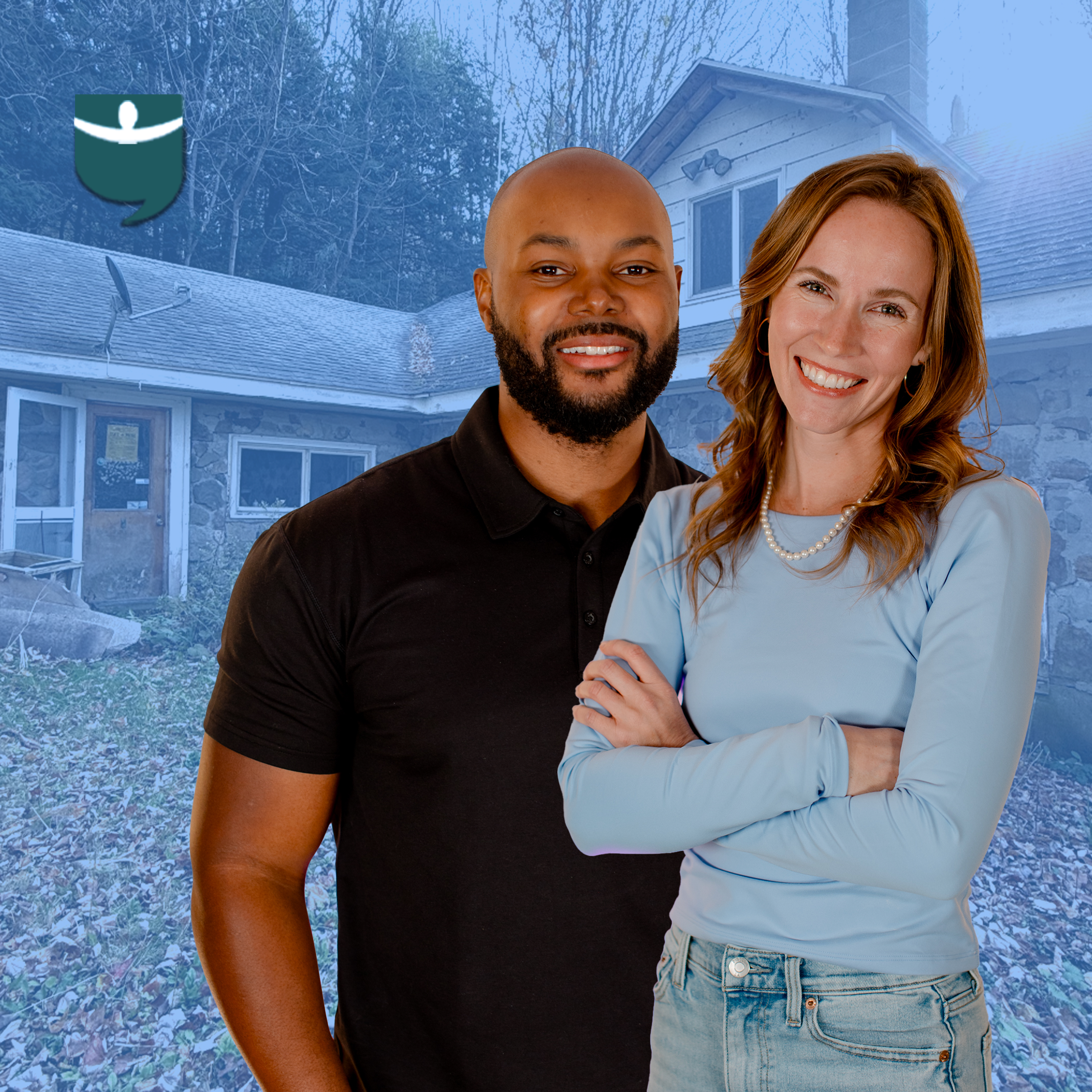
If you lost your job today, what’s your plan B? Just eight months ago, today’s guest was laid off from his W2—newly married and with a baby on the way! Thankfully, he was able to quickly pivot to real estate investing and turn a passion into a career. Whether you’re looking to escape the nine-to-five grind or create a better safety net, we’ve got the perfect game plan for you!
Welcome back to the Real Estate Rookie podcast! For years, Jason Manion had dreamed of buying, fixing, and flipping his own properties, and fortunately, he got a taste of real estate early on rather than sitting on the sidelines. His first real estate deal, a live-in flip that he also house hacked, netted him over $200,000 in profit. That early win gave Jason the confidence to pick right up with real estate after being let go from his nine-to-five job. His very next deal pulled in another $100,000!
Want to learn the secrets behind Jason’s six-figure margins? He hunted down discounted properties on the multiple listing service (MLS), took his time with real estate analysis, and even found ways to save money with DIY renovations. Tune in as he walks you through his entire method, step by step!
In This Episode We Cover
How Jason made over $300,000 in profit on his first two real estate deals
The secret to finding discounted properties on the multiple listing service (MLS)
How to save thousands with DIY renovations and savvy material hacks
The many benefits of using the live-in flip investing strategy
How to turn your primary residence into a profitable investment property
And So Much More!
Check out more resources from this show on BiggerPockets.com and https://www.biggerpockets.com/blog/rookie-578
Interested in learning more about today’s sponsors or becoming a BiggerPockets partner yourself? Email [email protected].
Learn more about your ad choices. Visit megaphone.fm/adchoices